

American single malt whiskey isn’t just an American take on Scotch. Far from it. This is the craft beer revolution, distilled. It’s a category exploding with creativity, driven by distillers from small, passionate craft whiskey brands who are obsessed with local ingredients and bold, new flavors. At its heart, the definition is simple: it’s a whiskey made from 100% malted barley at a single distillery right here in the United States.
What Defines American Single Malt Whiskey
For years, this style of whiskey was like a brilliant musician playing on a street corner—full of passion and talent but without official recognition. That's all changed.
For anyone new to whiskey, the most important thing to grasp is that this spirit is all about one grain: malted barley. While bourbon champions corn and rye whiskey celebrates its namesake grain, American single malt puts the rich, complex flavors of barley front and center. If you're curious about what makes that single ingredient so special, you can dive deeper into what malt is in whiskey in our detailed guide.
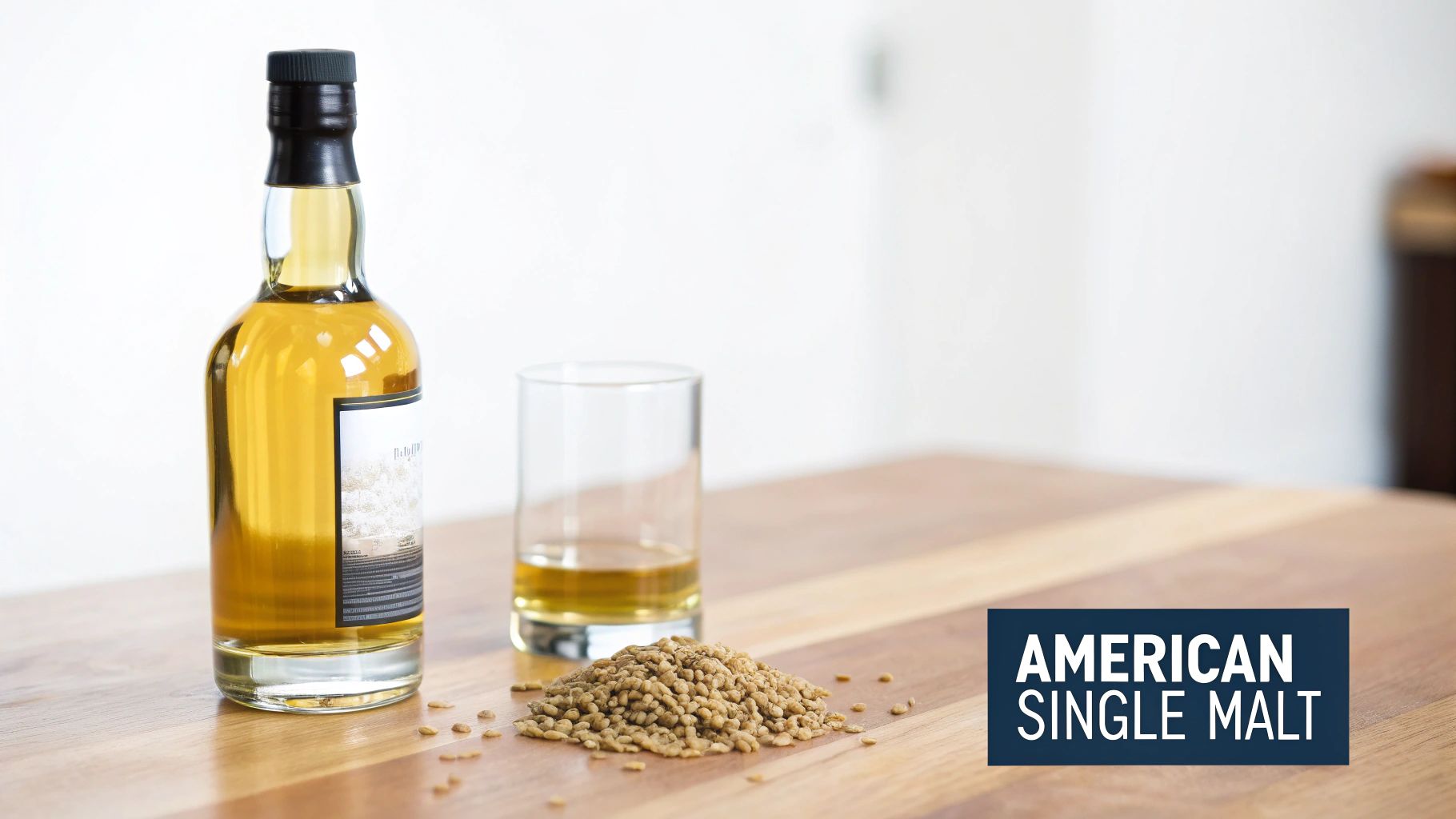
This intense focus on a single grain, all crafted under one roof, lets the unique character of the ingredients and the distiller's vision truly shine. It’s a clean break from the blended, multi-grain traditions that have long defined American whiskey.
The New Official Standards
After decades of campaigning by craft distillers, the Alcohol and Tobacco Tax and Trade Bureau (TTB) finally gave American Single Malt its due, officially recognizing it as a standard of identity. This wasn't just a win for the distillers; it was a landmark moment for whiskey drinkers everywhere, bringing clarity and protecting the category's integrity.
So, what does that new label actually mean? Here’s a quick rundown of the official rules that now define this spirit.
American Single Malt Whiskey At a Glance
The table below breaks down the core requirements for a whiskey to earn the "American Single Malt" title, making the new legal definition easy to digest.
| Requirement | Official Rule |
|---|---|
| Made in the USA | Must be mashed, distilled, and aged in the U.S. |
| Single Distillery | Must be produced entirely at one distillery. |
| Grain | Must be made from a mash of 100% malted barley. |
| Distillation Proof | Distilled to no more than 160 proof (80% ABV). |
| Maturation | Aged in oak casks (new or used). |
| Bottling Proof | Bottled at a minimum of 80 proof (40% ABV). |
These rules create a clear framework, ensuring quality and consistency for everyone. You can read more about the final ruling that solidified these standards.
This official definition is much more than just a list of regulations; it’s a declaration of independence for a uniquely American spirit.
By establishing these clear standards, American distillers can now confidently present a unique product to the world, one that stands on its own merits next to Scotch, Bourbon, and Rye. It’s a framework for innovation, not limitation.
This recognition has supercharged the entire movement. It gives distillers and drinkers a shared language and a clear benchmark for what's in the bottle. Now, when you pick up a whiskey labeled "American Single Malt," you know you're getting an authentic expression of this exciting and distinctly American spirit.
The Story of a Modern Craft Revolution
The rise of American single malt whiskey wasn't some grand, coordinated plan. Far from it. It was a grassroots craft revolution, sparked by a handful of rebellious distillers scattered across the country who looked at the American whiskey landscape—a world dominated by corn and rye—and decided to write a completely new chapter.
They certainly tipped their hats to centuries of Scottish tradition, but they had zero interest in simply making copies. Instead, they took that inspiration and filtered it through a distinctly American spirit of ingenuity.
This movement is deeply rooted in a sense of place. Distillers started asking a powerful question: how could local terroir shape a whiskey made from 100% malted barley? From the damp, salty air of the Pacific Northwest to the vast grain fields of the Midwest, each region offered a unique palette to paint with. This was never about creating a uniform, predictable product; it was about celebrating regional identity and letting local ingredients sing.
Pioneers of American Ingenuity
Early craft distilleries essentially became laboratories for flavor. They tinkered with everything imaginable: unique barley varietals, bespoke roasting techniques, and innovative barrel-aging programs that broke all the old rules. To really grasp how different this is, it helps to think about the rich tradition of American Bourbon, which has seen its own modern craft evolution. These single malt creators weren't just making whiskey; they were building a new category from the ground up, one small, passionate batch at a time.
This hands-on, story-driven approach struck a chord with a new wave of drinkers hungry for something more. Much like the craft beer boom that came before it, people began seeking out authentic, locally-made spirits with a real story to tell. They wanted to know the person behind the bottle and the philosophy guiding their craft.
The result is a spirit that truly reflects the personality of its maker. Some distillers, like the team at Seattle's Westland Distillery, are laser-focused on expressing the unique character of Pacific Northwest barley. Others, such as Balcones in Texas, are known for a bold, rich style shaped by the intense local climate. Every bottle from these American craft whiskey brands tells the story of where it came from.
"The beauty of American single malt is its lack of rigid tradition. It's a blank canvas for distillers to innovate, using local climate, grain, and wood to create something entirely new and distinctly American."
This creative freedom has fueled an incredible surge of energy and growth. The American Single Malt Whiskey category has absolutely exploded, quickly becoming one of the most exciting movements in the entire spirits world. The number of distilleries making it has skyrocketed by over 500% in the last decade alone, with the category now boasting over 200 active producers. This isn't just a trend; it's a massive shift in what people want to drink—premium, locally-made spirits that celebrate innovation and regional flavor.
How American Single Malts Get Their Flavor
That incredible spectrum of flavor you find in an American single malt doesn't happen by accident. It’s the direct result of a thousand tiny, deliberate choices made by distillers at every single step of the process. While the basic roadmap is familiar—mashing, fermentation, distillation, and maturation—American producers have become famous for putting their own creative, and often rebellious, spin on each stage.
It all begins with mashing. This is where malted barley gets mixed with hot water, coaxing the starches inside to convert into fermentable sugars. It sounds simple, but the creativity starts right here. Distillers can choose unique, locally grown barley varieties or play with different roast levels. Think of it like selecting a light-roast versus a dark-roast coffee bean; one might give you sweet, grassy notes, while the other lays down a foundation of rich, chocolatey flavor.
From Grain to Spirit
Next up is fermentation, where yeast gets to work on that sugary liquid (called wort) to create alcohol. For many distillers, this is a massive playground for flavor. While some stick with traditional distiller’s yeast, many American craft whiskey brands experiment with wild strains or even yeasts borrowed from the beer world to pull out specific fruity, spicy, or floral notes.
Then, the fermented liquid moves on to distillation. The actual shape and size of the copper pot still play a monumental role in shaping the final spirit's character. American producers aren't locked into one style of still; they use a huge variety, each one contributing to a unique personality. If you want to dive deeper into this, you can explore the art of whiskey distillation and see just how much the equipment matters.
The real magic of American single malt lies in the freedom to innovate. Unlike Scottish distillers bound by centuries of tradition, American makers can tweak every variable—from local barley to exotic cask finishes—to craft a spirit that is truly their own.
This unique blend of respecting old-world techniques while fearlessly embracing innovation is exactly what has fueled the explosive growth of the American craft whiskey movement.
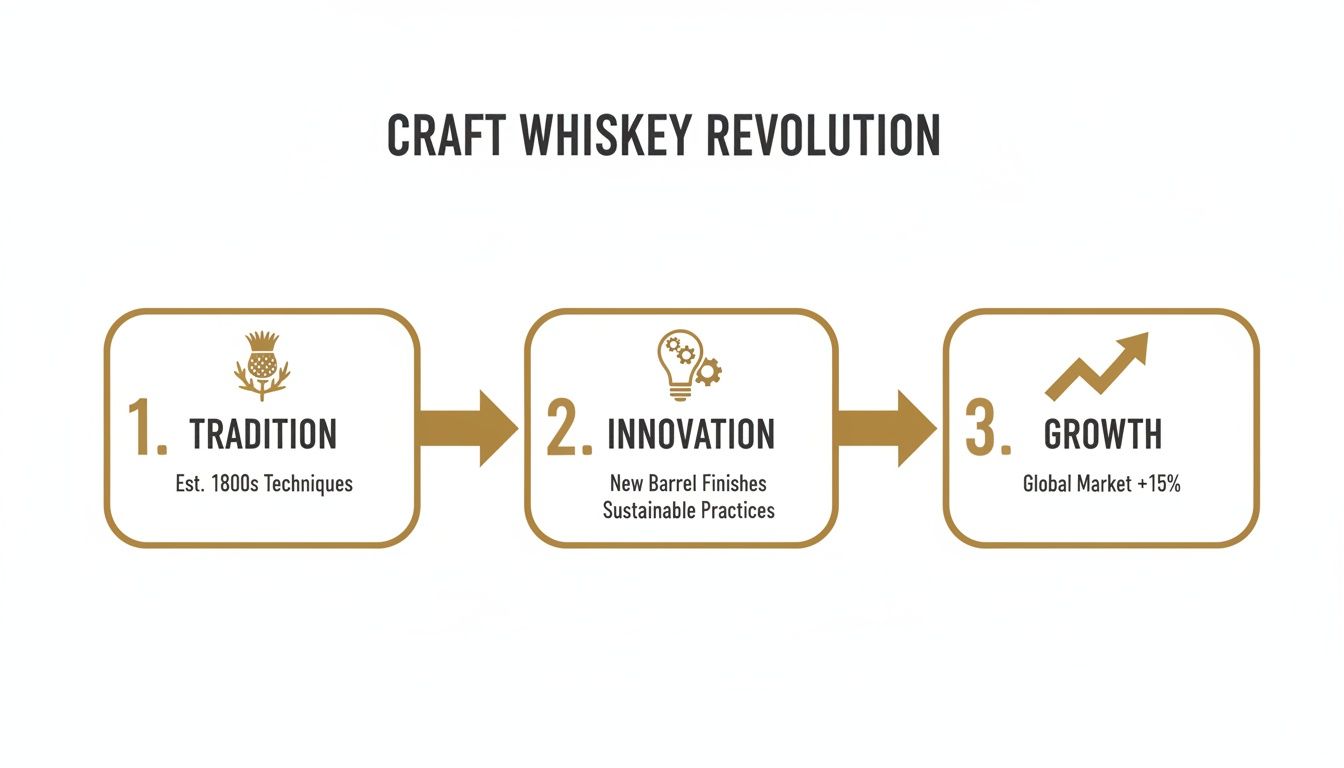
As the infographic shows, it's a clear progression: distillers honored tradition, then began to innovate, and that's what drove the category's incredible expansion into the modern market.
Maturation: The Final Touch
Finally, the new, unaged spirit is put into oak barrels for maturation. This is arguably the single most influential stage in creating flavor. While bourbon law dictates the use of new charred oak barrels, American single malt producers have a wide-open field to play on. They can use a huge variety of casks, including:
- Used bourbon barrels, which contribute those classic vanilla and caramel notes.
- New American oak barrels, for a much bolder, spicier, and more intense character.
- Wine, sherry, or port casks, which can add incredibly complex layers of fruit, nuts, and spice.
For anyone new to whiskey, the easiest way to grasp these distinctions is to see the core rules side-by-side.
American Single Malt vs. Scotch vs. Bourbon
This table really clarifies how the production rules for American Single Malt carve out a distinct identity compared to its more famous cousins.
| Attribute | American Single Malt | Scotch Single Malt | Bourbon |
|---|---|---|---|
| Grain | 100% malted barley | 100% malted barley | At least 51% corn |
| Location | Made in the USA | Made in Scotland | Made in the USA |
| Barrel Type | Oak casks (new or used) | Oak casks (mostly used) | New charred oak casks |
This incredible flexibility, especially in aging, is the reason you can find one American single malt that’s bright and fruity and another that’s dark, rich, and profoundly complex—all from the exact same grain.
Your Guide to Tasting and Flavor Profiles
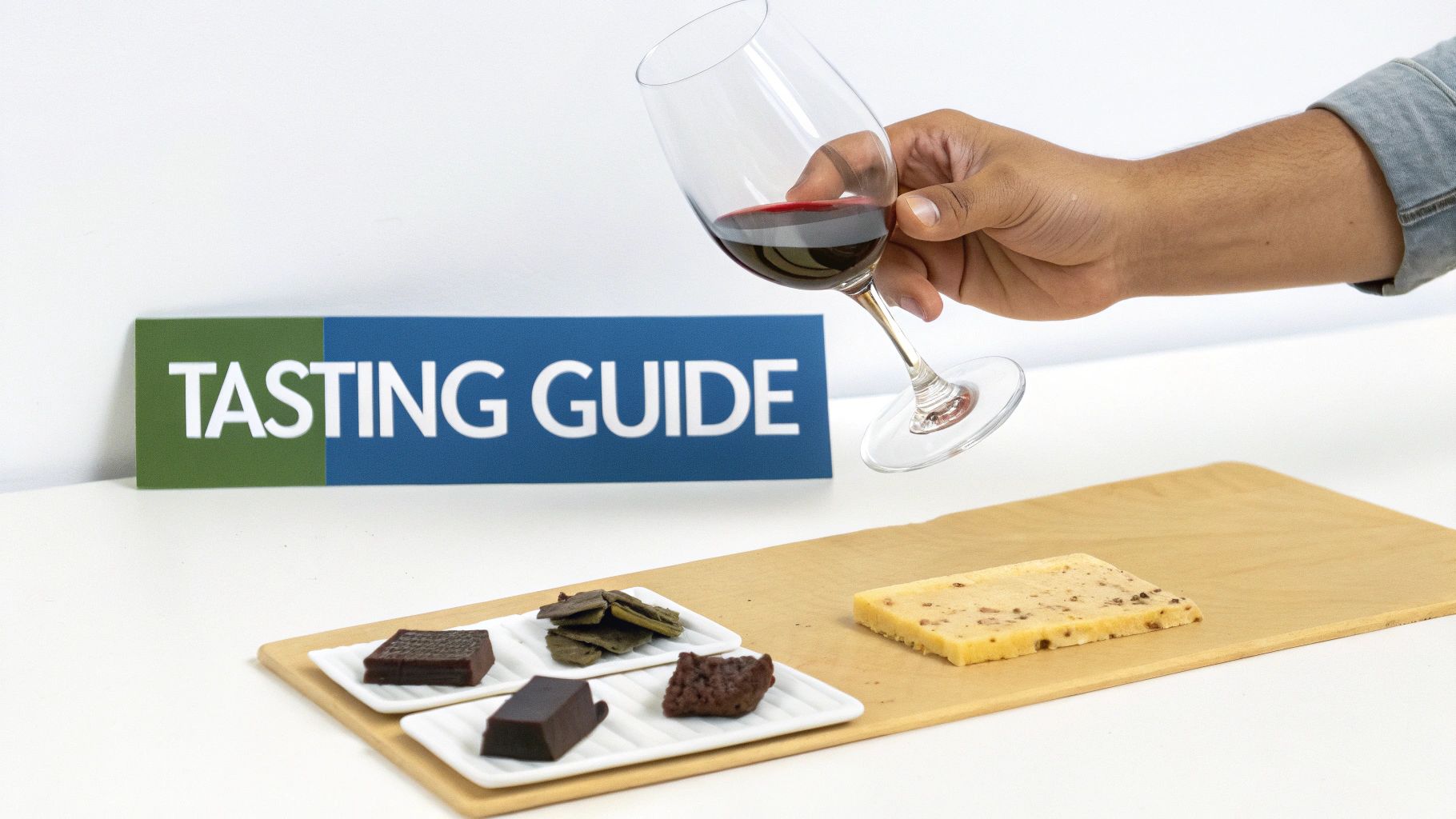
This is where the real fun begins. It’s the moment we transform a simple pour into a genuine experience, and trust me, you don’t need a “perfect” palate to do it. Tasting American single malt whiskey is all about curiosity. It’s about learning to tune into what you enjoy and picking up the story the spirit is trying to tell.
For anyone just getting started, the best way to approach a glass is with a simple, three-step framework: nose, palate, and finish. This method is less about rules and more about slowing down to notice the details. Before you even take a sip, just look at the whiskey. Its color alone can offer clues about its age and the kind of barrel it called home.
The Nose: Unlocking the Aroma
Believe it or not, your sense of smell is the most powerful tool you have for tasting whiskey. Go ahead and give the glass a gentle swirl, then bring it toward your nose with your mouth slightly open. Take short, light sniffs instead of one big inhale—this keeps you from getting overwhelmed by the alcohol vapor and lets the subtleties come through.
So, what do you smell? Don't stress about finding the "right" words. Just notice what comes to mind.
- Fruity notes: Do you pick up crisp green apple, dark cherry, or maybe a little citrus zest?
- Sweet aromas: Is there vanilla, warm caramel, honey, or something richer like marzipan?
- Earthy or woody scents: Can you find toasted oak, fresh pine, or even the smell of damp earth after a rain?
These aromas are breadcrumbs leading back to the whiskey's journey, from the specific strain of barley all the way to the cask it slumbered in.
The Palate: Savoring the Flavor
Now for the main event. Take a small sip and let it roll across your tongue, coating every part of your mouth. First, just think about the texture. Is it light and crisp, or is it rich, viscous, and oily? As you hold it, try to connect the flavors you're tasting to the aromas you just found on the nose.
This is where the incredible diversity of American single malt really gets to shine. A distillery right on the coast, like Westland in Seattle, might give you a whiskey with a subtle, salty brininess. On the other hand, a whiskey from a hot, dry climate could deliver much richer, oak-forward notes of caramel and baking spice.
Learning to taste properly is a skill that builds confidence. By breaking down the process, you start to trust your own senses and discover a personal vocabulary for what you enjoy, making every new bottle an adventure.
Developing this skill is far easier than you might think. To dive deeper, check out our complete guide on how to taste whiskey like an expert.
The Finish: The Lingering Story
Finally, swallow the whiskey and just pay attention. What flavors and sensations are left behind? That’s the finish.
Is it short, clean, and gone in a flash? Or does it linger with a warm, spicy glow that seems to last for minutes? Some whiskeys will leave you with a sweet, almost dessert-like note, while others might wrap up with a dry, oaky character. The finish is the final chapter of the whiskey's story, the last impression it leaves with you.
This incredible variety is exactly why American single malt is starting to pull ahead in market growth. Projections show it’s the fastest-growing player in the single malt world, and that’s because craft innovation and all this experimental barrel finishing are creating such a wide, exciting range of profiles. When you learn to trust your own palate, you unlock the key to this entire dynamic world.
How to Start Your Tasting Journey
Alright, you've got the backstory and the technical details down. Now for the fun part: putting that knowledge to the test and actually tasting the stuff. This isn't about memorizing flavor wheels or sounding like a pro overnight. It's about starting an adventure, armed with a little curiosity and an open mind. With just a few simple tips, you can dive headfirst into this world and start discovering what you truly enjoy.
Walking into a good bottle shop can feel like staring at a library with a thousand books but no titles on the spines. It's overwhelming. So where do you even start?
Instead of getting hung up on a specific bottle, think about a region first. American craft whiskey is deeply connected to its home turf. A distillery tucked away in the coastal Pacific Northwest might be pulling out brighter, more delicate notes, while one sweating it out in a hot, dry climate like Texas is often going to give you a much bolder, richer, and deeply oaky spirit.
Smart Ways to Explore
Let’s be honest, buying a full bottle right out of the gate is a big commitment, especially when you’re just trying to figure things out. Luckily, there are much smarter ways to explore the huge landscape of American single malt without draining your wallet. These are the tricks of the trade for broadening your palate.
-
Order a Tasting Flight: Any decent whiskey bar will offer flights—small pours of a few different whiskeys. It's the perfect low-cost, low-commitment way to put different styles side-by-side and quickly get a feel for what you like (and what you don't).
-
Join a Tasting Group: Keep an eye out for local whiskey clubs or tasting events. They’re a fantastic way to meet other enthusiasts, share the cost of bottles, and learn from the experiences of others in a laid-back setting.
-
Try a Curated Subscription: This might just be the best way to really train your palate. A service that specializes in discovery, like a blind tasting subscription, strips away all the noise. When you remove the fancy label, the price tag, and the age statement, you’re forced to let your taste buds do the talking. This is how you discover the actual flavors you enjoy, not just the ones you think you're supposed to.
Elevate the Experience with Food
You can also sharpen your palate by pairing your whiskey with simple foods that play well with its character. The goal here is to find a partner for the whiskey, not something that will overpower it.
Think of it like this: a rich, malty American single malt that’s full of dark fruit and spice notes is practically begging for a piece of high-quality dark chocolate. The bitterness in the chocolate creates this incredible balance with the whiskey's inherent sweetness. On the flip side, a creamy, mild cheese like a brie or a nutty cheddar can slice right through the spirit's intensity, unlocking more subtle flavors hiding underneath.
The best advice for anyone new to whiskey? Just start. Stop worrying about getting it “right.” Every single sip is another data point on your personal flavor map, guiding you toward your next favorite bottle and building your confidence one pour at a time.
Common American Single Malt Questions
As you start exploring the world of American single malt, a few questions tend to bubble up. Getting these sorted out will give you a much stronger footing for your tasting journey and let you navigate this exciting whiskey category like a pro.
Is American Single Malt a Type of Bourbon?
Nope, they're two completely different animals. The fundamental difference lies in the grain bill, the recipe of grains used to make the whiskey.
American single malt is always made from 100% malted barley. Bourbon, on the other hand, is America’s native spirit and must be made from at least 51% corn, which is what gives it that classic sweeter profile with notes of vanilla and caramel.
Does Single Malt Mean It Comes From One Barrel?
This is probably one of the biggest mix-ups in the whiskey world. It's a fair question, but the "single" in single malt actually refers to a single distillery.
Most of the single malts you'll find on the shelf are actually a blend of whiskeys from many, many different barrels all from that one distillery. A master blender does this to create a consistent, balanced flavor profile year after year. If a whiskey comes from just one cask, it will be clearly labeled as a "single barrel" or "single cask".
What Is the Best Way to Drink It?
Honestly? The best way is whatever way you enjoy it most. But if you’re trying to really understand what’s in your glass, especially with a craft whiskey from a place like Westland or Koval, start by sipping it neat. This gives you the purest expression of the spirit.
After a few sips, try adding just a few drops of water. You might be shocked at how it opens up the whiskey, unlocking new aromas and flavors. If you prefer it on the rocks, go for a single, large ice cube to cool it down with minimal dilution.
The rise of American single malt is tied directly to the craft spirits movement. Distillers are getting creative, using local grains and unique aging methods to pull out flavors you just won't find anywhere else. It’s this spirit of innovation that’s drawing in both seasoned whiskey drinkers and curious newcomers.
Ready to put your palate to the test and discover your next favorite craft whiskey without bias? At Blind Barrels, we remove the noise so you can focus purely on flavor. Explore top-shelf American craft distilleries through our curated blind tasting kits. Start your adventure at https://www.blindbarrels.com.