

If you’re just getting into whiskey, the idea of adding water to a glass of top-shelf bourbon might feel like sacrilege. After all, you paid good money for a complex, masterfully crafted spirit—why on earth would you dilute it?
Here’s a little secret that seasoned drinkers and master distillers live by: a little water doesn't weaken bourbon; it awakens it.
Why a Little Water Makes Bourbon Better
Think of a cask-strength bourbon as a tightly-wound ball of flavor. It’s all in there, but the high alcohol content can act like a gatekeeper, holding back the more delicate notes. That alcoholic “burn” can often overwhelm your taste buds, making it tough to notice anything else going on.
Adding a few drops of water for bourbon isn't about watering it down. It’s a common practice that can completely transform the tasting experience by softening the alcohol's punch and letting the subtler, more interesting flavors step forward.
Unlocking a Hidden World of Flavor
This is where the magic happens. When you add a bit of water, you’re kicking off a fascinating chemical reaction right in your glass. The water gently lowers the alcohol by volume (ABV), dialing back that sharp bite and giving other flavor compounds the space to shine. Suddenly, that overpowering heat takes a backseat, and a whole new world of aroma and taste opens up.
For many new drinkers, the initial intensity of a high-proof bourbon can be a barrier. Water is the key that unlocks the door, making the spirit more approachable and enjoyable from the very first sip.
This trick is especially useful when you're exploring the exciting world of American craft whiskey. Many small-batch distilleries are bottling complex, high-proof bourbons, and a little dilution is the best way to appreciate the full spectrum of their work.
A Tip for New Bourbon Drinkers
If you're just starting your bourbon journey, this is one of the best ways to train your palate. It helps you get past that initial alcoholic punch and start picking out the specific notes that make a whiskey truly great.
- Discover Subtle Aromas: You might suddenly notice hints of dried fruit, toasted oak, or sweet vanilla that were completely hidden before.
- Experience a Richer Taste: Flavors like caramel, dark chocolate, and baking spice can become much more distinct and easier to identify.
- Appreciate the Craft: It's the perfect way to explore bourbons from innovative producers like Stellum Spirits or High West, whose spirits are often bottled at higher proofs to showcase their unfiltered character. A craft brand like Still Austin in Texas, for example, often has a cask strength version of their whiskey that truly comes alive with a few drops of water.
By simply adding a few drops of water, you’re not just drinking bourbon—you’re actively engaging with it. You're turning a simple pour into a sensory exploration. It’s an easy, immediate way to elevate your tasting and discover just how deep and rewarding a great American whiskey can be.
The Simple Science of Unlocking Flavor
Ever wonder what’s actually happening in your glass when you add a splash of water? It's not just about watering it down; you're kicking off a fascinating chemical reaction that completely changes how you experience your bourbon.
Think of a high-proof whiskey like a tightly-packed bouquet of flowers. All the beautiful scents are there, but they're so compressed it’s tough to pick out any single one. Adding a little water for bourbon gently coaxes those aromatic molecules apart, letting individual notes escape and reach your nose. This simple move fundamentally alters the spirit's structure, making it far more expressive.
This quick concept map shows the simple flow from high-proof bourbon to a more open and flavorful spirit.
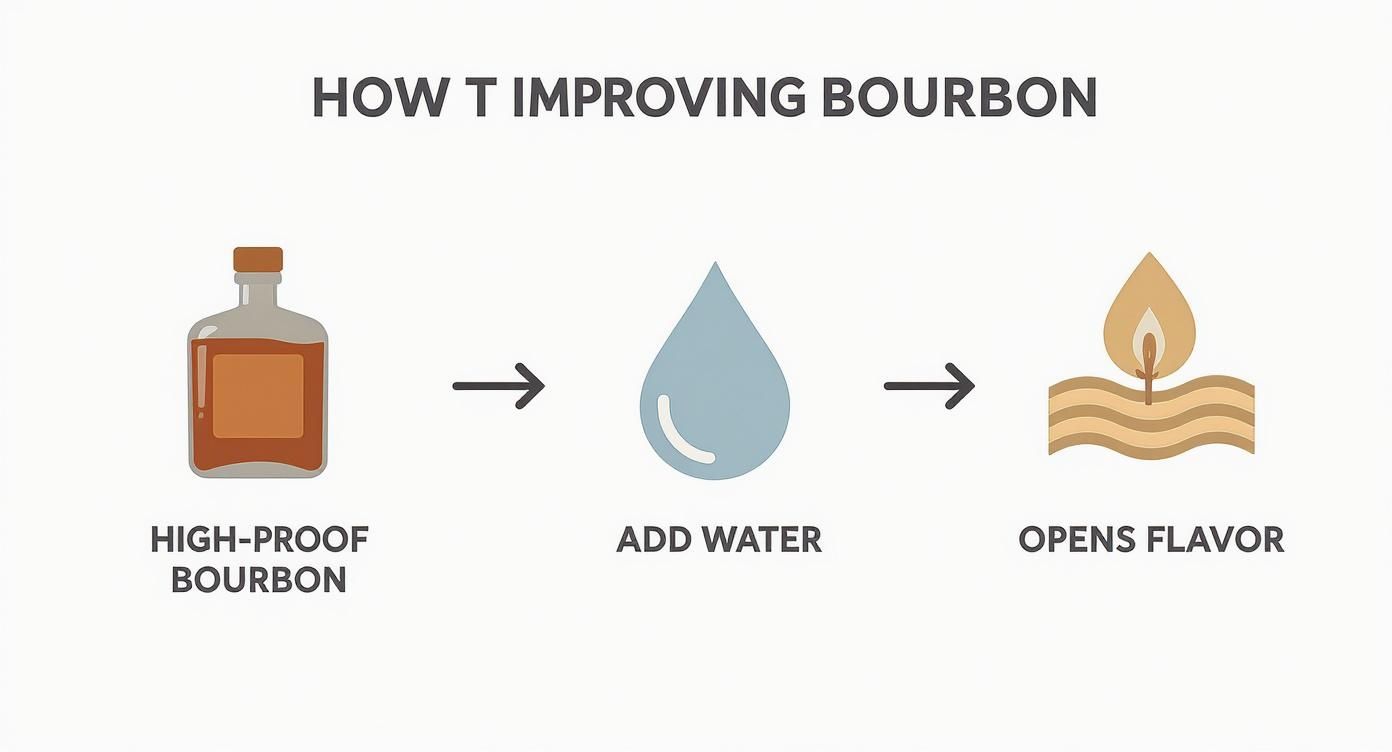
As you can see, the process is straightforward: a little water can unlock the complex flavors that a high alcohol content might otherwise hide.
How Water Tames the Burn
At its core, bourbon is a mix of water, ethanol, and a whole universe of flavor compounds. In a high-proof bottle, the ethanol molecules tend to cluster around these flavor compounds, effectively trapping them. This is exactly why your first sip of a cask-strength bourbon can feel overwhelmingly hot on the palate.
When you introduce water, you break up those ethanol clusters. Suddenly, the ethanol is more interested in the new water molecules, which causes it to loosen its grip on the flavor compounds.
By softening the alcohol's powerful hold, you allow the bourbon's true character to emerge. Your palate can then focus on the rich notes of caramel, oak, and spice instead of just bracing against the heat.
This is especially true for tasting the nuanced profiles found in many American craft whiskies, where distillers often bottle at higher proofs to preserve the spirit's full integrity.
Bringing Key Aromas to the Surface
And this isn't just a matter of perception—there's real science at play. One of the key flavor compounds in many bourbons is guaiacol, which delivers those wonderful smoky, spicy, and earthy notes. As it turns out, this compound is more attracted to ethanol than to water.
When you add water to your glass, the guaiacol molecules actually rise to the surface to stay closer to the remaining ethanol. This migration brings those specific aromas right to your nose, making the bourbon seem much more fragrant and complex. Other compounds called esters, which are responsible for fruity and floral notes, are also set free.
- Before Water: Flavorful esters are "trapped" by ethanol, and the aroma is often dominated by the sharp scent of alcohol.
- After Water: Guaiacol rises to the surface, esters are freed, and the overall aroma becomes richer and more layered.
This is precisely why a bourbon can smell so different after just a few drops. You're not just diluting it; you're rearranging its chemical makeup to your advantage. This fascinating interaction is part of what makes the spirit so captivating, beginning with the alchemical dance of water and yeast during fermentation and continuing right into your glass. Understanding this simple science helps transform every pour into a deeper exploration.
Choosing the Right Water for Your Whiskey
Just like a chef wouldn't dream of using subpar ingredients, you shouldn't just grab any old tap water to pair with your bourbon. Not all water is created equal. The wrong kind can introduce a host of unwanted flavors and completely derail an otherwise great pour.
The goal is to find a water that complements the whiskey, not one that competes with it.
Think about it: bourbon distillers are absolutely obsessive about their water sources, and for good reason. Many of the most iconic distilleries are built right on top of natural limestone springs. This water is the gold standard—it's naturally filtered, free of iron, and has just the right amount of minerals like calcium and magnesium to make fantastic whiskey.
When you use a similar type of water in your tasting glass, you're essentially honoring the spirit's origins and maintaining its intended character.
The Best and Worst Water for Bourbon
So, what should you have on hand? The best options are always clean, neutral, and free of any strong mineral notes that could hijack your bourbon's profile.
- Limestone-Filtered or Soft Spring Water: This is your top choice, hands down. It often mimics the exact water distillers use, so you know it won't add any off-flavors. Brands like Fiji or Kentucky’s own Old Limestone are excellent picks.
- Filtered Water: A quality pitcher or faucet filter provides a great, accessible option. It does a solid job of removing chlorine and other impurities that can definitely interfere with a bourbon's true taste.
On the flip side, some common water types can do more harm than good. Since mineral content has such a huge impact on flavor, understanding what hard water is can be a real eye-opener for any serious enthusiast.
Avoid hard tap water at all costs. The high mineral content, especially chlorine and iron, can clash with the bourbon, creating a funky metallic taste or even making your whiskey cloudy.
You might think distilled water is a good move since it's so pure, but its total lack of minerals can strip away some of the bourbon's vibrant character, leaving it tasting surprisingly flat.
Following the Distiller's Lead
The importance of water is woven directly into the DNA of American craft whiskey. Take Garrison Brothers Distillery in Texas, for example. They pull their water from a local aquifer, and its unique mineral profile is a key ingredient in their bourbon's bold, unmistakable flavor.
This practice is deeply rooted in bourbon's history, especially in its Kentucky heartland. The industry's geography is no accident; distilleries were strategically built near these ideal water sources. Maker's Mark uses water from its on-site, spring-fed lake. Buffalo Trace draws from the Kentucky River. Both are naturally filtered through the limestone bedrock that is absolutely essential to their whiskies' famous flavor profiles.
By choosing your water carefully, you're doing more than just tasting—you're continuing the craft the distiller started.
How to Add Water to Bourbon: A Step-by-Step Guide
Alright, you're ready to unlock some hidden flavors in that bottle of bourbon. This is where the fun really begins. We're going to walk you through the simple process of experimenting with a little water. Don't worry, you don't need a full-blown lab setup—just a few basic items and an open mind.
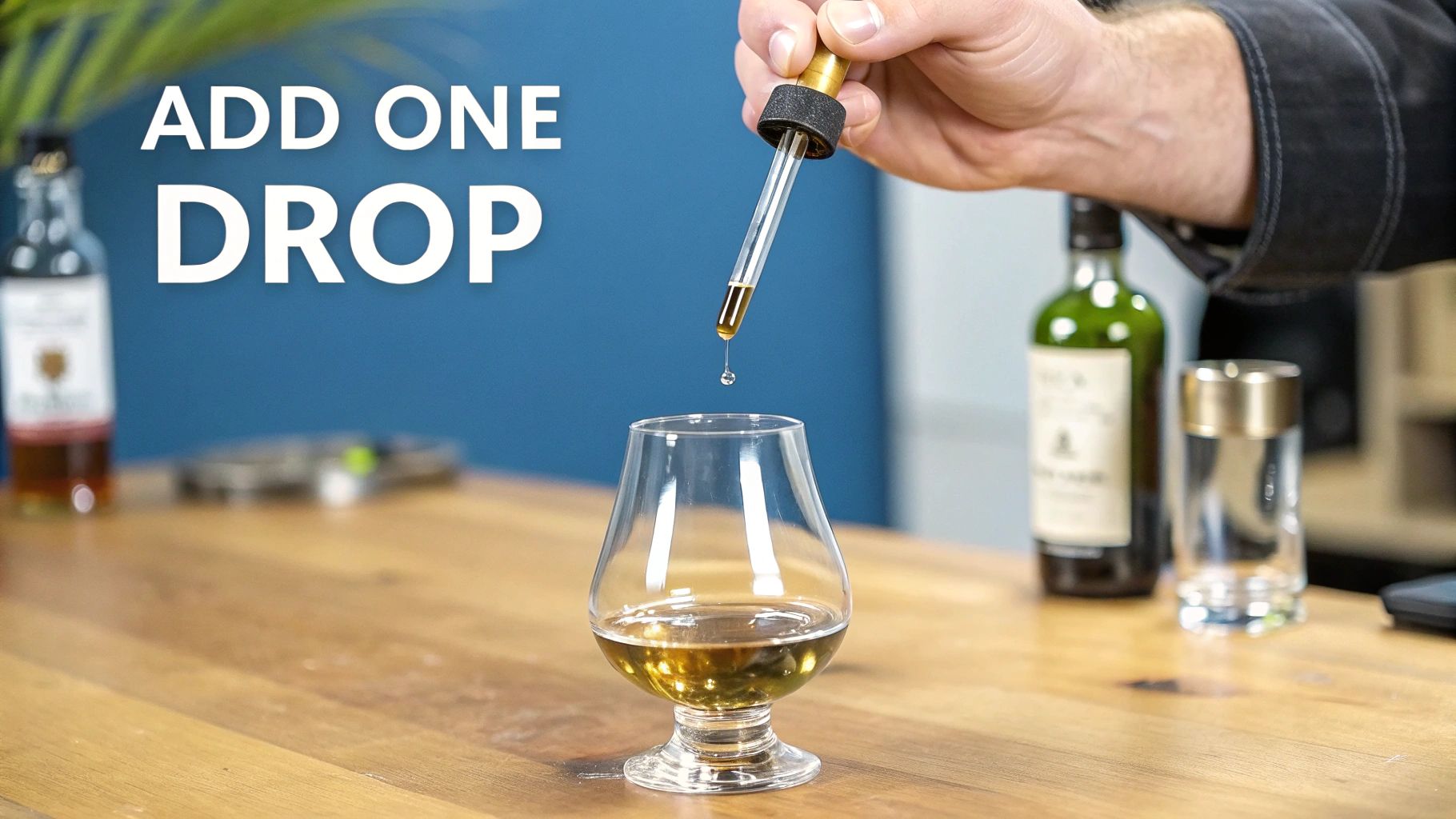
The best part? There are no wrong answers here. This is all about discovering what you enjoy. The goal is simply to train your palate and find that perfect sweet spot for each specific whiskey you taste.
Gather Your Tasting Tools
Before you start pouring, let's get your gear in order. Having the right setup makes the whole experience smoother and a lot more insightful.
- A Proper Glass: A Glencairn glass is the gold standard for a reason—its tulip shape is specifically designed to concentrate aromas right where you want them. No Glencairn? No problem. A simple rocks glass or even a wine glass will do the trick.
- Your Bourbon of Choice: It’s a good idea to start with a bourbon you know well. Alternatively, this is the perfect time to grab that higher-proof bottle from a craft producer like Kings County Distillery you've been meaning to really dig into.
- Quality Water: Like we talked about, you'll want to use soft spring water or filtered water, and make sure it’s at room temperature.
- A Dropper or Straw: Control is everything. An eyedropper, pipette, or even just a regular drinking straw gives you the precision to add water one drop at a time.
If you're new to this, we can't recommend enough that you start with a higher-proof or cask-strength bourbon. These spirits, often bottled at over 110 proof, are packed with concentrated flavor and will show you the most dramatic—and educational—changes when a little water is introduced.
The Four-Step Tasting Protocol
Following a methodical approach helps you appreciate the bourbon at each stage. You'll be able to pinpoint exactly how a single drop of water for bourbon can completely shift its profile. Take your time with these steps.
-
Pour and Assess Neat: Pour a standard 1.5-ounce serving into your glass. Before you do anything else, give it a proper evaluation "neat." Swirl it gently, nose it to catch those initial aromas, and then take a small sip. Make a mental note of the alcohol heat, the mouthfeel, and the flavors that jump out at you first.
-
Add a Single Drop: Using your dropper or straw, add just one single drop of water. I know it doesn't sound like much, but trust me, you'll be surprised at the difference it can make.
-
Swirl and Re-Nose: Gently swirl the glass again to mix in that tiny drop of water. Now, bring it back to your nose. What's changed? Often, that sharp ethanol edge softens, allowing other notes like fruit, vanilla, or spice to step into the spotlight.
-
Taste Again and Repeat: Take another sip. Pay close attention to how the flavor and mouthfeel have evolved. The burn might be dialed back, and new tastes you didn't get before might suddenly appear. If you're curious, add another single drop and repeat the whole process—swirl, nose, and taste.
The most important rule is to go slow. You can always add more water, but you can never take it away. Adding one drop at a time gives you complete control and allows you to find that perfect "sweet spot" where the bourbon is most expressive.
This simple ritual transforms drinking into an active tasting experience. It’s a fantastic way for anyone, from a curious newcomer to a seasoned enthusiast, to deepen their appreciation for the incredible complexity hiding inside every bottle of American craft whiskey.
Finding Your Personal Sweet Spot
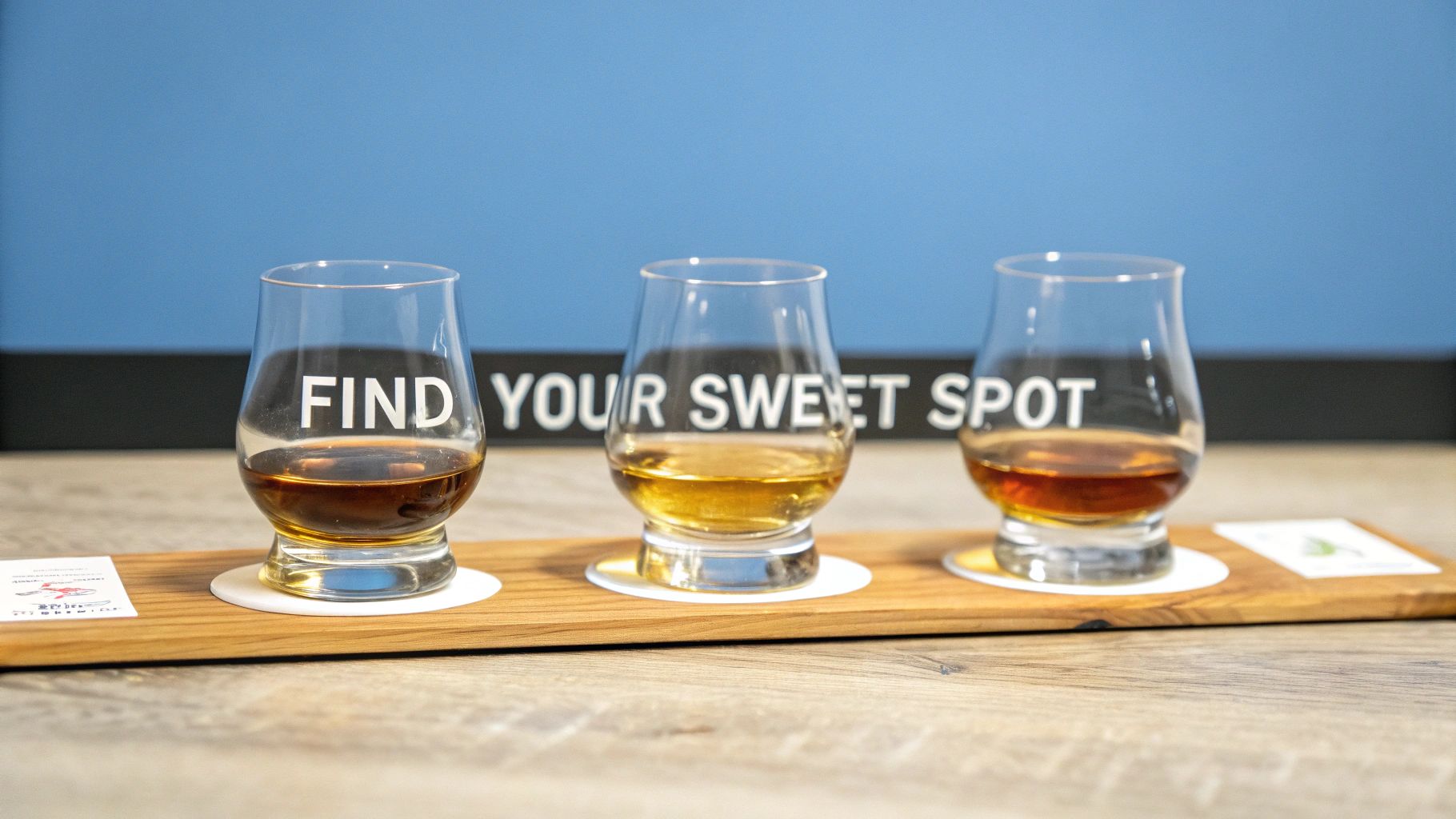
There’s no magic formula for the perfect ratio of water for bourbon. Forget the charts and the rulebooks. The ideal amount is something you discover yourself, guided by your own palate and the specific whiskey in your glass. The whole point is to find that personal sweet spot where the flavors really sing and the alcohol burn fades into the background.
Think of it like tuning a guitar. Too much water, and the flavors go flat and thin. Too little, and the heat from the alcohol can completely overwhelm the spirit’s more delicate notes. But just the right amount? That’s when everything comes together in perfect harmony.
Guidelines Based on Proof
While your taste is always the final judge, a bourbon's proof gives you a fantastic starting point. It’s pretty simple: the higher the alcohol content, the more water it can usually take before its character starts to wash out.
A standard, easy-sipping 90-proof bourbon might only need a few drops to gently open up its aromas. But a big, bold, cask-strength pour from a craft distillery clocking in over 115 proof has a much stronger backbone. It can easily handle a small spoonful of water without even breaking a sweat.
Your goal is to find the exact point where the bourbon is at its most vibrant—not just watered down. It’s that moment of peak expression where the nose is rich, the flavors are crystal clear, and the finish is beautifully smooth.
A Simple Tasting Exercise for New Drinkers
If you’re just getting into bourbon, one of the best ways to train your palate is with a dead-simple side-by-side comparison. This little exercise cuts out all the guesswork and gives you immediate, tangible feedback on how a little water can transform a whiskey’s profile.
Tasting different dilutions together is the fastest way to figure out what you like. Honestly, this hands-on approach is one of the most effective ways to learn how to taste whiskey like an expert and build some real confidence.
- Pour Three Samples: Grab three tasting glasses and pour a small, equal measure of the same bourbon into each one.
- Create a Control: Leave the first glass completely neat. This is your baseline, your starting point for comparison.
- Add a Little Water: To the second glass, add just two or three drops of water.
- Add a Little More: In the third glass, go a bit further—about a quarter teaspoon should do it.
- Compare and Contrast: Now for the fun part. Taste the samples in order, starting with the neat pour and moving to the most diluted. Really pay attention to the differences in aroma, flavor intensity, and how it feels in your mouth.
This simple, repeatable exercise is the key. It’s how you’ll unlock your personal sweet spot and start to truly understand what you enjoy most in a glass of bourbon.
Water's Role from the Distillery to Your Glass
When you add a few drops of water to your bourbon, you're not just diluting it—you're stepping into the final phase of a process that began long before the bottle ever hit the shelf. Water isn't just an ingredient; it's arguably the most critical component shaping the spirit from its very first moments.
Think about Kentucky. Distillers there swear by the state's naturally iron-free, limestone-filtered water. It’s the secret sauce during fermentation, helping to create the clean, distinct flavor profile that we all recognize as classic bourbon. This is the first and most fundamental use of water for bourbon, and it sets the stage for everything that comes after.
Continuing the Distiller's Craft
After the spirit comes off the still, it’s a fiery, high-proof liquid—far too intense to be drinkable. So, what does the distiller do? They add water to "proof it down" before it even enters the barrel for years of aging. And they do it again, right before bottling, to hit that perfect final proof.
When you add a drop of water to your glass, you are simply making the final, personalized adjustment in a long chain of dilutions. You’re not ruining the whiskey; you're finishing the distiller's work.
Seeing it this way adds a whole new layer of appreciation to the ritual. It connects your glass to the distillery floor. You can dive deeper into how water is truly the elixir of life in whiskey making in our detailed guide.
This precious resource is also a huge focus for sustainability within the industry. Water consumption is a serious challenge, but Kentucky's distillers are making real strides, collectively cutting their water use ratios by over 41% between 2013 and 2017.
Take Heaven Hill Brands, for example. They upgraded their systems and now save a staggering 330,000 gallons of water every single day. It’s a powerful testament to the industry's commitment to protecting the very resource that makes their spirit possible. You can read more about these formalizing sustainability efforts in the Kentucky bourbon industry and see how distillers are stepping up.
Answering Your Questions About Adding Water to Bourbon
As you get deeper into the world of bourbon, you’re bound to have a few questions. It's a natural part of the journey. Let's tackle some of the most common curiosities people have about adding a little water to their whiskey.
Should I Add Water to Every Bourbon I Drink?
Not at all. Think of it as a tool, not a requirement. You'll find the magic really happens with higher-proof bourbons—anything over 100 proof, and especially cask-strength expressions. At that intensity, the alcohol can be a bit loud, shouting over the more subtle flavors. A little water can quiet it down.
For your standard, lower-proof bourbons, the distiller has often already balanced them perfectly for sipping. My advice for newcomers? Always taste it neat first. Trust your own palate to tell you if it needs anything at all.
Is Adding Ice Just as Good?
While both involve water, they have totally different effects. Ice is primarily for chilling, but that cold temperature can actually numb your taste buds and mute the very aromas you’re trying to coax out. On the other hand, a few drops of room-temperature water for bourbon can "open up" the spirit without that dulling effect.
If you absolutely prefer your drink chilled, go for a single, large ice cube. It melts much slower, minimizing the dilution and temperature shock.
How do you know if you've gone too far? The bourbon will tell you. It will suddenly taste thin, watery, or flat. That rich, oily mouthfeel will vanish, and the complex flavors will become faint whispers. This is exactly why adding water drop by drop is the only way to go.
It's also worth noting that distillers are obsessed with water in another way: sustainability. Water is the lifeblood of their craft, and many are pioneering incredible systems to conserve it. Take Marble Distilling, for instance. They installed a system that saves over 4 million gallons of water every single year. You can find more fascinating facts like this in a great overview of bourbon industry sustainability on zipdo.co.
Ready to put your palate to the ultimate test? With Blind Barrels, you get to explore incredible American craft whiskies without any preconceived notions getting in the way. It's the best way to discover your next favorite bourbon, focusing purely on what's in the glass. Start your own blind tasting adventure at https://www.blindbarrels.com.