

You're standing at a whiskey shelf, comparing a bottle marked 90 proof with another that advertises a much higher number. The instinct is understandable: higher proof looks more serious, more concentrated, perhaps even more valuable. Yet once you pour the whiskey, the bottle with the bigger number may overwhelm your nose and palate before you can identify what the distillery made.
90 proof bourbon offers a useful alternative. It carries enough alcohol to present grain, fruit, vanilla, and oak clearly, while keeping the heat manageable for a thoughtful sip. For beginners, craft whiskey fans, and anyone planning a blind tasting, it can function as a reliable tasting lens rather than a compromise.
Decoding the 90 Proof Bourbon Standard
Start with the label math. In the United States, proof equals exactly twice alcohol by volume, or ABV. Therefore, 90 proof bourbon contains 45% ABV, a conversion explained in this guide to whiskey proof.
That number places the bottle above bourbon's federal minimum of 80 proof, or 40% ABV, while leaving it well below higher-strength bottlings. The difference matters because alcohol changes how a whiskey reaches your senses. A lower-strength pour can feel softer, while a stronger one usually delivers more heat and intensity.
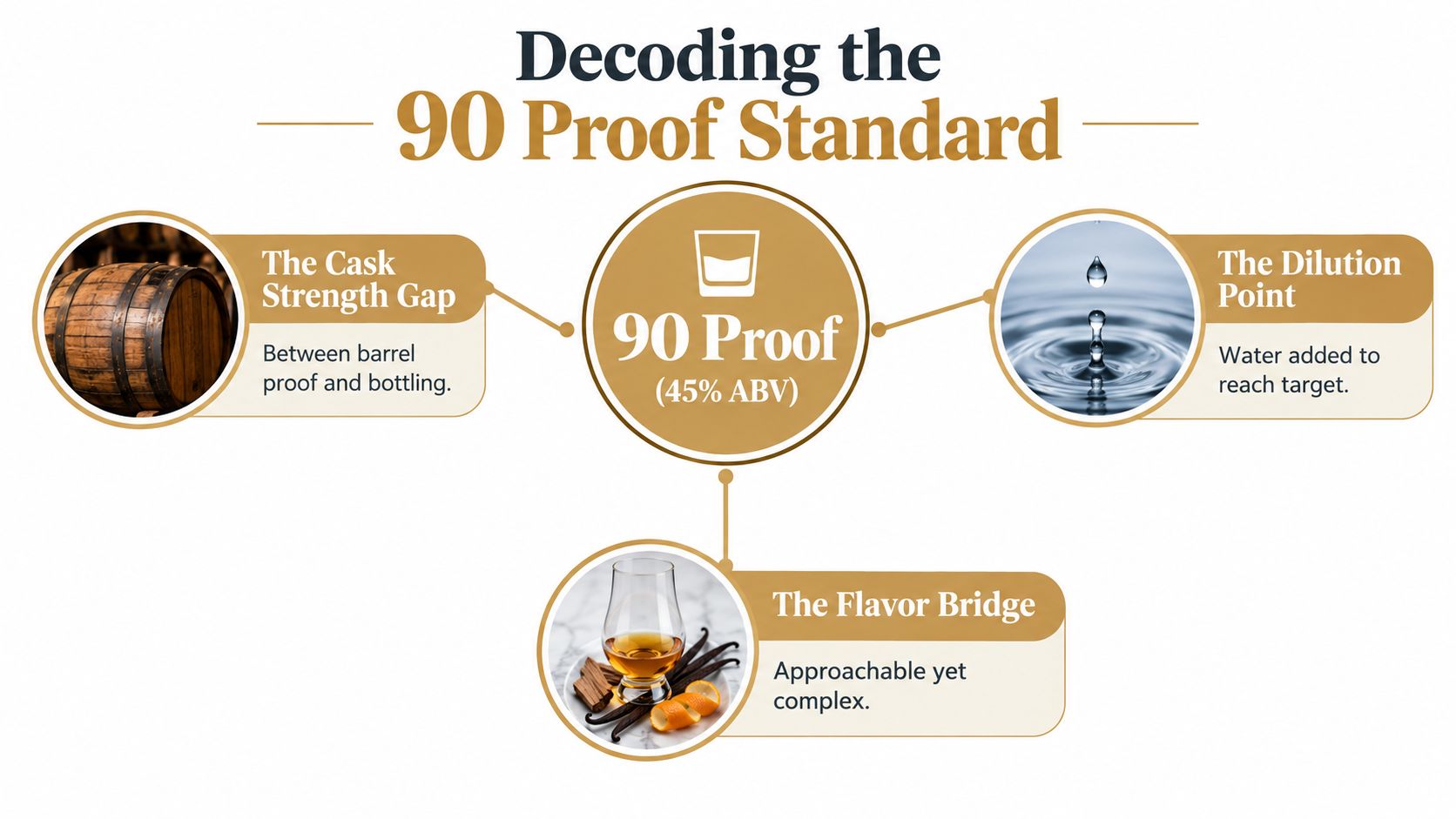
The legal boundaries
Bourbon production has proof limits before the bottle reaches the shelf. Federal rules set the maximum distillation strength at 160 proof, or 80% ABV, and the maximum barrel-entry strength at 125 proof. Those figures describe production stages, not the finished bottle, but they help explain why 90 proof sits in a moderate position.
Think of the process as a range:
- Distillation: The spirit can't exceed 160 proof.
- Barrel entry: The new whiskey enters the barrel at no more than 125 proof.
- Bottling: Bourbon must reach at least 80 proof.
- Finished expression: A 90-proof bottle lands between the legal minimum and stronger styles.
A distillery may reduce whiskey with water before bottling to reach its intended strength. That doesn't make the result inferior. It gives the producer control over texture, heat, aroma, and consistency.
Why the benchmark works
Higher proof isn't automatically higher quality. Proof is a production fact and a sensory variable, not a score. A well-balanced 90-proof bourbon can reveal more of its mash bill to a new drinker than an aggressive high-proof pour.
That makes the label easier to interpret. When you pick up a 90-proof bottle, you're choosing a strength that balances flavor concentration and drinkability, not accepting a diluted version of something better. For a deeper explanation of the label language, see what proof means in whiskey.
How Proof Shapes Aroma Taste and Finish
Alcohol does more than create warmth. It helps carry aromatic compounds from the liquid toward your nose, which is why proof can change the way bourbon smells before it changes what you taste.
At 45% ABV, a 90-proof pour has enough ethanol to lift esters, vanillin, and oak-derived aromas from the glass. Esters can contribute fruit-like impressions, vanillin can support vanilla and sweet wood notes, and barrel-derived compounds can add toasted, spicy, or woody character. You don't need to identify each compound scientifically. You only need to notice whether the whiskey smells lively, sweet, woody, fruity, or spicy.
Higher bottling proof generally brings more volatile aromatics and a sharper palate impact. Lower proof can soften heat, but it may also make sweetness and oak integration seem quieter. Industry tasting guidance commonly places 80–90 proof in a session-friendly zone and 90–100 proof in a balanced standard-sipper range, as described in Distiller's bourbon rules guide.
What happens in the glass
Pour a small amount and let it settle briefly. Bring the glass toward your nose without pushing your face directly into it. At 90 proof, you may find it easier to separate the first impression from the alcohol itself.
Look for layers:
- Grain character: Corn can suggest sweetness, while other grains may add spice, softness, or toast.
- Barrel character: Oak can appear as vanilla, baking spice, toast, or dry wood.
- Fruit and confection: Esters may remind you of apple, dried fruit, caramel, or ripe banana.
- Alcohol texture: The pour may feel warming without dominating the entire sip.
The goal isn't to prove that one proof is superior. The goal is to keep ethanol from becoming the only flavor you can describe. A higher-proof bourbon can be expressive, but its intensity may require more acclimation. At 90 proof, many drinkers can spend more attention on the whiskey's structure.
Practical rule: If the first sensation is heat, wait before judging the flavor. A second small sip often gives your palate a clearer reference point.
Why the finish matters
The finish is what remains after you swallow or spit the sip. A 90-proof bourbon may leave a moderate warmth, a trace of oak, lingering sweetness, or a gentle spice note. Those details help you understand whether the bourbon feels balanced.
A short finish isn't automatically a flaw, and a long finish isn't automatically proof of quality. Ask whether the ending matches the opening. Does sweetness fade into dry oak? Does spice remain clean? Does the alcohol disappear quickly, or does it dominate the final impression?
That relationship between aroma, taste, and finish is why 90 proof works well as a comparison point. It provides enough structure to show differences between mash bills and barrels without making every sample feel like a test of endurance.
The Craft Whiskey Approach to 90 Proof
Small distilleries don't all use the same grains, stills, maturation conditions, or finishing methods. A 90-proof bottling gives those choices room to speak.
Consider the examples available from American craft producers. Rieger Straight Bourbon is listed at 90 proof, or 45% ABV, while Boot Hill Distillery lists a 90-proof bourbon, and Coppercraft Distillery markets a 90-proof American craft spirit. These examples, documented through Rieger's bourbon selection, show that the strength belongs to the craft segment as well as large national brands.
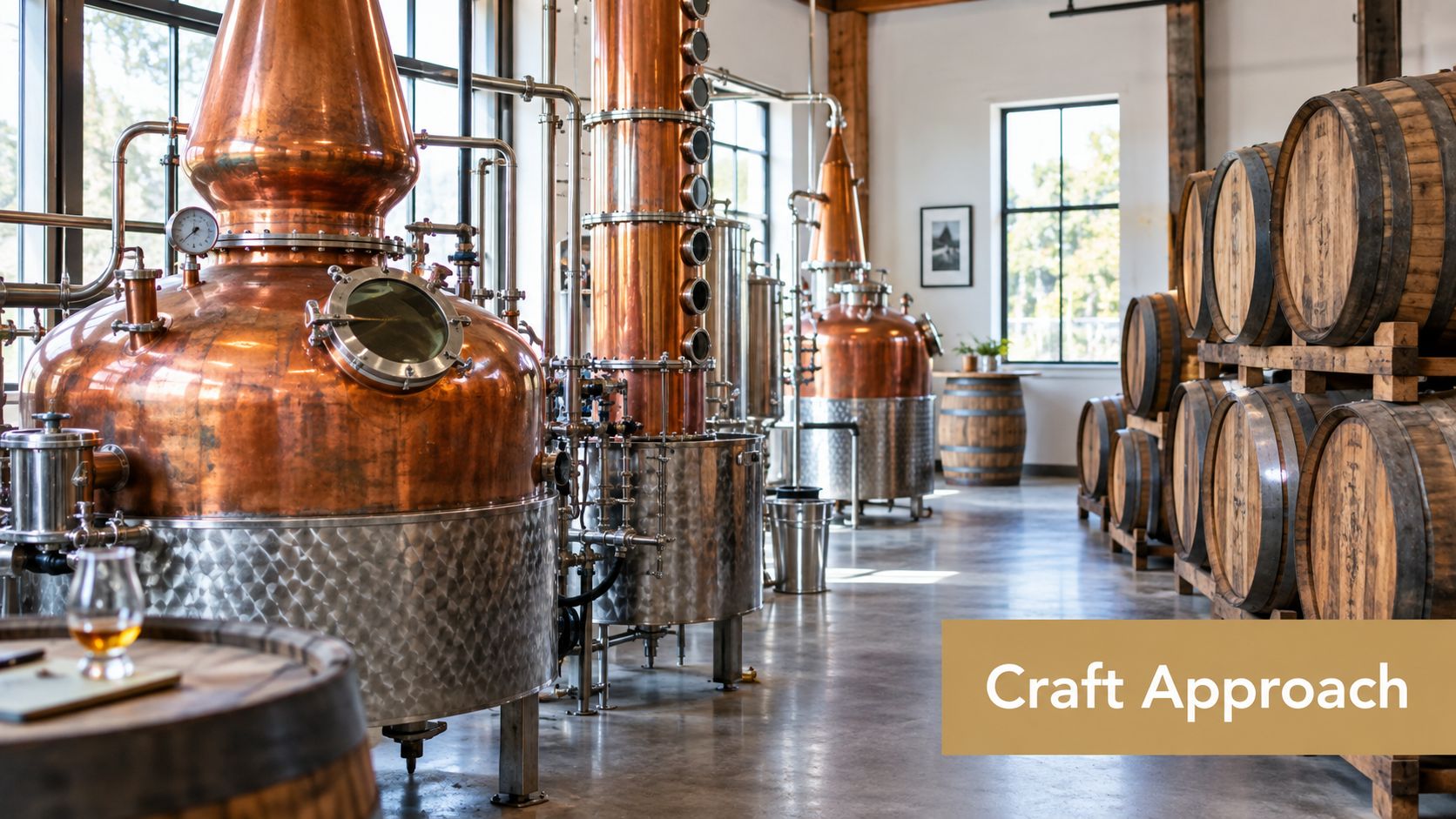
A clearer canvas for character
A craft distiller may want a wheated bourbon to show its soft sweetness, or a specialty barrel finish to contribute fruit, toast, or spice without a wall of alcohol heat covering the details. Bottling at 90 proof can make that expression easier to approach neat and easier to share with guests who don't routinely drink whiskey.
The same logic applies to mash bills. If one recipe leans softer and another brings more grain spice, moderate proof can help you compare them without turning the tasting into a contest of burn tolerance. You can focus on texture, sweetness, oak, and the way the finish develops.
For readers who want to understand the production side in more detail, this introduction to craft whiskey provides useful context before you start comparing bottles.
Proof as a deliberate choice
A distillery also has practical reasons to choose 90 proof. The strength can support consistency across a flagship expression, make the bottle approachable for a wider range of drinkers, and preserve enough flavor for cocktails. Those goals don't diminish the whiskey's identity. They clarify it.
Whiskey character can also appear outside the glass. If you enjoy the connection between oak, roast, and aroma, bourbon barrel coffee by Loyaltie offers a way to explore barrel influence through coffee rather than another pour.
A 90-proof craft bourbon can therefore act as a tasting lens. It lets you ask what the distiller's grain bill, fermentation choices, still work, and barrel program contribute, rather than allowing strength alone to dominate the conversation.
A Beginner Blueprint for Tasting Bourbon
A serious tasting doesn't require a collector's vocabulary. It requires patience, a small pour, and a willingness to describe what you notice without worrying about whether your answer sounds refined.
Beginner guides commonly recommend starting with bourbon in the 80–90 proof range and leaving barrel-proof, barrel-strength, and cask-strength bottles for later. One practical method uses three small sips: the first adjusts your palate, the second reveals the core flavor, and the third brings out the finish and nuance, as explained in this beginner bourbon tasting guide.
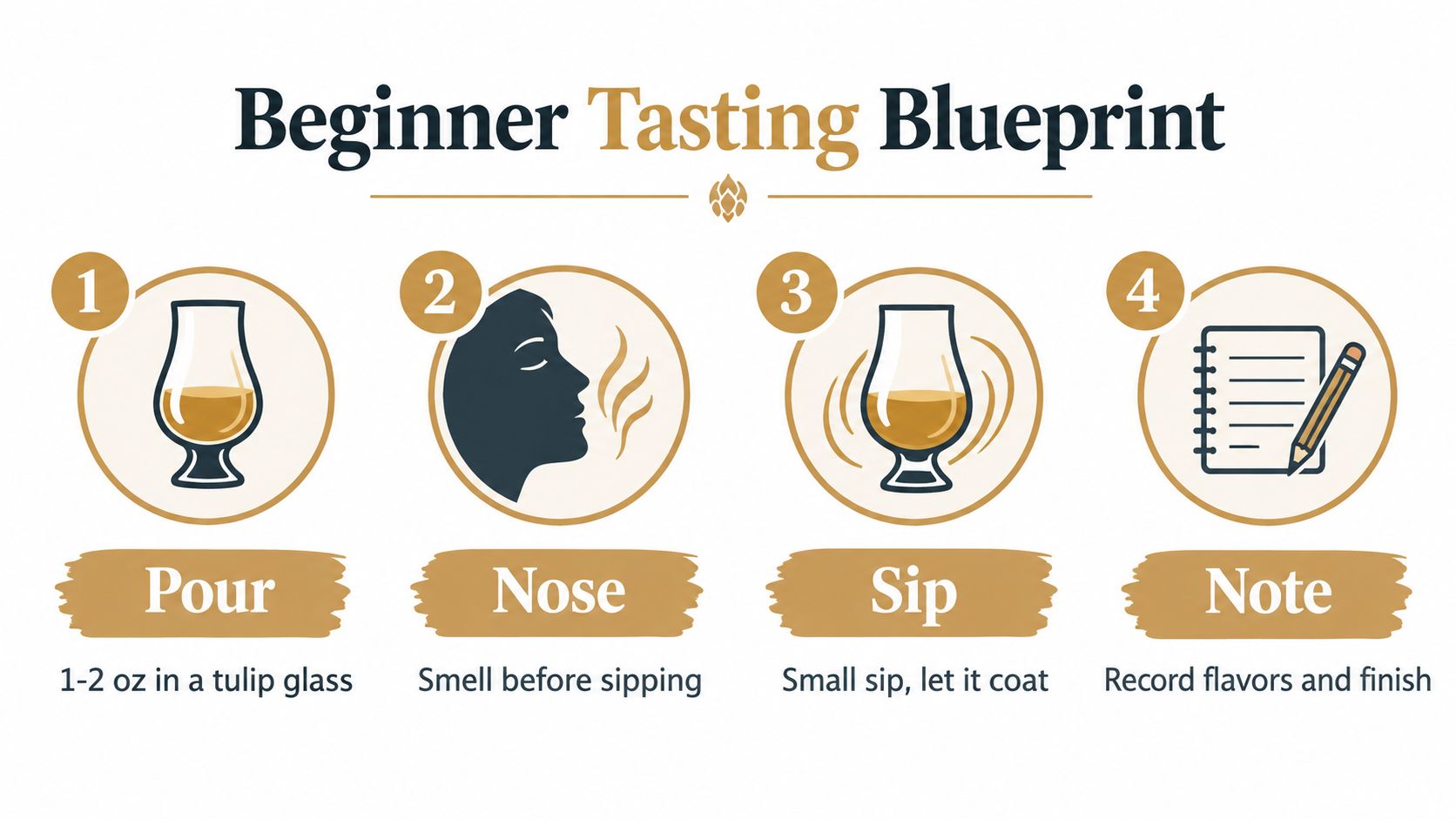
Pour and nose
Use a whiskey glass that narrows slightly toward the top if you have one. Pour a modest serving rather than filling the glass, then look at the color and viscosity before smelling it.
Move the glass slowly. Smell from a short distance first, then bring it closer. Search for familiar references such as vanilla, toasted grain, fruit, caramel, cinnamon, or fresh wood. You aren't trying to name every aroma. You're building a record of the impressions that arrive first.
Use the three-sip method
The first sip may feel more alcoholic than expected, even at 90 proof. Let it move across your tongue, then swallow slowly.
The second sip should give you more usable information. Ask whether the bourbon feels sweet, dry, oily, spicy, light, or dense. On the third sip, pay attention to the finish. Does the flavor vanish quickly, or does oak, fruit, spice, or warmth remain?
A simple notebook can turn vague impressions into patterns:
- Aroma: Write the first two or three scents you notice.
- Texture: Record whether the whiskey feels light, creamy, oily, or dry.
- Flavor: Separate sweetness, spice, fruit, grain, and oak.
- Finish: Describe what remains and for how long qualitatively.
- Reaction: Note whether you'd prefer it neat, diluted, or mixed.
Adjust carefully
If the bourbon feels harsh or closed, add a few drops of water, swirl gently, and smell it again. Beginner-focused tasting guidance explains that water can help bourbon “open up,” while palate-cleansing advice recommends water or a plain cracker between samples. You can find more practical suggestions in these beginner bourbon drinking tips.
Your first tasting note doesn't need to be correct. It needs to be honest enough that you can compare it with your next one.
Serving Suggestions and Flavor Pairings
A 90-proof bourbon can change noticeably depending on how you serve it. The whiskey remains the same, but dilution, temperature, and other ingredients alter the balance between aroma, sweetness, oak, and heat.
Neat
Neat service gives you the clearest view of the bottled expression. Use it when you want to evaluate the mash bill, barrel character, and finish without adding anything else.
Take small sips rather than treating the pour like a shot. If the aroma seems restrained, give it time in the glass. A 90-proof bourbon often has enough structure to remain interesting neat while staying approachable for newer drinkers.
With water or ice
A few drops of water can soften the alcohol impression and change the way aromas reach your nose. Add water gradually, tasting before and after each adjustment. If you add too much at once, you may lose the concentration you were trying to study.
Ice creates a different experience. Cooling the whiskey can reduce aromatic intensity and make the drink feel smoother, while melting ice continues to dilute it. That's useful when you want a relaxed pour rather than a detailed evaluation.
In cocktails
Ninety proof also works comfortably in classic bourbon cocktails. It has enough flavor to remain present with bitters, sugar, citrus, or vermouth, but it doesn't necessarily overwhelm the other ingredients.
Try it in an Old Fashioned when you want the bourbon to lead, or use it in a lighter highball when refreshment matters more than concentration. The right choice depends on the bottle and the occasion.
Many flagship and value bourbons remain at 90 proof because that strength can support consistency, approachability, and broad shelf appeal, rather than because producers lack ambition. This deliberate positioning is discussed in this overview of bourbon choices for 2026.
| Serving style | What to watch for |
|---|---|
| Neat | Original aroma, texture, and finish |
| Water | Softer heat and altered aromatics |
| Ice | Cooling and continuing dilution |
| Cocktail | Balance between bourbon and modifiers |
Pairing follows the same principle. Choose foods that complement the bourbon's sweetness, oak, or spice, such as roasted foods, dark chocolate, aged cheese, or desserts with caramel notes. You don't need an elaborate menu. A small bite between sips can help you notice how the whiskey responds to salt, fat, sweetness, and toast.
Mastering the Blind Tasting Experience
Blind tasting challenges the assumption that a famous label or higher proof will always win. Remove the bottle, price, and brand, and you have to pay attention to aroma, texture, flavor, and finish.
Ninety-proof bourbons make a useful baseline because their moderate strength allows you to compare sensory details without extreme heat taking over. You can ask whether the whiskey feels soft or spicy, grain-forward or oak-led, sweet or dry. Those observations may help you form a hypothesis about the mash bill or maturation style, but they won't magically reveal exact production details.
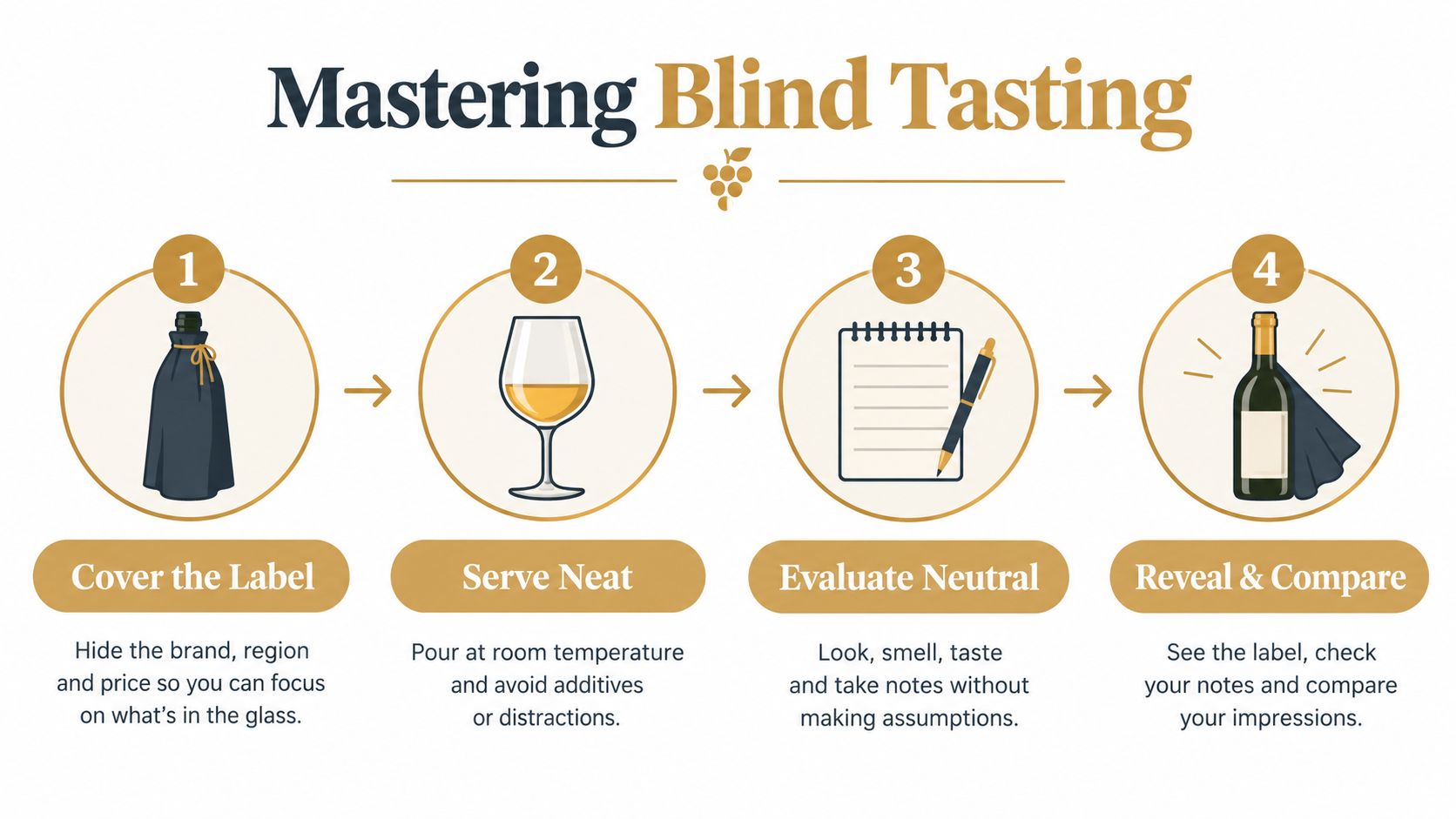
Remove the clues
Ask a friend to pour samples into identical glasses and cover the bottles. Keep the pours visually similar, and avoid discussing brands before everyone tastes.
Work through each sample in the same order:
- Smell first: Record the dominant aroma before tasting.
- Sip slowly: Notice entry, mid-palate, and texture.
- Track the finish: Write down the final impression.
- Make a hypothesis: Consider whether the profile suggests wheat, rye spice, grain sweetness, or heavier oak.
- Reveal afterward: Compare your notes with the actual bottle.
Blind tasting isn't about guessing perfectly. It's about separating preference from reputation. You may discover that a softer whiskey suits you better than a more powerful one, or that a spicy mash bill appeals to you even when the bottle lacks a familiar name.
Use comparison, not confidence
Taste samples side by side when possible, but keep your notes independent until you've evaluated each glass. If one whiskey seems sweeter, ask what creates that impression. Is the contrast coming from fruit, vanilla, corn sweetness, reduced oak, or just a softer finish?
A guide to blind whiskey tasting can help you build a repeatable approach. The more consistently you taste, the more useful your vocabulary becomes.
Blind-tasting question: If you couldn't see the proof or label, which flavor would you identify first?
Use the answer as a starting point, not a verdict. A moderate-proof bourbon can still have a complex profile, and a higher-proof whiskey can still taste unbalanced. Your job is to notice what the liquid does in the glass.
Putting 90 Proof to the Test with Blind Barrels
You pour a 90-proof bourbon, expecting an easy drink, then notice how clearly its character comes through. Proof changes the presentation, but it doesn't define quality. With less alcohol heat competing for attention, 90 proof works like a tasting lens: mash bill, barrel character, aroma, texture, and finish become easier to examine. That clarity makes the style approachable for beginners and useful to experienced drinkers comparing craft bourbons.
Blind Barrels turns that lesson into a repeatable home exercise. It sends members four blind samples each quarter from small American craft distilleries, plus a tasting table for aroma, palate, and finish notes. A QR code reveals each sample's details and provides access to full bottles. The accompanying game asks you to estimate the whiskey's age, proof, and type before the reveal.
Taste with a partner and compare notes only after each sample. Treat the reveal as palate feedback. You are learning which flavors signal grain, oak, or proof, and which profiles you prefer.
Blind Barrels sends the samples needed to run this comparison at home. Visit Blind Barrels for a guided, shared 90-proof bourbon tasting.