

The most popular advice on affordable cognac brands is to grab the lowest shelf price and stop there. That advice fails the moment you pour. A thin, hot VS wastes money in a Sidecar even when the tag looks kind, while a slightly dearer VSOP can be the cheaper habit if you only sip a glass after dinner. The grade is a legal floor, not a flavor guarantee, and the sticker is not the cost of a drink.
I would start with the job, not the brand logo. Mixing, neat sipping, and gifting are three different buys. Price the 1.5-ounce pour, then taste same-grade bottles blind before you decide a markdown is a win.
Affordable Cognac Brands to Consider First
| Bottle | Grade | Reference price | Best use |
|---|---|---|---|
| Martell V.S. | VS | about $33 | Cocktails and highballs |
| Château Montifaud V.S. | VS | $40 average U.S. price, 2024 | Mixing and everyday pours |
| Réviseur V.S.O.P. | VSOP | about $37 | Neat sipping on a budget |
Read the rows as jobs, not a ranking. Martell V.S. at about $33 is the cocktail and highball pick: citrus, soda, and ice will cover a younger profile, so you are paying for mixability. Château Montifaud V.S. carried an average U.S. price of $40 per bottle in 2024 and was the least expensive cognac in that year's VinePair roundup. Treat it as the everyday mixing bottle when you want a second VS, not a clone of the first. Réviseur V.S.O.P. at about $37 is the neat-sipping budget pick, because the longer minimum age is what you are buying when the glass has nothing else in it.
Prices are starting points
Those tags will not match every shelf. Retailer, state, and year all move them. Martell V.S. near $33 and the $40 Montifaud average sit below the $45 to $50 VS band used later for pour math. They come from different years and different retailers. The price in your market is the one that decides value. If Montifaud is $52 where you shop and Martell is $29, the table's "least expensive" label no longer applies.
A three-bottle shortlist
- One VS for cocktails: Pick Martell V.S. or Château Montifaud V.S., whichever is cheaper and fresher on your shelf.
- One VSOP for neat sipping: Réviseur V.S.O.P. near $37 is the reference, not a rule that every VSOP at that price will taste round.
- One wildcard in the same band: A second VS or a second VSOP, so you are comparing peers instead of judging a mixer against a sipper.
Write the three names down with the price each costs in your store before you read on. That note is what you will score against later, not a blog's tag from another year.
What VS and VSOP Promise and What a Pour Costs
VS means the youngest eau-de-vie in the blend has spent at least two years in oak. VSOP requires at least four years. XO requires at least ten. The Cognac age designations guide is clear that the rule hits the youngest component, so a VS can hold older spirit and still wear the lower grade. The grade is a floor, not an age statement and not an average. That is why a budget VS should not be lined up against an XO and declared a failure.
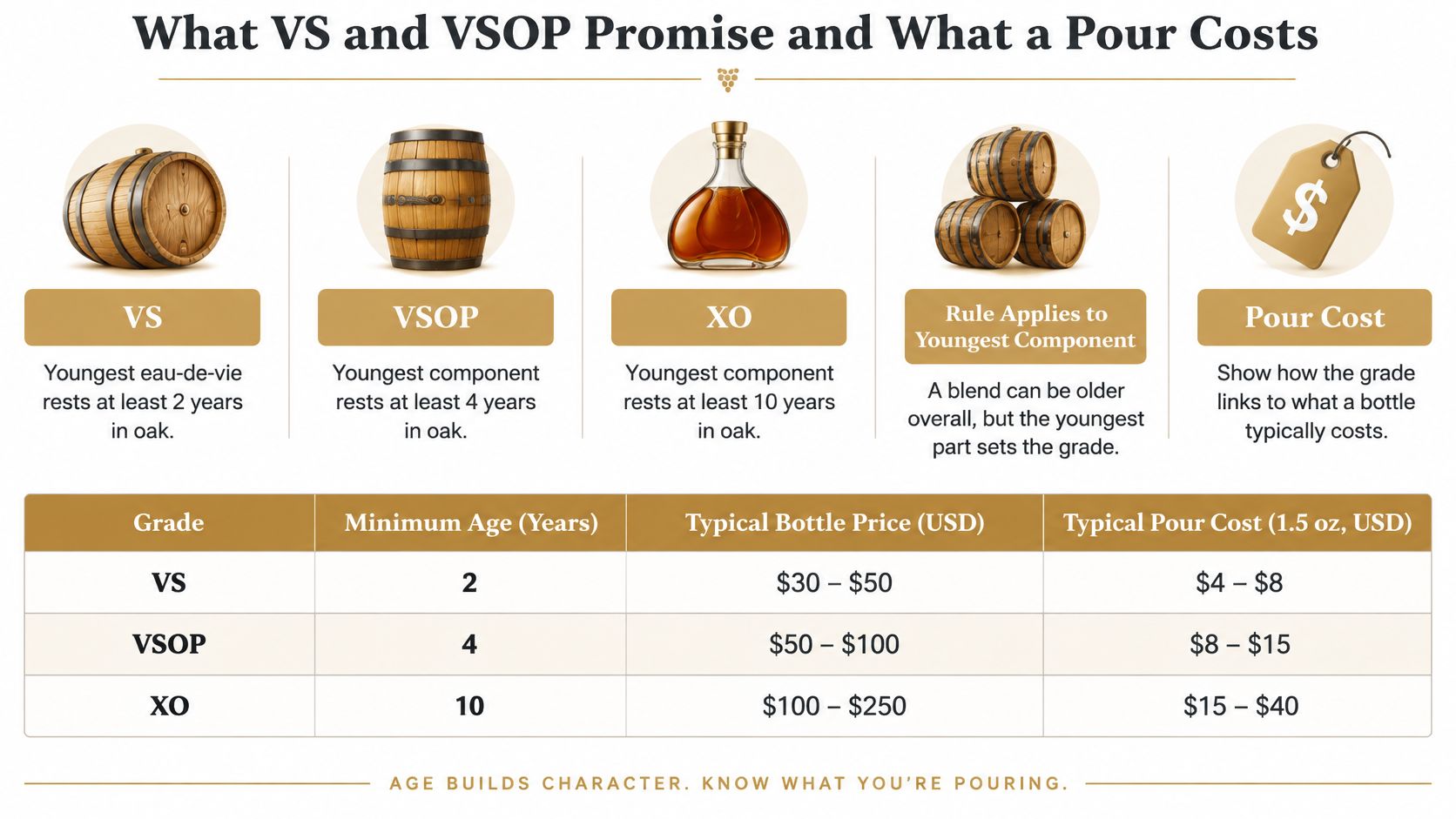
VS is the value benchmark for a Sidecar or an Old Fashioned. VSOP is the upgrade when you sip neat: more time in oak can add roundness, vanilla, coconut, and roasted notes, and it can take the alcohol edge down. The same guide notes that VS represents more than half of global Cognac sales and VSOP slightly more than one-third. These two grades are the mainstream comparison, not niche labels.
What one pour actually costs
A 750 ml bottle holds about 17 pours of 1.5 ounces. VinePair's 2025 cognac buying guide puts a 750 ml VS at roughly $45 to $50, a VSOP at about $69, and an XO at approximately $242, which works out to around $2.70 to $3, about $4.10, and about $14 per pour.
| Grade | 750 ml price | Cost per 1.5 oz pour | Best use |
|---|---|---|---|
| VS | $45–$50 | around $2.70–$3 | Cocktails and mixing |
| VSOP | about $69 | about $4.10 | Neat sipping |
| XO | about $242 | about $14 | Special occasions |
A VSOP can be the better buy for a neat sipper. The extra dollar or so per glass is what you pay for a smoother sip. A cheaper VS still wins in mixed drinks, where lemon, sugar, and bitters do part of the work. Two, four, and ten years are minimums for the youngest eau-de-vie. They are not a promise that every older bottle will taste better to you.
If you cost cocktails the way a bar should, a simple pricing guide for independent restaurants keeps the spirit, the citrus, and the garnish in one recipe cost instead of treating the bottle tag as the whole drink. Count how many pours you will drink in a month, and whether they go into a shaker or into a glass on their own. That split tells you which row to fund.
Is a Cheap Cognac a Bargain or a Clearance Price
A lower tag is not proof the bottle got better. Cognac shipments declined 15.1% in 2025 to 141 million bottles, while ex-cellars value fell 25.3% to €2.24 billion, and another industry forecast expects Cognac volume to fall 5.9% in 2025, according to a Cognac market analysis. Value dropped faster than volume. That pattern points to discounting, inventory pressure, tariffs, or a shift in who is buying, not to a sudden jump in how the spirit is made.
A shelf checklist
- Confirm the word Cognac: If the label is a differently produced brandy, you are not in this category at all.
- Confirm grade and strength: You want VS or VSOP, and the bottle has to be at least 40% ABV. Cognac is double-distilled and matured in oak at least two years before release, as the Cognac ageing overview sets out. The floor does not predict whether this bottle is balanced.
- Check appellation and size: A 1-liter or a 375 ml will scramble any per-pour math you did on 750 ml.
- Judge the store: Heat, sun, and a dusty endcap are reasons to walk past a "deal."
- Separate a stable price from a one-off markdown: If last month's tag was far higher, you may be looking at clearance.
The same market analysis places typical VSOP pricing around $35 to $75 and treats that grade as a bridge for drinkers who want more depth without XO money. One market estimate places typical VS bottles below $25, per a separate Cognac market report. Shelf references in the $33 to $40 range, and the $45 to $50 band used for pour math, do not match that estimate. Trust the price in your hand.
Is this affordable bottle genuinely good value, or is it discounted because the category is under pressure?
The same value test shows up in whiskey. A guide to whiskeys that earn their price is a useful parallel when a spirits markdown feels too tidy. This week, buy one VS and one VSOP from your shortlist and taste them before the tag convinces you.
How to Run a Blind Tasting at Home
A low price earned by a thin or hot profile only shows up when the label is hidden. Taste first, then reveal.
New drinkers should borrow a plain whiskey sequence before they score anything. A whiskey tasting guide splits the pour into appearance, aroma, palate, and finish so you are not trying to name a house on sip one. Look at the liquid. Bring the glass slowly to your nose, take a short sniff, pause, and sniff again with your mouth slightly open so the aromas come in. Take a small sip, then note what stays after you swallow.
Six steps that separate value from a cheap burn
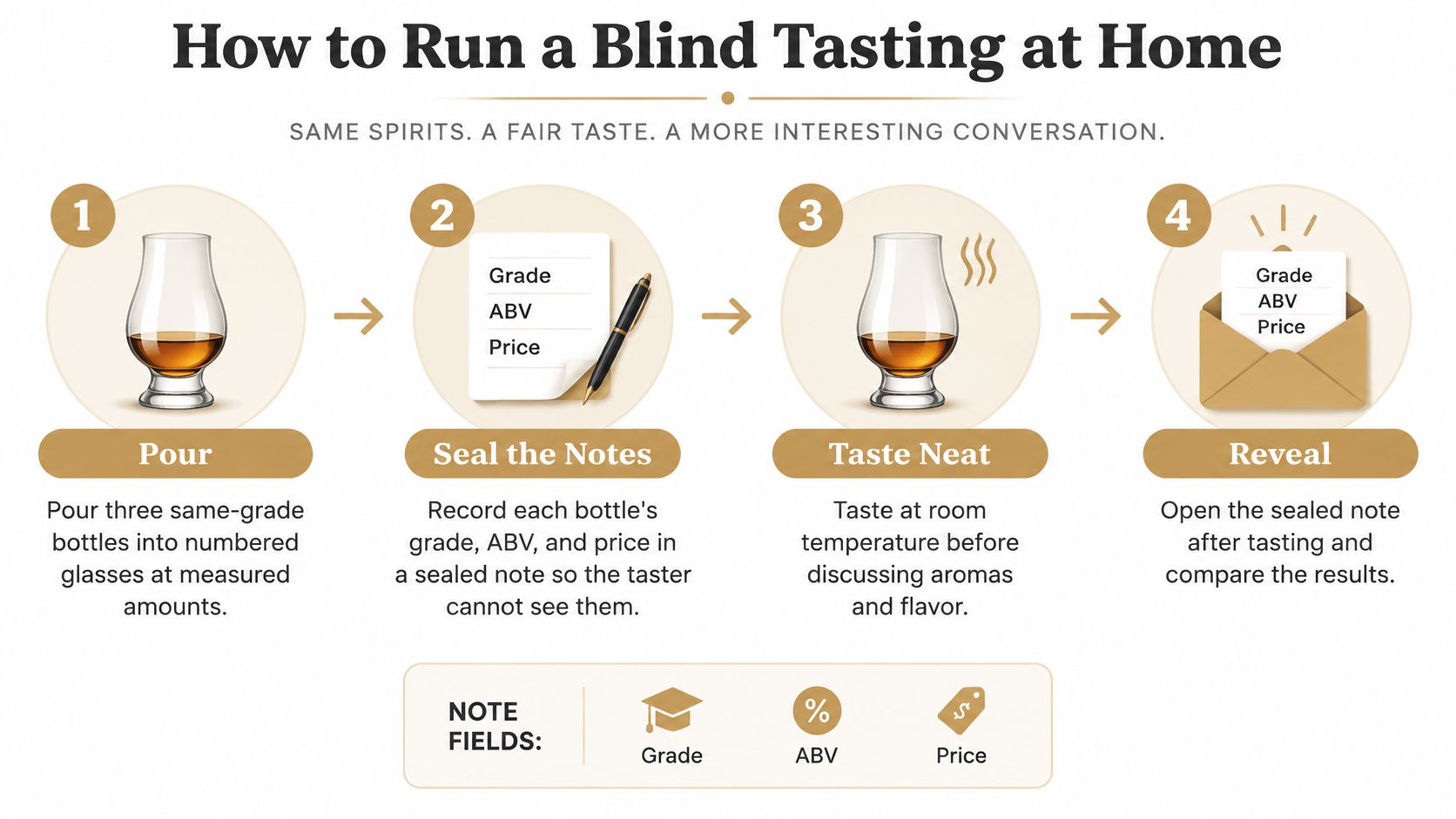
- Pour three bottles of the same grade into numbered glasses at equal measures, and seal each bottle's grade, ABV, and price in a note you cannot see. Same grade keeps you from crowning an older spirit just because it had more years.
- Taste neat at room temperature and write the first aroma, especially floral and fresh-fruit notes that younger eau-de-vie often shows. Heat you notice here is data, not a reason to dump the glass yet.
- Add a measured splash of water and taste again, checking whether the heat drops without the spirit going flat. If water only makes it watery, the body was already thin.
- Look for oak signals such as vanilla, roast, spice, dried fruit, or rancio, and check that they sit with the spirit instead of covering a burn. Masked heat is not integration.
- Build the same Sidecar or the same Old Fashioned with each bottle, same spec, and note whether the cognac still reads once citrus or bitters arrive. A mixer that vanishes was only cheap on the shelf.
- Score aroma, heat, oak integration, finish, and the cocktail, then open the notes. The winner is the bottle that holds up, not the one with the lowest tag.
Practical rule: If you cannot tell the bottles apart once the sugar and lemon are in, buy the cheaper VS and stop paying for a neat-sipping profile you will never taste.
A blind tasting subscription can hand a group labelled samples and a sheet for aroma, palate, and finish, but current kits centre on American whiskey rather than cognac, so check the lineup before you treat it as a cognac flight. The same hide-the-label habit is what a blind whiskey tasting is built for, and it transfers cleanly once your three cognacs are in numbered glasses.
American Craft Whiskey for New Drinkers
"Craft" on a back label is marketing until you apply a real test. The American Craft Spirits Association data project uses four checks, and I would not skip any of them on a bourbon or rye shelf.
- Licensed, and not a giant: The producer makes no more than 750,000 proof gallons a year, about 394,317 nine-liter cases.
- It calls itself craft: The producer markets itself as a craft producer, rather than borrowing the word from a retailer sign.
- No open control by a large supplier: Ownership has to match the claim.
- No proven break of the ACSA Code of Ethics: A violation takes the producer out of the definition.
Three passes at the glass
Taste one pour neat before you add anything. Look, nose, small sip, then the finish. You need a baseline, or water and ice will get credit for flavors the whiskey never had.
Add a few drops of water and taste again. You are checking whether heat falls without the whiskey going flat. If it collapses, that bottle is a highball whiskey, not a sipper, and that is a useful answer.
Log style, price, and one or two things you noticed. A short note beats a memory of "it was fine." Our American craft whiskey listings are one place to see small distilleries named as craft under that kind of screen, instead of trusting the word alone.
The same three passes work on a VS cognac in the next glass. Put a craft bourbon or rye beside it in a blind flight and score both on aroma, heat, and finish. You are comparing spirits on one scale, not asking cognac to taste like whiskey.
Which Affordable Cognac Fits Your Situation
Match the grade to the night, and accept the trade-off that comes with it.
Home cocktails. Buy a VS near the shortlist tags, in the low-thirties to about $40, and make one Sidecar before you commit to a case. You trade some neat elegance for a spirit that can take lemon and sugar. If it runs hot even in the drink, the cheaper tag was not a saving.
Neat after dinner. Buy a VSOP, including one near the high thirties if you can find it, and accept a higher cost per pour than a mixing VS. You are paying for oak roundness you can clearly taste. You are not buying a miniature XO, and you should not expect one.
A gift. Pick a bottle whose grade and presentation match how that person drinks. A gift is judged on the first pour and on the label they unwrap. A no-name VS in a scuffed bottle saves you money and costs you the gesture. A VSOP they will never sip neat is the opposite miss.
Newcomers. Start them on one VS in a mixed drink, then a VSOP neat, labels hidden. Use the same look, nose, sip, and finish pass that works on a craft whiskey, so they hear the difference instead of being told it. The trade-off is two small bottles instead of one "best" bottle they may not like.
A party. Buy the VS for the shaker and one VSOP for a side table where a few people want a quiet glass. Funding every highball with the sipping bottle burns money. Offering only the mixer leaves the curious guests with nothing to compare.
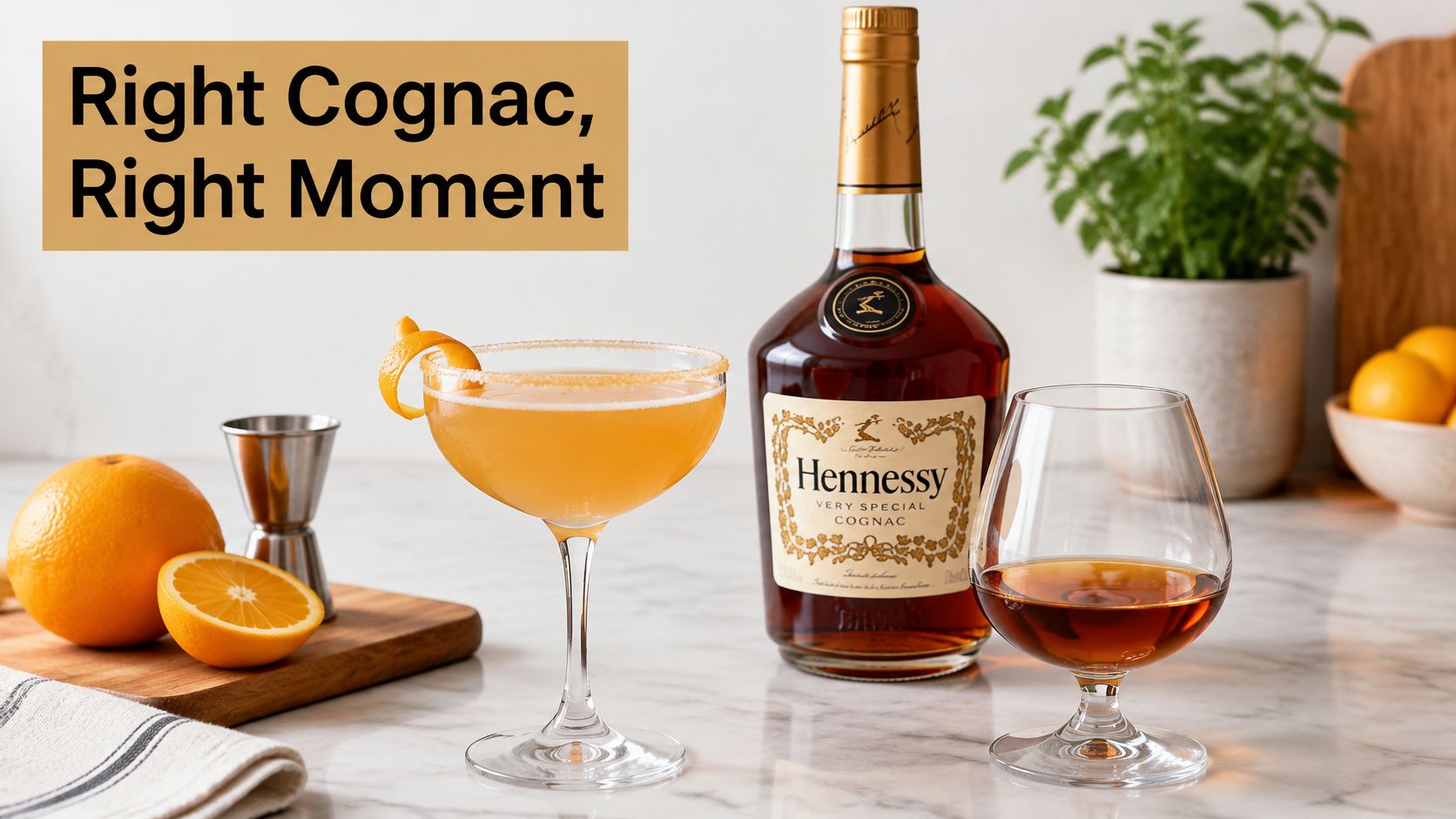
The cheapest bottle is rarely the best base for a cocktail if it runs hot neat, and the most expensive option is not automatically the best sipping choice.
I would rather own one honest VS for the shaker and one VSOP I will finish neat than a single famous name I bought because the tag was on sale.
Blind Barrels is a quarterly blind whiskey tasting subscription built around small American craft distilleries, with four samples, a tasting table, and a way to guess age, proof, and style before the reveal. The same habit, hiding the label until your palate has voted, is exactly how affordable cognac brands earn a place on your shelf or lose it. Visit Blind Barrels if you want that kind of tasting with people you drink with.