

Aging liquor in oak barrels is where the real magic happens. It’s the process that takes a raw, fiery spirit and coaxes it into something with color, aroma, and those incredible flavors of vanilla, caramel, and spice we all look for.
This isn't just storage; it's an active, living interaction between liquid and wood, involving extraction, subtraction, and a little bit of oxidation over time.
Why Oak Barrels Are the Heart of Great Whiskey
Ever wonder what turns a clear, aggressive spirit—what distillers call "white dog"—into the smooth, amber whiskey you love? The secret isn't just about letting it sit. It’s about the profound chemical romance that unfolds inside that wooden cask.
This step is what separates a basic distillate from a truly memorable spirit. For a new whiskey drinker, getting a handle on it is the key to appreciating every single sip.
Grasping this concept is like learning the grammar of a new language. It helps you understand why a whiskey from a small American craft distillery, like many you'll find in our Blind Barrels tasting kits, can have a completely different personality from a mass-market brand. These distillers are artists, and the barrel is their most important brush.
The Science of Transformation
From the moment a spirit enters the barrel, a few critical things start happening. You have to think of the barrel not as a simple container, but as a crucial, active ingredient. The whole process really boils down to three key interactions:
- Extraction: The high-proof alcohol acts like a solvent, literally pulling compounds out of the wood. This is where we get those signature flavors—vanillin for vanilla, tannins for structure and mouthfeel, and wood sugars that become caramel and toffee.
- Subtraction: That charred layer on the inside of the barrel? It’s basically a charcoal filter. It works to absorb and strip out harsh, unwanted compounds like sulfur, smoothing out the rough edges of a young spirit.
- Oxidation: Over months and years, a tiny amount of air breathes through the wood. This slow, gentle oxidation helps develop fruity and nutty esters, creating a much deeper, more rounded flavor profile. It's the same idea that softens a fine wine as it ages.
The magic is in the wood. A barrel contributes up to 60-70% of a whiskey's final flavor, making it the single most influential factor in its journey. This is exactly why the choice of oak, the char level, and whatever was in the barrel before are all so incredibly important.
From Hobbyist to Connoisseur
Understanding the fundamentals of barrel aging does more than just satisfy your curiosity. It directly sharpens your tasting skills.
When you're doing a blind tasting, you're not just taking a wild guess; you’re hunting for clues.
Knowing that American oak tends to give bold vanilla notes, or that a heavy char contributes more smoke and caramel, allows you to deconstruct what’s in your glass. You start connecting flavors to the process, making educated guesses about a whiskey's origin, age, and production style. This is how a fun hobby becomes a true passion, turning every pour into a deeply rewarding experience.
Choosing Your First Oak Barrel
Picking the right vessel for aging your liquor is probably the most critical decision you'll make in this whole adventure. It's the foundation. The barrel is what will shape everything from the deep amber color to those subtle hints of spice and vanilla on the finish.
Think of it like a chef choosing their star ingredient—the barrel you select is going to define the final character of your spirit. This isn't just about finding a container; it's about deliberately steering your spirit toward a specific flavor destination. The good news is, you've got a ton of creative control right from the jump.
This visual gives you a simple map for the key forks in the road on your aging journey.
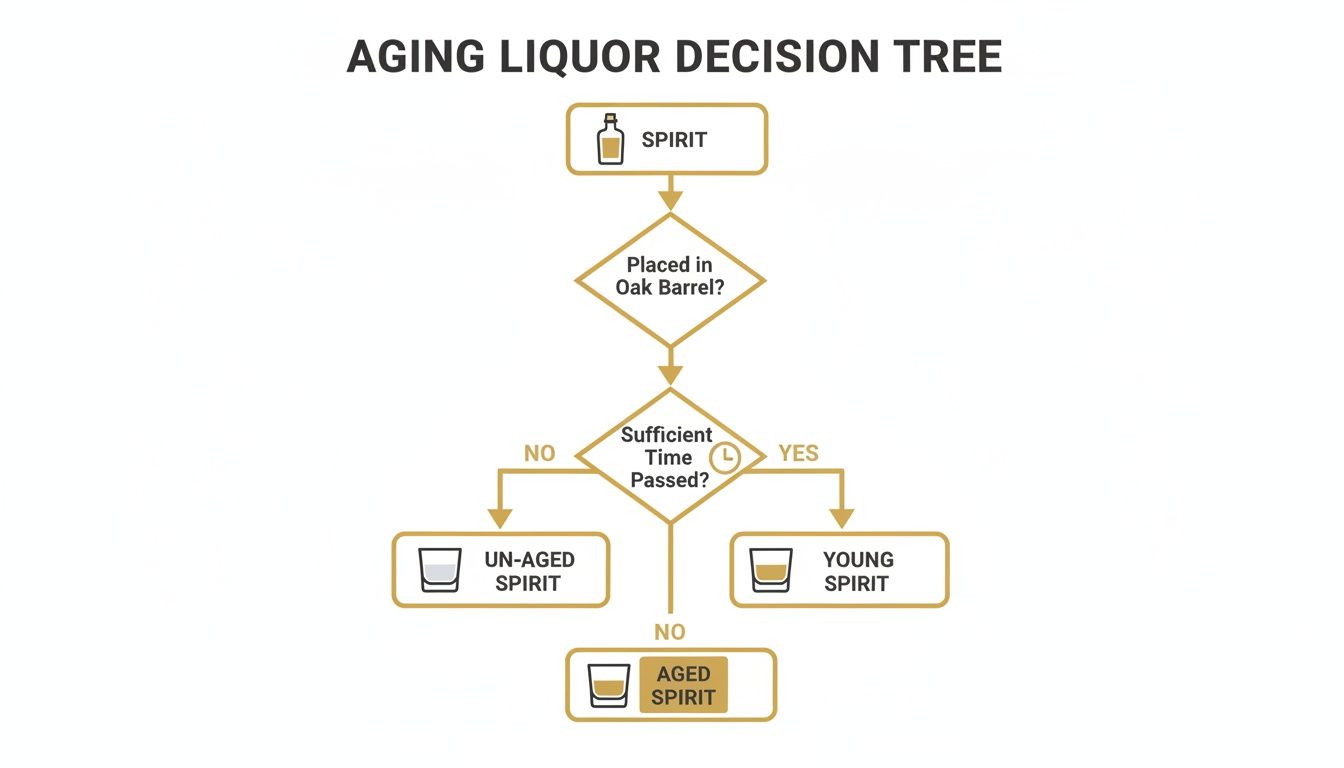
As you can see, a path from raw spirit to a beautifully aged final product is a series of choices, and the oak barrel sits right at the heart of that transformation.
Oak Barrel Options for Home Aging
When it comes to choosing your wood, you've got some fantastic options. Each type of oak, and whether it's new or used, will bring a completely different personality to your spirit. Let's break down the most common choices to help you find the perfect match for the whiskey profile you're aiming for.
| Feature | American Oak | French Oak | Used Barrel (e.g., Sherry Cask) |
|---|---|---|---|
| Dominant Flavors | Vanilla, coconut, caramel, dill | Baking spice, cinnamon, clove, cedar | Flavors from the previous contents (wine, port, sherry) plus subtle oak |
| Tannin Level | Medium to High | High (more refined, silky) | Low to Medium (mellowed by previous use) |
| Best For | Bourbon-style whiskey, bold spirits | Scotch-style whiskey, brandy, delicate spirits | Finishing, adding complexity and unique notes |
| Aging Speed | Fast flavor extraction | Slower, more subtle extraction | Very slow; primarily imparts finishing notes |
| Beginner Friendliness | Excellent. Forgiving and delivers classic whiskey notes. | Good. Requires more patience and monitoring. | Advanced. Best for secondary aging or finishing. |
New Drinker Tip: For your first go-around, you really can't go wrong with a new American Oak barrel. It’s the most straightforward path to creating those classic, rich whiskey notes that most of us are chasing.
Understanding Char Levels
Once you've picked the oak, the next variable to consider is the char level. The inside of a new barrel is toasted and then charred with an open flame. This process is crucial—it caramelizes the wood sugars and creates a layer of charcoal that acts as a natural filter, pulling harsh sulfur compounds out of the spirit.
The char level is your flavor dial. A light char might give you subtle toasted notes, while a heavy "alligator" char—so named because the wood cracks into scales—will deliver deep caramel, smoke, and toffee flavors much more quickly.
For home aging, a medium char (often called a #3 char) is an incredibly versatile and popular choice. It hits that sweet spot, providing a great balance of flavor extraction and filtration without overwhelming the spirit too fast.
The Power of Small Barrels
At home, you'll be working with small barrels, typically ranging from 1 to 5 liters. These aren't just tiny versions of distillery casks; their size fundamentally changes the aging game. Because of their incredibly high surface-area-to-volume ratio, the spirit has far more contact with the wood.
This means maturation happens fast. Really fast. While a big distillery might age a whiskey for four years in a 53-gallon barrel, you might achieve a similar level of oak influence in just a few months. This rapid aging is perfect for us enthusiasts, but it also means you have to be vigilant to avoid over-oaking your spirit. If you want to get into the nitty-gritty, you can explore the impact of barrel types and sizes on American craft whiskey in our more detailed guide.
The global oak whiskey barrel market is a massive industry, valued at over $800 million USD annually with around 2.5 million new barrels produced each year. That scale tells you just how essential oak aging is to the spirits we love. American oak leads the charge with about 1 million of those units, prized for the signature vanilla and coconut notes that define bourbon and fuel the small American craft distilleries we’re all about.
Preparing and Filling Your Barrel
So, you’ve picked out the perfect barrel. Now the real fun begins. This is the hands-on part where the project starts to feel real, but don't get ahead of yourself—rushing this stage can doom your spirit before it even has a chance to age. An unprepared barrel will absolutely leak, and a sloppy fill can ruin the entire batch.
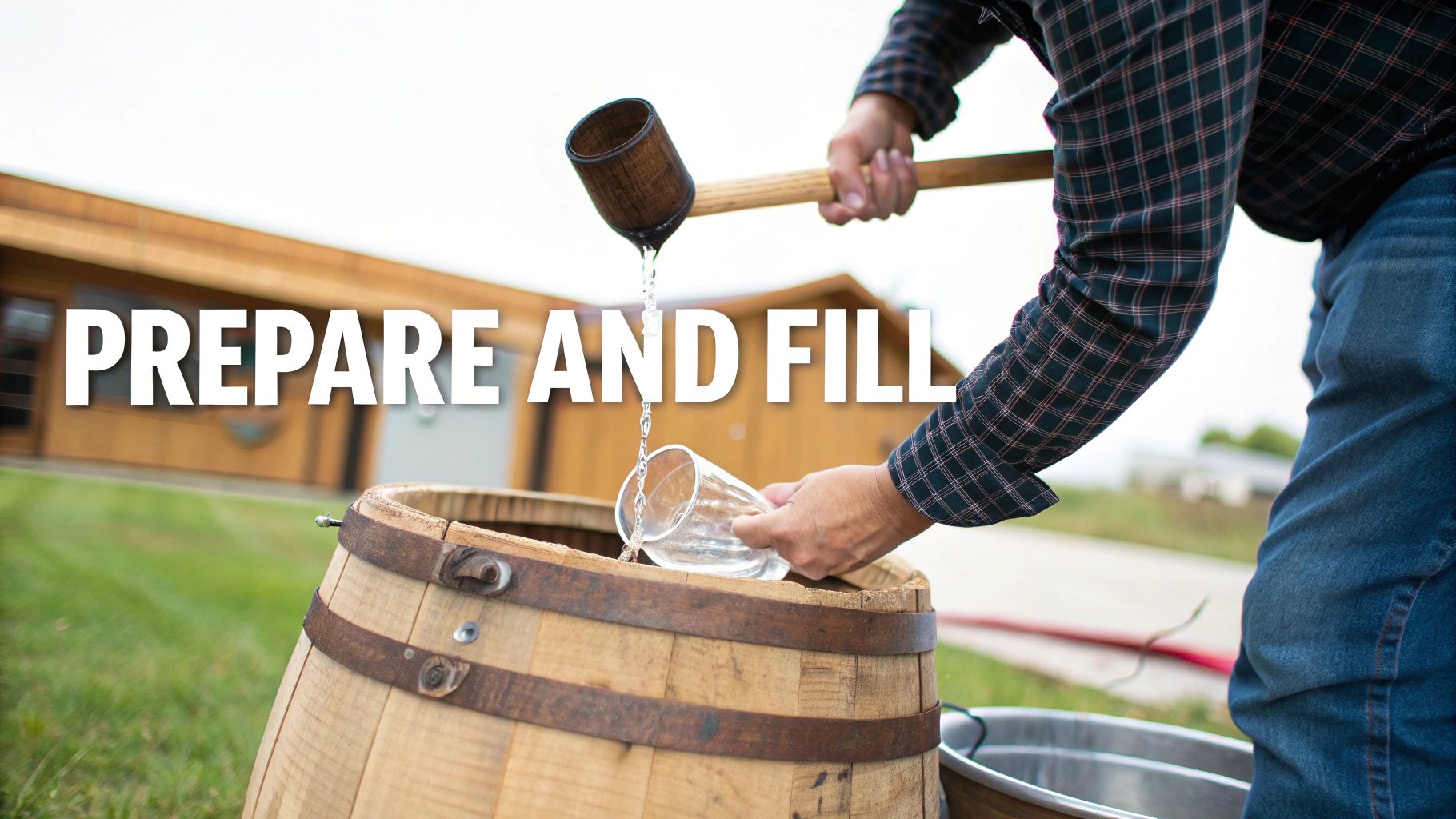
Think of a new oak barrel as being thirsty. The wood staves are bone dry, and there are microscopic gaps between them. Your first job is to get that wood to swell up with water, creating a tight, leak-proof seal. This process, often called curing or swelling, is completely non-negotiable if you want to successfully age liquor in oak barrels.
Curing Your Barrel to Prevent Leaks
Curing isn't just about stopping leaks. It also serves another important purpose: rinsing out some of the harsher, raw wood tannins that could otherwise blast your spirit with a bitter, overly woody taste right out of the gate.
Here’s a simple way to get it done right:
- Give it a good rinse. First, swish some clean, cold water around inside the barrel a few times. This will flush out any loose wood dust or bits of char left over from its creation.
- Fill with hot water. Next, fill the barrel all the way to the top with hot water (not boiling, just hot from the tap is fine). The heat helps the wood expand and seal much faster.
- Play the waiting game. You’ll probably see some dripping at first. That's totally normal. Just keep the barrel full, topping it off as needed, until the leaks stop. This can take anywhere from a few hours to a couple of days.
- Empty and rest. Once your barrel is watertight, dump all the water out and let it air dry for just a few hours before you pour in your spirit.
A classic rookie mistake is letting a freshly cured barrel sit empty for too long. Once it’s sealed, you've got to fill it with your spirit within 24 hours. If you wait much longer, the wood will dry out and shrink, and you'll be right back at square one, repeating the whole curing process.
Selecting and Filling with Your Spirit
With a sealed and ready barrel, it’s time for the main event. Remember, the quality of the spirit you put in has a direct impact on the quality of the whiskey you’ll eventually get out. The barrel works magic, but it can’t fix a flawed foundation.
New Drinker Tip: If you’re just starting this journey, my advice is to keep it simple. Don’t reach for a complex, flavored, or heavily peated spirit for your first run.
A fantastic starting point is a high-quality unaged corn whiskey, often called "white dog." You can find some excellent options from American craft whiskey brands like High West or even your local distillery. Using a neutral spirit like this really allows the barrel's character to shine, giving you a crystal-clear lesson in how oak transforms flavor.
When you're ready to fill, grab a funnel and pour your spirit in, leaving just a tiny air gap at the top. Hitting that 90-95% full mark is the sweet spot. This minimizes the spirit’s contact with oxygen, which helps prevent unwanted oxidation that can create some funky off-flavors.
Once it's full, hammer in the spigot and bung securely. That’s it—you are officially aging your own whiskey. The way you prepare your cask is a massive part of the final flavor equation. You can dive deeper into this topic by reading our article on how barrel preparation affects whiskey taste.
The Art of Patience: Monitoring Maturation
Your barrel is filled, sealed, and safely stowed away. Now, the real test begins—the waiting. But this isn't a passive "set it and forget it" kind of thing. Actively monitoring your spirit's maturation is easily the most rewarding part of aging liquor at home. It’s what turns you from a hobbyist into a true craftsperson.
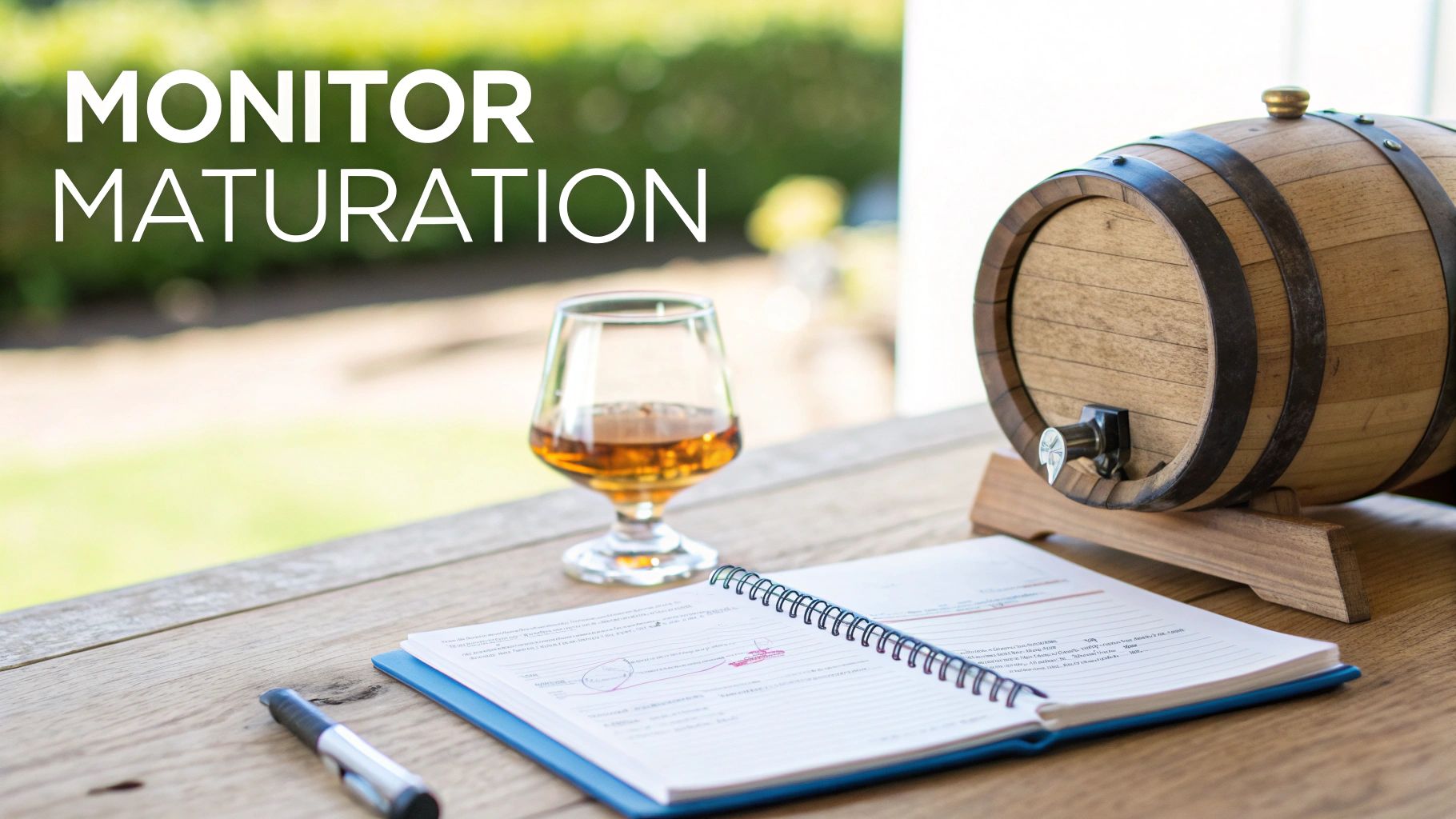
With the small barrels we use for home aging, things happen much faster than you might think. While a commercial distillery might let a barrel sit for years before the first taste, your timeline is seriously compressed. You’ll want to start sampling surprisingly early to avoid the dreaded over-oaking.
Establishing Your Tasting Schedule
Patience is key, but a completely hands-off approach will almost certainly lead to a spirit that tastes more like a wet 2x4 than a fine whiskey. In a 1- to 3-liter barrel, the high ratio of wood-to-spirit means flavor gets pulled out fast and hard.
New Drinker Tip: A good rule of thumb is to pull your very first sample after just one month.
This first taste is your baseline. It's your starting point. From there, a sensible schedule is to sample every two to three weeks. This is frequent enough to track the spirit’s evolution without drinking all your hard work before it’s even ready.
- Month 1: This is your first look. Expect it to be raw, with a sharp alcoholic bite and a heavy, grainy sweetness. You'll see the first hints of color and maybe a faint whisper of vanilla if you’re lucky.
- Months 2-4: Now the magic starts. The color will deepen into a beautiful amber, and those harsh edges will begin to round out. This is when the classic oak notes of caramel, toffee, and baking spice really start to show up.
- Months 5+: You’re in the fine-tuning stage now. The spirit should feel much more balanced and integrated. Your job is to decide when it hits that perfect peak—that magic moment right before the wood tannins become too bitter or drying.
Learning What to Look For
Every time you sample, pour a small amount into a proper tasting glass. This is where any experience you have with blind tasting, like using a Blind Barrels kit, becomes a massive advantage. You aren't just drinking; you’re analyzing.
Keep a dedicated notebook for your aging project. For each tasting, jot down the date and your observations on color, aroma, and flavor. This log becomes a priceless map of your spirit's journey, helping you pinpoint the exact moment it achieves greatness.
Take note of how the initial harshness of the "white dog" gives way to a softer, rounder sweetness. Document the color’s shift from pale straw to rich gold. On the nose, track how those raw grain aromas bloom into complex layers of vanilla, spice, and toasted oak. This hands-on experience is the best education a whiskey drinker can get.
Environmental Factors and The Angel's Share
Remember, your barrel is a living, breathing thing, and its environment plays a huge role. You’ve probably heard of the "angel's share"—that’s the small amount of spirit that evaporates right through the wood during maturation. Temperature and humidity have a direct impact on this.
A warmer, drier spot will speed up both maturation and evaporation. The spirit will suck flavors from the wood more quickly, but you'll also lose more of your precious liquid to the angels. On the flip side, a cooler, more humid space will slow everything down, resulting in a more gradual, subtle aging process. For most home projects, a stable basement or closet is just about perfect.
Oak aging is far more than a tradition; it’s a booming industry. The wooden whiskey barrel market is projected to expand by $2 billion by 2032, a testament to its vital role. While tariffs and supply chain issues have pushed some distillers to experiment with shorter aging, premium American craft whiskey brands like Frey Ranch or Southern Star remain committed to full oak terms—often 4-12 years—to get the depth their fans expect. You can explore more about the growth and dynamics of the whiskey barrel market to see how commercial pressures shape the industry. Your small barrel operates on the exact same principles, just on a much faster timeline.
Common Pitfalls and How to Avoid Them
Kicking off your first home aging project is a blast, but don't be surprised if you hit a few bumps. Even the pros at small American craft whiskey distilleries run into challenges. The real trick isn't about avoiding mistakes altogether—it's about knowing what to do when they happen.
Think of this as your field guide to troubleshooting. We'll walk through the most common headaches you might face when aging liquor in oak barrels and give you some practical ways to get your project back on the right track.
The Leaky Barrel Panic
So you’ve cured your barrel, filled it with some promising white dog, and you come back the next day to find a small puddle. First thing's first: don't panic. This is way more common than you think, especially in the first few days.
Often, a tiny drip will sort itself out as the wood continues to swell and fully seal. The spirit itself helps this process along. But if you have a stubborn leak coming from a stave or the head of the barrel, grab some barrel wax. Just dry the area completely and smear a thin layer of wax over the outside of the leak. It’s a safe, easy fix that plugs the gap without messing with the spirit inside.
Rescuing an Over-Oaked Spirit
This is probably the #1 risk with home aging, particularly with smaller barrels. Because of the high wood-to-spirit ratio, your whiskey can go from perfect to tasting like a bitter, woody mess in a shockingly short amount of time. If you’ve tasted your spirit and the tannins are just screaming at you, don't dump it. All is not lost.
The best way to save an over-oaked batch is to turn it into a blending component. That sharp, woody spirit is now a powerful ingredient you can use to add character to something else.
New Drinker Tip: Start by mixing it with a fresh, unaged spirit. Try a simple ratio, like one part of your over-oaked whiskey to three parts of the new make. Give it a taste. Adjust from there. This is exactly what master blenders at distilleries like High West and Barrell Craft Spirits do, and it's a fantastic skill for any whiskey lover to develop. You learn to balance flavors and, most importantly, trust your own palate.
When Your Whiskey Tastes… Off
Sometimes you’ll take a sample and get a flavor that just feels wrong. Maybe it’s sour, metallic, or a little musty. An "off" flavor can come from a few places, and figuring out the source is your first step.
- Sour or Acidic Notes: A sharp, vinegary taste is usually a bad sign. It often points to bacterial contamination, which can happen if a barrel wasn't cleaned well or was left to sit empty and uncared for. This is one of the toughest problems to fix, and honestly, you might have to chalk it up to experience and retire the barrel.
- Metallic Flavors: A weird metallic tang can come from a low-quality spirit, but it can also be the spigot. Make sure your spigot is made from stainless steel and not just a plated base metal that can leach into your whiskey over time.
- Musty or Moldy Aromas: This almost always means the barrel grew mold while it was stored empty. This is why proper barrel maintenance between batches—like using a holding solution—is so important.
Once a barrel has truly gone bad, the best move is to let it go. The wood is porous and can hang onto those unwanted flavors, tainting anything you try to age in it later. Knowing when to call it quits on a barrel is a tough but necessary lesson on this journey.
Connecting Home Aging to Your Tasting Skills
Aging liquor in an oak barrel is more than just a cool project; it’s a hands-on education that will fundamentally change how you taste spirits. This isn't just about making your own custom hooch—it's about gaining a deep, intuitive feel for how whiskey comes to be, transforming the way you approach every single dram.
You’re not just reading about maturation anymore—you're living it. You’ll witness a raw spirit soften its fiery edges and see how caramelized wood sugars slowly introduce that signature sweetness. This direct experience builds a mental library of cause and effect that you can’t get from a book.
Putting Your Newfound Knowledge to the Test
This practical knowledge becomes your secret weapon in a blind tasting. You'll stop just guessing and start making educated deductions based on tangible clues you've learned to spot in your own barrel.
Think about these scenarios the next time you're tasting blind:
- Pinpointing Oak Influence: Does a whiskey burst with bold, sweet vanilla and a hint of coconut? Your experience will immediately point you toward new American oak, the calling card of so many great bourbons from craft distilleries like Garrison Brothers.
- Gauging Maturity: If a whiskey has a sharp, drying tannic bite but feels a bit thin on complexity, you might suspect it was aged in a small barrel. Just like your own setup, the intense wood contact in smaller casks can sometimes let the oak influence outrun true, deep maturation.
- Feeling the Proof: You'll quickly get a feel for how different proofs carry themselves. The aggressive burn of a high-proof spirit versus the gentle warmth of a lower-proof one becomes a familiar sensation, helping you instantly narrow down the possibilities.
This entire journey is about turning abstract tasting notes into a tangible skill. The insights you gain from your home barrel translate directly to deconstructing commercial whiskies, making you a far more confident and perceptive taster.
The goal isn't just to make whiskey; it's to deepen your connection to it. By understanding the maturation process from the inside out, every tasting becomes a richer, more engaging puzzle to solve.
Ready to put these skills to the test? Learn more about structured tasting with our comprehensive guide on how to taste whiskey.
Common Questions About Home Barrel Aging
Jumping into the world of home barrel aging always brings up a few questions. It’s a hands-on craft, and there's a learning curve. Let's tackle some of the most common things people ask when they're just getting started.
How Long Does Aging Take in a Small Barrel?
This is probably the number one question, and the answer is… it’s faster than you think! With a small barrel—say, one to five liters—the process gets put on fast-forward. There’s a much higher ratio of spirit-to-wood surface area, meaning the liquor is constantly interacting with the oak.
You'll see dramatic changes in color and flavor in as little as two to four months.
But here's the real secret: "done" is completely up to your personal taste. Start sampling after the first month, and then check in every few weeks. You might find your spirit hits its peak at three months, or it could take closer to a year. That regular tasting schedule is your best defense against creating an oak-bomb.
Can I Reuse My Oak Barrel?
Absolutely, and you definitely should. Reusing barrels is where some of the real magic happens, letting you layer flavors and get more life out of your investment. A barrel gives its strongest, most classic oak and vanilla notes on the very first fill.
Each time you use it after that, the wood's influence will be a bit more subtle and mellowed.
New Drinker Tip: A killer experiment is to age a totally different spirit in your used barrel. A cask that once held whiskey can add unbelievable depth to a good rum. You can even age a pre-mixed cocktail like a Manhattan or Old Fashioned in there to create a signature drink you literally can't buy anywhere.
What Is the Angel's Share?
You'll hear this term a lot. The "angel's share" is simply the spirit that evaporates through the wood staves while it's aging. It might seem like a loss, but it's a completely normal—and necessary—part of the process.
Evaporation is a sign that your barrel is breathing, which is crucial for maturation.
Keep in mind that with smaller barrels and in warmer, drier climates, you'll see a higher rate of evaporation. To keep the angels from getting too greedy, find a cool, stable spot for your barrel, like a basement or an interior closet where the temperature and humidity don't swing wildly.
Ready to put all this knowledge to the test and sharpen your palate? Blind Barrels sends the ultimate blind whiskey tasting experience straight to your home, packed with incredible samples from America's finest craft distilleries. It's the best way to discover your next favorite bottle—judging on pure flavor, with no preconceptions. Explore our subscriptions and start your own tasting adventure at https://www.blindbarrels.com.