

You're standing in a whiskey shop with a friend, holding two bottles that look equally promising. One claims a local grain bill, another emphasizes a special barrel finish, and a third has a famous name you recognize from a recent release. The labels tell vivid stories, but they don't tell you which whiskey will taste best to you.
That's the central challenge of American craft whiskey in 2026. The category offers remarkable variety, yet the shelf can make every decision feel like a gamble. A palate-first approach changes the question from “Which bottle has the strongest story?” to “Which flavors do I enjoy when I don't know the label?”
Why American Craft Whiskey Feels Overwhelming Right Now
A crowded whiskey shop can feel less like a library and more like a busy airport. Kentucky bourbons sit beside Texas releases, grain-belt experiments, Tennessee bottles, Pacific Northwest ryes, and American single malts from small coastal distilleries. Every label promises something distinctive, whether that's estate grain, a rare finish, a celebrated founder, or a limited batch.
The category has earned that shelf space. The broader U.S. craft spirits segment reached more than 14 million nine-liter cases and US$7.9 billion in sales in 2022, with 2,753 active craft distillers reported that year, according to Whisky Magazine's report on American craft distillers. Active craft distillers also increased by 2.4% year over year, showing that the market was still expanding while becoming commercially meaningful.
Why the shelf creates bad shortcuts
New drinkers often rely on signals that have little to do with personal taste. A high price can suggest quality, a celebrity association can create excitement, and a scarce bottle can feel important before the cork comes out. Limited drops intensify that effect because the fear of missing out makes the buying decision feel urgent.
The long-term expansion has made the problem larger. The craft spirits category grew from 75 craft distillers in 2006 to more than 2,000 by 2026, while recent analysis estimated $7.6 billion in sales and 12.7 million nine-liter cases. Those figures appear in the American Craft Spirits Association's 2025 Craft Spirits Data Project. A larger field gives whiskey drinkers more genuine choice, but it also gives marketing more room to compete for attention.
Palate-first rule: If you can't identify the bottle, you can't let its reputation tell you what you're tasting.
Blind tasting offers a simple reset. Pour several whiskeys without showing the labels, note the aroma, texture, sweetness, spice, oak, and finish, then rank them before the reveal. A practical guide to the rise of American craft whiskey fits that approach because it treats discovery as a sensory exercise rather than a hunt for the bottle with the loudest reputation.
The rest of the category becomes easier once you understand what the law requires, what production choices do to flavor, and how to build a tasting flight that gives your palate a fair vote.
What American Craft Whiskey Actually Means
Start with the word whiskey, not the word craft. Under the U.S. Federal Standards of Identity, whiskey begins as a fermented mash of grain. The distiller must distill it below 95% ABV, mature it in new charred oak containers, and bottle it at no less than 40% ABV. Those requirements create the broad frame, but they don't tell you whether the whiskey will taste sweet, spicy, malty, fruity, or dry.
The grain recipe is called the mash bill. Bourbon centers on corn, rye whiskey emphasizes rye, wheat whiskey emphasizes wheat, and malt whiskey uses malted grain. Each grain contributes a different kind of structure. Corn often brings rounded sweetness, rye can add black pepper and herbal lift, wheat tends to produce a softer impression, and malted barley can contribute toasted grain, biscuit, and nutty notes.
Aging terms that confuse new drinkers
American whiskey doesn't have one universal minimum aging period. Any contact with wood can qualify as aging, but spirits under four years old must disclose an age statement, according to Whisky Advocate's explanation of craft whiskey maturation. For straight whiskey, four years functions as a practical maturity benchmark for many producers, although the actual sensory result also depends on barrel size, entry proof, wood, and warehouse conditions.
Unblended straight whiskey must be aged for at least two years, a distinction that matters because a young whiskey can be legally valid without tasting fully integrated. Age isn't a guarantee of quality, but it gives you context for interpreting oak, grain intensity, and finish length.
Craft is about the producer, not just the bottle
“Craft” generally points to an independent, small producer operating within the small-producer framework recognized by the Alcohol and Tobacco Tax and Trade Bureau. The important distinction for a buyer is practical: the distillery's ownership, production choices, and relationship with the spirit matter. Some brands distill their own whiskey, while others source whiskey from larger producers or use contract arrangements.
Read the label for terms such as distilled by, distilled in, bottled by, and produced by. Those phrases can reveal whether the named company made the spirit or selected and bottled whiskey made elsewhere. That doesn't automatically make a sourced whiskey poor. It tells you what kind of craft story you're buying.
| Whiskey Type | Grain Requirement | Aging Rule | Flavor Cue |
|---|---|---|---|
| Bourbon | Corn-led mash bill | New charred oak | Caramel, vanilla, baked sweetness |
| Rye whiskey | Rye-led mash bill | New charred oak | Black pepper, herbs, baking spice |
| Wheat whiskey | Wheat-led mash bill | New charred oak | Soft grain, biscuit, gentle sweetness |
| Malt whiskey | Malted grain-led mash bill | Depends on the labeled style | Toasted grain, nuts, fruit, malt |
For a plain-language overview of how these terms fit together, this guide to what craft whiskey means is a useful companion. The most useful habit is to connect every legal term to the glass. A mash bill predicts the broad flavor family, maturation explains the oak influence, and the producer's choices determine how those elements are balanced.
How Grains, Barrels, and Proof Shape the Spirit
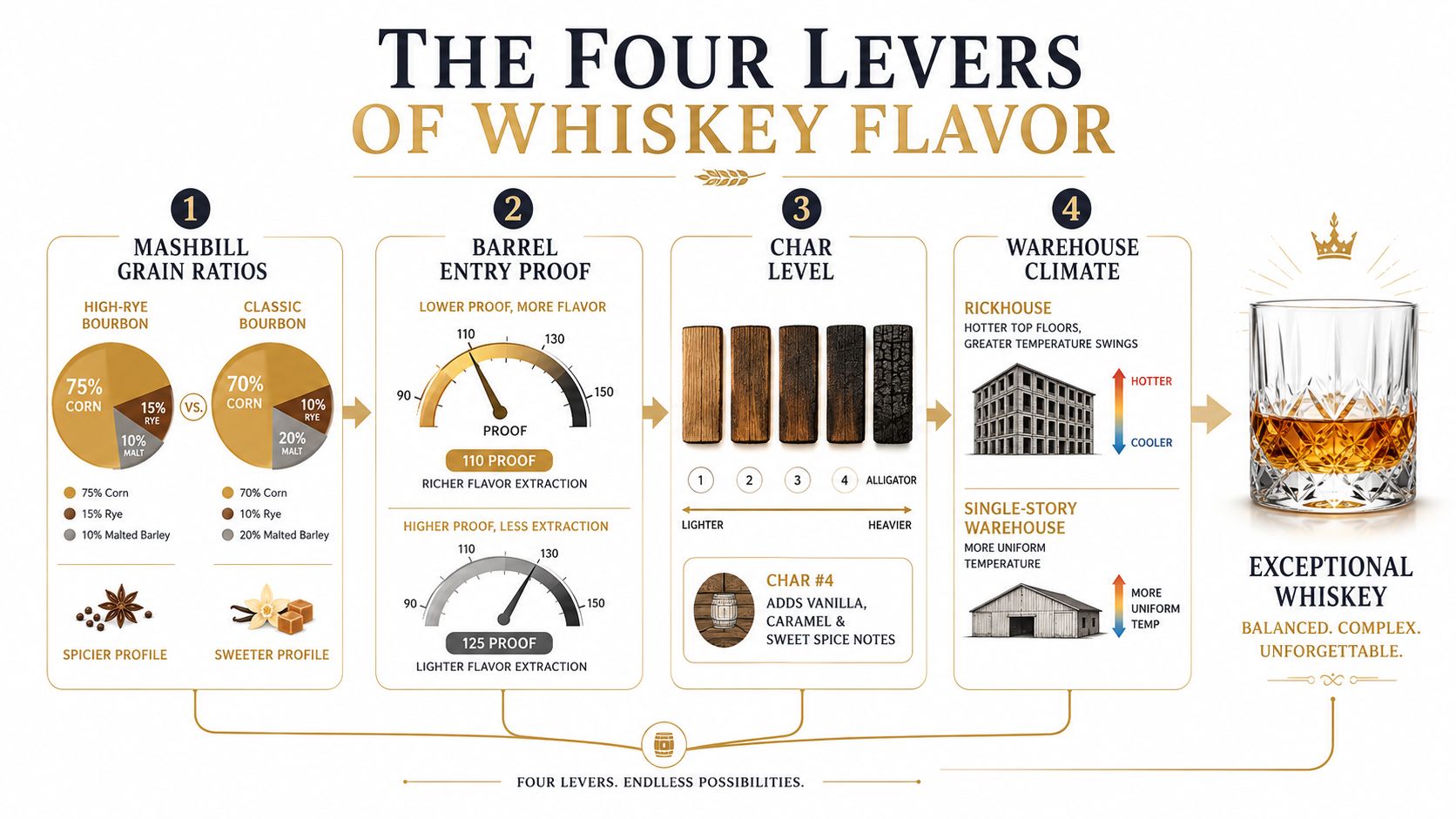
Four production decisions usually dominate the sensory result: grain ratios, barrel-entry proof, char level, and warehouse climate. They work together, so a rye-heavy recipe can still taste soft if the barrel and climate push it toward sweetness, while a corn-rich whiskey can show plenty of spice if the oak and proof emphasize structure.
The mash bill sets the opening note
A high-rye bourbon usually gives you more pepper, mint, and aromatic lift than a wheated bourbon. Think of the difference between toasted rye bread with cracked pepper and a warm biscuit spread with honey. Neither profile is better. The choice depends on whether you prefer a lively edge or a rounder, gentler texture.
Varietal grains make that comparison more interesting. Two bourbons can both be corn-led while showing different aromas because the corn variety, farming conditions, fermentation, and distillation choices differ. A closer look at whiskey grain bills helps you treat grain as more than a legal ingredient. It's a major flavor decision.
Proof controls extraction and concentration
U.S. rules require new make spirit to enter the barrel at no more than 62.5% ABV, as described in the American whiskey maturation research. Barrel-entry proof affects how water and alcohol interact with the wood, which changes extraction, evaporation, concentration, and eventual yield.
Lower entry proof can create a richer, broader impression because more water enters the wood and helps pull out different compounds. Higher entry proof can produce a leaner, more concentrated, or more tannic expression. The result isn't a simple quality ladder. It's closer to choosing between toasted marshmallow and dark chocolate. One feels plush and sweet, while the other brings deeper roast and firmer bitterness.
Char level also matters. Light char can preserve more direct grain character, while deeper char, including the familiar Number 4 “alligator” char, encourages stronger caramel, vanilla, and dark-fruit impressions. Warehouse climate then determines how aggressively the spirit moves in and out of the wood. A Kentucky rackhouse with pronounced seasonal swings can produce a different rhythm of extraction from a dry Texas warehouse, where heat and low humidity can make maturation feel more forceful.
Taste the whiskey slowly and ask which lever you're noticing. Is the pepper coming from rye, the dryness from oak, the sweetness from corn, or the concentration from the warehouse? That question turns a vague impression into useful whiskey vocabulary.
Regional Styles and Signature Mashbills
American craft whiskey doesn't have one regional accent. It speaks in several dialects, shaped by grain supply, climate, water, warehouse design, and local tradition. Geography doesn't dictate flavor by itself, but it creates conditions that distillers interpret through their mash bills and production methods.
Kentucky remains the reference point for bourbon drinkers. A high-rye bourbon may use a substantial rye portion, often around 35% rye in the style described by the regional archetype, and limestone-filtered water is part of the state's familiar whiskey identity. In the glass, that combination often suggests caramel, tobacco, oak spice, and a firm finish.
From Tennessee to the grain belt
Tennessee whiskey is associated with charcoal mellowing, a process that can soften the sharper edges of new make spirit before barrel aging. The result often feels smoother and more restrained in its grain profile, although individual distilleries still vary considerably.
The Midwest tells a different story. Indiana and Illinois distillers can work close to the corn belt, using corn-forward or wheated recipes that emphasize sweetness, biscuit, and soft cereal notes. A whiskey built around 99% corn presents a very different starting point from a rye-forward recipe. It may remind you of cornbread, vanilla custard, or banana bread rather than black pepper and dried herbs.
The coasts are where many house styles feel deliberately experimental. Pacific Northwest producers often explore rye-forward whiskey, while Northeast distillers are developing estate-grain and American single malt expressions that place farming and local climate near the center of the story. Litchfield Distillery, for example, makes an American Single Malt from Connecticut-grown malted barley, giving the whiskey a direct connection to local agriculture and a malt-led sensory profile.
| Region | Signature Grain Focus | Defining Practice | Typical Flavor Anchor |
|---|---|---|---|
| Kentucky | Corn-led bourbon with rye variation | Rackhouse maturation and bourbon tradition | Caramel, tobacco, baking spice |
| Tennessee | Corn-led whiskey | Charcoal mellowing | Soft grain, vanilla, gentle oak |
| Midwest | Corn-forward or wheated recipes | Grain-belt sourcing and broad mashbill variation | Biscuit, cornbread, banana bread |
| Pacific Northwest | Rye-forward and mixed-grain styles | Local experimentation and varied climates | Pepper, herbs, toasted grain |
| Northeast | Estate grain, malted barley, and emerging styles | Farm-linked production | Malt, honey, dark fruit |
To make the map useful, compare bottles by grain philosophy before comparing brand prestige. A Kentucky high-rye bourbon against a Pacific Northwest rye can show you whether you prefer caramel depth or peppery lift. A Midwestern wheater beside a Northeast malt whiskey can reveal whether your palate leans toward pastry sweetness or toasted cereal.
A Beginner's Tasting and Pairing Ritual
You don't need specialized glassware or a trained palate to taste American craft whiskey well. You need a quiet moment, a clean glass, and a repeatable sequence that keeps the first impression from deciding everything.
Start neat, then make small adjustments
Pour a modest neat serving into a rocks glass or clean white cup. A white surface makes the color easier to observe, while a glass concentrates aroma. Hold it a few inches away and sniff gently. Whiskey can smell sharp when you put your nose directly over the rim, so distance helps you find softer notes such as vanilla, fruit, grain, or oak.
A widely used beginner recommendation is to start neat, then add water or ice only after you've tasted the whiskey, as explained in this beginner's whiskey drinking guide. Take at least two sips. The first acclimates your palate, while the second gives you a clearer sense of texture, sweetness, spice, and finish.
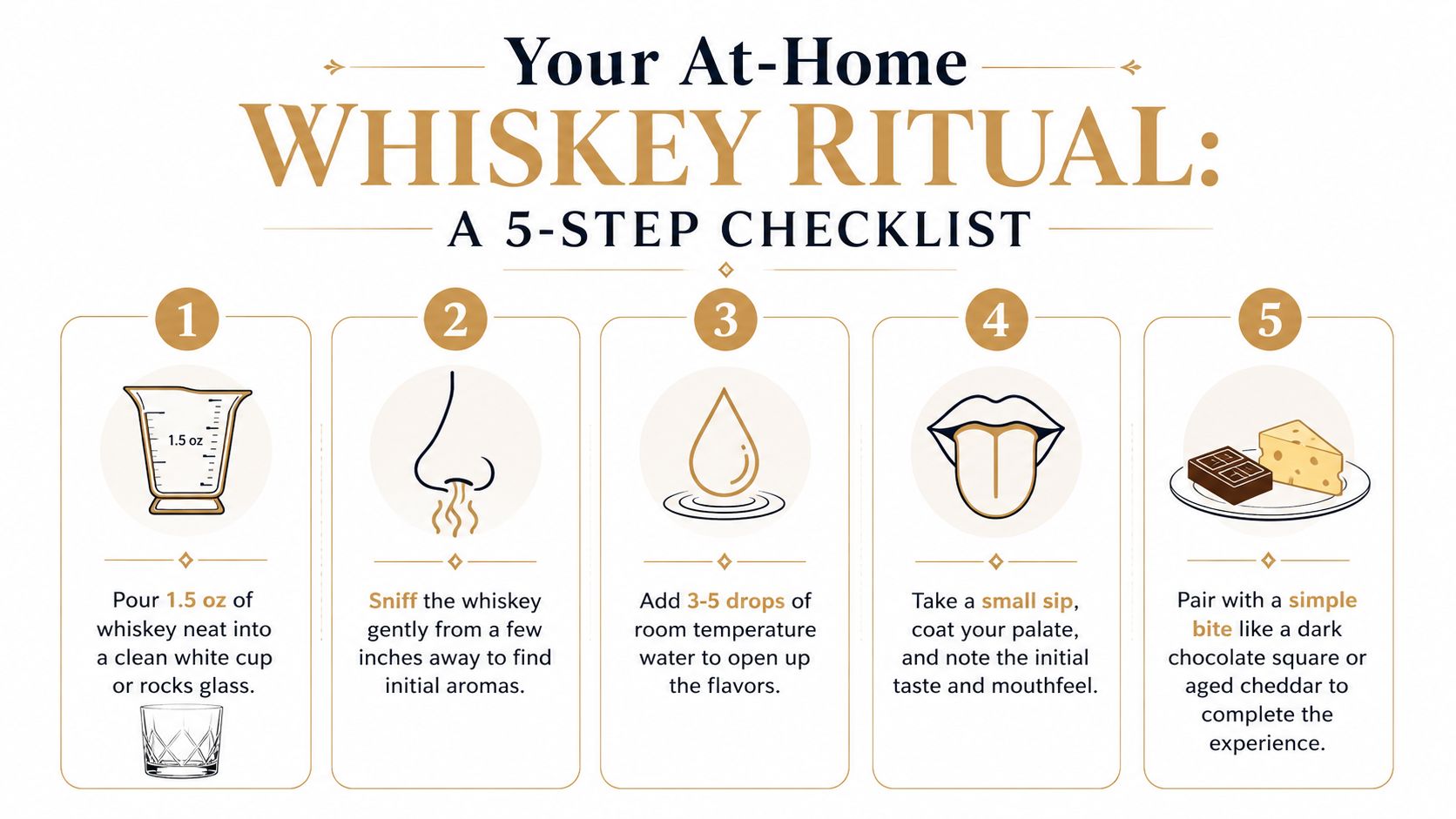
After the neat tasting, add a few drops of room-temperature water. Water can soften alcohol heat and bring hidden aromas forward. If you prefer whiskey chilled, use one large cube rather than a handful of small pieces. A large cube chills gradually and slows dilution.
Build pairings around flavor bridges
Pair food with the whiskey's dominant note, not with its reputation.
- Dark chocolate: Matches roasted oak, cocoa, and darker caramel.
- Aged cheddar: Echoes butterscotch, salt, and creamy texture.
- Smoked almonds: Reinforce rye spice and toasted grain.
- Apple pie: Pulls corn sweetness, cinnamon, and vanilla toward the front.
Portable gear helps if you want to taste outdoors or compare samples away from home. Durable titanium tumblers and bottles from Everti's drinkware collection can suit that use because they're designed for repeated travel and handling.
Keep your notes simple. Write down caramel, vanilla, banana bread, black pepper, cinnamon, or dry oak when those are the closest matches. You're not trying to identify every compound. You're building a personal map of what you enjoy.
Trends Reshaping the Craft Scene in 2026
Two forces are shaping the American craft whiskey conversation in 2026. The first is consolidation. The second is a move toward more transparent, ingredient-driven flavor.
The American Craft Spirits Association's 2025 data project reported 2,282 active craft distillers in the U.S. as of August 2025, down from 3,069 in August 2024, a 25.6% decline. That shift shows how quickly a growing category can narrow. Larger houses, independent bottlers, and contract-distilled brands now compete in a market where shelf space and distribution are harder to secure.
Consolidation can sharpen the remaining voices
When producers face greater pressure, vague positioning becomes expensive. Remaining independents have stronger reasons to show exactly what they make, where the grain comes from, how the whiskey was matured, and what makes a batch distinct.
That pressure can improve the discovery process. A transparent estate-grain bourbon gives you a testable idea. A single-farm rye gives you a specific ingredient story. A finished whiskey gives you a clear oak or cask influence to evaluate. In a blind tasting, those choices have to stand on flavor rather than branding.
Varietal grain moves from novelty to identity
The 2026 trend conversation increasingly highlights varietal grains, estate distilling, local sourcing, and supply-chain transparency. Producers are experimenting with grains such as Jimmy Red and Bloody Butcher corn, malting their own rye, and growing grain on-site. The point isn't novelty for its own sake. Distinct grain varieties can create recognizable differences in cereal sweetness, fruit, spice, and texture.
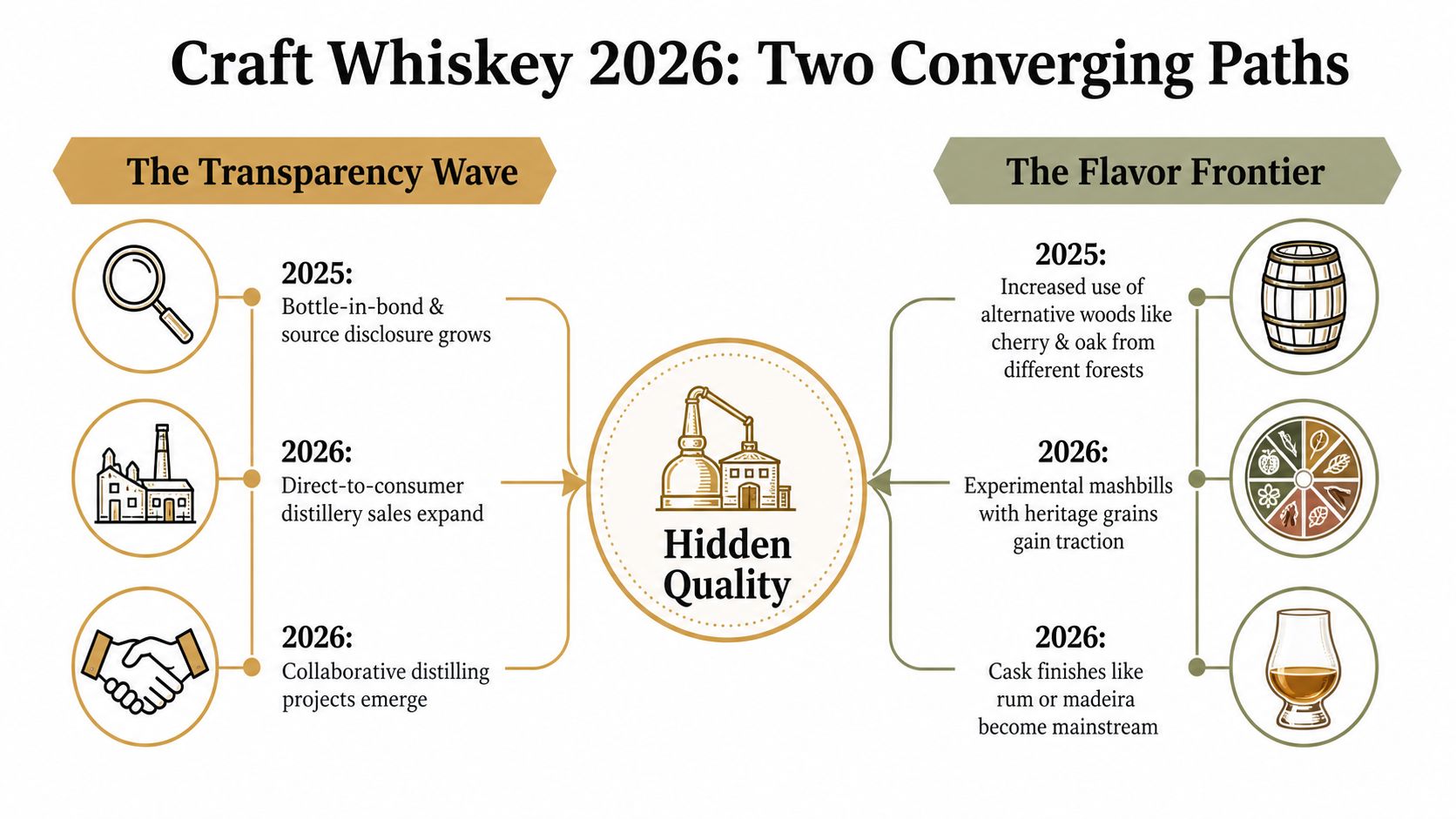
Those bottles are especially interesting in a blind lineup. Estate-grain bourbons, single-farm ryes, and carefully finished releases from newly independent contract brands all offer a clear sensory hypothesis. You can test whether the grain, provenance, or finishing choice produces a result you prefer.
The most useful bottle story is the one your palate can confirm after the label disappears.
The category's future may belong less to the distillery with the biggest narrative and more to the producer that can connect transparent sourcing with repeatable flavor. That makes blind tasting a practical tool for understanding the trend, not just a party game.
Blind Tasting as a Way to Discover New Distilleries
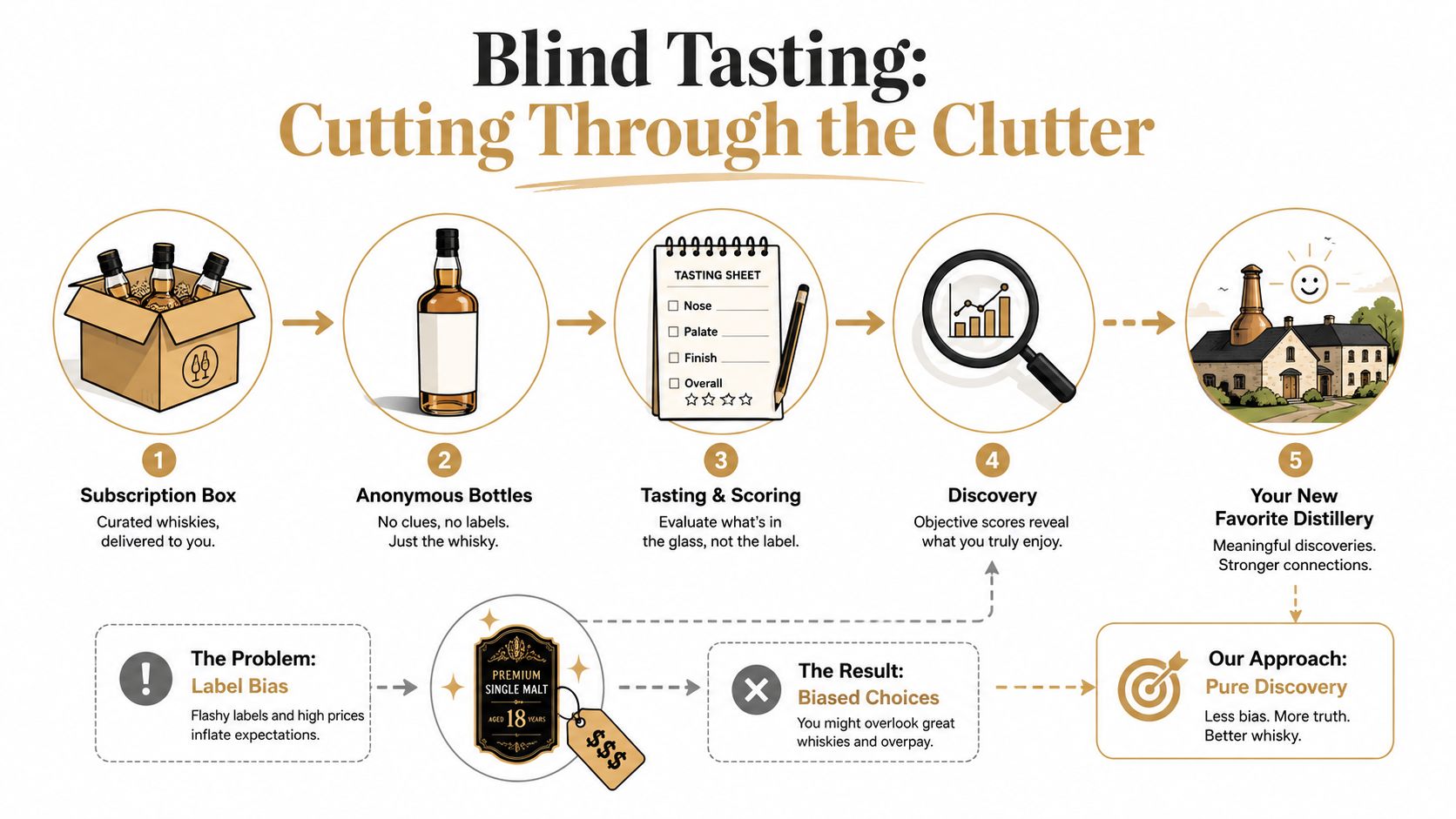
Blind tasting is the fastest way to separate your preferences from your assumptions. Labels anchor expectations before the first sip. A familiar bourbon name can make you search for caramel and oak, while a premium-looking bottle can encourage you to forgive heat or imbalance. Remove the label, and the whiskey has to make its case through aroma, texture, flavor, and finish.
A blind tasting subscription turns that idea into a manageable routine. A typical box contains four 50 ml samples, tasting guidance, and a reveal method that lets you score each pour before learning the distillery. That format gives you variety without asking you to buy a full bottle of every unfamiliar brand.
Make the reveal part of the experiment
Taste each sample in the same glass and record three areas:
- Nose: Note grain, fruit, spice, vanilla, smoke, or alcohol heat.
- Palate: Describe sweetness, weight, pepper, oak, malt, and texture.
- Finish: Track length, dryness, warmth, bitterness, and returning flavors.
Some kits include region and grain hints before the reveal, which gives you a way to practice deduction without turning the tasting into a guessing contest. After scoring, reveal the bottles and compare your expectations with the actual mash bill, proof, age, and production story.
The social format works well for couples, friends, and small groups. Each person can rank the pours independently, then compare notes. A bottle that one drinker calls too spicy may be exactly what another person wants in a rye. That difference is valuable because it teaches you how individual preference shapes whiskey judgment.
Blind Barrels offers a quarterly blind tasting subscription centered on small American craft distilleries, with four 50 ml samples, a tasting table, and a QR-based reveal that provides bottle details and distillery background. It's a discovery tool, not a substitute for buying full bottles. Use it to identify the grain bills, regions, and production styles worth exploring next.
Building Your Own Craft Whiskey Journey
Begin with contrast, not prestige. Build a starter flight around a high-rye bourbon, a wheated bourbon, a rye whiskey, and a malt-led American whiskey. That lineup gives your palate clear differences to compare before individual brands complicate the picture.
Keep a small notebook or phone document. Record the grain bill, age statement, region, proof, barrel finish, and personal score. Add two sensory notes and one sentence about whether you'd drink it again. Over time, patterns will emerge. You may discover that you prefer soft wheat, bright rye, toasted malt, or younger whiskey with vivid grain character.
Read the label like a producer
Look for the source statement first. “Distilled by” tells you more about production ownership than “bottled by.” Check whether the bottle carries an age statement, whether the whiskey is straight, and whether a finishing cask changes the expected oak profile. A sourced whiskey isn't automatically a bad choice, but the label should help you understand what the brand contributed.
A modest home collection can stay focused. Use a four-bottle shelf approach, with one bottle representing each major flavor direction rather than buying several versions of the same profile. Rotate bottles as your preferences change, and replace a bottle only after you know what role it fills.
The guiding question remains simple: Do you like what's in the glass? A blind flight, a tasting notebook, and careful label reading will answer that more reliably than scarcity, price, or reputation.
Blind Barrels offers quarterly blind tastings built around small American craft distilleries, with four samples, guided notes, and a reveal that connects each pour to its distillery and bottle details. Visit Blind Barrels to turn your next whiskey night into a focused, social way to discover what your palate prefers.