

The secret to your favorite whiskey’s deep, rich color and layered taste isn’t just the grain or the still—it’s the transformative power of barrel aging. This is the critical stage where a raw, clear spirit slowly becomes the nuanced drink you know and love, all thanks to a fascinating partnership between wood, time, and chemistry.
Why The Barrel Is a Distiller's Greatest Tool
Picture a spirit right after it comes off the still. It’s potent, fiery, and often called "white dog," but it’s missing the complex character that defines a great whiskey. This is where the barrel comes in, and it does a lot more than just hold the liquid. A barrel is a living, breathing vessel that filters, mellows, and infuses the spirit with a huge portion of its final flavor—often over 60%—and all of its color. For new whiskey drinkers, grasping this process is the first real step to appreciating what's in your glass.
The journey from that harsh white dog to a mature whiskey is guided by three fundamental interactions:
- Extraction: Alcohol is a natural solvent, and it gets to work pulling sugars and flavor compounds like vanillin and tannins straight from the wood. This is exactly where those classic notes of vanilla, caramel, and spice come from.
- Oxidation: Barrels aren’t airtight. They’re porous, allowing tiny amounts of oxygen to seep in and mingle with the spirit. Over years, this slow interaction develops fruity and floral notes while smoothing out the whiskey's harsher edges.
- Subtraction: The inside of a whiskey barrel is charred, creating a layer of activated carbon. This layer acts as a natural charcoal filter, stripping out unwanted sulfur compounds and other rough elements from the new make spirit.
This patient, deliberate process is what truly separates whiskey from so many other spirits. Without the barrel, we wouldn't have bourbon, scotch, or rye as we know them.
The Foundation of Flavor
The barrel’s influence is so immense that distillers see their cooperage—the place where barrels are made—as an essential partner. Craft distilleries all across the United States, from the hills of Kentucky to the heat of Texas, depend on very specific types of barrels to create their signature profiles. A distiller can have the perfect grain recipe and a flawless distillation run, but if they put it in the wrong cask, the whiskey will never live up to its potential.
Tip for new whiskey drinkers: The barrel isn't just a container; it's an active ingredient. It's the final and arguably most important contributor to the flavor, aroma, and color of the finished whiskey. Understanding this helps you appreciate why two whiskeys from the same grain can taste so different.
This deep reliance on wood has made barrels a cornerstone of the entire whiskey industry. With global demand surging, sales are projected to climb from USD 118.5 billion in 2025 to a staggering USD 345.7 billion by 2035. This boom puts incredible pressure on the supply of quality oak barrels, making them an increasingly precious resource for distillers trying to plan for the future. Learn more about the future of whiskey trends.
How Wood and Char Create Signature Flavors
To really get what’s happening during barrel aging, you have to start with the wood. A barrel isn't just a container; think of it more like a distiller's personal spice rack. The type of wood, where it grew, and how the cooper prepares it are all individual ingredients that shape a whiskey's final flavor. It's why choosing the right wood is one of the most important decisions a distiller makes.
For American whiskey, especially bourbon, one tree reigns supreme: the American White Oak (Quercus alba). While it's a legal requirement for bourbon, its fame is well-earned. This wood is incredibly tough and dense, which is great for preventing leaks. But more importantly, it's loaded with the compounds that create some of whiskey's most iconic flavors. Its cellular structure contains tyloses, which are natural plugs that make the wood exceptionally watertight.
But the real magic lies in the flavor precursors packed inside American White Oak:
- Vanillin: This is where those classic creamy vanilla notes, a signature of great bourbon, come from.
- Lactones: When the wood is heated, these compounds release delicious coconut and woody flavors.
- Tannins: These add structure and a pleasant dryness to the whiskey, along with hints of spice.
The Power of Fire and Char
An empty barrel is pure potential. To unlock all those flavors, coopers have to hit it with intense heat in a process we call toasting and charring. This is far more than just a cosmetic step; it's a deep chemical transformation that completely changes the wood, getting it ready to work its magic on the raw spirit. The char level, typically graded on a scale from 1 to 4, has a huge effect on the final taste.
A light toast or a #1 char gently caramelizes the sugars just under the wood's surface. This coaxes out subtle sweetness with notes of toasted bread or nuts—a delicate touch often used when the distiller wants the original grain character of the spirit to remain front and center.
At the other extreme, you have the #4 char, famously called the "alligator char" because the intense heat makes the wood crackle and form a pattern that looks like gator skin. This heavy burn does two crucial things. First, it creates a thick layer of activated carbon that acts as a natural filter, smoothing out the new spirit by removing harsh sulfur compounds. Second, it deeply caramelizes the wood's sugars, unlocking powerful notes of dark caramel, rich vanilla, and even a touch of smoke.
Tip for new whiskey drinkers: Charring is the ignition switch for flavor. It converts the raw potential of the wood into a dynamic ingredient, creating a filtration system and a flavor source all at once. If you enjoy sweeter, vanilla-forward bourbons, you'll likely prefer whiskeys from barrels with a heavier char.
This infographic gives you a great visual breakdown of the key processes happening inside the barrel as the whiskey ages.
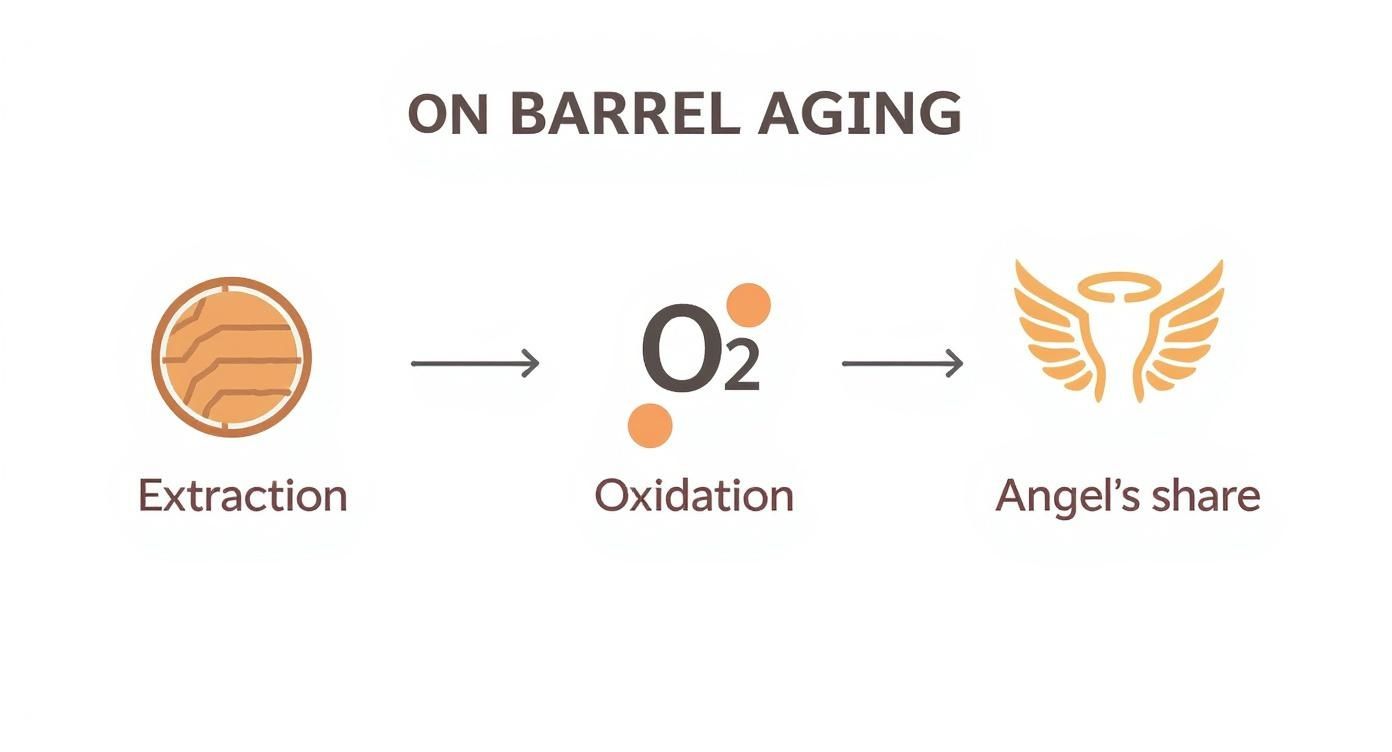
As you can see, the trio of extraction, oxidation, and the loss of spirit to the "angel's share" are the pillars that define the entire maturation journey.
The following table breaks down how different oak types and char levels influence the flavors you find in your glass. It’s a great cheat sheet for understanding why your favorite whiskeys taste the way they do.
Oak Type and Char Level Flavor Impact
| Factor | American White Oak | European Oak | Light Char (Level 1-2) | Heavy Char (Level 4+) |
|---|---|---|---|---|
| Primary Flavors | Vanilla, coconut, caramel, sweet spices | Dried fruit, clove, nutmeg, strong spice | Toasted nuts, gentle sweetness, baking spices | Dark caramel, vanilla bean, smoke, toffee |
| Tannin Level | Moderate and sweeter | Higher and spicier | Milder, less astringent | Softer, more integrated tannins |
| Color Contribution | Rich amber to deep gold | Darker, reddish-brown hues | Lighter golden color | Deep, dark brown color |
| Filtration Effect | Good, especially with heavy char | Less pronounced | Minimal filtration | Maximum filtration and mellowing |
Ultimately, the combination of these factors gives distillers an incredible palette to work with, allowing them to craft whiskeys that are profoundly different from one another.
Reading the Flavor Story on the Label
Once you grasp these basics, you can start to decode a whiskey label. When a distillery tells you about the specific rickhouse floor a barrel came from, they’re hinting at a story of intense maturation driven by temperature swings. And when you see a bourbon described with notes of "toasted oak and vanilla," you know it’s a direct nod to the American White Oak and the specific char level the distiller chose.
The real art of barrel aging is in that conversation between the spirit and the wood. It’s amazing how similar principles apply elsewhere, like understanding the nuances of wood flavors in barbecue, where different woods create signature smoky profiles.
For anyone new to whiskey, paying attention to these details can completely transform your tasting experience. Knowing the difference between a light toast and a heavy char helps you anticipate what’s in your glass and, more importantly, figure out what you truly enjoy. To go even further down this rabbit hole, check out our guide on how toasted, charred, and beyond affects whiskey taste.
The Slow Transformation Inside the Cask
Once a whiskey is sealed inside its cask, a quiet, unhurried alchemy begins. It’s not one single event, but a continuous conversation between wood, spirit, and air that slowly coaxes out complexity and character. You can think of it like a slow cooker, where time and gentle heat turn basic ingredients into a rich, layered dish. This entire transformation unfolds across three distinct, yet overlapping, stages.
This patient journey is the very soul of barrel aging whiskey. Each step adds another layer of personality, turning a fiery young spirit into a refined, mature sipper. Knowing what’s happening inside that barrel will help you pick out the subtle notes in your glass and truly appreciate the craft behind every bottle.
The First Step: Subtraction
Before the barrel can give, it has to take away. The first thing that happens is a process called subtraction, where the barrel’s charred interior acts like a natural filter. A brand-new spirit—what distillers call "white dog"—is packed with harsh, undesirable compounds. We're talking sulfurous notes that can smell like a struck match or even cooked cabbage. Not exactly pleasant.
The activated carbon in that char layer is a miracle worker. It acts like a powerful magnet, grabbing onto those off-putting elements and pulling them right out of the spirit. It's a purification step that mellows the whiskey, smoothing out its rough edges and creating a clean canvas for the next phase of maturation.
This is one of the most immediate changes, and it's why an unaged whiskey tastes so wildly different from one that's spent even a single year in oak. American craft distilleries like Corsair Artisan Distillery lean heavily on this step to quickly tame their young whiskeys, making them approachable and flavorful from the get-go.
The Second Step: Addition
With the harsh stuff gone, the whiskey starts soaking up character directly from the wood. This stage is called addition. As temperatures and humidity in the rickhouse shift, the wooden staves of the barrel expand and contract. This "breathing" process pulls the spirit deep into the wood and then pushes it back out, dragging all sorts of flavorful compounds along for the ride.
This is where the whiskey gets so many of its signature tasting notes. The wood itself releases several key chemical components that you can taste in the final product:
- Vanillin: Just like the name suggests, this compound gives the spirit those creamy vanilla flavors, a hallmark of whiskeys aged in American oak.
- Lactones: These are responsible for the distinct coconut, toasted wood, and sometimes even dill or floral notes you’ll find in many bourbons.
- Tannins: These add structure and a pleasant dryness to the palate, along with subtle hints of spice and leather that keep the whiskey from becoming overly sweet.
This stage is all about extraction. The longer a whiskey sits in that barrel, the more of these delicious compounds it pulls from the wood, deepening both its flavor and its color.
The Third Step: Interaction
The final and longest stage is interaction, and this is where the real magic happens. It’s a complex dance between the spirit, the compounds it has already extracted from the wood, and the tiny amounts of oxygen that manage to seep through the barrel. Over years, these elements react with one another to create entirely new, wonderful flavors that weren't there to begin with.
Tip for new whiskey drinkers: This is the stage of true transformation where fruitiness develops. Oxygen acts as a catalyst, creating new compounds called esters. It’s a process that simply cannot be rushed, and it's why older whiskeys often have those wonderful apple, pear, or dried fruit notes.
These esters are what give well-aged whiskeys their delightful fruity and floral notes—think aromas like apple, pear, dried apricot, or even rose petals. At the same time, organic acids from the wood slowly build up, lowering the whiskey’s pH and contributing to its evolving flavor profile.
This explains why older whiskeys often feel so much more integrated and complex. They’ve had years for these slow, delicate reactions to take place, building layers of nuance that give a truly great aged whiskey its soul.
How Climate and Time Shape the Final Spirit
Ever wonder why a 12-year-old Scotch tastes so vastly different from a 4-year-old Kentucky bourbon? The grain and distillation methods certainly play their part, but the real story often unfolds inside the barrel, driven by the powerful duo of climate and time. A barrel isn't just a container; it's porous, and the environment where it rests has a massive say in how fast and in what style the barrel aging whiskey process happens.
Think of a barrel as a living, breathing lung. In a place with dramatic temperature swings like Kentucky, that lung is working overtime. During the sweltering summer days, the whiskey expands, pushing deep into the wooden staves and soaking up rich flavors of vanilla, caramel, and spice. When a cold front rolls in, the whiskey contracts, pulling all those newly acquired flavors back into the spirit. This constant cycle is like hitting the fast-forward button on maturation.
The Impact of Hot Climates
In warmer regions, this accelerated aging creates bold, robust whiskeys in a surprisingly short amount of time. The intense heat cranks up the rate of both flavor extraction from the wood and evaporation from the barrel. It’s a delicate balancing act for distillers, who have to keep a close eye on their barrels to prevent the whiskey from becoming "over-oaked"—a state where harsh wood tannins steamroll the spirit's more subtle notes.
You can see this in action at American craft distilleries in hotter states. Take Garrison Brothers Distillery in the scorching heat of Hye, Texas. They produce bourbons that taste remarkably mature and complex after just a few years. The Texas climate forces an intense conversation between the spirit and the oak, creating a whiskey with a deep, dark character that would take far longer to develop in a milder place.
Climate is the accelerator pedal for maturation. A hot, variable climate like Kentucky's or Texas's pushes the aging process into high gear, creating bold flavors quickly. A cool, stable climate like Scotland's, on the other hand, favors a long, slow, and gentle journey.
This aggressive style of aging isn't just a craft tradition; it’s fueling a global industry. The demand for barrels for wine, scotch, and whiskey is projected to climb from USD 2.2 billion in 2025 to USD 3.4 billion by 2035. This boom is all thanks to a worldwide craving for the complex, premium flavors that only barrel aging can deliver. Discover more insights about the expanding barrel market.
The Beauty of a Slower Pace
Now, let's head across the pond. The cool, damp, and steady climate of Scotland encourages a much slower, more patient maturation. With minimal temperature swings, the barrel "breathes" far more gently. This leads to a slower, more delicate extraction of flavors, allowing the spirit's subtle nuances to evolve over many years without being shouted down by the wood. It’s exactly why Scotch whisky proudly wears age statements of 12, 18, or even 25 years.
This isn't just a Scottish phenomenon. Here in the States, craft distilleries in the Pacific Northwest, like Westland Distillery in Seattle, work with a temperate maritime climate. Their barrels experience more moderate seasonal shifts, resulting in an elegant and balanced aging process that lets the unique character of their local barley shine. It’s a perfect example of how hyper-local climates can craft truly one-of-a-kind whiskey profiles.
The Angel's Share and Concentrated Flavor
One of the most critical elements shaped by climate is the "angel's share"—the portion of whiskey that evaporates from the barrel over time. How much is lost, and what is lost, is tied directly to the humidity and temperature of the warehouse.
- Hot, Dry Climates (like Kentucky): In these conditions, water evaporates faster than alcohol. This means the proof of the whiskey inside the barrel can actually increase as it ages, concentrating the remaining liquid into a richer, more potent spirit.
- Cool, Humid Climates (like Scotland): Here, the opposite happens. Alcohol tends to evaporate more readily than water, causing the proof to gradually decrease. This results in a softer, more delicate whiskey over time.
The angel's share is much more than a romantic term for lost product; it’s a vital part of concentrating flavor. In hotter climates, this loss can be a staggering 4-5% per year, while in Scotland, it’s a much gentler 1-2%. That massive difference helps explain why a 4-year-old bourbon can have the color and flavor intensity of a Scotch twice its age. You can dive deeper into the fascinating economics of evaporation and the angel's share in our detailed guide. For anyone new to whiskey, understanding this concept is key to appreciating the unique story each bottle has to tell.
Exploring Unique Flavors from Barrel Finishing
For many whiskeys, that initial stay in a new charred oak barrel is just the first chapter of their story. The next step is a creative process called barrel finishing, where a fully mature whiskey gets moved into a second, completely different type of cask for a final burst of aging. This isn't just about tacking on more time; it's about layering in a whole new set of flavors and aromas.
Think of it like a chef adding a final, delicate sauce to a perfectly cooked meal. The base whiskey is already great, but this finishing touch adds a remarkable layer of complexity and nuance that simply wasn't there before. A few months in one of these "finishing barrels" can completely redefine a spirit's character.
A World of Casks and Flavors
The possibilities here are nearly endless, as distillers borrow from the traditions of winemakers and other spirit producers across the globe. The used cask, already seasoned by whatever it held before, imparts a shadow of its former life onto the whiskey. This is where you find some truly exciting flavor profiles that go way beyond the classic vanilla and caramel of American oak.
Some of the most popular and delicious finishing barrels you'll run into are:
- Ex-Sherry Casks: These barrels, once home to Spanish sherry, are famous for adding rich, decadent notes of dried fruit, raisin, roasted nuts, and warm baking spices. They lend a deep, dark color and a wonderfully complex sweetness.
- Ex-Port Casks: Hailing from Portugal, port casks infuse whiskey with luscious flavors of dark berries, plum, cherry, and a hint of chocolate. They often give the spirit a beautiful reddish hue and a velvety, full-bodied mouthfeel.
- Ex-Rum Casks: For a trip to the tropics, distillers turn to barrels that previously aged rum. These casks bring vibrant notes of molasses, brown sugar, banana, pineapple, and a touch of sweet spice that can brighten up a heavier whiskey.
Tip for new whiskey drinkers: Barrel finishing is the art of layering. It allows a distiller to take a classic American whiskey profile and paint it with new colors. If you already like a certain type of wine (like Port), trying a whiskey finished in that kind of barrel is a great way to explore new flavors you're likely to enjoy.
American Craft Distillers Leading the Charge
This technique has become a playground for innovation, especially within the American craft whiskey scene. Distillers are constantly experimenting and pushing the boundaries of what a whiskey can be. They aren't just sticking to the popular choices, either—they're exploring everything from Madeira and Sauternes wine casks to brandy and tequila barrels.
Pioneering distilleries like Hillrock Estate Distillery in New York are renowned for their meticulous finishing programs, often using casks from fine wineries to create their highly sought-after expressions. Likewise, Balcones Distilling in Texas has built a reputation on bold experimentation, using unique local woods and finishing casks to craft spirits that are unmistakably their own. For anyone new to whiskey, trying a finished spirit from a craft brand is a fantastic way to see how a subtle change can create an entirely new tasting experience.
By exploring these finished whiskeys, you can train your palate to pick out more complex flavor notes. It’s a rewarding journey that really highlights the incredible versatility of barrel aging whiskey. To learn more about this exciting practice, check out our deep dive into the exciting world of whiskey barrel finishes in American craft whiskey.
A Starter Guide to Home Barrel Aging
If you're the hands-on type of whiskey fan, the thought of creating your own signature spirit right at home is probably pretty exciting. And the good news? Barrel aging whiskey at home is easier than ever, giving you a front-row seat to watch a raw spirit transform into something rich, complex, and amber. Consider this your ticket into a hobby that puts you right in the distiller's chair.
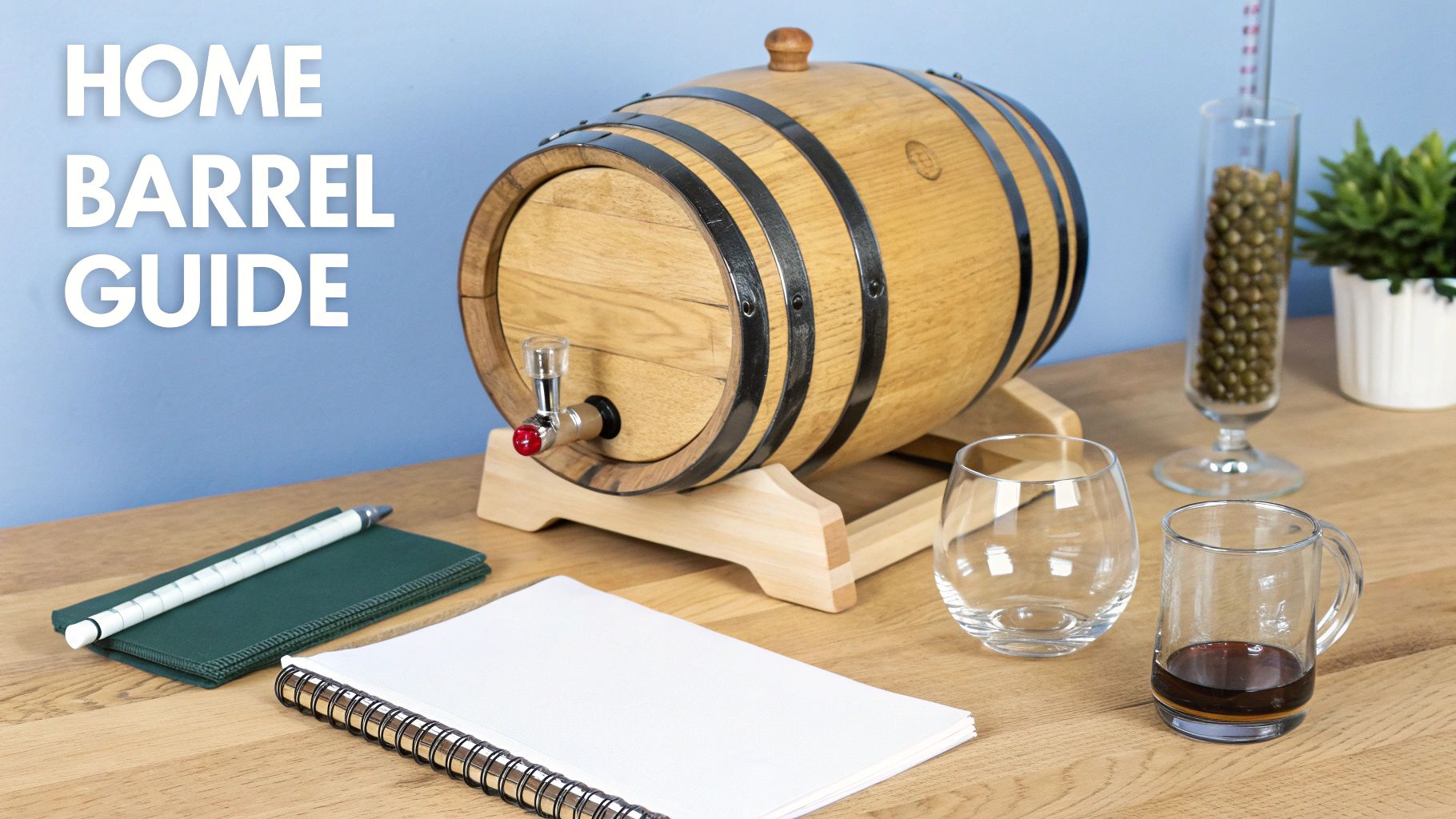
This isn't just a niche interest, either. Barrel aging has broken out of the massive distillery warehouses and is now a favorite technique for craft producers and home enthusiasts who want to create those artisanal flavors themselves. Search data shows that interest in "whiskey barrels" hit a peak in May 2025, and "oak barrels" have seen consistent growth as more folks get into aging their own spirits and even wines. Explore more about the trending interest in barrels.
Getting Your Barrel Ready
Your whole journey starts with picking out a small barrel, usually somewhere in the 1 to 5 liter range. The magic of these little guys is their wood-to-spirit ratio—it’s way higher than a standard 53-gallon cask, which puts the aging process into hyperdrive. What takes a distillery years to achieve in a rickhouse can happen in just a few months, or sometimes even weeks, on your countertop.
But before you pour in a single drop of spirit, you have to get the barrel ready. This is a non-negotiable step called curing, and it does two things: it makes the wood swell up to prevent leaks and pulls out some of the harsh, raw wood tannins you don't want in your drink.
- Rinse Thoroughly: First, give the inside of the barrel a few good rinses with hot water. This will clear out any leftover wood dust or bits of char.
- Swell the Wood: Now, fill the barrel to the brim with hot water and just let it sit for 24-48 hours. You'll want to keep an eye out for any drips and top it off as needed. The wood will soak up water and expand, sealing itself tight.
- Empty and Drain: Once you're confident the barrel is watertight, pour out the water and let it drain completely for a few hours.
Tip for new whiskey drinkers: A small barrel ages whiskey exponentially faster than a large one. This means frequent tasting isn't just a suggestion—it's essential to catch your spirit at its peak and avoid an over-oaked, tannic result. Start tasting after just a couple of weeks!
Choosing Your Spirit and First Project
For your first run, keep it simple. You want to see a clear, dramatic change, and the best way to do that is with a blank canvas. An unaged "white dog" whiskey or a clear moonshine from a local craft distillery is the perfect starting point. These spirits let you really taste the wood's influence as it adds color, sweetness, and complexity right before your eyes.
Another fantastic option, especially for a newer whiskey drinker, is to take a young, lightly aged rye and give it a short finishing period in your barrel. This is a great way to see how even a few extra weeks can deepen those spice notes and give it a smoother, more rounded finish. There’s really no better way to understand the magic of barrel aging than to do it yourself.
Common Questions About Barrel Aging Whiskey
The world of barrel aging is a deep one, filled with all sorts of fascinating details that naturally spark a lot of questions. As you get deeper into whiskey, you’ll find yourself wondering about the finer points. We hear great questions from curious drinkers all the time, so let's tackle a few of the most common ones.
Does Whiskey Continue to Age in the Bottle?
The short answer is no. Unlike wine, whiskey doesn't continue to age once it’s bottled. The real magic—the maturation process—happens entirely inside the cask, where the spirit is constantly interacting with the wood and a tiny bit of oxygen.
The moment it gets bottled and sealed, that incredible conversation between wood and whiskey stops. Its flavor profile is effectively locked in, and as long as you store it upright and out of direct sunlight, it will remain stable for decades. That 12-year age statement on the label? It tells you exactly how long the whiskey matured in the barrel, not how long it’s been sitting on your shelf.
What Does a Barrel Char Level Mean for Flavor?
The char level is a huge deal—it tells you how intensely the inside of a barrel was burned, and that process dramatically shapes the whiskey’s final flavor. Distillers use a scale that typically runs from a light toast (level 1) all the way up to a heavy "alligator char" (level 4), named for the scaly appearance of the wood.
This charring process does two critical things. First, it creates a layer of activated carbon that acts like a filter, stripping out harsh, undesirable compounds from the spirit. Second, it caramelizes the natural sugars hiding in the wood. A heavier char usually means more intense notes of vanilla, caramel, toffee, and even a hint of smoke, making all those delicious compounds more available to the whiskey. For a classic example, look at an American brand like Wild Turkey, which uses a signature #4 char to get its famously bold and rich flavor profile.
Think of char level as the seasoning on a steak. A light toast is like a sprinkle of salt, enhancing the natural flavor. A heavy alligator char is a bold spice rub, adding a deep, smoky, and caramelized crust that defines the final taste.
Can Distilleries Reuse Whiskey Barrels?
Absolutely—but there's one very important rule when it comes to Bourbon. American law dictates that Bourbon must be aged in new, charred oak containers. This means a barrel can only be used one time to make Bourbon. After that first use, however, those barrels become a hot commodity for distillers all over the globe.
Producers in Scotland, Ireland, and Japan are eager to snap up used Bourbon barrels to age Scotch, Irish whiskey, and other spirits. Back home, American craft distilleries give them a second or third life, using them to age everything from rye and rum to beer and even hot sauce. Each time a barrel is reused, it imparts a more subtle and nuanced character, adding layers of complexity to whatever new liquid it holds.
The absolute best way to understand the incredible impact of barrel aging whiskey is to taste the results for yourself. With Blind Barrels, you can push brand bias aside and discover some truly amazing spirits from America's finest craft distilleries. Our blind tasting kits let your palate be the only judge, helping you zero in on the notes you genuinely love and find your next favorite bottle.
Explore our blind whiskey tasting subscriptions and start your own tasting adventure today.