

You're standing over four unlabeled glasses, and one leans caramel-soft while another bites with rye spice. That gap usually comes from mash bill, barrel choice, and proof, not from marketing copy, which is why the best craft bourbon distilleries are easier to judge when you taste them blind. If you want a practical map for where to start, where to visit, and which bottle to buy first, these seven producers make the comparison real. For a related tasting-room mindset, the Kunde Winery tasting room visit shows the same basic truth, hands-on visits teach your palate faster than label reading.
1. Frey Ranch Distillery
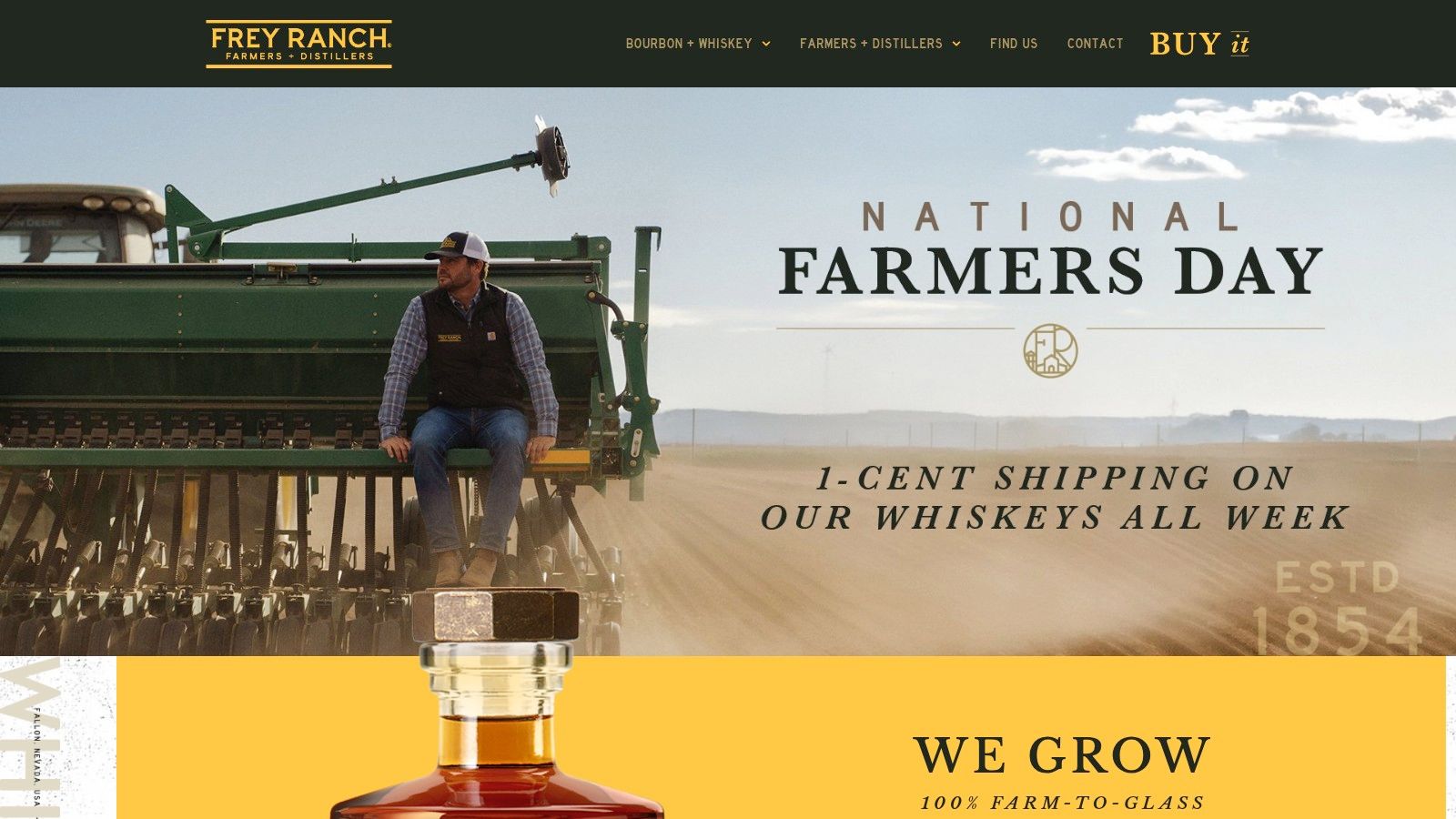
Frey Ranch is the clearest farm-to-glass bourbon pick if you want grain character to show up first in a blind flight. The distillery sits on a 1,500-acre Nevada farm, and the family's agricultural history stretches back more than 165 years, with the ranch established in 1944 and the distillery founded in 2006 on the same property (Frey Ranch background). That setup matters in the glass, because estate-grown grain usually gives you a more defined, rooted profile than bourbon built from purchased inputs.
Start with the core 4-grain bourbon. It gives you the house style without extra finish influence, so you can read the grain bill clearly.
Practical rule: If you want to compare proof against the same recipe, move next to Farm Strength Uncut Bourbon. Frey Ranch's estate-distillery model also requires at least 85% of raw materials to be grown on the ranch's own land, a detail that helps explain why the whiskey tastes tied to place rather than generic.
The first bottle to buy is the flagship bourbon. It is the cleanest entry point for beginners, and it makes the grain story easy to follow once the glass opens up. If you visit, the ranch tastings and guided tours are the right stop for people who want to connect what they taste with where it is made. For a closer look at that side of the house, the Frey Ranch sustainability profile is worth a quick read.
2. New Riff Distilling
New Riff is the safest blind-tasting benchmark if you want a craft bourbon that stays disciplined. The draw here is Bottled-in-Bond consistency and non-chill filtered texture, which usually gives the whiskey more grip in the glass and a fuller finish. In a side-by-side flight, that combination helps you separate oak, spice, and grain without the whiskey feeling engineered to hide its edges.
Why it works in blind tasting
The flagship bourbon is the bottle to buy first, because it tells you exactly what the distillery wants its core house style to be. From there, the single-barrel program is where the comparison gets interesting, especially if you can find age-stated picks that run longer than the standard releases. New Riff's bottle-to-bottle transparency also makes it easier to read the label after the reveal and connect your notes to the production details.
Best use case: pour New Riff next to a sweeter bourbon and a higher-rye bourbon, then note whether the structure feels balanced or assertive.
What works: clear production ethos, reliable quality, and a single-barrel range that gives repeat tasters something real to chase.
What doesn't: limited releases can disappear fast, so don't plan a recurring program around bottles you can't reliably replace.
It's also a strong visit for people who like a working distillery rather than a polished theme stop. New Riff sits on the Kentucky Bourbon Trail, so it's an easy fit for travelers already moving through northern Kentucky.
3. Kings County Distillery
Kings County is the pick for drinkers who want a bourbon that reads more malted and grain-forward than classic Kentucky sweetness. The Brooklyn Navy Yard location helps explain the identity, because the distillery leans into a house style built around 80% New York organic corn and 20% Golden Promise barley, then double pot distills the whiskey (Kings County background). That combination usually pushes the glass toward a richer, toastier texture with more barley influence.
If you're tasting blind, Kings County is useful because it doesn't try to hide its signature. The Peated Bourbon is the obvious curveball, but even the straight bourbon tends to stand apart from more conventional profiles. The first bottle to buy should be the straight bourbon, not the experimental release, because you want the house style before the finish-heavy bottles start dominating your notes.
A visitor who likes malt whisky often finds Kings County easier to identify blind than a standard Kentucky bourbon.
The onsite cocktail bar and visitor experience make it a strong stop for newer whiskey drinkers who want to compare neat pours with a finished cocktail afterward. The trade-off is price, which tends to run higher than many craft peers for standard 750 ml bottles. That's not a reason to skip it, but it does mean you should buy for distinctiveness, not bargain value.
4. Chattanooga Whiskey
Chattanooga Whiskey belongs on a blind flight because it doesn't taste like a classic Kentucky bourbon clone. The distillery's Tennessee High Malt approach builds a malt-forward, four-grain bourbon style, and that grain makeup shows up fast once the glass opens up. If you want to understand how malt changes bourbon's mid-palate, this is one of the clearest comparison points in the category.
What to taste for
The flagship Chattanooga 91 is the logical first bottle, because its solera-style release gives you the house identity in a broadly available format. After that, Cask 111 pushes the experience in a more assertive, unfiltered direction, and the Experimental series gives you a read on how the distillery handles finishes and limited ideas. For a beginner, the best move is to compare the core bottles before chasing the more unusual releases.
Blind-tasting checkpoint: look for malt depth, how quickly the oak arrives, and whether the finish feels layered or just busy.
Visit note: broad U.S. distribution means you don't have to rely on a single trip to know the brand, but a visit still helps if you want to understand the fermentation and blending choices.
Internal read: the broader craft-whiskey trail perspective is worth a look at this craft whiskey distillery guide.
This is a strong pick for comparative flights because the lineup spans multiple proofs and finishes. The downside is simple, some experimental vintages are limited or state-specific, so the bottle you love may not be easy to replace.
5. Kentucky Peerless Distilling Co.
Kentucky Peerless is the city stop that rewards people who care about full on-site control. The distillery in downtown Louisville handles milling through barreling and bottling, and that completeness tends to show up as a cohesive house profile in the glass. The bourbon often feels bold and polished, which makes it a solid blind-tasting choice when you want to compare a premium craft bourbon against more grain-forward or more heavily finished peers.
Start with the small batch
The first bottle to buy is the Small Batch Bourbon, because it gives you the clearest read on the house style before you move into Double Oak, Toasted, or other specialty finishes. That matters in a blind flight, since finishes can dominate the palate and make it harder to tell whether you're tasting the base spirit or the barrel treatment. Peerless also makes sense for drinkers who like a frequent single-barrel option, because those bottles let you track how the core style shifts across picks.
The guided tours are one of the better visitor experiences in Louisville, and the 75 to 90 minute format gives enough time for tastings without feeling rushed. The trade-off is premium pricing, so I'd buy here when you want a polished, full-bodied bottle rather than a casual everyday pour. If you want the deeper brand story, the best Kentucky bourbon distilleries overview fits naturally with Peerless's heritage angle.
6. Starlight Distillery
Starlight is the most useful stop for anyone who wants to study finishing without losing sight of the base bourbon. The Huber family's Indiana farm setting gives the distillery a grounded identity, but the true story is the range of cask types, from VDN and Armagnac to Toasted and Amburana “Cigar Batch”. In a blind tasting, that range teaches you quickly whether you like finished bourbon that adds nuance or finished bourbon that takes over the whole glass.
How to buy here
Start with the Bottled-in-Bond line if you want a steady reference point. Once you know that baseline, move to a finished release and compare the before and after effect. The single-barrel program also helps if you want to taste cask variation without jumping straight into the most polarizing finishes.
What works: transparent product specifications make selection easier, especially if you're building a tasting flight.
What doesn't: some releases, especially Amburana-style bottles, can be divisive, so don't expect every pour to land the same way with every drinker.
Visit note: this is a strong place to bring a couple or a small group, because the finishing program creates obvious conversation points.
If your goal is to learn how cask influence changes aroma, palate, and finish, Starlight belongs near the top of the list. If your goal is a straightforward daily bourbon, start elsewhere.
7. Southern Distilling Company
Southern Distilling Company, sold as Southern Star on the house line, is a practical pick for drinkers who want breadth. The North Carolina producer works across wheated, high-rye, and cask-strength bourbon, which gives you a broad blind-tasting spectrum without leaving one distillery family. That range matters, because beginners often think they dislike a brand when they really just dislike one mash bill or proof point.
Best first bottle
Choose Paragon Bottled-in-Bond Wheated Bourbon first if you want the clearest entry into the lineup. A wheated bottling usually shows a softer profile than high-rye expressions, so it gives you a controlled baseline before you move to the bolder bottles. The honey-finish variants are useful later, once you know whether you want extra sweetness layered on top of the base whiskey.
The visitor center in Statesville keeps the experience approachable, and the active North Carolina retail footprint makes Southern Distilling a practical bottle to re-find if you like what you taste. The main caution is that some early or limited batches can vary in maturity, so don't assume every SKU behaves the same. This is a house to sample methodically, not one to judge off a single bottle.
Buying rule: if a distillery offers wheated, high-rye, and cask-strength versions, taste them in that order. The softer bourbon teaches your palate the base style before the alcohol heat climbs.
Top 7 Craft Bourbon Distilleries Comparison
| Distillery | Implementation complexity | Resource requirements | Expected outcomes | Ideal use cases | Key advantages |
|---|---|---|---|---|---|
| Frey Ranch Distillery | High, full farm-to-glass with on-site malting/distillation | Large acreage, farming labor, malting & distilling equipment, barrel inventory | Grain-forward 4‑grain bourbons, estate-focused limited releases | Terroir-focused tastings, ranch visits, collectors of estate bottlings | Estate-grown control; distinctive grain profile; complimentary tours |
| New Riff Distilling | Moderate, consistent Bottled‑in‑Bond processes and single‑barrel program | Kentucky mash/aging warehouses, bottling, single‑barrel selection infrastructure | Reliable bottled‑in‑bond core, age‑stated and single‑barrel offerings | Benchmark tastings, collectors seeking single barrels, trail visitors | High consistency and quality; transparent single‑barrel program |
| Kings County Distillery | Moderate‑High, pot distillation and creative finishing | Pot stills, specialty malts (Golden Promise), finishing casks, urban site | Malt-accented, pot‑distilled bourbons and innovative finished expressions | Tasting flights, urban visitors, drinkers seeking malty profiles | Distinctive malt-forward flavor; award‑winning creative releases |
| Chattanooga Whiskey | Moderate, solera blending plus small‑batch production | Malted four‑grain mashbills, solera system, experimental finishing capacity | Malt-forward solera releases, unfiltered small batches, frequent limited finishes | Comparative blind tastings, experimental/limited-edition collectors | Clear alternative profile to Kentucky; varied proofs and finishes |
| Kentucky Peerless Distilling Co. | High, full grain‑to‑bottle revival with diverse finishing | Full production line (milling to bottling), barrel finishing programs, visitor facilities | Full‑bodied small batches, Double Oak/toasted finishes, single barrels | Premium tasting experiences, collectors seeking robust finishes | Consistent house profile; premium visitor tours in Louisville |
| Starlight Distillery | Moderate, extensive finishing program with single‑barrel focus | Family farm sourcing, many cask types for finishing, single‑barrel selection | Wide variety of finished bourbons, Bottled‑in‑Bond benchmark, polarizing finishes possible | Flights and blind tastings, finish‑focused collectors, educational comparisons | Broad finishing variety; transparent product specifications |
| Southern Distilling Company (Southern Star) | Moderate‑High, large grain‑to‑glass craft operation and contract services | Large production capacity, contract distilling infrastructure, visitor center | Diverse lineup (wheated, high‑rye, cask‑strength, honey‑finishes) | Broad retail availability, tours, contract distilling clients | Wide product range and availability; strong regional presence and tours |
Build Your Own Bourbon Flight at Home
The easiest way to use this list is to turn it into a small, controlled flight. Pick two or three expressions with different grain styles, pour them at similar proof, and taste them in a set order so one high-proof whiskey doesn't flatten everything that follows. A wheated bourbon, a high-rye bourbon, and one finished bottle usually give you enough range to learn what your palate likes.
Blind sampling helps because brand and price cues disappear. You notice texture, oak balance, spice, and finish length before you start guessing which bottle should be impressive, and that's exactly where newer whiskey drinkers improve fastest. A quarterly blind kit such as Blind Barrels can supply that comparison set from small American craft distilleries before you commit to full bottles, and it fits the same method this guide uses.
Keep the notes simple. Write down aroma, palate, and finish, then add one line on whether you'd pour it again, buy it again, or only drink it in a flight. That's enough to separate a one-off novelty from a bottle you'll want on the shelf.
If you want a tasting format that removes brand bias and keeps the learning curve fun, Blind Barrels is built for that kind of comparison. Each quarterly kit gives you blind samples from small American craft distilleries, plus tasting tools that help you record aroma, palate, and finish before the reveal. It's a practical way to explore craft bourbon, then decide which bottles deserve a full pour at home.