

You're staring at a gift list, a deadline, and the familiar fear that he already owns anything worth buying. Another shirt feels lazy. Another gadget feels risky. A bottle of whiskey sounds promising until you remember that choosing the wrong style can turn a thoughtful present into shelf decoration.
The smartest best gifts for him aren't selected by price alone. They fit his habits, create a useful moment, and give him something he wouldn't necessarily choose for himself. That's why a structured whiskey experience can beat the obvious labeled bottle, especially when you know he enjoys whiskey but don't know whether he prefers bourbon, rye, malt whiskey, smoke, spice, oak, or higher proof.
Why the Right Gift Matters More Than the Price Tag
Start with three filters.
- Budget tier: Decide what feels comfortable for the occasion before browsing. A birthday, holiday, or milestone doesn't need the same level of spending.
- Novelty versus longevity: Ask whether he'll enjoy the gift once, use it repeatedly, or discover a new interest through it.
- Shared or solo: A practical accessory may suit a private hobby, while a guided tasting can become an evening for a couple, friends, or a host and guests.
This framework removes much of the panic. You're not searching through every possible product for men. You're matching a gift to a person's behavior and to the memory you want the gift to create.
A man who dives wants something different from a man who collects watches, cooks every weekend, or keeps a whiskey shelf. If his hobby is highly specific, start with a specialist guide such as find dive gear gifts rather than guessing at equipment. The same principle applies to whiskey. You'll make a better choice by understanding how he drinks than by selecting the bottle with the most impressive label.
Use the three filters before you shop
For a beginner, prioritize low commitment and clear guidance. A tasting glass, sample set, and simple notes can teach more than a full bottle chosen by someone else. For an enthusiast, look for originality, such as an independent craft expression or a comparative tasting that gives him something to discuss.
Collectors need a different approach. They may already have more bottles than they can reasonably finish, so another standard release can feel like clutter. A rare allocation, private barrel selection, or discovery format may suit them better, provided it adds access, context, or a new sensory challenge.
The final question is whether the gift should create time together. Experience-based gifts have become a significant part of major-market gift buying. In 2025, approximately 30% of Father's Day shoppers planned to give an experience gift, up from 23% in 2019, an increase of 7 percentage points, or roughly 30% relative growth (National Retail Federation gift spending context).
Practical rule: If you know his exact taste, buy the specific object. If you know his hobby but not his preferences, buy a format that helps him discover them.
For more alcohol-focused options, compare this approach with the ideas in alcohol gifts for men. The strongest choice usually isn't the most expensive item. It's the one that respects how he spends his time.
Experiences Versus Products and Why Both Have a Place
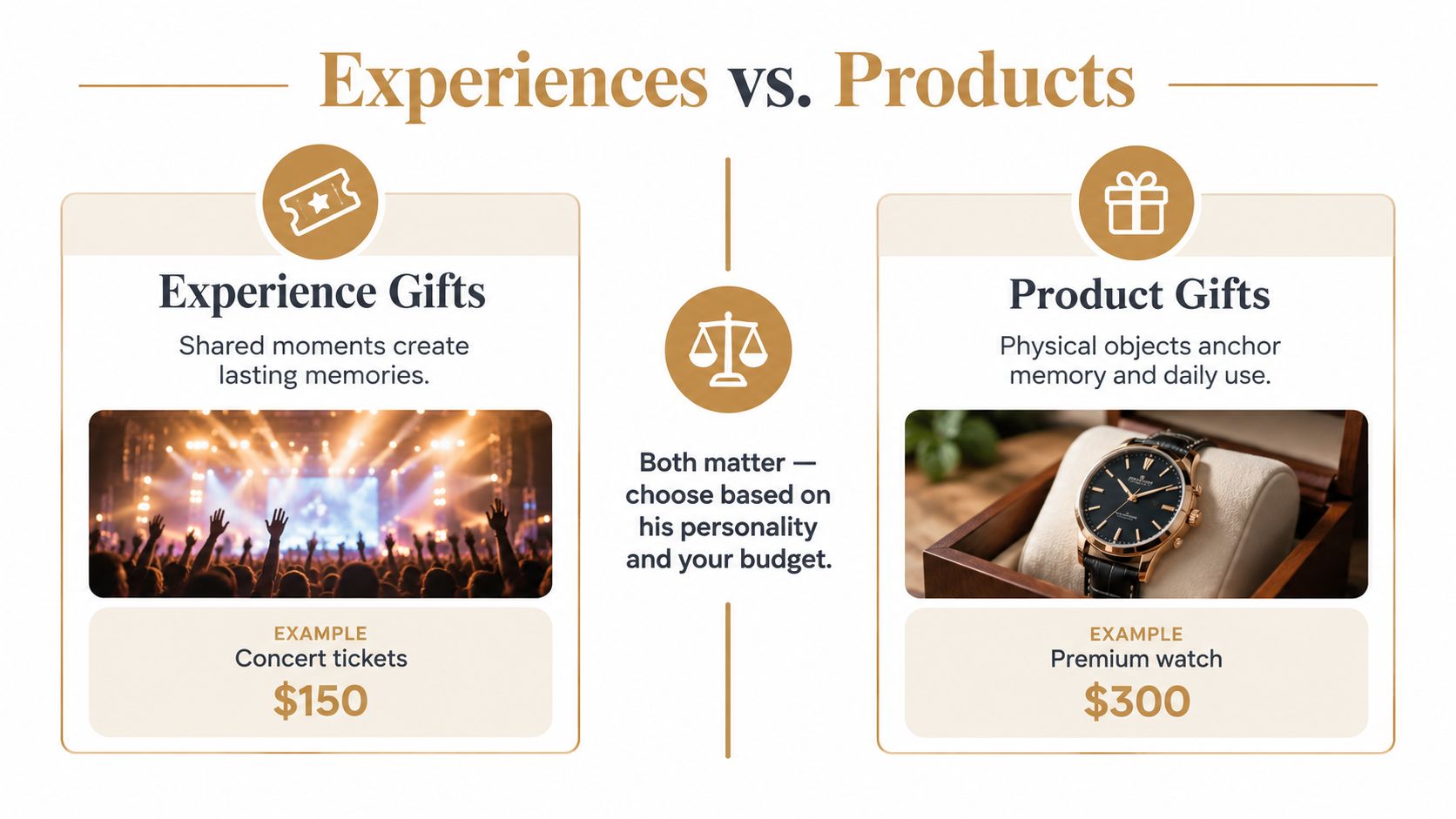
A product gives someone an object. An experience gives someone a story. The best gifts often combine both, using a tangible item as the anchor for an activity rather than forcing you to choose between a wrapped package and a memorable event.
A premium watch can become part of someone's daily routine. Concert tickets create a night he'll remember with the person beside him. Neither format wins automatically. The right choice depends on whether he values ownership, participation, or both.
Choose by certainty, not by category
A collector who tracks releases and knows exactly which bottle he wants will appreciate a specific product. In that case, a bottle from a sought-after producer or a hard-to-find allocation makes sense because the buyer already understands the recipient's preferences.
A casual enthusiast presents a different problem. He may enjoy whiskey broadly but not know whether he favors a sweet bourbon, peppery rye, smoky malt whiskey, or a lighter grain profile. Giving him another large bottle assumes the answer. A curated tasting lets him participate in finding it.
The same distinction applies to social habits. A solo drinker may prefer a tulip-shaped glass and guided notes. Someone who hosts friends may get more use from multiple samples, shared scorecards, and a tasting format that gives everyone a role.
Experience gifting has grown beyond travel and tickets. A home tasting can be quiet, affordable, and flexible. It doesn't require a reservation, a long drive, or a fixed schedule. It can also work for someone who doesn't consider himself an expert because the activity supplies the structure.
For more unconventional options outside whiskey, surprise gift ideas for him can help when a standard product feels predictable. The decision rule remains simple:
- Exact taste known: Choose a specific object.
- Hobby known, taste uncertain: Choose a practical item or discovery format connected to that hobby.
- Couple or group involved: Favor an experience with enough structure to keep the evening moving.
- Collector already owns plenty: Buy access, education, or comparison rather than more volume.
Whiskey is especially well suited to the blended format. A glass is useful on its own, but a glass paired with coded samples, aroma prompts, and a scorecard becomes an activity. The product remains after the experience, while the experience makes the product meaningful.
Whiskey Gifts for Every Type of Drinker
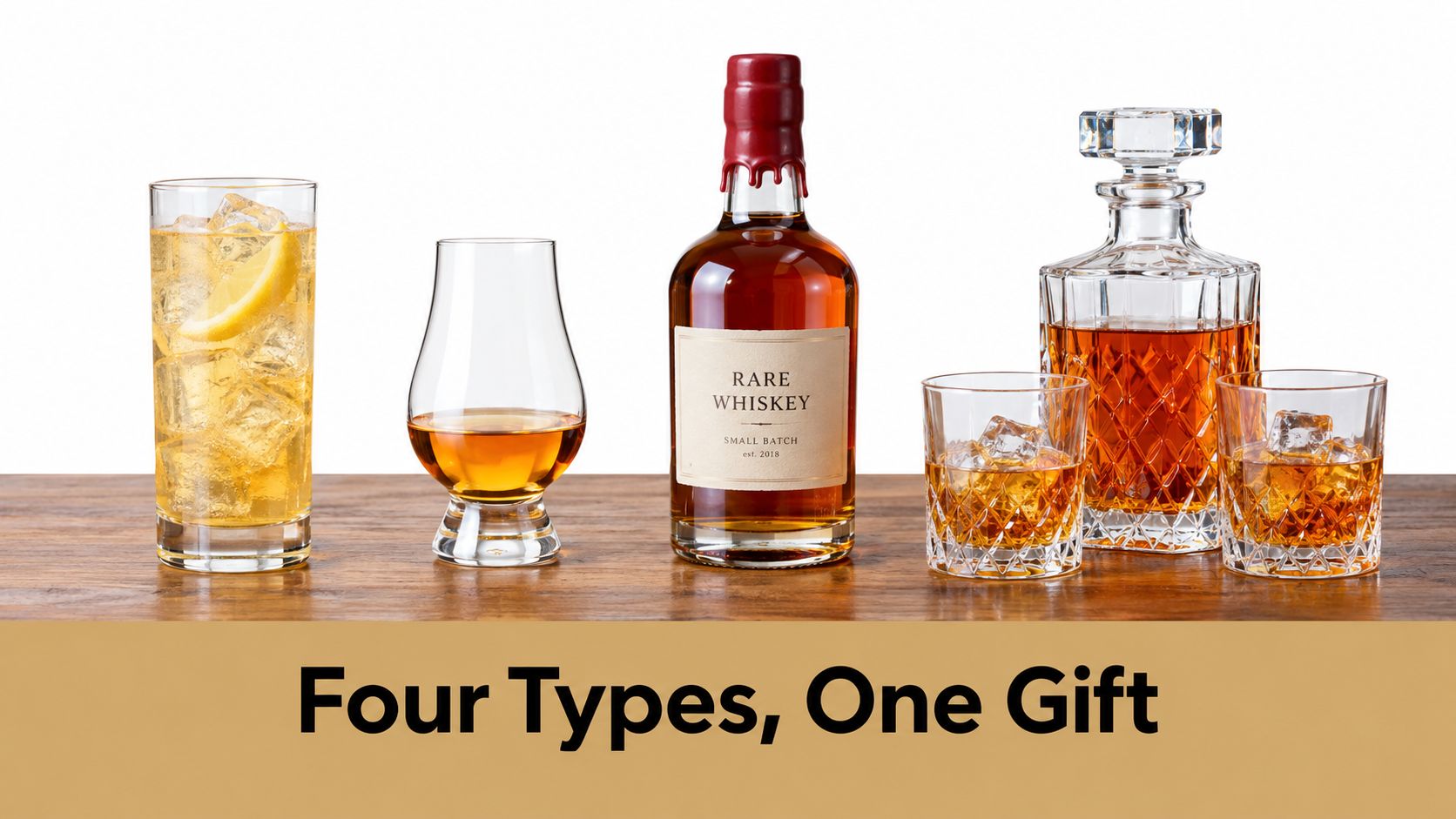
A whiskey gift fails when it guesses the bottle before it understands the drinker. Start with his habits, then choose a format that lets him taste, compare, or share instead of forcing one expensive answer.
The curious beginner
Give a starter tasting bundle rather than a large bottle without context. Include a lead-free tulip-shaped tasting glass, guided notes, water, and several small samples. He can taste each whiskey neat, add water gradually, and compare how the aroma, flavor, and texture change.
Keep the instructions simple. Ask him to look for sweetness, spice, fruit, oak, smoke, warmth, and texture before introducing terms such as esters or tannins. The goal is not perfect identification. It is a repeatable method for paying attention, which makes tasting less intimidating and more useful.
Bourbon provides a clear first lesson because its category has defined production requirements. U.S. bourbon must use a mash bill containing at least 51% corn and must rest in new, charred oak containers. Straight bourbon adds a minimum aging requirement of two years in new charred oak containers (New Riff Distilling's bourbon guide). Those rules give beginners a practical reason to connect caramel, vanilla, toast, and oak with the way bourbon is made.
The opinionated enthusiast
Choose an American craft whiskey from a producer with a distinct point of view. Examine the grain bill, proof, barrel treatment, and maturation environment instead of trusting a polished front label. Rye often brings pepper and spice, bourbon commonly emphasizes sweeter grain and oak, and malt whiskey can provide a different grain-led profile and texture.
The craft category covers a wide range of producers. The American Craft Spirits Association reported approximately 3,000 U.S. craft distilleries in 2024, compared with about 600 in 2013. Its definition includes independent producers making fewer than 750,000 proof gallons annually (Whisky Advocate's craft whiskey overview). That scale makes “craft” a poor substitute for research. Check who made the whiskey and how the liquid was constructed.
Give the enthusiast a reason to inspect the bottle. Add tasting prompts or pair it with a second expression so he can compare grain, proof, barrel influence, and finish.
The collector
Collectors make bottle gifts difficult because they may already own the release, know where to find it, or have ruled it out. A rare allocation, private barrel selection, or curated discovery set offers a stronger angle through scarcity, provenance, or comparison.
Price alone does not make a gift personal. A bottle that is difficult to source can be exciting, but only when it matches his interests. If his preferred category is unclear, choose a discovery format that reduces the risk of an expensive mismatch.
The host
For the man who turns drinks into an occasion, choose a shared tasting experience. Include several samples, identical glassware, water, neutral crackers, and a simple scorecard. He can invite friends or use the setup for a date night.
The same format gives a beginner useful structure. Everyone tastes the same pours under the same conditions, so conversation replaces the pressure to perform expertise. The gift creates an activity, not just another bottle on a shelf.
| Drinker | Gift profile |
|---|---|
| Beginner | Glass, samples, and guided notes |
| Enthusiast | American craft bottle with production details |
| Collector | Allocation, private pick, or discovery format |
| Host | Shared tasting kit with scorecards |
For more whiskey-specific ideas, use this guide to gifts for whiskey lovers, then match the final choice to his actual drinking habits.
Budget Tiers That Match Real Spending Habits
Set the budget before you fall for the packaging. A premium gift should feel intentional, not financially uncomfortable. The National Retail Federation reported that U.S. holiday shoppers expected to spend an average of $902 in 2024, with about $641 allocated to gifts for family, friends, coworkers, and others. The gift portion increased from $620 in 2023 (YouGov's U.S. gifting comparison).
That context supports a tiered approach, but the tier should describe the gift's role, not its status.
Under $75
This is the strongest range for a thoughtful birthday, stocking gift, or casual present. Choose a quality tasting glass, a guided tasting kit, or a curated sample set. Tastings under $30 can work especially well when they include instructions rather than arriving as anonymous miniatures.
A glass alone is practical but incomplete. Add aroma prompts, a notebook, or a small food pairing so the recipient has a reason to use it immediately.
$75 to $200
This range suits a partner, holiday gift, or enthusiast's birthday. Consider a premium bottle, a quarterly subscription, or a small-batch bottle paired with tasting accessories.
A subscription makes sense when you know he enjoys discovery and can use the deliveries. A bottle makes sense when you know his style. If you know only that he drinks whiskey, choose the format with lower selection risk.
$200 and above
Reserve this tier for milestones, major anniversaries, or a collector whose preferences you understand well. An allocated bourbon, private barrel pick, premium tasting, or distillery experience can justify the spend because it offers access and context, not merely more liquid.
Don't use this tier to compensate for uncertainty. A high-priced bottle in the wrong style is still the wrong bottle.
| Budget tier | Example gifts | Best for |
|---|---|---|
| Under $75 | Glassware, guided kit, curated samples | Stocking gifts, casual birthdays, beginners |
| $75 to $200 | Premium bottle, quarterly subscription, small-batch set | Partners, holidays, enthusiasts |
| $200 and above | Allocated bourbon, private barrel pick, distillery experience | Milestones, collectors, confirmed preferences |
The occasion should guide the spend, but the recipient's habits should guide the format. A modest tasting he uses beats an expensive bottle he never opens.
Why Blind Tasting Beats Buying a Named Bottle
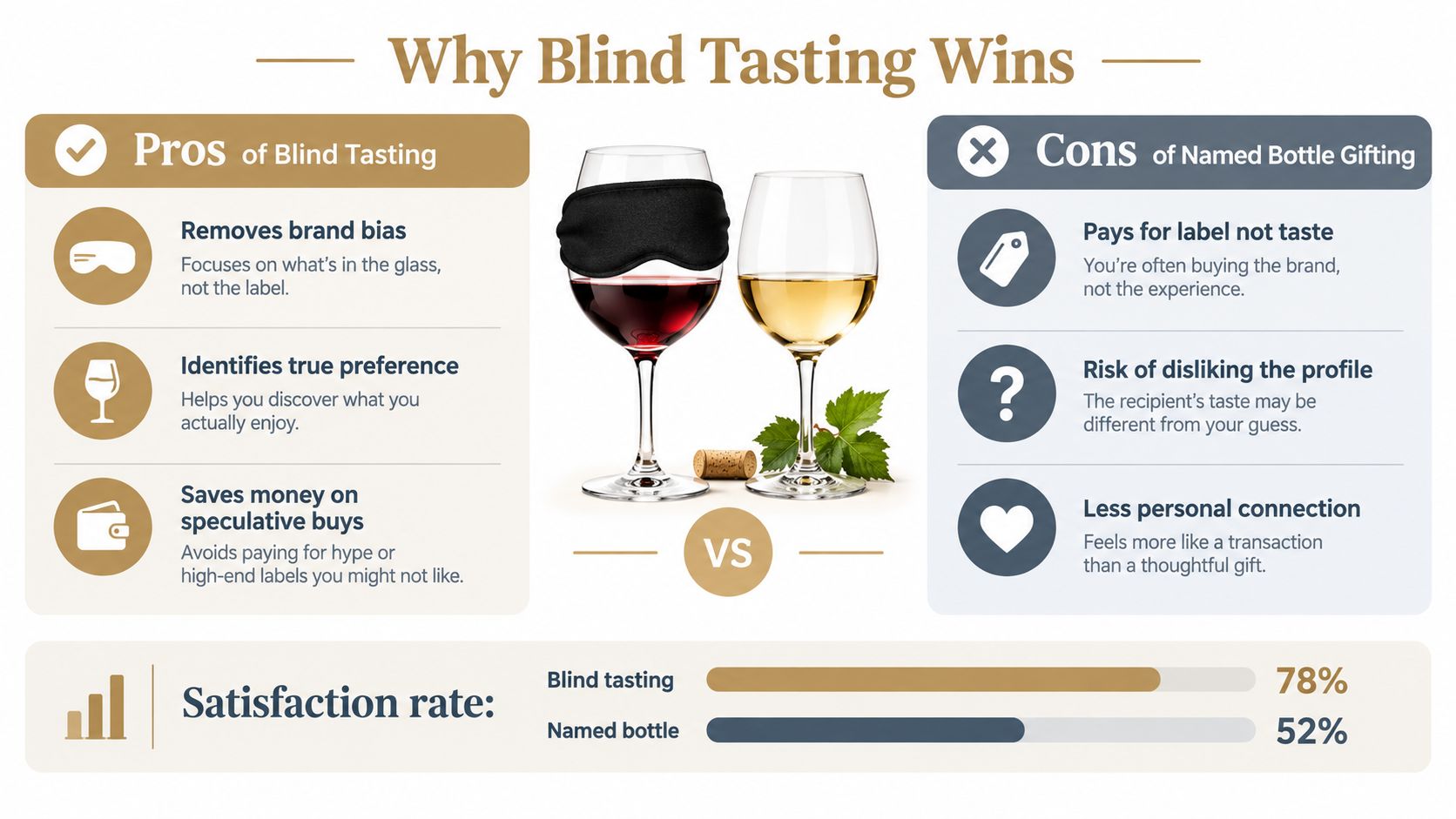
A named bottle arrives with expectations attached. The recipient sees the producer, price, age statement, packaging, and reputation before tasting the whiskey. Those details can influence how he judges what's in the glass.
Consumer sensory research identifies informed testing, where brand or price is disclosed, as problematic because non-sensory information can bias liking judgments. Blind testing allows aroma and flavor attributes to connect more directly to preference (consumer sensory research on informed and blind testing).
The format that makes blind tasting useful
A serious gift kit should include:
- Four coded samples: Enough variety for comparison without turning the activity into a marathon.
- Identical serving volumes: Each pour should receive the same treatment.
- Consistent glassware: Different vessels can change aroma delivery.
- A structured scorecard: Separate aroma, palate, finish, proof, age estimate, and whiskey category.
- Water and neutral crackers: These reduce carryover between samples.
- A two-stage reveal: Record impressions before disclosure, then compare them after identities are revealed.
Randomize the sample order and keep serving temperature consistent. The point isn't to prove that the recipient has a perfect palate. The point is to discover what he prefers when the label can't steer the answer.
The best blind tasting question isn't “Did you guess the bottle?” It's “Would you buy this profile again?”
A beginner can participate by describing what he notices in ordinary language. He might prefer the whiskey that feels sweeter, spicier, fruitier, smokier, or less hot. That information is valuable even if he can't identify the age or category.
Disliking one sample doesn't make the gift fail. It creates useful contrast. The recipient learns that he prefers caramelized oak over smoke, rye spice over sweetness, or lower proof over intensity. That personal preference dataset can guide future full-bottle purchases more reliably than reputation alone.
A blind subscription such as Blind Barrels delivers four coded samples from small American craft distilleries, a tasting table, a reveal process, and a game involving age, proof, and whiskey type. It fits the gift category because it combines discovery, education, and a social ritual without requiring the buyer to guess one full bottle.
For a deeper look at the format, use this guide to blind whiskey tasting. The argument is straightforward: taste first, commit later.
A Beginner-Friendly Way to Taste Like a Pro
You don't need advanced vocabulary to taste whiskey well. You need a quiet setting, a suitable glass, and a repeatable sequence that prevents the first sip from becoming the entire evaluation.
Observe
Pour a small amount into the glass and examine its color and clarity. Don't treat appearance as proof of quality. Use it as a starting observation, then move on to aroma and flavor.
A tulip-shaped tasting glass is more useful than decorative barware for this purpose. Its broader bowl gives volatile compounds room to evaporate, while the narrower rim directs those compounds toward the nose. Comparative aroma research found stronger aroma performance from tulip-shaped whisky glasses than from other tested vessels (comparative whisky glass aroma research).
Smell
Bring the glass near your nose before swirling. Take a gentle smell and identify broad impressions first, such as fruit, grain, oak, smoke, spice, caramel, or alcohol heat. Swirl carefully, then smell again.
The change matters. Swirling increases contact between whiskey and air, which can alter what reaches the nose. New drinkers should avoid forcing a precise answer. “Sweet oak” or “peppery grain” is already useful.
Sip
Taste the whiskey neat first. That establishes the spirit's undiluted baseline. Take a small sip and move it across the tongue and cheeks, noticing sweetness, spice, bitterness, texture, and heat.
Then add water one drop at a time. Water can soften the perception of alcohol and change how aromatic compounds present themselves, but too much dilution makes comparisons less useful (beginner whiskey tasting guidance). Compare the neat and diluted versions rather than assuming one is correct.
Finish
After swallowing, pay attention to what remains. The finish includes the flavors and sensations that linger, such as oak, pepper, sweetness, dryness, warmth, or smoke.
Use a quiet, well-lit room with minimal competing smells. Write notes immediately, even if they're basic. Readers interested in transferring sensory skills across drinks can also explore these expert tips for tasting Northern Spain wines, but the whiskey method stays the same: observe, smell, sip, and assess the finish.
Beginner shortcut: Don't chase tasting-note poetry. Record what you'd happily taste again.
Matching the Gift to His Actual Taste
Start with four questions before choosing a gift.
- Where is he in his whiskey journey? Beginners need guidance. Enthusiasts want contrast. Collectors value rarity or access. Hosts need a bottle or tasting others will enjoy.
- Does he want an object or an activity? Glassware, a bottle, or a notebook suits private use. Samples with scorecards create shared time.
- Which budget tier fits the occasion? Keep a casual birthday gift modest, save premium choices for milestones, and never spend more to compensate for uncertainty.
- Can you identify his exact style? If you cannot, choose a format that helps him discover it.
That fourth answer should control the purchase. Knowing that he drinks whiskey does not reveal whether he prefers bourbon, rye, malt whiskey, smoke, sweetness, or higher proof. A discovery set lets him compare styles before committing to a full bottle.
The same framework matches the recipient to the format: four questions, four practical choices. Give the beginner guidance, the enthusiast contrast, the collector access, and the host something shareable. If his preferences remain unclear, prioritize tasting over a named bottle.
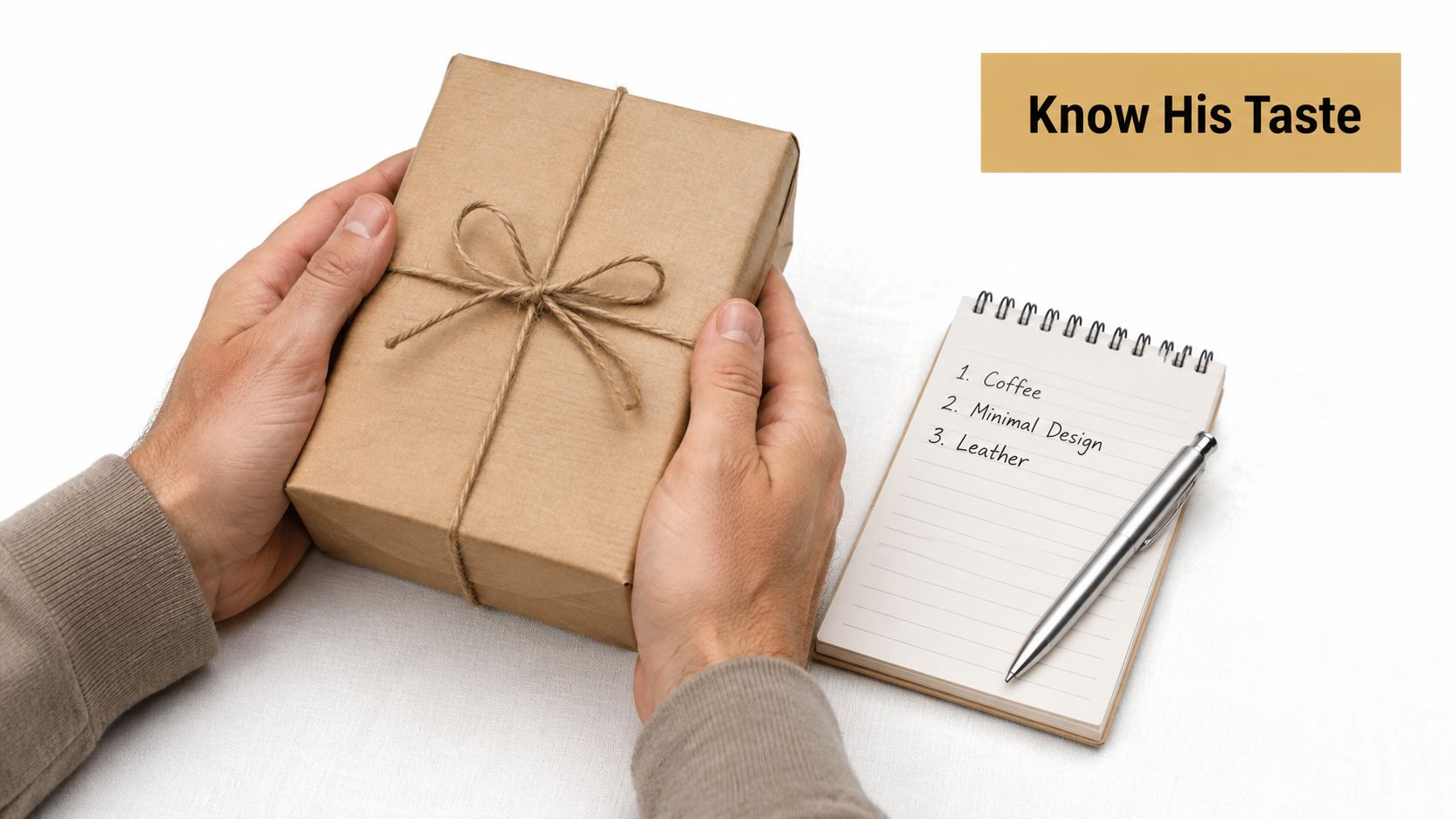
For someone with more bottles than he can drink, choose education and discovery. For a couple, choose a shared tasting. For a beginner, choose a guided starter format. For an uncertain buyer, choose taste before commitment.
Blind Barrels offers quarterly and annual blind whiskey tasting subscriptions with four samples from small American craft distilleries, tasting guidance, reveal details, and a palate-scoring game. Visit Blind Barrels to turn a risky bottle guess into a shared discovery experience.