

If you're trying to find the best small batch bourbon, it's easy to get tangled up in the jargon. Simply put, small batch bourbon is a premium whiskey born from blending a limited number of hand-picked barrels. A master distiller chooses these specific barrels for their exceptional quality and distinct flavor, a careful curation that sets this style apart from its mass-market cousins. It’s a fantastic starting point for anyone new to whiskey, especially when exploring the world of American craft whiskey brands.
What Makes a Bourbon Small Batch
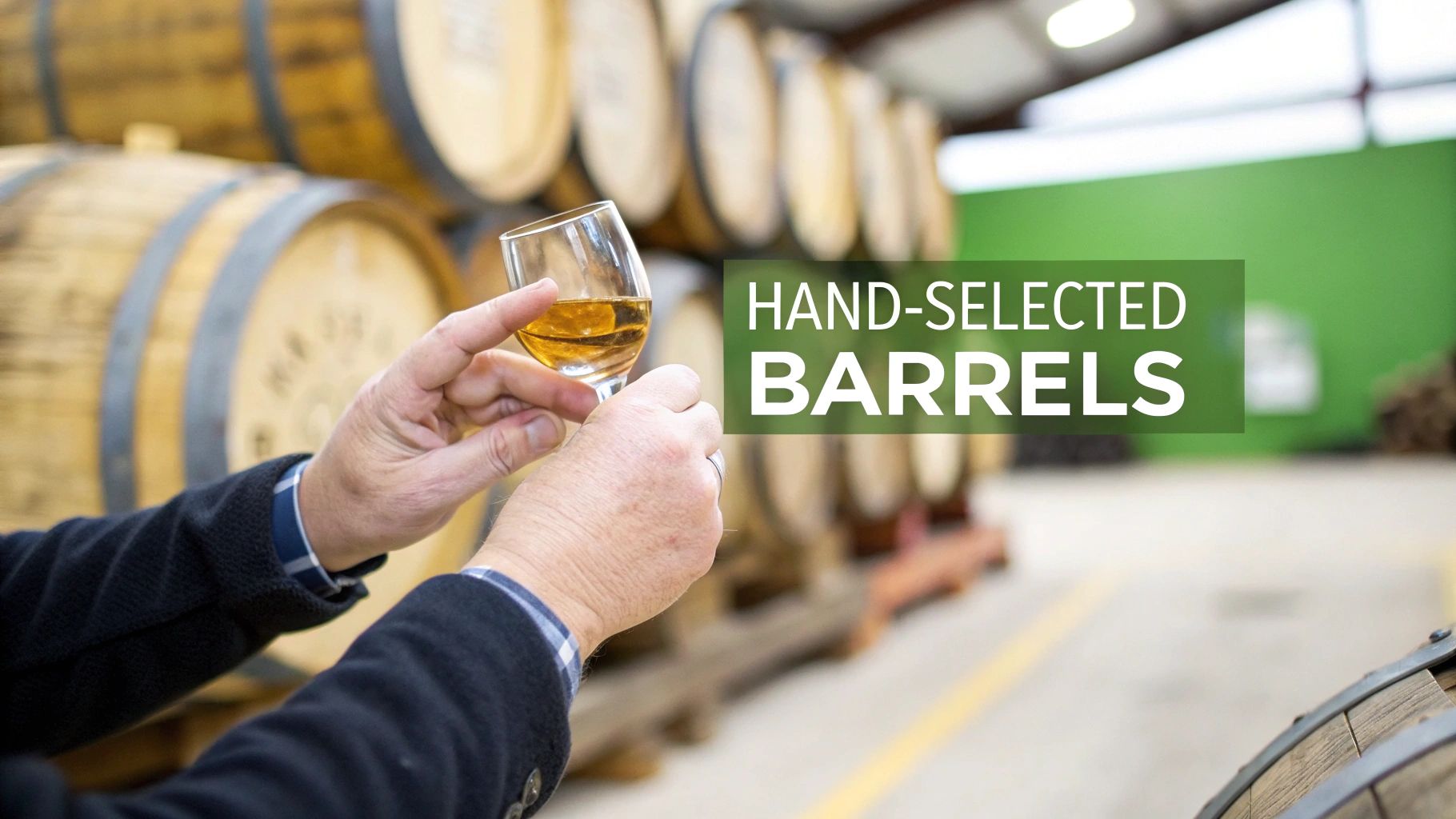
For anyone just dipping their toes into the world of American craft whiskey, the term "small batch" can feel a little ambiguous. The best way to think about it is like a chef creating a signature soup. Instead of just dumping the entire pantry into the pot, they meticulously select only the finest, most flavorful ingredients to build a specific, harmonious taste. Small batch bourbon is crafted with that same philosophy.
A distiller might have hundreds, even thousands, of barrels aging away in their rickhouse, but each one develops its own unique personality over time. To create a small batch release, they'll sample barrel after barrel, choosing a select few that, when married together, create the exact flavor profile they’re chasing. It’s less about the numbers and more about artistry and intent.
The Art of Selection
While there's no hard-and-fast legal rule on the barrel count, the generally accepted industry standard is fewer than 100 barrels per batch. This focused approach is what allows distillers to achieve a complex, consistent product that lets those unique characteristics shine.
In a massive, thousand-barrel blend, the subtle nuances from any one barrel would be completely washed out. Small batch blending, on the other hand, preserves them. This selective process is really a cornerstone of the craft whiskey movement. To get a better handle on what makes these spirits so special, you can dive deeper with our complete guide to small batch and craft whiskey.
Why It's a Great Starting Point for New Drinkers
For those just setting out on their whiskey journey, small batch bourbons are an ideal place to start. They offer a more polished and approachable experience than the sometimes-wild variations you'll find in single barrel expressions. Here’s why they’re such a great entry point:
- Consistency: Every bottle from a single small batch release is going to deliver that same high-quality, intentional flavor profile. This reliability is key when you're still learning what you like.
- Complexity: Blending multiple barrels adds layers of flavor—you might get caramel from one barrel, a pop of spice from another, and deep oak from a third, all coming together for a richer taste.
- Craftsmanship: When you choose a small batch bourbon, you’re often supporting American craft distillers who put quality way ahead of quantity.
A small batch bourbon tells a story of balance and precision. It’s the distiller’s carefully curated expression, designed to deliver a specific, memorable experience in every single glass.
Why American Craft Distillers Lead the Way
While the big, historic distilleries certainly produce some fantastic bourbon, the real heart and soul of the small batch movement beats strongest within America's independent craft distilleries. These smaller producers are the true innovators and artists of the whiskey world, and their bottles are often the best place for a beginner to discover unique flavors.
Because they aren't bound by the pressure to produce millions of identical bottles, they have the creative freedom to explore flavors and techniques that larger companies might see as too risky. This spirit of independence is what makes exploring American craft whiskey so exciting.
Think of it like the difference between a massive chain restaurant and your favorite local farm-to-table bistro. Both can serve a good meal, no doubt. But the bistro owner is right there in the kitchen, experimenting with fresh, local ingredients and pouring their personal passion onto every single plate. Craft distillers have that same hands-on connection, always prioritizing quality over sheer quantity.
This absolute commitment to artisanship is what makes the hunt for the best small batch bourbon so darn exciting. It’s a journey of discovery that often leads you to the most unexpected and delightful flavors.
Innovation in Every Bottle
Craft distillers are famous for pushing the boundaries of what bourbon can even be. They love to experiment with unique grain recipes, or mash bills, sometimes swapping traditional corn or rye for ancient grains like spelt or triticale. This is how you get flavor profiles you simply won't find sitting on the average liquor store shelf.
They also lead the charge with creative aging and finishing techniques. It's not uncommon for a craft distiller to finish their bourbon in a port wine cask, a rich stout beer barrel, or even a barrel that once held maple syrup. These special finishes add incredible layers of complexity and create a truly memorable pour.
- Unique Grains: Many craft distillers use locally sourced, non-GMO grains to create a bourbon with a genuine sense of place, or what the wine world calls terroir.
- Creative Aging: They might use smaller barrels to speed up the aging process or play with different char levels to coax out very specific flavors from the wood.
- Artful Blending: The final product is a direct reflection of the distiller's personal skill, as they meticulously blend barrels to achieve a precise and unique expression.
This intense focus on craft has clearly resonated with whiskey drinkers. The global small batch bourbon market has exploded to approximately USD 1.31 billion. In the U.S. alone, over 2,500 active craft distillers are contributing around $1.4 billion to the bourbon market. It's clear that more and more people are choosing quality over quantity.
The Story Behind the Spirit
When you choose a bourbon from a craft producer, you’re getting so much more than just a drink; you’re buying into a story of passion and persistence. These are often family-owned businesses or small, dedicated teams obsessed with perfecting their craft. You can dive into the rich history and innovation of some of these amazing producers in our look at great American craft spirits.
Choosing a craft small batch bourbon is about supporting American artisanship. It’s an investment in distillers who pour their heart into every barrel, creating unique spirits that tell a story of their origin and their maker.
How to Properly Taste Bourbon and Find Your Flavor
Tasting bourbon is so much more than just taking a drink. It’s an experience, a full-sensory deep dive into the incredible complexity American craft distillers work so hard to create. If you learn just a few simple techniques, you can move beyond simply "liking" a bourbon and start to understand why you like it. That's the real secret to confidently finding your next favorite bottle.
Forget all the intimidating tasting notes and overly complicated rituals you might have seen. At its core, properly tasting bourbon boils down to five simple steps that anyone can master. This process is all about slowing down, paying attention, and letting your senses pick up on all the subtle details hiding in the glass.
The Five Steps of Bourbon Tasting
For anyone new to whiskey, this structured approach is the best way to train your palate and start putting names to the flavors you're experiencing. It transforms drinking from a passive activity into an active, engaging exploration.
-
See: First, just look. Hold your glass up to a light source and take in the color. It can range from a pale straw to a deep, rich mahogany, and that color tells a story. A darker hue often hints at more time spent in the barrel, soaking up all the good stuff from the charred oak.
-
Swirl: Give the bourbon a gentle swirl in your glass. This little motion does two things: it coats the sides of the glass and helps release its aromatic compounds into the air. Watch for the "legs" or "tears" that run down the glass—thicker, slower-moving legs can be a sign of a higher proof or a richer, more viscous whiskey.
-
Smell: This is arguably the most important step. Bring the glass toward your nose, but don't stick it all the way in and overwhelm your senses. With your mouth slightly open (trust me on this), take a gentle sniff. See if you can pick out the big, classic aromas first—caramel, vanilla, and oak—before hunting for more subtle notes of fruit, spice, or even leather.
This infographic shows the simple but artistic journey from grain to barrel that defines small batch bourbon.
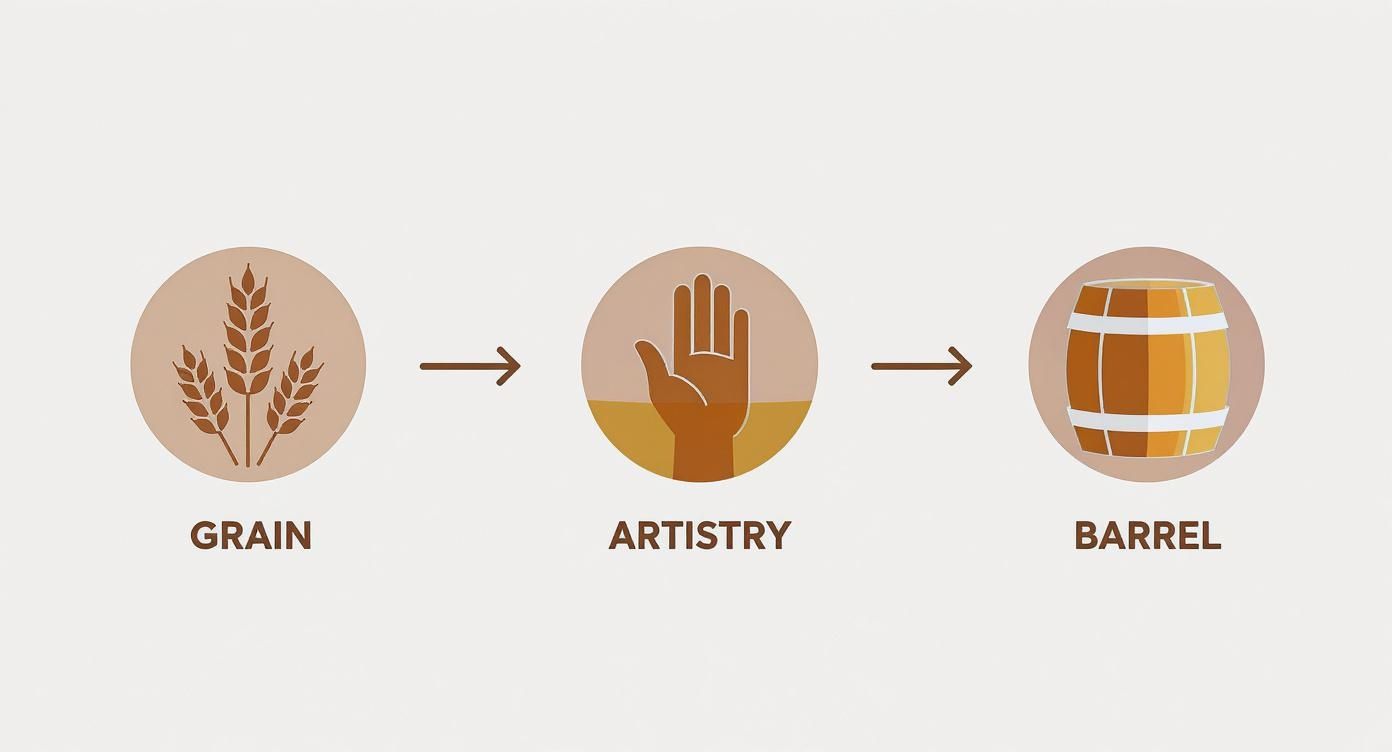
This whole process highlights how each stage, from the specific grains chosen to the distiller's unique artistry, contributes to the final aromas and flavors you experience in the glass.
-
Sip: Now for the main event. Take a small initial sip and let it coat your entire mouth. That first taste can be a bit intense, especially with a higher-proof bourbon, as it gets your palate used to the alcohol. This is where a great technique called the "Kentucky Chew" comes in. Gently swish the bourbon around your mouth like you're chewing on it. It sounds a little silly, but it exposes the liquid to all of your taste buds.
-
Savor: After you swallow, pay close attention to what happens next. That's the finish—the taste and sensation that lingers. Is it short and clean, or does it hang around for a while with a pleasant warmth? Do new flavors pop up at the end, like dark chocolate, tobacco, or a hint of citrus? This is where the bourbon leaves its lasting impression.
Tips for New Whiskey Drinkers
Jumping into the world of whiskey can feel a little overwhelming, but a few simple tricks can make the process way more enjoyable and educational. These tips will help you unlock even more flavor from your glass.
- Start with a Good Glass: A simple rocks glass works, but a Glencairn or tulip-shaped glass is even better. The shape concentrates the aromas, making it easier for you to smell all the nuances.
- Add a Drop of Water: Don't be afraid to add a few drops of water to your glass. This can slightly lower the alcohol proof and "open up" the bourbon, revealing more subtle aromas and flavors you might have missed.
- Take Small Sips: You're not drinking it like water. Tiny sips allow you to appreciate the complexity without overwhelming your palate with alcohol burn.
- Don't Rush the Finish: Pay attention to the aftertaste. That lingering flavor is a huge part of the experience and can often be the most rewarding.
Adding a few drops of water to your bourbon isn't cheating—it's a pro move. The water can dial back the alcohol's intensity and break apart certain chemical bonds, releasing new, more delicate aromas and flavors that were previously hiding.
For a more detailed walkthrough, check out our guide on how to taste whiskey like an expert, which is packed with even more pro tips.
By following these steps, you’ll build a much deeper appreciation for what's in your glass, turning the search for your perfect bourbon into a genuinely rewarding journey.
Decoding the Label to Find a Great Bourbon
Stepping into a well-stocked whiskey aisle can feel like trying to read a foreign language. The labels are crowded with terms that, while important, can be confusing if you're just starting your journey.
But here’s the secret: understanding just a few key elements can transform your shopping from sheer guesswork into a confident hunt for the best small batch bourbon for your palate. Think of a bourbon label as its recipe card and biography all rolled into one. It tells you exactly what’s in the bottle and the story of how it got there.
By learning to decode four crucial factors—Mash Bill, Age, Proof, and Barrel Selection—you’ll be able to predict a bourbon's character before you even pop the cork.
The Mash Bill: Your Flavor Blueprint
The mash bill is simply the recipe of grains used to make the bourbon. By law, it has to be at least 51% corn, which is where bourbon gets its signature sweetness. The other grains, known as the "flavoring grains," are where distillers really get to show off their creativity and define the whiskey's core personality.
- High-Rye Bourbons: When rye is the main flavoring grain, it injects notes of pepper, baking spices, and sometimes even a hint of mint. If you enjoy a bolder, spicier spirit, a high-rye mash bill is a great place to start looking.
- Wheated Bourbons: Using wheat instead of rye results in a much softer, sweeter, and smoother profile. These "wheaters" often have delicious notes of honey, caramel, and fresh bread, making them exceptionally approachable and a great choice for new drinkers.
Age and Proof: Markers of Maturity and Intensity
An age statement tells you how long the youngest whiskey in the bottle has spent maturing in a new, charred oak barrel. While older isn't automatically better—a bourbon can become bitter if it's "over-oaked"—age definitely contributes to depth and complexity. Many of the best small batch bourbons find their sweet spot between 4 to 8 years.
Proof, which is just twice the alcohol by volume (ABV), is a direct measure of intensity. A lower proof (80-90) bourbon is often smoother and more approachable for beginners. On the other end of the spectrum, a "barrel proof" or "cask strength" bourbon is bottled straight from the barrel, undiluted, delivering a powerful and concentrated flavor experience that's as pure as it gets.
Understanding the interplay between age and proof is key. A younger, high-proof bourbon might taste fiery and bold, while an older, lower-proof one could be exceptionally smooth and complex.
This kind of dedication to quality aging and blending is paying off big time. The high-end bourbon market continues to explode, with the U.S. bourbon industry recently hitting $5.3 billion in revenues. Super-premium segments—which are full of the best small batch bourbons—are growing at an impressive 18% rate.
With a record 14.3 million barrels currently aging in Kentucky, it's clear that people are rewarding distillers for their commitment to craft. You can dive deeper into these industry trends in this detailed bourbon outlook for 2025.
The information on a bourbon label isn't just marketing fluff; it's a window into the whiskey's soul. Here’s a quick reference guide to help you translate those key terms into flavors you can expect in your glass.
Decoding a Small Batch Bourbon Label
| Label Term | What It Means for You | Example Flavor Impact |
|---|---|---|
| Mash Bill | The grain recipe. High-rye is spicy; wheated is soft and sweet. | A high-rye mash bill might give you notes of cinnamon, clove, and black pepper. |
| Age Statement | How long the youngest whiskey in the blend matured in oak. | More time in the barrel often means deeper notes of oak, vanilla, and caramel. |
| Proof / ABV | The alcohol content. Higher proof means more intense, concentrated flavor. | A "barrel proof" bourbon delivers a powerful, undiluted taste of the whiskey. |
| Barrel Finish | Matured in a secondary cask (e.g., sherry, port) for extra flavor. | A port cask finish can add rich notes of dark fruit, chocolate, and red berries. |
This table is just a starting point, of course. The real fun begins when you start tasting and discovering how these elements come together for yourself.
Barrel Selection: The Distiller's Final Touch
Ultimately, the magic of small batch bourbon lies in the artful selection and blending of barrels. A master distiller is like a painter, and the barrels are their palette.
They carefully choose a handful of exceptional barrels that, when combined, create a final product that is far greater than the sum of its parts. This is the distiller’s signature—the final touch that ensures every single bottle delivers a balanced, complex, and intentional flavor experience.
A Smarter Way to Discover Your Perfect Bourbon
So, you’ve learned how to decode a label and appreciate the artistry behind the spirit. That’s a huge step. But let's be honest, staring down the whiskey aisle can still feel a little overwhelming. How do you go from knowing the theory to actually finding the best small batch bourbon for your palate without dropping a fortune on full bottles that just don't hit the spot?
The answer is simpler and way more fun than you think: blind tasting.
This is the ultimate equalizer. It strips away all the noise—the fancy label, the impressive age statement, the price tag, and the slick marketing. When you taste a bourbon blind, the only thing you have to go on is what’s in the glass. It’s the most honest way to figure out what you genuinely enjoy, free from any outside influence.
Developing Your Palate Without the Hype
Think of it like this: if you did a blind taste test between Coke and a generic store-brand cola, would you be surprised if you preferred the cheaper one? Without the iconic red can, your taste buds are the only judge. It's the exact same principle with bourbon. A beautifully designed bottle or a high price tag can trick your brain into thinking the whiskey inside is better than it is.
Blind tasting throws all of that out the window. It forces you to focus purely on the aroma, the flavor, and the finish. There's simply no better way to train your palate, helping you pick out specific notes and build a real understanding of your preferences. You’re not just buying whiskey anymore; you’re starting a genuine adventure in flavor.
Blind tasting is empowering. It lets your taste buds lead the way, revealing your true flavor preferences and giving you the confidence to trust your own palate over any critic or advertisement.
A Guided Journey into Craft Whiskey
Now, you could absolutely set up a blind tasting on your own. But if you really want a structured and eye-opening experience—especially when diving into the world of American craft whiskey—a curated tasting is the way to go. Services that specialize in blind tasting kits act as your personal guide, hand-picking unique and high-quality bourbons from small, independent producers you’d probably never find otherwise.
These experiences are all about shining a spotlight on the hidden gems from American craft distilleries. Instead of getting another bottle from a massive, well-known brand, you get to explore the incredible spirits coming from smaller operations that are all about passion and quality.
For newcomers and seasoned drinkers alike, this approach has some serious perks:
- Discover Hidden Gems: You’ll get your hands on exceptional small batch bourbons from craft producers who are truly pushing the boundaries of flavor.
- An Educational Experience: Guided tastings give you the story behind each distillery, explaining what makes their process and their whiskey so unique.
- Cost-Effective Exploration: You can sample several top-shelf whiskeys for a fraction of what it would cost to buy full bottles of each one.
- Build Real Confidence: By repeatedly tasting blind and comparing your notes to the big reveal, you build a powerful mental library of flavors. It makes you a much smarter, more discerning whiskey drinker.
This method transforms the search for the best small batch bourbon from a guessing game into a fun, interactive, and deeply personal journey. It’s a smarter way to explore the vast landscape of American whiskey, making sure every new discovery is a genuine reflection of what you love to drink.
Common Questions About Small Batch Bourbon
As you dive deeper into the world of American craft whiskey, you're bound to have some questions pop up. That’s perfectly normal. Think of this as a quick guide to clear up a few of the most common curiosities we hear from fellow bourbon lovers.
Getting these final pieces of the puzzle in place will build your confidence and make the hunt for that perfect bottle even more fun.
What Is the Difference Between Small Batch and Single Barrel Bourbon?
This is easily one of the most frequent questions we get, and the answer really gets to the heart of a distiller's philosophy.
A small batch bourbon is created by blending multiple, carefully chosen barrels together. The master distiller’s whole mission here is to create a specific, consistent, and beautifully balanced flavor profile that represents their signature style. It’s like a chef’s go-to recipe—every time you order it, you know exactly what delicious, curated experience you’re going to get.
A single barrel bourbon, as the name implies, is bottled from one individual barrel. Since no two barrels are identical, every single bottle is a unique snapshot in time. It’s more like the "special of the day" at a restaurant—it might be absolutely incredible, but it will be different from the next one. For newcomers, the reliable consistency of a small batch is often a much better starting point.
Is Older Bourbon Always Better?
Not a chance. While age can definitely add wonderful layers of complexity and depth, it’s far from the only thing that matters. In fact, a bourbon can easily become "over-oaked" if it sits in the barrel too long, leading to a flavor that’s bitter, tannic, and completely out of whack.
The real magic of the best small batch bourbons lies in achieving a perfect balance between the grain, the spirit, and the influence of that charred oak barrel. Age is just one piece of a much larger, more complex puzzle.
Many distillers find their "sweet spot" for aging is somewhere between 6 to 12 years, but don't get hung up on that. There are plenty of phenomenal bourbons that fall well outside that range. The true art is in knowing the exact moment a barrel has hit its peak.
How Much Should I Expect to Pay for Good Small Batch Bourbon?
Here’s the good news: you don't need to take out a second mortgage to find an exceptional bottle. While some limited releases from sought-after American craft whiskey brands can get pretty pricey, there’s incredible value to be found.
Generally speaking, you can find a truly fantastic small batch bourbon in the $40 to $70 range. This price point usually marks a big jump in quality, complexity, and craftsmanship from the entry-level stuff. It’s the perfect tier for exploring the rich, nuanced flavors that make small batch so special, all without a massive financial commitment.
Ready to stop guessing and start discovering your perfect bourbon? Blind Barrels offers a blind tasting subscription that cuts through the marketing hype and lets your palate be the guide. Experience top-shelf spirits from America's best craft distilleries and find what you truly love. Explore the experience at Blind Barrels.