

The popular advice is backwards. A whiskey tasting set isn't defined by how handsome the box looks, how heavy the glasses feel, or how much room the packaging takes on a bar cart. Those details can be pleasant, but they don't tell you whether the whiskey was judged fairly.
The best whiskey tasting set is the one that protects the sample, conceals the identity, gives everyone the same serving conditions, and records what happens in the glass before the reveal. That matters even more when the flight includes small American craft distilleries, because unfamiliar names leave less room for reputation to do the tasting for you.
A good set should help you answer practical questions. Which whiskey did you enjoy most? Did proof affect that preference? Could you recognize the style without seeing the label? Would you buy a full bottle, or did the tasting just teach you what to avoid?
Why the Box Matters Less Than the Tasting Method
A fancy presentation can't rescue a poorly designed tasting. If one sample arrives in a broad tumbler, another in a narrow glass, and a third is poured far more generously, you're comparing serving conditions as much as whiskey. The same problem appears when participants see the distillery, age statement, price, or maturation story before taking a sip.
Blind service changes the question. Instead of asking whether a respected brand tastes impressive, tasters judge aroma, palate, texture, heat, balance, and finish. A reported 2022 Irish Whiskey Association trial evaluated 12 single pot still whiskeys aged between 7 and 12 years twice, once with identifying information visible and once anonymously. Average scores increased by 6.2 points during the anonymous phase, while tasters used “silky” 31% more often, “layered tannin integration” 27% more often, and “lingering citrus oil lift” 44% more often when the identity was concealed, as reported in this blind tasting trial overview.
Those results don't mean blind tasting produces a magical objective score. Personal preference still matters. They do show why labels can alter the language and confidence people bring to a pour.
The useful order is simple: taste first, record second, reveal third.
What a fair flight controls
A credible tasting set uses coded samples, identical containers, and a randomized order. The Fraunhofer IVV whisky study evaluated 16 whiskies across 40 total samples with 11 trained sensory-panel volunteers over four sessions, using three-digit codes, randomized service, and a RATA method in which tasters selected descriptors and rated intensity. Its design offers a practical model for home tastings, especially the separation of aroma, taste, and finish in the scorecard. You can review the study's sensory design in the Fraunhofer whisky research report.
A quality kit should also protect sample freshness. Sealed miniatures, opaque labels, and enough information for a later reveal matter more than a decorative oak tray. If the sample is identifiable before the first sip, the set has already surrendered its main learning advantage.
The format is also valuable socially. A guest who dislikes a famous bottle may still discover that its flavor profile isn't for them. Another guest may choose a lesser-known American craft whiskey as a favorite. That's a more honest conversation than everyone politely agreeing that the expensive-looking bottle must be good.
For more practical guidance on setting up the concealment and reveal stages, use this guide to blind whiskey tasting. Buy a tasting experience, not a photo prop.
Five Criteria That Separate a Good Set From a Gimmick
A set deserves your money only if it works before the packaging is admired. Use these five tests when comparing products, retailer flights, and subscription boxes.
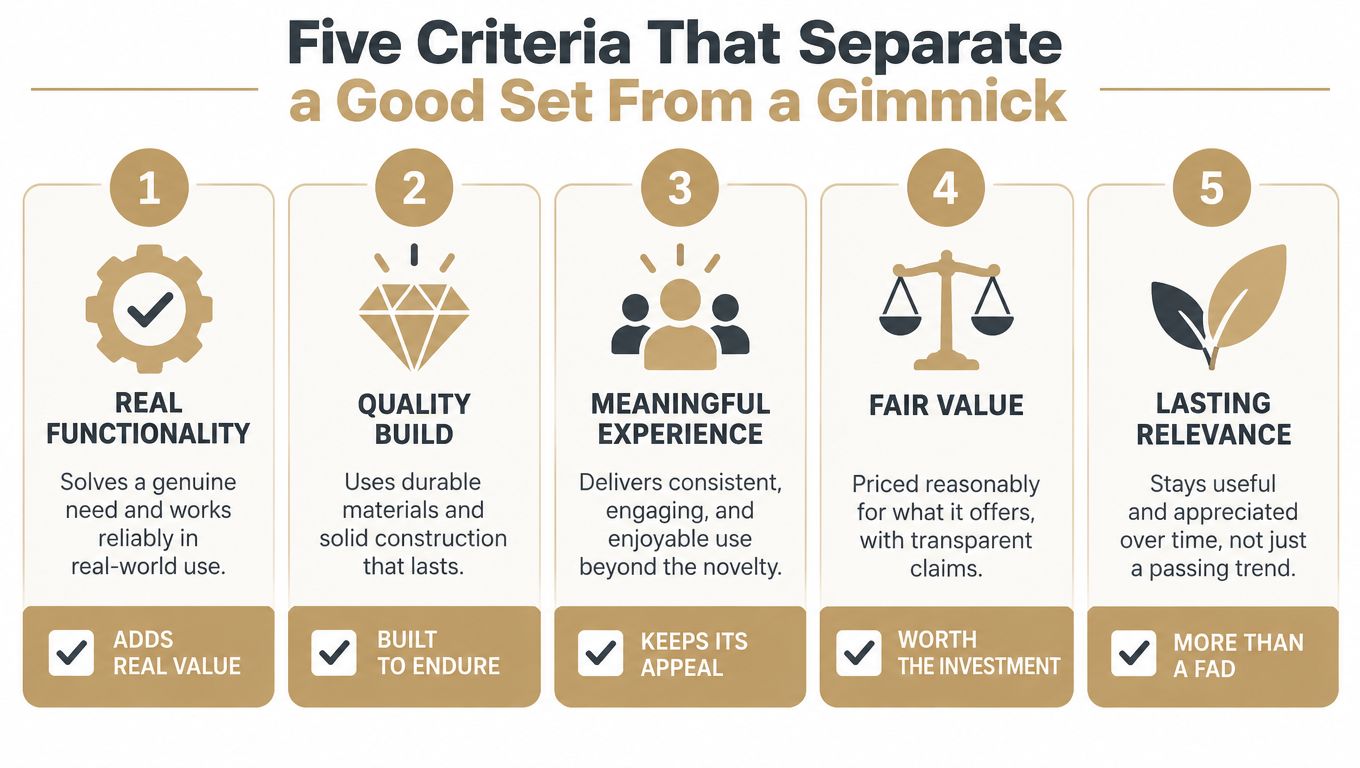
1. Sample integrity
Start with the liquid. Look for sealed samples, clear provenance, and a description of whether the pours come directly from full bottles or have been transferred by a retailer. Top-shelf whiskey is only useful if the sample has been handled carefully and hasn't been sitting half-filled for an unknown period.
Miniatures should also be sized for an actual tasting rather than a token sip. A set with several thoughtful pours can support comparison, note-taking, and a second look after water is added. A box full of tiny, poorly identified portions is variety without substance.
2. Genuine blind format
A label that says “blind” isn't enough. Ask the seller how the samples are concealed. Are the bottles opaque? Are the codes independent of the distillery names? Can the host see the answers before the tasting? Does the reveal happen only after everyone has written notes?
The most important question is: can anyone identify the whiskey before the scorecard is complete?
A covered bottle with a visible silhouette or a distinctive cap still leaks information. Fairness requires consistent containers and no visible details about age, proof, distillery, region, or price.
3. A scorecard with useful fields
A tasting note that only asks whether you “like it” wastes most of the exercise. The table should separate aroma, palate, finish, proof, age, whiskey type, confidence level, and would-buy preference. That distinction matters because identification accuracy and enjoyment are different outcomes.
A serious scorecard lets someone prefer a whiskey without correctly naming it. It can also expose a pattern, such as liking fruit and texture while disliking high alcohol heat.
4. Serving mechanics
Glass shape and volume alter aroma delivery. In a controlled aroma-evaluation study, researchers compared three vessels using 45 mL pours, watch-glass covers, three to four swirls, and 5–10 seconds of aroma evaluation. The tulip-shaped whisky glass produced a distinct sensory profile from the snifter and sensory-engineered glass, as detailed in this controlled whisky glass study.
For home use, choose identical narrow-rimmed or tulip-shaped glasses and pour 20–30 mL per sample. That range sits within ordinary evaluation pours of 2–4 cL, or 20–40 mL, while leaving enough headspace for nosing. Keep the temperature, resting time, and fill level consistent.
5. Value per tasting
Don't compare boxes only by bottle count or packaging weight. Compare the number of meaningful tasting sessions, the quality of the samples, the clarity of the scorecard, and whether the kit helps you identify a bottle worth buying later.
A cheaper flight can be poor value if it provides no structure. A smaller, carefully concealed set can be better value if it creates a useful comparison and prevents a disappointing full-bottle purchase. For a practical kit framework, see this whiskey taster kit guide.
Comparing the Three Main Whiskey Tasting Set Formats
Most buyers are choosing among three formats, not dozens of different products. Each format solves a different problem, and none is automatically right for every tasting night.
Whiskey tasting set formats at a glance
| Format | Blind | Scorecard | Repeatable | Best For |
|---|---|---|---|---|
| One-time curated retailer flight | Sometimes | Basic to moderate | Limited | Gifts and casual exploration |
| Build-your-own mini-bottle flight | Only if the host creates it | Host-designed | High if documented | Learning a specific style or proof range |
| Recurring blind subscription | Built into the format | Structured | High | Palate training and recurring social tastings |
One-time curated flights
Retailer flights are convenient and often attractive gifts. Someone else has selected the bottles, arranged the theme, and handled the presentation. That makes this format suitable for a recipient who wants to open a box and start tasting without planning.
The weakness is inconsistency. Some flights provide tasting notes before the pour, which can prime the drinker. Others use visible miniatures, so the tasting becomes a guided comparison rather than a genuinely blind test. Buy this format when convenience and presentation lead the decision, but check whether the samples are concealed before assuming the set is blind.
Build-your-own flights
A liquor store or retailer with mini-bottles lets you build a sharper educational question. You might compare different proof levels, bourbon and rye, or American craft expressions with similar production details. The host controls the order, labeling, and scorecard, so this format offers the most flexibility.
It also demands the most work. You need opaque containers, a code system, a separate answer sheet, matching glasses, and a plan for serving. Without that discipline, build-your-own flights quickly become a show-and-tell session where the labels dominate.
Recurring blind subscriptions
A blind subscription earns its place when the group wants regular practice rather than one memorable evening. Each delivery creates a fresh opportunity to compare guesses with preferences, refine vocabulary, and see whether the same sensory patterns keep appearing.
The trade-off is commitment. You're buying into a cadence and a discovery format rather than selecting every bottle yourself. That's a good fit for couples, hosts, and whiskey drinkers who enjoy the process as much as the pour. A whiskey tasting set for the USA market is especially appealing when American craft discovery is part of the point.
How Blind Barrels Differs From a Standard Tasting Kit
A standard sampler gives you whiskey to drink. Blind Barrels, as a format, adds a controlled game around the tasting. Each quarterly kit contains four blind American craft whiskey samples, a structured table for aroma, tasting, and finish notes, and a QR reveal stage that identifies the samples and provides distillery and purchase information.
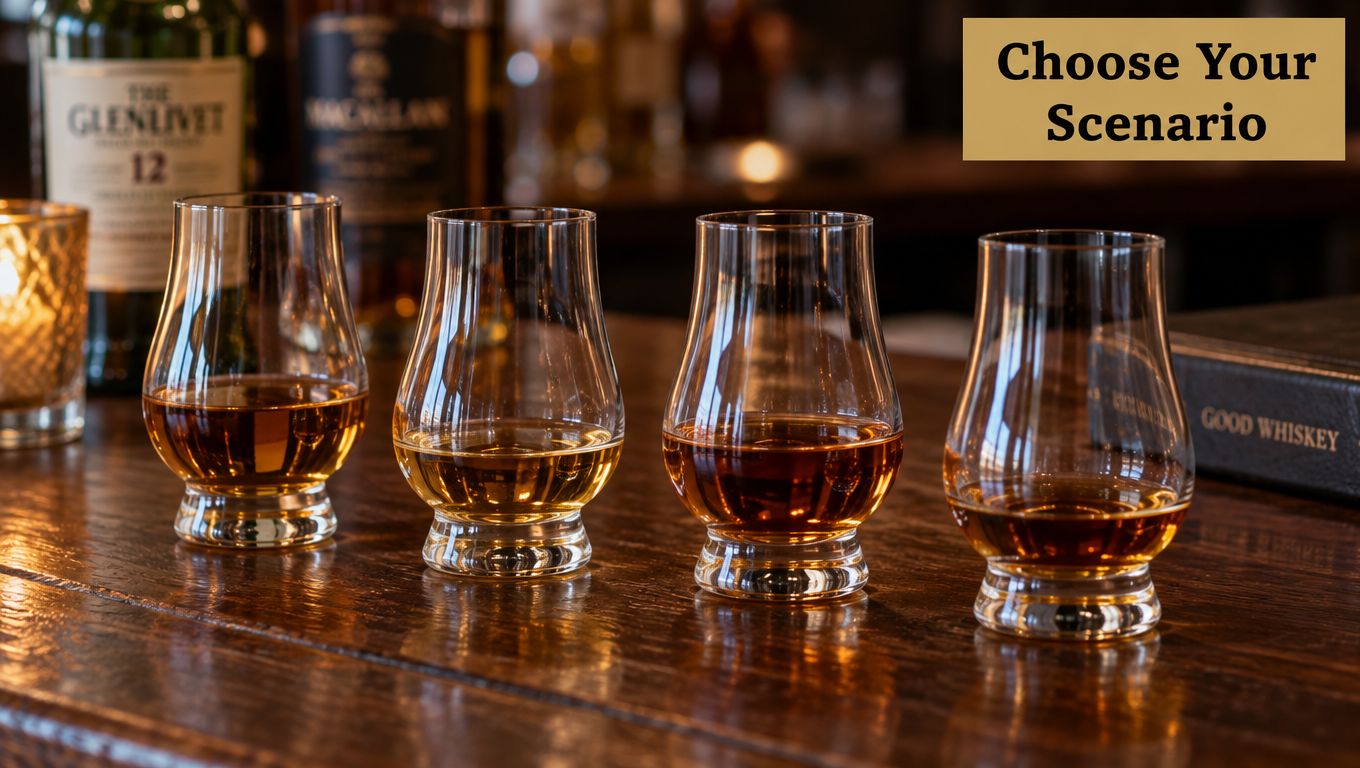
The order matters. Participants taste and write first, then scan to reveal the distillery, mash bill, ABV, age statement, aroma notes, and tasting notes. That separation prevents the product story from becoming the first thing people taste.
The game measures guessing separately
The scoring game asks participants to estimate age, proof, and whiskey type. That creates a useful distinction between “I like this” and “I identified this correctly.” A drinker can prefer a high-proof pour while missing its proof range, or identify the whiskey type accurately while ranking it last.
That's more informative than a single overall score. The results can start a real discussion about confidence, sensory language, and personal preference.
Brand and price should influence the buying decision after the tasting, not the first sip.
Why the American craft focus works
American craft whiskey gives the set a broad producer base. The American Craft Spirits Association reported 3,069 active U.S. craft distillers as of August 2024, up from 2,753 in August 2023, with craft spirits holding approximately 4.6% of the U.S. spirits market by volume and 7.5% by value, according to the 2024 Craft Spirits Data Project.
That doesn't mean every small distillery makes exceptional whiskey. It means a well-curated set can introduce drinkers to producers they wouldn't encounter through the largest national labels. For a palate-training exercise, that variety is useful when the samples remain anonymous until the reveal.
The subscription model is strongest for people who want a repeatable social ritual. It turns four samples into a shared question: what did we taste, what did we prefer, and how close were our guesses?
Which Set Fits Your Tasting Scenario
The right format depends on the evening you're planning. Don't buy a recurring subscription for a single gift exchange, and don't build an elaborate blind system for guests who only want a relaxed introduction.
A couple's date night
Choose a curated flight if the goal is simple conversation and low preparation. Keep the samples hidden, pour identical amounts, and let each person write a few notes before discussing the glasses. A recurring blind format is the better choice when the couple wants to make tasting a regular activity rather than a one-off novelty.
The best date-night scorecard is short enough to use without turning dinner into an exam. Record aroma, palate, finish, favorite sample, and whether you'd buy it. Save detailed proof and age guesses for a group that enjoys the competitive element.
A small group of new whiskey drinkers
Build the evening around accessibility and contrast. Bourbon provides a useful entry point because it must contain at least 51% corn, be distilled to no more than 160 proof, enter new charred oak at no more than 125 proof, and be bottled at a minimum of 80 proof, according to this University of Kentucky bourbon guide.
Those legal boundaries still leave room for major differences in grain recipe, maturation, proof, and flavor. A beginner flight should make those differences observable without asking guests to memorize production terminology.
A host running recurring tastings
Choose the recurring blind format. The host's real burden isn't pouring whiskey, it's maintaining fairness and keeping the event fresh. Pre-coded samples, a standardized table, and a reveal stage reduce preparation while giving the group a consistent record from one tasting to the next.
Rotate who reads the reveal and who leads the discussion. That keeps one person from becoming the permanent authority and encourages guests to trust their own observations.
A gift buyer
For a gift, a one-time curated flight is the safest choice when you don't know the recipient's schedule or appetite for recurring deliveries. Select a coherent theme rather than a random collection of famous names. Small American craft producers are a strong option for someone who already owns the obvious bottles and wants discovery.
A subscription makes more sense when you know the recipient enjoys games, group hosting, or collecting tasting notes. If they mainly want a drink, don't confuse a learning system with a gift they'll really use.
Hosting a Tasting That Actually Teaches You Something
A kit performs only as well as the host's procedure. You don't need a laboratory, but you do need consistency.
Prepare the room and the samples
Use identical tulip-shaped glasses, neutral lighting, water, plain food for palate resets, and a table where each guest can write. Cover or decant the samples into matching coded containers, then randomize the order. Don't let the strongest or hottest whiskey arrive first, because it can dominate the palate and flatten later comparisons.
Pour 20–30 mL per sample, keep the fill levels consistent, and give every glass the same resting time. The point isn't theatrical precision. It's removing avoidable differences between participants.
Hosts planning a larger gathering may also benefit from a practical Vancouver party rentals guide, especially when they need additional tables, seating, or serving equipment without turning their home into an event-storage area.
Use the neat-then-water routine
Start neat. A beginner should first establish the whiskey's aroma, flavor, texture, and alcohol intensity before changing the sample. Master blender guidance recommends tasting without dilution first, then adding water only if the alcohol burn calls for it. This beginner whiskey tasting guide supports the gradual approach.
Add water incrementally, not all at once. Water can't be removed, so a neat baseline preserves the comparison. The exercise is simple:
- Nose gently: Bring the glass toward your face gradually and avoid forceful inhalation.
- Taste neat: Record the first impression, alcohol intensity, sweetness, spice, fruit, smoke, oak, and texture.
- Add a little water: Nose and taste again, then note what opens, softens, or disappears.
- Compare: Decide whether the diluted version is more balanced or just less intense.
For newcomers, a small tulip-shaped glass and a resting period of 5–10 minutes can make nosing less intimidating. Short, gentle sniffs with the mouth slightly open reduce the impact of concentrated ethanol vapor, as described in this guide to reading whiskey notes.
Keep the room social
Give guests time to write before anyone announces a favorite. Ask for descriptive observations rather than verdicts. “I get dry oak and citrus” is more useful than “this one is smooth.”
Assign one non-drinking role when appropriate. That person can manage pours, track scores, read the reveal, or reset the table. Non-drinkers should still have a meaningful way to participate, and nobody should feel pressured to finish a sample.
End with the reveal and a discussion of surprises. The most useful result isn't the person who guessed the most labels. It's the pattern showing which flavors the group enjoyed.
Choosing a Format, Not Just a Product
The purchase decision is really a format decision. A one-time retailer flight prioritizes convenience and presentation. A build-your-own set prioritizes control and a specific learning question. A recurring blind subscription prioritizes consistency, discovery, and social repetition.
Use this final checklist before buying:
- Sample quality: Are the pours sealed, clearly sourced, and worth comparing?
- Blind integrity: Can nobody see the distillery, age, proof, price, or other identifying information?
- Scorecard depth: Does the table separate aroma, palate, finish, identification, confidence, and preference?
- Serving consistency: Can you use identical glasses, matching volumes, and a controlled sequence?
- Value: Will the set create a useful tasting rather than just add more miniatures to the shelf?
American bourbon and craft whiskey make particularly strong subjects for this approach because production categories provide a framework, while mash bills, proof, maturation, and finishing create meaningful differences in the glass. New drinkers should focus on what they smell and enjoy before trying to sound like professionals. Experienced drinkers should do the same, because confidence can be another form of bias.
Choose a one-off flight for a gift or casual evening. Build your own when you have a precise question to answer. Choose a blind subscription like Blind Barrels when you want fair evaluation, American craft discovery, and a repeatable social structure.
The best whiskey tasting set isn't the one with the most accessories. It's the one that makes your preferences harder to fake.
Blind Barrels offers four blind samples featuring small American craft distilleries, with a tasting table, reveal stage, and game for estimating age, proof, and whiskey type. If you want a more honest, repeatable tasting night, visit Blind Barrels and choose a format that turns discovery into a shared experience.