

When you hear a bourbon expert talk about tasting notes, they’re really just describing the specific scents, tastes, and feelings they get from the whiskey in their glass. It’s the language of bourbon, a way to put words to everything from that first whiff of toasted marshmallow to the warm, spicy finish that lingers on your tongue.
Learning this language is what turns simply drinking bourbon into a full-on sensory experience, especially for new whiskey drinkers diving into the exciting world of American craft whiskey.
Unlocking the Language of Bourbon
Ever been around someone who takes a sip and casually says they're getting "caramel, worn leather, and a hint of black pepper," and you're just sitting there thinking, how? It can sound a little out there, but picking out tasting notes is a skill anyone can build over time. It’s not about finding the one "right" answer in the glass; it’s a personal journey of discovery.
This skill has become more important as the bourbon world has exploded in popularity. Drinkers are more curious than ever about complex flavors, a trend that saw supplier revenues for bourbon and Tennessee whiskey jump by 46.7% between 2009 and 2014 alone. People are moving toward higher-end bourbons with real character, especially from American craft whiskey producers. You can dig into the numbers yourself in the full report on bourbon's economic growth.
More Than Just a Drink
Learning to identify what you're tasting and smelling transforms a simple drink into an active exploration. Think of it like listening to a great song—at first, you just enjoy the melody. But with a little focus, you start to pick out the bassline, the drums, the subtle guitar riff in the background. That's what happens with bourbon.
When you can name what you smell and taste, you start to appreciate the spirit on a whole new level. This process helps you:
- Understand Your Preferences: You can finally pinpoint exactly what you like—or don't like—in a whiskey. This makes finding that next perfect bottle so much easier.
- Appreciate the Craft: Suddenly, flavors like oak and vanilla aren't just there. You connect them to the distiller's choices, from the specific grain recipe to the char level on the barrel.
- Build Confidence: You'll gain the vocabulary to talk about bourbon with friends and fellow enthusiasts, sharing what you're experiencing in a way that makes sense.
A great tip for new whiskey drinkers: don't get intimidated! The goal isn’t to become a professional critic overnight. It’s about making your experience better and connecting more deeply with what's in your glass. Every sip becomes its own small adventure.
For anyone new to American craft whiskey, the sheer number of options can feel overwhelming. That's where a guided tasting kit, like the ones from Blind Barrels, really shines. It cuts through the noise by sending you curated, mystery selections, letting you build your palate and confidence one pour at a time.
The Three Stages of Bourbon Tasting
When you pour a glass of bourbon, you’re holding a story told in three parts. Understanding how to "read" that story is the real key to unlocking its unique character and getting the most out of every sip.
This process isn't some rigid, scientific test; it's a simple, progressive method that breaks down the tasting experience into three distinct stages: the Aroma (often called the "nose"), the Flavor (the "palate"), and the Finish.
Each stage builds on the last, creating a complete picture of the bourbon's profile. We’ll walk you through the practical techniques for each one, giving you the vocabulary to confidently describe what you're experiencing. This approach is fundamental to sensory analysis, and you can even see similar principles in other tasting disciplines if you explore these expert tips for sensory evaluation from a different craft.
Stage 1: The Nose or Aroma
Believe it or not, before you even take a sip, your nose does most of the heavy lifting. Our sense of smell is responsible for detecting a huge percentage of what we perceive as flavor. This first step is your initial introduction to the bourbon's personality.
For new whiskey drinkers, a common mistake is sticking your nose deep into the glass and inhaling sharply. This only results in a harsh whiff of alcohol that burns your nostrils and masks everything else. Instead, you need a much gentler approach.
Tips for Nosing Your Bourbon:
- Give It a Swirl: Gently swirl the bourbon in your glass. This agitates the liquid just enough to release the aromatic compounds into the air, making them easier to smell.
- Keep Your Mouth Open: As you bring the glass toward your nose, slightly part your lips. This simple trick allows some of the ethanol vapor to escape, so you can focus on the deeper, underlying scents.
- Take Short, Gentle Sniffs: Don't inhale like you're smelling a flower. Instead, take a few short, light sniffs from just above the rim. Try moving the glass from one nostril to the other—you might be surprised to find each one picks up different notes.
Stage 2: The Palate or Flavor
Now for the main event. The palate is where you finally taste the whiskey, letting it move across your tongue to reveal its core flavors. This is where the promises made by the aroma are either confirmed or, in some fun cases, delightfully contradicted.
The goal here isn't to just gulp it down. The first small sip is often called the "Kentucky Chew." It's a way to acclimate your palate to the proof and prepare it for the complex flavors to come.
By letting the bourbon coat your entire tongue, you engage all your taste receptors. This technique allows you to distinguish the journey of flavors from the moment it hits your tongue to the point you swallow.
After that initial sip, take another and let it linger. Move it around your mouth. What do you taste first? Is it sweet like caramel? Spicy like cinnamon? Fruity like dried cherries? This middle part of the story reveals the bourbon's true complexity and body.
Stage 3: The Finish
The finish is the final chapter of the bourbon's story—it’s the lingering taste and sensation left in your mouth and throat after you swallow. This is where you get to sit back and reflect on the experience. Was it a quick, clean goodbye, or did it leave a long, warm, and memorable impression?
Consider these questions as you evaluate the finish:
- Length: How long does the flavor last? A short finish disappears almost immediately, while a long finish can stick around for minutes, often evolving as it fades.
- Texture: Does it feel warm, cool, or tingly? A pleasant "Kentucky Hug" is that signature gentle warming sensation that spreads through your chest—a tell-tale sign of a well-made spirit.
- Lingering Notes: What flavors remain? Sometimes the finish brings out entirely new notes, like a final hint of oak, leather, or dark chocolate that wasn't present on the palate.
To bring it all together, here's a quick cheat sheet for navigating the tasting process from start to finish.
| Tasting Stage | What to Do | Common Notes to Look For |
|---|---|---|
| Aroma (The Nose) | Swirl glass, part lips, take gentle sniffs. | Vanilla, Caramel, Oak, Cherry, Orange Peel, Cinnamon, Tobacco |
| Palate (The Flavor) | Take a small sip ("Kentucky Chew"), then a second to analyze. | Brown Sugar, Toffee, Rye Spice, Baked Apple, Nutmeg, Leather |
| Finish | Swallow and pay attention to lingering sensations. | Black Pepper, Dark Chocolate, Charred Oak, Warm Spice, Mint |
This table is a great starting point, but the real fun is discovering your own descriptors.
By breaking down the experience into these three stages, you can systematically analyze and, more importantly, enjoy any bourbon. For a more in-depth look at these stages, our guide on how to taste whiskey provides even more detail. This structured approach helps you build a mental library of bourbon tasting notes, making every pour an opportunity for discovery.
Decoding the Bourbon Flavor Wheel
Once you’ve got the hang of the three stages of tasting—the nose, the palate, and the finish—it’s time to start building your vocabulary. Moving past simple descriptions like "sweet" or "strong" is what really opens up the world of bourbon. This is where getting familiar with common bourbon tasting notes becomes your secret weapon, letting you pinpoint exactly what’s going on in your glass.
Think of these notes as belonging to different flavor families, almost like sections in an orchestra. Each one plays its own unique part, but when they come together, they create something truly special. Learning to identify them helps you connect the dots between what you're tasting and how that specific bourbon was made.
The infographic below is a great visual reminder of that simple three-step journey—aroma, palate, and finish—that’s the foundation of any good tasting.
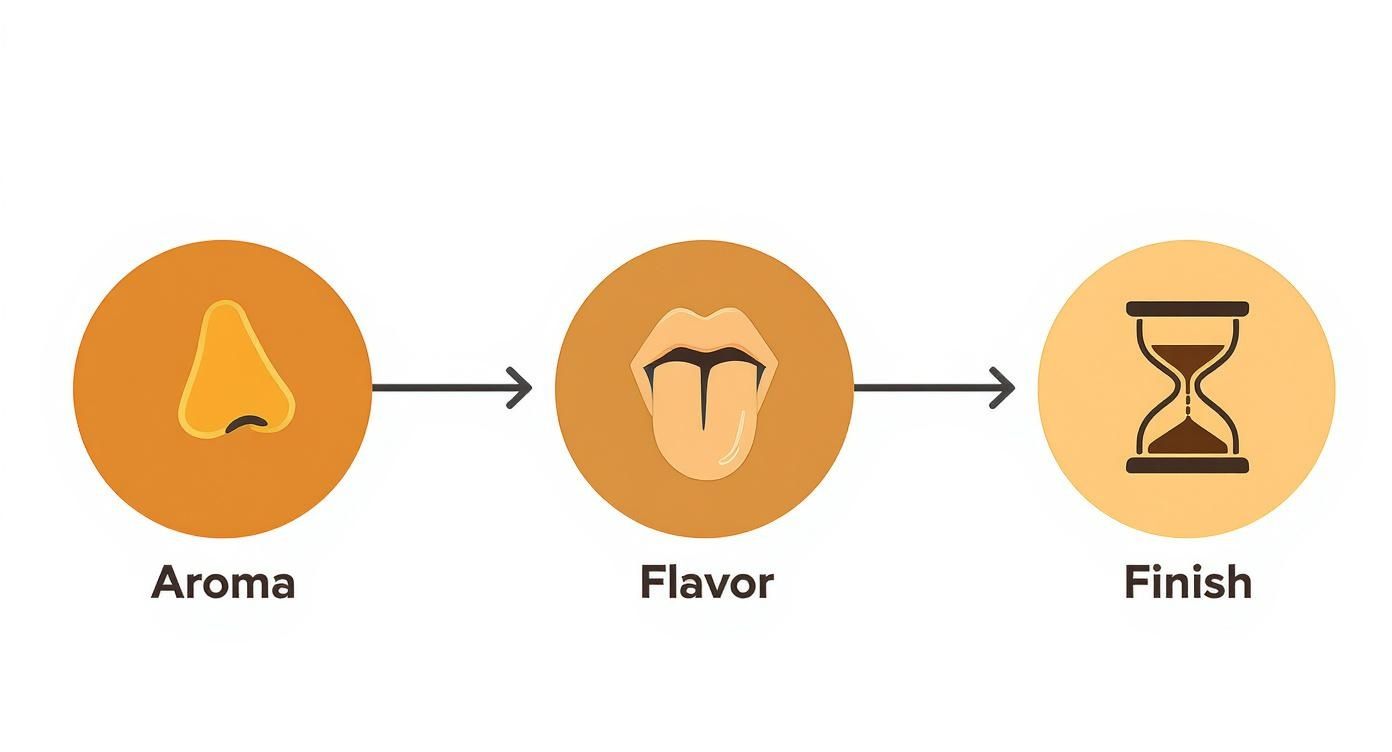
It really shows how tasting is a progressive experience, where each step reveals a new layer of the bourbon's personality.
The Five Core Flavor Families
While the list of possible flavors is nearly endless, most bourbon notes can be neatly grouped into five main categories. These profiles are a direct result of bourbon’s unique production process, especially its time spent aging in new charred oak barrels.
Experts have identified five major flavor families: caramel, vanilla, oak, spice, and fruit. These all come from specific chemical reactions that happen while the whiskey matures. The charring of the oak, for example, releases a compound called vanillin, which is what gives bourbon its signature vanilla flavor.
Let's dive into each of these families.
1. Sweet and Caramel Notes
This is usually the first and most obvious flavor you'll pick up, and you can thank bourbon's corn-heavy recipe for it. By law, a bourbon's mash bill must be at least 51% corn. The sugars from that corn, along with caramelized wood sugars from the barrel char, create a deep, inviting sweetness.
- Common Descriptors: Keep an eye out for notes like caramel, toffee, butterscotch, brown sugar, honey, and even richer flavors like molasses or maple syrup.
- A Tip for New Drinkers: This family is the easiest place to start. On your first sip, just ask yourself: what kind of sweet is this? Is it light and floral like honey, or is it dark and robust like molasses?
2. Vanilla Notes
Vanilla is a classic bourbon calling card. This flavor doesn’t come from an additive; it's a gift straight from the oak barrel. When the wood is toasted and charred, a chemical compound called vanillin is released, infusing the spirit with that creamy, familiar flavor as it ages.
- Common Descriptors: You might identify notes of vanilla bean, marshmallow, custard, or crème brûlée.
- Craft Whiskey Connection: Many American craft whiskey distillers love to play with different char levels on their barrels specifically to dial the intensity of these vanilla notes up or down, creating some truly unique profiles.
Here's a great way to train your palate: smell some actual vanilla extract or a toasted marshmallow right before nosing your bourbon. It creates a powerful scent memory that will help you immediately pick out that note in the glass.
3. Oak and Woody Notes
Because bourbon has to be aged in new charred oak containers, the wood's influence is always part of the conversation. These notes give the bourbon structure and depth, providing a nice counterbalance to all that sweetness from the corn. How long the bourbon ages plays a huge role here—older bourbons almost always have more pronounced oaky character.
- Common Descriptors: This family can range from fresh-cut wood and sawdust to more mature notes like toasted oak, cedar, tobacco leaf, and worn leather.
- Avoid the Pitfall: For beginners, "oaky" can sometimes come across as a negative, bitter flavor. Try to reframe it. Think of it more like the pleasant bitterness in dark chocolate or black coffee—it adds complexity and sophistication.
4. Spice Notes
Spice in bourbon usually comes from the secondary grain in the mash bill. A "high-rye" bourbon will hit you with a bold, peppery spice, while a "wheated" bourbon will be much softer and gentler on the palate. These notes often pop up in the middle of a sip and ride all the way through to the finish.
- Common Descriptors: Think of baking spices like cinnamon, nutmeg, and clove. You might also find sharper notes like black pepper, rye spice, or even a surprising hint of mint.
- Practice Tip for New Drinkers: Pour a high-rye bourbon next to a wheated one (like Maker's Mark or a craft wheater). The difference in the spice profile will be immediate and obvious. It’s a fantastic learning experience.
5. Fruit and Floral Notes
Last but not least, we have the fruity and floral notes. These delicate flavors are created by compounds called esters, which develop during fermentation. They can be bright and zesty or dark and rich, adding a real touch of elegance to a bourbon.
- Common Descriptors: Fruit notes can include cherry, baked apple, orange peel, raisin, and dried apricot. Floral notes are typically more subtle, like honeysuckle or rose petals.
By getting comfortable with these five families, you build a powerful framework for tasting and talking about bourbon. To see how these notes are organized visually and to explore even more specific descriptors, check out our complete guide to the bourbon flavor wheel. It’s an essential tool for any enthusiast.
How Grain and Oak Create Flavor
Every single tasting note you'll ever pull from a glass of bourbon—from rich vanilla to a crack of spicy cinnamon—is born from chemistry and craftsmanship. These flavors aren't just added in; they're created from two core sources: the grain recipe that kicks things off and the charred new oak barrel that sees the journey through.
Getting a handle on this relationship is the secret to understanding why you taste what you taste.
Think of the mash bill—the specific mix of grains—as the bourbon's DNA. Federal law mandates that bourbon must be at least 51% corn, which lays down a sweet foundation that is absolutely central to its identity. This corn base is where you get those classic caramel, honey, and butterscotch notes that are often the first thing people notice.
But it’s the other grains in the recipe, the “flavoring grains,” that really start to define a bourbon's personality and push its flavor profile in a specific direction.
The Role of the Mash Bill
The distiller's choice of a secondary grain is one of the most important decisions they make. This is where the mash bill forks into two main paths, each creating a totally different tasting experience. For anyone new to American craft whiskey, learning to spot these differences is a massive step toward figuring out what you truly like.
- High-Rye Bourbon: When rye is the main flavoring grain, it brings a bold, spicy punch to the party. This is where you get tasting notes of black pepper, cinnamon, nutmeg, and sometimes even a little mint. A high-rye mash bill gives bourbon an assertive character that really stands out. Many craft distillers, like Laws Whiskey House in Colorado, have become famous for their bold, spicy high-rye expressions.
- Wheated Bourbon: Swap that rye for wheat, and you get a much softer, gentler, and often sweeter profile. Wheated bourbons are famous for their smooth, creamy mouthfeel and notes of things like fresh-baked bread, honey, and toffee. Their approachable style makes them a fantastic place to start your bourbon journey. A great example from the craft scene is Garrison Brothers from Texas, known for their rich, wheated bourbons.
The sensory experience of bourbon tasting is shaped by both the mash bill and the aging environment. The mandatory 51% corn gives it a naturally sweet base, while the choice of rye or wheat adds either spice or softness. The aging process then builds upon these initial flavors, with rickhouse temperature swings causing the spirit to interact with the wood, extracting even more flavor compounds.
The Magic of the Oak Barrel
If the mash bill is the DNA, the barrel is how the bourbon is raised. The law is clear: bourbon has to be aged in new, charred oak containers. This rule is non-negotiable, and it’s responsible for more than half of a bourbon's final flavor—and 100% of its color. The dance between the spirit and the wood is where the real magic happens.
Picture the barrel "breathing." As the seasons change in a place like Kentucky, the temperature swings cause the wooden staves of the barrel to expand and contract. When it gets warm, the wood expands, pushing the clear, un-aged whiskey deep into the layers of charred oak. Then, as it cools, the wood contracts and squeezes that liquid back out, pulling a whole symphony of flavor compounds with it.
This back-and-forth process extracts key compounds from the wood, creating those iconic bourbon notes we all know and love:
- Vanillin: The charring process unlocks this compound, directly giving the spirit notes of vanilla, marshmallow, and custard.
- Lactones: These are responsible for the distinct woody, and sometimes even coconut-like, flavors.
- Caramelized Sugars: The intense heat of charring caramelizes sugars naturally present in the wood, leading to notes of caramel, toffee, and brown sugar.
The char level itself is a huge lever that distillers can pull to craft a specific profile. How deep and intense that char is can completely change the final taste. If you want to dive deeper into the nitty-gritty, you can learn more about how barrel preparation affects whiskey taste in our other guide.
Ultimately, every tasting note is just one piece of a story that starts with a humble grain and ends in a complex, flavorful spirit shaped by wood and time.
A Guided Tasting of Craft Bourbon
We've talked about the theory—the stages, the flavor families, and the science humming away inside the barrel. Now it's time for the fun part. Let's put that knowledge to work and actually taste some bourbon. This is your hands-on guide, where we'll walk through a pour together, step-by-step. The goal here is discovery, not a pop quiz.
To make this real, let’s pretend we’re sitting down with a fictional American craft bourbon. We’ll call it "Hickory Creek Reserve," a high-rye expression from a small, family-run distillery in the Midwest. This is a journey for the senses, from the first look to the final, lingering note.
First Impressions: The Look and Nose
I pour a small measure of Hickory Creek Reserve into my Glencairn glass. The first thing you notice is the color—a gorgeous deep amber that catches the light with flashes of copper and gold. A gentle swirl sends thick, slow "legs" or "tears" down the side of the glass. Right away, that suggests a rich texture and a respectable proof.
Now, let's bring the glass up for a smell. Remember the trick for beginners: keep your mouth slightly open and take short, gentle sniffs to avoid getting overwhelmed by alcohol vapor. The very first aroma is sweet and welcoming, like a toasted marshmallow pulled straight from a campfire. Digging a little deeper, I find a clear note of dried cherry and a hint of orange zest cutting through with a bright, fruity layer.
I let it rest for a minute and go back in. This time, a deeper, woodier character steps forward. I’m picking up vanilla bean and a touch of warm cedar. It’s a complex but really well-balanced nose. A promising start, for sure.
The Palate: A Story in Every Sip
Okay, the moment of truth. I take a tiny initial sip, what some folks call the "Kentucky Chew," just to acclimate my palate to the alcohol. It’s warm, but there’s no harsh burn. That’s a good sign.
On the second, more thoughtful sip, a wave of warm caramel and brown sugar washes over my tongue—that classic sweetness from the corn. But before it gets too comfortable, the high-rye part of the recipe makes its presence known. A fantastic kick of rye spice, like a dusting of cinnamon and black pepper, creates this wonderful back-and-forth between sweet and spicy.
As the bourbon sits on my palate, those fruit notes from the nose come back, but now they taste more like baked apple and a hint of dark plum. The mouthfeel itself is creamy and substantial, coating the tongue without feeling heavy. It's a well-put-together whiskey that tells a clear story.
The Finish: A Lasting Impression
Finally, the finish. After swallowing, I focus on what’s left behind. Hickory Creek Reserve leaves a long, oaky finish that's both warming and deeply satisfying. That peppery rye spice hangs around pleasantly on the back of my tongue before slowly fading into a final, delicate note of dark chocolate and old leather.
The whole experience wraps up with that signature "Kentucky Hug," a gentle warmth spreading through your chest. It’s a clean, memorable end to a fantastic pour.
This entire process isn't about finding "right" answers, but about building a narrative for yourself. The notes of toasted marshmallow, caramel, rye spice, and oak are my interpretation. Your adventure with the same glass might uncover entirely different bourbon tasting notes.
Your Turn: Tips for New Whiskey Drinkers
This guided tasting is a template you can use for any bourbon you encounter. As you start your own explorations, especially into the exciting world of American craft whiskey, here are a few tips to make the journey even more rewarding:
- Start a Tasting Journal: It doesn't need to be fancy. A simple notebook is perfect for jotting down what you see, smell, and taste. Over time, this becomes an invaluable record of your palate's journey and what you truly enjoy.
- Taste with a Friend: Sharing the experience makes it more fun and far more educational. You can compare notes, bounce ideas off each other, and help identify flavors you might have missed on your own.
- Explore Curated Tasting Kits: The craft whiskey scene can feel a little overwhelming when you're just starting out. A service like Blind Barrels is a fantastic way to cut through the noise. They send you curated, high-quality samples from amazing small distilleries you'd likely never find otherwise. Tasting blind is especially powerful—it strips away any bias from the label, letting you focus purely on the whiskey. It's the perfect way to discover hidden gems and build your confidence one pour at a time.
Got Questions About Tasting Bourbon?
As you get deeper into the world of bourbon, you're going to have questions. It happens to everyone. Every single seasoned enthusiast has stood exactly where you are now, wondering the same things. This final section is all about tackling those common questions new whiskey drinkers have, giving you some practical advice to help you taste with more confidence.
Think of this as your go-to guide for getting over those last few hurdles. We'll hit everything from training your palate to picking the right glass, making sure you have what you need to make this journey a rewarding one.
Why Can't I Taste All the Flavors Everyone Mentions?
This is, hands down, the most common roadblock for beginners. Don't worry, you're in good company. Your palate is like a muscle—it needs training to get stronger and more perceptive. Nobody starts out being able to tell the difference between "toasted oak" and "cedar" on their first pour.
The trick is to start broad. The next time you have a glass in your hand, don't go hunting for specific bourbon tasting notes. Just ask yourself some simple questions: Is it generally sweet? Is it spicy? Is it fruity? Start by just identifying those big, main categories.
With every tasting, you’ll slowly start to sharpen your senses. That general "sweetness" might eventually start to taste more like honey. A few tastings later, you might be able to pick out the difference between a light, floral honey and a rich, dark butterscotch.
The most important tip for any new drinker is to be patient with yourself. Enjoy the process of discovery without feeling pressured to find a dozen specific flavors in every glass. Tasting is a journey, not a test.
Tasting with a friend or using a guided kit can be a game-changer. Just having someone ask, "Hey, do you get any cherry in this?" can give your brain the little nudge it needs to connect the dots.
Do I Need a Special Glass for Bourbon Tasting?
You can absolutely enjoy bourbon out of any old cup you have, but if you're serious about identifying specific notes, a proper tasting glass like a Glencairn makes a world of difference. It’s not about being fancy; it’s just physics.
That unique tulip shape of a Glencairn glass is engineered to do one thing really, really well: concentrate aromas. The wide bowl lets you swirl the bourbon to release all those aromatic compounds, while the narrow rim funnels those scents straight to your nose. This makes it way easier to "nose" the whiskey and pick up on subtle notes that would just float away in a standard rocks glass.
You don't need one to get started, but if you're getting more into the hobby, it's a small investment that pays off big time in your sensory experience.
Should I Add Water or Ice to My Bourbon?
Look, how you drink your bourbon is always up to you. But when we're talking about tasting for analysis, there’s a definite best practice.
Always, always start by tasting your bourbon neat—no water, no ice. This gives you the pure, unaltered spirit, exactly as the distiller wanted you to taste it. After your first few sips, then try adding just a few drops of room-temperature water.
This one simple act can "open up" the bourbon. It slightly lowers the proof, taming the alcohol burn and letting more of those subtle, underlying flavors and aromas step forward. Ice, on the other hand, does the exact opposite. Chilling the spirit numbs your taste buds and dulls the aromas, making it much harder to pick up on anything nuanced.
So, for analysis? A few drops of water is your best friend. For casual sipping on a hot day? Enjoy it any way you like.
What Is the Best Way to Explore Craft Whiskeys?
The American craft whiskey scene is exploding with amazing distilleries, but honestly, the number of choices can be paralyzing. Where do you even start?
A fantastic way in is through a curated tasting kit or subscription service. These services take all the guesswork out of it, removing the pressure of picking one bottle from a crowded store shelf. Better yet, they introduce you to incredible distilleries and unique expressions you might never have found otherwise.
A blind tasting format is especially powerful for new drinkers. When you taste without knowing the brand, the price, or the hype, you’re forced to rely on nothing but your own senses. This helps you develop your palate way faster and discover what you genuinely enjoy, without any outside noise. It’s like a guided tour that helps you uncover hidden gems and build real confidence at the same time.
Ready to discover your next favorite American craft whiskey without the guesswork? Blind Barrels delivers a curated, blind tasting experience straight to your door. Our kits are designed to help you train your palate, discover incredible small-batch distilleries, and have fun doing it. Start your tasting adventure with us today at https://www.blindbarrels.com.