

Ever found yourself staring down a whiskey list, puzzled by the whole bourbon versus rye thing? Let's cut right to it. The simplest way to think about it is this: bourbon is generally sweet, and rye is typically spicy. Bourbon’s signature sweetness comes from its corn-heavy recipe, which pulls out those classic caramel and vanilla notes. Rye, on the other hand, gets its assertive, peppery kick straight from the rye grain itself.
Your Quick Guide to the Bourbon vs Rye Debate
Jumping into the world of American whiskey can feel a bit much at first, but figuring out the difference between bourbon and rye is the perfect starting point. Think of it like choosing between a rich, decadent dessert and a zesty spice cake. Both are fantastic, but they hit different notes and satisfy different cravings.
This guide is your personal cheat sheet. We're here to help you understand these two iconic spirits so you can order with confidence, pick a bottle off the shelf, or even host your own blind tasting. We'll break down the core differences in a practical way, focusing on what you can actually taste in the glass. This isn't about memorizing regulations; it’s about training your palate.
A First-Timer Friendly Comparison
For anyone new to whiskey, seeing the key differences side-by-side is the best way to get a handle on the bourbon vs. rye debate. We’ve stripped away all the jargon to give you just the essential facts.
Bourbon vs Rye At a Glance
Here’s a quick-reference table that summarizes the key characteristics of each whiskey. It’s designed to help you make a fast decision based on what you’re in the mood for.
| Characteristic | Bourbon | Rye Whiskey |
|---|---|---|
| Primary Grain | At least 51% corn | At least 51% rye |
| Core Flavor Profile | Sweet, rich, full-bodied | Spicy, peppery, assertive |
| Common Tasting Notes | Caramel, vanilla, oak, brown sugar | Black pepper, cinnamon, mint, dill |
| Mouthfeel | Generally smoother and rounder | Often crisper and drier |
| Great For Beginners | Yes, its sweetness is very approachable | Yes, if you enjoy spicy flavors |
Ultimately, this chart gives you a solid foundation, but the real magic happens when you get to tasting.
A Tip for New Drinkers: If you're just starting out, the best thing you can do is grab a bottle of a well-regarded craft bourbon and a craft rye and taste them together. This hands-on experience is the fastest way to figure out what your palate prefers—it’s the core principle behind our blind tasting kits.
The Rules of the Game: What Makes Bourbon and Rye Whiskey?
When we talk about bourbon versus rye, we're not just discussing taste preferences. The differences are literally written into law. For a spirit to earn the title "bourbon" or "rye," it must adhere to a strict set of federal regulations that dictate everything from its recipe to its aging process. These aren't just suggestions; they're the rules of the road that give each whiskey its distinct identity.
The single most important rule comes down to the mash bill—the grain recipe that forms the whiskey's foundation. This is the core element that creates the fundamental flavor divide between the two.
- Bourbon has to be made from a mash bill of at least 51% corn.
- Rye Whiskey must be made from a mash bill of at least 51% rye.
This simple requirement is why bourbon generally has a sweeter, rounder character, while rye brings that classic spicy, peppery kick. The other 49% of the mash bill is where distillers get to play, often using grains like malted barley or wheat to add their own signature twist to the final product.
More Than Just the Main Grain
While the mash bill is the star of the show, a few other non-negotiable rules apply to both bourbon and rye, cementing their status as uniquely American spirits.
Both bourbon and rye absolutely must be aged in new, charred oak barrels. This is where the magic really happens. The spirit pulls color, aroma, and those classic vanilla, caramel, and oak flavors directly from the wood.
This aging requirement is a huge reason for the depth you find in both styles. On top of that, there are strict limits on alcohol content at each stage of production.
- Distillation Proof: It can't be distilled to more than 160 proof (80% ABV).
- Barrel-Entry Proof: It has to go into that new barrel at no more than 125 proof (62.5% ABV).
- Bottling Proof: It must be bottled at a minimum of 80 proof (40% ABV).
These numbers ensure distillers don't strip out all the flavor during distillation and that the spirit gets a rich, meaningful interaction with the barrel as it ages. If you want to geek out on the science behind it all, check out our deep dive on what makes a whiskey a whiskey.
How Craft Distillers Play Within the Rules
To a newcomer, it might seem like all these regulations would make every bourbon or rye taste the same. But in the hands of a skilled distiller, the opposite is true. These rules create a framework for incredible creativity.
By tweaking that "other" 49% of the grain recipe, experimenting with different yeast strains, or mastering their barrel-aging environments, American craft distillers like Frey Ranch or Laws Whiskey House produce whiskeys with wildly different personalities. They're all following the same rulebook, but the results prove that true mastery is about finding your own unique voice within those established boundaries.
How to Decode Bourbon and Rye Flavors
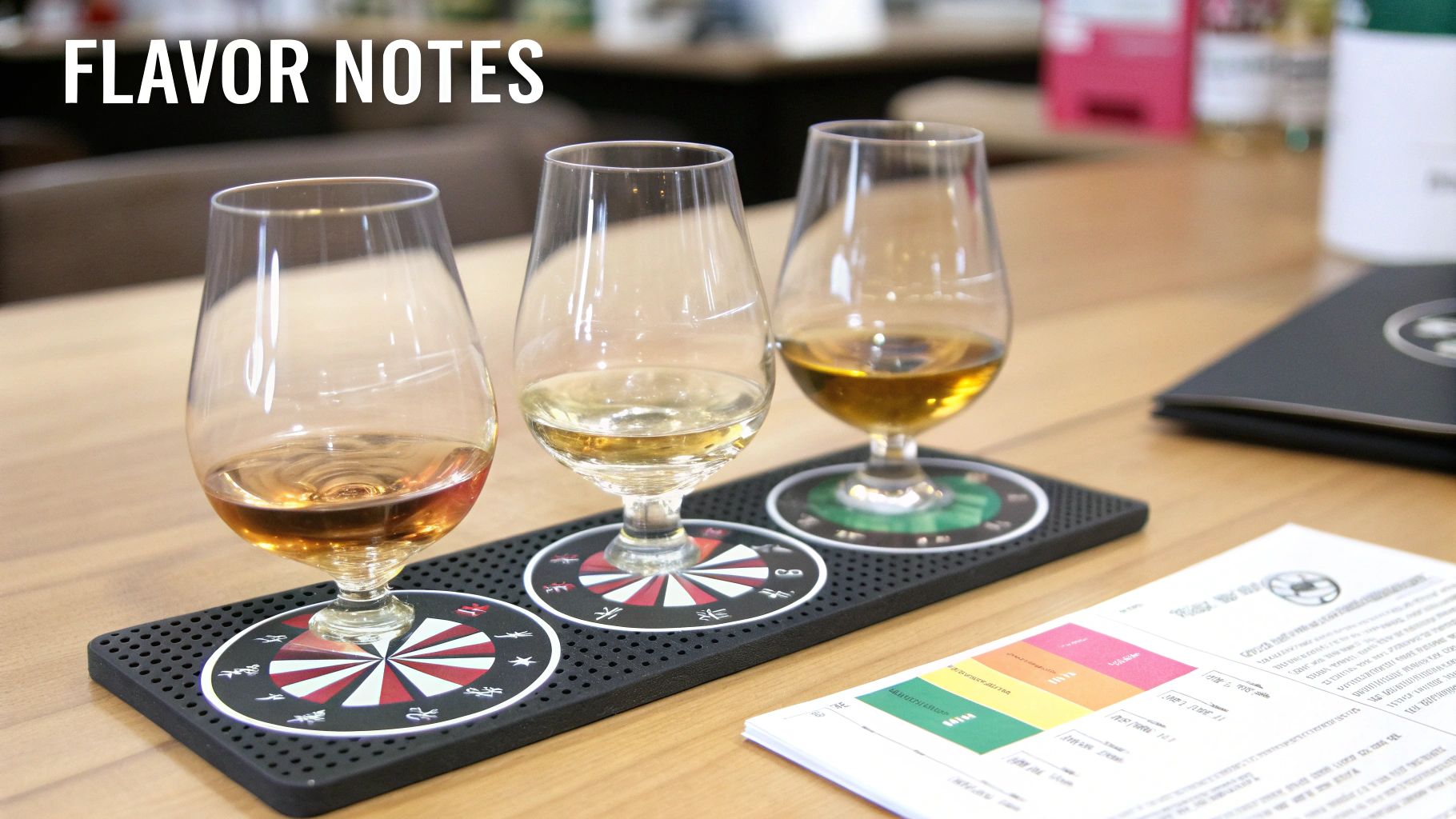
This is where the real fun begins—moving past the simple "sweet vs. spicy" labels. The legal stuff we just covered sets the stage, but the true personality of any whiskey only comes out once it's in the glass. When you start training your palate to pick up on those subtle differences, a simple drink transforms into a full-on sensory experience.
For anyone new to whiskey, the first step is just learning what to listen for. Think of it like picking out the individual instruments in a song; once you can hear the bass line, the guitar riff, and the drumbeat, you appreciate the whole composition that much more. It's a skill anyone can build with a little guidance and, of course, a lot of tasting.
The Bourbon Flavor Profile: Sweetness and Depth
Bourbon’s signature sweetness comes directly from its corn-heavy mash bill, laying the groundwork for a profile that’s typically rich and inviting. As it spends time aging in those new charred oak barrels, it picks up a whole host of complex notes that are both comforting and full-bodied.
When you take a sip of bourbon, start looking for these classic characteristics:
- Sweet Foundation: Notes of caramel, vanilla, and brown sugar are almost always part of the show, thanks to the corn and the caramelized wood sugars from the barrel char.
- Fruity Undertones: You can often find hints of darker fruits like cherry, fig, or even raisin, which add a delicious layer of richness.
- Oak and Char: A pleasant backdrop of toasted oak, tobacco, or a touch of leather often comes through, especially in whiskeys with a bit more age on them.
A great example is the bourbon from Balcones, a Texas craft distiller. Their spirits nail that classic caramel sweetness but bring a unique regional character shaped by the intense Texas climate, showing just how much distillers can create distinct profiles all within the bourbon framework. To dive even deeper, check out our detailed guide to the bourbon flavor wheel and see the full spectrum of notes.
The Rye Flavor Profile: Spice and Complexity
Rye whiskey offers a completely different kind of ride. That legally required 51% rye grain brings a bold, spicy character that’s assertive and invigorating. Most people find rye has a drier, crisper finish compared to bourbon’s softer, more rounded feel.
A Tip for New Drinkers: If you love the bold flavors of a spicy red wine or dark roast coffee, you'll likely feel right at home with rye. Don't be intimidated by the "spice"—it's more like a pleasant baking spice than something hot.
When you're tasting a rye, here are the key flavors to seek out:
- Signature Spice: The first thing you'll likely notice is black pepper or baking spices like cinnamon, nutmeg, and allspice.
- Herbal and Floral Notes: A lot of ryes, especially those with a high rye content (like 95%), have fresh notes of mint, dill, or even light florals.
- Underlying Fruitiness: Keep an eye out for hints of citrus peel or crisp green apple, which provide a bright, clean contrast to all that spice.
The craft whiskey world is seeing a massive resurgence in rye's popularity, which has helped fuel incredible market growth. In the premium American whiskey space, bourbon and rye account for over 80% of the market. While bourbon is still king, gaining an 8.7% market share recently, rye isn’t far behind with a 6.5% gain. This just goes to show how both spirits, with their distinct differences, are contributing to the strength of the category.
Choosing the Right Whiskey for Your Cocktail
The whiskey you choose is the backbone of your cocktail. It’s the decision that fundamentally shapes its final character. Grasping the core difference between bourbon and rye is the real secret to mastering classic recipes and leveling up your home bartending game.
This isn’t about which whiskey is “better.” It’s about which one is better for the specific drink you’re about to mix.
Bourbon’s natural sweetness and its smooth, full body make it the perfect candidate for cocktails that need a rich, comforting foundation. Its signature notes of caramel, vanilla, and oak aren’t just there for flavor; they actively balance out tart or bitter ingredients, creating a more harmonious and approachable drink.
When to Use Bourbon
Bourbon truly shines in cocktails where its inherent sweetness can round out sharp flavors. Its mellow character supports the other ingredients beautifully without ever stealing the show.
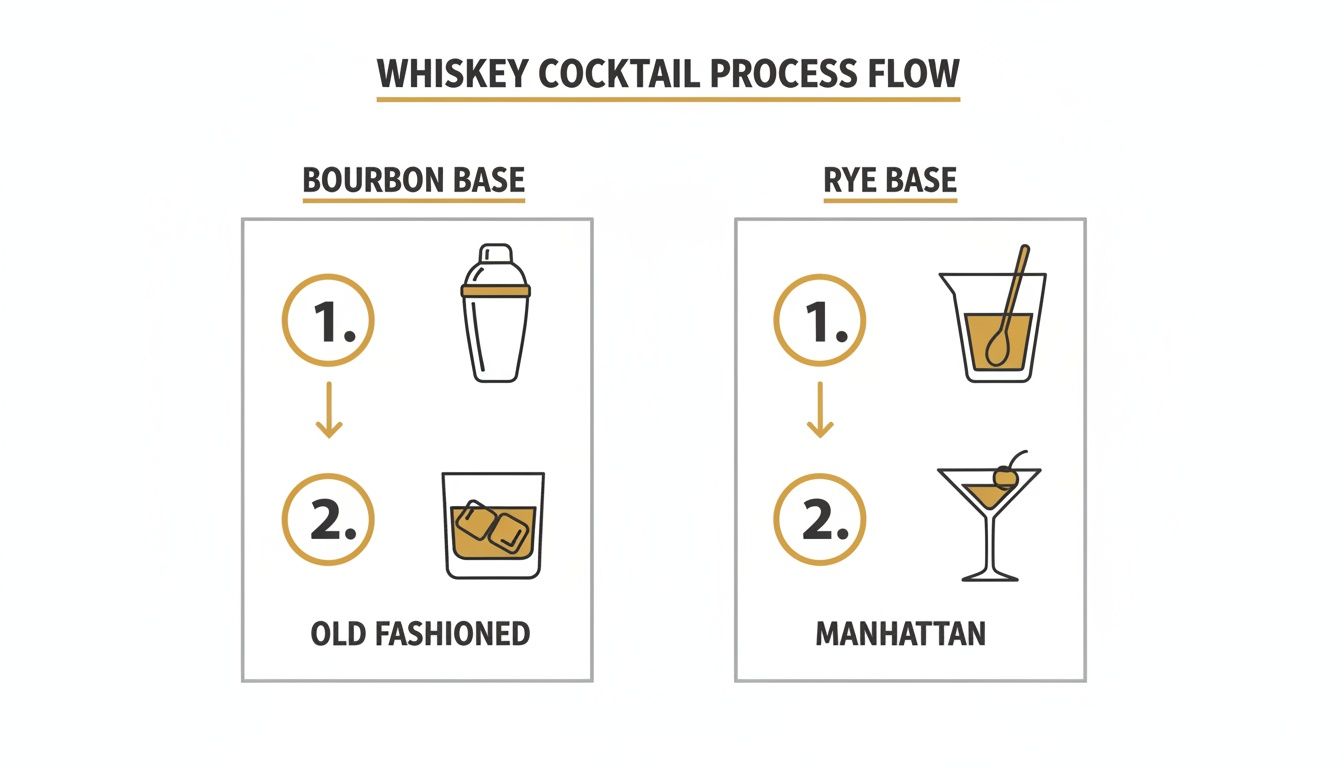
- For an Old Fashioned: Bourbon’s sweetness is a perfect match for aromatic bitters and the bright citrus from an orange peel. A quality craft bourbon, like one from Frey Ranch, brings a robust corn sweetness that makes for an exceptionally smooth, classic version of this cocktail.
- For a Whiskey Sour: The rich vanilla and caramel notes in bourbon stand up perfectly to the aggressive tartness of fresh lemon juice, creating a balanced and incredibly refreshing drink.
When to Use Rye
When you need a whiskey that can cut through sweetness and add a serious layer of complexity, rye is your go-to. Its spicy, assertive nature is what you’re looking for.
Those peppery, sometimes herbal notes are what keep a drink from becoming overly sugary or one-dimensional. This bold character is exactly why it’s making such a massive comeback.
Rye whiskey is staging a spicy resurgence, with sales skyrocketing from $175 million in 2017 to $356 million by 2022. That doubling reflects a renewed love for its bold, peppery bite, especially as craft cocktail culture explodes in both bars and homes. You can explore more data on the whiskey market to see just how fast rye is growing.
This makes it the non-negotiable choice for certain iconic cocktails.
- For a Manhattan: You absolutely need rye’s sharp, spicy character to slice through the rich, sweet vermouth. A bourbon would just make the drink cloyingly sweet, but rye creates that timeless, sophisticated balance.
- For a Sazerac: This classic New Orleans cocktail flat-out depends on rye's peppery kick to stand up to the bold flavors of absinthe and Peychaud's bitters. Anything else would get lost.
A Tip for New Drinkers: The next time you're at a bar, order two Old Fashioneds—one with bourbon and one with rye. Tasting them side-by-side is the quickest and most effective way to truly understand how much the base spirit changes the entire experience. It’s a simple experiment that will make the bourbon vs rye distinction click instantly.
Hosting Your Own Blind Whiskey Tasting
Ready to put your palate to the test? Forget reading reviews for a minute. The single best way to truly understand the difference between bourbon and rye is to taste them side-by-side, without a clue what’s in your glass.
Hosting a blind tasting is a fantastic excuse to get friends together, but it's also the most effective way to discover what you genuinely enjoy. No fancy labels, no high price tags swaying your judgment. It's just you and the whiskey.
This isn’t about being some kind of expert; it’s about trusting your own senses. When you remove all that bias, the spirit itself becomes the star of the show. I promise you and your friends will learn more in one evening of tasting this way than you would from months of reading articles.
Setting Up Your Tasting
The goal here is simple: create a level playing field where only the whiskey's character speaks. Don't overcomplicate it. A great setup is way easier than you might think.
- Select Your Whiskeys: Start with one classic bourbon and one classic rye. You're looking for bottles that really lean into their style. Find an American craft whiskey known for its caramel-and-vanilla bourbon profile and another known for that signature peppery rye spice. This contrast is what will make the differences pop.
- Use Identical Glasses: This is a bigger deal than it sounds. Pour about one ounce of each whiskey into identical glasses for everyone. Glencairn glasses are the gold standard for capturing aromas, but any small, identical glassware will do the job. You don't want someone guessing "Whiskey A" is the good stuff just because it's in a fancier glass.
- Conceal the Bottles: This is the most important part! Have a friend who isn't tasting pour the whiskeys in another room, or just wrap the bottles in foil or stick them in paper bags. Label them with something simple like "A" and "B" so you can take notes without knowing which is which.
Pro Tip: Keep a small glass of water and some plain crackers or bread on hand for each taster. This helps reset your palate between sips, ensuring the flavor of one whiskey doesn't bleed over into the next.
How to Guide the Tasting
Alright, this is the fun part. You don't need a rigid script, just a simple framework to get everyone to engage their senses. It's not a test; it's a guided discovery. Just walk your friends through these three steps for each sample.
- Aroma (Nose): Give the glass a gentle swirl and take a few light sniffs. What are you picking up? Is it sweet and dessert-like, maybe caramel or vanilla? Or do you get something more spicy and herbal, like black pepper, dill, or mint?
- Palate (Taste): Take a small sip and let it roll around your tongue. What are those first impressions? Does it feel rich, oily, and full-bodied? Or is it sharper, crisper, and more vibrant on the tongue?
- Finish: After you swallow, just pause and pay attention to that lingering taste. Does a long, warming sensation stick around? Or is the finish quick, clean, and spicy?
Once everyone has tasted both whiskeys and jotted down a few thoughts, it's time for the big reveal. You’ll be genuinely surprised at how easily you and your friends can pick out the classic sweet notes of bourbon from the signature spice of rye.
For an even more seamless experience, our blind whiskey tasting kit has everything you need to get started, including tasting mats and guided notes.
And as you start building out a more diverse lineup for future tastings, you might find it helpful to manage your wine and spirits collection with a dedicated tool. It’s a great way to keep track of what you’ve tried and what you want to explore next.
Exploring the Craft Whiskey Revolution
Beyond the big names, there's a vibrant movement reshaping American whiskey. Craft distillers all over the country are taking the foundational rules of bourbon and rye and using them as a launchpad for pure creativity. Think of them as artists pushing the boundaries, playing with grain recipes, and proving that incredible whiskey can come from anywhere, not just Kentucky.
This craft revolution is where some of the most exciting things in the bourbon vs. rye conversation are happening right now. These distillers are intentionally blurring the lines, all to create entirely new flavor experiences for adventurous drinkers like us.
Pushing Flavor Boundaries
One of the most popular innovations to come out of this is the "high-rye" bourbon. By law, it's still a bourbon with its 51% corn base, but distillers crank up the rye content in the rest of the mash bill. This creates a beautiful hybrid—you get the sweet, comforting caramel and vanilla of classic bourbon fused with the peppery, spicy kick of rye. It’s truly the best of both worlds in a single glass.
On the flip side, craft rye producers are experimenting with unique secondary grains like malted barley or even wheat. Their goal is to soften rye's sometimes aggressive spicy edge and add surprising layers of complexity you wouldn't normally find.
A Tip for New Drinkers: Exploring craft whiskey doesn't have to be expensive. Many distillers offer smaller 200ml or 375ml bottles, which are a perfect, low-commitment way to try something new without buying a full-sized bottle.
This is a new golden age for American whiskey, and it’s being driven by small producers who are obsessed with their craft. While bourbon commands a massive 70-75% of the U.S. whiskey market—with an estimated 30 million 9-liter cases of American whiskey sold in 2024—it’s the independent players generating so much of the buzz. You can delve deeper into the bourbon market's massive scale and growth to see just how big it is.
For anyone new to whiskey, exploring this world is incredibly rewarding. You’ll find spirits that challenge your expectations and help you pinpoint exactly what you love. Consider it your personal invitation to look beyond the mainstream and find your next favorite bottle among the pioneers of the craft whiskey movement.
Answering Your Bourbon and Rye Questions
As you dive deeper into American whiskey, a few common questions always seem to pop up. Let's tackle some of the ones we hear most often to clear things up.
Can Bourbon Be Made Outside of Kentucky?
You bet it can. While Kentucky is undoubtedly the heartland of bourbon—pumping out about 95% of the world's supply—the "America's Native Spirit" designation means it can be legally produced anywhere in the United States.
As long as a distillery sticks to the script (at least 51% corn, aged in new charred oak barrels, etc.), it's the real deal. In fact, some of the most exciting bourbons we're seeing today come from craft distilleries in places like Texas, New York, and Colorado.
What Is a High-Rye Bourbon?
Think of a "high-rye" bourbon as the best of both worlds. The distiller still meets the legal minimum of 51% corn, but they crank up the rye content in the remaining mash bill—often to 20-35% or more.
This creates a fantastic hybrid. You get the classic sweet, caramel-forward backbone of a traditional bourbon, but it's layered with that distinct peppery spice and dry finish that rye is famous for. It's a great stepping stone for bourbon lovers curious about rye.
Is One Whiskey Better Than the Other?
This is the big one, and the answer is simple: neither is "better." It all boils down to your personal palate.
Do you lean toward sweeter, rounder flavors like caramel, vanilla, and baked orchard fruits? You'll probably find yourself reaching for bourbon more often. But if you crave something with a bit more of a spicy, herbaceous, and peppery kick, rye will likely be your jam. There's no right or wrong answer—the best way to figure it out is to taste them for yourself.
Ready to put your palate to the test without any brand bias getting in the way? The Blind Barrels tasting experience is designed to do just that, helping you discover incredible American craft whiskeys and trust your own taste. Start your whiskey journey with us today!