

Let's get one thing straight right away: all bourbon and rye are types of whiskey, but not all whiskey is bourbon or rye. Think of "whiskey" as the massive, global family of spirits made from grain. Bourbon and rye are just two specific, legally-defined styles within that family, and their names come down to one key ingredient—corn for bourbon, rye for rye.
Cracking the Code of Bourbon Whiskey and Rye
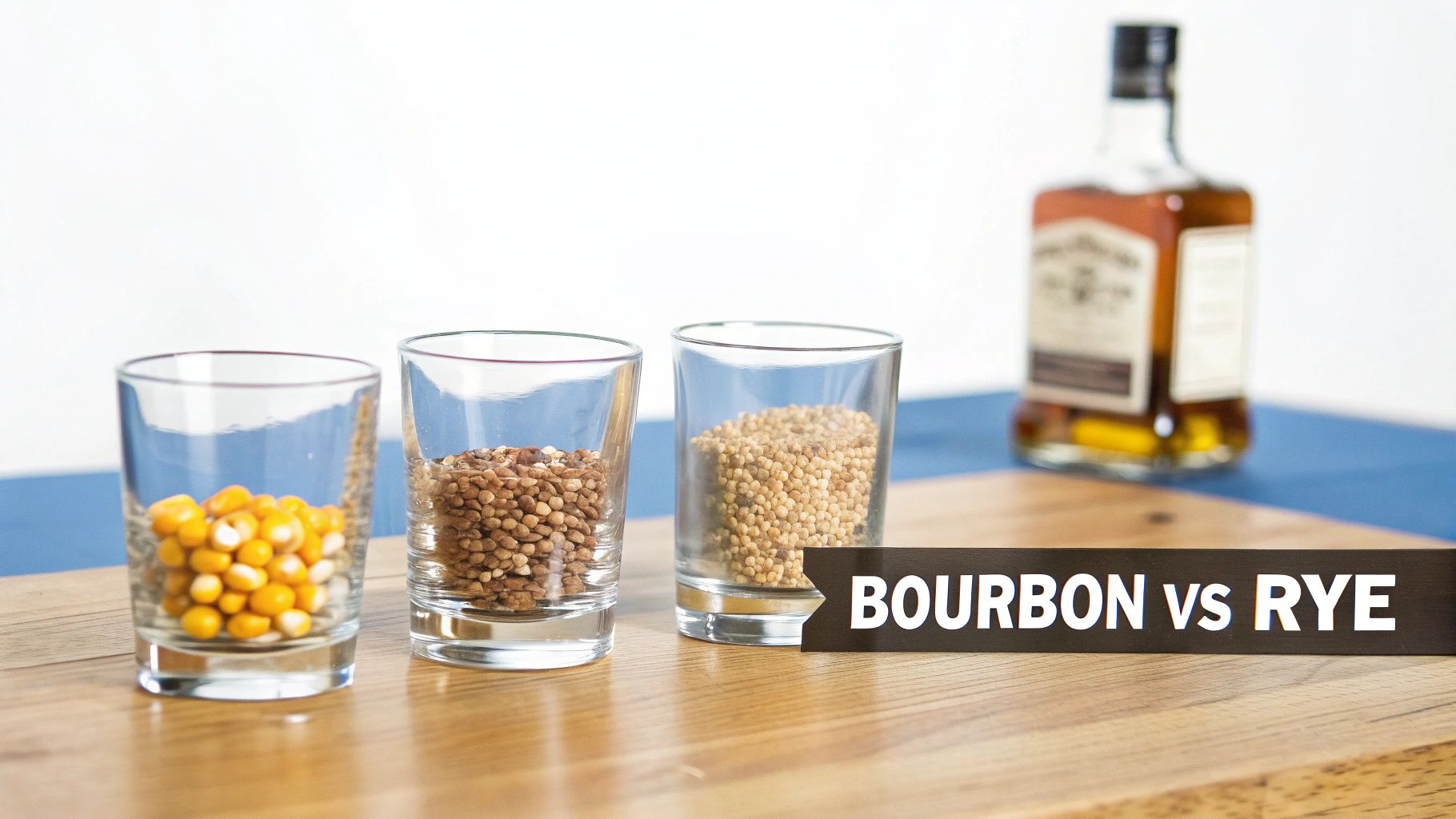
If you’ve ever felt lost staring at a wall of whiskey bottles, you’re not alone. The terms get thrown around so casually that it's easy to get confused. But untangling them is the first step on a seriously rewarding tasting journey. The key is simply remembering that whiskey is the parent category.
Bourbon and rye are like two of the most famous siblings in the American branch of that family. Each one has a strict set of rules it must follow to earn its name on the label, kind of like how true Champagne can only come from a specific region in France. These regulations cover everything from the grain recipe to the barrel it's aged in, giving each style its own unmistakable identity.
The Three Pillars of American Whiskey
When it comes to American styles like bourbon and rye, the differences really boil down to three core elements. Get these down, and you’ll have a solid framework for understanding almost any American whiskey you pick up.
- The Mash Bill: This is just the distiller's grain recipe. Whichever grain is the star of the show has the biggest say in how the final spirit tastes.
- Geography: While not as geographically tight as Scotch, American whiskey still has rules about its homeland. Bourbon, for instance, has to be produced in the United States to be called bourbon.
- Aging Process: This one's a big deal. The type of barrel and how long the whiskey sleeps inside it are critical. For both bourbon and rye, the law demands aging in new, charred oak barrels, which is where they get those signature deep colors and rich flavors.
The single biggest differentiator is the grain. A mash bill with at least 51% corn creates bourbon's characteristic sweetness, while one with at least 51% rye grain results in rye's signature spicy, peppery character.
This fundamental split in the mash bill is your primary guidepost for telling these two classics apart.
Quick Comparison Bourbon Rye and Whiskey
To make it even simpler, here's a quick cheat sheet laying out the main distinctions between these spirits. This table breaks down the essentials at a glance, from the grain that defines them to the barrels that shape them.
| Attribute | Bourbon | Rye | Whiskey (General) |
|---|---|---|---|
| Primary Grain | At least 51% Corn | At least 51% Rye | Any grain (corn, rye, barley, wheat) |
| Flavor Profile | Sweet, full-bodied (vanilla, caramel, oak) | Spicy, bold, peppery (baking spices, fruit) | Varies widely by style and region |
| Origin Rule | Must be made in the USA | American Rye must be made in the USA | Can be made anywhere in the world |
| Aging Barrel | New, charred oak barrels | New, charred oak barrels | Can use new or used barrels (oak, etc.) |
As you can see, the rules create distinct personalities. Bourbon is the sweeter, more mellow sibling, while rye is the spicier, more assertive one. And "whiskey"? That’s the whole, wonderfully diverse family they belong to.
Taking a Look at the Global Whiskey Scene
Before we dive deep into the classic American showdown of bourbon versus rye, it helps to zoom out and see the massive, worldwide family they belong to. At its heart, whiskey is a spirit distilled from a fermented mash of grain—think corn, barley, rye, or wheat—and then aged in wooden barrels. It’s a simple definition that opens the door to an incredible range of styles, each with its own story, rules, and personality.
Whiskey is a truly global phenomenon. America may have bourbon and rye, but other countries have their own icons. Scotland brings us Scotch, famous for its smoky peat and the complex flavors drawn from malted barley. Just a short trip across the water, you’ll find Irish whiskey, known for being exceptionally smooth thanks to its triple-distillation process. Farther east, Japanese whisky has earned worldwide respect for its incredible craftsmanship and elegant, finely-tuned flavors.
These international cousins really show off the amazing diversity in the whiskey world. Each one tells you something about the local land, the climate, and the traditions of the people who make it. Understanding this bigger picture helps you realize that bourbon and rye aren’t just off on their own; they’re America’s most famous answers to the age-old question of how to turn humble grain into liquid gold. To get a better handle on this, check out our article on the difference between whisky and whiskey, which breaks down some of these global distinctions.
The Sheer Scale of the Whiskey World
The world’s thirst for whiskey is staggering, creating a market that dwarfs any single style. The total whiskey market was valued at about USD 84.06 billion and is expected to hit roughly USD 114.26 billion by 2030. The U.S. whiskey market alone makes up a huge chunk of that, sitting around USD 34.3 billion, which shows you just how much we love our homegrown styles.
These numbers aren't just trivia; they underscore how popular this spirit truly is. While bourbon and rye are heavy hitters here in the States, they’re competing on a global stage with Scotch, Irish, and Japanese giants that command markets across Europe and Asia.
American Whiskey: A Category All Its Own
With that global perspective in mind, let's bring our focus back home to the United States. American Whiskey is a distinct and vital sub-category, with its own production laws that give birth to truly unique styles.
Tip for New Drinkers: For anyone new to whiskey, this is the main thing to remember: "American Whiskey" is the big umbrella. Bourbon, rye, Tennessee whiskey, and other domestic spirits all live under it. The specific rules for each one are what shape their final taste.
This legal framework is what gives American craft whiskey its identity. It’s the playbook that allows distilleries like Frey Ranch in Nevada or Southern Star in North Carolina to operate, all while pushing the boundaries with local grains and creative aging methods. Now that we know "whiskey" is the starting point, we can finally compare its two most celebrated American kids: bourbon and rye.
Discovering Bourbon: America's Native Spirit
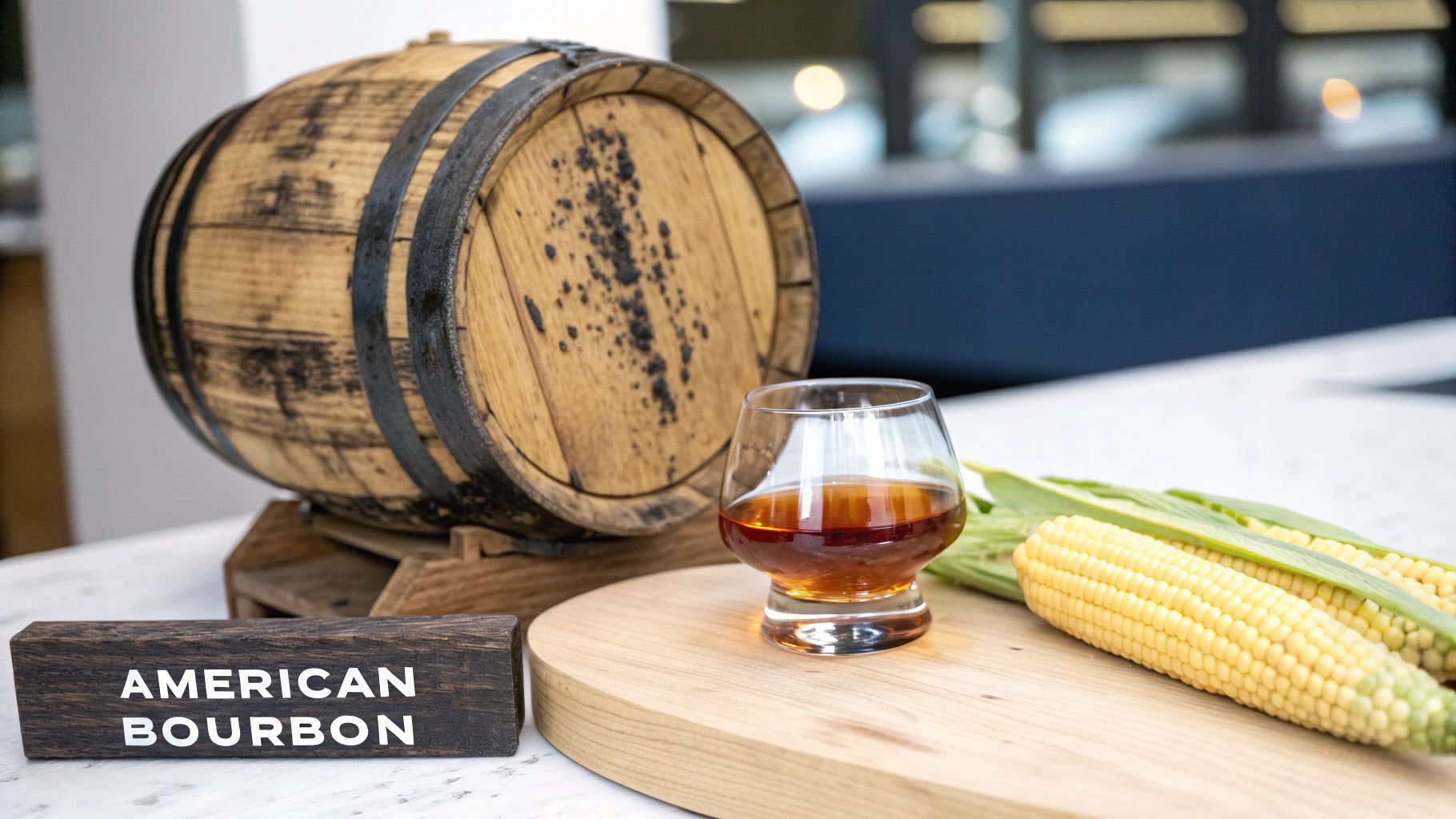
To really get a handle on the whole bourbon vs. whiskey vs. rye debate, we have to start with America’s own spirit. Bourbon isn’t just a drink; it's a piece of American history, a spirit defined by a strict set of laws that give it a character beloved around the world. It’s this legal framework that carves out bourbon’s special place within the broader whiskey family.
At its heart, bourbon is a story told by corn. This single grain is the star of the show, and its inherent sweetness lays the foundation for everything that follows. For a spirit to earn the name "bourbon," it has to play by a few non-negotiable rules—think of them as the Bourbon Laws. These rules guarantee that every bottle delivers a consistent style, no matter which distillery crafted it.
The Unbreakable Rules of Bourbon
The federal government has laid out some very clear, simple rules that make bourbon what it is. This is the spirit’s DNA, dictating its origin, ingredients, and aging process to create that familiar profile whiskey drinkers know and love.
Here’s the breakdown:
- Made in the USA: This is an absolute. While Kentucky is its historic heartland, bourbon can be legally produced anywhere in the United States.
- A Mash Bill of At Least 51% Corn: This is the most important rule for flavor. That high corn content is the source of bourbon's signature sweetness.
- Aged in New, Charred Oak Barrels: The spirit must mature in a brand-new barrel that has been charred on the inside. This is where bourbon gets 100% of its color and a massive chunk of its flavor.
- Specific Distillation and Barreling Proofs: It can’t be distilled higher than 160 proof (80% ABV) and has to go into the barrel for aging at no more than 125 proof (62.5% ABV).
These regulations establish a baseline of quality and character. The high corn mash bill and the time spent in fresh, charred oak barrels work in tandem to create bourbon's classic notes of caramel, vanilla, and toasted wood.
The Flavor Profile Bourbon Is Known For
Thanks to its corn-forward recipe and new oak aging, bourbon is generally sweeter and more full-bodied than its spicy cousin, rye. The sweetness isn't cloying or sugary; it’s rich and complex, reminding you of baked goods or dessert. For newcomers, bourbon is often the most approachable gateway into American whiskey because of these comforting, familiar flavors.
Tip for New Drinkers: The first time you sip a bourbon, try to pick out three key flavors: vanilla from the oak, caramel from the caramelized wood sugars in the barrel, and a gentle sweetness from the corn. This simple exercise is a great way to start training your palate.
The spirit’s incredible popularity really speaks for itself. Bourbon dominates the American whiskey scene, with U.S. output hitting roughly 22.7 million 9-liter cases. It’s estimated that bourbon accounts for about 70–75% of all U.S. whiskey volume, and Kentucky is responsible for producing an astounding 95% of the world's supply.
Exploring Modern Craft Bourbon
While the rules are strict, that doesn't mean there's no room for creativity. Craft distillers are finding brilliant ways to put their own stamp on this classic spirit, experimenting with unique secondary grains (like wheat for a softer profile or more rye for a spicy kick), innovative aging techniques, and locally sourced corn.
Brands like Wyoming Whiskey, with its standout wheated bourbon, and FEW Spirits from Illinois, known for its bold high-rye bourbons, are perfect examples. These distilleries honor tradition while pushing the boundaries, offering exciting new flavor profiles for curious drinkers to explore. They prove that even within a tightly regulated category, there's still plenty of room for personality.
Unpacking Rye: The Bold and Spicy Original
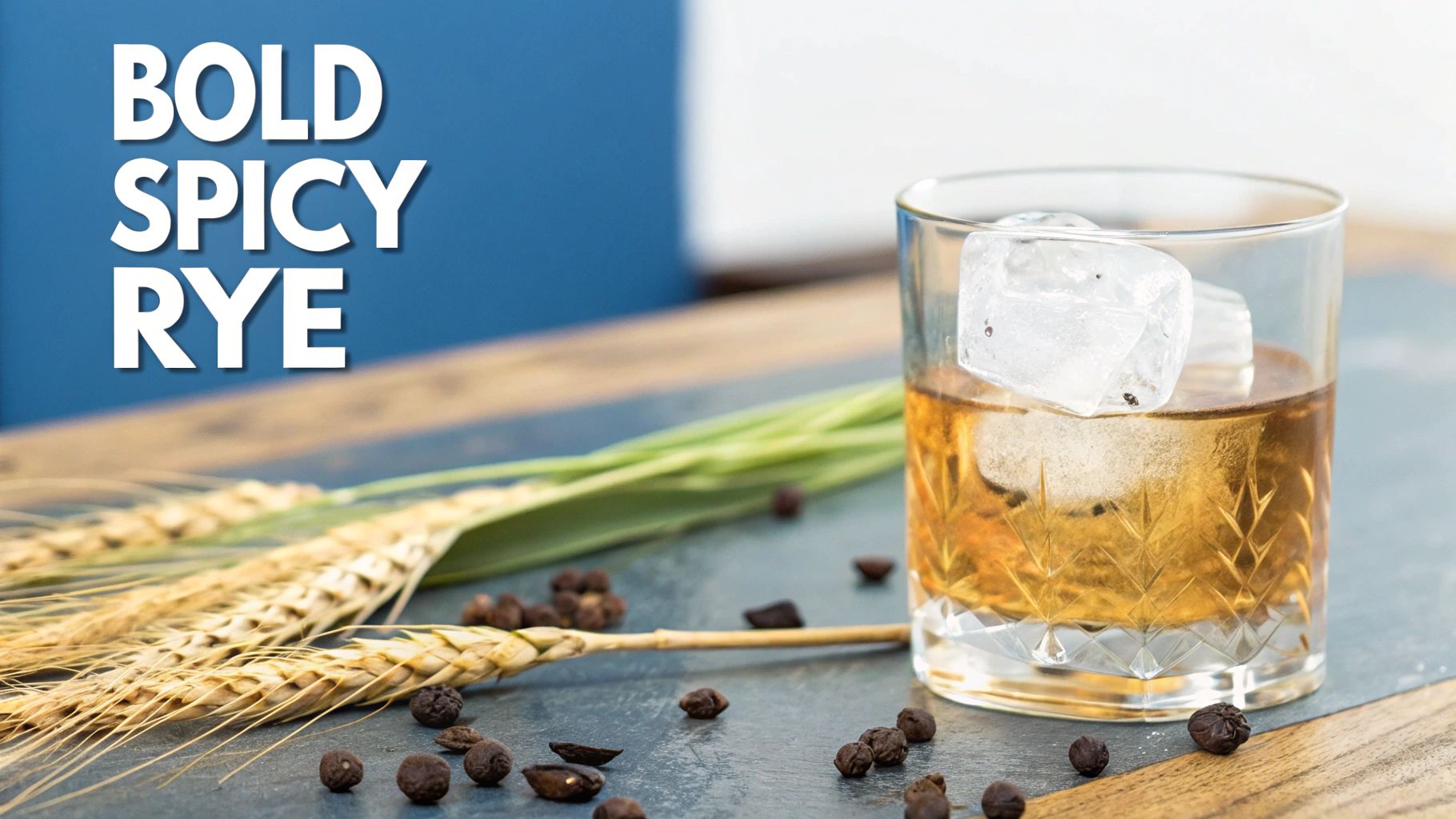
If bourbon is the sweet, charismatic star of American whiskey, rye is its bold, spicy, and historically rich older brother. Long before bourbon became a household name, rye whiskey was the undisputed king of spirits in America, especially in the northeastern states where the hardy grain thrived. Today, it’s in the middle of a massive comeback, celebrated for the very backbone and spice that make it so distinct from its corn-based cousin.
The secret to rye’s unique character is right there in the name. Just as bourbon must have at least 51% corn in its mash bill, American Rye Whiskey must be made from a minimum of 51% rye grain. This one simple shift in the recipe creates a profoundly different spirit, trading bourbon's signature caramel and vanilla sweetness for a profile driven by pepper, baking spices, and a characteristically drier finish.
The Legal Blueprint of American Rye
Like bourbon, American Rye Whiskey is governed by a strict set of rules that guarantee a certain level of quality and consistency. The production standards are surprisingly similar, which really puts a spotlight on how much that one grain can change the final product.
To earn the "American Rye Whiskey" label, a spirit has to check these boxes:
- A Mash Bill of At Least 51% Rye: This is the non-negotiable rule that gives rye its signature spicy kick.
- Aged in New, Charred Oak Barrels: Just like bourbon, this step is essential for developing color and deep, complex flavors.
- Made in the USA: This applies specifically to spirits labeled "American Rye Whiskey," although rye is produced all over the world.
- Distillation and Barreling Proofs: It can’t be distilled higher than 160 proof and must go into the barrel at no more than 125 proof.
These regulations forge a spirit that's structured, robust, and often more assertive than bourbon. It's become a favorite for anyone who appreciates a bolder, more complex flavor profile.
Rye's Signature Spice and Flavor Profile
The rye grain itself contains compounds our palates register as peppery and spicy. This leads to a whiskey that often sings with notes of black pepper, cinnamon, nutmeg, and clove. While you might find some underlying fruit or caramel, the dominant character is almost always herbaceous and zesty.
Tip for New Drinkers: When you first try a rye, pay attention to that distinct peppery sensation on your tongue. It might be a gentle tingle or a full-on burst of spice on the finish. That's the classic rye "signature" and the main point of contrast with the smoother, sweeter profile of bourbon.
This spicy character is exactly why rye is a bartender's darling. It has the backbone to cut through sweet mixers and other ingredients, allowing it to stand tall in classics like the Manhattan and the Sazerac where a softer bourbon might get lost.
The Modern Rye Resurgence
After spending decades in bourbon’s shadow, rye whiskey has made a stunning return. The craft cocktail movement and a growing appreciation for bolder spirits have fueled incredible growth. In fact, industry reports show that rye volumes in the U.S. skyrocketed by 1,275% through 2018, driven by a renewed passion for classic cocktails and a consumer shift toward more premium spirits.
This revival has been led by American craft distilleries. Brands like WhistlePig in Vermont have become famous for their high-end, aged rye expressions, while distillers like High West in Utah have built a stellar reputation on expertly blended rye whiskeys. These producers aren't just bringing a historic spirit back to life; they're redefining it, creating expressions that are both a nod to the past and a bold step into the future.
How to Taste Whiskey and Find What You Love
Alright, you’ve got the rules down for what makes a bourbon a bourbon and a rye a rye. Now for the best part: putting all that theory into practice. Learning to truly taste whiskey isn't about becoming a stuffy connoisseur overnight. It's much simpler than that. It’s about slowing down and really paying attention to what’s in your glass.
A little structure can demystify the whole experience and help you start pinpointing exactly what you like or dislike. We can break it down into three simple stages: checking the appearance, exploring the nose (that’s just the aroma), and finally, analyzing the palate (the taste and finish). Each step gives you clues about the whiskey's journey, from the grain it started as to the glass in your hand.
The Three Steps of Tasting Whiskey
First things first, you need a decent glass. The classic choice is a Glencairn, whose tulip shape is designed to concentrate aromas right where you want them. But really, any glass that curves inward at the top will do the trick.
- Look at the Color: Hold your glass up against a white wall or piece of paper. The color can tell you a lot, ranging from a pale straw to deep, rich amber. This often gives you hints about its age and the type of barrel it rested in. Since bourbon must be aged in new charred oak barrels, it usually has a deeper, reddish-brown hue.
- Nose the Aroma: Give the whiskey a gentle swirl and bring the glass to your nose. A pro tip is to keep your mouth slightly open—it helps you avoid getting hit with pure alcohol vapor. What do you smell? Is it sweet like vanilla? Spicy like cinnamon? Fruity like dark cherries?
- Taste the Palate: Take a small sip and let it roll across your tongue. Notice the first flavors that pop out and the mouthfeel. Does it feel thin and light, or is it rich and oily? After you swallow, pay attention to the finish, which is just the taste that lingers. Is it short and sharp, or does it hang around with a long, warming sensation?
Tasting Tip for Beginners: Don't stress about finding a dozen obscure notes like "leather-bound books" or "candied violets." Just start with the big categories. Is it mostly sweet, spicy, fruity, or smoky? Nailing that down is the perfect first step to telling the difference between a classic bourbon and a punchy rye.
Hosting Your Own Bourbon vs Rye Tasting
Honestly, one of the best ways to get a feel for the differences is to try them side-by-side. A simple home tasting is perfect because it strips away any brand bias and lets your own palate be the judge.
Just grab one bottle of bourbon and one of rye. If you can, find bottles from craft distilleries to really experience some unique character. For instance, a distillery like Laws Whiskey House makes both a fantastic bourbon and a rye, making for a perfect apples-to-apples comparison.
Pour a small amount of each into separate glasses. Go through the tasting steps for each one, but be sure to take sips of water and nibble on a plain cracker in between. This cleanses your palate and makes their distinct personalities pop. Once you get the hang of distinguishing whiskeys, you can branch out into the art of beverage pairing to see how these flavors play with food.
Typical Flavor Profiles Bourbon vs Rye
As you're tasting, it can be helpful to have a "cheat sheet" of common notes to look for. This isn't a strict list by any means, but it does highlight the classic flavors that often define each style.
Here’s a quick guide to what you might find in your glass.
| Flavor Category | Common Bourbon Notes | Common Rye Notes |
|---|---|---|
| Sweetness | Caramel, vanilla, brown sugar, honey | Molasses, subtle toffee |
| Spice | Light cinnamon, soft nutmeg | Black pepper, clove, sharp cinnamon, dill |
| Fruit | Cherry, orange peel, baked apple | Green apple, citrus, dried apricot |
| Wood/Grain | Toasted oak, light char, corn bread | Charred oak, cedar, pumpernickel bread |
| Finish | Smooth, warm, and often sweet | Drier, spicier, and often longer |
Think of this table as a starting point. Your palate is your own, so you might pick up on completely different things—and that’s half the fun. Happy tasting
Choosing the Right Bottle for Any Occasion
So, you can now tell a spicy rye from a sweet bourbon. Great. But the real fun starts when you put that knowledge to work. This isn't just about showing off at a blind tasting; it's about walking into a liquor store and confidently grabbing the perfect bottle for a classic cocktail, a quiet neat pour, or a thoughtful gift. It really comes down to matching the whiskey’s personality to the occasion.
Bourbon’s inherent sweetness and full-bodied character make it a natural for cocktails that need a richer, rounder spirit. Think of an Old Fashioned—those classic caramel and vanilla notes are the bedrock, melting perfectly into the sugar and bitters. On the flip side, rye’s assertive spice and drier finish are what give a Manhattan or a Sazerac its signature bite, slicing right through the sweetness of vermouth or absinthe with a clean, spicy kick.
This decision tree cuts right to the chase, showing how your preference for sweet or spicy can point you directly to the perfect American whiskey.
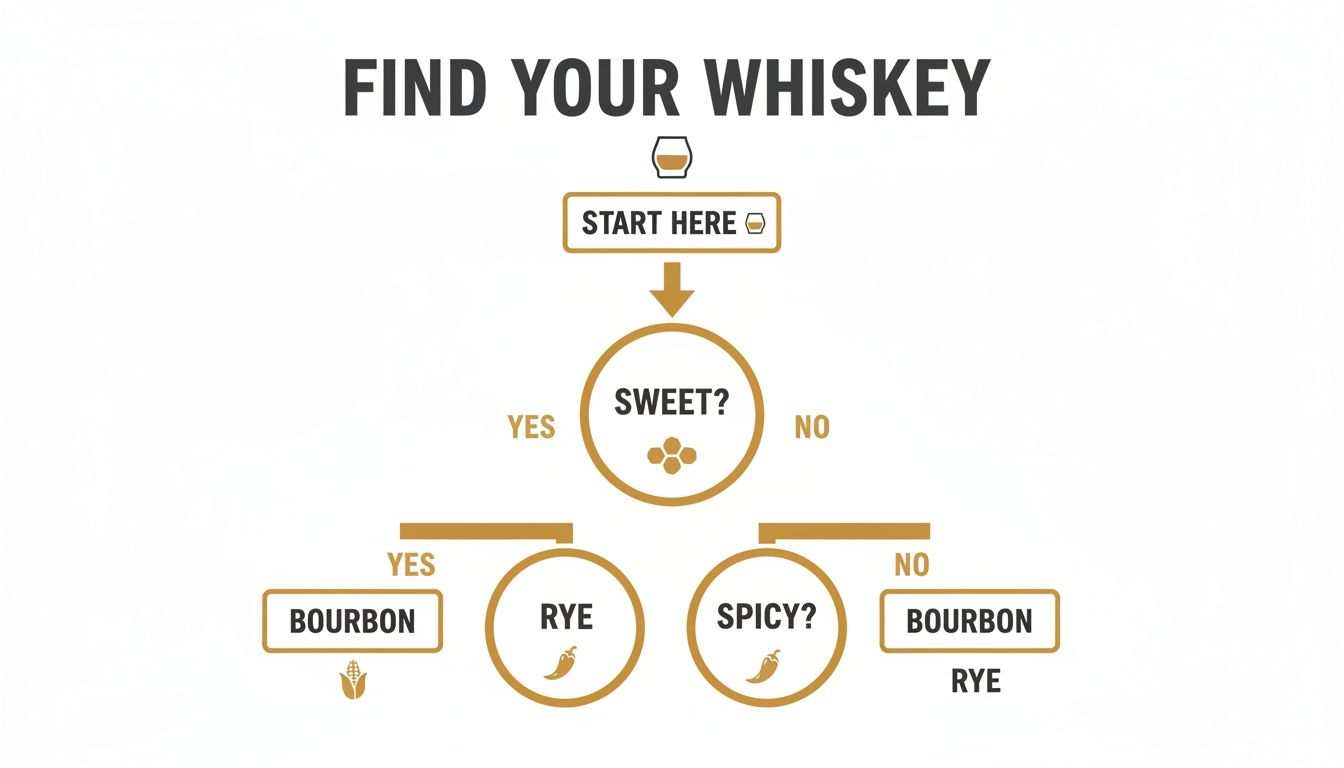
It’s a simple visual that gets to the heart of the bourbon vs. rye debate: if you're chasing sweetness from corn, you're heading toward bourbon. If you want the zesty spice from rye grain, you know where to look.
Tips for New Whiskey Drinkers
Let's be honest, staring at a wall of whiskey can feel a bit overwhelming. The secret is to cut through the noise and focus on the label. It’s the whiskey’s resume, and it’s packed with clues.
- Look for Key Terms: Phrases like "Bottled-in-Bond" are a mark of quality. It means the whiskey is at least four years old, 100 proof, from a single distillery, and from one distilling season. A "Single Barrel" whiskey means every drop came from one cask, giving you a totally unique snapshot of that distillery’s character.
- Start with Approachable Proofs: "Barrel proof" or "cask strength" expressions are fantastic for their intense, unfiltered flavor, but they can be a shock to the system for beginners. Stick to bottles in the 90-100 proof range (45-50% ABV) to find a sweet spot between bold flavor and drinkability.
- Embrace Craft: Don't just reach for the big, familiar names. Smaller American craft distilleries like Still Austin in Texas or New Riff in Kentucky are putting out some truly exceptional bourbons and ryes that are just bursting with personality.
Beginner's Buying Tip: When you're just starting out, go for versatility. A good "wheated" bourbon offers a softer, sweeter profile that's perfect for sipping, while a classic 95% rye is an absolute workhorse for mixing up fantastic cocktails.
A Shortcut to Finding Your Favorites
The only real way to figure out what you love is to taste, but buying full bottles gets expensive—fast. This is where curated tasting experiences are a total game-changer, especially for newcomers. Subscriptions like Blind Barrels offer a fantastic shortcut, sending expertly selected samples from America's best craft distilleries right to your door.
This approach lets you explore a huge range of styles without committing to a full bottle every time. Beyond your own journey, understanding the wider world of spirits and wines can also sharpen your gift-giving skills. If you're looking for something for a different kind of occasion, you might consider options like a gift box with wine for a different tasting experience.
Ultimately, blind tastings are the great equalizer. They strip away brand bias and marketing, letting your palate be the one and only judge. It's the purest way to find your next favorite whiskey.
Frequently Asked Whiskey Questions
As you dive deeper into the world of American whiskey, a few common questions always seem to pop up. Moving from the big picture of bourbon vs. rye to actually picking a bottle can feel a bit overwhelming. Let's clear up some of the most frequent points of confusion to help you on your tasting journey.
Getting these details straight will give you a ton of confidence when you're browsing the whiskey aisle or talking shop with other enthusiasts.
Can Bourbon Be Made Outside Kentucky?
Absolutely. This is one of the biggest myths in the whiskey world. While it's true that about 95% of the world's bourbon is proudly made in Kentucky, the law only requires that it be produced somewhere in the United States. This legal definition has thrown the doors wide open for incredible craft distilleries all over the country—from Texas to New York—to create their own unique spin on America's native spirit.
Rye whiskey, on the other hand, can be made anywhere in the world. But if you see a bottle labeled "American Rye Whiskey," it has to follow all the specific U.S. production laws. This is a key distinction from, say, Canadian Rye, which is a completely different style and often contains very little actual rye grain.
Is Jack Daniel's A Bourbon?
Ah, the classic debate. Technically, Jack Daniel's checks all the legal boxes to be called a bourbon. But the distillery itself has always preferred the term "Tennessee Whiskey," and for a good reason: they add an extra step called the Lincoln County Process.
Before the new make spirit ever touches a barrel, it's filtered slowly—drip by drip—through ten feet of sugar maple charcoal. This extra step mellows the whiskey considerably, sanding off the rough edges and giving it a character all its own. So, while it could be called a bourbon, it's earned its own unique classification.
How Important Is The Aging Barrel?
The barrel is everything. Most distillers will tell you the barrel is responsible for 60-80% of a whiskey’s final flavor and 100% of its color. For bourbon, the law is ironclad: it must be aged in new, charred oak barrels.
Tip for New Drinkers: The char inside the barrel isn't just for show. It acts as a natural filter and caramelizes the wood's sugars, which is where those signature bourbon notes of vanilla, caramel, and toasted oak come from. The barrel isn't just a container; it's the most important ingredient after the grains themselves.
Other whiskeys around the globe might use a whole variety of casks, like ex-bourbon or sherry barrels, to layer in different flavors. But for bourbon and American rye, that fresh, charred oak is a non-negotiable part of their identity. If you want to see just how much of an impact this single factor makes, explore brands like FEW Spirits, which experiments with different barrel char levels.
Ready to put your palate to the test and discover your next favorite craft whiskey? With Blind Barrels, you can explore America's best small-batch distilleries from the comfort of your home. Our blind tasting kits remove brand bias, letting you discover what you truly love based on taste alone. Start your whiskey adventure today!