

Let's get the big question out of the way right up front: all bourbon is whiskey, but not all whiskey is bourbon.
It’s best to think of “whiskey” as the massive, global family tree of spirits distilled from fermented grain. Bourbon, on the other hand, is a very specific, legally-protected branch of that tree—a uniquely American whiskey with a strict set of rules it has to follow.
Understanding the Bourbon and Whiskey Relationship
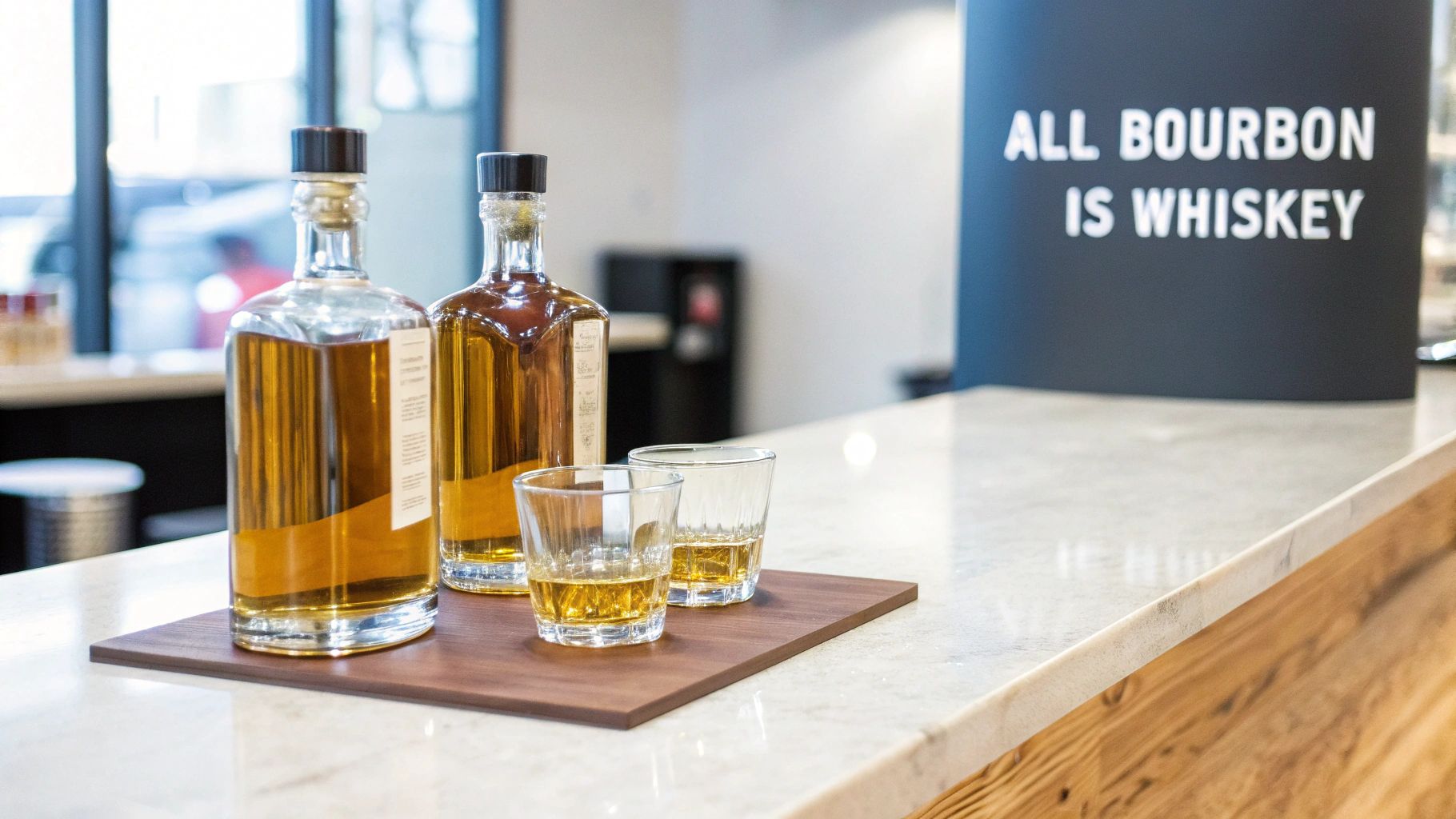
Jumping into the world of spirits can feel a bit overwhelming, but the bourbon vs. whiskey distinction is the perfect place to start. At its core, whiskey is a global phenomenon. You’ve got famous styles hailing from Scotland, Ireland, Canada, Japan, and beyond, each with its own heritage and way of doing things.
Bourbon, however, is a purely American invention. It’s not just a style; it’s a spirit defined by law. This official designation as "America's Native Spirit" means it must follow a very particular recipe and process to earn its name, which is what truly sets it apart from the wider whiskey family. For a deeper look at the fundamentals, check out our guide on what makes a whiskey a whiskey.
And people love them both. The global whiskey market, which includes bourbon, was valued at a staggering USD 84.06 billion in 2024 and is only expected to keep growing. Bourbon plays a huge part in that, with the U.S. standing as the world's second-largest supplier, driven almost entirely by its production.
Key Distinctions at a Glance
For anyone just starting their tasting journey, getting these foundational differences down is key. Here’s a quick breakdown of what separates these two iconic spirits.
| Feature | Whiskey (General) | Bourbon (Specific) |
|---|---|---|
| Origin | Can be made anywhere in the world. | Must be made in the United States. |
| Primary Grain | Varies widely (barley, rye, wheat, etc.). | Must be made from at least 51% corn. |
| Aging Container | Can be aged in new or used barrels. | Must be aged in new, charred oak containers. |
The simplest tip for new drinkers: Remember that bourbon's rules—especially the 51% corn and new charred oak requirements—are what give it that characteristically sweeter and often spicier flavor profile compared to many other types of whiskey.
Stepping Back to See the Bigger Picture: The Global World of Whiskey
To really get bourbon, you have to understand the family it comes from. Whiskey is a massive, global category of spirits, and the basic definition is pretty simple: it’s any spirit distilled from a fermented grain mash. That simple starting point, however, leads to an incredible world of different styles, traditions, and flavors.
Think of "whiskey" as the sprawling family tree. Bourbon, Scotch, Irish, and all the others are the distinct branches, each one shaped by its local soil, climate, and centuries of handed-down know-how. The specific grains used, the shape of the still, and the way it's aged all come together to create the unique spirit in your glass.
A Quick Tour of Major Whiskey Regions
Every major whiskey-producing country has its own signature style, and knowing them gives you a fantastic frame of reference when tasting bourbon. The contrast between these global players is what makes bourbon’s unique personality pop.
- Scotch Whisky: Straight out of Scotland, this spirit is most famously made from malted barley. It’s often known for its smoky, peaty character, especially the stuff from the Islay region. That distinct flavor comes from an old-school technique of drying the barley over smoldering peat fires.
- Irish Whiskey: Famous for being exceptionally smooth, Irish whiskey is typically triple-distilled—that’s one more trip through the still than most Scotch and bourbon. That extra step strips out heavier oils, creating a lighter spirit that’s incredibly easy to sip.
- Canadian Whisky: Often using a high percentage of corn in the mash, Canadian whiskies are light, smooth, and very approachable. Many include rye grain for a touch of spice, but the overall vibe is generally much softer than their American cousins.
- Japanese Whisky: The Japanese took inspiration from Scotch traditions and then elevated them with an obsessive focus on precision and balance. Japanese distillers are masters of their craft, producing an incredible range of elegant, complex, and highly sought-after whiskies.
This world map gives you a sense of just how far and wide the whiskey family has spread.
Seeing the geographic footprint really drives home the point: while bourbon is proudly American, it’s part of a much larger, international conversation.
A Pro Tip for Your Palate: One of the best ways to understand bourbon is to taste it right alongside an Irish whiskey or a non-peated Scotch. The gentle, smooth profile of the Irish or the malty sweetness of the Scotch will make bourbon’s signature corn sweetness and bold oaky spice jump out. It’s the fastest way to train your palate to spot the difference.
Knowing this global context is what makes the strict, legally-defined rules for bourbon so important. While other countries often rely on tradition to define their spirits, the U.S. uses the force of law to protect its native spirit—a crucial distinction we'll get into next.
The Unbreakable Rules That Define Bourbon
While the global whiskey family is full of cherished traditions, bourbon is a spirit defined by law. Back in 1964, the U.S. Congress officially declared bourbon "America's Native Spirit," creating a strict, non-negotiable set of standards. These rules are the bedrock of what makes bourbon, well, bourbon, ensuring every bottle delivers a consistent and distinctly American experience.
Think of it this way: there are five core mandates a spirit must follow to legally wear the "bourbon" label. If it misses even one, it's simply not bourbon. This legal framework is precisely why bourbon has such a recognizable character, setting it apart from the diverse styles found across the globe.
This decision tree helps visualize where bourbon fits into the larger spirit family, showing the key geographic branches of whiskey production.
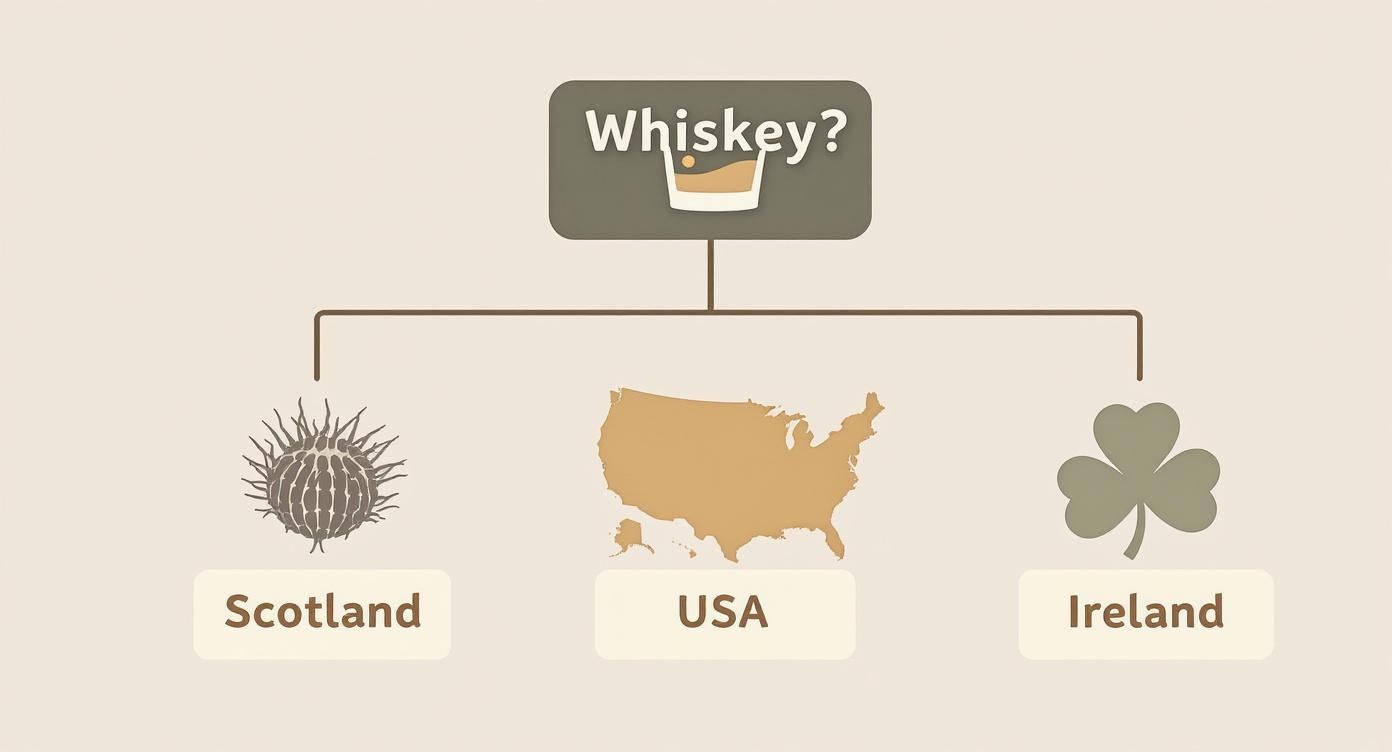
As the graphic makes clear, while countless countries produce their own unique styles, the path to authentic bourbon begins and ends right here in the United States.
The Corn-Driven Mash Bill
The foundation of any whiskey is its mash bill—the specific recipe of grains used for fermentation. For bourbon, the law is crystal clear: the mash bill must contain at least 51% corn. This single requirement is the main reason for bourbon's signature sweetness, often showing up as notes of caramel, vanilla, and crème brûlée.
The rest of the recipe is usually a mix of other grains like rye, wheat, and malted barley, each bringing its own personality to the party. A "high-rye" bourbon, for instance, will lean spicier and more robust, while a "wheated" bourbon offers a much softer, smoother tasting experience.
Tip for New Drinkers: If you're just starting your bourbon journey, look for a "wheated" bourbon. The wheat grain creates a gentler, more approachable flavor profile that’s a perfect introduction to the category. A great example is the small-batch bourbon from Laws Whiskey House in Colorado, which often showcases unique grain expressions.
Made in the USA
One of the biggest myths out there is that bourbon has to be made in Kentucky. It's true that the Bluegrass State produces around 95% of the world's supply, but the actual legal requirement is simply that it must be produced somewhere in the United States. This "Made in the USA" rule keeps bourbon a uniquely American product.
These days, fantastic bourbon is being crafted all across the country. You can find incredible expressions from the high desert of Nevada with distilleries like Frey Ranch to the humid climate of Texas with producers like Garrison Brothers. These distillers are using local grains and unique aging conditions to create bourbons with a true sense of place.
Distillation and Barrel Entry Proof
The rules for bourbon also dictate the alcohol content at key stages. First, the spirit can’t be distilled to a proof higher than 160 (80% ABV). This is a huge deal. A lower distillation proof helps retain more of the flavorful compounds, known as congeners, from the fermented mash, which would otherwise be stripped away at higher proofs.
Then, when the new, unaged spirit (often called "white dog") is ready for the barrel, it cannot go in at a proof higher than 125 (62.5% ABV). This step ensures a balanced interaction between the spirit and the wood, preventing the high-proof alcohol from overpowering the subtle flavors being extracted from the oak.
The New, Charred Oak Container
This might be the most impactful rule of them all: bourbon must be aged in new, charred oak containers. This is a major fork in the road compared to other world whiskies. Scotch, for example, is typically aged in used barrels, often ones that previously held bourbon or wine.
Bourbon's requirement for brand-new barrels means it pulls 100% of its rich color and a huge portion of its flavor directly from that fresh, charred wood. It's a one-and-done deal, which is why the American bourbon industry is the world's largest supplier of used barrels to other spirits producers. You can dig deeper into these production differences and their market impact in this detailed industry report.
How Production Rules Create Distinct Flavors
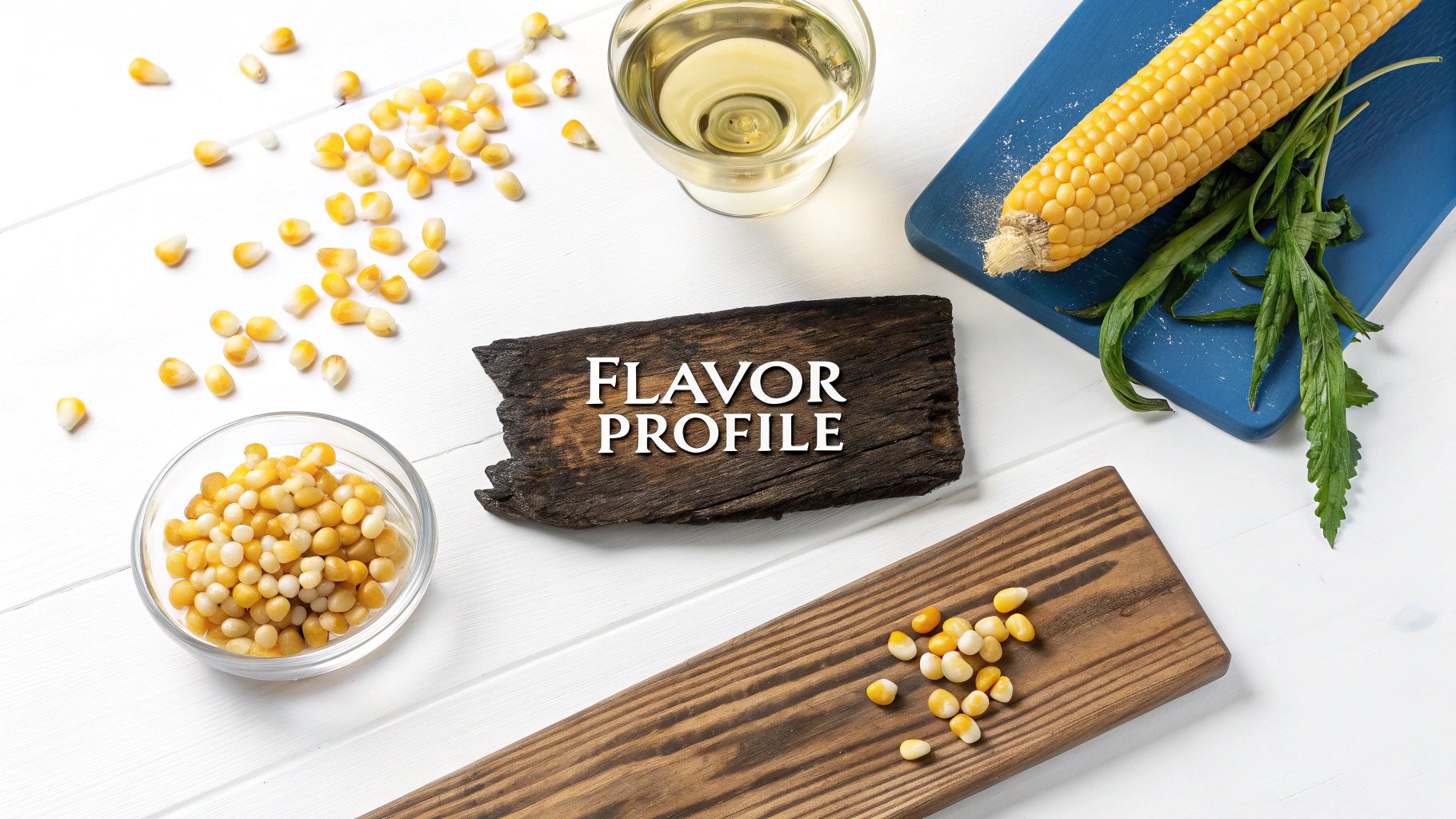
Those strict production rules aren't just red tape; they are the very architects of bourbon's signature taste. Every single regulation, from the grain recipe right down to the barrel it sleeps in, directly translates into the aromas and flavors you find in the glass. Getting a handle on this connection is the key to understanding the fundamental difference between bourbon and whiskey.
Bourbon’s unique flavor journey begins with its legally required mash bill. By demanding at least 51% corn, the law ensures a foundation of sweetness that you just won’t find in most other whiskeys. Corn simply ferments into sweeter, lighter alcohols compared to the peppery kick of rye or the soft, bready character of malted barley.
This corn-forward base is exactly what creates bourbon's classic tasting notes. It’s the source of that familiar caramel, rich vanilla, and warm toffee that makes the spirit so inviting, especially for newcomers.
The Power of New Charred Oak
While the corn sets the stage, the aging process in new, charred oak containers is where bourbon’s deep, complex character truly comes alive. This is, without a doubt, the most critical step in shaping its final flavor. When distillers char a brand-new barrel, they're essentially caramelizing the wood sugars just beneath the surface of the staves.
This process creates a layer of natural vanillins and other sweet, rich compounds. As the bourbon ages, it breathes in and out of the wood, pulling out those incredible flavors of vanilla, brown sugar, and baking spice. If you want to dive deeper into this crucial step, check out our guide on how barrel preparation affects whiskey taste.
Because bourbon regulations mandate a new barrel every time, the spirit gets first dibs on all those powerful, wood-derived flavors. This is a massive departure from Scotch or Irish whiskey, which are typically aged in used barrels that have already given much of their character to a previous spirit.
For New Whiskey Drinkers: When you're tasting, try to find the two core pillars of bourbon's flavor. First, see if you can pick out the sweetness from the corn—think candy corn or caramel. Then, search for the flavors from the barrel, like vanilla, cinnamon, or toasted oak. Learning to spot these two elements will completely change how you appreciate what's in your glass.
Comparing Bourbon to Other Whiskey Profiles
To really get a feel for bourbon's unique identity, it helps to put it side-by-side with other major whiskey styles. You'll see that the contrast in flavor is a direct result of their completely different production methods.
-
Scotch Whisky: Many Scotch whiskies are made from 100% malted barley and aged in used barrels. This often leads to a malty, honeyed sweetness, but the real game-changer can be peat smoke. Islay Scotches, for instance, are famous for their bold, smoky, and even medicinal notes—a world away from bourbon’s sweet oakiness.
-
Rye Whiskey: Think of rye as bourbon's spicy American cousin. It has to contain at least 51% rye, and that grain brings a signature peppery, spicy, and sometimes herbal character. While it shares the new, charred oak aging rule, its grain-forward spice creates a sharp, zesty counterpoint to bourbon's corn-driven sweetness. A fantastic example is the rye from Utah's High West Distillery, which perfectly showcases this spicy profile.
This clear distinction in flavor DNA is precisely why blind tastings are so powerful. When you remove all the labels and preconceived notions, you can focus purely on what the spirit is telling you—letting the corn, the oak, and the distiller's craft speak for themselves.
Discovering American Craft Whiskey and Bourbon
Knowing the rules and flavor profiles is a solid start, but the real magic happens when you actually taste what today’s passionate distillers are creating. The American craft whiskey scene is absolutely exploding, with small, independent producers pushing every boundary and redefining what bourbon and American whiskey can even be. These are the distillers who give you a tangible taste of how grain, climate, and pure craft can create an incredible spectrum of flavor.
Let’s move from theory to practice and look at a few craft brands that truly highlight just how exciting the world of American whiskey has become. These examples show how distillers are using unique grains and finishing techniques to put their personal stamp on America's native spirit.
High West Distillery Utah
Tucked away in Park City, Utah, High West has built its reputation on masterful blending and finishing. While they certainly distill their own spirits, they’ve become celebrated for their uncanny ability to source and expertly marry whiskeys from different producers to create something entirely new and delicious.
A perfect entry point to their portfolio is the American Prairie Bourbon. It’s a thoughtful blend of straight bourbons that offers a rich, earthy profile with notes of caramel, honey nougat, and just a hint of sweet cornbread. For anyone new to whiskey, it’s a fantastic and accessible introduction to how different bourbon profiles can be layered together to build real complexity.
Frey Ranch Distillery Nevada
Frey Ranch, located in Fallon, Nevada, is the definition of a "farm-to-glass" operation. They grow 100% of their own grains—corn, wheat, rye, and barley—right on their family farm. This gives them unparalleled control over the spirit's character from the moment the seed hits the soil.
Their flagship Straight Bourbon Whiskey is a phenomenal four-grain expression. Because they use non-GMO grains grown right on their own estate, the flavor is immediately distinct. New tasters will find those familiar, approachable notes of vanilla and caramel, but there’s an added layer of citrus and a hint of cedar and leather that speaks directly to its unique origin.
A Tip for Exploring Craft Spirits: When you're starting out, look for distilleries that are transparent about their process. Brands that love to talk about their unique grain sources, distillation methods, or aging experiments are almost always the ones producing the most interesting and flavorful whiskeys. Learning their story makes the tasting experience that much more rewarding.
Laws Whiskey House Colorado
Operating out of Denver, Colorado, Laws Whiskey House is obsessed with the concept of terroir—the idea that the local environment fundamentally shapes the flavor of the grain. They are well-known for using heirloom and heritage grains sourced from local Colorado family farms, adding a layer of complexity you just won’t find in mass-market spirits.
Their Four Grain Straight Bourbon is the perfect example of this philosophy in a bottle. It has a signature sweet and fruity profile, with clear notes of orange peel and black tea that are beautifully balanced by hints of cinnamon and vanilla. It’s a wonderful demonstration of how specific grain varieties can introduce flavors far beyond the typical bourbon profile. For more inspiration, explore our list of other great American craft spirits making waves in the industry.
Still Have Questions About Bourbon and Whiskey?
As we get to the bottom of the glass, it's totally normal to have a few questions swirling around. Getting the hang of the difference between bourbon and whiskey is a process, and nailing down these common points will help you feel more confident next time you're browsing the whiskey aisle.
Let's clear up some of the most frequent questions we hear from folks just starting their journey.
What's the Best Way for a Beginner to Start Tasting Bourbon?
Jumping into the world of bourbon should be fun, not feel like a test. The trick is to start with something approachable that won't singe your tastebuds with a high-octane alcohol burn.
A great place to begin is with a lower-proof bourbon, maybe something in the 90-100 proof neighborhood. You might also want to look for "wheated" bourbons. These use wheat as the second main grain instead of rye, which often results in a softer, smoother profile that’s really welcoming for beginners.
When you've got your bottle, here’s how to approach the tasting:
- Go Neat First: Pour just a small amount into a proper tasting glass (like a Glencairn). This shape helps concentrate all those great aromas.
- Add a Drop of Water: After you take that initial sip, add a single drop of water. You'd be surprised how much this can open up the spirit, taming the alcohol and letting new flavors and scents come forward.
- Think in Broad Strokes: Don't stress about picking out notes of leather-bound books or crème brûlée just yet. Instead, just ask yourself what you're sensing. Is it sweet? Spicy? Fruity? Woody? Getting comfortable with these big categories is the best way to build your palate.
Can Bourbon Be Made Outside of Kentucky?
Yes, it absolutely can. This is easily one of the biggest myths in the whiskey world.
While it's true that Kentucky is the undisputed king of bourbon, producing about 95% of the global supply, the only geographic requirement by law is that it has to be made in the United States. Period.
Today, you can find incredible bourbon being made all over the country. Distilleries in states like Colorado, Texas, New York, and Nevada are putting their own spin on America's native spirit, using local grains and aging in unique climates to create bourbons with a true sense of place.
For anyone new to whiskey, this is where things get really exciting. Trying a bourbon from a craft distillery like Frey Ranch in Nevada or Laws Whiskey House in Colorado lets you taste how a different environment—or terroir—shapes the final product. It’s a chance to find a flavor profile you simply won't get from traditional Kentucky bourbon.
What Does “Straight Bourbon Whiskey” on a Label Mean?
When you spot the word "Straight" on a bourbon label, it’s not just marketing fluff. It’s a legally defined term that acts as a seal of quality and tells you a lot about what’s in the bottle.
For a spirit to earn the title Straight Bourbon Whiskey, it has to check two very important boxes:
- It must be aged for at least two years in new, charred oak barrels.
- It cannot have any additives. That means no added coloring, no extra flavoring, and no other spirits blended in.
There's one more detail: if a Straight Bourbon is aged for less than four years, the distillery has to state the age right on the label. This designation is your guarantee that you're getting a pure, properly matured bourbon that truly represents the distiller's craft.
Ready to put your newfound knowledge to the test and discover your next favorite craft whiskey? With Blind Barrels, you can remove brand bias and let your palate lead the way. Our blind tasting kits feature incredible spirits from America's best small distilleries, delivered right to your door. Start your tasting adventure today at https://www.blindbarrels.com.