

Welcome to the wild, wonderful world of whiskey! If you're just dipping your toes in, the sheer number of different brands of whiskey lining the shelves can feel like a tidal wave. But don't worry, this guide is your roadmap.
Think of it as your personal compass for navigating everything from iconic global names to the small-batch American craft whiskey distilleries popping up everywhere.
Starting Your Journey into Whiskey Brands
Stepping into a well-stocked liquor store can feel a bit like walking into a library where every bottle tells a different story. The labels, shapes, and colors all vie for your attention, and it's easy to feel intimidated. But here's the secret: understanding the basics is way simpler than you think.
Our goal here is to turn what feels like a daunting task into a genuinely fun discovery. We'll give you the confidence to start your own tasting journey, whether you find yourself drawn to the sweet, vanilla-and-caramel notes of bourbon, the spicy kick of rye, or the peaty, smoky character of a good Scotch. It’s all about finding what clicks with your palate.
The global fascination with whiskey isn't just a hunch; it's powering a market valued at around USD 71.5 billion and it’s still climbing. This isn't just about the old guard like Johnnie Walker, either. The boom is fueled by innovative American craft distilleries and exciting new players from around the globe. If you want to dive deeper into the numbers, you can learn more about the global whiskey market trends on imarcgroup.com.
This simple diagram breaks down the main branches of the whiskey family tree you'll come across.
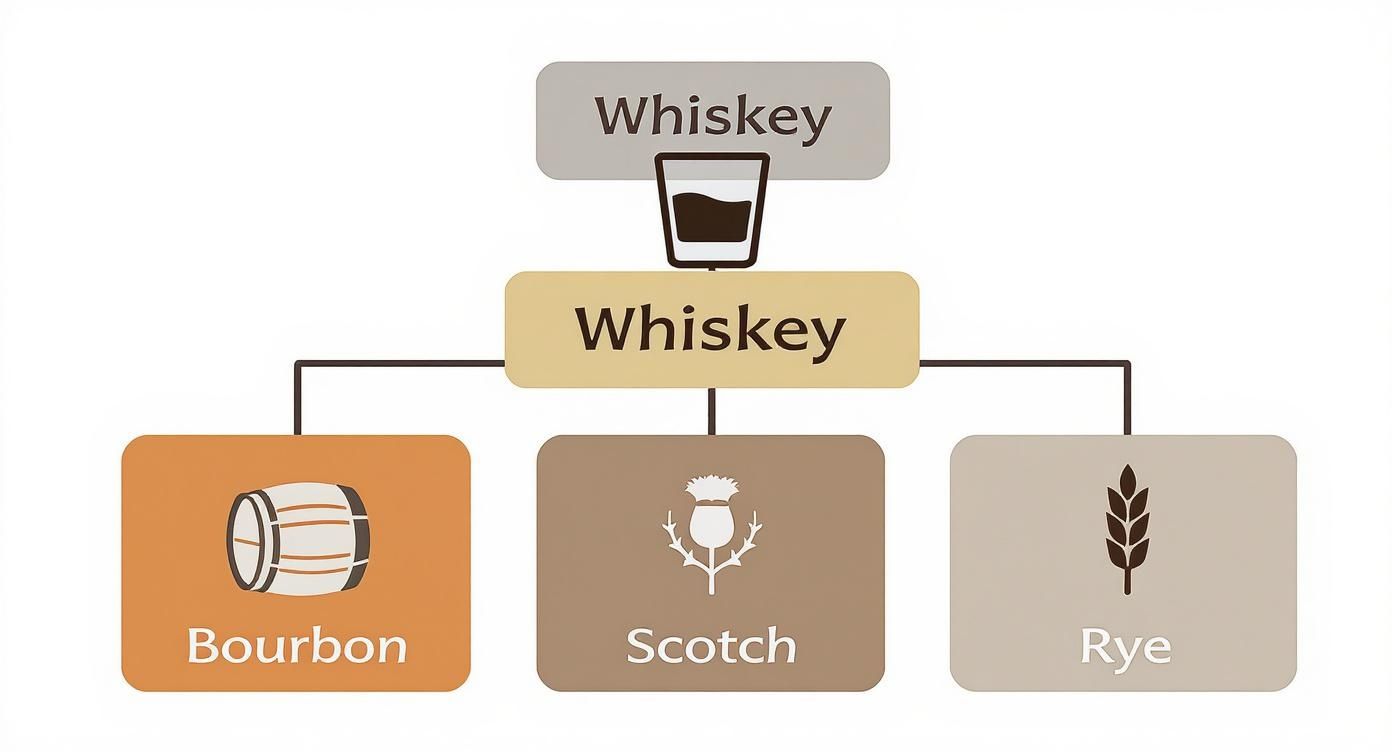
As you can see, the big players—Bourbon, Scotch, and Rye—each have their own distinct origins and production rules that shape their signature flavors.
Tips for New Whiskey Drinkers
Kicking off your exploration doesn't mean you need a massive budget or an encyclopedia of knowledge. All it really takes is a little curiosity and a willingness to try something new. Here are a few practical tips to get you started on the right foot:
- Start with the Classics (and then get adventurous): Begin with well-regarded brands from major categories. Think Buffalo Trace for bourbon or Monkey Shoulder for blended Scotch. These give you a solid baseline. Once you have that, explore an American craft whiskey brand like Westward Whiskey to see how newcomers are innovating on classic styles.
- Don't Fear Lower Proofs: High-proof, cask-strength whiskeys can be an intense experience for a new palate. Starting with whiskeys bottled between 80-90 proof (40-45% ABV) lets you appreciate the complex flavors without being overwhelmed by a strong alcohol burn.
- Try a Tasting Flight: The absolute best way to compare different brands of whiskey is to taste them side-by-side. Head to a good whiskey bar that offers tasting flights or, better yet, consider a tasting subscription to sample a variety of styles—especially from American craft producers—without having to commit to a full bottle right away.
To help you get your bearings, here's a quick cheat sheet of the major whiskey types and a classic brand to look for in each category.
Quick Guide to Whiskey Types and Key Brands
| Whiskey Type | Common Flavor Profile | Classic Brand Example |
|---|---|---|
| Bourbon | Sweet, caramel, vanilla, oak | Maker's Mark |
| Rye | Spicy, peppery, hints of fruit | Bulleit Rye |
| Scotch (Blended) | Balanced, smooth, hints of smoke & fruit | Johnnie Walker Black Label |
| Scotch (Single Malt) | Varies by region: smoky, peaty, fruity, floral | The Macallan 12 |
| Irish Whiskey | Smooth, light, notes of fruit & vanilla | Jameson |
| Japanese Whisky | Elegant, balanced, often with floral & subtle smoke | Suntory Toki |
| Craft Whiskey | Highly diverse, experimental, unique grains & finishes | Varies (e.g., Stranahan's) |
This table is just a starting point, of course. The real fun begins when you start exploring the incredible diversity within each of these categories and discovering your own personal favorites.
Exploring American Whiskey: Bourbon and Rye
If you're just dipping your toes into the wide world of whiskey, there's no better place to start than right here in America. The two titans of the scene, bourbon and rye, offer distinct but welcoming flavor profiles that give you a solid foundation for everything else you'll taste.
Think of them as two sides of the same coin—born from a similar heritage, yet each offering a completely different experience on the palate.
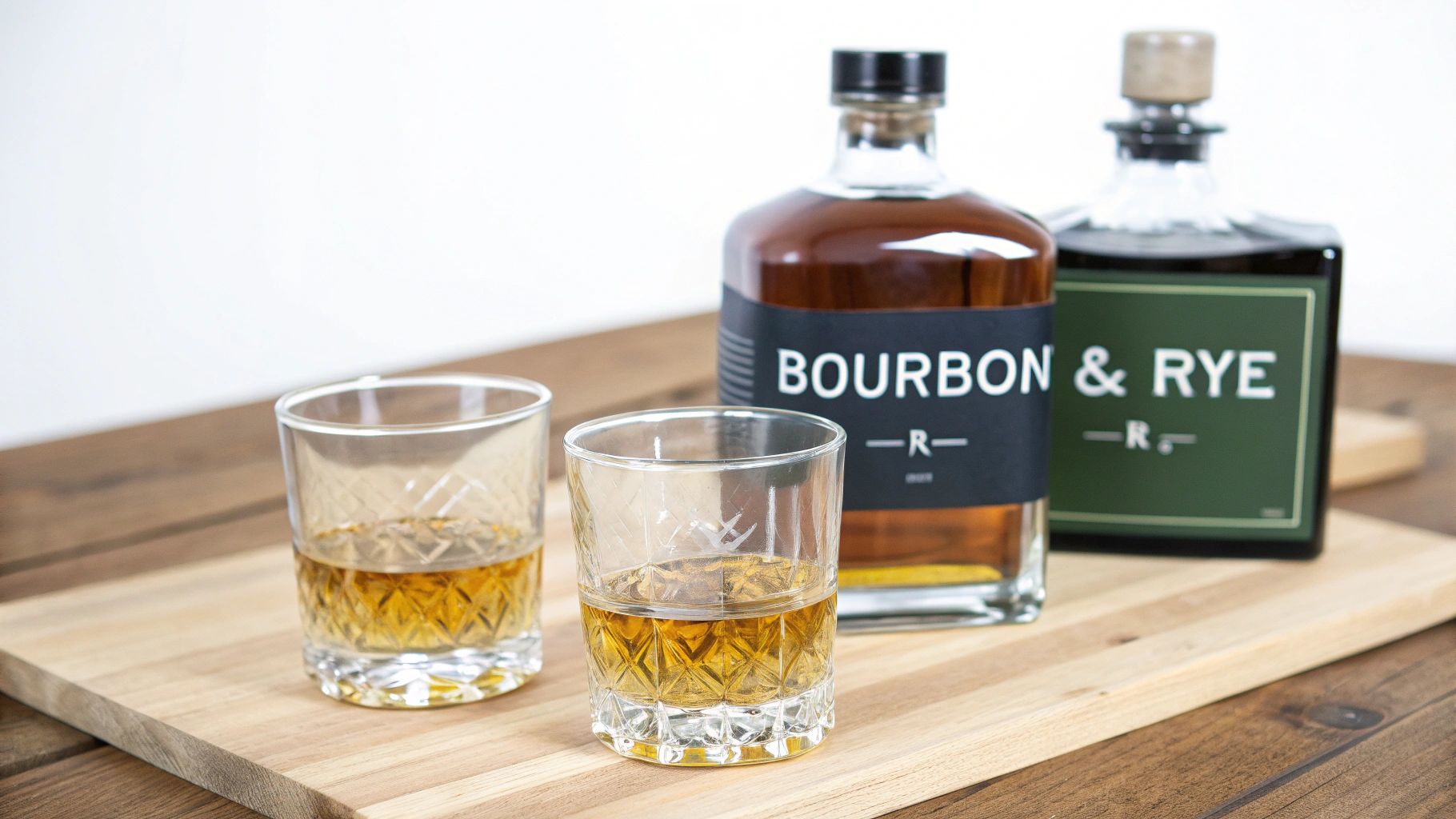
First up is bourbon, America’s native spirit. Its identity is so important that it's protected by a strict set of rules. For a whiskey to earn the name "bourbon," it must be made from a mash bill of at least 51% corn, aged in brand-new charred oak barrels, and distilled to no more than 160 proof.
It's that corn-heavy recipe and the fresh oak barrels that work together to create bourbon's signature sweetness. When you take a sip, you’ll likely pick up notes of caramel, vanilla, and toasted oak. It’s a rich, full-bodied spirit that just feels comforting and familiar, even if it's your first time trying it.
Bourbon Brands to Know
For a benchmark bourbon that is both accessible and high-quality, you can't go wrong with Buffalo Trace. It comes from one of America's most storied distilleries and delivers a perfectly balanced profile of brown sugar, toffee, and just a hint of spice. It’s an excellent, affordable introduction that shows you exactly why this style is so beloved around the globe. For an American craft option, look for a brand like Frey Ranch which uses grains grown on their own farm to create a unique "farm-to-glass" bourbon.
Understanding Rye Whiskey
If bourbon is a warm, comforting hug in a glass, then rye is a firm, spicy handshake. The legal requirement for rye whiskey is that its mash bill must contain at least 51% rye grain. This one key difference completely changes the spirit's personality.
That rye grain brings a distinct peppery spice, often layered with notes of mint, dark fruit, and sometimes even a little dill. It’s typically drier and zestier than bourbon, which is why it works so brilliantly in cocktails like a classic Manhattan where that spicy character can really cut through and shine. If you want to dive deeper into this dynamic duo, you can learn what truly sets bourbon and rye apart in our detailed guide.
Rye whiskey offers a crisp and spicy counterpoint to bourbon's sweetness. This contrast is what makes exploring American whiskey so rewarding; you can find a style to match any mood or preference, from smooth and mellow to bold and assertive.
Rye Brands to Know
For an iconic taste of what rye has to offer, look no further than High West Distillery. While many brands source their whiskey, High West has built its name on masterful blending and being open about its process. Their Rendezvous Rye, for instance, is a classic that showcases the style's signature spice with a fantastic amount of complexity and smoothness.
This isn't just a local trend, either. The global whiskey trade is booming, with exports hitting a staggering 1.4 billion bottles. This growth is fueled by curious drinkers and innovative products from distilleries of all sizes. It's fascinating to see how brands are expanding into new markets and pushing the boundaries of what whiskey can be.
Discovering the World of Scotch Whisky
While American whiskeys offer a fantastic spectrum of sweet and spicy, crossing the Atlantic to Scotland opens up an entirely different universe of flavor. Scotch whisky is defined by its sense of place—its terroir—with geography and tradition shaping every single drop.
Exploring the different brands of whisky from Scotland is like taking a liquid tour of its rugged, beautiful landscape.
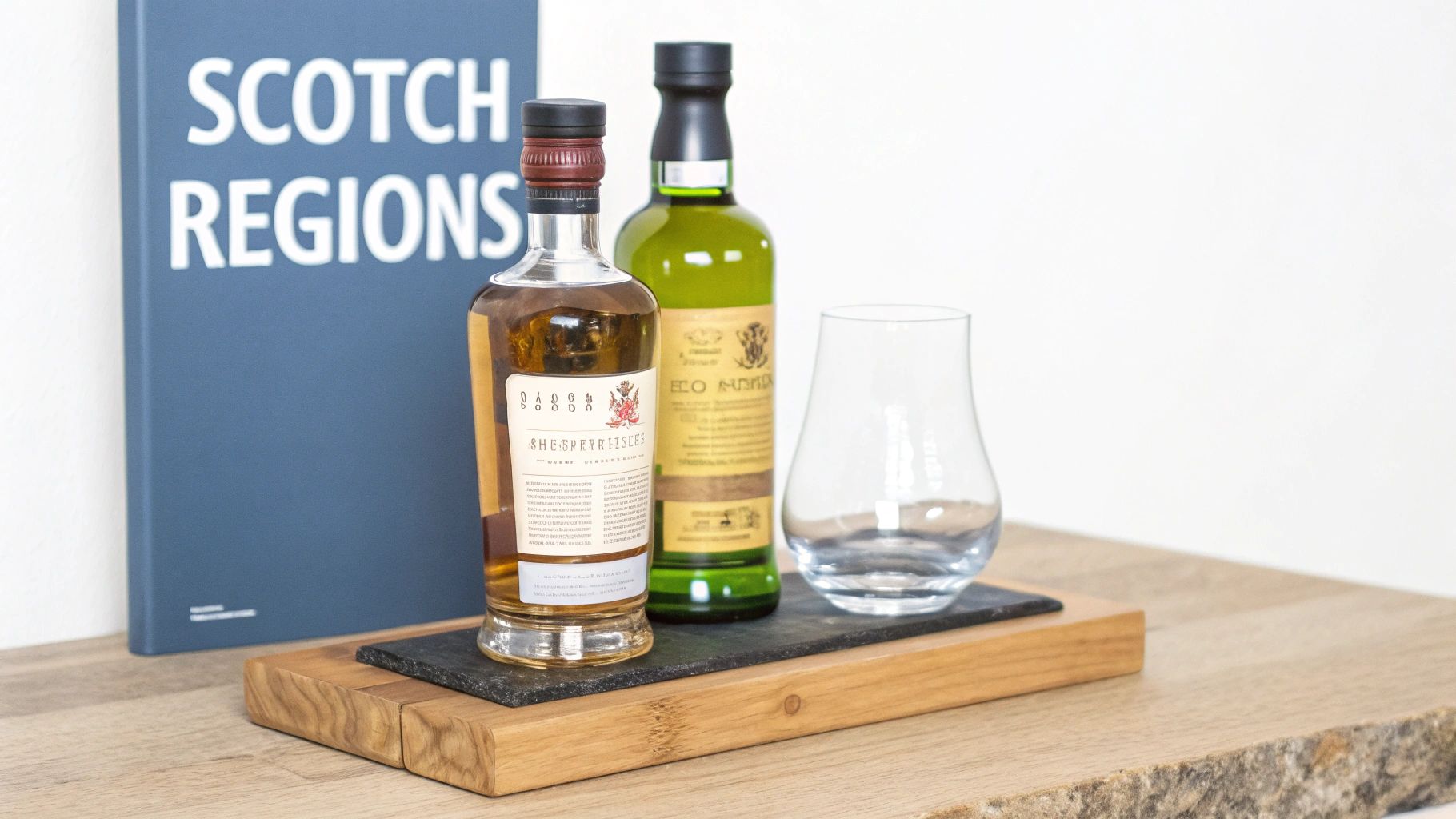
One of the first things you'll hear about is the difference between a single malt and a blended Scotch. A single malt is the product of just one distillery, made from 100% malted barley. Think of it as a solo artist, expressing a unique and singular vision.
A blended Scotch, on the other hand, is a careful combination of malt and grain whiskies from multiple distilleries. This is more like an orchestra, where a master blender harmonizes different instruments to create a consistent, balanced, and often more approachable final product.
Exploring Scotland's Whisky Regions
Scotland's whisky identity is carved into several distinct regions, each with its own signature style. While there are a few, two major regions offer a perfect starting point for understanding Scotch's incredible diversity.
- Speyside: Nestled in the northeast, Speyside is home to the highest concentration of distilleries. Whiskies from here are typically smooth, elegant, and fruity, with notes of apple, pear, and honey. Brands like Glenfiddich and The Macallan are classic examples of this accessible, often unpeated style.
- Islay: This small island off the west coast is famous for its powerful, smoky, and peaty whiskies. The peat, a type of local turf used to dry the barley, imparts intense flavors of smoke, brine, and iodine. Islay malts from distilleries like Ardbeg and Laphroaig are bold and unforgettable. They're not for the faint of heart, but they are a must-try.
For many, the smoky character of an Islay Scotch is a defining feature of the category. This "peatiness" can be an acquired taste, but it offers a depth and complexity that many whisky lovers find incredibly rewarding once their palate adjusts.
Finding an Approachable Scotch
If the idea of a campfire in a glass from Islay feels a bit intimidating, don't worry. Blended Scotch is the perfect gateway.
Brands like Johnnie Walker and Monkey Shoulder are designed for smoothness and consistency, making them ideal for newcomers. Monkey Shoulder, in particular, is a "blended malt" made from three different Speyside single malts, delivering a rich, smooth profile without any harsh edges.
Navigating this new territory is part of the adventure. If you're keen to learn more, our guide to drinking Scotch for beginners offers even more tips for starting your exploration with confidence. Choosing a well-crafted blend is a fantastic way to ease into the complex and rewarding world of Scotch whisky.
The Rise of American Craft Whiskey
Step away from the big names in Kentucky and Tennessee for a moment, and you'll find a full-blown creative revolution happening in distilleries all across the United States. This is the exciting world of American craft whiskey, where small, independent producers are tearing up the old rulebook and redefining what American whiskey can be. They aren't just making bourbon and rye; they're writing entirely new playbooks.
This movement is fueled by a relentless spirit of experimentation. Craft distillers are the pioneers on the frontier of flavor, using unique local grains, messing around with creative aging techniques in different kinds of wood, and dreaming up novel mash bills that the big guys would never dare to try. What you get is a ridiculously vibrant and diverse landscape of whiskeys that offer a taste of something genuinely new and exciting.
Pioneers of a New Frontier
Two distilleries that perfectly capture this spirit are Westland Distillery up in Seattle and Balcones Distilling down in Texas. Westland has quickly become a leader in the exploding American Single Malt category, creating complex whiskies from Pacific Northwest barley that can go toe-to-toe with some of the best drams from Scotland.
Meanwhile, Balcones is harnessing the brutal Texas heat to create whiskeys that are as bold and unique as the state itself. They’re known for using unconventional ingredients like roasted blue corn, which helps them produce spirits with a character and depth that is truly all their own. These producers are perfect examples of the regional creativity that’s making the modern whiskey movement so thrilling.
The real beauty of American craft whiskey is its sheer diversity. From the Pacific Northwest to the heart of Texas, distillers are using local ingredients and climate to their advantage, creating whiskeys that tell a story about where they come from. It’s a departure from tradition that opens up a whole new world of flavor for curious drinkers.
Tips for Exploring Craft Whiskey
Diving into the world of craft whiskey is an adventure, and honestly, it’s one of the best ways to discover truly unique profiles among the different brands of whiskey. For anyone new to the scene, the sheer variety can feel a little overwhelming, but a few simple tips can help you navigate this exciting space.
- Look for Local: A great place to start is by exploring distilleries in your own state or region. It’s a fantastic way to support local artisans and taste spirits that reflect your own backyard.
- Don't Judge by Age: Craft whiskeys are often younger than what you see from the heritage brands, but don't let that fool you. They often use smaller barrels or unique climate conditions to speed up maturation. An age statement definitely doesn't tell the whole story.
- Embrace the Unknown: Be open to trying new things. Whether it's a whiskey made from an unusual grain like quinoa or one finished in a weird and wonderful cask, this is where you’ll find the most memorable pours.
Exploring the craft scene is one of the best ways to broaden your palate. To learn more about some of the most exciting producers out there, check out our guide to some of the great American craft spirits making waves today. This world is all about discovery, creativity, and incredible quality.
Finding a Whiskey You'll Actually Love
Walking into a liquor store and seeing a wall of whiskey can be intimidating. With countless options staring back at you, how do you find one you'll genuinely enjoy? The secret is to ignore the flashy labels and clever marketing for a moment and focus on what really matters: the flavor profiles that click with your palate. Are you a fan of sweet, spicy, smoky, or fruity notes?
A fantastic way for anyone new to whiskey to figure this out is to let your taste buds do the talking, completely free from brand bias. The best way to do that? A blind tasting.
You could head to a good whiskey bar and order a flight, or even better, try a curated sampling service like Blind Barrels. This approach strips away any preconceived ideas you might have about a certain brand, letting you judge each whiskey purely on its own merit.
A No-Nonsense Guide to Tasting
To really get the most out of every glass and start building some confidence, it helps to have a simple process. This isn't about being stuffy or formal; it's just about paying attention to what the whiskey is trying to tell you.
- Nose It: Before you even think about sipping, give the whiskey a gentle swirl in the glass and bring it up to your nose. Inhale lightly with your mouth just slightly open. What are you picking up? Is it sweet like vanilla, fruity like apples, or maybe spicy like cinnamon?
- Sip It: Take a small sip and let it roll around your tongue for a second before swallowing. Don't just throw it back. What flavors hit you first, and how do they change?
- Finish: Now, pay attention to the taste that hangs around after you've swallowed. Is it short and sharp, or does it linger with a long, warming sensation? That lasting impression is called the "finish," and it’s a huge part of the whole experience.
If you're just starting out, lean into what you already enjoy. Love sweet desserts? A corn-forward bourbon might be right up your alley. If you're always reaching for the hot sauce, a spicy rye whiskey could be your perfect match.
The whiskey world is also in the middle of a massive trend toward "premiumization." More and more drinkers are looking for high-quality, upscale options, and it's driving some serious growth. The premium segments are expanding at a rate of 5.43% annually, especially in markets where people get excited about exclusive releases and luxury packaging.
Even as the big, mass-market brands face new hurdles, this shift shows a growing appreciation for real craftsmanship. You can dig deeper into these whiskey market trends and consumer behaviors on mordorintelligence.com.
So, you're ready to graduate from tasting notes to your own curated collection? Perfect. Let's talk about building your first home whiskey bar.
This isn't about cramming your shelves with dozens of bottles just for show. It’s about being strategic—choosing a few versatile, high-quality spirits that can handle any occasion, whether it's a quiet neat pour for yourself or a classic cocktail for a friend. Think of it as creating a foundational palette of flavors to build upon.
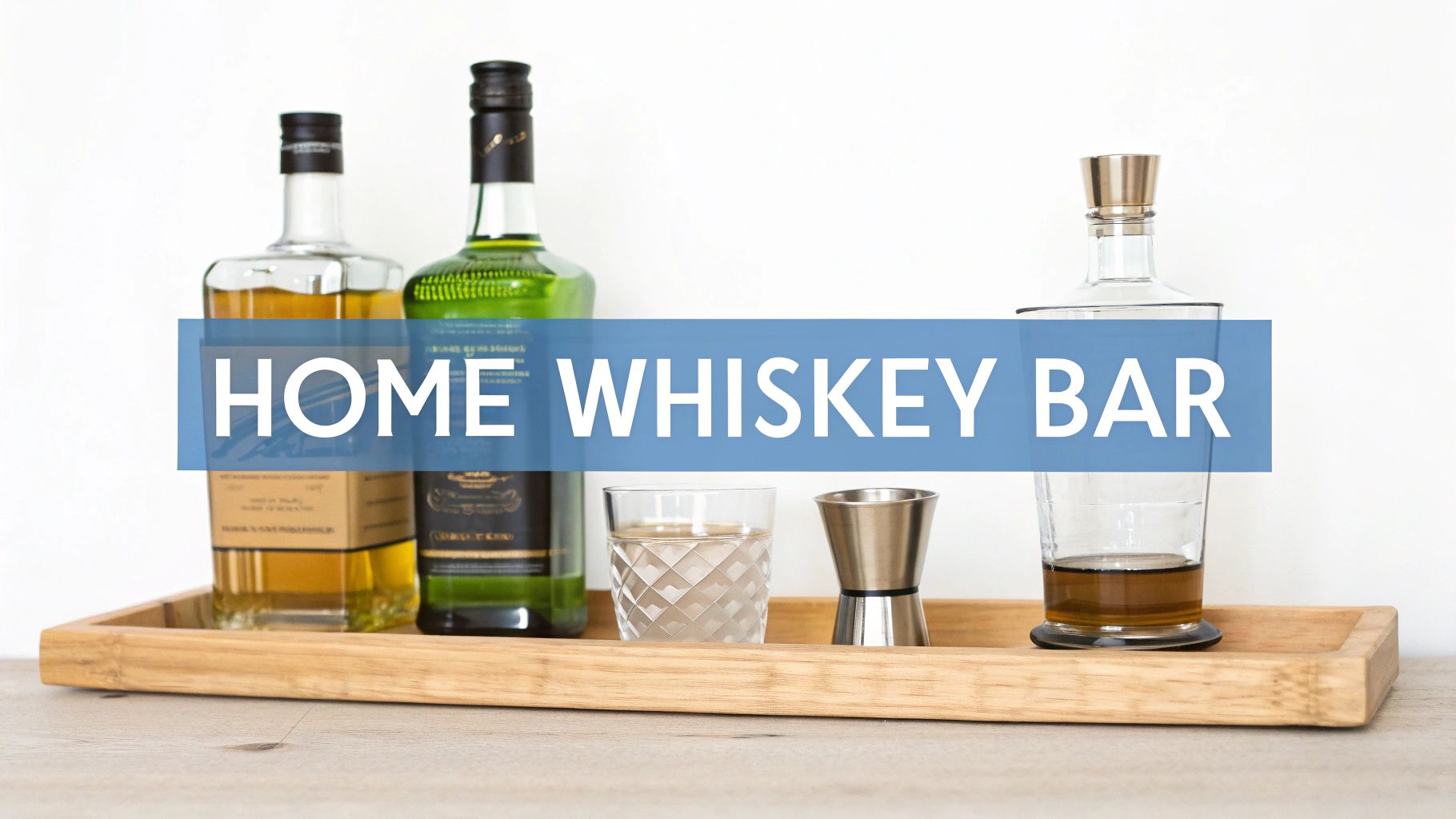
Starting small and smart ensures you always have the right tool for the job. This approach helps you invest wisely and build a bar that’s both impressive and genuinely practical. The real goal here is quality and versatility, not just quantity.
Your Essential First Four Bottles
If you're just starting your whiskey journey, this is the perfect starting lineup. Each bottle represents a key style, giving you maximum flexibility for both sipping and mixing. They're all widely available, consistently delicious, and serve as a fantastic baseline for exploring the wider world of whiskey brands.
-
A Classic Bourbon (Maker's Mark): This is a wheated bourbon, which makes it exceptionally smooth with sweet notes of caramel and vanilla. Its softer profile is incredibly approachable for sipping neat and makes a perfect base for a Whiskey Sour or an Old Fashioned.
-
A Versatile Rye (Rittenhouse): At a respectable 100 proof, this rye has the spicy backbone needed to stand up in cocktails like a Manhattan or a Sazerac without getting lost. Those notes of dried fruit and pepper also make it a satisfying sipper on its own.
-
An Approachable Blended Scotch (Monkey Shoulder): This is a blend of single malts from Scotland's Speyside region, making it smooth, rich, and beautifully balanced. It doesn't have the intimidating peat smoke you'd find in an Islay Scotch, which makes it a friendly introduction to the category and a surprisingly great mixer.
-
An Innovative American Craft Whiskey (Stranahan's Original): To round out your bar, grab something unique from a small producer. Stranahan's is a great example of American Single Malt. It’s approachable, complex, and shows how American distillers are creating world-class whiskey outside of the traditional bourbon and rye lanes.
Building your bar should be a journey of discovery. Start with these essentials, then use them as your benchmark. As you taste new things—maybe through a blind tasting kit—you can swap out bottles or add new ones that truly speak to your palate. This is how you create a collection that's uniquely yours.
A Few Common Questions About Whiskey Brands
As you dive into the world of whiskey, you're bound to run into some confusing terms and common questions. It’s a landscape with its own language, but we’re here to give you some clear, straightforward answers to the things we hear most often.
What’s the Deal with “Whiskey” vs. “Whisky”?
This is probably the first question everyone asks, and the answer is way simpler than you'd think. It all comes down to geography.
- Whiskey (with an "e") is the spelling you'll find on bottles from the United States and Ireland.
- Whisky (no "e") is how it's spelled for spirits distilled in Scotland, Canada, and Japan.
At the end of the day, it's all a distilled spirit made from fermented grain mash. That one little letter just gives you a clue about where the bottle began its journey.
Does a Bigger Price Tag Mean Better Whiskey?
Absolutely not. It’s easy to assume that price equals quality, but that’s one of the biggest myths in the whiskey world. Things like age, how rare a bottle is, and slick marketing campaigns can all drive up the cost, but they don't guarantee you'll actually enjoy what's inside.
I’ve seen plenty of affordable, unassuming bottles completely blow away expensive, hyped-up whiskeys in a blind tasting, especially when a fantastic American craft whiskey is in the mix.
Ultimately, the "best" whiskey is a deeply personal choice. Your own palate is the only judge that matters, not the price. That's exactly why we love blind tastings—they strip away all the noise and let the flavor do the talking.
What Do Single Barrel and Small Batch Actually Mean?
You’ll see these terms pop up a lot, especially on bottles from American craft distilleries. While there aren't strict, legally-defined standards for them, they both point to a more hands-on, focused approach to whiskey making.
-
Single Barrel: This is as straightforward as it sounds. The whiskey in that bottle was sourced from one—and only one—individual barrel. Because no two barrels are identical, each bottle is a unique time capsule of that specific cask, with its own distinct character.
-
Small Batch: This means the final product is a blend from a hand-selected, limited number of barrels. The distiller carefully chooses a handful of casks that, when combined, create a specific, consistent, and desirable flavor profile.
Both of these terms suggest a level of artistry and intention, separating them from the massive blends of mass-produced whiskeys.
Ready to let your palate be the guide and discover your next favorite whiskey without being swayed by a label? Blind Barrels sends curated, blind tasting experiences featuring top-shelf American craft whiskeys right to your home. It’s time to find out what you really love. Start your tasting journey here.