

Let's settle the great debate right away: is it okay to put ice in your bourbon? Absolutely.
There's no single "correct" way to enjoy whiskey. Adding ice is a fantastic method for both newcomers trying to find their footing and seasoned drinkers looking to explore new dimensions of their favorite spirit. The choice isn't about right or wrong; it's about personal preference and understanding how ice changes the drink.
The Great Debate: Does Ice Belong in Bourbon?
The world of whiskey can feel a bit intimidating, full of unwritten rules and strong opinions. One of the most common arguments revolves around a simple cube of frozen water: should you be drinking bourbon with ice? Some purists will tell you that adding anything to a quality pour is a disservice to the distiller’s craft. We’re here to set a more welcoming tone and tell you that your palate is the only expert that matters.
For someone just starting their bourbon journey, adding ice is one of the best ways to begin. It can mellow the alcoholic heat—often called the “burn”—making the spirit far more approachable. Think of it as a friendly handshake from a spirit that can sometimes have a firm grip. This initial introduction allows your taste buds to acclimate without getting overwhelmed.
Unlocking Flavors and Finding Your Preference
For the experienced drinker, ice isn’t just about taming the proof; it's a tool for exploration. As the ice melts, it slowly dilutes the whiskey, which can unlock different layers of flavor. A bold, high-proof American craft bourbon from a distillery like FEW Spirits might hit you with caramel and spice right out of the gate, but with a little dilution, subtle hints of fruit, oak, or vanilla can emerge from the background.
This is especially true when exploring the unique profiles from smaller American craft distilleries. Their bourbons often have distinctive characteristics that change and evolve right there in the glass. Ice allows you to experience that transformation firsthand.
Tip for New Drinkers: The goal is to discover what you enjoy. Whether you prefer your bourbon neat, with a splash of water, or on the rocks, the best way to drink it is the way that brings you the most satisfaction.
Ultimately, the choice is yours. There are moments for a neat pour and moments for a chilled glass. Understanding how ice works empowers you to make the perfect choice for any occasion.
To help you decide what’s right for your next pour, here’s a quick look at the pros and cons.
Pros and Cons of Adding Ice to Bourbon
This table breaks down the key effects of adding ice, helping you decide when it's the right move for your glass.
| Aspect | The Upside (Pros) | The Downside (Cons) |
|---|---|---|
| Temperature | Mellows the alcohol burn, making it smoother and more refreshing. | Can numb the palate and mask delicate, subtle flavor notes. |
| Dilution | Opens up the bourbon, revealing hidden aromas and flavors. | Can lead to over-dilution, watering down the bourbon's character. |
| Experience | Creates an evolving drink that changes as the ice melts. | May not represent the distiller's original intended tasting profile. |
As you can see, it's all a balancing act. The chill that makes a high-proof bourbon approachable might hide the nuances of a more delicate one. It’s all about what you’re looking for in that specific moment.
How Ice Chemically Transforms Your Bourbon
Dropping an ice cube into your bourbon does more than just cool it down; it kicks off a whole series of chemical and physical changes. Imagine a bold, high-proof bourbon as a tightly wound ball of yarn. Adding ice is like gently pulling on the threads, letting you see all the individual colors and textures that were packed tightly together.
This isn't just a matter of opinion—it's a sensory journey guided by science. As the ice melts and the temperature drops, your bourbon undergoes four key changes that directly impact what you smell, taste, and feel. Grasping this process lets you taste with more confidence and appreciate every single sip.
The Cooling Effect: Taming the Burn
The first thing you'll notice is the drop in temperature. Chilling the bourbon significantly tames the "alcohol burn"—that sharp, hot feeling from the ethanol. This is a game-changer for newcomers or when you’re sipping a high-proof bourbon from an American craft distillery like Westward Whiskey, which often packs a more intense punch.
By bringing the temperature down, you're essentially turning down the volume on the alcohol. This allows the more subtle, underlying flavors—like vanilla, caramel, or dark fruit—to come forward without being steamrolled. The result is a smoother, more approachable whiskey that feels far less aggressive on the palate.
The Magic of Dilution: Unlocking Hidden Flavors
As the ice melts, it introduces water into the whiskey, a process we call dilution. This is where the real magic happens. Water molecules get in there and start interacting with the flavor compounds in the bourbon, breaking up dense molecular clusters and setting aromatic esters free. These are the compounds that give us those rich scents of fruit, spice, and oak.
Tip for New Drinkers: Adding a controlled amount of water, whether through a few drops or a slow-melting ice cube, can dramatically alter a bourbon’s profile. It’s a technique used by master distillers and seasoned tasters to explore the full depth of a whiskey.
This is exactly why adding a little water is such a common practice in tastings. As the bourbon opens up, notes that were hiding in the background might suddenly become the star of the show. You can dive deeper into how this works by exploring our guide on the science of adding water for bourbon.
Altering the Aroma: How Cold Changes the Nose
Temperature and dilution also team up to change the bourbon's aroma, or what we call the "nose." The cold suppresses the volatility of ethanol, which means fewer alcohol vapors are flying up your nose. This allows you to smell the bourbon’s other aromatic compounds more clearly, without that sharp alcoholic sting getting in the way.
But it's a delicate balance. While muting the ethanol is great, getting it too cold can also suppress some of the more delicate floral or fruity notes. A slow-melting, large ice cube strikes the perfect middle ground, chilling the bourbon just enough to mellow the alcohol while still letting its complex bouquet shine through.
This effect is particularly useful in blind tastings. With Blind Barrels' quarterly kits, which often feature small American craft distilleries like Frey Ranch, ice lets you score your palate on age, proof, and type without brand bias, turning education into pure excitement. This trend is growing globally, too; after 2020, iced bourbon sales in Europe jumped 18% as bars revived with lower-ABV serves to meet health-conscious shifts. You can dive deeper into these market trends and read the full research about bourbon's global appeal.
Transforming the Mouthfeel: A New Textural Experience
Finally, adding ice to your bourbon changes its mouthfeel—the actual physical sensation of the liquid in your mouth. A chilled bourbon often feels thicker, more viscous, and silkier on the tongue compared to one served at room temperature.
This cooler, more refreshing texture can make the bourbon feel more substantial and satisfying, especially on a warm day. The drink's evolution—starting bold and slowly mellowing as the ice melts—creates a dynamic experience that keeps your palate engaged from the first sip to the last. Each stage of the melt reveals a slightly different version of the bourbon in your glass.
Choosing The Right Ice For Your Whiskey
Let's be honest, not all ice is created equal. When it comes to drinking bourbon with ice, your choice has a massive impact on the final drink.
Think of it like this: you wouldn't put regular gasoline in a high-performance sports car. In the same vein, a top-shelf American craft bourbon from a distillery like Laws Whiskey House deserves better than the cloudy, fast-melting ice from your freezer tray. This is where you take control of the dilution and temperature. The shape, size, and clarity of your ice dictate how quickly it melts, and mastering this simple element instantly elevates your home bar game.
The diagram below breaks down how temperature, dilution, and aroma all play together inside your glass.
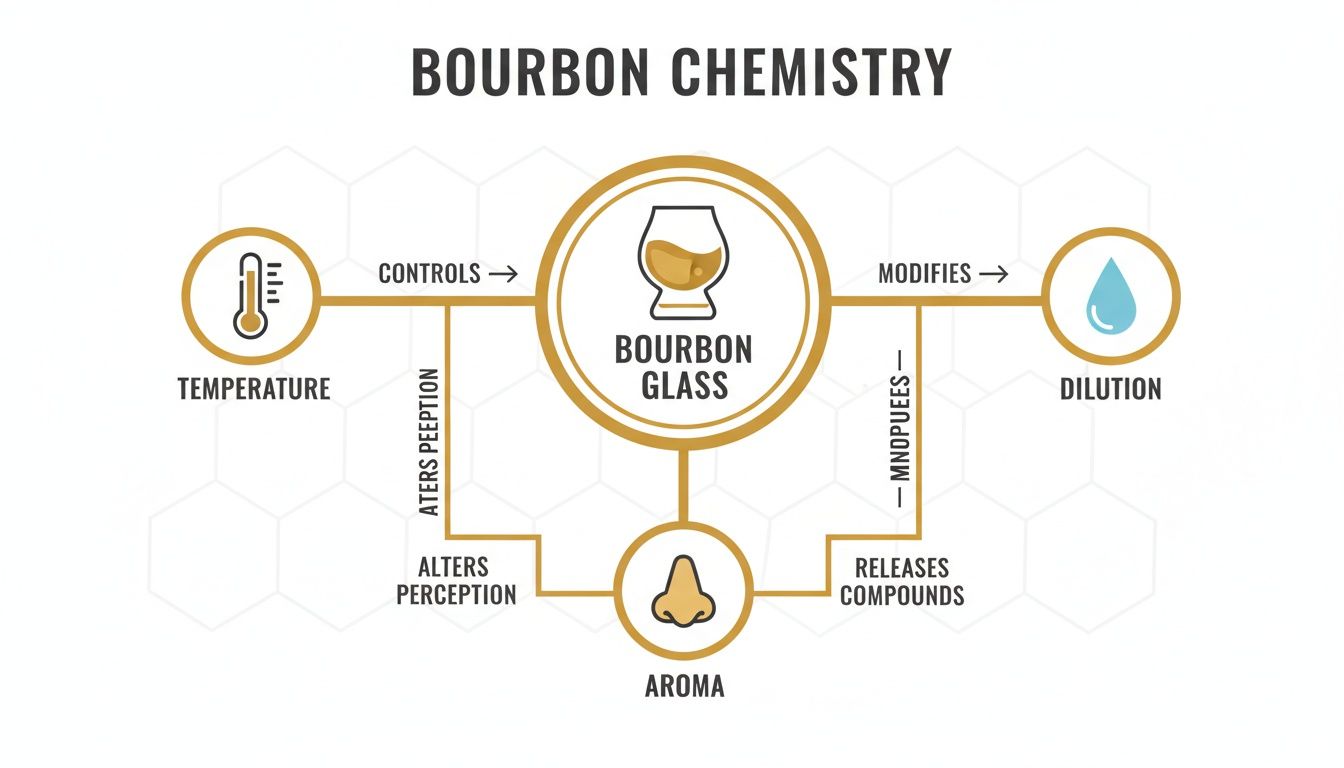
It’s a delicate balancing act. Chilling your bourbon can mute the alcohol burn but might also suppress those lovely aromas. At the same time, a little dilution opens up new flavors but risks turning your complex spirit into a watery mess.
Comparing Your Ice Options
Let's break down the most common types of ice you'll run into. Each one has its own pros and cons, directly affecting how your bourbon tastes from the first sip to the last.
-
Standard Freezer Cubes: These are the small, often cloudy cubes you get from a standard freezer tray. Their small size and trapped air pockets mean they melt incredibly fast, leading to rapid, uncontrolled dilution. They'll chill your drink in a hurry, but they can turn a robust bourbon into a watery memory in just a few minutes.
-
Large Cubes or Spheres: This is the gold standard for whiskey drinkers. A single large cube or sphere has much less surface area relative to its volume, meaning it melts much, much slower. This provides a consistent, gentle chill with minimal dilution, letting you savor your bourbon's evolving flavors over a longer period.
-
Whiskey Stones: Made from non-porous soapstone or stainless steel, these are designed to chill your drink without any dilution at all. While that sounds good on paper, they're also far less effective at actually cooling the liquid compared to real ice. For a deeper dive, check out our guide on how and when to use whiskey stones: https://blindbarrels.com/blogs/whiskey-insights/whiskey-stones-use
Why Clear Ice Is Better
You’ve probably noticed that the ice at a good cocktail bar is crystal clear, while the stuff from your home freezer is cloudy. That cloudiness is just trapped air and impurities. Clear ice, being denser and purer, melts slower than its cloudy counterpart, making it the ideal choice for a quality pour.
Pro Tip for New Drinkers: Don't get hung up on perfection at first. If standard freezer cubes are all you have, use them! The most important thing is figuring out how you enjoy your bourbon. You can always upgrade your ice game later on.
This focus on quality is especially relevant for craft bourbon enthusiasts. Small distilleries are booming, with their output growing 14% to 1.8 million cases in 2023. This growth is also fueled by an expanding demographic; surveys show 67% of women prefer bourbon on ice, which has helped grow female consumption by 16% since 2020. This mellowing effect is key in blind tastings, too. In Blind Barrels' kits, ice tempers the heat of craft bourbons (often 46-55% ABV), helping users guess the proof with 20% higher accuracy.
How To Make Clear Ice At Home
You don’t need a fancy machine to make bar-quality ice at home. The secret is something called directional freezing, which forces impurities and air bubbles downward as the water freezes from the top.
Here’s a simple way to do it:
- Fill a small, insulated cooler (like a lunchbox cooler) with water, but leave the lid off.
- Stick the cooler in your freezer for about 24 hours. The water will freeze from the top down.
- Pull the cooler out. You should have a big block of clear ice on top with a layer of cloudy ice at the bottom.
- Let the block sit on your counter for a few minutes to temper, then use a serrated knife to carefully score and break off the clear part.
Of course, the quality of your ice is just one piece of the puzzle. For serious enthusiasts, how you store that ice also plays a role, making a little knowledge about choosing the right ice maker bins a valuable asset.
When to Use Ice and When to Drink It Neat
Figuring out whether to add ice or drink your bourbon neat isn't about some rigid, unbreakable rule. It’s more of an art, really—about matching the whiskey in your glass to the moment, the specific bottle, and what you're in the mood for.
Think of it like choosing the right tool for the job. A big, bold, high-proof American craft bourbon might just need a little chilling to open up and show its best side. On the other hand, a delicate, well-aged pour could be at its peak all on its own. Getting a feel for these situations means you'll always get the most out of every single sip, whether you're just starting your whiskey journey or you've been at this for years.
Ideal Moments for Drinking Bourbon with Ice
A good, solid ice cube can take a decent bourbon and make it great, especially in a few key scenarios. It's the perfect way to tame a whiskey's intensity and make it a bit more welcoming. Here are the best times to break out the ice tongs.
- When You're New to Bourbon: If you're just getting into whiskey, that alcoholic "burn" can be a real roadblock. Ice is your best friend here. It smooths out the heat, letting your palate ease in and start picking up on those delicious caramel, vanilla, and oak flavors without getting overwhelmed.
- For High-Proof or "Hot" Whiskeys: A lot of fantastic American craft bourbons come bottled at a higher proof to pack a serious flavor punch. While they're delicious, these "hot" whiskeys can be a lot to handle. A single, large, slow-melting cube will gently cool and dilute the spirit, sanding down the rough edges and turning it into a much smoother sipper.
- On a Warm Day: Let's be honest, sometimes it’s just about refreshment. On a sweltering afternoon or a humid evening, there's nothing better than a chilled glass of bourbon. The cold temperature transforms your whiskey into a crisp, easy-drinking treat.
When to Savor Your Bourbon Neat
On the flip side, there are definitely times when adding ice would be a real disservice to a great bourbon. Drinking it neat—at room temperature, with nothing added—is how you experience the whiskey exactly as the distiller wanted you to.
Tip for New Drinkers: The number one reason to drink bourbon neat is to taste its full, unvarnished character. Every single nuance, from the first smell to the last echo of the finish, is right there in its purest form. It’s the complete sensory snapshot of that spirit.
Here’s when a neat pour is the way to go:
- For a Formal Tasting: When you’re sitting down to really analyze a bourbon—especially during a blind tasting like the ones in our Blind Barrels kits—starting neat is non-negotiable. This gives you a pure, unadulterated baseline of its true aroma, flavor, and texture. You can always drop an ice cube in later to see how it evolves.
- With Lower-Proof or Delicate Bourbons: Whiskeys bottled below 90 proof often have more subtle, intricate flavor profiles. The intense cold from ice can literally numb your taste buds, masking those delicate notes and making you miss the very things that make the bourbon special.
- When Enjoying Very Old Bourbons: An aged bourbon develops an incredible depth and complexity over many years in the barrel. Those amazing notes of old oak, worn leather, and dark fruit are at their best at room temperature. Ice can easily overpower these subtleties, effectively erasing years of patient maturation in a single pour.
Ultimately, you're in the driver's seat. A great approach for new drinkers is to always taste a new bourbon neat first to get a sense of its baseline character. Then, if it feels a little too hot or you’re just craving a colder drink, add one large ice cube. This two-step process allows you to appreciate the distiller's craft while still making the drink perfectly yours.
Your First Bourbon Tasting Experiment
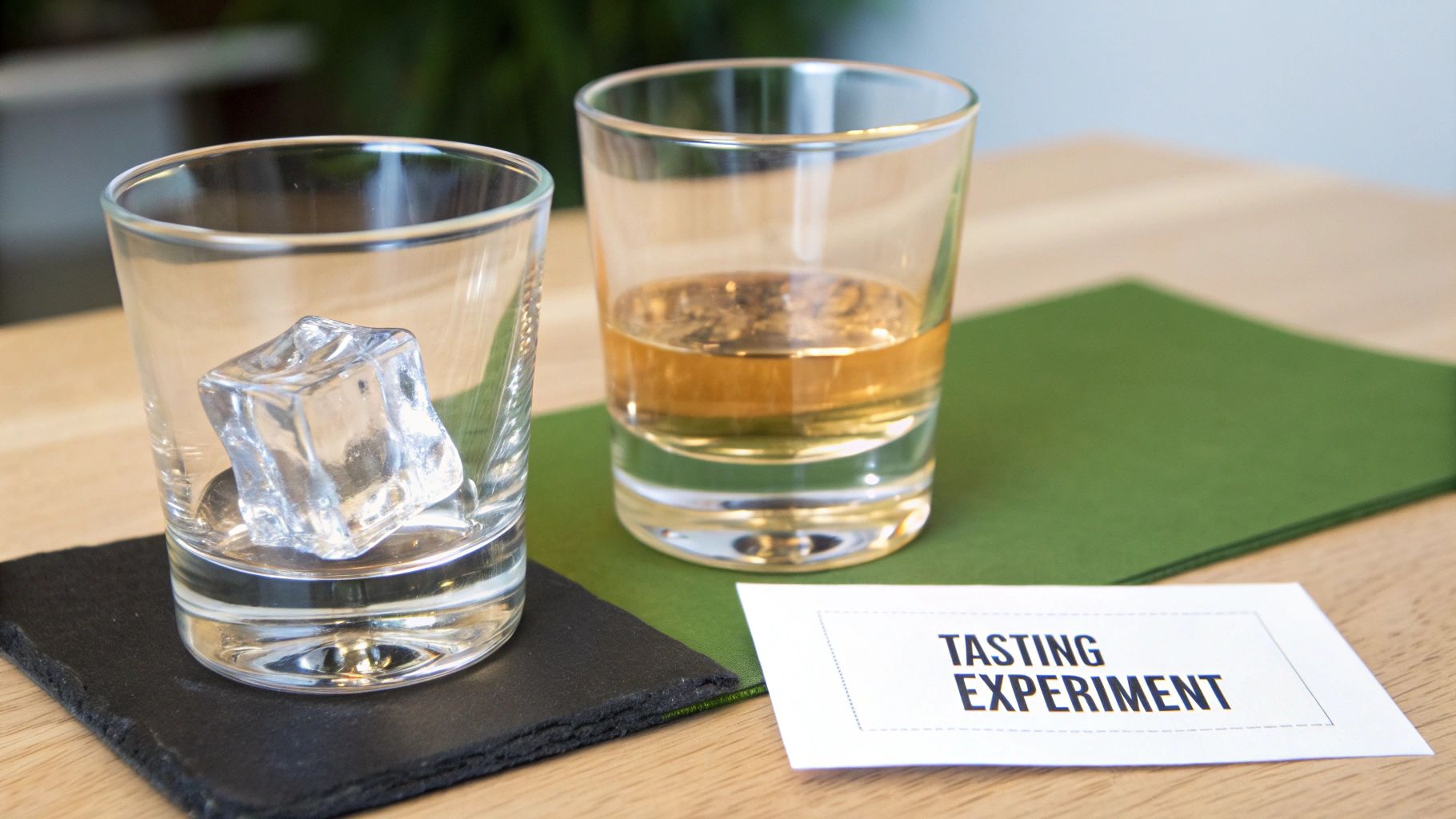
Reading about how ice changes bourbon is one thing, but the only real way to understand the impact is to taste it for yourself. This simple experiment is the perfect starting point for anyone new to whiskey, and it’ll teach you more in ten minutes than an hour of reading ever could.
It's a straightforward way to start training your palate and, more importantly, figure out what you actually like. The goal is simple: compare the exact same bourbon served neat and on the rocks. You’ll be surprised how much a single cube of ice can shift the entire experience, from aroma to flavor and even how it feels in your mouth. Let's get to it.
Setting Up Your Tasting
First, you'll need to gather a few things. Don't get hung up on having the "perfect" setup—the point here is to explore and learn, not pass a test.
What You'll Need:
- A decent bourbon: Grab a bottle of an American craft whiskey you already like or have been wanting to try, like something from New Riff Distilling. Aim for something between 90-105 proof. This range is the sweet spot; it has enough backbone to stand up to a little dilution but isn’t so hot that it’s overwhelming neat.
- Two identical glasses: Using the same type of glass is key to making sure you're getting a true side-by-side comparison. The right glassware can make a big difference, and understanding basics like how many ounces in a rocks glass can really shape your tasting.
- One large ice cube or sphere: Bigger is better here. A large, slow-melting cube will chill your bourbon without turning it into whiskey-flavored water in two minutes.
- A glass of water: Just plain water for rinsing your palate between sips.
Once you’ve got your gear, pour about 1.5 ounces of bourbon into each glass. Now you're all set for the interesting part.
Step-By-Step Tasting Guide
Follow these steps and just pay attention to what your senses are telling you. The real magic is in noticing the subtle (and not-so-subtle) differences between the two glasses. Jotting down a few notes can make a world of difference in remembering what you liked.
Step 1: The Neat Pour
Start with the glass that has no ice. This is your baseline, your control sample—the bourbon exactly as the distiller intended it.
- Look: Hold it up to a light source. What color do you see? Is it pale honey, deep amber, or something closer to rich mahogany?
- Smell: Give the glass a gentle swirl and bring it toward your nose. Take a sniff with your mouth slightly open. What aromas pop out? You might find vanilla, caramel, toasted oak, or different fruits.
- Taste: Take a small sip and let it roll across your tongue. Think about the initial flavors, the mouthfeel—is it thin and light or rich and oily?—and the finish, which is that lingering taste after you swallow.
Step 2: The Iced Pour
Now, let's move to the second glass. Drop in your large ice cube and let it hang out for about 60 seconds. This gives it just enough time to chill the spirit.
- Look: Any changes? Sometimes chilling can cause a little haze or condensation on the glass.
- Smell: Swirl and nose it again. Do the aromas smell the same? The cold often tamps down the sharp ethanol vapor, which can let softer, sweeter notes come forward.
- Taste: Go in for a sip. The temperature change is obvious, but what about the flavor? Has the alcoholic "burn" softened? Does it feel smoother, more mellow, or just refreshing?
Tip for New Drinkers: There are no right or wrong answers in this experiment. The entire point is to discover what you prefer. Did the ice open up the bourbon and make it more enjoyable for you, or did it mute some of the flavors you really liked in the neat pour?
This simple, hands-on exercise is the single best way to build your tasting confidence. By actively comparing the two, you’re teaching your palate to pick up on specific changes—a skill that will make every bourbon you try from here on out a more rewarding experience. If you want a little more structure, you can use our downloadable bourbon tasting notes template to guide your thoughts.
As you get more comfortable with this, you're joining a massive movement. The global bourbon market, valued at $8.4 billion in 2023, is expected to hit $16.8 billion by 2033, driven by a new wave of curious drinkers who appreciate how a little chill can elevate their whiskey.
Common Questions About Bourbon and Ice
Even after getting the science down, you probably still have a few questions rattling around. That’s perfectly normal. The world of whiskey is deep, and getting straight answers is the best way to build the confidence to really own your bourbon journey.
Let's tackle some of the most common questions we hear from folks new to bourbon. We’ll cut through the myths, give you some practical advice, and hopefully put the final pieces of the puzzle in place.
Does Adding Ice Ruin Good Bourbon?
Absolutely not. Adding ice doesn't ruin a good bourbon; it just changes it. Think of it as creating an entirely different experience with the same spirit. For high-proof or particularly bold American craft bourbons, a little chill and dilution can actually be a huge plus.
Sometimes, a really powerful whiskey has so much alcoholic heat that it completely bulldozes the more subtle, complex flavors hiding underneath. A single, large ice cube can tame that fiery punch, allowing beautiful notes of vanilla, caramel, or spice to finally step forward and say hello.
Tip for New Drinkers: It's always a good idea to try a new or expensive bourbon neat first, just to get a baseline and appreciate what the distiller created. But adding a quality ice cube afterward can unlock a second, equally fantastic experience. The whole game is about controlling the melt with the right kind of ice.
Can I Use Regular Ice From My Freezer?
You sure can. If you want a cold drink, any ice is better than no ice. It's what's available, and it absolutely gets the job done when you’re just looking for something cool and refreshing.
That said, it’s good to know what you’re getting into. Those small, cloudy cubes from a standard freezer tray are full of trapped air and impurities, which makes them melt incredibly fast.
This quick meltdown leads to rapid, uncontrolled dilution that can water down your bourbon before you’ve even had a chance to enjoy it. If you want a better, more consistent drink, consider picking up an affordable silicone mold for large cubes or spheres. They melt so much slower, giving you all the chill with a fraction of the dilution.
What Is the Difference Between Adding Ice and Water?
Both ice and a few drops of water dilute your bourbon, but they work in completely different ways to achieve different results. Figuring out this distinction is key to deciding which one to use.
-
Adding Water: This is a direct, one-and-done action. When you add a few drops of room-temperature water, you’re only focused on dilution. It "opens up" the bourbon's aromas and flavors almost instantly without messing with the temperature.
-
Adding Ice: This brings two things to the party at once: chilling and dilution. The cold tamps down the alcohol burn and thickens the mouthfeel, while water is released slowly as the ice melts.
Here's another way to think about it: adding water is like flipping a switch to change the bourbon's profile. Adding ice is like starting a slow-burning fire; it creates a dynamic, evolving drink that transforms over time, offering a new experience with every single sip.
Are There Bourbons I Should Never Add Ice To?
There are no unbreakable rules in whiskey—your palate is king. However, there are some solid guidelines that can help you get the most out of certain bourbons. Generally, it's best to first try lower-proof or very old, delicate bourbons completely neat.
Here’s the thinking behind that:
- Lower-Proof Bourbons (below 90 proof): These whiskeys are already less intense and often showcase subtle, nuanced flavors. The shock of cold from ice can numb your palate and completely overpower those delicate notes, making you miss what makes the whiskey special.
- Very Old Bourbons: When a bourbon has spent decades in an oak barrel, it develops an incredible depth of complex, fragile flavors—think old leather, pipe tobacco, or dark, stewed fruits. These subtleties are best appreciated at room temperature, as ice can easily "freeze" them out of existence.
Ice really shines with higher-proof, younger, and more robust bourbons where its cooling and taming effects are most needed. But again, these are just recommendations. The only real rule is to drink your bourbon the way you enjoy it most. If you love a delicate, lower-proof pour with a single cube, then that’s the right way to drink it.
Ready to put your palate to the test and discover your next favorite American craft whiskey? At Blind Barrels, we take the guesswork and brand bias out of the equation. Our blind tasting kits let you focus purely on flavor, helping you find what you truly love without any preconceived notions. Explore our whiskey tasting subscriptions and start your adventure today!