

Let's be clear about one thing right up front: food and whisky pairing isn't about following a stuffy set of rules. It’s an exploration. A truly great pairing clicks when the food and the whisky either sing in harmony with similar flavors or create a beautiful tension that just works. The whole point is to make both the dram and the dish even better than they were on their own.
Your Journey Into Food and Whisky Pairing
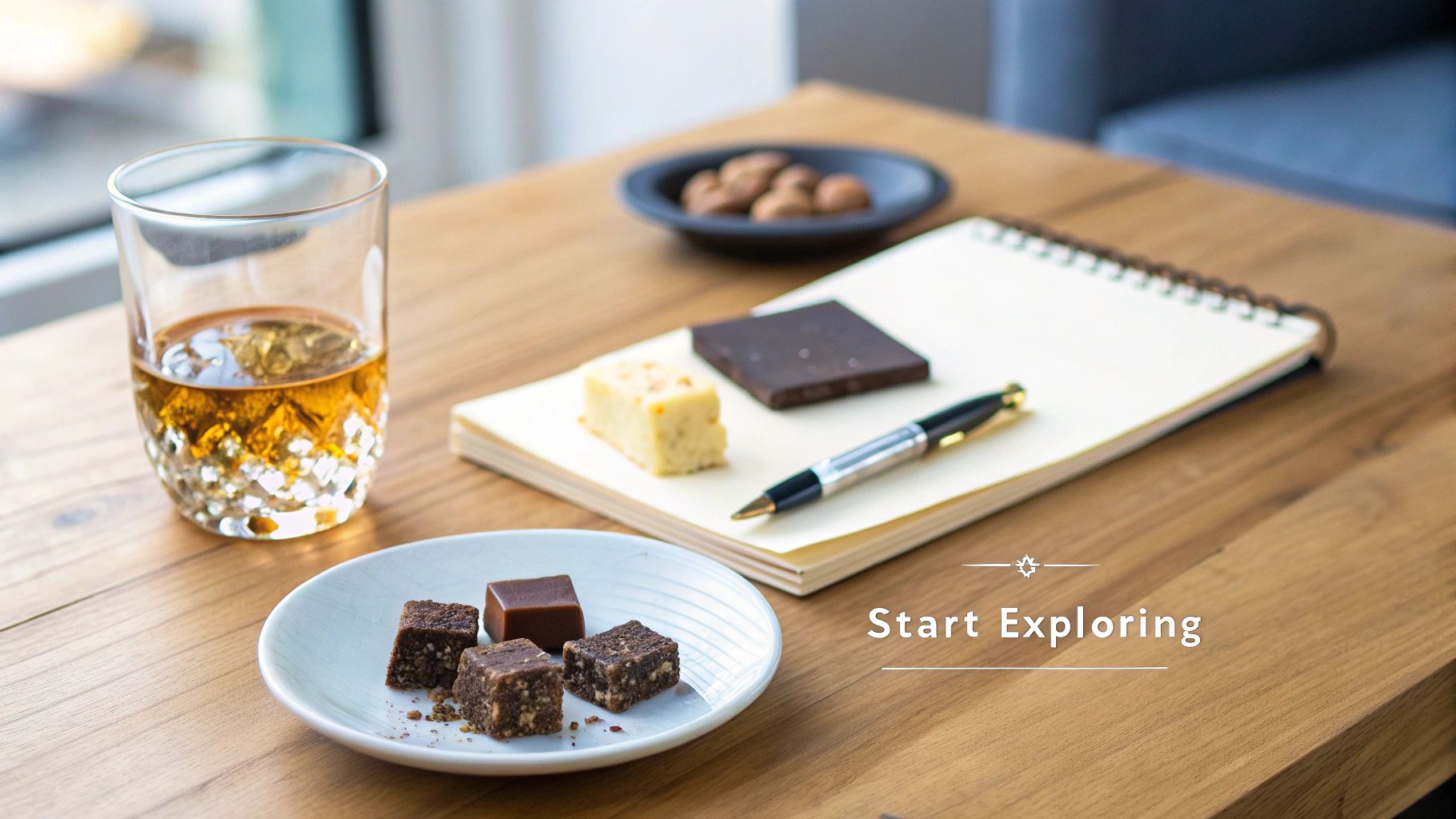
Forget any notion that you need a master sommelier's palate to get this right. Think of this guide as a friendly chat, a starting point for anyone curious about the amazing culinary world of American craft whiskey. The core idea couldn't be simpler: pairing is an adventure, not a test.
There are no "wrong" answers here, only your own delicious discoveries. Your only job is to find the combinations that make you go, "Wow." We'll give you the framework to start playing around with confidence, turning your next pour from just a drink into one-half of a perfect sensory experience.
Beyond the Glass: The Art of Flavor Exploration
The real secret to unlocking great pairings is getting to know the whiskey in your glass. You don't have to be a seasoned expert to pick out the basics. Just learning to spot a few key characteristics is your first big step.
Think of these as the building blocks of any whiskey's flavor profile:
- Sweetness: Are you getting notes of caramel, rich vanilla, or honey?
- Spice: Can you pick out any cinnamon, black pepper, or warm baking spices?
- Fruit: Do you taste hints of crisp apple, dark cherry, or bright citrus?
- Smoke: Is there an earthy, peaty, or campfire-like aroma coming through?
Tip for New Drinkers: Honestly, just by figuring out if a whiskey is sweet, spicy, or smoky, you’ve got more than enough information to start making some fantastic food choices. This is how you start building your pairing intuition.
For instance, a bourbon like Frey Ranch, with its deep caramel notes, is a natural match for a classic crème brûlée. See how that works? Or consider how the peppery spice in a rye from an innovative craft distillery like High West can slice right through the richness of cured meats.
If you're looking to dive deeper and connect with others who share your passion, platforms like the Saucial App for Food and Drink Enthusiasts are fantastic for swapping ideas and finding new inspiration. It’s all about drawing a line from what you taste in the glass to what's on your plate.
How to Read a Whisky's Flavor Profile
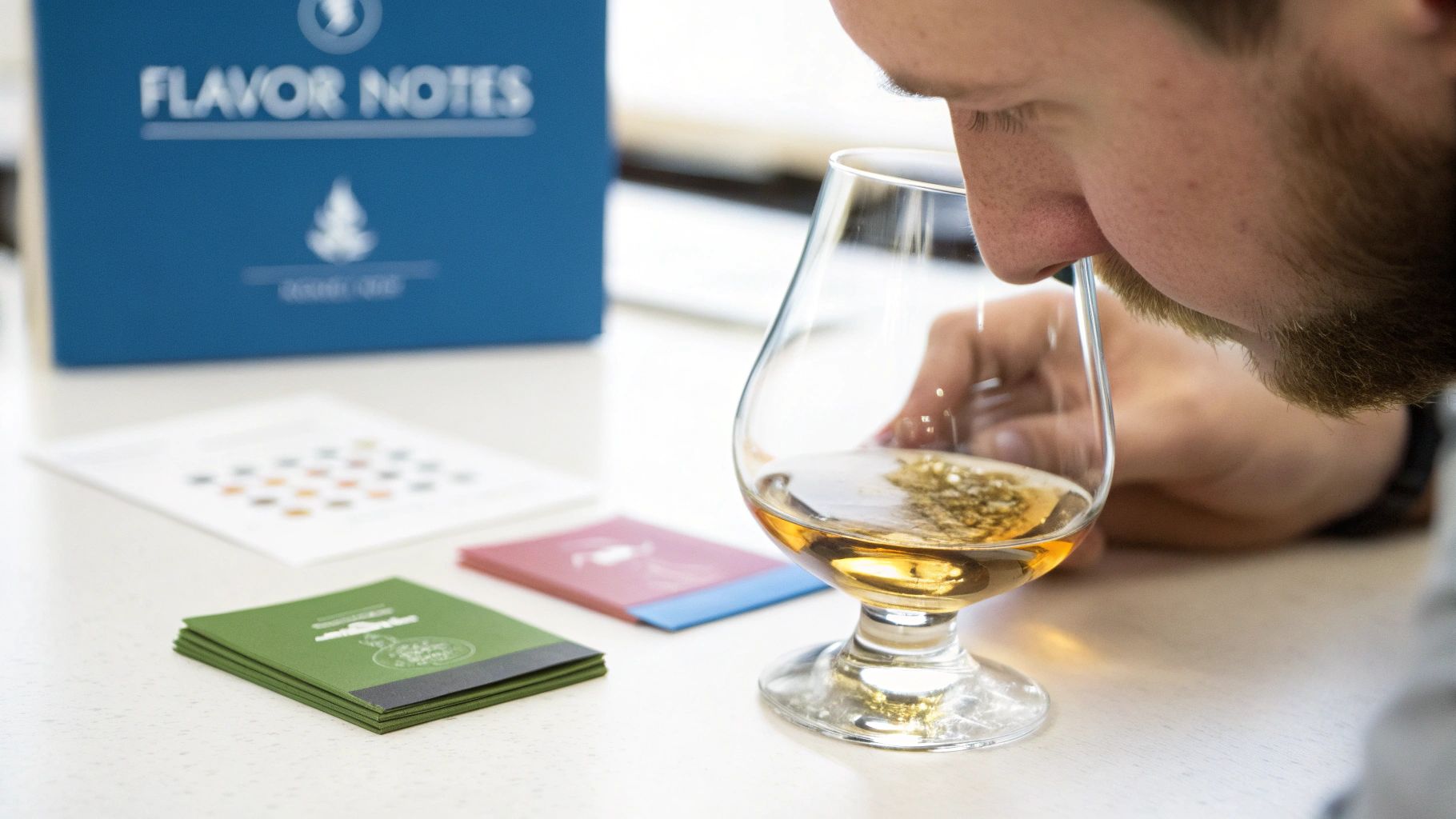
Before you can start playing matchmaker with food and whisky, you first have to get to know the spirit in your glass. Learning to read a whiskey's profile isn't about memorizing a dictionary of esoteric tasting notes; it’s about training your own senses to pick up on the fundamentals.
This skill is your roadmap to creating some truly incredible pairings. The whole process starts long before you ever take a sip. When you properly analyze a whiskey, you aren't just tasting it—you're experiencing it. For newcomers, this might sound a bit intimidating, but it really just breaks down into a few simple, approachable steps.
Start with the Nose
Your first impression always comes from the aroma, or what those in the business call the nose. Your sense of smell is wired directly to your sense of taste, making this a critical first move.
A classic beginner mistake is sticking your nose deep into the glass and taking a huge whiff. Don’t do that. You’ll just get a blast of alcohol that numbs your senses. Instead, hold the glass a few inches away, keep your mouth slightly open, and gently waft the aromas toward you.
Try this simple technique:
- First Pass: Keep the glass around chin level and gently sniff. This is where you'll catch the lighter, more volatile notes—think fruit, florals, or fresh grass.
- Second Pass: Bring the glass up to just under your nose and sniff again. Now you’ll likely pull out deeper aromas like vanilla, caramel, or baking spices.
Think of it as peeling back the layers of a story. What are you smelling? Is it the sweet caramel richness of a Balcones Texas Single Malt, or does it have the spicy, herbal kick of a High West Double Rye?
Evaluate the Body and Finish
Next up is the actual tasting. The body refers to the mouthfeel—how does the liquid feel on your tongue? Is it light and crisp, or is it rich, oily, and coating? An American single malt might feel lighter, while a classic Kentucky bourbon will often have a heavier, more viscous body.
After you swallow, pay attention to the finish. This is the lingering taste and sensation left behind. Does the flavor vanish in a flash, or does it hang around, maybe evolving from sweet to spicy to smoky? A long, warming finish is often the sign of a very well-crafted whiskey. For a deeper dive into these techniques, check out our complete guide on how to taste whiskey.
Putting It All Together
Did you know the bourbon segment makes up a massive 33% share of the flavored whiskey market? This makes it a perfect playground for practicing your tasting skills and creating some knockout pairings. Bourbon's naturally sweet, rich, and full-bodied profile—with its signature notes of vanilla, caramel, and oak—pairs beautifully with a whole range of foods, from smoky barbecue to decadent chocolate desserts.
By simply identifying a whiskey’s core nose, body, and finish, you build a mental library of flavors. This vocabulary is the key that unlocks your ability to predict which food pairings will complement or contrast with your dram.
To help you get started, here's a quick reference guide to what you can expect from some of the most popular American craft whiskey styles. Think of it as a cheat sheet for decoding your next bottle.
Decoding American Craft Whiskey Styles
| Whiskey Style | Common Aroma Notes | Typical Flavor Profile | Mouthfeel/Body |
|---|---|---|---|
| Bourbon | Caramel, vanilla, toasted oak, hints of cherry | Sweet corn, toffee, baking spices, dark fruit | Medium to full-bodied, often creamy or rich |
| Rye Whiskey | Black pepper, mint, dill, baking spices, dried fruit | Spicy, peppery, herbal, with underlying caramel sweetness | Lighter to medium-bodied, often crisp and dry |
| American Single Malt | Varies widely; can include notes of honey, fruit, malt, or smoke | Cereal and grain notes, fruit, chocolate, sometimes earthy | Often lighter-bodied but can be complex and oily |
| Wheated Bourbon | Softer notes of bread, honey, dried apricot, vanilla | Sweet, gentle grain flavors, caramel, stone fruit | Soft, smooth, and typically less spicy than rye bourbons |
Once you start recognizing these patterns, you're no longer just drinking whiskey; you're understanding it. And that's when the real fun of food pairing begins.
The Core Philosophies of Whisky Pairing
Okay, you've got a handle on decoding a whisky's flavor profile. Now for the fun part: putting it into action and actually pairing it with food. This is where you really get to play and be creative.
When it comes down to it, the whole world of food and whisky pairing really boils down to two simple, powerful ideas. You can either create harmony by matching similar flavors, or you can generate some excitement by pitting them against each other.
Grasping these two core philosophies gives you a flexible framework for just about any situation. You'll quickly learn to stop thinking about rigid rules and start focusing on the conversation happening between what's in your glass and what's on your plate.
The Art of Complementary Pairing
The most intuitive place to start is with a complementary pairing. This strategy is all about matching like with like. You’re simply looking for flavors in your food that echo the notes you found in the whisky, which creates a really seamless and unified taste experience.
Think of it as creating a flavor echo. A sweet, caramel-forward bourbon just naturally shines alongside a dessert that shares those same notes. It's a fantastic, straightforward way to build confidence, and it’s especially perfect if you're new to pairing whisky.
Here are a few classic examples to get you started:
- Smoky Islay Scotch & Grilled Oysters: The briny, smoky hit from the oysters perfectly mirrors the peaty, coastal notes of the Scotch. It's a match made in heaven.
- Caramel-Forward Bourbon & Crème Brûlée: Take a bourbon like those from Frey Ranch, with its deep notes of vanilla and burnt sugar. It feels right at home with the rich custard and caramelized top of this classic dessert.
- Wheated Bourbon & Cornbread: The soft, sweet grain notes in a wheated bourbon beautifully complement the gentle sweetness of warm cornbread slathered in honey butter.
Tip for New Drinkers: The goal of a complementary pairing isn't just to match flavors, but to amplify them. When you nail it, both the food and the whisky taste more intensely of their shared characteristics, creating a sum that is so much greater than its parts.
Finding Balance with Contrasting Pairings
While harmony is a beautiful thing, sometimes the most memorable pairings come from a bit of delicious tension. A contrasting pairing is all about creating balance by using opposing flavors and textures to make each other pop. This is where things get really interesting.
This method works by using one element to cut through, cleanse, or stand up to another. Think about how a squeeze of lime brightens up a rich, heavy dish—a contrasting whisky pairing works on a very similar principle. While we're focused on whisky here, understanding the broader principles of culinary pairing can seriously deepen your appreciation for all kinds of food and drink combinations.
This approach often delivers some wonderfully surprising and delightful results. For instance, putting a fiery, spicy rye whiskey up against something cool and creamy creates a dynamic where each element shines even brighter. It’s also a fantastic way to prevent your palate from getting tired, especially with richer foods.
Consider these contrasting scenarios:
- Spicy Rye Whiskey & Creamy Brie: The sharp, peppery spice of a rye from a distillery like Southern Star slices right through the rich, fatty character of the cheese, cleansing your palate and getting you ready for the next bite.
- Sweet Tennessee Whiskey & Salty Country Ham: You can't go wrong with the classic sweet and salty combination. The whiskey’s inherent sweetness mellows the ham’s saltiness, while that salt, in turn, brings out the whiskey's deeper oak and vanilla notes.
- Rich, Oily Whiskey & Acidic Pickles: The sharp acidity from a pickled vegetable can cut straight through the heavy mouthfeel of a high-proof or particularly oily whiskey, creating a surprisingly refreshing reset.
All the theory in the world is fine, but the real magic happens when you get a great plate of food next to a fantastic glass of whiskey. American craft whiskey, in particular, throws the pairing rulebook wide open. Distillers are pushing boundaries like never before, which means we get to play with a spectacular spectrum of flavors.
Let's get practical and talk about some killer combinations you can put together tonight.
High-Rye Bourbon and Spicy Charcuterie
If you're a fan of a little heat, high-rye bourbons are your go-to. That extra kick of rye in the mash bill layers in a peppery spice that sings alongside the classic caramel and vanilla notes. It's a profile that practically begs for some spicy, savory charcuterie.
Get a board together and try pairing a bold high-rye with:
- Spicy Sopressata: The heat in the sausage meets the whiskey's spice head-on. It's not a fight; it's a beautiful, fiery dance.
- Chorizo: The smoky paprika and garlic in a good chorizo are a perfect match for the oak and char notes from the bourbon barrel.
- Aged Pepper Jack Cheese: The creaminess of the cheese is a great counterpoint, softening the whiskey's punch just enough while the peppers in the cheese echo its spicy side.
A pour from a distillery known for its robust profiles, like Southern Star, has the backbone to stand up to these powerful flavors without getting steamrolled.
American Single Malt and Dark Chocolate
American Single Malts are easily one of the most exciting things happening in craft spirits right now. The profiles are all over the map, from sweet and malty to earthy and even subtly smoky. When you find a complex, malt-forward American Single Malt from a producer like Westland Distillery, pairing it with a high-quality dark chocolate is a game-changer.
Grab a bar of chocolate that's at least 70% cocoa. The bitterness and rich, earthy notes of the chocolate have this incredible way of pulling out the nuanced fruit and cereal flavors in the whiskey. Want to take it up a notch? A tiny sprinkle of sea salt on the chocolate creates a sweet-and-salty dynamic that makes the whiskey's finish last for days.
This pairing is all about complementary richness. The deep, roasted character of the cocoa bean finds a kindred spirit in the toasted, malted barley of the whiskey. It’s a sophisticated and deeply satisfying experience.
Unique Finishes and Flavor-Forward Pairings
Craft distillers love to experiment, especially with finishing their whiskeys in different types of barrels—port, sherry, rum, you name it. For us, this is a goldmine for food pairing. A port-finished whiskey, for instance, soaks up luscious red fruit and dark berry notes, making it an absolutely perfect partner for a sharp, funky stilton cheese or a decadent chocolate lava cake.
This creative spirit is having a huge impact. The global flavored whiskey market was recently valued at USD 19.92 billion and is expected to keep growing, largely because these diverse profiles are just so versatile with food. The creativity of these distillers opens up a whole new world of pairings, from an apple-finished whiskey with a classic apple pie to a citrus-forward spirit that can cut right through the richness of fried calamari.
For a deeper dive into the incredible variety coming out of distilleries across the country, our guide to great American craft spirits is a fantastic place to start. It’s a thrilling time to be a whiskey drinker.
Quick Pairing Cheat Sheet for American Craft Whiskey
Feeling overwhelmed? Don't be. Here’s a quick-reference table to get you started with some classic pairing ideas for the major American craft whiskey styles. Think of this as your starting point for experimentation.
| Whiskey Style | Try a Complementary Pairing With... | Try a Contrasting Pairing With... |
|---|---|---|
| High-Rye Bourbon | Grilled steak, BBQ ribs, spicy sausage | Creamy blue cheese, crème brûlée |
| Wheated Bourbon | Caramel-drizzled desserts, pecan pie | Sharp cheddar cheese, salty cured ham |
| American Rye | Smoked salmon, pastrami sandwich, dark chocolate | Soft, creamy goat cheese, apple tart |
| American Single Malt | Roasted duck, mushroom risotto, nutty cheeses | Fresh oysters, lemon meringue pie |
| Barrel-Finished Whiskey | Stilton cheese (Port finish), fruit tarts (Sherry) | Varies by finish; find an opposite flavor |
Remember, the best pairing is the one you enjoy the most. Use this cheat sheet as a jumping-off point, but don't be afraid to trust your own palate and discover something new. Happy pairing
How to Host a Blind Tasting and Pairing Night
There's something special about sharing your passion for whisky and food with friends. Turning it into a blind tasting night takes the experience to a whole new level. It's a fantastic way to strip away brand bias and get everyone—from total beginners to seasoned connoisseurs—to focus purely on what’s in the glass. The point isn't about guessing correctly; it's about discovering what you genuinely enjoy.
And trust me, the setup is much simpler than you might think. Your main job is to create a space where the whisky and food can be the stars of the show, sparking conversation and exploration.
Setting the Stage for Discovery
First things first, you'll want to pull together a diverse lineup of American craft whiskeys. Try to get a good variety of styles in there. Maybe a classic bourbon, a spicy rye, a softer wheated bourbon, and an American Single Malt to round things out. This kind of range gives your guests a real spectrum of flavors to play with. If you want to make it even easier, a curated blind whiskey tasting kit can handle the selection and prep for you.
When you're setting up the table, a few small details go a long way:
- Proper Glassware: Use identical glasses for each pour. This keeps things consistent and removes any visual bias. A Glencairn or a similar tulip-shaped glass is perfect because it really helps concentrate the aromas.
- Serving Order: It's a good rule of thumb to arrange the whiskies from lowest to highest proof. You don't want to blow out anyone's palate right at the start with a high-octane pour.
- Palate Cleansers: Don't forget these! Simple, unsalted crackers and room-temperature water are must-haves. They act as a reset button between sips, making sure each whisky gets a fair shot on a fresh palate.
Building Your Pairing Menu
When it comes to the food, I always recommend starting simple. Think single-ingredient bites before you move into more complex dishes. This approach is a lifesaver for folks new to whiskey, as it helps them draw clear lines between specific flavors in the food and the spirit.
Tip for New Drinkers: A great pairing menu for a tasting night is a journey in itself. Begin with basics like cheeses, nuts, charcuterie, and dark chocolate. These foundational pairings provide clear complementary or contrasting experiences without being overwhelming.
The role of whiskey in the dining world has absolutely exploded. It used to be wine's territory, but now whisky is stepping into the spotlight. Just look at the on-trade sector (bars and clubs), which boasts a 5.87% CAGR as bartenders get creative with experiential pairings. Bourbon, where a massive 33% of the market is flavored, goes brilliantly with bold foods like barbecue. Meanwhile, Irish whiskey, seeing its own 5.86% CAGR, is a natural fit for lighter fare like seafood. The innovation is happening right at the bar.
This diagram shows a simple, effective way to think about the flow of a pairing. You can start with a spicy rye, move to something savory, and finish with a sweet counterpoint.
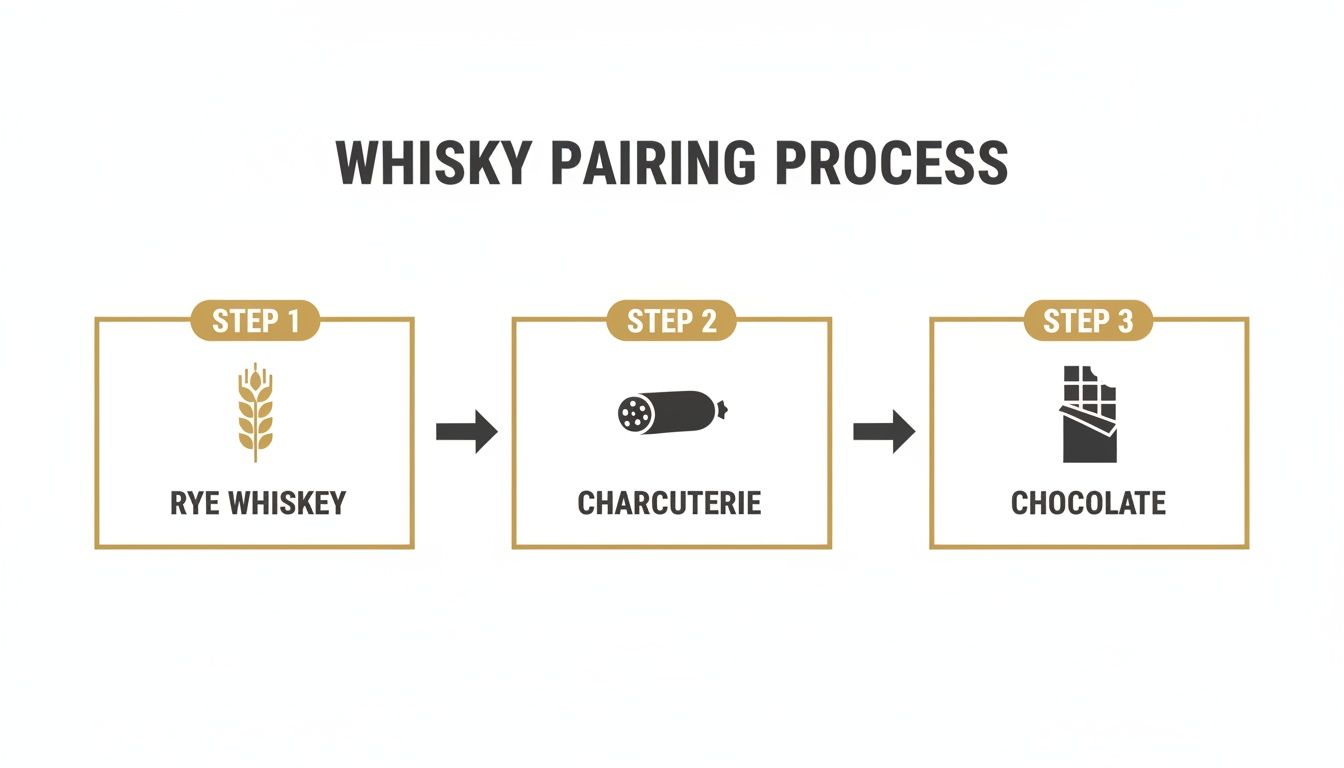
The key takeaway here is progression. A single whiskey can dance with multiple food partners, highlighting different sides of its personality, from its savory notes to its sweet finish.
Ultimately, if you keep the focus on fun and discovery, you're guaranteed to host a memorable food and whisky night that entertains and educates everyone at the table.
Still Have Questions About Food and Whisky Pairing?
Diving into the world of food and whisky pairing can feel a little intimidating at first, but it doesn't have to be. Let's tackle some of the most common questions I hear, with some simple, real-world advice to get you pairing like a pro.
What Are Some Easy Food Pairings For a Beginner?
If you're just starting out, my best advice is to keep it simple. You don't need a five-course meal to have a fantastic pairing experience. Honestly, a classic cheese and charcuterie board is the perfect playground for figuring out what you enjoy.
Take a medium-bodied bourbon, for instance. Its classic caramel and vanilla notes are just gorgeous with a sharp, aged cheddar or a nutty gouda. Or try a slice of salty prosciutto alongside it—that contrast with the bourbon's sweetness makes both the meat and the whiskey sing.
Tip for New Drinkers: One of my go-to recommendations for beginners is dark chocolate. Grab something around 70% cocoa or higher. The pleasant bitterness is an incredible counterpoint to a spicy American rye whiskey, smoothing out that peppery kick beautifully.
And don't forget the easy wins! A small bowl of candied nuts or some dried fruits are surprisingly versatile. They have a knack for drawing out those subtle fruity and nutty notes hidden in many American craft whiskeys.
Can I Pair Whisky With a Full Meal?
Absolutely! Pairing whisky across an entire meal is one of the most rewarding ways to experience it. The trick is to think about matching intensity. You want the food and the spirit to be dance partners, not competitors where one completely overpowers the other.
For a lighter starter, like seared scallops, you'll want a more delicate craft whiskey. Something like a soft, wheated bourbon from a distillery such as Frey Ranch would be a perfect match, complementing the dish without overwhelming it.
But when you get to a main course with big, bold flavors—say, a rich steak or a smoky brisket—you need a whiskey that can hold its own. This is where a high-proof bourbon or even a peated American single malt really shines. They have the structure and intensity to stand up to those powerful savory notes.
And for dessert? A sherry cask-finished whiskey can be a game-changer. Its rich, dried-fruit character is fantastic on its own, but it’s even better alongside a fruit tart or a decadent chocolate lava cake.
What Should I Avoid When Pairing Food and Whisky?
While I’m not a fan of rigid rules, some pairings are definitely harder to pull off. Be careful with intensely spicy foods. That heat can blast your palate, making it nearly impossible to pick up on the subtle, complex notes in a good craft whiskey.
Similarly, highly acidic dishes that are heavy on vinegar or citrus can clash with the whisky's profile, creating a jarring experience. The ultimate goal is always balance. The most common mistake is pairing a light, delicate whiskey with a flavor-bomb of a dish—the food will just bulldoze right over the spirit.
Here at Blind Barrels, we believe the best pairings are the ones you discover yourself. Our blind tasting kits are designed to strip away brand hype and let you focus on what really matters: the flavor. It's the best way to find what you truly love. Experience a new world of American craft whiskey today.