

You and your partner have poured two anonymous whiskeys and are comparing aromas before either of you knows the labels. One glass smells like vanilla and toasted oak. The other carries pepper, dried fruit, or a faint thread of smoke. Then you add a carefully chosen bite, and the tasting changes. Cheese softens the alcohol, chocolate makes oak and vanilla easier to recognize, and a salty or briny food can make the finish feel brighter.
The best food pairing ideas do more than add indulgence. They give new whiskey drinkers a clear sensory reference while helping experienced tasters explore American craft expressions without letting brand reputation or price guide every impression. This list moves from approachable combinations to more adventurous ones. Each entry includes a whiskey match, serving setup, quick preparation, palate lesson, and a caution to keep the pairing balanced.
For background on the spirit itself, you can also explore this whiskey subject artwork while setting up your tasting.
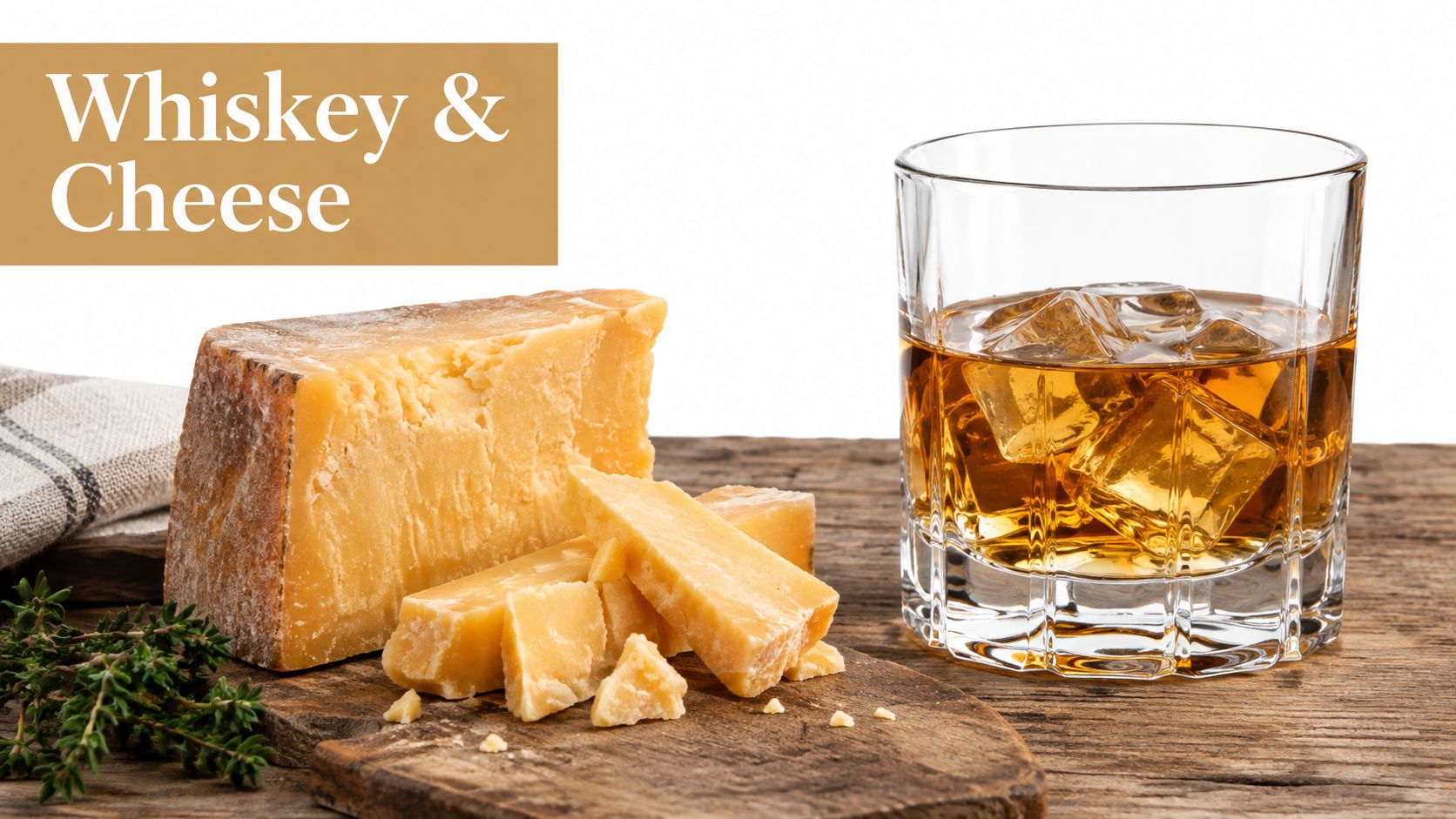
1. Craft Whiskey and Artisanal Cheese Pairing
Cheese is one of the easiest places to begin because its texture gives whiskey time to develop. Fat coats the palate, while salt and acidity can bring forward sweetness, oak, fruit, or spice in the glass. Start with mild cheese for new drinkers, then move toward more assertive styles as the whiskey becomes bolder.
Try New Riff bourbon with aged cheddar, Wilderness Trail single barrel with smoked gouda, or Belle Meade Reserve with gruyère. A wheated bourbon can be especially approachable beside brie because the cheese's creamy texture rounds the spirit's sharper edges. Higher-proof whiskey can handle stronger cheese, but don't serve an aggressive blue cheese first. It may dominate the sample and leave little room for discovery.
Practical rule: Taste the whiskey first, take a small bite of cheese, then return to the same whiskey. Notice whether the finish becomes sweeter, creamier, drier, or more peppery.
For a blind flight, serve small cheese portions separately rather than building a crowded board. Use cheese as a reset between samples, but avoid treating it as a universal palate cleanser. Its salt and fat can also influence the next pour, so plain water remains useful between comparisons.
Add a short note to the food and whiskey pairing guide on your tasting table, such as “aged cheddar emphasizes oak” or “brie softens heat.” This turns a snack into a training tool. You can also serve the cheese with homemade protein bread for a more substantial shared tasting.
2. American Craft Whiskey and Dark Chocolate Pairing
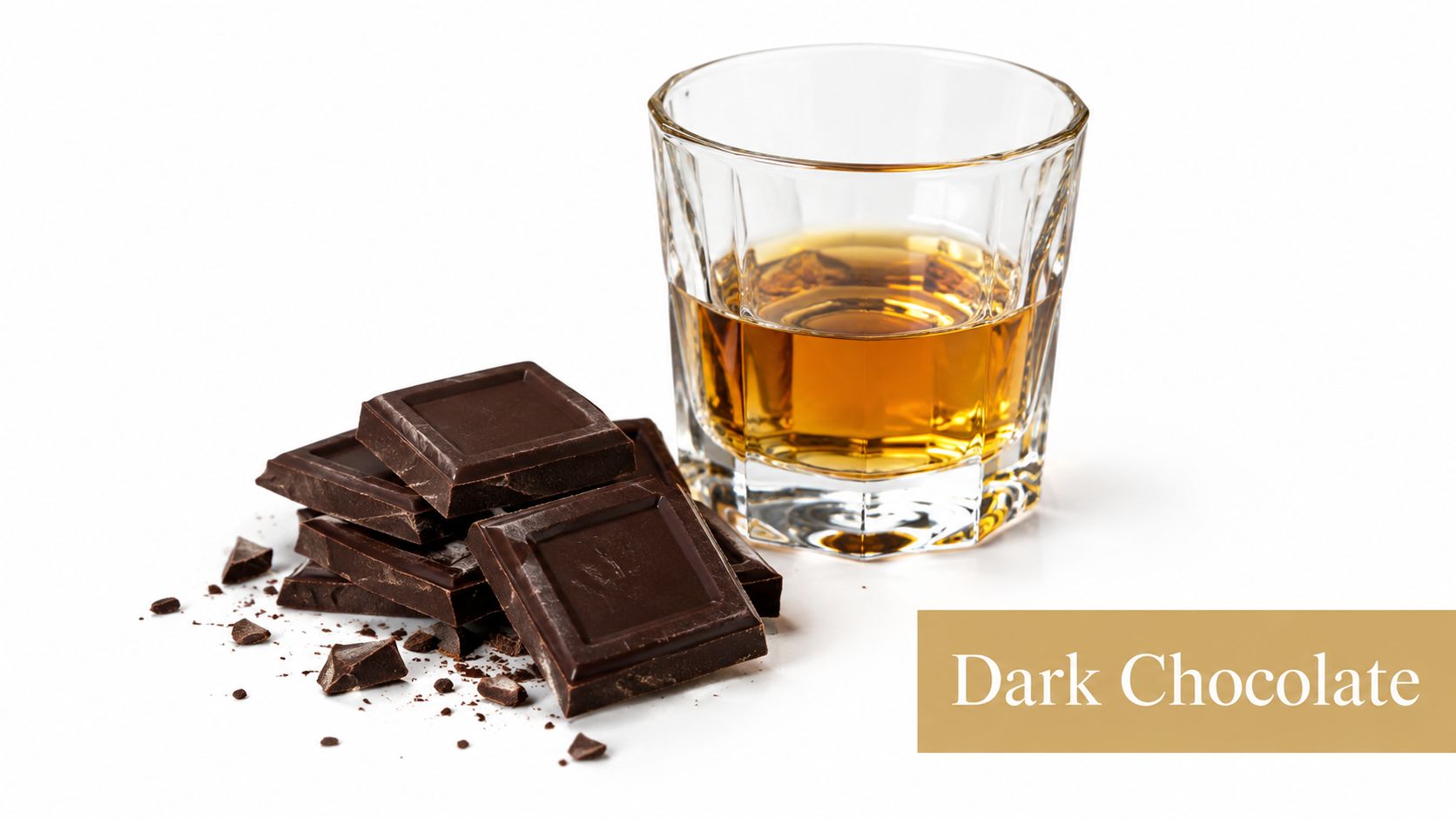
Dark chocolate creates a useful bridge for people who find whiskey intimidating. Cocoa, roasted bitterness, and gentle tannin can echo bourbon's oak and toasted notes, while the chocolate's natural sweetness makes vanilla and caramel easier to notice. It also works well in a blind setting because the bite doesn't reveal the whiskey's brand or bottle design.
Begin with 70% to 80% cacao dark chocolate for most craft whiskeys. A high-proof bourbon can stand beside a more intense square, while a new make spirit may show its grain character more clearly with a softer chocolate. Bardstown Bourbon Company releases with single-origin chocolate and Wilderness Trail whiskey with artisanal craft chocolate offer useful comparisons because the chocolate can highlight different roasted and oak-related impressions.
Let the chocolate melt slowly before taking another sip. Don't chew it quickly and immediately drink. The point is to observe how the whiskey changes after the cocoa coats your palate.
Turn chocolate into a tasting lesson
For new whiskey drinkers, ask them to look for oak, vanilla, toast, and dried fruit after the chocolate. Those notes can feel abstract when presented as a list, but the contrast between cocoa and whiskey gives the palate something concrete to compare.
Serve one small square between samples rather than combining chocolate with every sip. Too much sweetness can flatten differences between pours, and a chocolate-heavy finish may make a lighter whiskey seem thin.
A well-designed tasting can include the guidance in this food pairing with whisky article, then invite guests to record whether chocolate amplified sweetness or merely covered alcohol. That distinction matters. A successful pairing should reveal a new feature, not hide an uncomfortable one.
3. Craft Whiskey and Smoked Meat Pairing
Smoked meat connects naturally with whiskey because both can carry charred, roasted, and savory impressions. The pairing feels familiar, but it becomes more useful when you compare how different meats change the same pour. Hickory-smoked bacon may emphasize sweetness and salt, while smoked salmon can make a bourbon seem warmer and more oak-driven.
Try high-rye bourbon with hickory-smoked bacon, wheated bourbon with applewood-smoked ham, or rye whiskey with peppered beef jerky. A small-batch bourbon can also work with smoked salmon, while releases from Frey Ranch or Southern Star can sit comfortably beside carefully made craft charcuterie.
Keep portions lean and small. Fat, salt, and smoke build quickly, especially during a blind flight. Serve one non-smoked option alongside the meat so tasters can identify whether the smoke is supporting the whiskey or completely overwhelming it.
Match smoke without stacking it
The most useful comparison is often a smoked bite followed by an unsmoked bite. Ask whether the whiskey's oak and char notes remain clear. If the meat makes every sample taste smoky, the food has become the dominant voice.
Smoke should create a conversation, not a shouting match.
Higher-proof whiskey can handle bolder meat, but proof isn't the only consideration. A delicate sample may disappear beside bacon even if its aroma is attractive on its own. New drinkers can begin with ham or lightly smoked poultry before trying jerky or heavily charred barbecue.
This is also an excellent couples pairing. One person can focus on aroma while the other tracks the finish, then both can compare notes after the bite. The shared conversation often reveals details that a solitary tasting misses.
4. Single Barrel Craft Whiskey and Oyster Pairing
Oysters bring a completely different kind of challenge. Their briny, mineral character contrasts with whiskey's warmth, oak, and alcohol, creating a pairing that feels more like a coastal aperitif than a traditional bourbon snack. A single-barrel whiskey is particularly interesting here because its individual character can stand out against the oyster's clean ocean profile.
Serve New Riff single barrel bourbon with Kusshi oysters, or compare a Wilderness Trail single-select with a locally sourced variety. High-proof craft bourbon can work with a strongly briny oyster, provided the whiskey isn't so forceful that it erases the food. A simple squeeze of lemon is enough. Strong sauces can obscure both sides of the pairing.
Taste the oyster first, then take a small sip of whiskey. Follow with another sip after the oyster's salinity fades. Look for changes in perceived sweetness, minerality, warmth, and length of finish.
Keep the setup safe and restrained
Raw oysters require careful sourcing, cold storage, and safe handling. Follow the supplier's storage instructions, serve them chilled, and don't leave them sitting unattended while the tasting continues. If guests aren't comfortable with raw shellfish, a lightly grilled oyster can provide a similar mineral and savory direction with less logistical pressure.
For new whiskey drinkers, describe salinity as a point of comparison rather than claiming it makes whiskey taste salty. The oyster may sharpen the spirit's complexity, just as a small amount of water can open aroma.
A premium tasting can include regional oyster suggestions, but the main lesson is balance. The single barrel whiskey guide can help guests focus on the individual sample rather than assuming every bourbon will behave the same way.
5. Rye Whiskey and Spiced Food Pairing
Rye gives you a direct way to teach spice. Many rye whiskeys suggest black pepper, cinnamon, clove, or other warm aromatic qualities, so a spiced bite can either reinforce those impressions or expose them as something else entirely. The result is more educational than merely telling guests that rye is “spicy.”
Use high-rye bourbon with black peppercorn, a pure rye with cinnamon and nutmeg, or a Kentucky craft rye with cumin and coriander. Wilderness Trail rye with ginger and cardamom can create a more aromatic comparison, while Frey Ranch and Southern Star rye expressions can work with carefully seasoned food that brings regional spice into the conversation.
Start mild for new drinkers. A lightly spiced roasted vegetable or softly seasoned meat is easier to interpret than a very hot sauce. Ground spices usually spread across the palate more consistently than whole spices, but use only a small amount.
Compare grain character and heat
Ask tasters to separate aromatic spice from chili heat. Pepper, cinnamon, and cardamom can complement whiskey without creating burning intensity. Chili heat may instead make alcohol feel sharper, particularly in a high-proof sample.
Create a separate mild track for spice-sensitive guests at a group event. Everyone can taste the same whiskey while using different food intensity, which keeps the exercise inclusive without diluting the lesson.
A simple tasting card can ask three questions:
- Aroma: Does the food make pepper, baking spice, or herbal notes easier to detect?
- Texture: Does oil soften the whiskey, or does dry spice make it feel hotter?
- Finish: Does the spice linger longer than the whiskey?
This format helps participants learn how grain selection influences perception without requiring technical distilling knowledge.
6. Bourbon and Caramelized Dessert Pairing
Bourbon and caramelized dessert feels intuitive because both can suggest vanilla, toasted sugar, fruit, and oak. The pairing is inviting for new drinkers, yet experienced tasters can still find meaningful differences between a wheated bourbon and a high-proof craft expression.
Try wheated bourbon with salted caramel, high-proof bourbon with crème brûlée, or New Riff bourbon with butterscotch. Belle Meade Reserve with caramelized apple dessert creates a useful fruit-and-oak comparison, while dulce de leche can complement a small-batch American craft whiskey when the dessert isn't excessively sweet.
Choose desserts that develop flavor through browning, roasting, or cooking rather than relying on heavy artificial sweetness. A lightly caramelized apple can reveal more about a whiskey than a very sugary sauce because the fruit adds acidity and texture.
Keep sweetness under control
Serve a small dessert bite after the first neat sip. Then taste the whiskey again and ask whether the caramel note became clearer or whether the dessert just made everything seem sweeter. Lower-proof samples generally pair more comfortably with lighter desserts, while a fuller whiskey can support richer custard or caramel.
Use dessert to reveal sweetness, not to bury the whiskey.
For a couple's tasting, alternate the caramelized dessert with a savory bite instead of serving sweets across an entire flight. This prevents palate fatigue and gives guests a reference point when they return to bourbon.
Barrel char can contribute toasted, caramel-like impressions, but don't treat every sweet note as proof of a specific production detail. Record what you taste first. The value of a blind tasting comes from your perception before the label supplies a story.
7. High-Proof Craft Whiskey and Herb-Forward Food Pairing
Herbs can make a high-proof whiskey feel more complex without adding sugar or smoke. Rosemary, thyme, sage, oregano, and mint each create a different aromatic frame. The whiskey may seem greener, drier, or more lifted after the bite, especially when the food uses herbs as a central flavor rather than a garnish.
Try high-proof bourbon with rosemary and thyme, craft rye with sage and oregano, or a small-batch bourbon with fresh mint. Wilderness Trail high-proof releases can be compared with a small herb plate, while a single-barrel sample may show whether herbal impressions were present before the food arrived.
Use dried herbs when you need consistency across a group tasting. Fresh herbs are appealing, but their intensity varies and their texture can distract from the whiskey. A small piece of herb-seasoned bread, roasted vegetable, or poultry is usually easier to manage than a mouthful of raw leaves.
Train the palate with aroma first
Rub a small amount of herb between your fingers and smell it before tasting the whiskey. This creates a clear reference without forcing participants to identify a note they may not recognize. Then take the whiskey, taste the food, and return to the glass.
Ask guests to score whether the herb amplified, softened, or introduced the whiskey's herbal character. This works well in a game-based tasting because participants can make a specific observation rather than guessing a broad flavor category.
Keep high-proof samples for later in the session, when tasters have established a baseline. Water can be available, and a few drops may help if the spirit feels too intense. Beginner tasting guidance recommends starting with a small sip and adding only a few drops of water when needed, since excess water is difficult to reverse and can flatten flavor in the glass. Malts' beginner tasting guide explains that approach clearly.
8. Small-Batch American Craft Whiskey and Nut Butter Pairing
Nut butter brings roasted flavor, natural oils, and a thick texture that can expose qualities other foods hide. Almond butter may emphasize vanilla and grain, peanut butter can make rye seem toastier, and cashew butter can soften the edges of a small-batch whiskey. Tahini offers a more savory route, especially with bourbon that already suggests toasted grain.
Try craft bourbon with almond butter, rye whiskey with roasted peanut butter, or small-batch whiskey with cashew butter. New Riff bourbon with tahini creates an especially useful contrast between sweet oak and sesame's savory richness. Expressions from Frey Ranch or Southern Star can also provide a strong base for comparing roasted grain and nut flavors.
Use natural, unsweetened nut butter. Added sugar can make the whiskey seem sweeter than it is, while a heavily salted spread may dominate the finish. Serve a small dab on a plain cracker or tasting spoon, and give guests water between samples.
Make texture part of the exercise
Ask tasters to describe the mouthfeel before naming flavors. Does the whiskey feel oily, dry, warm, thin, or coating? Does the nut butter make the spirit seem rounder, or does it make the finish feel shorter?
This pairing also requires clear allergy communication. Label every nut and seed ingredient prominently, offer an alternative for guests with allergies, and avoid shared utensils between spreads.
A discovery score can reward observations such as “roasted grain,” “oiliness,” or “sesame.” The aim isn't to prove that one pairing is correct. It's to help tasters notice how texture and aroma influence one another, especially when the whiskey's identity remains hidden.
Craft Whiskey Food Pairing Comparison: 8 Ideas
| Pairing | Implementation Complexity | Resource Requirements | Expected Outcomes | Ideal Use Cases | Key Advantages |
|---|---|---|---|---|---|
| Craft Whiskey and Artisanal Cheese | Moderate; requires careful cheese and whiskey matching | Assorted cheeses, whiskey samples, serving materials | Layered flavor discovery and improved tasting-note recognition | Group tastings, beginner education, subscription boxes | Texture contrast; supports bourbon and rye; accessible to new drinkers |
| American Craft Whiskey and Dark Chocolate | Low; simple portioning and storage | Dark chocolate, whiskey samples, tasting guides | Enhanced vanilla, caramel, fruit, and spice perception | Blind tastings, subscription kits, mixed-experience groups | Stores well; preserves blind-tasting integrity; broadly appealing |
| Craft Whiskey and Smoked Meat | Moderate to high; requires freshness and portion control | Smoked or cured meats, refrigeration, shipping logistics | Stronger recognition of oak, char, and smoke characteristics | Immersive events, group tastings, American-themed experiences | Memorable and satisfying; reinforces American craft production |
| Single Barrel Craft Whiskey and Oysters | High; requires sourcing, refrigeration, and safe handling | Fresh oysters, ice, refrigeration, regional sourcing | Premium sensory analysis involving salinity and minerality | Luxury events, premium subscription tiers, advanced tastings | Creates an elevated atmosphere; highlights single-barrel complexity |
| Rye Whiskey and Spiced Food | Moderate; spice intensity must be carefully calibrated | Spiced foods or ground spices, tasting guides | Better rye identification and grain-driven flavor recognition | Educational tastings, cuisine-themed events, palate training | Supports bourbon-versus-rye comparison; offers diverse flavor experiences |
| Bourbon and Caramelized Dessert | Low to moderate; requires suitable dessert selection | Caramelized desserts, portioning, storage materials | Improved recognition of vanilla, caramel, and oak notes | Beginner tastings, couples' events, broad subscription audiences | Approachable and visually appealing; desserts are generally easy to manage |
| High-Proof Craft Whiskey and Herb-Forward Food | Moderate; requires advanced pairing and consistent herbs | Fresh or dried herbs, high-proof whiskey, educational materials | More sophisticated palate development and herbal-note recognition | Advanced tasting tiers, master classes, experienced drinkers | Elevates educational value; complements intense whiskeys |
| Small-Batch Craft Whiskey and Nut Butter | Low to moderate; requires allergy management and portion control | Natural nut butters, allergy labels, tasting materials | Greater awareness of body, oiliness, roasted notes, and texture | Signature subscription inclusions, discovery tastings, gamified events | Long shelf life; cost-effective; distinctive and memorable |
Build Your Own Whiskey Pairing Flight
A good flight doesn't need every pairing at once. Begin with a familiar entry point, then increase intensity and complexity as your palate settles. For new drinkers, cheese or dark chocolate is the safest starting place. Cheese introduces texture and salt without requiring much technical vocabulary, while chocolate can make oak, vanilla, and roasted notes easier to recognize.
Move next to smoked meat or caramelized dessert. These options create stronger comparisons, but they remain approachable. Smoked ham can show how char and savory flavor interact with bourbon, while a caramelized apple or lightly browned custard can bring out sweetness without turning the tasting into a dessert course.
Reserve oysters, spicy food, herbs, and nut butter for more adventurous flights. Oysters test contrast and salinity. Spiced food teaches you to separate aromatic spice from chili heat. Herb-forward bites develop aroma vocabulary, and nut butter adds a lesson in texture, oiliness, and roasted grain.
Pour the samples before revealing their identities. Use neutral glasses if possible, keep bottle labels out of sight, and give each person room to write down aroma, taste, and finish notes. Independent tasting guidance recommends a neutral setting, modest sips, and written observations about appearance, aroma, and finish so tasters can identify patterns in the whiskies they enjoy. This whisky tasting guide offers a practical model for that approach.
For a small gathering, compare three to five whiskeys. A larger tasting can use five to eight, with water available and food held until after the initial tasting unless the event is specifically designed around pairings, as outlined in this whiskey tasting guide. Keep pours limited so the final samples receive the same attention as the first.
After everyone has tasted, compare guesses about age, proof, and whiskey type. The purpose isn't to reward the person who identifies a bottle immediately. Blind tasting removes brand and price bias, giving your taste buds a clearer chance to tell you what you like.
Plan the practical details before guests arrive. Label allergens, keep raw oysters properly chilled, use small portions, and avoid foods with enough smoke, heat, sugar, or salt to overpower the whiskey. If you want another food-and-drink experience to inspire the evening, this Amsterdam foodie night out guide offers a broader example of how shared tasting can shape a night out.
Blind Barrels offers quarterly kits with four blind samples from small American craft distilleries, a tasting table for aroma, tasting, and finish notes, and a QR code that reveals the samples and provides access to full bottles at a discounted price. The kits also include a game that lets members guess age, proof, and whiskey type before receiving a palate score. For a communal tasting built around discovery, explore Blind Barrels.
Blind Barrels sends four blind whiskey samples each quarter, featuring small American craft distilleries and tasting materials designed for aroma, taste, and finish practice. Use the food pairing ideas in this guide to turn each kit into a shared palate-training session, then visit Blind Barrels to explore the subscription.