

Forget everything you’ve been told about keeping whisky separate from your meal. The simple truth is that food pairing with whisky is an incredible adventure, whether you're a curious newcomer or a seasoned pro. The right combination can transform both the spirit and the dish, creating something truly memorable.
Unlocking a New World of Flavor
For too long, the idea of pairing whisky and food felt like it was reserved for experts rattling off intimidating tasting notes. A lot of new drinkers worry that whisky’s bold profile will just steamroll a meal.
That myth is finally being put to rest, especially with the explosion of dynamic American craft whiskies that feel like they were made for the dinner table.
This isn't just a trend for at-home enthusiasts, either. It’s happening everywhere. Bars and restaurants now make up over 52.3% of the global whiskey market, and in the U.S., there's been a 25% jump in menus that feature whisky pairings. Bourbon and rye are leading that charge.
Why It Works So Well
The magic behind a great food and whisky pairing comes down to harmony and balance. Think of it as a great conversation where two distinct personalities bring out the absolute best in each other.
- Complementary Flavors: This is the most straightforward approach, where the notes in the whisky echo the flavors in the food. A bourbon bursting with caramel, for instance, is a natural match for a dessert like crème brûlée. They share that same delicious, toasted sweetness.
- Contrasting Flavors: Here's where things get really exciting. A spicy, peppery rye can slice right through the richness of a creamy, fatty cheese. It cleanses your palate, making every single bite and sip feel brand new.
Tip for New Drinkers: The goal of food pairing whisky isn't to follow a rigid set of rules, but to discover what you enjoy. It’s a journey of experimentation that deepens your appreciation for both the spirit in your glass and the food on your plate.
Ultimately, learning how to pair is all about building your confidence. You don’t need a trained palate—just a little curiosity. For anyone just starting out, getting comfortable with the basics is the most important step. If you're new to the spirit, our guide on whiskey for beginners is the perfect place to build that foundation before you dive into the delicious world of pairings.
Decoding the Flavors in Your Whisky Glass
To really nail a food and whisky pairing, you have to first learn the language your whisky is speaking. Don't get bogged down in technical jargon—just think of the flavors as belonging to four main families: sweet, spicy, fruity, and smoky. Once you can spot these, you're on your way to creating pairings that truly sing.
American craft whiskies are a great playground for this because their flavor profiles are often so distinct and easy to pick out. Take a classic bourbon from a distillery like New Riff Distilling; you'll immediately get those warm vanilla, caramel, and gentle oak notes—the hallmarks of a sweet profile. Switch to a high-rye whiskey, and you're met with a totally different personality, full of that zesty spicy kick of black pepper or cinnamon.
This isn't happening by accident. This incredible variety is a direct result of drinkers like us demanding more interesting spirits. The global market for flavored and distinct whiskies is on fire, with North American sales climbing higher every year. It’s clear we're all hungry for whiskies with character, the kind that are perfect for culinary experiments.
Identifying Your Whisky’s Personality
Think of every bottle on your shelf as having its own personality. Some are mellow and sweet, others are brash and peppery. Getting to know them is simpler than you might think. Just pour a small amount, give it a gentle swirl, and spend a moment with the aroma before you even take a sip.
A little practice goes a long way. If you really want to get the hang of this, our detailed guide on how to taste whiskey breaks down the entire process. It’s designed to help you start identifying those subtle aromas and flavors like a seasoned pro.
This infographic is a fantastic visual for how different people, from total newcomers to connoisseurs, approach the world of whisky and food pairing.
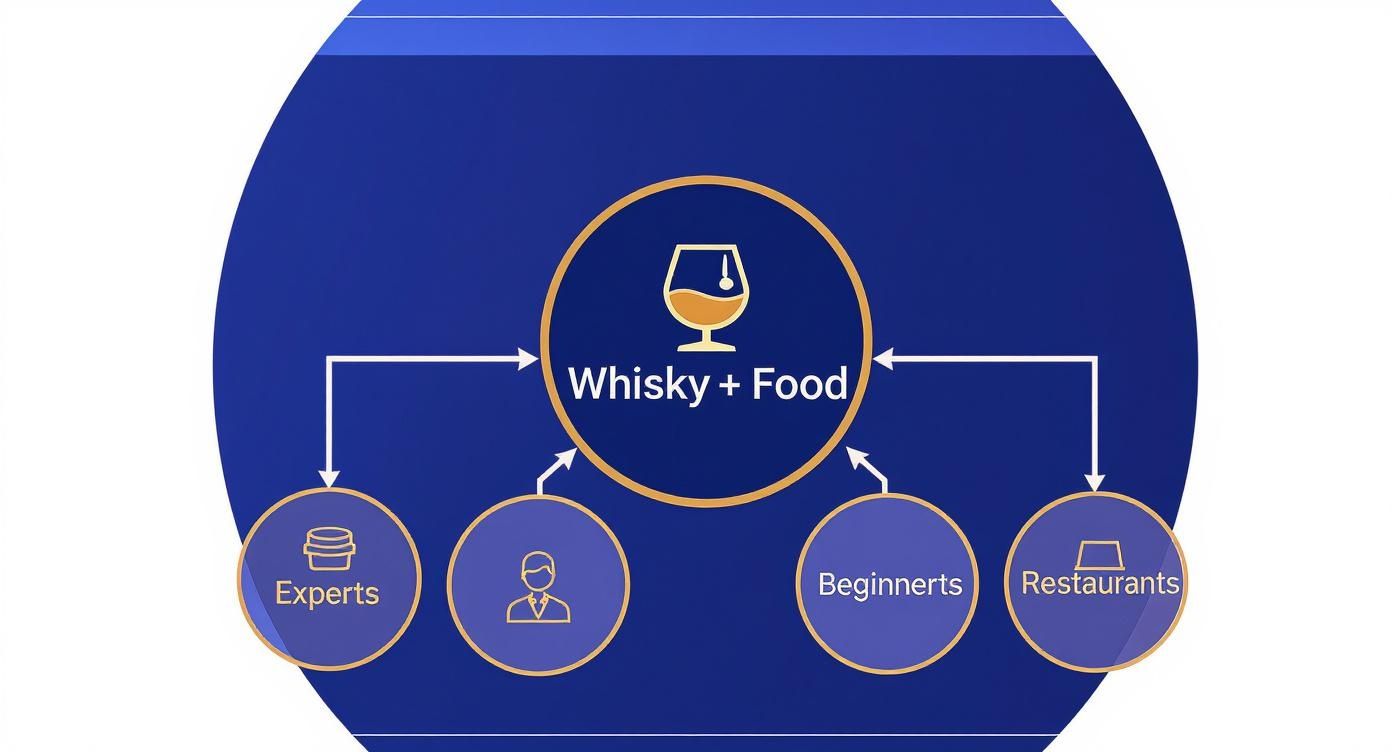
As you can see, it doesn't matter if you're an expert or just starting out. The fundamental idea is always the same: find the connection between the flavors in your glass and the ones on your plate.
The Four Core Flavor Camps
To get you started, let's take a closer look at what you can expect to find in your favorite American craft whiskies. Once you're comfortable with these core profiles, you'll have the confidence to start making your own pairing decisions.
To help, here's a quick reference to help you identify key flavor notes and find your next perfect pairing.
Common American Whiskey Flavor Profiles
| Flavor Profile | Common Notes | Typical Whiskey Style | Example Pairing Idea |
|---|---|---|---|
| Sweet | Caramel, vanilla, honey, toffee, butterscotch | Bourbon, Wheated Bourbon | Pecan pie, creme brûlée, pulled pork with a sweet BBQ sauce |
| Spicy | Black pepper, cinnamon, clove, nutmeg, rye bread | Rye Whiskey, High-Rye Bourbon | Smoked sausage, sharp cheddar cheese, gingerbread cookies |
| Fruity | Apple, cherry, pear, citrus, dried figs, raisin | Finished Whiskeys, some Bourbons | Fruit tarts, pork chops with apple chutney, dark chocolate with berries |
| Smoky | Campfire, peat, tobacco, charred oak, leather | American Single Malt, Smoked Whiskeys | Grilled steak, blue cheese, smoked salmon, rich dark chocolate |
This table is just a starting point, of course. The real fun begins when you start experimenting with these ideas and discovering your own unique combinations.
Tip for New Drinkers: Don't worry about getting it "right" immediately. Your palate is a muscle. The more you taste with intention, the better you'll become at picking out these individual notes and imagining what foods they might complement.
Mastering the Art of Complement and Contrast
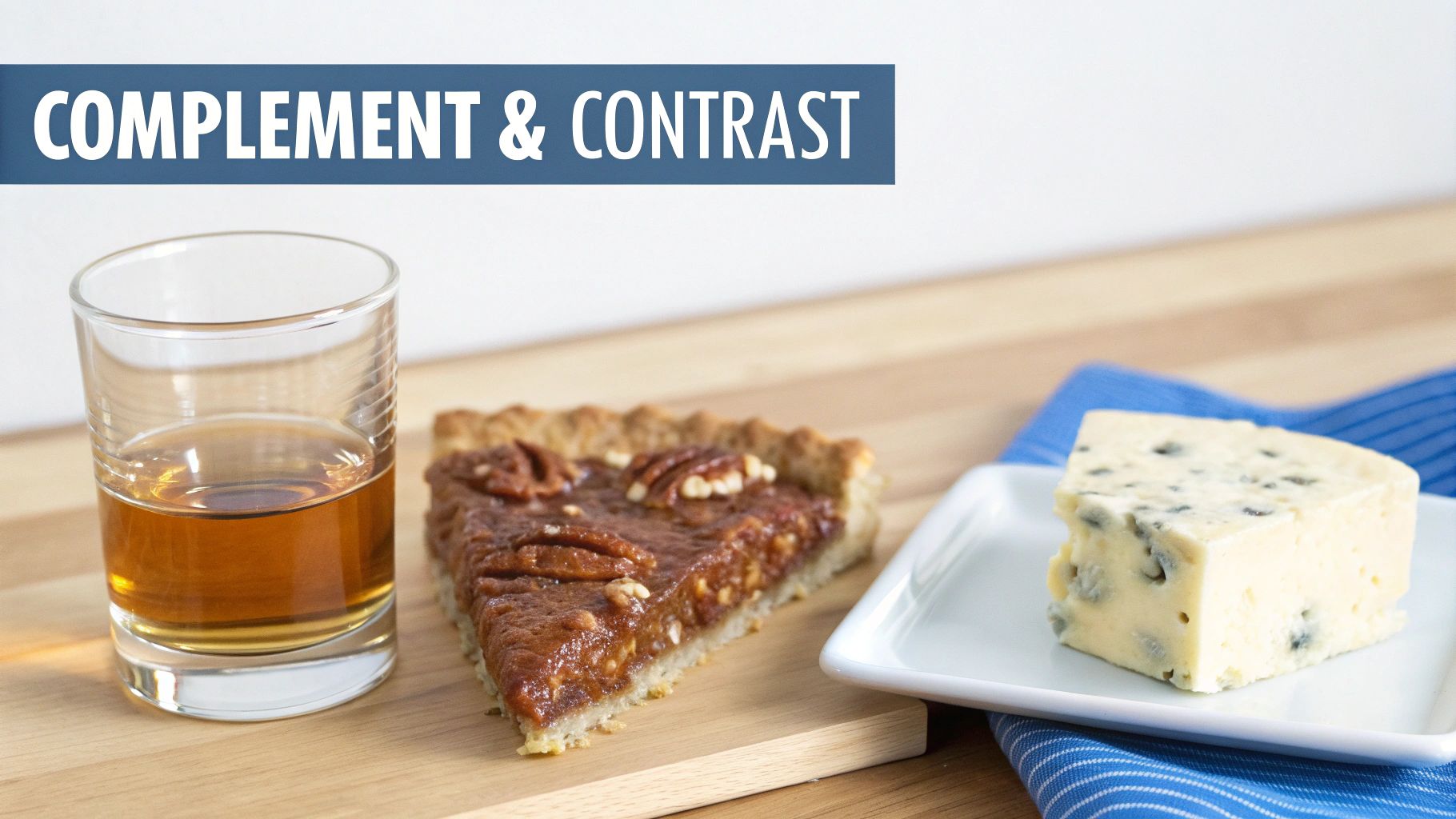
Pairing food with whisky isn't about memorizing a stuffy rulebook. Forget that. It’s really about understanding two simple ideas: complementing or contrasting flavors. Once you get the hang of these two strategies, a whole world of incredible combinations opens up, turning any meal into a true experience.
Think of it like building a great team. Sometimes you want players with similar skills, and other times, you need opposites to create that perfect balance.
Finding Harmony with Complementary Pairings
The most intuitive place to start is with a complementary pairing. This is where the notes in the whisky echo flavors you find in the food, creating a seamless, harmonious bridge between your glass and your plate. The goal here is to find those shared characteristics that just click and make each other better.
A fantastic, real-world example is matching a classic American bourbon with a slice of pecan pie. The bourbon’s inherent notes of rich caramel, vanilla, and toasted oak perfectly mirror the sweet, nutty, and buttery profile of the pie. They speak the same language. Each sip of whiskey amplifies the dessert’s richness, and each bite brings out the bourbon's sweeter side.
To get better at spotting these connections, it helps to understand the full spectrum of flavors a whiskey can offer. Exploring a tool like a comprehensive bourbon flavor wheel can be a total game-changer, especially for new drinkers, helping you finally put a name to what you're tasting.
Creating Excitement with Contrasting Pairings
While complementary pairings are all about harmony, contrasting pairings are designed to create a dynamic, exciting balance. It’s a bit more daring. You use the whisky to cut through or stand up against a powerful flavor in the food, cleansing the palate and making each bite and sip feel new again.
This method is where some of the most memorable pairings are born. It’s about finding a delicious tension between the whisky and the dish, where one zigs and the other zags.
Imagine pairing a bold, spicy rye whiskey with a creamy, pungent blue cheese. The cheese is rich, fatty, and funky. That rye, with its signature pop of black pepper and spice, slices right through that richness, preventing it from completely taking over your palate. The contrast actually makes the whole experience feel lighter and more refreshing than you'd expect.
Similarly, a slightly smoky American single malt can be brilliant alongside a sweet and sticky rack of BBQ ribs. The whisky’s smoke cuts the sweetness of the sauce, while the char from the grill links right back to the whisky’s oaky backbone.
These fundamental principles of balancing flavors are universal in the culinary world. To dig deeper into the concepts of matching flavors, you might even consider learning about the art of wine pairing, since many of the same core ideas apply. The main takeaway for any pairing is to experiment with both strategies. Don’t be afraid to try something that sounds a little weird—you might just discover your next favorite combination.
You can read all the theory in the world, but the only way to truly understand whisky and food pairing is to get your hands dirty and try it for yourself. To help you get started, I’ve put together three full pairing menus.
Think of these as a roadmap. They’re designed with newcomers in mind, using accessible American craft whiskey styles and dishes you can easily find or whip up at home. We’ll go from appetizer to dessert, and I'll break down exactly why these pairings sing.
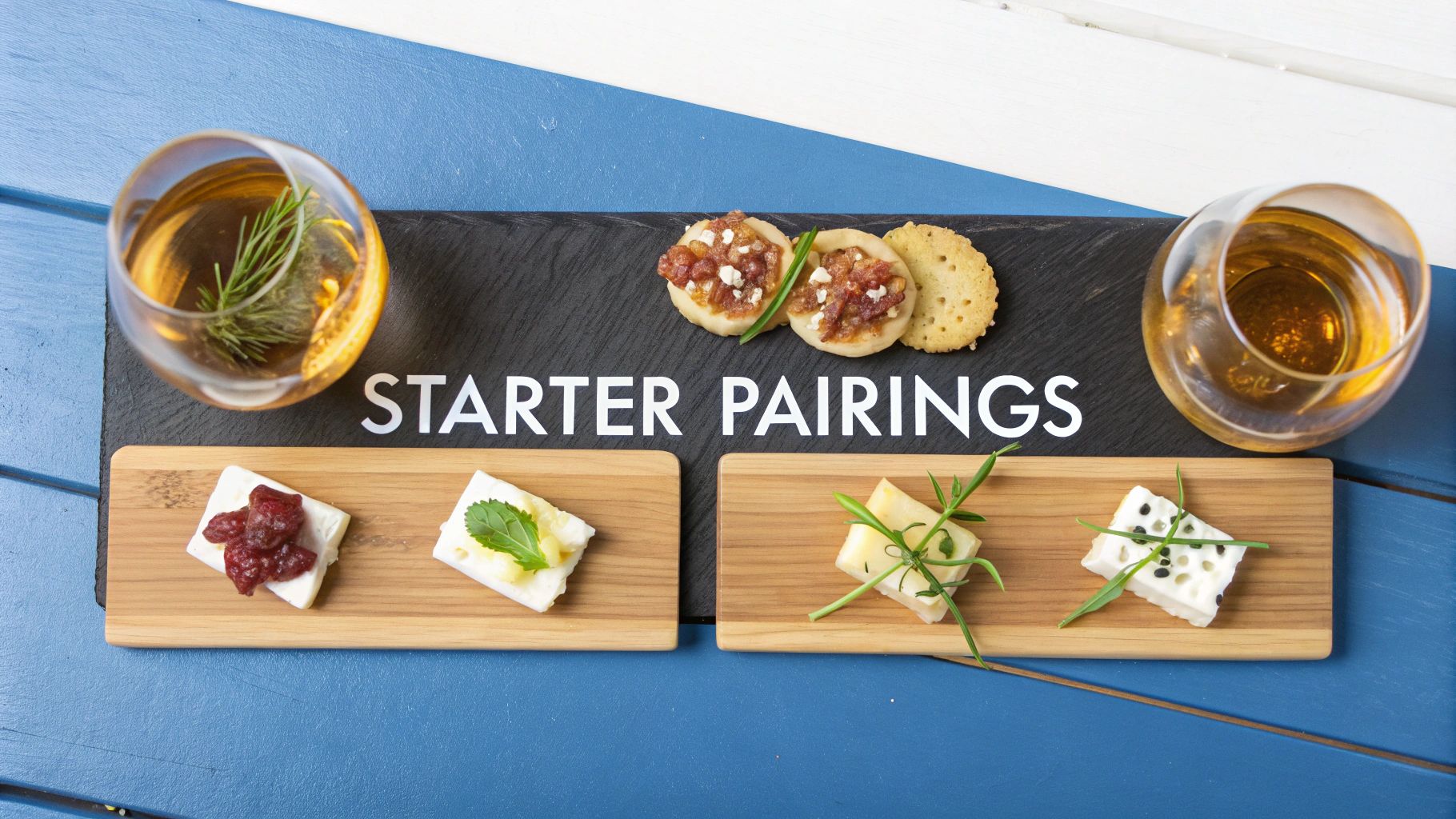
The Smooth Wheated Bourbon Experience
Wheated bourbons are a fantastic gateway into the world of whiskey. By swapping out the spicy rye grain for wheat, distillers craft a spirit that’s noticeably softer and sweeter. You'll often find delicious notes of honey, vanilla, and fresh-baked bread.
For this menu, we're looking for a gentle, approachable wheater. Think of something like the smooth offerings from Wyoming Whiskey.
- Appetizer: Smoked Almonds. It's a simple, classic start for a reason. The light saltiness and subtle smoke of the almonds create a perfect gentle contrast to the bourbon’s inherent sweetness. The nuttiness also beautifully complements the grain notes in the whiskey itself.
- Main: BBQ Pulled Pork. This is where the magic really happens. The sweet and tangy BBQ sauce locks in perfectly with the caramel and vanilla backbone of a wheated bourbon. The whiskey’s smooth finish cuts through the richness of the pork, making for a truly satisfying combination.
- Dessert: Warm Apple Crumble. The baked apple and cinnamon in the crumble are a perfect echo of the subtle fruit and spice notes you find in a good wheater. The dessert's warmth just enhances the whiskey's comforting qualities. It’s a perfect finale.
The Bold High-Rye Whiskey Journey
Ready for something with a bit more of a kick? High-rye whiskeys bring a signature spicy character to the party, loaded with notes of black pepper, cinnamon, and even mint. These whiskies are absolutely brilliant for cutting through rich, savory foods.
To get the full experience, look for a craft option from a distillery like Sagamore Spirit.
Tip for New Drinkers: A great rye whiskey doesn’t just sit alongside your food; it actively engages with it. Think of its spicy kick as a tool to cleanse your palate, making each bite feel as vibrant as the first.
This menu is all about playing with that bold personality.
- Appetizer: Sharp Cheddar and Cured Salami. This is a classic contrast pairing. The rye’s spice slices right through the fat and salt of the cheese and salami, keeping your palate from getting overwhelmed. The whiskey’s peppery notes are a fantastic counterpoint to the savory meat.
- Main: Rich Beef Stew. The deep, savory flavors of a hearty beef stew need a bold whiskey to stand up to them. The rye’s spicy character cuts through the richness of the beef, while its underlying sweetness complements the caramelized notes from the slow-cooked root vegetables.
- Dessert: Dark Chocolate Truffles. The slight bitterness of good dark chocolate is an incredible match for the spicy finish of rye. The whiskey’s own notes of cinnamon and clove amplify the complexity of the chocolate, creating a surprisingly balanced and indulgent pairing.
The Unique American Single Malt Adventure
American Single Malt is a thrilling and diverse category. Distillers are experimenting with unique grain profiles and aging techniques, often creating whiskeys with a delicate balance of fruity, malty, and sometimes subtly smoky notes.
An approachable single malt from a pioneer like Westward Whiskey opens up a whole new landscape for food pairings. This menu is designed to show off just how versatile this style can be.
- Appetizer: Smoked Salmon with Cream Cheese. Many single malts have a gentle smokiness that creates a beautiful complementary bridge to the smoked salmon. The whiskey’s crisp, malty body then cuts right through the richness of the cream cheese for a refreshing contrast.
- Main: Grilled Pork Chops with Apple Chutney. You'll often find distinct orchard fruit notes—like apple and pear—in American Single Malts. This makes them a natural partner for pork. The sweetness of an apple chutney links directly to the whiskey's fruity side, creating a delicious harmony.
- Dessert: Pear Tart. This is a light, elegant way to finish the meal. The delicate baked pear in the tart highlights the fruity esters in the whiskey, while the spirit’s maltiness complements the dessert's buttery crust.
Easy Pairing Menus for American Craft Whiskey
Feeling inspired? Follow these simple pairing menus to explore how different whiskey styles interact with food. This table lays it all out so you can mix, match, and start your own tasting adventure.
| Whiskey Style | Appetizer Pairing | Main Course Pairing | Dessert Pairing |
|---|---|---|---|
| Wheated Bourbon | Smoked Almonds | BBQ Pulled Pork | Warm Apple Crumble |
| High-Rye Whiskey | Sharp Cheddar & Salami | Rich Beef Stew | Dark Chocolate Truffles |
| American Single Malt | Smoked Salmon & Cream Cheese | Grilled Pork Chops with Apple Chutney | Pear Tart |
These are just starting points, of course. The best part about pairing is experimenting to find what you love. Use these ideas as a foundation and don't be afraid to try new combinations.
Discovering a New World of Whisky Experiences
Reading about pairing is one thing, but to really get the magic of putting whisky and food together, you have to experience it for yourself. This is where the exciting world of whisky tourism comes in, giving you a chance to learn right from the folks making the stuff at American craft distilleries. These aren't just your standard walk-through tours anymore; they've become full-blown culinary events.
Distilleries have totally reimagined what a visitor experience can be. Gone are the days of a quick tasting sip at the end of the line. Now, many offer curated events with pairings of local cheeses, artisanal chocolates, and amazing charcuterie. These sessions connect you directly with the makers, their process, and the local flavors that spark their creativity.
Your Path to Hands-On Pairing
This move toward hands-on learning isn't just happening at the distilleries. You can find these kinds of engaging tasting opportunities all over the place, which makes it easier than ever for newcomers to dive in without feeling overwhelmed.
- Local Distillery Events: Hop on the websites of nearby American craft distilleries. You'll often find they host regular tasting nights or special pairing dinners that are both educational and a genuinely good time.
- Whisky Festivals: Big whisky festivals are a playground for exploration. Brands will often set up unique pairings at their booths to stand out from the crowd and show you what their spirit can do.
- Specialized Bars & Restaurants: Keep an eye out for restaurants that take their whisky program seriously. They frequently host tasting events with chefs and brand ambassadors, crafting unique menus designed to make specific whiskies shine.
Tip for New Drinkers: The best part about these events is that they take all the guesswork and pressure off your shoulders. They're designed to be social, fun, and welcoming—the perfect spot to ask questions and figure out what you like without feeling intimidated. It’s all about community and discovering something new together.
The Rise of Culinary Distillery Tourism
This shift toward experiential tasting isn't just a small trend; it's a major movement shaking up the industry. The global whisky tourism market has ballooned, and distillery tours are a huge piece of that pie. In the United States, a massive hub for whisky tourism, distilleries have seen a huge uptick in visitors coming specifically for these food-centric events.
It really drives home how essential food has become to the modern distillery visit. You can dig deeper into this growing trend and its impact by checking out the full whisky tourism market report.
Seeking out one of these experiences is a powerful next step. It takes the abstract ideas of complementing and contrasting flavors and makes them a tangible, delicious reality. You won’t just deepen your appreciation for the spirit—you’ll find a new, incredibly enjoyable way to connect with the craft.
Common Questions About Pairing Whisky and Food
Even with a good roadmap, stepping into a new world like pairing whisky with food can kick up a few questions. Let's run through some of the most common ones that pop up for newcomers. Think of these as a few quick tips to get you feeling confident enough to dive in and start experimenting.
What Is the Easiest Whisky for Beginners to Pair with Food?
When you're just starting out, a classic American bourbon is your best friend. Its hallmark notes of caramel, vanilla, and a touch of gentle oak are incredibly accommodating.
Seriously, it plays well with almost everything, from a simple slice of cheddar and grilled meats to desserts like apple pie or dark chocolate. This makes it a really forgiving and rewarding choice for your first few attempts. A well-crafted, approachable bourbon like one from the American craft scene—perhaps Laws Whiskey House—is a perfect example of a spirit that can do it all.
Can I Pair Whisky with Spicy Dishes?
Absolutely, but it's all about finding the right balance. A bold, spicy rye whiskey can stand up beautifully to foods with a bit of a kick, like a tangy BBQ sauce or certain curries. The peppery notes in the rye often complement the heat rather than fighting against it.
Just be careful—super fiery food can blow out your palate, completely masking the subtleties of the whisky. My advice? Start with moderately spicy dishes and save your most delicate whiskies for another time. The goal here is harmony, not a five-alarm fire on your tongue.
Tip for New Drinkers: Don't let the "rules" scare you off. The most important part of this whole process is discovering what you actually enjoy. Trust your own palate—if a combination tastes good to you, then you've nailed it. It's that simple.
Do I Really Need a Special Glass for Whisky Pairings?
While it’s not a deal-breaker, using a proper tasting glass like a Glencairn can definitely elevate the whole experience. The unique tulip shape is designed to concentrate the aromas, and smell is a huge part of how we perceive flavor. Nosing the whisky is a key step in guessing how it will play with your food.
But don't let a lack of fancy glassware hold you back. A standard rocks glass or even a wine glass will do the job just fine when you're getting started. The whole point is to explore and enjoy the process of food pairing whisky, not to get bogged down in having the perfect gear.
At Blind Barrels, we think the best way to find your next favorite whisky is to taste without preconceptions. Our blind tasting kits are your introduction to America's best craft distilleries, letting your palate do the choosing. Ready for a real tasting adventure? Explore our subscription boxes and start your journey today.