

You're standing in front of a shelf of amber bottles, trying to make sense of age statements, cask finishes, regional names, and labels that all promise richness. One bottle looks smoky, another looks sweet, and a third costs far more without explaining why. The useful question isn't “What's the best dark liquor?” It's which dark spirit fits your palate, occasion, and budget?
Dark liquor is a practical category rather than one strict spirit class. It generally includes distilled spirits that spend enough time in oak, or receive color through another production method, to develop amber, brown, or mahogany tones and richer flavor. The four families worth learning first are aged whiskey and bourbon, dark rum, brandy, and aged tequila. They overlap in color, but not in taste or purpose. Whiskey tends toward oak, spice, caramel, and sometimes smoke. Rum can bring molasses, tropical fruit, or funk. Brandy leans toward grape and stone fruit, while aged tequila keeps cooked agave at its center.
This guide will help you choose a good dark liquor by flavor, occasion, production style, and serving method, without treating one category as the universal winner.
What Counts as a Good Dark Liquor
A good dark liquor earns its color and flavor through a coherent production style. In many cases, that means aging in oak, where the spirit extracts wood compounds and changes through oxidation over time. Some products also use coloring, so a dark appearance alone doesn't prove lengthy maturation.
Start with the spirit family
The shelf becomes easier to read once you separate the bottles into four broad groups:
- Whiskey and bourbon use grains as their foundation and often show vanilla, caramel, baking spice, toasted oak, or smoke.
- Dark rum begins with sugarcane byproducts or juice and can taste like brown sugar, molasses, dried fruit, tropical fruit, or warm spice.
- Brandy is distilled from fruit, commonly grapes, and usually carries stone-fruit sweetness, floral notes, and a rounded warmth.
- Aged tequila remains agave-driven, with cooked agave, citrus peel, pepper, and soft oak from barrel maturation.
These families suit different drinkers. A bourbon fan may want a structured neat pour, while a rum drinker may be looking for a richer Mai Tai. Someone choosing brandy for dessert may care more about fruit and texture than char. Aged tequila can bridge the gap between an agave spirit and an oak-aged sipper.
What doesn't belong in this guide
Liqueurs, coffee spirits, and artificially flavored after-dinner products aren't the focus here. They can be dark in color, but sweetness, added flavor, or coloring often defines them more than the underlying aged spirit.
Practical rule: Treat color as an invitation to investigate, not as proof of quality.
The phrase good dark liquor should describe a balanced drinking experience, not merely the darkest bottle on the shelf. Look for a spirit whose aroma, flavor, alcohol, wood influence, and finish work together. A younger whiskey can be excellent if the oak hasn't overwhelmed the grain. A dark rum can be compelling in a cocktail even if it isn't designed for neat sipping. The right bottle depends on what you want it to do.
The Four Types of Dark Liquor Worth Knowing
The four main families differ most clearly in their raw materials, sweetness, oak character, and best use. Whiskey is the category most associated with dark spirits globally. One market estimate placed whiskey at about 46.8% of the dark spirits market in 2025, while also describing rum and brandy as meaningful but smaller segments, according to the cited dark spirits market overview. That scale matters, but it doesn't make whiskey the right choice for every occasion.
Whiskey and bourbon
Whiskey and bourbon typically offer the broadest range of flavor. Expect caramel, vanilla, toasted grain, baking spice, oak, and sometimes smoke or char. Bourbon often feels sweeter because corn and new oak create a rounded profile, while rye-heavy whiskey can bring pepper, mint, and sharper spice.
Sweetness is usually perceived rather than added. A bourbon may smell like brown sugar without tasting like a sugary liqueur. Serve it neat after dinner, add a few drops of water if the alcohol feels closed, or use it in an Old Fashioned. Rye works especially well in a Manhattan when you want the cocktail to stay lively and structured. For a deeper guide to regional and production differences, explore this overview of whiskey types and their defining styles.
Dark rum
Dark rum ranges from polished and molasses-rich to intensely aromatic. British-style expressions can show treacle, brown sugar, dried fruit, vanilla, and baking spice, while Jamaican rum may deliver overripe banana, tropical fruit, and a powerful fermented character often described as funk.
Sweetness varies considerably. Some bottles taste dry despite rich aromas, while others are deliberately dessert-like. Dark rum shines in a Dark ’n' Stormy, Mai Tai, Rum Old Fashioned, or warm winter drink. A smooth aged rum can also work neat or over one large cube.
Brandy
Brandy is fruit-forward rather than grain- or sugarcane-led. Grape brandy, Cognac, Armagnac, and American brandies may offer baked pear, peach, raisin, plum, floral notes, vanilla, and gentle spice. Its sweetness usually comes from ripe fruit and oak influence, not necessarily added sugar.
A snifter suits a slow after-dinner pour, though a rocks glass can make the experience more relaxed. Brandy also performs well in a Sidecar or Vieux Carré, where fruit character supports citrus, vermouth, and spice.
Aged tequila
Reposado and añejo tequila bring cooked agave, soft oak, pepper, citrus peel, caramel, and herbal depth. The agave remains visible, which keeps aged tequila distinct from whiskey or brandy.
Reposado often works well in spirit-forward cocktails, while añejo can be enjoyed neat. Try a Tequila Old Fashioned when you want oak and bitters without hiding the agave.
Dark Liquor Types at a Glance
| Type | Core Flavor Markers | Sweetness | Best Occasion |
|---|---|---|---|
| Whiskey and bourbon | Caramel, vanilla, oak, baking spice, smoke | Dry to gently sweet | Neat sipping, Old Fashioned, Manhattan |
| Dark rum | Molasses, treacle, dried fruit, tropical funk | Medium to dessert-like | Tiki drinks, winter warmers, relaxed sipping |
| Brandy | Stone fruit, grape, flowers, raisin, spice | Fruit-sweet and rounded | After dinner, dessert pairing, Sidecar |
| Aged tequila | Cooked agave, citrus peel, pepper, soft oak | Dry to gently sweet | Neat pours, Tequila Old Fashioned |
Why Some Dark Liquors Look and Taste Deeper
Oak does much of the work behind a dark spirit's color and richness. As a spirit rests in toasted or charred wood, it draws out compounds created by heat and wood breakdown. Vanillin contributes vanilla, lactones can suggest coconut, lignin-derived compounds add spice and toasted notes, and tannins create drying grip on the finish. These changes are discussed in detail in this review of rapid maturation and barrel-aging studies.
The barrel's treatment matters. Toasting and charring change which compounds become available, while the char layer can soften some rough edges and contribute smoky, roasted tones. Barrel size, climate, time, and the cask's previous contents also influence the result. A former bourbon barrel may emphasize vanilla and toasted oak, while a cask that previously held fortified wine can add dried-fruit character.
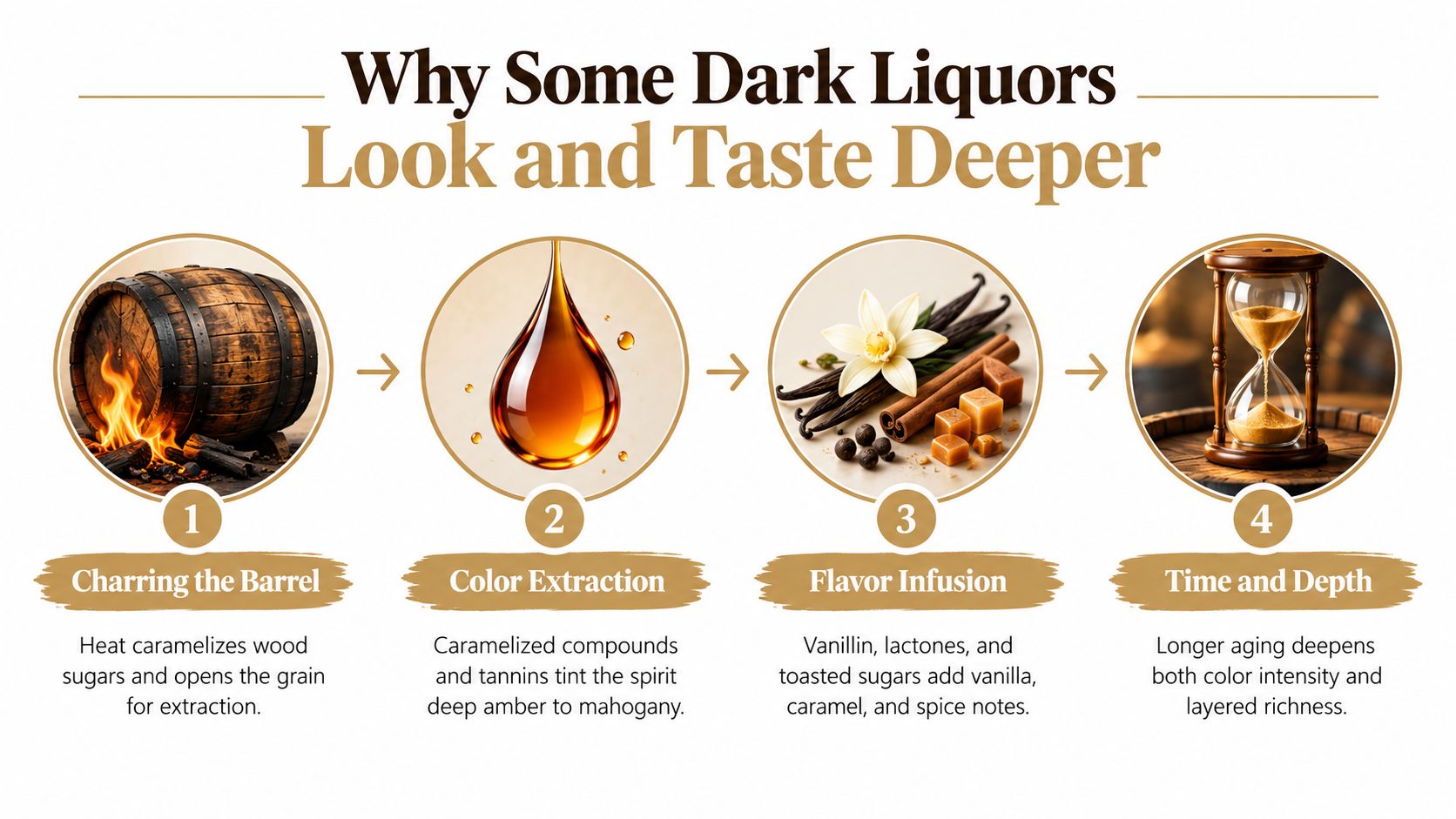
Read color as a clue, not a verdict
Amber often points toward warmth, vanilla, and caramel. Mahogany may suggest more wood influence, dried fruit, or spice. A nearly black pour can indicate heavy cask contact, but it may also reflect coloring.
Longer maturation generally brings more oak influence, yet time isn't the only variable. A smaller barrel exposes more spirit to wood, and a warm maturation environment can accelerate extraction. A spirit with a heavy char may look darker than an older spirit from a different barrel.
For a closer look at how toast, char, and other barrel choices affect whiskey, see this explanation of barrel preparation and whiskey taste. Some whiskies permit added caramel coloring, and almost all rums may use it, so label transparency and tasting balance matter more than visual intensity.
How to Choose a Quality Bottle Without the Hype
A shelf decision gets easier when you ignore the bottle shape and inspect four practical signals. Start with the information the producer gives you, then compare that information with the style you want to drink.
Check the age statement
A clear age number tells you more than vague language such as “reserve” or “finest.” It still doesn't guarantee that you'll prefer the bottle. Longer time in oak can add complexity, but it can also bring dryness or make wood dominate a delicate distillate.
If there's no age statement, focus on tasting notes, maturation details, and the producer's transparency. A non-age-stated whiskey may still be well made, but you'll have less information before buying.
Use proof as a flavor clue
Higher proof often carries more aroma and intensity, but it can also amplify alcohol heat. Water can help open a cask-strength pour, while ice lowers temperature and adds dilution. Look for a balance between concentration and drinkability rather than assuming the strongest bottle is the most valuable.
Chill-filtering and caramel coloring can also affect how a spirit presents. Neither automatically makes a bottle poor, but they're reasons to judge the liquid in the glass instead of relying on a dark hue or bold label promise.
Decode the source
A distillery-of-record produces and controls its own spirit. A non-distiller producer, often called an NDP, buys whiskey from another distillery and may blend, finish, or bottle it. Neither approach is automatically superior. What matters is whether the label explains the source and whether the final blend has a clear identity.
Read the back label before the front label. Production details often tell you more than an illustration, slogan, or celebrity name.
Compare craft with legacy
Legacy producers usually offer consistency and familiar flavor profiles. American craft whiskey distilleries are more experimental, which can produce distinctive bottles as well as uneven ones. The U.S. craft category included 2,753 craft spirits distilleries in 2024, defined in the cited industry summary as producers making fewer than 750,000 proof gallons annually; the category accounted for nearly 8% of U.S. spirits market value and more than 14 million cases in combined volume, as reported in this craft whiskey overview.
| Criterion | Legacy Distilleries | American Craft Whiskey |
|---|---|---|
| Consistency | Reliable house style | Batch variation is more common |
| Sourcing | Often established grain-to-glass control | May distill, source, blend, or experiment |
| Flavor | Familiar and polished | Bold, local, or unconventional |
| Buying reason | Predictable performance | Discovery and originality |
| Best fit | A dependable home-bar staple | Exploratory tasting and special pours |
For more context on age, proof, sourcing, and premium positioning, use this guide to what top-shelf liquor actually means.
Beginner and Advanced Bottles to Try First
New drinkers often make the same mistake: they buy one forceful, expensive bottle and assume whiskey or dark liquor isn't for them. A more useful approach starts with softer profiles, then introduces proof, oak, fruit, and funk one variable at a time.
Beginner bottles
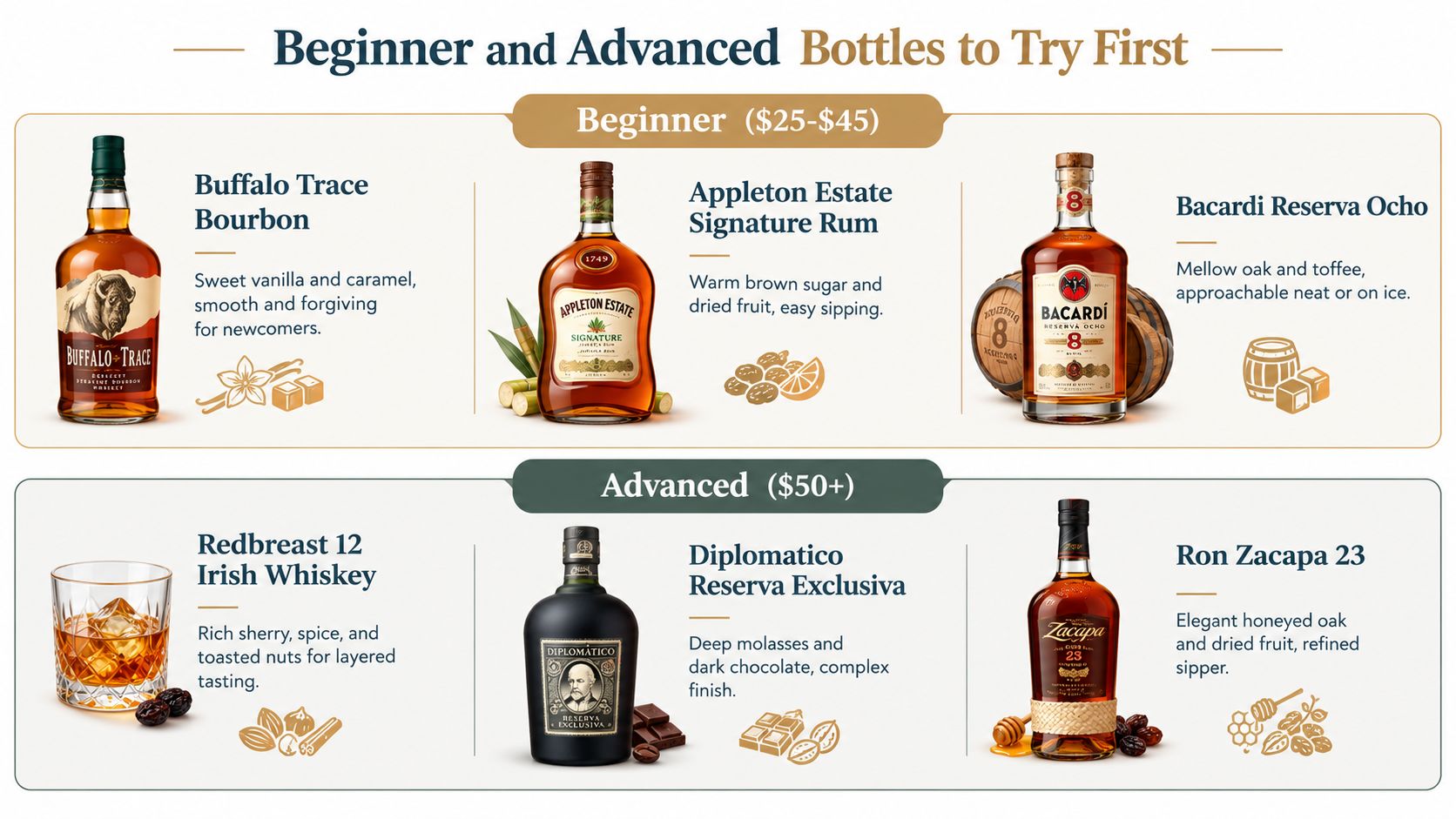
The approachable lineup below stays in the $25 to $45 range, as a practical starting tier rather than a guarantee of local pricing or availability.
- Buffalo Trace Bourbon: Caramel and vanilla with a warm, rounded profile. Try it neat first, then use it in an Old Fashioned.
- Jameson Black Barrel: Smooth Irish whiskey with toasted wood and gentle sweetness. Pour it neat or over ice.
- Mount Gay Eclipse: A straightforward aged rum with soft brown-sugar and oak impressions. Use it in a Rum Old Fashioned or sip it with a small amount of ice.
- Casamigos Reposado: Cooked agave and rounded oak without an aggressive bite. Try it neat or in a Tequila Old Fashioned.
A flight can teach you more than repeatedly buying similar bottles. Whiskey educators commonly recommend starting with a wheated bourbon before moving into high-rye or high-proof expressions, because the softer profile can be easier for new drinkers to approach. Asking for a flight of American craft bourbons or ryes also lets you compare aroma, flavor, and finish without committing to a full pour, as recommended in this whiskey education guide.
Advanced and splurge bottles
The next tier is for drinkers who already know whether they prefer power, fruit, sweetness, or oak.
- Booker's Bourbon: Uncut, high-proof bourbon with intense oak, caramel, and spice. Add water slowly and taste after each addition.
- Redbreast 12 Year: Sherry-matured Irish whiskey with dried fruit, toasted nuts, and layered spice. It's built for a slow neat pour.
- Diplomático Reserva Exclusiva: Rich, sweet-leaning rum with molasses, dried fruit, and dessert-like depth. Serve it neat after dinner.
- Don Julio 1942: Añejo tequila with a polished, brandy-like profile, cooked agave, oak, and soft sweetness. Use a small neat pour rather than burying it in a mixer.
These bottles aren't interchangeable. Booker's is about concentration, Redbreast about fruit and texture, Diplomático about richness, and Don Julio 1942 about an elegant aged-agave profile.
Buy one bottle from the beginner tier and one from the advanced tier before collecting several bottles from a single family. That contrast trains your palate to notice what you enjoy, rather than reinforcing your first preference.
Tasting Blind to Find What You Actually Like
Labels influence judgment before the spirit touches your tongue. A familiar brand can make you expect smoothness, while a high price can make ordinary notes seem more impressive. Blind tasting removes those signals and puts attention on aroma, texture, finish, and balance.
The method is simple. Pour samples into unmarked glass vials, taste them without seeing the producer or price, and record what you notice before revealing the identities. You don't need formal sensory vocabulary. “Sweet vanilla,” “peppery,” “thin,” “dry,” and “long finish” are useful observations.
Three things blind tasting teaches
- Your real flavor preferences: You may discover that rye spice appeals to you more than bourbon sweetness, or that grape brandy suits you better than oak-heavy whiskey.
- Your price sensitivity: Tasting without a label helps you compare quality and enjoyment without allowing branding to make the decision first.
- Your personal flavor map: Repeated notes create a buying guide built around your palate, not someone else's ranking.
A service such as Blind Barrels uses unmarked samples from small American craft distilleries, a tasting table for aroma, flavor, and finish, and a QR-code reveal that identifies the spirit after tasting. Its kits also include a guessing game involving age, proof, and whiskey type, turning the exercise into a shared learning activity rather than a solemn test.
Blind tasting isn't about proving that your palate is sophisticated. It's about learning what you reach for when the label can't influence you.
Try the exercise with three glasses and a willing friend. Taste each sample twice, write down one aroma, one flavor, and one finish impression, then rank the pours by enjoyment. The bottle you choose afterward may surprise you, and that surprise is often more useful than another shelf recommendation.
Serving Dark Liquor the Way It Shines
The best serving method depends on the spirit's intensity and the moment. A mature bourbon or single malt Scotch may need nothing but a neat pour and a suitable glass. A younger whiskey can become more approachable with ice, while a high-proof rye or brandy may reveal more aroma after a few drops of water.
Match the format to the bottle
- Neat: Use for aged bourbon, single malt Scotch, añejo tequila, and brandy when you want to study texture and finish.
- With water: Add a few drops to cask-strength whiskey or high-proof brandy if alcohol heat blocks the aroma.
- On the rocks: Choose for younger or higher-proof whiskey when chilling and dilution make the pour easier to drink.
- In cocktails: Use bourbon or rye in an Old Fashioned or Manhattan, aged rum in a Dark ’n' Stormy or Mai Tai, Cognac or Armagnac in a Sidecar or Vieux Carré, and reposado or añejo tequila in a Tequila Old Fashioned.
Glassware changes the experience, but it doesn't need to become expensive. A Glencairn focuses whiskey aromas, a snifter suits brandy, and a rocks glass handles ice and cocktails. If you're building a home setup on a budget, this cost-effective glassware guide offers a useful way to compare practical options.
Best Serving Formats by Dark Liquor Type
| Dark Liquor Type | Best Serving Style | Glassware | Signature Cocktail |
|---|---|---|---|
| Bourbon and rye | Neat, water, or rocks | Glencairn or rocks glass | Old Fashioned or Manhattan |
| Single malt Scotch | Neat or with water | Glencairn | Rob Roy |
| Dark rum | Neat, rocks, or mixed | Rocks or highball glass | Dark ’n' Stormy or Mai Tai |
| Brandy and Cognac | Neat or gently chilled | Snifter or tulip glass | Sidecar or Vieux Carré |
| Reposado and añejo tequila | Neat or spirit-forward | Rocks glass | Tequila Old Fashioned |
Keep the pour modest, especially when comparing several bottles. Let the spirit settle in the glass, smell before sipping, and avoid mixers when the bottle has enough character to stand alone. A good dark liquor should still taste coherent when you remove the decorations.
Blind Barrels offers quarterly blind whiskey tasting kits with four samples from small American craft distilleries, tasting notes, a reveal page, and a palate game covering age, proof, and whiskey type. Visit Blind Barrels to turn your next dark-liquor purchase into a guided tasting and discover which bottles suit your palate.