

The first rye I learned to appreciate wasn't the loudest pour on the shelf. It was the one that changed from pepper and mint to vanilla and citrus as it sat in the glass. That shift taught me the central lesson of high quality rye whiskey: intensity can get your attention, but balance earns the next sip.
The Renaissance of American Rye
Rye whiskey once stood at the center of American distilling. By 1810, Pennsylvania produced about 6.5 million gallons of rye whiskey in one year, nearly three times Kentucky's 2.2 million gallons of bourbon, according to this history of rye whiskey. George Washington's Mount Vernon distillery also produced nearly 11,000 gallons of rye whiskey per year in the 1790s, a remarkable scale for a young nation.
Then rye nearly disappeared from everyday American drinking. U.S. rye sales had fallen to about 150,000 9-liter cases in 2006, while bourbon stood at 14.7 million cases, as documented in the Distilled Spirits Council's 2020 rye whiskey report. By 2020, rye had climbed to roughly 1.4 million cases, including 1.411 million cases of production, and sales reached $275 million. The category's rise from 2009 levels was about 1,500%, making rye one of the sharpest rebounds in the spirits industry.
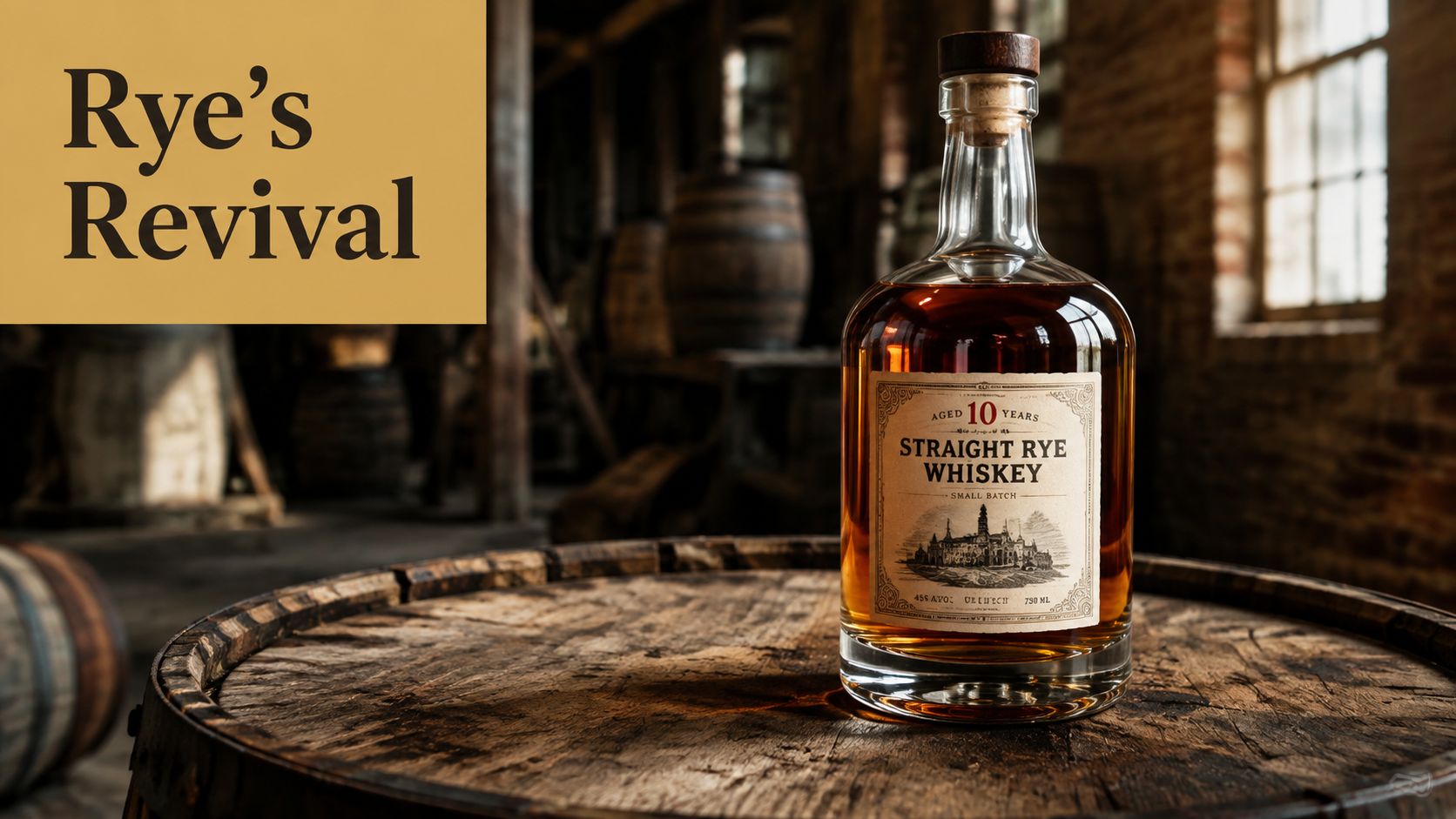
That revival gave American craft distillers room to experiment. Some work with heritage or heirloom rye. Others use malted rye, unusual fermentation approaches, or carefully selected barrels. The result is a category with more variation than the familiar cocktail shorthand of “spicy whiskey” suggests.
Why quality matters now
More bottles create more opportunity, but they also create more confusion. A rye can be expensive, dark, high proof, or wrapped in an appealing story without delivering the harmony you want in the glass. Learning to evaluate the grain, production choices, aroma, palate, and finish helps you separate genuine character from simple intensity.
The history also gives modern drinkers useful context. Rye isn't a novelty borrowing bourbon's identity. It has deep roots in Pennsylvania, Maryland, and early American distilling, and today's small producers are reconnecting with that tradition in different ways. For a concise look at that background, explore the history of rye as America's true native spirit.
If you encounter an unfamiliar bottle at a bar or auction, product details can help you establish what you're looking at before tasting. A resource such as Flav R Wave Baron Crown details can be useful for checking presentation and stated specifications, but the liquid still has to make its case in the glass.
What Defines High Quality Rye Whiskey
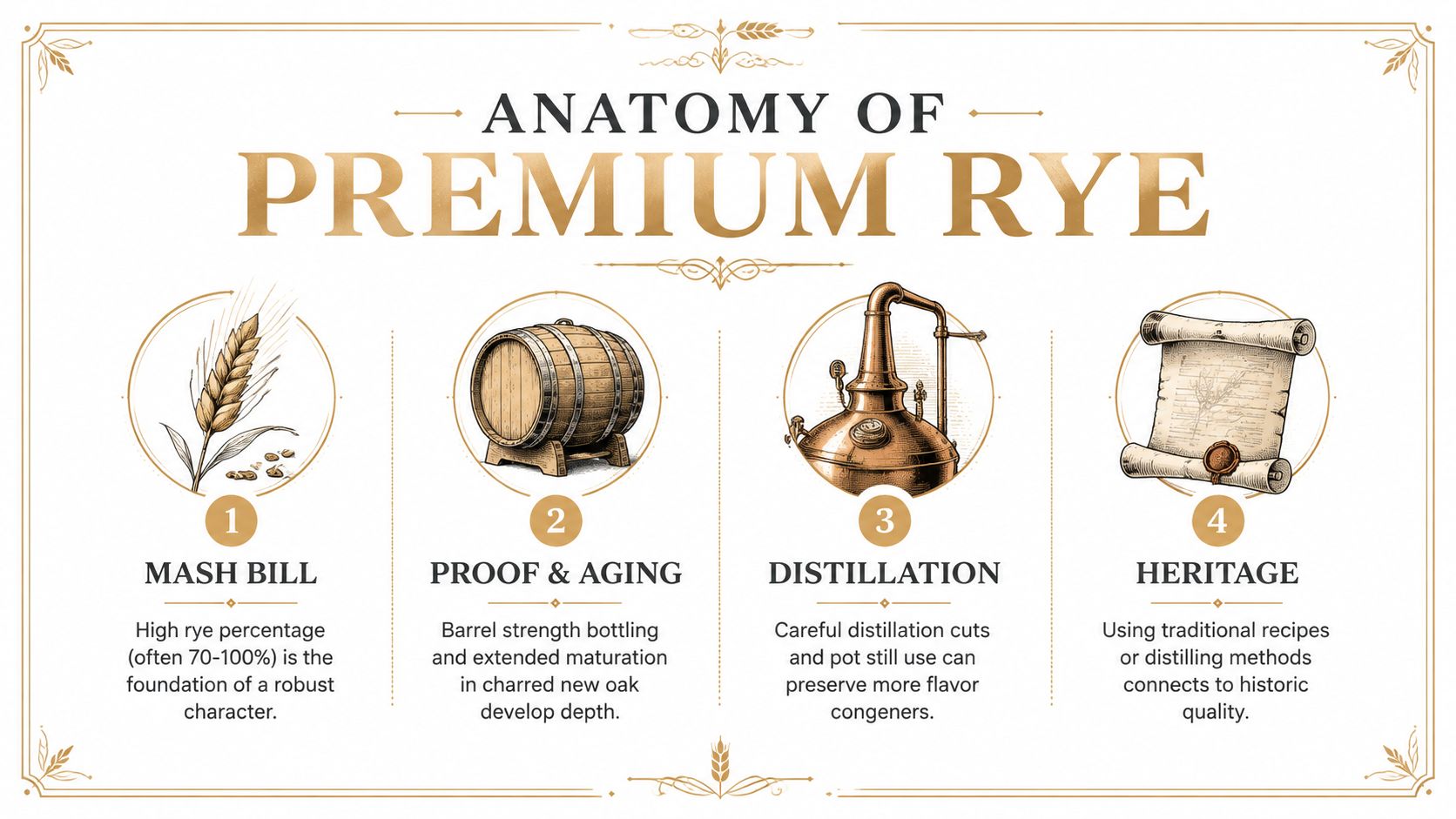
Start with the legal baseline, then move quickly beyond it. American rye whiskey must contain at least 51% rye grain in its mash bill, as explained in this guide to rye mash bills. That rule defines the category, but it doesn't tell you whether a bottle will taste lean and herbal, sweet and rounded, or forceful and peppery.
Read the mash bill as a flavor clue
A 51% rye recipe has room for other grains, often including corn and malted barley. That can create a softer foundation, with rye spice sitting alongside sweetness. A 95% rye recipe pushes the grain character much closer to the front. You may notice sharper pepper, herbal notes, and pronounced grain spice, while corn-driven sweetness recedes.
Neither recipe automatically produces better whiskey. They produce different starting points. A lower-rye mash bill may be ideal for someone moving from bourbon, while a high-rye or nearly all-rye recipe can reward a drinker who wants a drier, more aromatic profile.
Look for balance, not maximum force
High quality rye whiskey usually shows clarity of character. The spice should feel integrated rather than abrasive. Oak should add vanilla, toast, and structure without burying the grain. Sweetness should support the whiskey rather than cover rough edges.
A useful tasting question is simple: does each component have a role? If pepper dominates the nose but gives way to citrus, mint, caramel, or baking spice on the palate, the whiskey has more to show you. If alcohol heat overwhelms every other sensation, the bottle may need water, more time in the glass, or a different drinking occasion.
The practical test: Quality isn't the loudest flavor. It's the point where grain, oak, proof, and time stop competing and start working together.
Price can't answer that question by itself. Independent market estimates place global rye whiskey at roughly $4.82 billion in 2025 with an 8.3% CAGR projected through 2033, while another estimate places the category at $1.8 billion in 2025 and $2.9 billion by 2034. These estimates differ considerably, but both describe a market expanding toward premium and ultra-premium releases, as discussed in this rye whiskey market analysis. Growth may give you more ambitious bottles to explore, but your palate still decides whether the price feels justified.
How Production Shapes Quality
A bottle's flavor begins long before it reaches a barrel. The distiller chooses the grain, manages fermentation, selects the distillation cuts, fills the cask at a particular strength, and decides when the whiskey has developed enough to bottle. Each choice leaves a trace.
Grain and fermentation establish the identity
The mash bill determines the broad direction, but grain quality and variety influence the details. Heirloom rye can bring a distinctive grain expression. Malted rye may contribute a rounder, more cereal-led character. Hybrid recipes give craft distillers another way to combine rye's spice with fruit, floral notes, or a softer texture.
Fermentation matters because yeast and time create flavor compounds before the spirit ever touches oak. A distiller who protects those aromas can produce a whiskey that tastes grain-forward and vivid, rather than relying on barrel extraction to supply all the complexity. The whiskey grain bill guide offers useful background for understanding how these grain decisions shape the final profile.
Distillation then determines how much of that character survives. Careful cuts remove unwanted notes while retaining desirable flavor compounds. Some premium rye producers favor lower distillation proofs or pot still methods because those choices can preserve a more expressive spirit, though the still design alone doesn't guarantee quality.
Oak has to frame the rye
Premium rye is commonly matured in new, charred American oak. That wood contributes vanillin, syringaldehyde, tannins, and toasted-oak flavors. The distiller's challenge is to extract enough oak to give the whiskey depth without allowing wood to erase the grain.
Barrel-entry proof plays a major role. Lower entry proofs such as 105 to 115 can increase water-mediated extraction of oak lignin and tannins, helping soften rye's sharper edges and integrate them with vanilla and toast, according to the Bulleit Rye fact sheet. Higher entry proofs can slow that balance and may leave the whiskey hotter or less cohesive.
Time is not a simple score
Longer aging can deepen a rye, but age isn't a guarantee of refinement. A well-managed younger whiskey may taste focused and lively, while an older one can become overly woody if the barrel overwhelms the spirit. Climate, warehouse placement, barrel size, entry proof, and the distillate itself all influence the result.
Taste the finished whiskey rather than treating an age statement as a verdict. Ask whether the oak has become part of the rye's structure, whether the spice remains recognizable, and whether the finish feels developed instead of merely dry.
Sensory Markers of Premium Rye
Two glasses can both smell “spicy” and still tell completely different stories. Average rye often presents one dominant impression, such as raw pepper, hot alcohol, or drying oak. High quality rye whiskey tends to unfold in layers, giving you a reason to return to the glass.
Nose
Begin with the first aroma, then wait. Black pepper, anise, mint, or clove may appear immediately, followed by vanilla, caramel, dried fruit, orange peel, or fresh herbs. Fruity, floral, nutty, and creamy profiles are becoming more visible as producers use heirloom rye, malted rye, and hybrid mash bills, according to this industry coverage of American whiskey in 2026.
That broader range matters because rye doesn't have to smell aggressive to be authentic. A floral or creamy note doesn't make it less rye-like. It may show that the producer has shaped the grain and fermentation character with care.
Palate
Take a small sip and let it move across your tongue. A balanced rye might begin with light sweetness, develop pepper and baking spice through the middle, then reveal citrus, mint, toasted grain, or oak as the sip expands.
Average whiskey can feel hot at the beginning and thin in the middle. Premium whiskey usually gives the alcohol a job. Proof carries flavor, but the spirit should remain readable beneath the heat. You should be able to identify at least a few distinct sensations rather than one undifferentiated burn.
| Tasting phase | What to notice in a refined rye | Warning sign |
|---|---|---|
| Nose | Layered grain, spice, fruit, herbs, or oak | One sharp solvent-like note |
| First sip | Clear entry with controlled heat | Immediate harshness |
| Mid-palate | Texture and developing flavor | Thinness or flat sweetness |
| Finish | Clean persistence with integrated oak | Bitter wood or unresolved alcohol |
Finish
The finish often separates an enjoyable rye from a memorable one. High quality rye can linger with pepper, citrus, mint, caramel, or oak, but those flavors should resolve cleanly. A finish that turns bitter, metallic, or aggressively hot may point to poor integration, although a drop or two of water can reveal whether the problem is proof rather than the spirit itself.
Awards coverage now shows rye winning across regions and styles, with expressions from the United States, Scotland, the Netherlands, Spain, Finland, and Tasmania. That range reinforces a useful point: quality markers include balance and definition, not a single national flavor template.
A Practical Method for Tasting and Evaluating
You don't need a collector's cabinet to evaluate rye. You need a quiet moment, a tulip-shaped or rocks glass, a little water, and a repeatable method.
Use your eyes and nose first
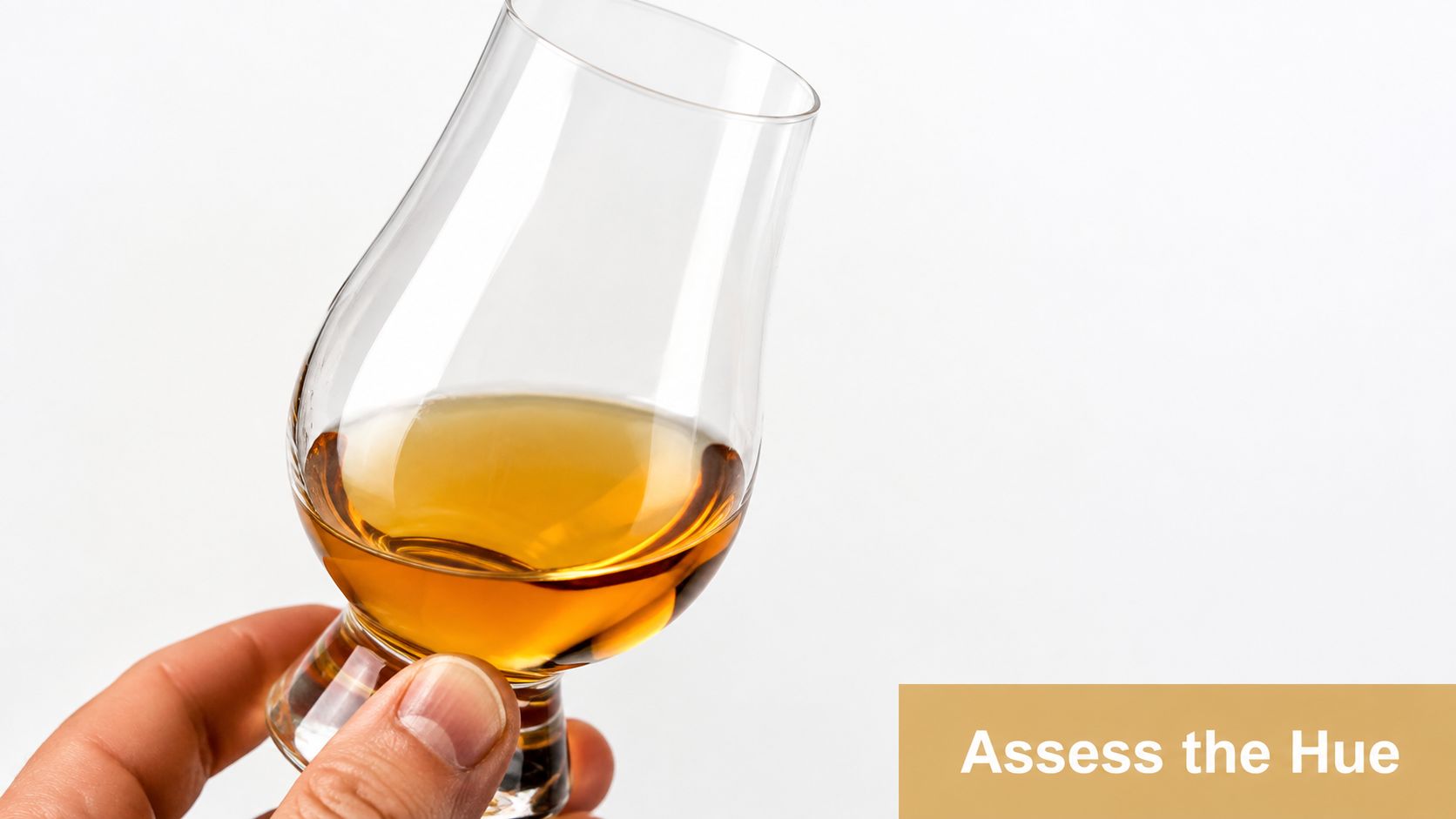
Pour a small amount and hold the glass against a white background. Look for clarity and color, but don't treat a darker shade as proof of better whiskey. A slight haze can appear in an unfiltered whiskey, while clarity may reflect filtration. Neither appearance tells you whether the liquid tastes balanced.
Swirl gently, then smell from a short distance. Deep inhalation can flood your nose with alcohol and hide subtler aromas. Take several brief sniffs, allowing the whiskey to sit for a few minutes, and write down the changes.
Taste in stages
Take a small sip and let it coat your mouth. Separate the experience into entry, mid-palate, and finish. Record concrete words such as “black pepper,” “orange peel,” “vanilla,” “mint,” “dry oak,” or “cinnamon,” rather than writing only “good” or “bad.”
For new drinkers, a bottle around 90 proof, or 45% ABV, is often a comfortable starting point because it lets the rye spice show without overwhelming heat, as recommended in this beginner's whiskey guide. Once you can identify the base flavors, compare the same style at a higher proof. Add a few drops of water and note whether the whiskey opens, becomes sweeter, or loses definition.
Turn tasting into practice
The whiskey tasting guide can help you structure your notes. Use the same glassware and tasting order when comparing bottles. That consistency makes differences easier to notice.
A simple discipline: Taste before reading the label's story. Your first impression should come from the whiskey, not the bottle's reputation.
Repeat the tasting on another day. Fatigue, food, temperature, and mood can change perception, so one pour shouldn't become an absolute judgment.
Smart Buying Strategies for Quality Rye
A good purchase starts with label literacy. The front label may emphasize a historic name, a farm, a barrel type, or a dramatic proof, but the back label often tells you more about who made the spirit.
Separate distilling from bottling
Look for the phrase “distilled by.” If a label doesn't clearly use that language, a practical rule is to assume the whiskey was sourced rather than distilled by the brand, as explained in this guide to American rye whiskey rules. Sourced whiskey isn't automatically poor. A brand can select, age, blend, and bottle sourced spirit thoughtfully. The distinction tells you what kind of production story you're buying.
Farm-to-bottle claims deserve the same careful reading. Whisky Advocate highlights Frey Ranch Bottled in Bond as a craft rye made with 100% rye from the distillery's own farm in Fallon, Nevada. The expression is 50% ABV and received a score of 93, details available in Whisky Advocate's coverage of rye's roots. Those specifics are more useful than vague language about authenticity because they identify the grain source and bottling strength.
Match the bottle to your purpose
A bartender bottle should mix well and offer dependable flavor. A cask-strength release may reward slow sipping but can demand water, food, or patience. An age statement can provide useful context, yet the absence of one doesn't automatically disqualify a bottle if the distillery explains its process and the whiskey tastes integrated.
The current market includes bottles around $30 aimed at cocktails, $80 cask-strength releases, and a broader middle tier, according to recent buyer-guide coverage cited in the market discussion. Don't assume the highest price delivers the most pleasure. Compare what the bottle promises with what you want to drink.
Before buying a rare or expensive release, check production details, independent tasting notes, and the bottle's provenance. An auction reference such as the January 2026 Sotheby's auction digest can help you understand how collectors describe and evaluate sought-after American whiskey, though auction attention shouldn't replace your own tasting judgment.
Sharpening Your Palate Through Blind Tasting
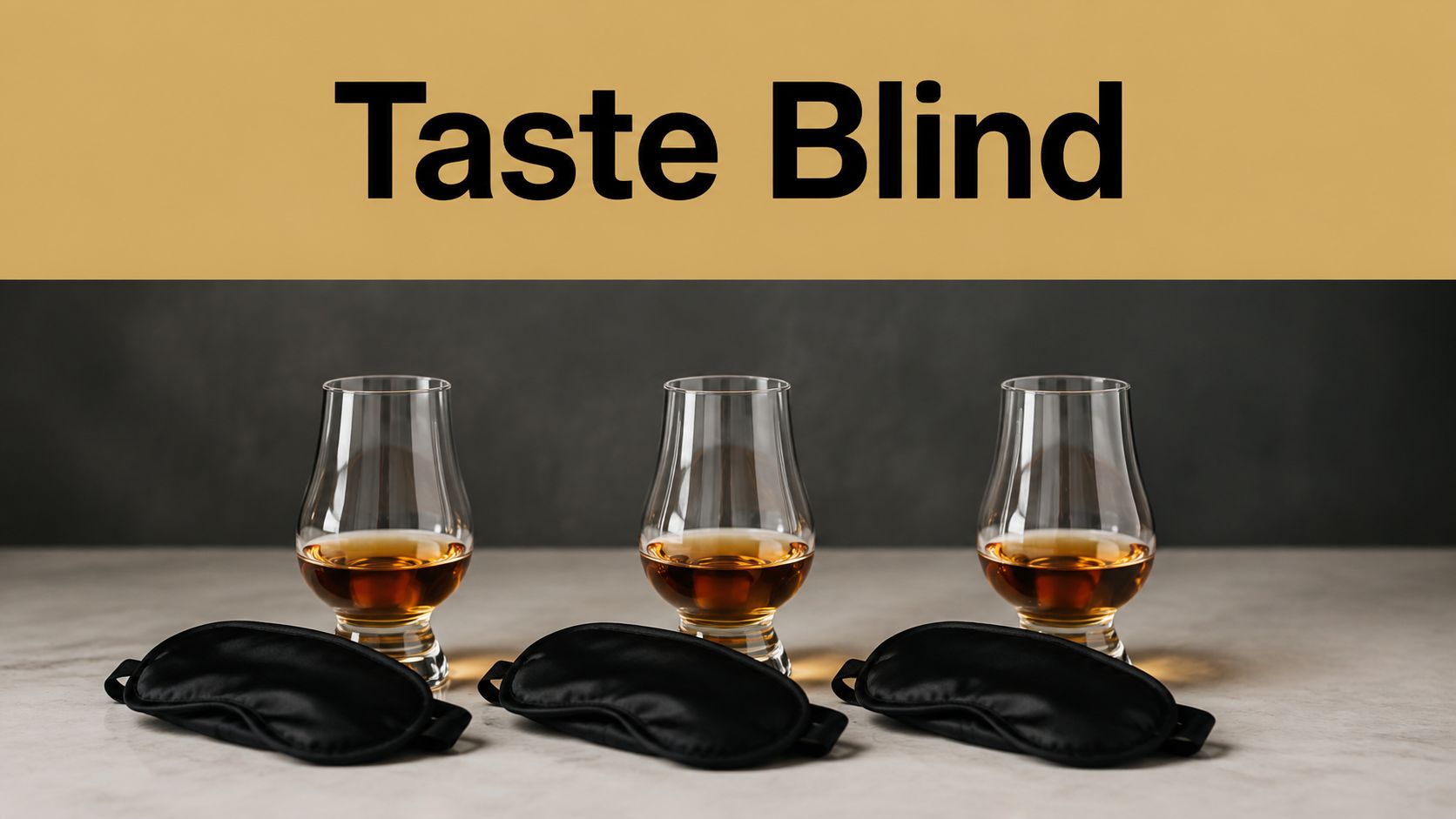
Blind tasting removes the easiest source of confusion: expectation. When you don't know the brand, price, age, or packaging, you have to judge the aroma, texture, spice, sweetness, and finish in front of you.
Start with two or three ryes poured into identical glasses. Ask a friend to hide the bottles, or use numbered samples. Before revealing anything, write down the mash-bill impression you expect, the proof range you sense, and whether the whiskey seems young, mature, sweet, dry, floral, herbal, or oak-led.
Build recognition through repetition
A single tasting gives you an impression. Repeated comparisons create a reference library. You begin to recognize how a lower-rye recipe differs from a high-rye recipe, how a lighter proof carries spice, and how barrel influence changes the texture and finish.
Blind tasting also exposes personal bias. You may prefer a less expensive cocktail rye to a rare bottle, or you may discover that high proof tastes better with water than neat. Those are useful findings because quality has both technical and personal dimensions. A well-made whiskey can be excellent even when it isn't your favorite style.
Add structure and conversation
A tasting table with prompts for aroma, palate, and finish keeps the session focused. After writing your notes, reveal the samples and compare your impressions with the actual whiskey type, age, and proof. Games that ask you to guess those details can turn tasting into a measurable exercise without pretending that palate recognition is an exact science.
A quarterly subscription can make that practice consistent. Blind Barrels sends members four blind samples from small American craft distilleries every quarter, with tasting tables, QR-code sample reveals, bottle access, and a game built around guessing age, proof, and whiskey type. It's one practical way to compare craft ryes without letting the label steer your first reaction.
Discussing impressions with other drinkers adds another useful layer. Someone else may identify dried fruit where you noticed caramel, or floral notes where you found herbs. Over time, those conversations expand your vocabulary and make the sensory markers of high quality rye whiskey easier to recognize.
Blind Barrels offers quarterly blind whiskey tastings featuring four samples from small American craft distilleries, with guided aroma, palate, and finish notes plus reveal tools and palate games. Visit Blind Barrels to turn your next rye tasting into a hands-on way to learn what you enjoy.