

You pour bourbon into a wide rocks glass, take a sip straight from the bottle's serving strength, and get something closer to solvent than caramel. Your throat warms, your eyes narrow, and whatever flavor you expected disappears behind the alcohol.
That doesn't mean you bought a bad whiskey, or that you need to learn to tolerate an unpleasant drink. Learning how to make whiskey taste good starts with controlling the serving conditions, then finding the style you enjoy.
The Four Changes That Fix Most Harsh Pours
Before adding a mixer, check the glass, pour size, temperature, and proof. They work together: a generous pour of strong whiskey in a warm tumbler creates a different experience from a modest pour in a tasting glass.
Keep the bottle constant while you adjust those conditions. Otherwise, you won't know whether you preferred the whiskey or preferred how you served it.
Starting Points for the Four Variables
| Variable | Starting point | Why it matters |
|---|---|---|
| Glass | Tulip or narrow-mouth tasting glass | Concentrates aroma; wide tumblers let volatile compounds escape more freely |
| Pour size | 1 oz (30 mL) neat; 10 mL for side-by-side comparisons | Smaller pours discourage large, hot sips and leave room to swirl |
| Temperature | Comfortable room temperature, without a chilled glass | Cold mutes aroma; let a chilled glass warm a few minutes in your hand |
| Proof check | 80 proof = 40% ABV; 100 proof = 50% ABV | Higher proof signals more potential heat, so start with lower-proof bottles |
A Glencairn glass is a useful tasting tool, but a small, clean wine glass can work too. Don't buy special equipment before trying the narrow-opening glass you already own.
The smaller pour isn't chemically less alcoholic. Its advantage is practical: you're more likely to take manageable sips, and you have space to add water without filling the glass excessively.
Read Strength Before Judging Quality
The U.S. Alcohol and Tobacco Tax and Trade Bureau's distilled spirits FAQs define proof as twice alcohol by volume, so an 80-proof whiskey is 40% ABV, while a 100-proof whiskey is 50% ABV.
Cask-strength whiskey often sits around 110 to 130 proof, equivalent to approximately 55% to 65% ABV, as described in CNN's explanation of whiskey dilution. That strength can make aromas harder to assess when alcohol dominates your attention.
Proof predicts potential heat, not quality. A high-proof American craft whiskey from a producer such as Frey Ranch deserves careful handling, not an endurance test.
Practical rule: Change one variable at a time. A better-tasting pour is useful evidence only when you know what you changed.
Try the same whiskey in matching glasses, leaving one untouched while you adjust the other. Compare a narrow glass against a tumbler first, then test water or temperature separately, recording which change made the drink more enjoyable.
How to Taste Whiskey Step by Step
You don't need a vocabulary full of obscure fruit and antique furniture. Start with familiar categories: sweet, grainy, fruity, spicy, woody, or smoky.
Published bourbon sensory work in the Journal of Agricultural and Food Chemistry used 10 mL portions in tasting glasses with loose lids to standardize aroma capture. At home, consistency matters more than copying a laboratory: keep the glass, serving conditions, and sequence steady.
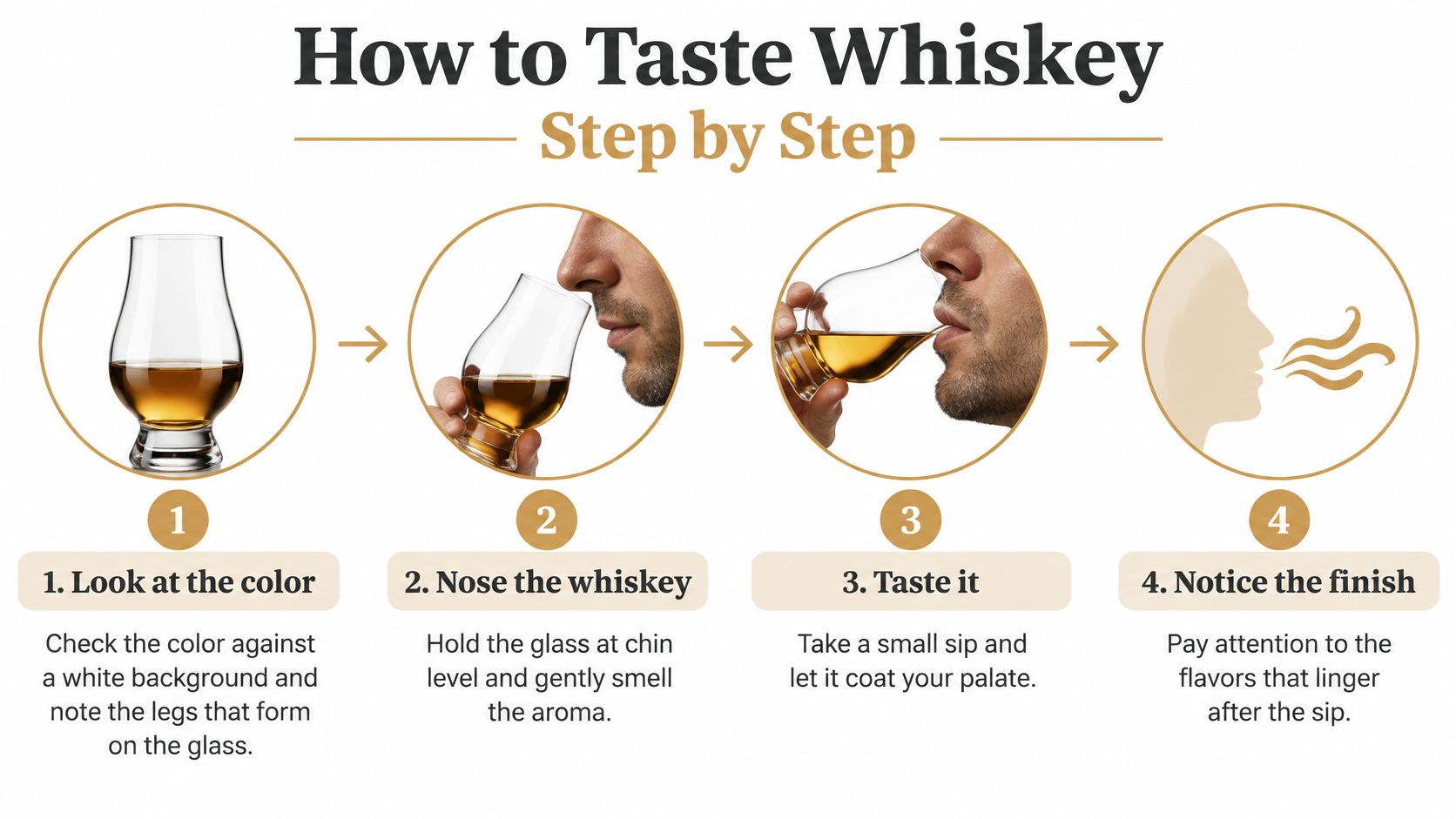
Follow the Sensory Sequence
- Look against a white background. Notice the color, then tilt the glass and watch the trails, sometimes called legs, run down its sides. Treat these as observations, not a shortcut to judging age or quality.
- Start nosing at chin height. Gently waft air toward your face instead of taking a deep breath inside the glass. Name the first three aromas you recognize, even if they're just grain, sweetness, and wood.
- Pause, then smell again. Try waiting 10 to 15 seconds before your next gentle sniff. Moving away from the glass helps you avoid repeatedly overwhelming your nose with alcohol.
- Take a small sip and coat your palate. From a roughly 10 mL comparison portion, sip only what feels comfortable, hold it briefly, and swallow. You don't need to drink the whole portion at once to understand it.
- Track the order of flavors. Many whiskeys seem sweet initially, followed by spice and then oak or smoke, but yours may behave differently. Recording the sequence is more useful than searching for a supposedly correct tasting note.
- Notice the finish. Pay attention to how long the flavor and warmth remain, and whether your mouth feels dry, sweet, oily, or clean. Separate pleasant lingering spice from a burning sensation you don't enjoy.
- Reset before changing samples. Drink water and eat an unsalted cracker. This gives the next whiskey a fairer chance without introducing strong competing flavors.
Give Each Sample a Fair Chance
Taste lower-proof bottles before stronger ones, and lighter styles before heavily peated or oak-driven pours. A forceful whiskey can make a delicate one seem empty when you reverse that order.
Avoid judging entirely from the first sip, wearing fragrance, or switching glassware between samples. Skip strongly sweet or spicy food immediately beforehand, and wash scented lotion from your hands.
A useful bourbon note might read: vanilla on the nose, caramel as the sip settles, then dry oak after swallowing. If a Southern Star bourbon instead reminds you of toasted grain and baking spice, write that down. Your notes should describe your experience, not imitate the bottle's label.
How Much Water to Add and When
You pour a whiskey that tastes hot, add a little water, and the aromas shift. Proof, glassware, water, and temperature all affect what you notice, so change one at a time and compare each pour with its original.
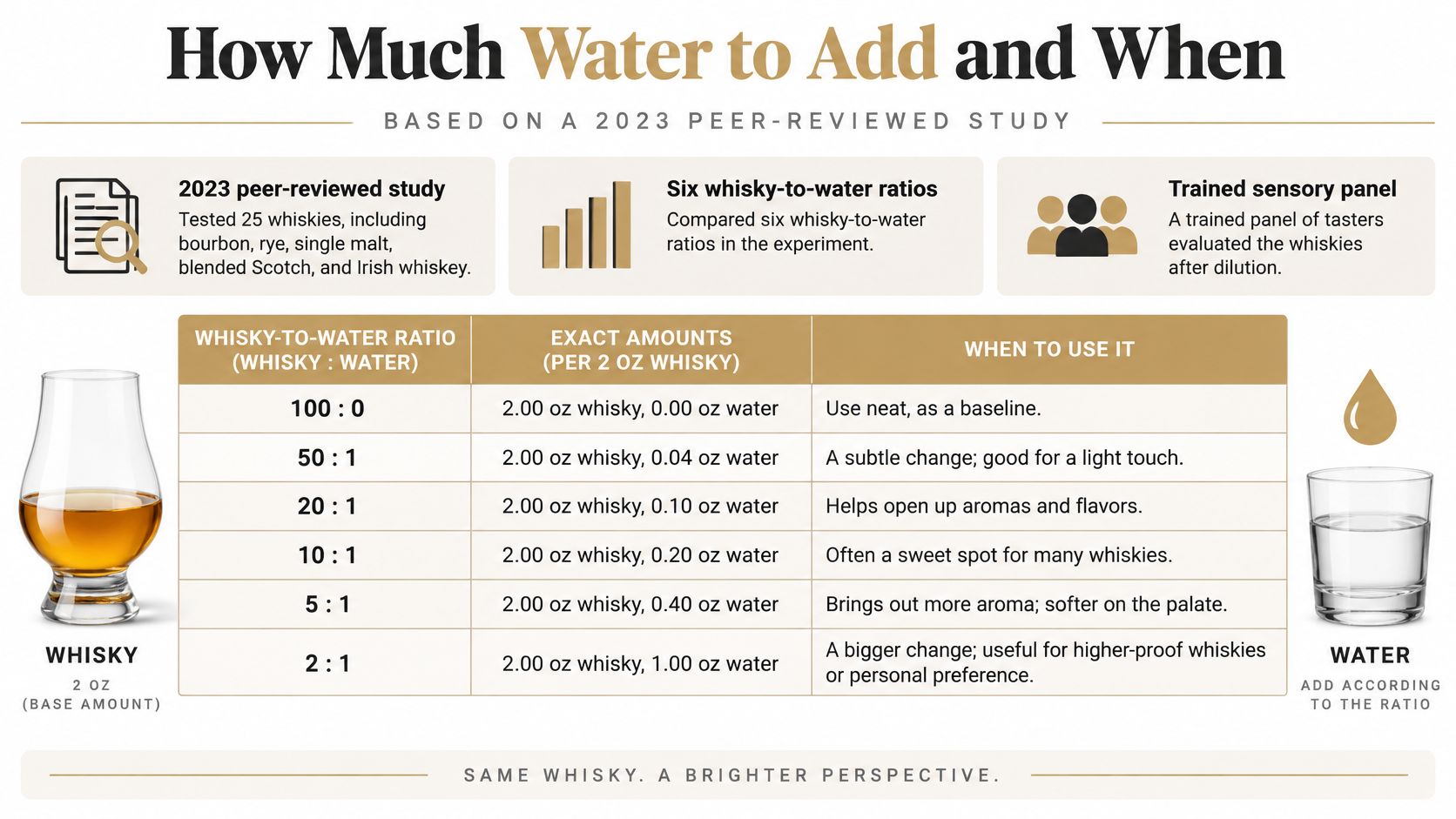
A 2023 peer-reviewed study published in Foods examined 25 whiskies, including bourbon, rye, single-malt Scotch, blended Scotch, and Irish whiskey, and assessed six whiskies: three bourbons and three Scotches with a trained panel of 20 people. The ratios shown below range from undiluted whiskey to an equal measure of whiskey and water. The study's broader finding was that heavier dilution tended to make whiskies within a style seem more alike, rather than preserving every distinction.
Water can soften a hot pour, but more is not automatically better. Your aim is to find the point where the alcohol feels comfortable and the flavors you enjoy remain clear.
Whisky-to-Water Ratios and What They Change
These ratios describe the proportion of whiskey to added water, not the final alcohol percentage. Treat them as tasting checkpoints, not fixed recipes.
| Whisky:water ratio | What to notice | Useful comparison |
|---|---|---|
| 100:0 | Undiluted, at bottled strength | Start here to judge the whiskey as poured |
| 90:10 | A small addition may shift the aroma balance | Look for floral, fruity, or sweet notes |
| 80:20 | Compare which flavors remain distinct | Try this if the neat pour feels too strong |
| 60:40 | Substantial dilution can soften the whiskey and blur differences | Consider it when comfort matters more than fine distinctions |
| 50:50 | A large addition may make subtle differences harder to notice | Use as a contrast, rather than a default for judging nuance |
Add Water Until the Flavors Separate
Water changes the balance of aromas above the whiskey. Some compounds become less concentrated as water is added, while others become relatively more prominent. The result can be a new impression, not just a weaker version of the same sip.
Use neutral-tasting still water and a clean dropper. Taste the whiskey neat, add a few drops, swirl gently, then reassess its aroma, flavor, and finish before adding more. Keep the glass and temperature steady during this comparison, so water is the only change. If you also want to explore how dilution affects a pour, this guide to whiskey and water offers more context.
Stop when the alcohol feels comfortable and you can still distinguish the flavors you enjoy.
Cask-strength whiskey often leaves more room for adjustment than a standard bottling. Still, trust your palate over a chart; if the whiskey already tastes balanced, leave it as it is.
Ice is a separate test because it cools the whiskey while gradually adding water. Compare an untouched pour with one containing a single cube, and notice how each changes over time. This helps you separate the effect of temperature from dilution and decide which version suits you.
Matching Your First Whiskey to Your Palate
Do you usually prefer caramel desserts, peppery food, toasted cereal, or smoky flavors? That's a more useful starting question than asking which whiskey a beginner is supposed to like.
Many new drinkers find sweet, gentle styles approachable, but you don't have to follow that path. If you dislike sweet drinks and love savory spice, rye may suit you sooner than bourbon.
Whiskey Styles for a First Tasting
The strength entries are shopping starting points, not guarantees about every bottle in a category.
| Style | What to expect | Good first pick | Typical bottling strength |
|---|---|---|---|
| Bourbon | Sweet corn, vanilla, caramel, and oak; mash at least 51% corn | Entry-level bourbon with a clear vanilla profile | 80–100 proof |
| Rye | Spicy, peppery, and often drier; mash at least 51% rye | Lower-proof rye tasted after a bourbon | 80–100 proof |
| Single malt Scotch | Malty, honeyed, sometimes smoky or peated | Unpeated Speyside-style bottle | Choose a standard-strength rather than cask-strength release |
| Irish whiskey | Cereal and fruit notes, often with a lighter impression | Triple-distilled blend | Start with a standard-strength bottling |
| Cask strength | Intense and concentrated; often 55–65% ABV | Make a cautious aroma assessment, then add water before further tasting if needed | Approximately 110–130 proof |
Bourbon's flavor has a production foundation: the TTB's whiskey classification document requires at least 51% corn, distillation to no more than 160 proof, entry into charred new oak at no more than 125 proof, and at least two years of maturation for straight bourbon.
Corn and new oak help explain the familiar sweet-grain, vanilla, and caramel impressions. They don't make every bourbon taste alike, because distillers also choose grain proportions, yeast, barrels, and maturation conditions.
Explore Craft Without Buying the Story
The 2024 Craft Spirits Data Project reported 3,069 active U.S. craft distillers in 2023, an 11.5% year-over-year increase, according to Market Watch's account of the craft category. The Craft Spirits Association's definition concerns production scale and independent ownership, not whether a label looks handmade.
Use producers such as Frey Ranch, Southern Star, and Silver Brothers as names to explore, not promises that every expression will match your preferences. Read the whiskey type and strength before choosing.
A blind-sample set from small American craft distilleries, such as Blind Barrels offers, is one option alongside a shop tasting or samples shared responsibly with friends. Record aroma, taste, and finish before revealing the label; this guide to choosing a whiskey you enjoy can help narrow the alternatives.
Start with one bourbon and one rye. That contrast teaches you more about your palate than buying several similar bourbons at once.
Food Pairings That Bring Out Whiskey Flavor
Match intensity, then look for shared flavors. Delicate food can disappear beside an assertive whiskey, while a very sweet dessert can make a comparatively dry pour seem sharp.
You're not trying to make the food and whiskey taste identical. A good pairing might repeat a nutty flavor, introduce a pleasant contrast, or make the finish feel more balanced.
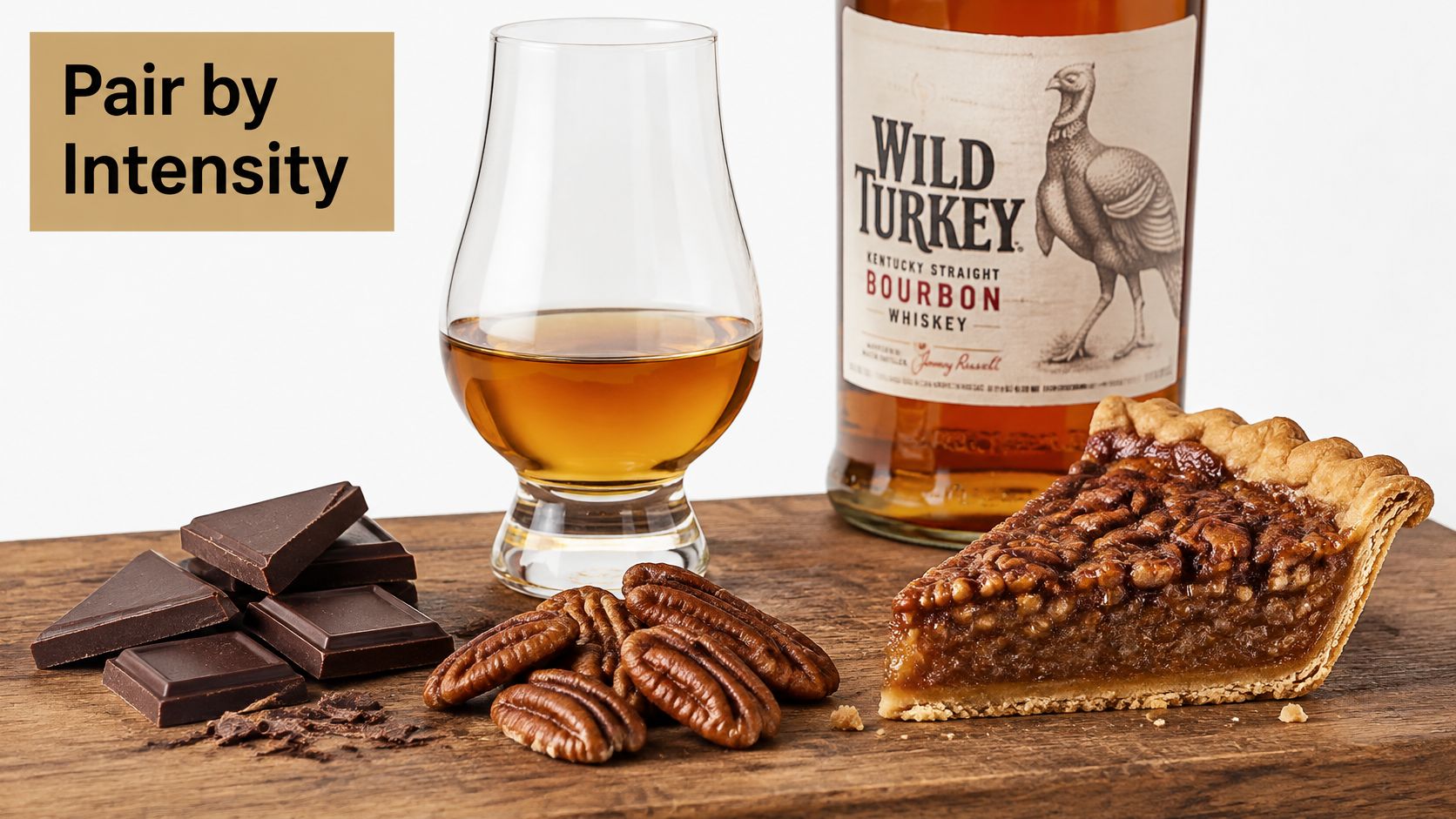
Match the Food to the Style
- Bourbon with nuts and chocolate: Try dark chocolate around 70% cacao, toasted pecans, or pecan pie. Nutty and caramel flavors can complement a vanilla-forward bourbon, although very sweet pie may overwhelm a delicate pour.
- Rye with savory richness: Sharp cheddar, smoked meats, and mustard provide fat, salt, and tang alongside the whiskey's spice. Keep the mustard modest so it doesn't dominate.
- Single malt with smoke and salt: Lightly peated Scotch can work with smoked salmon, aged hard cheese, or dark chocolate with sea salt. Begin with a small bite because smoke can become overpowering on both sides.
- Irish whiskey with lighter snacks: Salted nuts or fresh oysters leave room for cereal and fruit notes. Choose a pour you already find comfortable without food.
A strip of orange peel can make citrus easier to notice in bourbon. Express it gently over the glass, and avoid squeezing in juice unless you intend to make a cocktail.
For dessert, adjust the whiskey with a few drops of water before reaching for more sweetness. The food and whiskey pairing guide offers other combinations to test.
Use the Three-Bite Test
Taste the whiskey before eating, then take three small bites of your chosen food and sip again. Note whether the pairing reveals fruit, softens bitterness, or makes everything seem dull.
Drink between bites rather than alongside a mouthful of very spicy food. Chili heat can make the next sip feel harsher, so save that comparison for another meal.
Fixing Harsh, Flat or Overpowering Pours
A burning sip is the most common reason a beginner stops exploring a bottle. Before deciding the whiskey is bad, identify the symptom and make a targeted adjustment.
Many serving changes are quick, but don't assume every unpleasant finish comes from glassware or temperature. A bottle can contain flavors you dislike.
Symptoms, Causes and Fixes for a Disappointing Pour
| Symptom | Likely cause | Fix |
|---|---|---|
| Burns the throat and hides the flavor | Proof is high or the sip is large | Cut the pour to 1 oz, take smaller sips, and add a few drops of water |
| Tastes thin or flat | Served too cold or diluted too much | Remove the ice and let the remaining whiskey reach room temperature; restart with a fresh sample if over-diluted |
| Overly sweet and one-note | Sweetness without enough contrast for your palate | Add a strip of orange peel or try a rye |
| Harsh, metallic finish | Serving conditions or spicy food may distort perception; a wide glass can complicate aroma assessment | Try a narrow glass and reset with water and an unsalted cracker |
| Nose smells of nothing | Glass too full, whiskey too cold, or your nose overwhelmed | Let it warm a few minutes, leave more headspace, and smell gently near the rim |
Removing ice stops further melting, but it doesn't undo water already added. If a sample has lost its character, use it for a mixed drink rather than repeatedly trying to repair it.
Likewise, a metallic impression isn't a reliable diagnosis of the wrong glass. If it persists in a clean glass with a rested palate, treat it as a reason to try another whiskey.
Separate the Bottle From the Setting
Check your surroundings before abandoning a Frey Ranch or Southern Star expression. Perfumed hands interfere with aroma, a cold glass suppresses it, and poor lighting makes visual comparisons harder.
A useful limit: If three deliberate changes don't improve the experience, choose another style instead of forcing yourself to finish.
For a cask-strength pour, measure water additions rather than dropping in ice and hoping for balance. For an overly sweet pour, don't automatically add honey.
If you decide you'd rather make a cocktail, you can find inspiration for honey cocktails from Topanga Quality Honey. Use those ideas when sweetness suits the drink, not as a universal remedy for whiskey you dislike.
Start a Three-Bottle Tasting Log This Week
A short tasting log will teach you more than trying to remember which bottle tasted smooth last month. Choose a bourbon, a rye, and either a single malt or an Irish whiskey, preferably in the 80 to 100 proof range for a more manageable comparison.
You don't need to open them all on the same evening. Separate sessions make it easier to notice your preferences without turning the exercise into a drinking challenge.
Make the Comparison Repeatable
- Choose contrasting bottles. Compare styles before chasing subtle differences between similar releases. A craft bourbon, a rye, and a lighter malt or Irish whiskey give you distinct reference points.
- Keep the setup steady. Use the same clean tasting glass and a 1 oz pour for each session. Record the bottle's proof, water drops added, aroma notes, flavor order, and whether the finish feels brief, lingering, pleasant, or drying.
- Review your choices after a week. Ask which whiskey you wanted to return to and which only became enjoyable after adjustment. Preference matters more than how many tasting notes you identified.
You can also ask someone to conceal the labels, or use a blind-sample kit instead of buying full bottles. Write your impressions before revealing the whiskey, then compare your expectations with what you enjoyed.
Keep the log simple enough that you'll continue using it. A note such as toasted grain, orange, dry finish, better with water is useful because it helps you choose your next bottle.
Drink responsibly, avoid driving after drinking, and only participate if you're of legal drinking age where you live. The habit worth building is thoughtful observation, not finishing every pour.
Blind Barrels offers blind whiskey samples from small American craft distilleries, along with a tasting table for recording aroma, flavor, and finish. Visit Blind Barrels to explore a guided way to compare pours, test your preferences, and discover what makes whiskey taste good to you.