

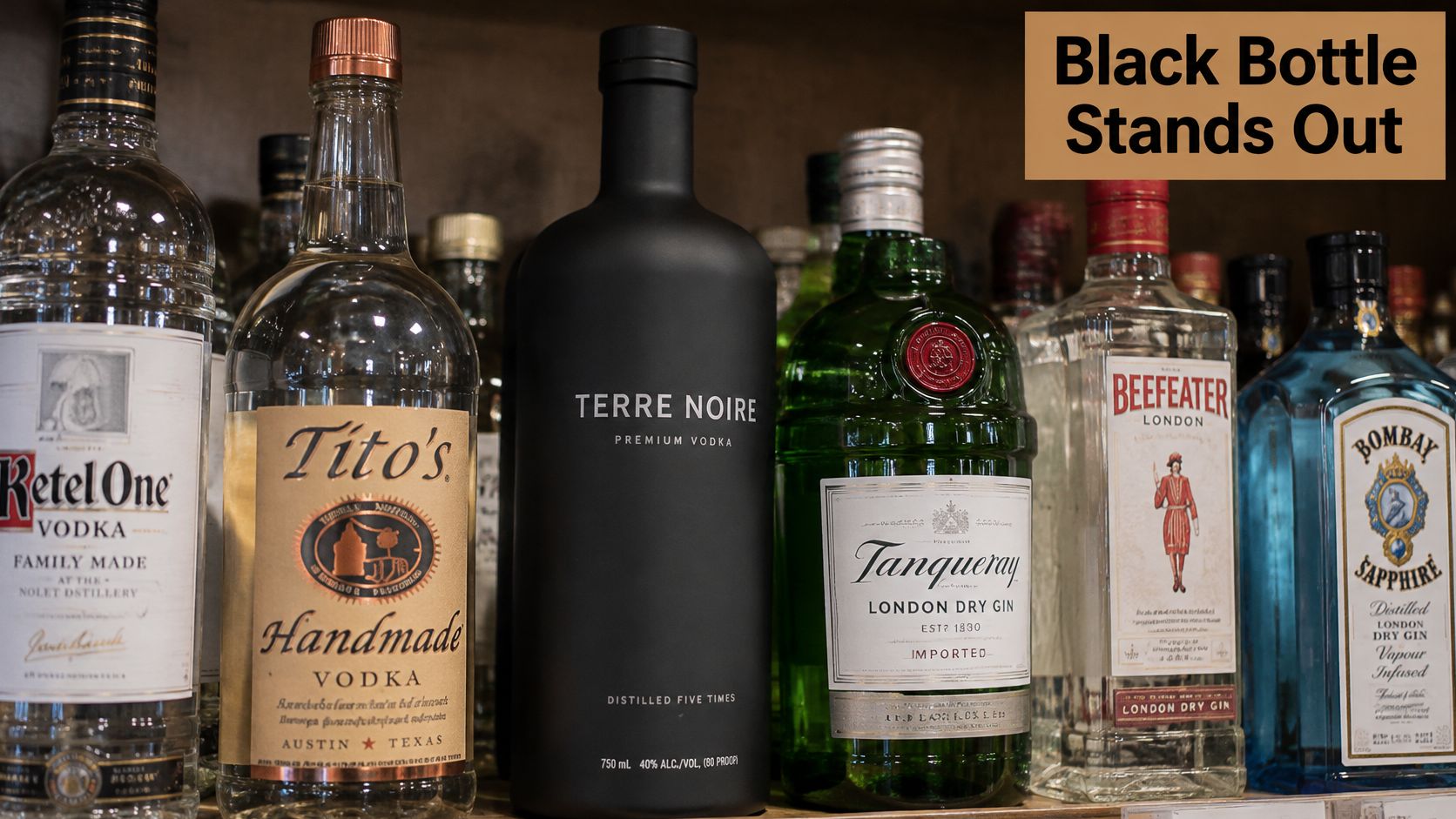
You're standing in the whiskey aisle trying not to look lost. Rows of clear glass show off amber liquid, green bottles glow under the lights, and then one matte black shape stops your eye completely. You can't see the color, the fill level, or anything about the liquid, yet you're already reaching for it and wondering if it must taste better.
That moment is exactly why liquor in a black bottle is worth understanding slowly. The bottle is doing real work, some of it protective, some of it historical, and some of it purely persuasive. Once you can separate those jobs, you can enjoy the drama without mistaking it for proof of quality.
Why a Black Bottle Catches Your Eye on the Shelf
Walk slowly past a back bar at night and notice what happens. Clear bottles reflect the light, labels compete in bright colors, and liquids in shades of gold and copper all start to blur together. A black bottle cuts through that noise because it gives your eye almost nothing to process except silhouette, texture, and contrast.
Retail lighting makes the effect stronger. A glossy black surface throws back a sharp highlight, while a matte finish absorbs light and looks soft and heavy. Either way, the bottle reads as a solid object first and a container second, which is why it can feel more serious before you've read a word on the label.
What Your Brain Fills In
Because you can't judge the liquid, your brain fills the gap with associations. Black suggests formality, restraint, and expense in many product categories, from watches to cars. That doesn't mean the whiskey is better. It means your expectation has already shifted before the cork moves, and expectation shapes aroma, flavor, and how generous you feel about the finish.
That's the first lesson for a new drinker. Treat the pull you feel as information about design, not about taste. Four threads will help you read that design clearly:
- Heritage: One famous Scotch turned its bottle into its name and kept that identity for well over a century.
- Light chemistry: Dark glass can block a specific kind of damage, but it can't stop every kind.
- Craft branding: Small American distilleries use black to stand apart on crowded shelves.
- Serving skill: Your glass, water, and patience matter more than glass color once you pour.
Keep those threads separate and the shelf becomes easier to read. You'll still enjoy the mystery, but you won't pay for mystery alone.
The Original Black Bottle and Its Place in History
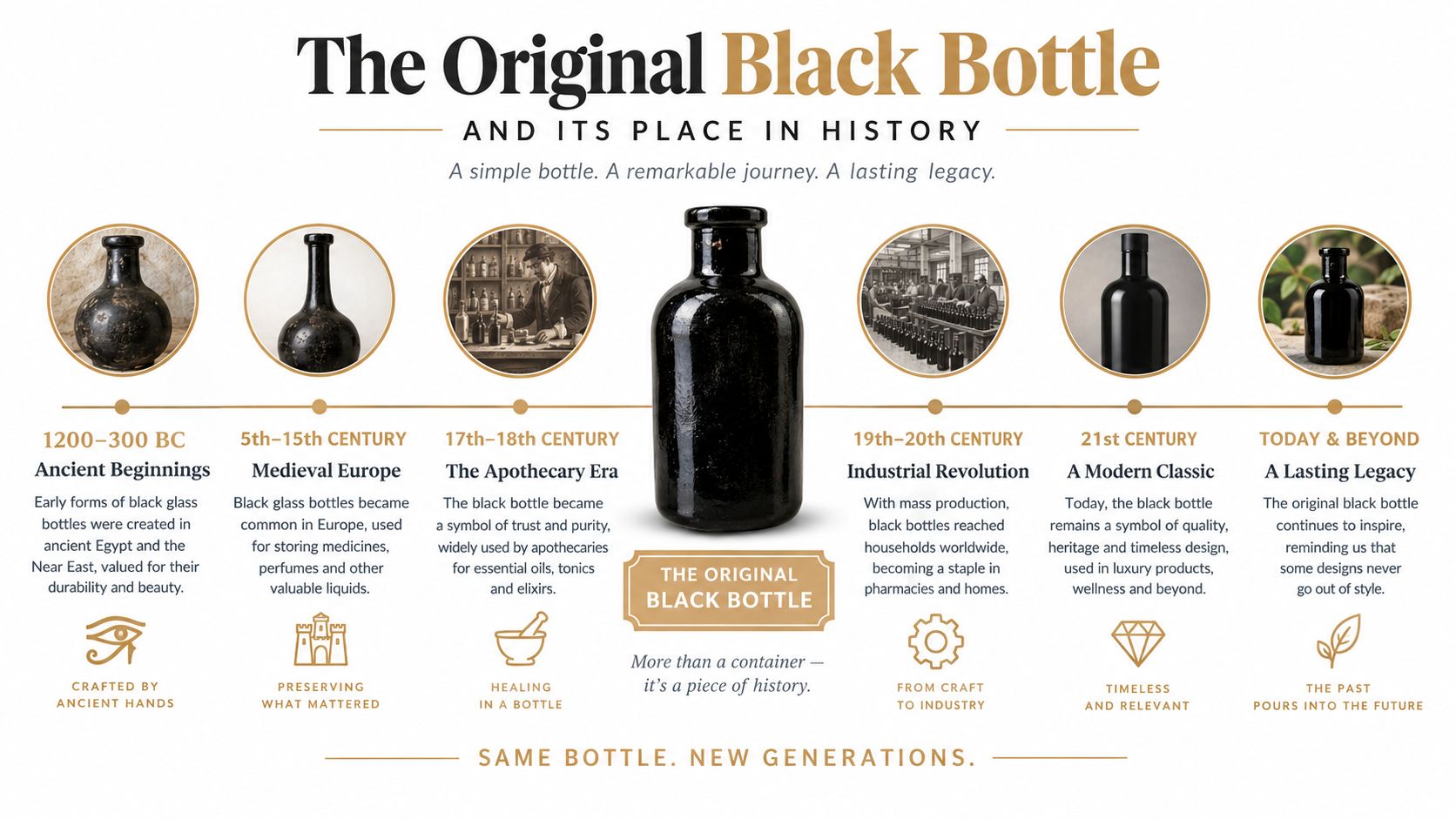
The clearest proof that a bottle can become a brand comes from Scotland. Black Bottle was introduced in Aberdeen in 1879 by brothers Charles, David, and Gordon Graham, whose family business had been tea blending, and shoppers adopted the nickname from its distinctive German black glass even though the original name was Gordon Graham's Special Liqueur, as traced in the documented history of Black Bottle Scotch.
Think about what that means in plain terms. Customers didn't remember a slogan or a family story first. They remembered the container on the shelf and asked for it by sight. Packaging stopped being decoration and became the fastest way to identify the whisky.
When War Changed the Glass
In 1914, the outbreak of World War I disrupted access to German made black glass. The company switched to dark green bottles because supply, not style, forced the decision. The name Black Bottle stayed anyway, which tells you how firmly the original look had settled in drinkers' minds.
Revival and Return
Two later turns kept that identity alive:
- The 1990 revival: Burn Stewart Distillers reformulated the blend around Islay single malts, giving the liquid a new direction while the historic name carried recognition forward.
- The 2013 to 2014 update: The blend and visual identity were refreshed and the black bottle was reinstated, drawing inspiration from an archival bottle dated 1906.
A package can outlast its original recipe, its original supplier, and even a long period when it isn't black at all.
That's the heritage modern producers borrow when they choose dark glass. They're not copying a recent fashion. They're tapping a lesson older than most distilleries operating today, which is that a recognizable bottle shape and color can hold brand equity while owners, blends, and markets change around it. For you as a buyer, that history is interesting, but it still isn't a tasting note.
What Black Glass Does to Protect the Whiskey
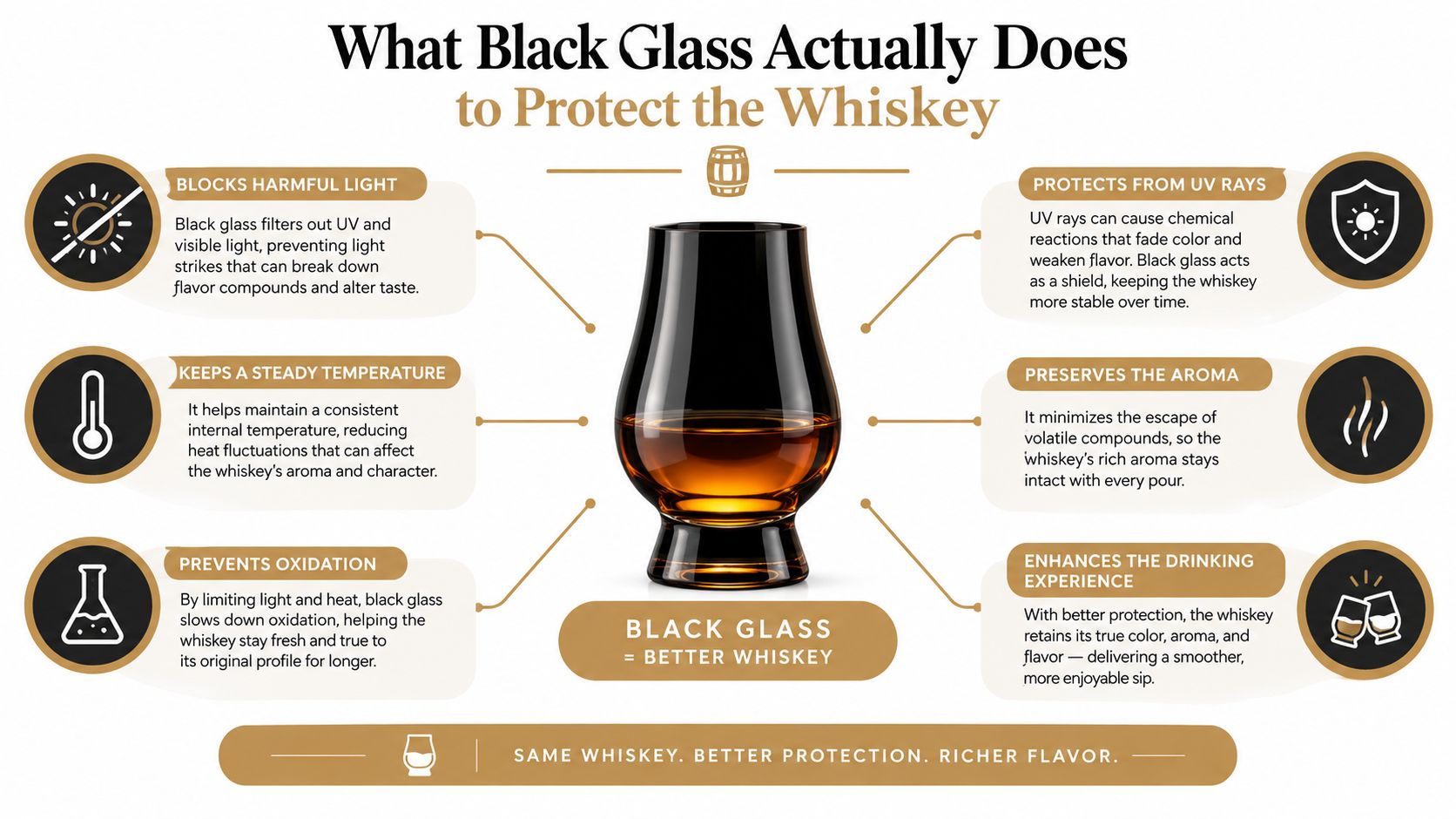
Set two identical pours on a sunny shelf, one in clear glass and one in liquor in a black bottle, and light becomes the first variable worth controlling. Compounds such as phenolics, aldehydes, esters, and oak derived chromophores can undergo photo-oxidation when ultraviolet and high energy visible light excite dissolved oxygen and organic molecules, creating reactive oxygen species that alter aroma, color, and flavor. Neutral packaging guidance notes that amber glass provides more than 90% UV protection, while opaque black glass can provide substantially greater protection depending on wall thickness and pigment loading, as explained in Vetropack guidance on spirits bottle anatomy and protection.
A closed cabinet keeps light off a photo album. Black glass does something similar for whiskey. The album inside does not become better because the door stayed shut, and whiskey does not become older, richer, or more carefully distilled because the bottle is dark.
Where the Protection Stops
Oxygen is the separate problem. Headspace oxygen and outside oxygen ingress depend mainly on closure integrity, including cork porosity, capsule sealing, and screw cap liner quality, while hue only controls how much UV and blue light reaches the liquid, a distinction set out in technical material comparing clear and colored glass for spirit longevity. That means black glass can be excellent at one job and still silent on the other.
At home, the order is easy: keep the bottle out of direct sun and away from hot display lighting, then check that the capsule or cork sits tight, then follow sensible guidance on how to store whiskey instead of trusting color alone.
One shopping caution clears up the last confusion. Dark tinted is not always opaque, so if a brand makes a strong protection claim, ask for a transmission specification from the supplier. That single question separates a functional light barrier from a cosmetic coat of darkness, which is why the black look can carry real value for careful producers while still telling you nothing final about the pour.
Why American Craft Distilleries Love the Black Look
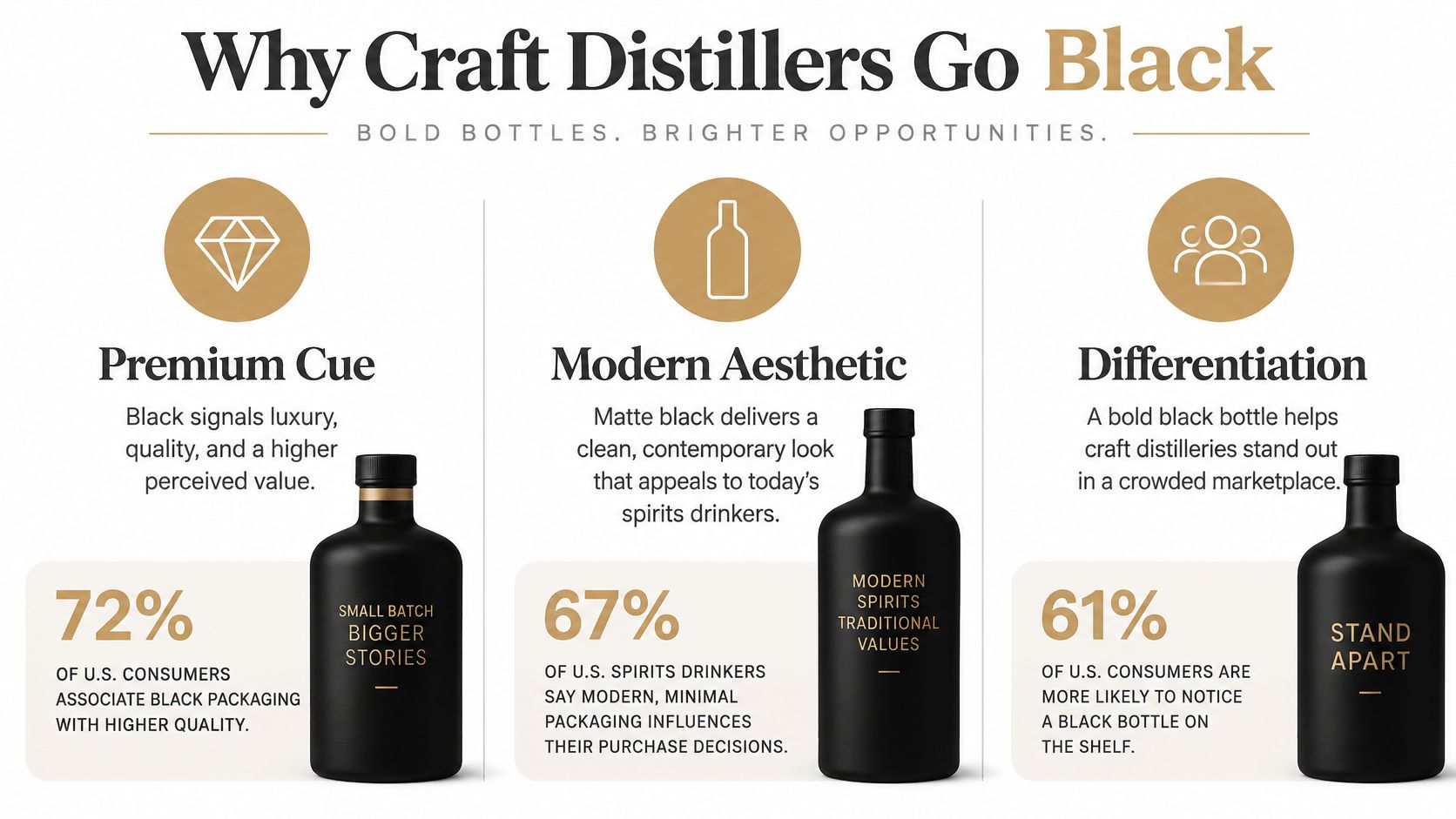
Small distilleries face a brutal first problem. A shopper who has never heard their name gives them a glance, not a research session. A black bottle buys that glance a little more time by creating contrast against clear bourbon bottles and by making a short label, copper foil, or embossed detail stand out sharply.
The look also sends a compact message without extra words. Matte black feels modern, a heavy shoulder feels deliberate, and a clean silhouette suggests the producer cares about presentation. None of that proves careful distillation, but it helps an unknown regional bottle get picked up, turned over, and considered.
Craft Has a Specific Meaning
It's easy to assume craft is just marketing language for small or expensive. The category has firmer edges than that. The American Craft Spirits Association's 2024 Craft Spirits Data Project counted 3,069 active U.S. craft distillers as of August 2024, up 11.5% from 2,753 in August 2023, and defines a craft producer as U.S. licensed, removing no more than 750,000 proof gallons, or 394,317 nine liter cases, annually, and not more than 50% owned by a larger producer over that threshold, according to the 2024 Craft Spirits Data Project report.
That definition changes how you read the shelf. Many black bottles you'll meet aren't global giants playing dress up. They're independent or regional producers competing for attention beside famous names with much larger advertising budgets.
Shelf reading habit: When black glass draws you in, flip the bottle and look for the distillery location, who distilled it, and who bottled it before you decide the story is craft.
That habit protects you from a common confusion. Small batch language, black glass, and a premium price are three different things. A bottle can have one, all three, or none, and your palate still gets the final vote.
Collectible Editions and What Makes Them Different
Walk into a distillery gift shop on an anniversary weekend and you will likely spot it: a matte black bottle behind glass, numbered by hand, priced well above the everyday pour. Anniversary releases, single cask offerings, barrel picks, and numbered runs reach for dark glass because it photographs cleanly, hides small fill differences from casual view, and keeps a display shelf looking unified. The bottle becomes part of what a collector preserves, not a container to empty.
Those unfamiliar names on limited releases have a real explanation behind them. Industry reporting based on American Distilling Institute data counted only 76 U.S. craft distilleries in 2006 compared with approximately 2,283 by 2023, a roughly thirtyfold rise in less than two decades, according to coverage of the American whiskey revival and craft growth. More distilleries means more anniversary milestones, more barrel picks, and more black bottles claiming a moment.
Scarcity can rush you.
So slow down before you chase. Taste a pour at a bar or from a friend's shelf first, and jot down what you notice: sweeter bourbon notes, spice, oak, smoke, fruit, or lighter grain character. That record guides you better than fear of missing a numbered bottle ever will, and reading about how limited edition whiskey releases work helps you tell a genuine small run from packaging that only sounds rare.
If you do buy a bottle to keep, treat it the way a book collector treats a first edition. Keep the original box, since collectors value complete presentation and the box blocks light. Store it away from heat and sun, because a display near a window defeats the dark glass entirely. Photograph the fill line, capsule, and any certificate or bottle number while everything is pristine.
A collectible earns that name when the liquid, the production story, and the physical object all hold interest together. Black glass alone cannot create that combination.
How to Judge a Black Bottle Before You Buy
Opaque glass removes useful clues. You can't easily check fill level, sediment, haze, or color change, so you need to lean harder on the label, the closure, and eventually smell and taste. That's the trade at the center of liquor in a black bottle. You gain light protection and shelf impact, but you lose visual information you'd get from clear glass.
That trade also affects blind tasting. Removing appearance can reduce bias from color and branding, yet it also removes hints about maturation or possible defects, and claims about matte black creating premium associations shouldn't be treated as universal proof without an identifiable peer reviewed primary source, a caution reflected in industry coverage of glass recovery and packaging claims.
Black Bottle Buying Checklist
| Criterion | What to Look For | Why It Matters |
|---|---|---|
| Producer transparency | Distilled by, bottled by, and location stated clearly | Shows whether the brand made the whiskey or sourced it |
| Age and proof | Age statement if present, and ABV printed on label | Helps you set expectations for intensity and dilution |
| Closure | Intact capsule, firm cork, or clean screw cap seal | Seal quality affects oxygen exposure more than color does |
| Opacity | Truly opaque glass, not a thin dark tint | Determines whether light protection is real |
| Production detail | Mash, cask, or batch information when offered | Gives you flavor clues the hidden liquid can't |
Don't Forget Disposal
Heavy black glass with foil, shrink sleeves, and complex closures can complicate recovery. Glass can be remelted repeatedly, but that doesn't mean every bottle in a curbside bin becomes a new bottle, and local acceptance depends on color sorting, contamination, caps, and labels, as noted in a guide to recycling empty wine and liquor bottles.
Empty and rinse the bottle, separate removable closures where your system requires it, and check local rules for dark glass. It's a small step, but luxury packaging asks a little more effort from you at the end.
Serving Tips for New Whiskey Drinkers
Start smaller than feels natural. An ounce or so gives you room to swirl without spilling and leaves enough in the bottle for a second round of experimenting. Since the dark glass hid the whiskey's color on the shelf, the tasting glass is your first honest look at what you bought, so hold it up to neutral light before anything touches your lips.
New drinkers tend to nose a whiskey the way they would smell a flower, with one deep inhale. That habit fails at proof, because high-alcohol vapor numbs your receptors before your brain registers much of anything. Whiskey expert JoAnn Street recommends nosing with your mouth slightly open to soften the alcohol hit, and guidance on sipping whiskey like a professional notes that a roughly 20 percent water addition can open up smell and flavor in high proof bourbon.
Water works like a dimmer switch. Each small addition shifts the balance a little, so add still, soft water a few drops at a time and nose after each round, stopping at the point where the prickly burn fades and fruit, grain, oak, or spice becomes easier to name. Whisky Magazine's sensory evaluation guidance suggests a starting dilution near 30 percent alcohol by volume and water around 15 degrees Celsius, since very cold water can suppress aroma.
Run that exercise on one pour, then repeat it across sittings. You'll learn faster from a single whiskey served three ways than from three whiskeys tasted in a hurry, and once water feels familiar, other ways to drink whiskey give the same bottle a few more lessons to teach.
Putting It All Together for Your Next Pour
Think of one simple scene. A black bottle sits beside a nosing glass and a small pitcher of cool water. That still life contains the whole story if you know how to read it, because each object answers a different question you've worked through.
The bottle speaks first about identity. A Scotch first sold in the nineteenth century kept its name through a wartime glass shortage and later reformulations, proving that drinkers remember a strong visual cue for generations. Modern craft distillers borrow that same cue to earn a second look beside famous competitors.
Your Personal Order of Operations
The glass speaks about evidence. Dark glass can limit photo-oxidation, but the closure guards against oxygen, and your storage habits guard against both light and heat. The pitcher speaks about skill, because measured water and patient nosing reveal more than a dramatic label ever will.
Let the bottle invite you in, let the label inform you, and let your palate make the final decision.
For your next purchase, choose one American craft whiskey in a black bottle that states its producer clearly. Pour it beside a familiar whiskey in clear glass, cover both labels, and taste them in the same sequence with the same water. Write down aroma, palate, and finish before you uncover anything.
You may discover the black bottle earns its place. You may discover the familiar bottle wins once the theatre is removed. Either result is useful, because you'll have learned what you like, and that's the knowledge that makes every future shelf, gift, and shared pour easier to manage.
If you want that label free comparison done for you, Blind Barrels sends members four blind top shelf samples from small American craft distilleries each quarter, with a tasting table for aroma, palate, and finish notes and a QR reveal you open only after you've scored your guesses. Join the next quarterly kit, taste before you know the brand or price, then use your member discount to buy the full black bottle or clear bottle your palate chose.