

You might be standing in your kitchen right now, turning over a whiskey gift and wondering why it arrived in a box instead of a bottle. That small surprise says more about modern spirits than it looks like at first glance. A well-built package can protect aroma, guide discovery, and make the first pour feel deliberate instead of accidental.
The Surprising History Behind Boxed Spirits
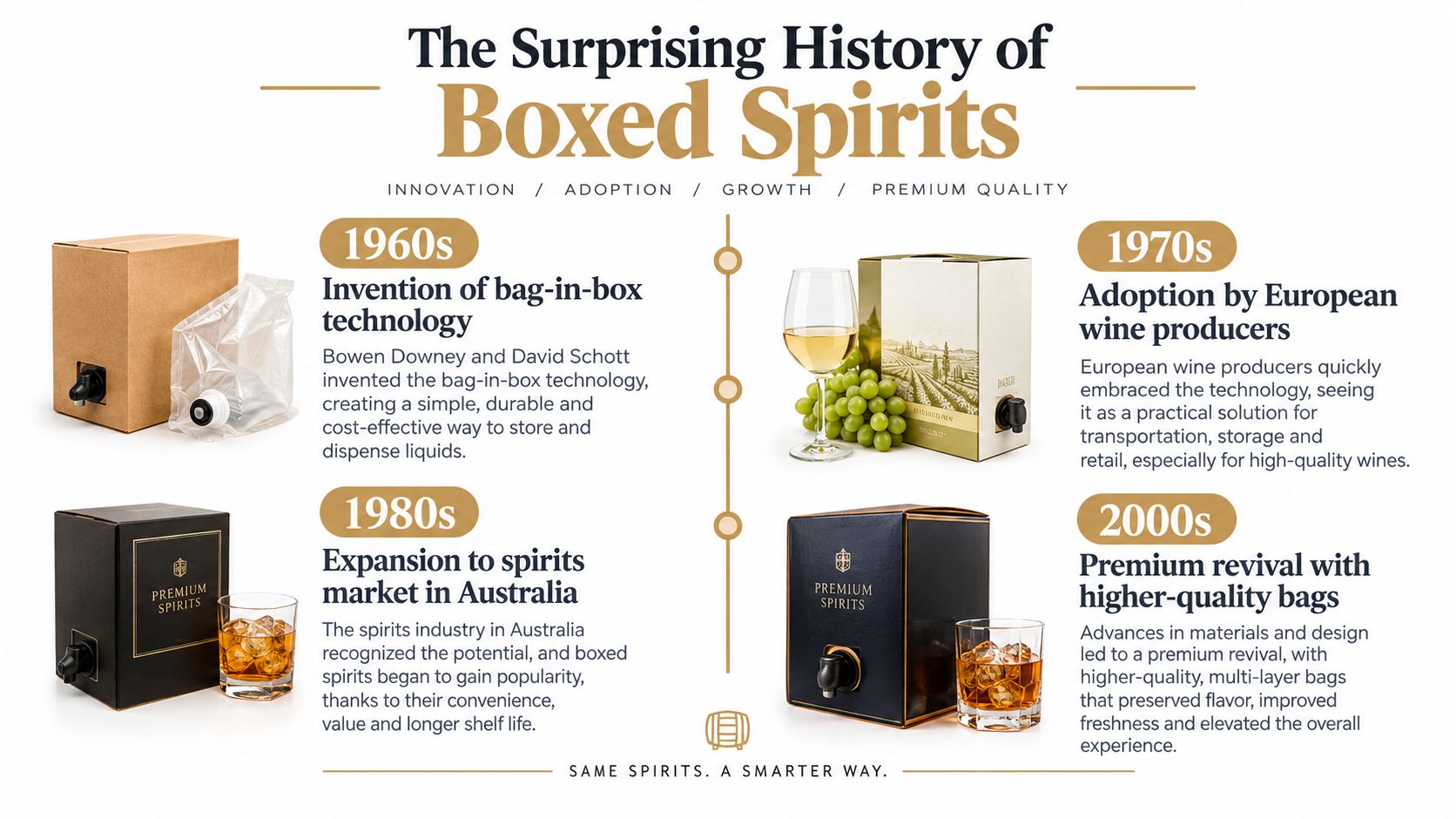
The first time I saw a boxed drink treated with suspicion, it was on a table where the host had already opened a bottle of something expensive. The box sat nearby like an afterthought, until the conversation drifted to how wine casks changed the way people shipped and stored alcohol. That history matters because liquor in a box didn't begin as a gimmick, it grew out of a practical need to move wine more efficiently.
From cellar problem to commercial format
In the 1960s, Australian winemaker Thomas Angove developed the wine cask, and that idea helped set the pattern for what came later, including the familiar “goon bag” association in Australia. By the 1970s, boxed wine had crossed borders and become part of international alcohol packaging. Franzia's U.S. format followed in the 1980s, and by 2018 it was reportedly producing about 23 million 9-liter cases annually, roughly 207 million liters of wine, according to the boxed-wine history referenced in the Wine Club Group account of boxed wine's rise.
Why that history matters for spirits
The point isn't nostalgia. A package that ships light, stores compactly, and limits air exposure after opening is useful whether the liquid inside is wine or a spirit-based sample kit. That's why the boxed format moved from bargain-bin stereotypes toward something more thoughtful, especially when small producers needed a way to deliver multiple pours without the fragility of glass.
Practical rule: if a package protects freshness and travels well, the format is part of the product, not just the wrapper.
That's the true inheritance of boxed alcohol. The box was never only about price, it was about getting liquid to the table in better condition, with less waste and less breakage standing between the maker and the drinker.
Inside the Bag-in-Box Design
A premium boxed spirit starts with a simple contradiction, it looks plain on the outside and highly engineered on the inside. The outer carton gives shape and protection, but the real work happens in the liner. Modern liquor-in-a-box packaging uses a collapsible, multilayer synthetic-film pouch with oxygen-barrier polymers like EVOH inside a rigid box, and the pouch is filled under vacuum with nitrogen backfilling to reduce oxygen before sealing, as described in the University of Florida technical review.
Why the pouch matters
Glass is rigid, so once you open it, the empty space grows as the liquid level falls. That headspace gives oxygen room to move in and work on aroma. In a bag-in-box system, the liner collapses as liquid is dispensed, so the package doesn't create the same expanding air pocket.
This is especially important for spirits and wine-based products where oxidation can dull aroma, flatten proof perception, and make a bright pour feel tired before its time. The box isn't there to disguise the liquid, it's there to keep it closer to the condition the maker intended.
The limits are part of the truth
The package isn't oxygen-proof. Oxygen can still enter through the film, the spout, the valve, and the seals, which is why the engineering details matter. The same source notes that conventional bag-in-box wine may have an unopened shelf life below roughly 9 to 12 months, while improved barrier designs can preserve quality for about two to three weeks after opening.
That's the distinction premium buyers should care about. A sturdy box alone means nothing. A properly specified pouch, closure, and fill process can make the difference between a sample that still smells vivid and one that feels tired by the second pour.
The best boxed spirits aren't trying to imitate glass, they're trying to outperform it where oxygen and logistics are the enemy.
Tasting Whiskey Without the Labels
The first blind whiskey pour always feels a little like standing in front of a closed barn door and listening to the wind. The label is gone, the brand is hidden, and your senses have to do the work. That's exactly why a structured tasting beats casual guessing, especially for people still learning what whiskey can taste like.
Nose, palate, finish
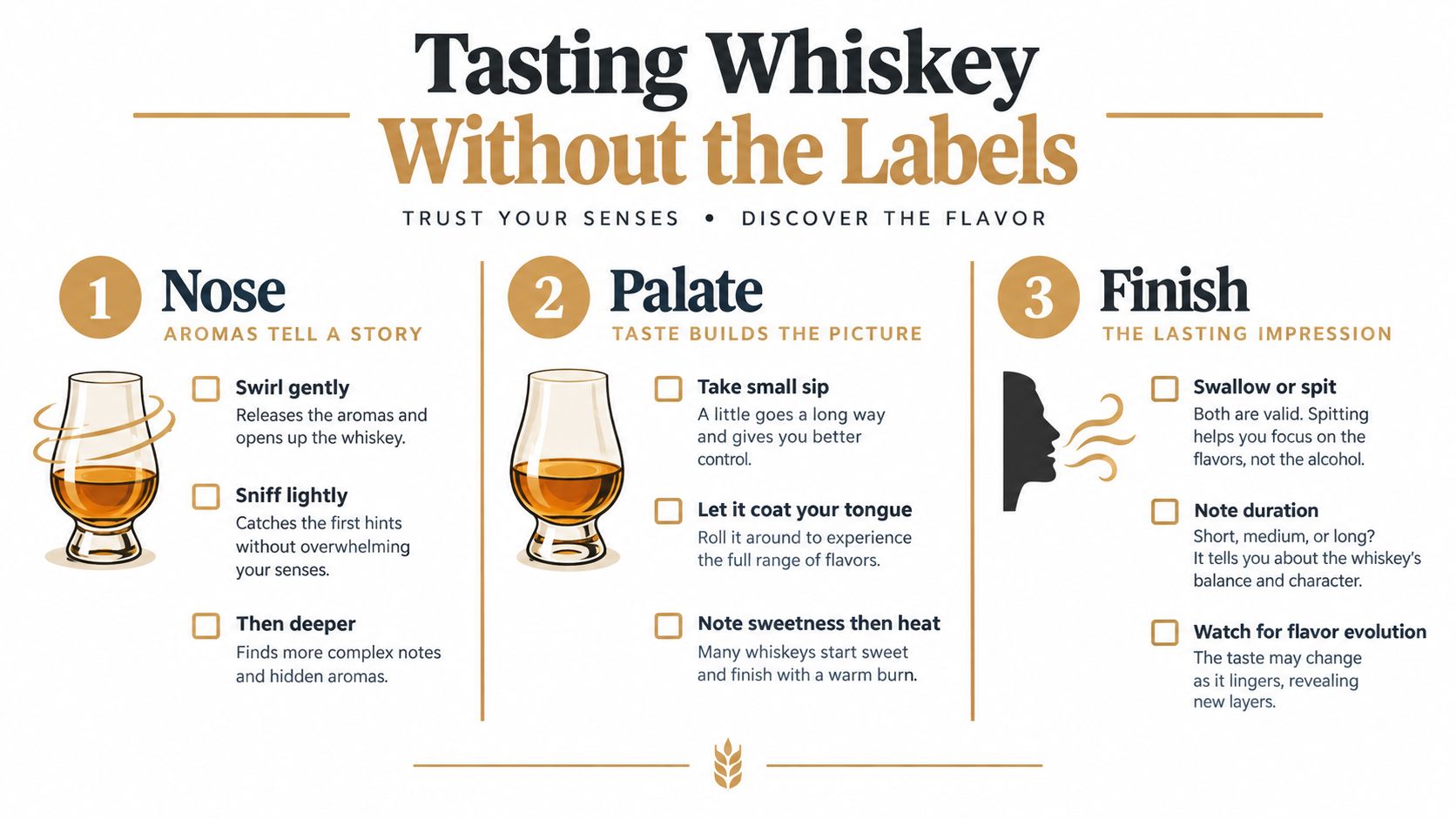
A beginner can use a three-stage structure, nose, palate, and finish, with a starting pour of about one-half to one ounce in a tulip-shaped glass, then let it rest for five to 10 minutes before tasting, according to Beam Distilling's whiskey tasting guidance. The narrow glass opening concentrates aroma. The resting time softens sharp alcohol vapors.
- Nose: Swirl gently, then smell lightly before leaning in deeper.
- Palate: Take a small sip, let it coat the tongue, and notice sweetness, texture, heat, and spice.
- Finish: Swallow or spit, then track how long flavor hangs on and what changes as it fades.
Water as a comparison, not a reflex
The best next move is controlled, not dramatic. Taste the whiskey neat first, then add just two or three drops of room-temperature water per ounce and compare the difference, as outlined in Beam Distilling's tasting notes guide. Ice can be useful in a casual drink, but it's less useful when the goal is to learn what the spirit already contains.
Beginner's rule: change one variable at a time, or you won't know what caused the shift.
That's where blind tasting becomes powerful. Without the label, you stop leaning on reputation and start trusting your own senses. If you want a deeper version of that experience, see the internal guide on blind whiskey tasting.
Subscription Kits versus One-Off Purchases
The difference between buying a boxed whiskey once and opening a tasting kit every quarter is the difference between reading one page and following a story. One purchase gives you a drink. A recurring kit gives you context, repetition, and the chance to notice your own palate changing over time.
What one-off buying gives you
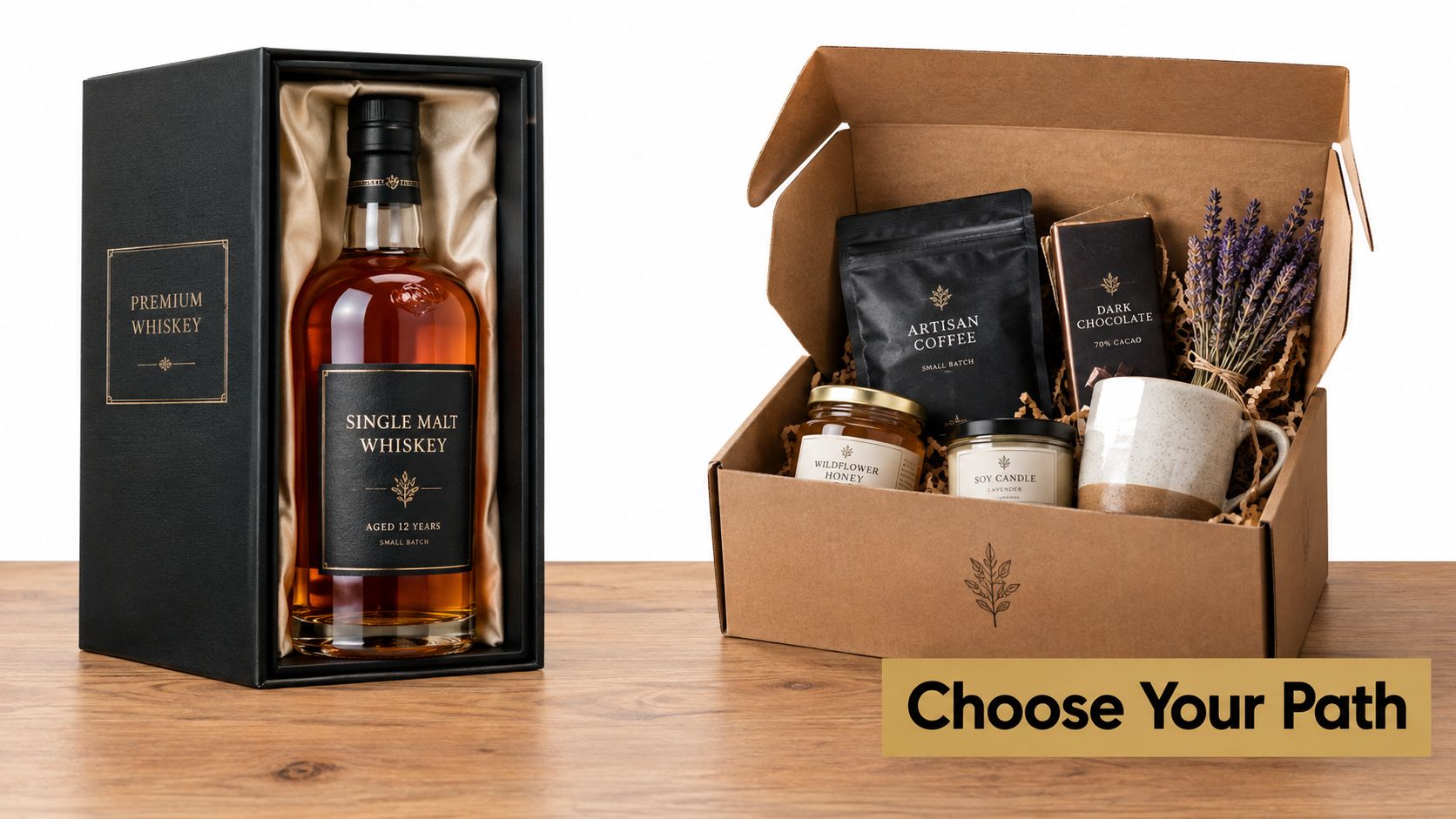
A single boxed bottle or gift set is easy to understand. You buy it, open it, and enjoy what's inside. That works well for a dinner party, a present, or a one-night experiment with a new distillery.
But the experience ends there unless you keep chasing it one bottle at a time. Without a repeated structure, new drinkers often compare bottles by label art, price, or name recognition instead of aroma and balance.
What a subscription changes
A tasting subscription removes that pressure. One option in this space is Blind Barrels, which sends blind whiskey tasting kits with four samples, a tasting table, and a QR code that reveals sample details and purchase paths for full bottles. The format turns the box into an active learning tool rather than a passive container. For a related perspective on choosing pairings for a tasting night, the guide on how to choose healthy snacks is a useful side note because palate fatigue is real when people sample several pours together.
The internal breakdown of the whiskey subscription box model makes the logic clear. Curated blind samples let you compare styles without seeing the label first, which keeps prestige from deciding the outcome before your tongue does.
**A blind set works because the last thing you taste is the spirit, not the marketing.
For new whiskey drinkers, that matters more than it sounds. A box can become a classroom when the samples are small, the order is deliberate, and the reveal comes after you've already formed your opinion.
Navigating Direct-to-Consumer Shipping Laws
A compact box can fool people into thinking shipping spirits must be simple. It isn't. In the United States, direct-to-consumer alcohol rules are driven largely by the destination state, and most states restrict or prohibit direct shipment of spirits even where some wine shipments are allowed, according to GetTips's overview of alcohol delivery laws.
The legal path is state by state
That means the same whiskey sampler can be easy to order into one state and blocked in another. The box itself doesn't change the rule. A tasting kit may be eligible where a full bottle is not, and that distinction matters when people confuse convenience with legality.
Carriers add another layer. Licensed business shippers are required, and adult-signature delivery is mandatory for U.S. shipments, also noted in the same delivery-law source. That's not a small detail, because failed delivery often turns a simple order into a reroute, a return, or a reshipment delay.
Why buyers should check before checkout
The practical question is simple, can the package legally reach your door? If not, the clever packaging doesn't matter. Shipping alcohol online can feel frictionless at the cart page, then get complicated at the state line and again at the front porch.
- Check state eligibility: Spirits rules are often stricter than wine rules.
- Confirm shipper licensing: The carrier won't treat every sender the same.
- Expect adult signature: The package can't just be left anywhere.
- Know the product type: A sample kit and a full bottle may be treated differently.
If you're comparing online options, the internal guide on is it legal to buy alcohol online is the right place to start before you click purchase.
The lesson is blunt. A box can simplify packaging, but it can't override alcohol control laws.
The Rise of American Craft Whiskey
The modern boxed whiskey story only makes sense against the scale of American craft distilling. The American Craft Spirits Association counted 3,069 active U.S. craft distillers as of August 2024, up 11.5 percent from the previous year, and 51.5 percent of craft spirits sales happened outside the producer's home state, according to the 2024 Craft Spirits Data Project.
Why that matters for boxed discovery
Those numbers tell you that craft whiskey isn't a small local hobby anymore. It's a wide, moving network of distillers with regional roots and national reach. That's exactly the kind of market where a blind box makes sense, because it can introduce drinkers to distilleries they'd never spot on a crowded shelf.
A boxed tasting kit also solves a practical problem for producers. Small distillers often need a way to put their whiskey in front of drinkers without asking them to commit to a full bottle first. A sample format lowers the barrier, then the QR reveal can point the drinker toward a full bottle if the pour earns it.
A market that travels well
The same craft-spirit report counted 29,373 full-time domestic employees and 179,000 9-liter cases exported, but the most useful number for everyday drinkers is the domestic reach. More than half of sales crossing state lines tells you that American craft whiskey already lives beyond the tasting room.
That's why the box feels so natural here. It can carry a few ounces of a distillery's work across distance without making the buyer gamble on an entire bottle. In that sense, liquor in a box isn't just packaging, it's a bridge between small producers and curious drinkers.
Why the Future of Spirits Is Boxed
The strongest case for boxed spirits isn't that they're trendy. It's that they line up with how people buy, ship, store, and learn. Boxed alcohol can reduce material use and transport impacts compared with glass, and the industry figures referenced in the packaging source estimate roughly 40% to 60% fewer greenhouse-gas emissions per liter transported and packaging waste reductions of about 84% by weight for an equivalent 3-liter volume, with results depending on materials and shipping conditions, as noted by Interpack's packaging overview.
Sustainability and freshness can sit in the same box
That's the point people miss when they assume sustainable packaging must feel cheaper. A box can be lighter to ship and still be engineered for preservation. A box can be easier to store and still protect aroma better than a half-empty bottle when the liner and valve are done right.
For whiskey drinkers, the deeper advantage is education. A blind tasting kit teaches you to judge what's in the glass before you judge the label on the outside. It also gives small craft distillers a way to be sampled on fair terms, which is a better match for a market built on regional character and experimentation.
Best takeaway: the future of spirits isn't one format replacing another, it's choosing the vessel that protects the liquid and sharpens the experience.
That's where liquor in a box earns its place. It can be a preservation tool, a shipping solution, and a tasting format that turns curiosity into skill.
If you're ready to taste whiskey by aroma, palate, and finish instead of by label alone, start with Blind Barrels. Each box is built for blind discovery, so you can compare small American craft distilleries on your own terms. If that sounds like the right way to explore spirits, visit the site and see what the next tasting brings.