

You're standing in the chip aisle with a familiar problem. The bags are different colors, but your hand keeps reaching for the same dependable flavor, and the excitement has long since disappeared. A monthly potato chip club offers a different kind of snack experience, one built around discovery, curation, and the pleasant uncertainty of opening a box you didn't assemble yourself.
The format has a surprising parallel in curated American craft whiskey subscriptions. Small distilleries, limited releases, blind tastings, and guided notes turn a bottle into an exploration rather than a routine purchase. A chip club borrows that same logic for savory snacks, bringing rotating flavors and smaller producers to your door instead of asking you to make another predictable choice at the supermarket.
When the Usual Chip Aisle Stops Exciting You
The tenth trip to the same chip aisle can feel strangely repetitive. You scan familiar bags of Lay's, Ruffles, and Doritos, compare flavors you've already tried, and wonder whether “new” really means new or a slightly different seasoning on the same base. Grocery shopping rewards certainty, but certainty can flatten curiosity.
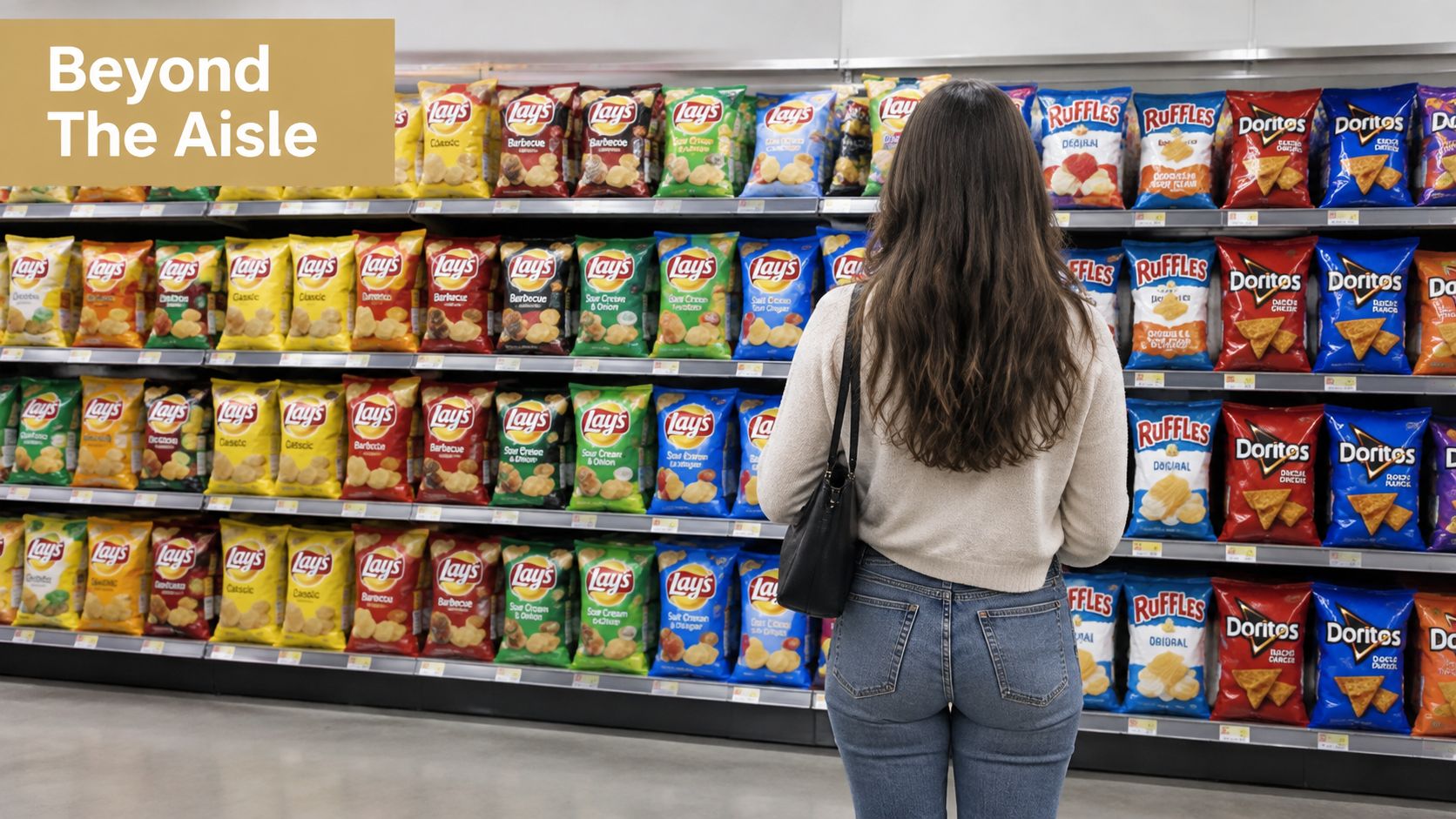
A monthly potato chip club changes who makes the decision. Instead of choosing one large bag from a national shelf, you receive a curated selection assembled around variety. That can mean small-batch kettle chips, hand-cooked styles, regional makers, unusual seasonings, or a flavor combination you'd have ignored in a store because the packaging didn't tell you enough.
The same discovery mechanic appears in American craft whiskey clubs. A blind tasting removes the immediate influence of a famous label, a high price, or an attractive bottle design. You taste first, form an opinion, and learn what's in the glass afterward. Independent American whiskey bottlers often work with limited barrel supplies and create blends in batches of only a few hundred bottles, a sourcing model described in SevenFifty Daily's coverage of independent American whiskey bottlers.
Curation creates anticipation
A chip subscription applies that scarcity-and-curation idea to snacks. The point isn't merely to send food repeatedly. The point is to make each delivery feel like a small tasting event, where the curator has done the searching and you get to judge the results.
That difference matters because a single grocery purchase ends when you finish the bag. A recurring club creates a ritual. You open the package, inspect the flavors, compare textures, and perhaps save the most unusual bag for a weekend tasting with friends.
The rest of the buying decision comes down to practical questions. What exactly arrives? How many varieties make a box feel worthwhile? Are the portions designed for sharing or tasting? Which plans work for gifts, and is monthly delivery the best pace for your household?
What a Monthly Potato Chip Club Actually Is
A monthly potato chip club is a recurring subscription for curated potato chips. You choose a plan, provide delivery details, pay according to the club's terms, and receive a new assortment on a scheduled basis. The box is designed to create repeated variety, not to replace a bulk grocery run.
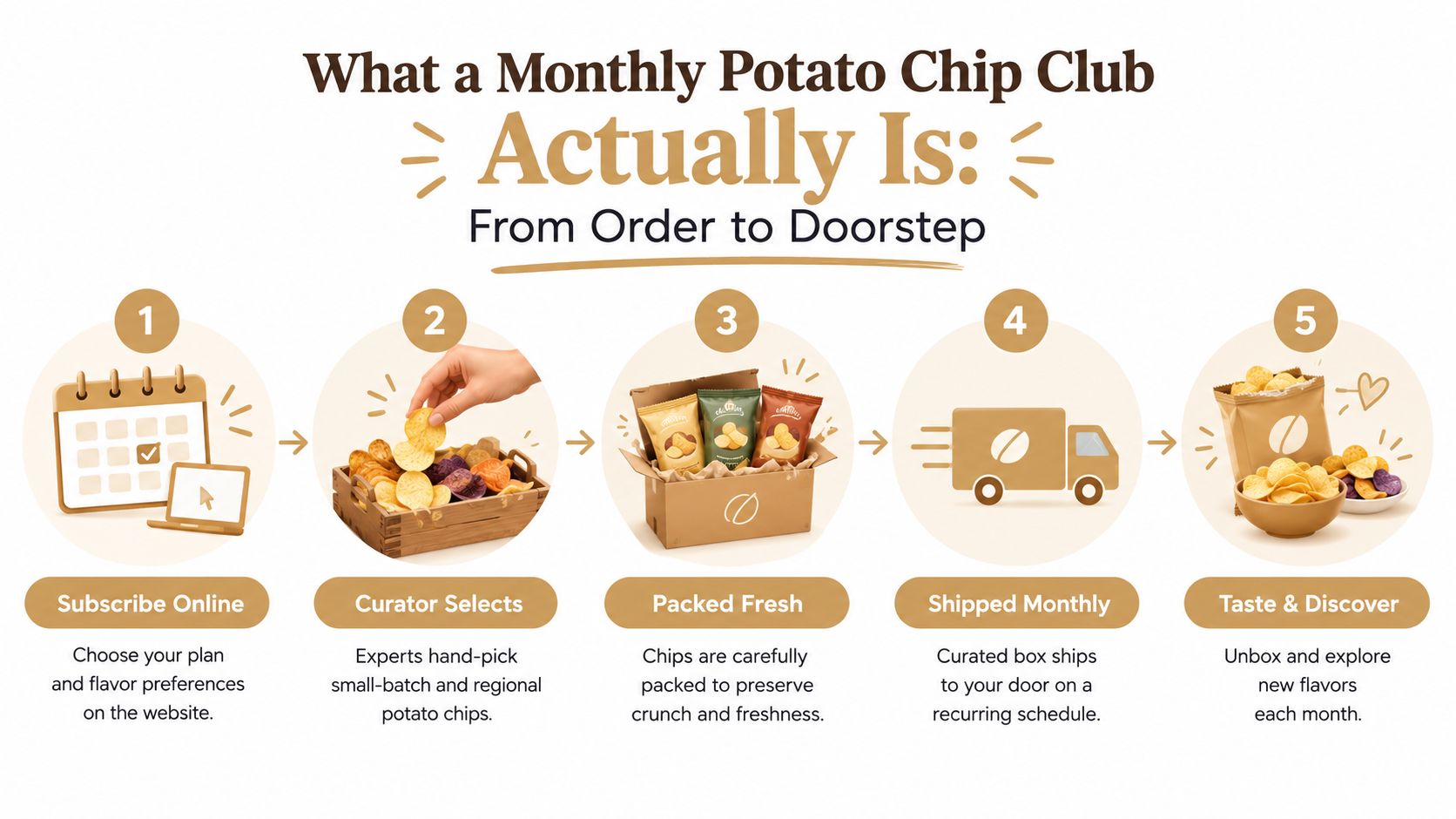
A typical order follows a straightforward path:
- Choose the commitment. You select an ongoing plan or a prepaid duration. Some clubs let you choose preferences, while others keep the selection fully blind.
- Enter delivery information. Shipping details, billing information, and any available dietary preferences go into the club's signup form.
- Wait for curation and packing. The curator assembles the assortment, often around a theme, producer, flavor family, or regional focus.
- Open the shipment. Your box arrives with the chips and, ideally, tasting notes, producer information, or a card explaining what makes each selection different.
- Taste and evaluate. You can sample the bags, compare them, and record which textures or seasonings you'd buy again.
The process resembles a guided blind whiskey tasting more than a random snack haul. A useful explanation of the broader subscription format appears in how subscription boxes work, where recurring delivery is treated as an experience with a deliberate sequence rather than an automatic replenishment of identical goods.
The distinction becomes clearer when you consider what the club isn't. It isn't a single bulk bag of one brand, and it isn't a mystery box filled with unrelated candy, jerky, and sweets. It also isn't automatically a one-time gift. A prepaid duration can make it a finite present, but an ongoing plan continues until the buyer cancels or pauses it.
The strongest neutral example describes a club featuring four to five different potato chip varieties from a featured cooker each month, with separate listings offering 3-month, 6-month, 9-month, and 12-month durations. Those details show the central design: recurring monthly variety paired with a defined gifting cycle, not a one-off snack purchase. Explore the potato chip club format to see how that structure works in practice.
Inside the Box Varieties, Portions and Price
The box itself determines whether a monthly potato chip club feels like a tasting experience or an expensive delivery of snacks you could have bought locally. Start with variety. A well-designed shipment might combine kettle-cooked chips, hand-cooked chips, classic salted styles, bold flavored versions, and selections associated with a particular region or maker.
Public club descriptions support the idea of a focused assortment rather than a random mix. The potato chip example centers on four to five varieties from a featured cooker each month, while a broader snack club example offers 3-month and 6-month options and sends month-by-month assortments that can include potato chips. Zingerman's recurring snack club illustrates how fixed-duration plans and curated monthly shipments fit into the wider snack subscription model.
Portion size matters just as much. Small bags work well for a tasting flight because they let you compare seasoning, crunch, oiliness, and finish without committing to a large bag of every flavor. That approach is similar to craft whiskey tasting, where a small pour gives you enough liquid to assess the spirit without turning every experiment into a full-bottle purchase.
What you're paying for
The subscription fee usually covers more than the chips. Curation takes time, packaging protects fragile food, and shipping adds a meaningful layer of cost. Tasting cards, producer stories, rarity markers, flavor notes, and member-only selections can make the experience feel more intentional than a grocery purchase.
Exact pricing varies by club, so compare the full delivered cost rather than the headline fee. Monthly plans can cost more per shipment than prepaid plans because shipping and curation overhead are spread across fewer deliveries. Longer commitments may reduce the effective monthly cost, but they also increase your exposure to flavors you may not enjoy.
| Plan Length | Bags per Box | Portion per Bag | Typical Price per Shipment |
|---|---|---|---|
| 1 month | Curated assortment | Tasting-sized portions | Varies by club, shipping, and curation |
| 3 months | Curated assortment | Tasting-sized portions | Often lower per shipment than month-to-month plans |
| 6 months | Curated assortment | Tasting-sized portions | May offer stronger prepaid value |
| 12 months | Curated assortment | Tasting-sized portions | Designed for extended gifting or ongoing discovery |
Treat the table as a comparison framework rather than a universal specification. Clubs differ in bag count, serving size, shipping policy, and whether extras are included. If you're comparing a tasting-oriented box with a larger snack bundle, a resource such as Gym Snack's chip variety pack for fitness can help you think more carefully about portion format and the purpose of the assortment.
Pros and Cons of Joining a Potato Chip Subscription
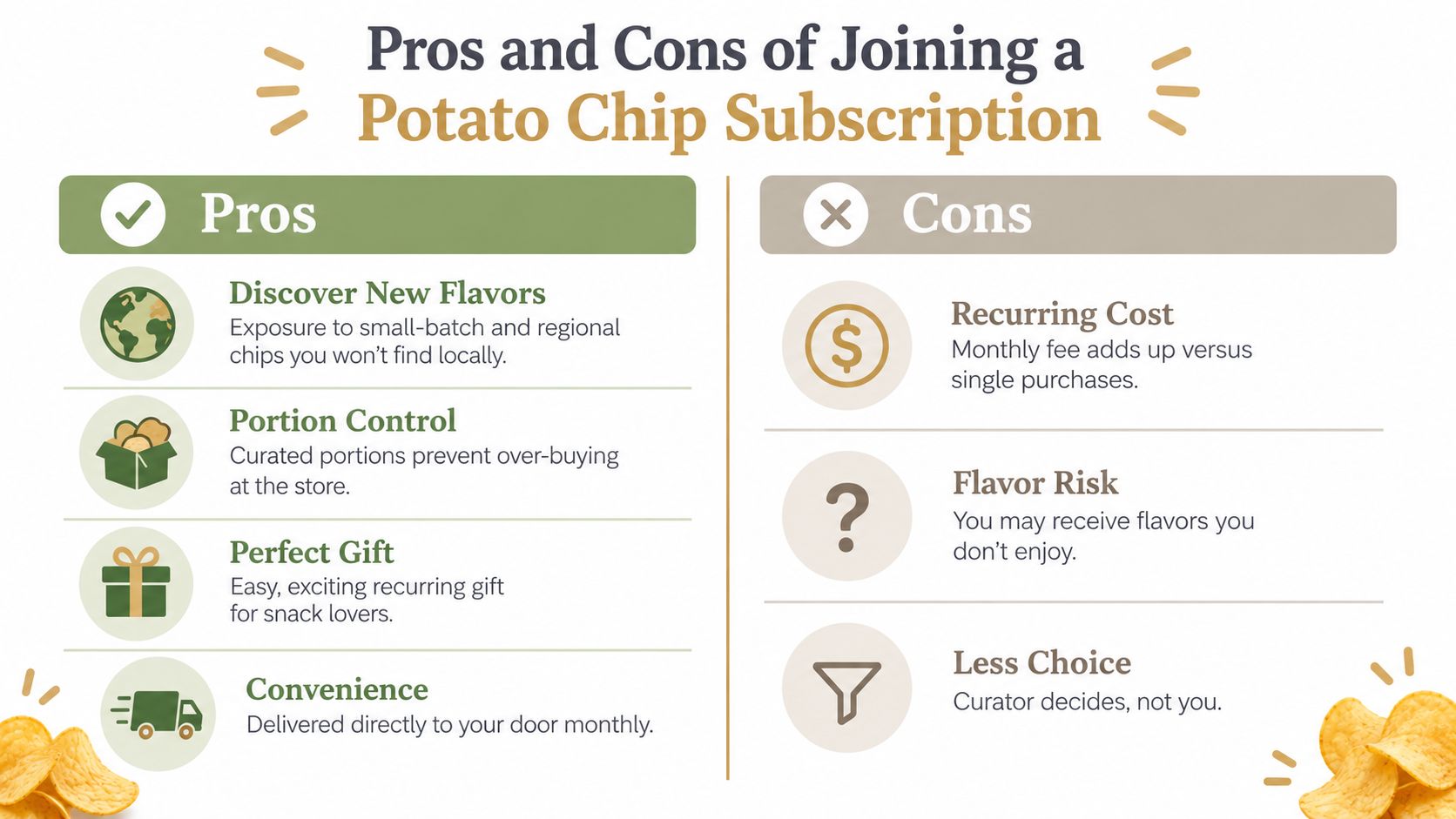
The appeal is easy to understand. Someone else searches for interesting chips, assembles the box, and sends it to your door. You get novelty without spending time comparing every unfamiliar bag in a crowded store.
The trade-off is that curation replaces control. You may discover a new favorite, but you may also receive a flavor that doesn't match your preferences or dietary needs.
Where the format works well
Discovery: A curator can introduce small-batch and regional flavors that your local supermarket doesn't carry. The box becomes a route into producers you might never search for by name.
Portion discipline: Tasting-sized bags can reduce the temptation to buy several full-size bags because their packaging looks appealing. You still get variety, but the format encourages comparison rather than accumulation.
Gifting: Prepaid durations make the club easier to give than a single snack basket. A gift can arrive as a series of small surprises instead of one package that gets opened and forgotten.
Participation: Rating each shipment adds a simple game layer. You can track which flavors worked, which textures disappointed you, and whether the curator's choices are becoming more aligned with your taste.
Where it can disappoint
The recurring cost may exceed the price of buying one familiar bag at the grocery store. Shipping can also change the calculation substantially, especially when the club charges separately for each box.
Dietary restrictions require careful checking. Gluten, dairy, seasoning ingredients, and shared production equipment may not receive enough attention in a club's basic description. Artisan production can also mean a shorter practical shelf window, so a solo snacker may need to plan how quickly to finish each shipment.
Flavor fatigue is another risk. A rotation can feel exciting at first, then become repetitive if the curator keeps returning to the same seasoning family. Compare the options:
- Grocery bags: cheaper and predictable, but you do the searching and get less surprise.
- Potato chip clubs: focused discovery and a clear theme, but less control over every flavor.
- General snack boxes: broader variety, but chips compete with candy, jerky, sweets, and other categories.
If nutrition is part of your decision, a practical reference such as Rip Van's dietitian-approved snack guide can help you think about serving size before you compare subscriptions. The right choice depends on whether you value discovery or efficiency more.
How to Choose the Right Club for Your Taste
Start with flavor focus, not the subscription price. A club built around classic American chips will feel very different from one that emphasizes international seasonings, sharp vinegar, intense heat, or experimental combinations. Decide whether you want familiar foundations with small variations or a genuine challenge for your palate.
Then inspect the chip styles. Kettle-cooked chips tend to offer a different crunch from thin-cut styles, while ridged chips change how seasoning clings to the surface. A varied box can be more interesting, but a focused box may suit someone who already knows they prefer one texture.
A practical evaluation checklist
- Count the bags and portions. A solo eater may prefer fewer tasting bags, while a household needs enough food for several people to participate.
- Read the ingredient information. Look for clear details about oils, flavorings, allergens, and production facilities. Don't assume a “natural” or “small-batch” label answers every dietary question.
- Study the curator's method. Does the club rotate regional makers, feature one producer at a time, or send a consistent brand lineup? The answer tells you how much discovery to expect.
- Calculate delivered value. Compare the total cost, including shipping, against the amount of product you receive. Price per bag and price per ounce are more useful than the subscription headline.
- Check flexibility before paying. Look for cancellation, pause, address-change, and skipped-shipment policies. A club that fits your life should let you adjust when your appetite or schedule changes.
American craft whiskey subscriptions offer a useful way to judge curation. Small distilleries and independent bottlers may work with limited barrels or short production runs, so a subscription can serve as a guided route to bottles that aren't prominent in national retail. The same principle applies to chips. Scarcity matters only when the curator explains what makes the product difficult to find and why it belongs in the box.
For gift shopping beyond chips, Food Escapes' collection of best food gift ideas UK offers useful context on choosing edible experiences for different recipients. If whiskey is also on your gift list, best monthly clubs for gifts shows how guided discovery can work in another category.
Choose based on your role. A heavy snacker should prioritize quantity and predictable delivery. A gift buyer should prioritize prepaid terms, presentation, and flexible shipping. A flavor explorer should seek the most transparent curation notes and the widest rotation.
Is Monthly the Best Frequency or Just the Loudest
Monthly delivery sounds natural because the calendar gives the subscription a clear rhythm. But a regular interval isn't automatically the right interval. The best cadence depends on how quickly your household eats the chips, how much novelty you enjoy, and whether you want a snack supply or a tasting ritual.
A household with several heavy snackers may finish a box comfortably before the next one arrives. A solo snacker may still be working through an earlier shipment when the next box lands, leaving the later bags less fresh and the experience less exciting. The same assortment can feel generous to one household and excessive to another.
Match the schedule to the experience
Market reporting describes monthly subscriptions as a major part of the snack-box category, with monthly subscriptions representing 54.7% of 2025 revenue in one independent report. That figure shows popularity, not proof that monthly is optimal for every buyer. The same report identifies long-term excitement, retention, fatigue, and repeat-purchase behavior as important gaps in public subscription coverage. Review the snack-box subscription market context before treating monthly delivery as a default.
| Frequency | Typical Per-Box Shipping Cost | Best For | Drawback |
|---|---|---|---|
| Monthly | Recurring shipping charge | Households that finish snacks quickly | Novelty may outpace consumption |
| Every two months | Shipping spread across fewer boxes | Moderate snackers and cautious tasters | Longer waits between discoveries |
| Quarterly | Fewer annual shipments | Premium tasting experiences | Less frequent variety |
| On demand | Paid only when ordered | Buyers who want maximum control | No automatic surprise or ritual |
The quarterly model has a useful parallel in quarterly subscription boxes, where anticipation can build around a more deliberate tasting event. That slower pace may suit premium snacks because scarcity and expectation have room to develop.
A sensible test is to start with a short commitment, such as one or three months, if that option exists. Pause after a disappointing shipment, assess how much remains uneaten, and commit longer only when the rotation consistently matches your appetite.
Why Curated Snack Boxes Keep Growing in 2026
A chip club belongs to a wider discovery economy. People aren't only paying for food. They're paying for access to products, producers, and flavor combinations they might not encounter through ordinary shopping. American craft whiskey clubs use the same channel to connect curious drinkers with small distilleries that don't have national shelf space.
The global snack subscription box market was estimated at USD 7.2 billion in 2024 and projected to reach about USD 22.5 billion by 2033, with a reported 13.6% CAGR, according to market analysis of snack subscription boxes. Those figures describe the wider market, not potato chip clubs alone, but they help explain why recurring snack formats continue to attract attention.
A related gamified snack-box market was valued at USD 1.8 billion in 2025 and forecast to reach USD 4.6 billion by 2034. Subscription boxes held 38.2% of revenue in that segment, suggesting that scoring, challenges, and discovery mechanics can make snack consumption feel more like a repeatable activity than a one-time purchase. Read the gamified snack-box market report for that broader context.
The experience matters as much as the food
Social media unboxings and limited-edition flavor drops have made anticipation part of the product. A mass-market grocery aisle mainly encourages comparison by price, package size, and familiarity. A curated box adds a story, a reveal, and an opportunity to form an opinion before the next shipment arrives.
Before joining, audit what you already spend on snacks and how often unfinished bags pile up. Then compare two clubs by delivered cost, variety, ingredient disclosure, and cancellation terms. If you're buying for someone else, a short prepaid subscription is a low-pressure way to test whether the recipient enjoys discovery more than predictability.
Blind Barrels offers quarterly blind whiskey tastings with four samples from small American craft distilleries, a tasting table, QR-based reveals, and a guessing game for age, proof, and whiskey type. Visit Blind Barrels if you want to apply the same discovery-and-scarcity mindset to a guided whiskey experience.