

A premium spirits brand isn't defined by a high price or a hard-to-find bottle. Provenance, production control, blending skill, distinctive flavor, and educational value can matter just as much as scarcity. The strongest bottles give you something useful to taste and discuss, whether that's estate-grown grain, a carefully built blend, regional malt, unusual maturation, or a recognizable house style.
That makes blind tasting especially useful for new whiskey drinkers. Remove the label and price signal, then your palate has room to identify what it enjoys. This roundup organizes seven American craft and premium whiskey producers by tasting role, not prestige alone. For each, compare the signature bottle, flavor profile, price tier, serving format, beginner accessibility, and role in a blind flight.
1. Frey Ranch Distillery
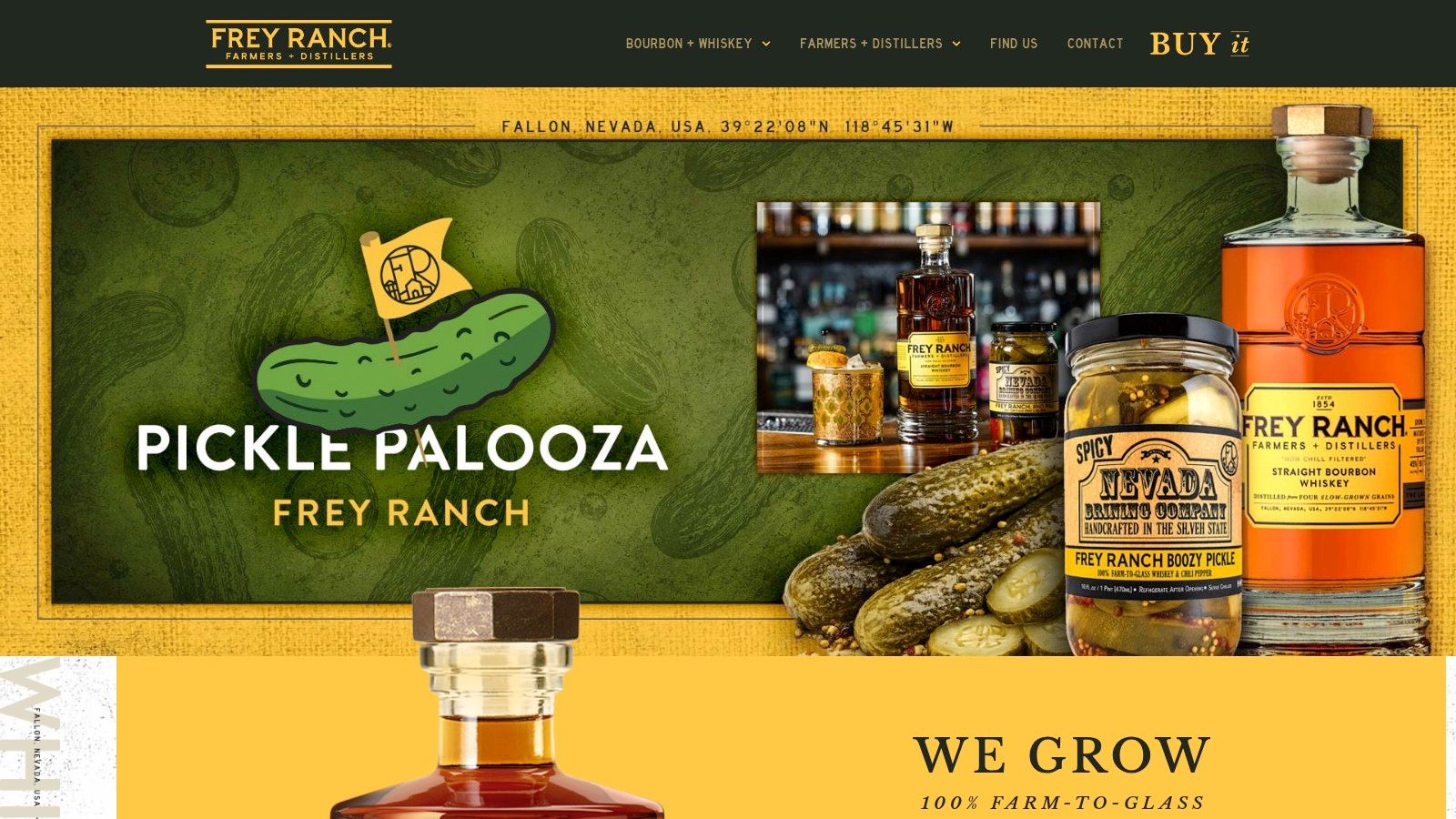
Frey Ranch starts with an unusually complete answer to the question, “Where did this whiskey come from?” The Nevada producer grows its grains on the family farm, then handles distilling, aging, and bottling on site. Its 100% estate-grown, non-GMO grain program gives the brand a clear ground-to-glass identity, while the Nevada setting adds a regional angle that stands apart from the traditional Kentucky conversation.
The core lineup gives a tasting group several useful entry points. Four Grain Straight Bourbon offers a broad bourbon profile, Straight Rye shifts the emphasis toward spice and grain character, and Farm Strength Uncut brings a fuller, higher-proof format for drinkers who want to explore intensity. The brand's transparent grain-to-bottle story also makes it easy to explain how raw materials and production control can shape a premium spirit.
Best tasting role
Frey Ranch works as the provenance bottle in a blind flight. Ask tasters to consider whether the whiskey feels grain-forward, earthy, sweet, or unusually defined before revealing that the producer controls the farm as well as the distillery. A neat pour lets the grain and oak speak clearly, while a few drops of water can help newer drinkers separate aroma from alcohol heat.
The brand has national retail presence, although direct-to-consumer drops can be sporadic, so availability may depend on local retailers. For a deeper discussion of the farming and environmental side of the story, pair the tasting with this guide to sustainable American craft whiskey.
Blind flight reveal: Place Four Grain Straight Bourbon beside a conventional bourbon and ask whether tasters notice a distinct grain identity before discussing estate production.
2. Southern Distilling Company, Southern Star
Southern Distilling Company earns its place in a premium tasting because Southern Star functions less like a single expression than a broad study in mashbills, proof, and style. The North Carolina producer's portfolio includes Bottled-in-Bond Wheated Bourbon, Cask Strength Bourbon, Double Rye, American Single Malt, and finished releases such as honey-barrel expressions.
That range makes Southern Star especially helpful for new whiskey drinkers. Someone who thinks all whiskey tastes alike can compare a softer wheated bourbon with a spicy rye, then move toward a more powerful cask-strength pour. The American Single Malt adds another direction entirely, showing how malted grain can change the conversation without leaving American production behind.
Best tasting role
Use Southern Star as the proof and mashbill contrast. A Bottled-in-Bond wheated bourbon gives the group a structured baseline, while Cask Strength Bourbon demonstrates how proof can amplify aroma, texture, sweetness, and heat. Double Rye can sharpen the comparison with pepper, herbs, and a drier grain profile.
The company also operates a tasting room and offers tours, alongside contract-distilling, single-barrel, and private-select programs. That combination gives the brand both a consumer-facing experience and a production story that extends beyond one flagship bottle. Its expanding distribution footprint can make higher-proof and Bottled-in-Bond releases appealing additions when a local retailer carries them.
For serving, start with the lower-intensity sample, then move into rye and cask strength. New drinkers should taste neat first, record a few impressions, and only then add water. That sequence prevents the first high-proof pour from overwhelming the palate.
Flight order: Put the wheated bourbon first, Double Rye next, American Single Malt after that, and Cask Strength Bourbon last.
3. Barrell Craft Spirits
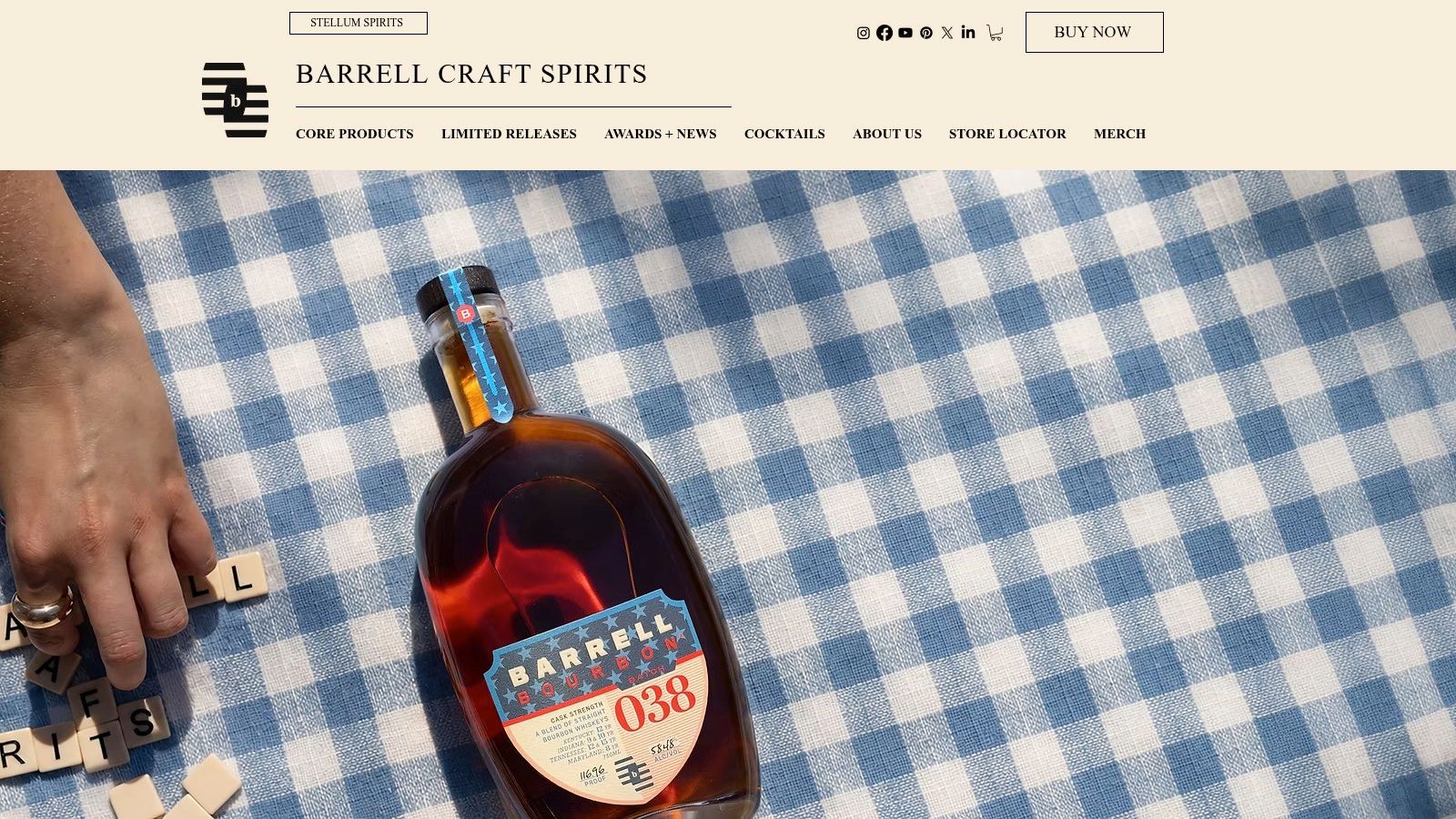
Barrell Craft Spirits turns blending into the main event. Rather than building its identity around one geographic recipe, the independent producer is known for cask-strength small-batch and single-barrel releases, frequent new blends, and inventive finishing programs. The result is a portfolio that rewards comparison because each bottle can ask a different question about balance and maturation.
The lineup includes Barrell Bourbon, Seagrass, Vantage, Foundation, Gold Label releases, and private programs. Seagrass is particularly useful for an adventurous flight because its rye base is finished in rhum, Madeira, and apricot brandy casks. Those finishes create a clear teaching opportunity: tasters can look for fruit, spice, sweetness, and wine-like notes that aren't usually associated with a straightforward bourbon pour.
Best tasting role
Barrell is the blending and finishing bottle. It's a strong choice for drinkers who already recognize basic bourbon or rye profiles and want to explore how a blender can build complexity from multiple components. Batch notes and finish details make the educational conversation concrete instead of speculative.
The trade-off is variation. Batch-to-batch differences mean hosts should record the exact expression and release before pouring. Some bottles are limited or fulfilled through retailer networks, although the brand has broad availability for many releases and follow-on purchases.
Serve a finished whiskey neat first, then revisit it with a small amount of water. Don't begin with food that has strong smoke, heat, or sweetness, since those flavors can mask the details you're trying to identify. For a practical explanation of how blending creates layered flavor, use this guide to the craft of whiskey blending.
Blind flight reveal: Pour Seagrass against an unfinished rye and ask tasters whether the fruit and spice come from the grain, the barrel, or both.
4. Bardstown Bourbon Company
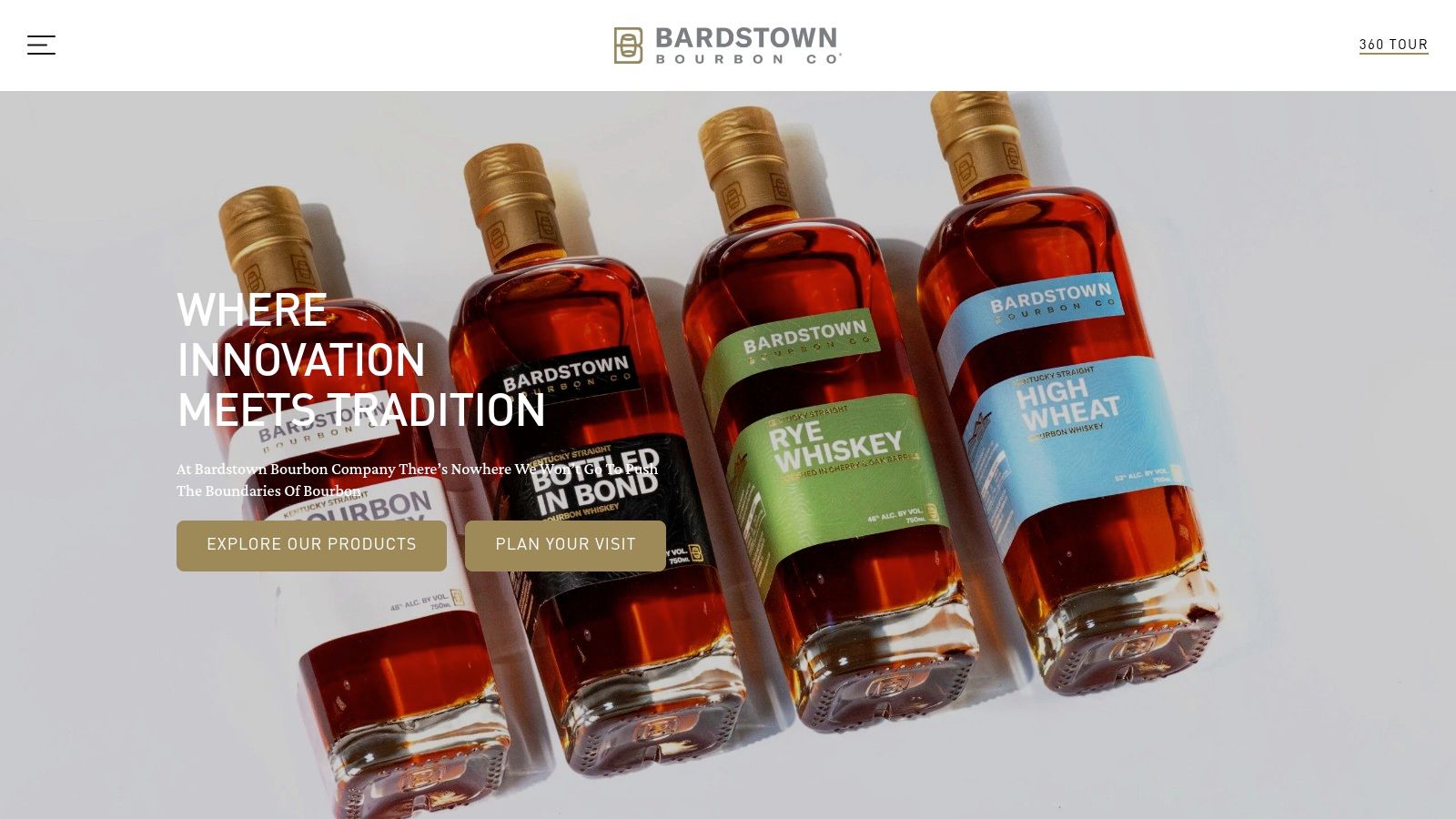
Bardstown Bourbon Company gives hosts a ready-made progression because its portfolio is divided into distinct product families. Origin Series provides in-house, age-stated bourbon and rye baselines. Discovery Series explores blends, while Barrel Finish, Single Barrel, and Distillery Reserve releases introduce more variables for a more advanced group.
That structure makes Bardstown one of the most practical premium spirits brands for education. A new drinker can begin with an Origin Series bottle and focus on basic aroma, palate, finish, and proof. More experienced tasters can then compare a Discovery blend or Barrel Finish release and ask how blending or secondary maturation changes the original profile.
Best tasting role
Bardstown is the structured progression bottle. Its product families let a host build a flight that moves from recognizable foundations toward more complex combinations without changing producers at every step. That consistency helps tasters understand process rather than only reacting to unrelated flavors.
The company also offers visitor experiences at Bardstown and Louisville tasting rooms, plus The Reserve membership program for exclusive access. Direct purchasing can vary by state, and many bottles still move through the three-tier system. Limited releases may require membership, so a host should source the intended bottles before announcing a themed event.
Try an Origin bourbon neat beside a Discovery expression. Then compare a Barrel Finish release with a standard sample and ask whether the finish adds fruit, spice, oak, sweetness, or more weight. The exercise helps beginners understand that “premium” can refer to a deliberate production choice, not only age or rarity.
5. Westland Distillery
Westland changes the center of gravity in a bourbon-heavy tasting. The Seattle producer focuses on American Single Malt, using Pacific Northwest grain and oak choices to create a style with a different relationship to malt, wood, and regional identity. Its Flagship expression gives newcomers an accessible starting point, while the Cask Exploration series adds releases such as Wine Cask Finish and Beer Cask Finish.
The contrast is immediate in a blind flight. Bourbon drinkers may expect corn sweetness, vanilla, and familiar oak. Westland invites them to consider roasted malt, cereal notes, dried fruit, cocoa, smoke, or wine-derived character instead. The style is useful not because it imitates Scotch, but because it shows how American producers can build a distinct single malt category from local ingredients and cask decisions.
Best tasting role
Westland is the malt contrast. Put it after bourbon or rye, not before, so tasters have a familiar reference point. Its regional and cask-focused identity gives the group a way to discuss how grain, fermentation, maturation, and finishing can produce a whiskey that doesn't fit a conventional bourbon template.
The distillery maintains an open tasting room and bottle shop, with select products available through direct-to-consumer channels. Shipping restrictions vary by state, and selection can change depending on local compliance. For hosts who want to explain the category before pouring, this introduction to American Single Malt whiskey provides useful context.
Start with Flagship, then move to a Cask Exploration bottle. Serve both neat before adding water, and ask tasters to describe texture as well as flavor. A malt whiskey may reveal itself through body and cereal character before anyone identifies a specific fruit or spice note.
6. Kings County Distillery
Kings County Distillery brings New York City energy to the flight. As the city's oldest operating post-Prohibition distillery, it has built its identity around pot-distilled bourbon and rye, small-format aging, and releases that refuse to stay inside familiar category boundaries. Peated Bourbon, Chocolate Whiskey, and single-barrel cask-strength bottlings give tasters several ways to encounter the brand's distinctive house style.
That individuality makes Kings County valuable for palate calibration. A recognizable whiskey can teach a new drinker what it means to detect a producer's signature, even when the bottle's exact identity is hidden. Peated Bourbon can introduce smoke in an American context, while Chocolate Whiskey demonstrates how an experimental release can shift expectations about what a whiskey tasting should include.
Best tasting role
Kings County is the experimental signature bottle. Use it when the group needs a clear outlier, but don't place it beside delicate samples without planning the order. Smoke and strong flavor can linger, so follow the beginner-friendly progression of lighter and sweeter pours first, then move toward richer or smokier whiskey.
The distillery's on-site experiences and curated gift sets support a social tasting format. Smaller 200 ml and 375 ml bottles also make sampling more approachable, while annual barrel-strength and limited bottlings offer deeper options for enthusiasts. Limited releases can sell quickly, and small-batch or barrel-strength products generally sit at a higher price tier.
Pour Peated Bourbon after the gentler samples, and use water between expressions. A host can also give the group a plain cracker or still water, keeping the palate reset simple. The point isn't to find a universally likable bottle. It's to identify the flavors each person notices and enjoys.
7. Widow Jane Distillery
Widow Jane combines premium shelf recognition with a story that works particularly well in a blind reveal. The Brooklyn-linked producer proofs its whiskey with limestone-rich water from the Rosendale mines, connecting the brand to New York geography in a way that listeners can understand before they taste. Its lineup includes 10-Year Straight Bourbon, Baby Jane Bourbon, Paradigm Rye, limited cask finishes, and city-focused editions such as Borough Blend.
The brand gives a tasting host several levels of conversation. The 10-Year expression can serve as the mature bourbon reference, Baby Jane introduces heirloom corn into the discussion, and Rye Shifts the grain emphasis toward spice and structure. The city editions add another layer, showing how a premium brand can use place and identity as part of the experience around the bottle.
Best tasting role
Widow Jane is the recognizable terroir story. In a blind flight, ask participants to describe texture, mineral impressions, sweetness, and oak before disclosing the Rosendale water connection. The reveal doesn't prove that water alone defines the whiskey. It gives the group a concrete way to discuss proofing, place, and brand storytelling together.
Official direct bottle sales are limited, so most purchases route through retailers. The brand's active visitor hours and merchandise storefront add an experiential dimension, while its strong shelf presence can help tasters find a full bottle after the event.
Serve Baby Jane or 10-Year Straight Bourbon after lighter samples and before any especially smoky whiskey. Compare the bottle with a rye if you want to focus on grain structure, or with another New York-linked producer if the theme is regional identity.
Premium Spirits: 7-Brand Comparison
| Producer | Implementation complexity | Resource requirements | Expected outcomes | Ideal use cases | Key advantages |
|---|---|---|---|---|---|
| Frey Ranch Distillery | Moderate, vertical integration simplifies storytelling but availability can be sporadic | Moderate cost; intermittent retail/DTC sourcing | Strong grain-to-bottle provenance and terroir-driven flavors | Educational blind flights; provenance-focused tastings | 100% estate grain, transparent provenance, distinctive terroir |
| Southern Distilling Company – “Southern Star” | Moderate–High, broad portfolio requires careful curation | Moderate; expanding distribution, pricing often retailer-dependent | High-proof/value samples across multiple styles | Proof and mashbill comparison flights; tours; private selects | Wide style range, Bottled‑in‑Bond value, contract-distilling |
| Barrell Craft Spirits | High, batch-to-batch variation needs selection and notes | Variable cost; generally good national availability via DTC networks | Bold cask-strength profiles and adventurous finishes that stand out | Adventurous blind sets; blending and finishing education | Blending expertise, creative finishes, transparent batch notes |
| Bardstown Bourbon Company | Moderate, clearly segmented product families facilitate curation | Moderate; three-tier distribution limits consistent DTC access | Consistent, award-recognized baselines plus contrasting barrel finishes | Age-stated baseline flights; barrel-finish and discovery comparisons | Segmented product lines, consistent awards, visitor experiences |
| Westland Distillery | Moderate, single-malt category requires different tasting framework | Moderate; select DTC availability and state shipping limits | Distinct American single-malt profiles that diversify bourbon-heavy kits | Single-malt discovery flights; cask-exploration comparisons | Pacific Northwest malt focus, creative cask exploration |
| Kings County Distillery | Moderate, small-format and experimental barrels need careful curation | Higher per-unit cost; limited small-batch availability | Unique pot-distilled signatures useful for palate calibration | Experimental blind comparisons; sampler packs and small-format flights | Pot-distillation, peated/experimental releases, small-format SKUs |
| Widow Jane Distillery | Low–Moderate, premium terroir story easy to present | Higher price point; retail-focused distribution with limited DTC | Recognizable premium flavors and strong terroir narrative for reveals | Brand-driven reveals; premium tasting events and follow-on sales | Limestone (Rosendale) proofing, premium SKUs, strong brand recognition |
Build a Flight That Teaches Your Palate
These seven brands become more useful when you assign each one a job. Frey Ranch represents estate provenance and farm-to-bottle control. Southern Star shows how mashbill and proof can reshape a tasting. Barrell Craft Spirits demonstrates blending and adventurous finishes, while Bardstown Bourbon Company creates a structured progression from baseline expressions to blends and secondary maturation.
Westland supplies the malt contrast that keeps a flight from becoming seven versions of bourbon. Kings County delivers experimental signatures, especially when smoke or unusual flavor helps calibrate the palate. Widow Jane closes the storytelling loop with recognizable New York identity, Rosendale water, and a portfolio that connects premium presentation with practical tasting discussion.
For new whiskey drinkers, the serving sequence matters more than complicated equipment. Begin with lighter, sweeter samples, then move toward richer, smokier, or higher-proof pours. Taste each whiskey neat first, write down your initial impressions, and only then add a small amount of water. Professional tasting guidance also recommends examining the label before tasting and starting neat, while beginner resources support using water between samples and avoiding smoky and delicate whiskies in the same glass because aroma carryover can distort perception. Read this beginner whiskey tasting guide and this practical guide to drinking whiskey before hosting.
Use the same questions for every pour:
- Aroma: What arrives first, grain, fruit, oak, spice, smoke, or alcohol?
- Palate: Is the whiskey sweet, dry, creamy, peppery, malty, or unusually textured?
- Finish: Does the flavor fade quickly, or does spice, oak, smoke, or fruit remain?
- Proof: Does the alcohol add structure, or does it dominate the experience?
- Perceived value: Would you choose the bottle because of the liquid, the story, the format, or the overall experience?
A Blind Barrels-style gathering turns those questions into a communal game. Blind samples remove brand and price bias, a tasting table guides aroma, tasting, and finish notes, and the reveal lets everyone compare their guesses with the actual whiskey. Scoring age, proof, and whiskey type gives beginners a reason to trust observation over confidence, while the shared discussion makes discovery more memorable.
The best premium spirits brand for you may not be the rarest bottle or the most expensive one. It may be the whiskey that teaches you why you prefer estate grain, a soft wheated profile, a bold rye, a finished blend, regional malt, smoke, or a particular house style. Taste without the label first, then decide which story deserves a place on your shelf.
Blind Barrels delivers a quarterly blind whiskey tasting subscription with four top-shelf samples from small American craft distilleries, plus a tasting table, QR-code reveals, bottle access, and a palate-scoring game. Visit Blind Barrels to turn this seven-brand tasting approach into a guided, communal whiskey experience.