

A barrel of “red eye” whiskey once became the target of an armed temperance group in Indiana, while drinkers nearby turned the incident into a request for “a shot of redeye.” That strange episode captures the term perfectly: vivid, useful, and never as tidy as a legal whiskey category.
The Origins of the Red Eye Term
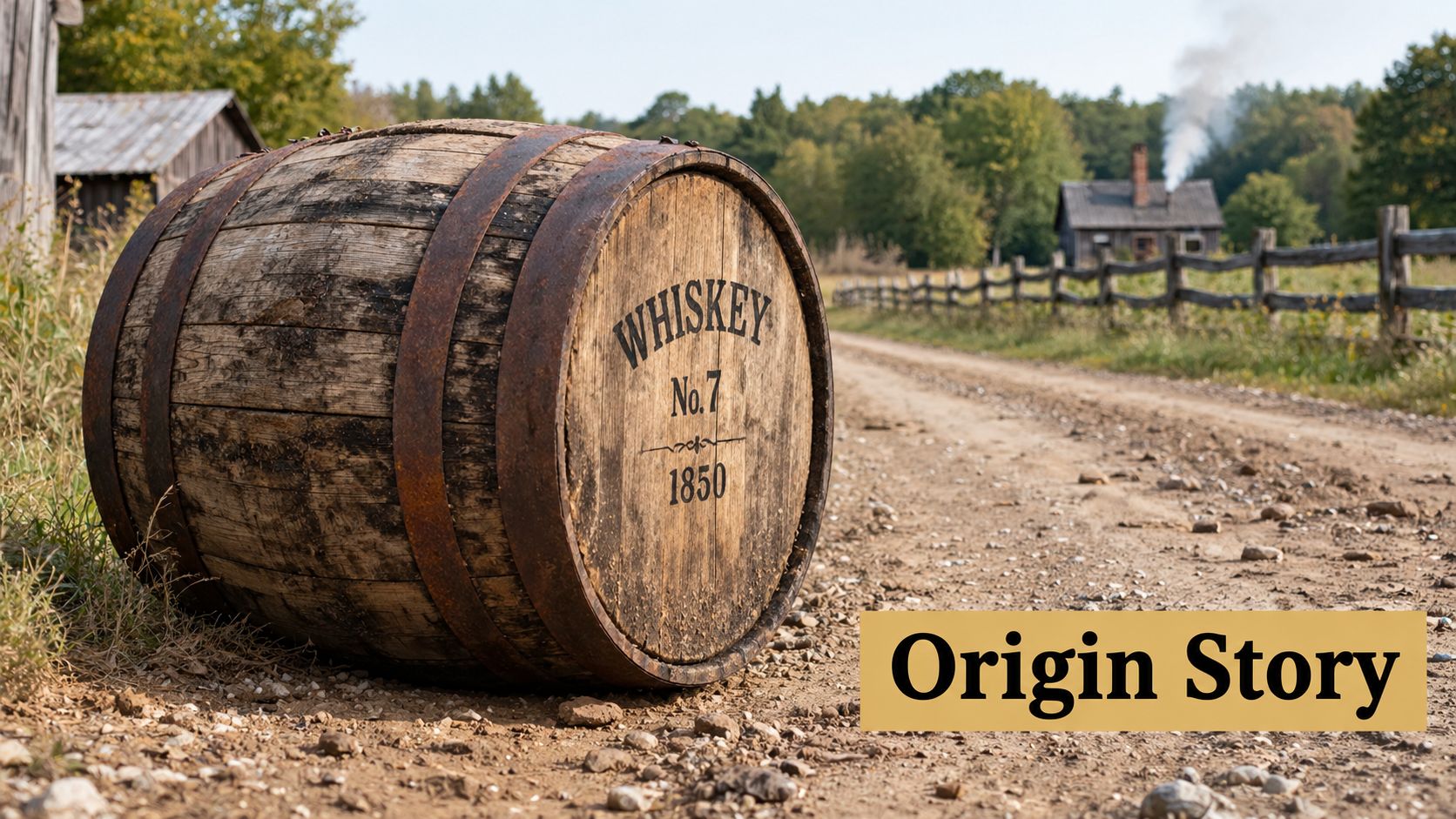
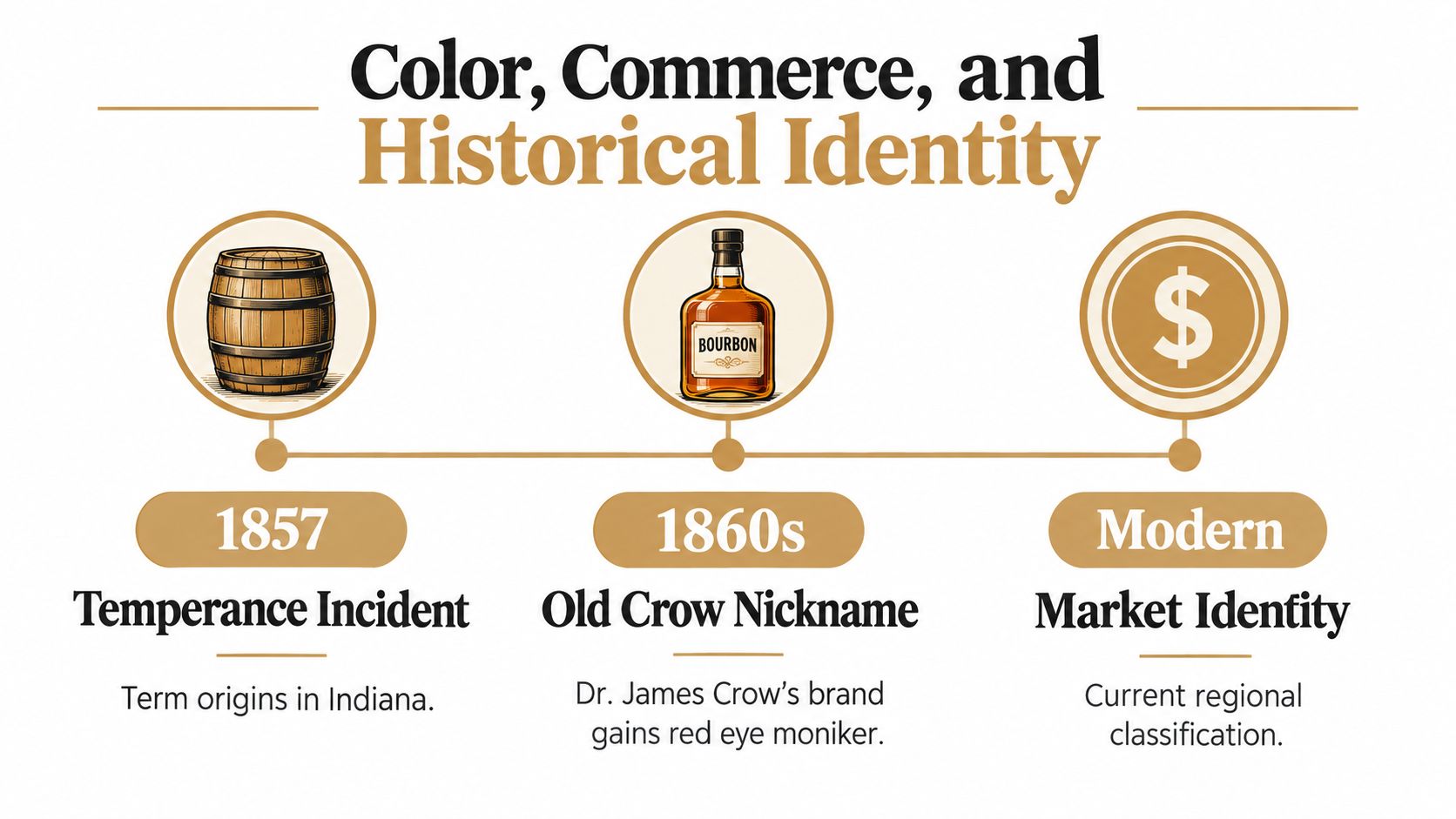
In 1857, New Waverly, Indiana, was the setting for a confrontation that sounds almost too theatrical for a county history. An armed temperance group fired at a barrel of “red eye” whiskey, trying to prevent the liquor from being consumed. The barrel survived the attack, and the drinkers reportedly answered by requesting “a shot of redeye.”
The story appears in a history of Cass County, Indiana, published in 1913 by Jehu Z. Powell. His account connects the phrase with the volatile drinking culture of the pre-Prohibition United States, when whiskey was sold, shared, criticized, and defended in language that rarely followed modern product categories. The documented account of the Indiana incident and the phrase “shot of redeye” offers an early explanation for why “shot” became associated with a small serving of strong liquor.
A phrase born outside the bottle shop
Powell's account shouldn't be treated as definitive proof that this was the sole origin of the word “shot.” It does, however, place red eye whiskey in a specific year, a specific Indiana community, and a recognizable social conflict. The term was ordinary vernacular for whiskey, not the registered name of one national brand.
That distinction matters. A drinker in the nineteenth century could use “red eye” to suggest strength, roughness, or an inexpensive spirit. Another speaker might use it for whiskey whose reddish color evoked maturation in oak. The phrase carried atmosphere more reliably than technical information.
The episode also belongs to a larger American whiskey story. Readers exploring where whiskey was invented quickly encounter a tradition shaped by local production, regional vocabulary, and changing ideas about what counted as respectable drinking. In that setting, a nickname could travel through taverns and family stories long before a distiller standardized a label.
Historical clue: “Red eye” tells you more about how people talked about whiskey than about the exact grains, proof, or age inside the barrel.
For a modern drinker, that uncertainty isn't a problem to hide. It's the reason to approach the term as a piece of drinking culture first, then ask what the whiskey itself reveals.
Color, Commerce, and Historical Identity
The phrase took on another shade of meaning when drinkers connected it with the appearance of matured American whiskey. Historical accounts describe Dr. James Crow's Old Crow bourbon as “red whiskey,” “red liquor,” or “red eye,” because charred barrels gave the spirit a red hue. The nickname points to a time when color served as a visible sign of the whiskey's journey through oak.
The barrel mattered. Charred oak could lend a whiskey a reddish or amber appearance familiar to modern bourbon drinkers, linking the spirit's look with wood, time, and transformation. That association makes “red eye” more than a synonym for harsh liquor. In some contexts, it suggested a mature, oak-influenced spirit with the color people expected from American whiskey.
Old Crow and the commercial power of a style
Old Crow also shows how a nickname could sit beside serious commercial importance. Historical accounts report that it was the leading-selling bourbon in the United States until the 1950s, when Jim Beam and Jack Daniel's surpassed it. The historical account of Dr. James Crow and Old Crow's “red eye” associations places the term beside a foundational bourbon milestone.
That milestone was the movement from locally variable frontier spirits toward recognizable, oak-aged American bourbon. The whiskey's identity increasingly came from a combination of production, maturation, branding, and public expectation. “Red eye” belongs to that transition because it could describe the visual evidence of oak while still retaining the rough, conversational edge of tavern slang.
A useful way to read the history is to separate appearance from specification. A reddish color may evoke charred oak, but the term itself doesn't establish a mash bill, maturation period, proof, or place of production. Even Old Crow's example doesn't turn “red eye” into a formal style. It shows how consumers attached a memorable phrase to a recognizable whiskey experience.
Why color can mislead a modern taster
Color remains an inviting first impression, but it shouldn't become a verdict. A darker-looking pour may encourage expectations of oak and maturity, while a lighter pour may seem younger or less intense. Those impressions can influence the palate before the first sip.
That's why a blind tasting of red eye whiskey should record color separately from aroma, flavor, and finish. Let the glass suggest a question, not supply an answer. The historical identity is strongest when it leads you to examine the spirit rather than assume what it must be.
Clarifying the Myth and Confusion
Red eye whiskey isn't a standardized whiskey category. The name doesn't legally define bourbon, rye, blended whiskey, or any other production class. Slang references have used “red-eye” for strong or poor-quality whisky, while beverage references have used Red Eye for an entirely different drink. The terminology overview distinguishing slang uses from whiskey categories reinforces the central point: the phrase has never supplied a reliable technical specification.
A bottle or tasting sample called “red eye” therefore doesn't automatically reveal its mash bill, aging regime, proof, or geographic origin. Those details must come from the label, producer, or tasting evidence. If the underlying whiskey type matters, look for an actual designation such as bourbon, rye, or blended whiskey instead of treating an evocative nickname as a guarantee.
The cocktail with the same name
The confusion grows because Red Eye is also the name of a mixed drink. Sources describe it as beer combined with tomato juice, sometimes with egg, and classify it as a cocktail rather than a whiskey style. The slang reference describing the beer-based Red Eye drink makes the separation clear.
That means a whiskey discussed as “red eye” shouldn't automatically taste like tomato, beer, or savory breakfast ingredients. Those expectations belong to a separate beverage tradition. A whiskey sample can evoke potency, roughness, or the idea of morning-after drinking without containing any of those cocktail components.
| Term | What it may refer to | What it doesn't guarantee |
|---|---|---|
| Red eye whiskey | Historical or regional whiskey slang | A mash bill, age, proof, or production method |
| Red Eye cocktail | Beer with tomato juice, sometimes egg | A whiskey base or whiskey flavor |
| Bourbon or rye | An underlying whiskey category | That the bottle carries the red eye nickname |
A better answer to the bottle-shop question
When someone asks, “What is red eye whiskey?” the most accurate answer begins with a clarification. It's a flexible historical term, not a legally defined style. The next question should be, “What whiskey is underneath the name?”
That approach protects the drinker from modern folklore presented as fact. It also creates a better tasting experience because the glass becomes evidence. You can judge proof, oak extraction, grain character, aroma, palate, and finish without asking an unregulated nickname to do the work of a label.
The American Craft Whiskey Landscape
The modern craft market gives this ambiguity a useful setting. Small American distilleries often work with local audiences and distinctive production choices, but the word craft itself doesn't have one universally uniform definition. The American Craft Spirits Association defines a craft distillery as a United States producer making fewer than 750,000 proof gallons annually, while the American Distilling Institute uses a lower ceiling of 100,000 proof gallons. The Congressional Research Service comparison of craft-distillery definitions explains why the label can cover different groups depending on which definition applies.
That distinction matters for red eye whiskey because a regional nickname and a craft designation answer different questions. “Red eye” describes historical language or perception. “Craft” describes a producer category under a particular industry definition. Neither one tells you exactly how the whiskey will smell or taste.
Why regional bottles deserve a blind pour
Testimony presented to Congress cites data that 90% of craft distilleries produce fewer than 1,500 cases per year, and 92% of those businesses conduct their activity within their home state. The Congressional testimony containing those craft-distillery figures shows why many American craft whiskeys remain regional experiences rather than nationally familiar brands.
A bottle from a small producer may be easier to find near its distillery than across the country. It may sit beside better-known names such as Old Crow, Jim Beam, and Jack Daniel's, yet arrive with a much narrower distribution story. That makes a blind tasting especially revealing. The glass can put a regional craft whiskey and a familiar bottle on equal footing, at least for the first sip.
A useful distinction: “Craft” tells you about the producer's scale under a chosen definition. “Red eye” tells you about a whiskey's language and associations. Neither replaces tasting.
For new drinkers, that separation reduces pressure. You don't need to recognize a label or defend a famous brand. You can describe what you find, compare grain character and oak, and decide whether the whiskey's rougher or more mature associations appeal to you.
Practical Tips for New Whiskey Drinkers
A good tasting starts small. Beginner guidance recommends sampling only three or four whiskeys in one session, moving from lower-proof whiskey to higher-proof whiskey so alcohol intensity doesn't overwhelm later samples. This beginner whiskey-tasting guide also advises against shot-style drinking when the goal is to notice aroma and flavor.
Set up the flight
Pour modest samples into similar glasses and hide the labels if you're testing your assumptions about red eye whiskey. Put the lower-proof sample first, then move upward, keeping water available between pours. If you're hosting a broader gathering, a guide to tips on building a party bar can help with general drink service, while the tasting itself should stay focused on a short flight.
Use this order:
- Look first. Note the color and clarity without deciding that darker means older or better.
- Nose slowly. Raise the glass gradually and breathe through your nose and mouth as the aromas develop. Look for grain, oak, fruit, spice, sweetness, or alcohol intensity.
- Sip normally. Don't throw the whiskey back like a shot. Let a small sip move across the palate, then notice the finish.
- Record the basics. Write down aroma, palate, finish, proof if known, and your suspected base category.
The step-by-step guide to tasting whiskey can provide a useful reference while you practice. Your notes don't need to sound like a professional review. “Dry oak,” “peppery,” “soft grain,” and “warming finish” are more useful than grand descriptions you don't understand.
Taste neat, then test water
Taste the whiskey neat first. A master blender's recommended sequence is to observe the whiskey's type, alcohol content, color, and apparent tasting notes, then establish an undiluted baseline before changing it. After that first sip, add a few drops of water and check whether the aroma opens, the flavor shifts, or the alcohol burn becomes less pronounced. The beginner guide covering neat tasting and the few-drops-of-water technique treats water as an optional tasting variable, not a required ingredient.
Practical rule: Taste the original pour before you edit it. Otherwise, you won't know what the water changed.
For red eye whiskey, this method is particularly helpful. The nickname may prepare you for a forceful or rough spirit, but your glass might show something rounder, sweeter, more oak-driven, or more grain-forward. Record that surprise. It's often more educational than confirming the story you expected.
Embracing Blind Tasting for Discovery
The uncertainty surrounding red eye whiskey becomes an advantage when the label disappears. Since the term doesn't establish a regulated style, tasters can focus on what the spirit offers: aroma, palate, proof, oak character, grain, and finish.
A blind flight also separates preference from reputation. A familiar brand may feel important before you taste it, while a small regional craft whiskey may arrive without any expectations attached. Once both are poured anonymously, your notes have room to lead.
Use a simple tasting sheet, make a guess about the underlying category, and revisit the samples after the first pass. The best blind whiskey tasting approach turns uncertainty into a structured game, especially for drinkers who are still learning which flavors they enjoy.
Red eye whiskey doesn't need one final definition to be worth exploring. Its history moves from an Indiana temperance confrontation to the color of charred-oak bourbon, then into modern confusion with a beer-and-tomato cocktail. The blind glass brings those threads together by asking a more useful question: what does this whiskey do on your palate?
Blind Barrels sends four blind samples each quarter from small American craft distilleries, with a tasting table for aroma, taste, and finish, plus a reveal game covering age, proof, and whiskey type. Visit Blind Barrels to explore red eye whiskey and other American craft pours without brand or price bias.