

When you get right down to it, the main difference between rye vs bourbon whiskey comes from a single, simple rule. Bourbon must be made from at least 51% corn, which gives it that classic sweet character. Rye, on the other hand, needs at least 51% rye grain, and that’s where its signature spicy, peppery kick comes from. This one requirement in the grain recipe—what distillers call the "mash bill"—is what sends each of these iconic American spirits on its own unique flavor journey.
Decoding Bourbon and Rye Whiskey
Jumping into the world of American whiskey might seem intimidating, but the real distinction between bourbon and rye is refreshingly straightforward. I like to think of the main grain as the lead singer in a band—it sets the entire tone. Corn steps up to the mic and delivers smooth, sweet notes of caramel and vanilla. Rye grabs the spotlight with a bold, peppery spice that wakes up your palate.
This core difference is the perfect starting point if you're new to whiskey. Just knowing the mash bill helps you guess what’s coming when you take that first sip and, more importantly, helps you figure out what you actually like. Whether you find yourself drawn to the mellow sweetness of a classic bourbon or the zesty punch of a rye, it all begins with the grain.
Your First Step into American Whiskey
For anyone just starting out, the best way to learn is by tasting. Forget trying to memorize every little rule right off the bat and just focus on the experience itself.
- Start with the Basics: Pour an approachable bourbon and a classic rye side-by-side. The contrast between sweet and spicy will be immediately obvious.
- Trust Your Palate: There's no right or wrong here. Just pay attention to what you enjoy—the aromas, the flavors, the finish. It’s your journey.
- Explore Craft Brands: Once you've got the fundamentals down, check out what craft distilleries are doing. American distillers are pushing boundaries, and brands like Frey Ranch or Southern Star are creating some really unique whiskeys that show just how diverse these categories can be.
This visual helps break down the essential character of each whiskey based on its primary grain.
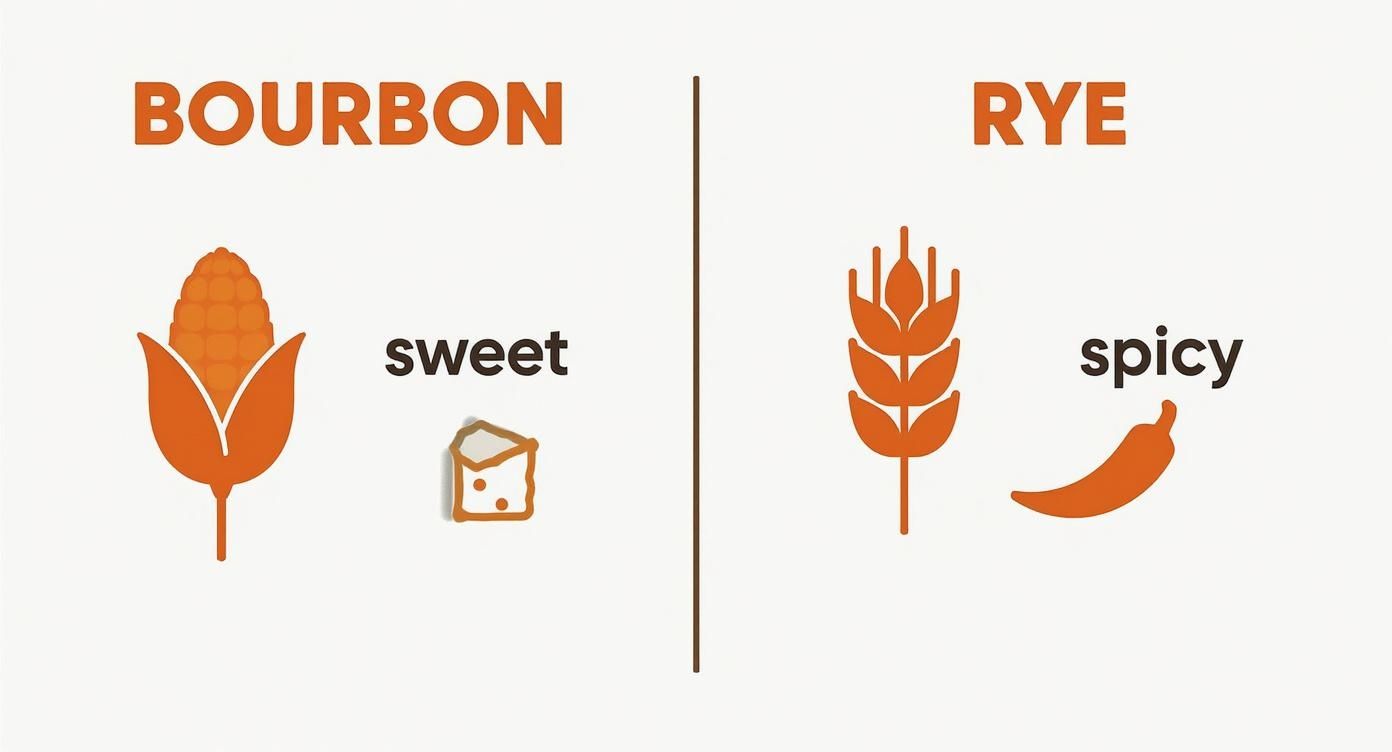
As the infographic shows, it’s all about corn’s sweetness versus rye’s spice. This growing appreciation for distinct, authentic flavors is fueling some massive growth in the industry. The global whiskey market is expected to skyrocket from USD 118.5 billion in 2025 to USD 345.7 billion by 2035, thanks in large part to the craft spirits movement and a new generation of drinkers looking for something real. You can pour through the whiskey trends shaping 2025 on hiredragons.com for a deeper dive.
How Mash Bills And Aging Define Each Whiskey
If you really want to understand the heart of the rye vs bourbon whiskey debate, you have to look at the recipe. That recipe, known as the mash bill, is the list of grains that lays the groundwork for everything that follows. In the U.S., the law is crystal clear about what makes a bourbon a bourbon and a rye a rye.
It all boils down to the "51% rule." To legally be called bourbon, a whiskey's mash bill needs at least 51% corn. To earn the name rye, it must be made from at least 51% rye grain. Simple as that.
But that one simple requirement sends these two whiskeys down completely different paths. Corn is a sweet grain, plain and simple, which is why bourbons burst with those classic notes of caramel, vanilla, and toasted oak. Rye, on the other hand, is where the spice comes from. It gives the whiskey a distinctly peppery, sometimes herbal, and often fruity character that results in a drier, more assertive spirit.
The Role of Secondary Grains
So, what about the other 49%? That’s where distillers get to play and put their signature on the spirit. These "secondary" or "flavoring" grains are usually malted barley—which provides enzymes for fermentation and a nice biscuity sweetness—and often wheat or even more rye.
- Wheated Bourbons: When wheat is the main secondary grain, it creates a much softer, gentler bourbon with lovely notes of honey and fresh bread. They’re a fantastic entry point for new drinkers looking for something smooth. Just look at the lineup from Garrison Brothers Distillery in Texas, which is famous for its mellow, winter wheat-based bourbons.
- High-Rye Bourbons: This is where things get interesting. When a distiller amps up the rye content (usually between 20-35%) alongside the corn, you get a beautiful balancing act. These bourbons have all the classic sweetness you expect, but with a bold, spicy kick on the finish.
For a new whiskey drinker, understanding the secondary grain is your secret weapon. If you find a standard bourbon too sweet, try a high-rye version next. If you find rye whiskey too sharp, a wheated bourbon might be your perfect match.
This kind of creativity with grain is exploding in the craft scene. Distillers are constantly pushing beyond the traditional mash bills. You can dive deeper by exploring alternative grains in craft whiskey in our detailed guide.
The Laws of Aging
Beyond the grains, strict aging laws are in place to guarantee quality and consistency. It’s another one of those things that really sets American whiskey apart on the world stage.
For a whiskey to be labeled "straight" bourbon or "straight" rye, it has to follow these non-negotiable rules:
- Aged in New, Charred Oak Containers: This is a big one. All that color and a huge chunk of the flavor—vanilla, oak, toasted marshmallow—comes directly from the fresh, charred wood.
- Minimum Aging Period: The spirit has to spend at least two years in the barrel. Any straight whiskey aged for less than four years is also required to state its age right on the label.
Because they share these aging requirements, both rye and bourbon pull deep, complex flavors from the barrel. The real magic is in how those barrel notes interact with the base spirit, either amplifying bourbon's inherent sweetness or providing a rich counterpoint to rye's signature spice.
Comparing Rye and Bourbon Flavor Profiles
Sure, the legal definitions and production methods are interesting, but the real story of the rye vs. bourbon whiskey rivalry unfolds in the glass. This is where those mash bill percentages stop being numbers on a page and become actual tasting notes—and where the journey gets personal. Each spirit offers a completely distinct experience, shaped directly by its dominant grain.
With its corn-heavy foundation, bourbon is all about an inviting, gentle sweetness. That corn provides a rich, full-bodied mouthfeel that acts as the perfect canvas for all the delicious flavors pulled from new, charred oak barrels.
You can almost think of it as a dessert in a glass. You'll pretty much always find notes of:
- Caramel and Toffee: This comes directly from the sugars in the oak barrel caramelizing during the charring process.
- Vanilla and Custard: Compounds called vanillins are released from the wood, giving bourbon its signature creamy sweetness.
- Toasted Oak and Baking Spices: The wood itself contributes layers of cinnamon, nutmeg, and a pleasant, warming toastiness.
For someone new to American whiskey, a classic bourbon is often the most welcoming starting point because of this smooth, sweet profile.
The Spicy Character of Rye
If bourbon is a warm hug, rye is a firm, confident handshake. The rye grain itself builds a flavor profile that is sharper, drier, and way more assertive. It’s a whiskey that makes its presence known with a signature spicy kick.
Rye’s trademark notes often include pepper, mint, and a whole range of herbal or fruit-forward flavors you just won’t find in a typical bourbon. Its finish tends to be crisper and cleaner, making for a sip that feels both refreshing and invigorating.
A great tip for new whiskey drinkers is to think about your preferences in other foods. If you enjoy spicy, savory dishes and dark bread, you will likely appreciate the bold character of a rye whiskey.
This distinctive spice has made rye a beloved, if smaller, corner of the whiskey world. In fact, the global rye whiskey market is projected to grow from USD 3.89 billion in 2023 to USD 4.98 billion by 2030, a surge driven by its essential role in classic cocktails and the amazing creativity of craft distillers. You can dig into more data on the growing demand for rye whiskey on marketreportanalytics.com.
Navigating the Flavor Spectrum
The beautiful thing about American whiskey is that these categories aren't always so black and white. Craft distillers absolutely love to play in the gray areas, creating fascinating expressions that bridge the gap between sweet and spicy.
A perfect example is to contrast a 'wheated' bourbon with a 'high-rye' bourbon. A wheated bourbon, like the ones from Laws Whiskey House in Colorado, swaps out rye for wheat as the secondary grain, which results in an exceptionally smooth and gentle spirit. On the other hand, a high-rye bourbon from a brand like New Riff Distilling uses a hefty dose of rye, giving you a bourbon that kicks off with sweetness but ends with a satisfying peppery bite. To get better at picking out these notes, you can use our comprehensive bourbon flavor wheel as a guide.
Choosing the Right Whiskey for Your Cocktail
A whiskey’s true personality shines in a well-made cocktail. When you're standing at your home bar, the choice between rye and bourbon is more than just a matter of taste—it's about crafting a specific experience. Each spirit plays differently with bitters, sugar, and citrus, fundamentally altering the soul of the drink you’re about to enjoy.
Your base spirit is the single most important decision for any classic whiskey cocktail. The choice you make will either complement or clash with the other ingredients, so understanding the role each whiskey plays is absolutely crucial.
Old Fashioned: A Tale of Two Whiskeys
The Old Fashioned is the perfect stage to see this difference play out. It’s an elegantly simple recipe—just whiskey, sugar, bitters, and a twist of citrus—which means the base spirit has nowhere to hide. Your whiskey choice defines the entire drink.
-
The Bourbon Old Fashioned: Using bourbon creates a cocktail that is undeniably smooth, round, and rich. The corn’s sweetness softens the sharp, aromatic edges of the bitters, creating a mellow, comforting drink where notes of caramel and vanilla take center stage. It’s a classic for a very good reason.
-
The Rye Old Fashioned: Swapping in rye completely transforms the experience. The whiskey's inherent spice cuts right through the sugar and stands up boldly to the bitters. This version is drier, more robust, and packs a peppery punch that many cocktail lovers swear by. It’s a drink with an attitude.
Tip for New Whiskey Drinkers: Start with a simple rule of thumb. If you want a smooth, easy-sipping cocktail that feels like a warm dessert, reach for bourbon. If you’re looking for a drink with a zesty, spicy backbone that wakes up your palate, rye is your best bet.
Recommendations for Craft Cocktails
While the classics are great, using a high-quality American craft whiskey can elevate your cocktail from good to genuinely memorable. These smaller distilleries often produce spirits with far more character and complexity than their mass-market cousins.
For a next-level Bourbon Old Fashioned, try a bottle from Still Austin Whiskey Co. Their flagship bourbon, "The Musician," strikes a beautiful balance of fruit and spice that adds incredible depth. For a bold and spicy Rye Manhattan, you can’t go wrong with Dad's Hat Pennsylvania Rye. Their whiskey is a fantastic take on the historic Monongahela style, delivering a powerful, spicy character that’s perfect for cocktails.
Bourbon's role in cocktail culture is deeply woven into American history, and its popularity isn’t slowing down. The global bourbon market hit a value of USD 8.29 billion in 2024 and is expected to keep climbing, with North America alone accounting for over 35% of global revenue. This growth is a testament to its versatility, both neat and as a cocktail base. You can find more insights on the whiskey market and its trends on ohbev.com.
Exploring the American Craft Whiskey Scene

Sure, we all know the big names. But beyond those household brands, there's a vibrant revolution shaking up the American whiskey world. We're talking about the small-batch, independent distilleries that are challenging tradition and completely redefining what bourbon and rye can be. This whole movement is driven by pure innovation, passion, and a genuine connection to the raw ingredients.
Think of these craft distillers as the true artists of the whiskey world. They’re the ones playing with heirloom grains, dreaming up unique mash bills that push way past the legal minimums, and using creative barrel-finishing techniques to layer in flavors you never saw coming. What you get is a tidal wave of spirits with incredible depth and personality—a clear, delicious alternative to the mass-produced stuff.
Discovering Craft Distilleries
One of the best parts about diving into craft whiskey is the sheer variety of flavors just waiting for you. These smaller producers almost always have a great story and a unique way of doing things, and you can truly taste it in every single sip. Exploring what they have to offer is an incredible way to expand your palate in the great rye vs. bourbon debate.
A few standouts that show what this scene is all about:
- Frey Ranch Distillery (Nevada): This is a true farm-to-glass operation, since Frey Ranch grows all its own grains. Their Bottled-in-Bond Straight Rye is a must-try, showcasing a complex, four-grain mash bill that hits that perfect balance of spice and sweetness.
- High West Distillery (Utah): Famous for being masters of the blend, High West creates iconic whiskeys like Campfire, which brilliantly combines bourbon, rye, and peated Scotch. Their bottles are proof that a little creativity can lead to something entirely new and unforgettable.
- New Riff Distilling (Kentucky): Even though they're right in the heart of bourbon country, New Riff has made a huge name for itself with bold, high-rye expressions. Their dedication to Bottled-in-Bond standards means every bottle is a high-quality, authentic taste of their craft.
Tips for New Whiskey Drinkers
Finding these gems is half the fun. If you're new to the scene, it can feel a little overwhelming, but a few simple tips will have you navigating it like a pro. Start by looking past the top shelf at your local store and just ask the staff for their craft recommendations.
A fantastic way to start is by visiting a local distillery. Many offer tours and tastings, which give you a chance to meet the people behind the whiskey and hear about their process firsthand. It’s an experience that really connects you to what’s in the glass.
Another great approach is to seek out a curated tasting. A blind tasting, in particular, strips away all the bias that comes with a fancy label or a high price tag, forcing you to focus only on the aroma and flavor. Honestly, it's the purest way to figure out what you genuinely enjoy.
Services like Blind Barrels are built on this exact idea, sending members curated samples from some of America's best craft distilleries. It's an easy, no-fuss way to explore the exciting future of American whiskey right from your own home.
How Blind Tasting Helps You Find Your Preference
So, when the fancy labels, clever marketing, and hefty price tags are stripped away, what do you actually like? The best way to settle the rye vs bourbon whiskey debate for yourself is to taste them blind. It’s the ultimate way to figure out your personal palate without any outside noise.
By removing all the preconceived notions that come with a famous brand or an old bottle, you’re forced to rely on nothing but your senses. You can focus purely on the aroma, the flavor, and the finish, which often leads to some surprising and honest conclusions about what you genuinely enjoy. For newcomers to whiskey, it’s a seriously fun way to build some confidence.
Setting Up a Simple Blind Tasting
You don’t need to be a seasoned expert to host a blind tasting. It’s a fantastic way to explore whiskey with friends, and the setup couldn't be easier.
Here’s a quick guide to get you going:
- Gather Your Whiskeys: Start simple. Pick one classic bourbon and one classic rye. As you get more comfortable, you can toss in more complex bottles—maybe a high-rye bourbon or a wheated one—to see if you can pick out the subtle differences.
- Pour and Conceal: Pour a small amount of each whiskey into identical glasses for everyone tasting. Get a friend who isn't participating to label the bottom of the glasses (like A, B, etc.) and keep the key hidden until the end.
- Taste and Discuss: Go through each sample one by one. Talk about what you smell, taste, and feel on the palate. Is it sweet or spicy? Is the texture smooth or does it have a bold kick? Does it remind you of fruit or fresh herbs? There are no wrong answers here.
- The Big Reveal: Once everyone has jotted down their thoughts and picked a favorite, it’s time to reveal which whiskey was in each glass. You might be shocked by the results!
Blind tasting is the great equalizer. It proves that a whiskey's real value isn't in its price tag or branding, but in the experience it delivers. You might just find your new favorite bottle is one you’ve been walking past on the shelf for years.
For anyone who wants a curated experience without all the prep work, services like Blind Barrels are a fantastic option. They offer a perfect way to explore diverse and exciting American craft whiskeys from the comfort of your own home. You can learn more about how a blind whiskey tasting kit works on our blog.
Common Questions About Rye and Bourbon
When you're trying to figure out the difference between rye and bourbon, a few questions always seem to pop up. Let's tackle some of the most common ones so you can feel more confident picking out your next bottle.
Is Bourbon Sweeter Than Rye?
Yep, bourbon is almost always the sweeter of the two. This comes down to its mash bill, which has to be at least 51% corn. Corn is a naturally sweet grain, and it’s responsible for bourbon’s classic caramel, vanilla, and brown sugar notes.
Rye whiskey, on the other hand, must be made from at least 51% rye grain. This gives it a completely different character—think spicier, peppery, and often a bit drier on the finish.
Can a Bourbon Contain Rye?
Absolutely. In fact, rye is a super common secondary grain in bourbon mash bills. When you see a bottle labeled a "high-rye bourbon," that’s exactly what’s happening.
These whiskeys offer a beautiful balance, bringing together the classic sweetness of corn with a spicy kick from the rye for a more complex profile. Craft distilleries like New Riff Distilling have built their entire reputation on these bold, layered bourbons.
Which Is Better for an Old Fashioned?
This really comes down to what you’re in the mood for. There’s no right or wrong answer, just personal preference.
A bourbon Old Fashioned will be smoother, richer, and a bit sweeter. A rye Old Fashioned is going to be spicier and more assertive—the whiskey’s peppery character really cuts through the sugar and bitters. The best way to find out? Make one of each and see what you think.
If you’re just starting your whiskey journey, a great approach is to begin with a classic, approachable bourbon like Buffalo Trace. Then, try a versatile rye like Old Forester Rye. This gives you a solid baseline for both the sweet and spicy ends of the spectrum.
Once you have a handle on the basics, diving into the world of American craft whiskey from places like Frey Ranch or High West is a fantastic next step. You’ll discover some truly unique and exciting takes on both styles.
Ready to discover your personal preference without bias? The Blind Barrels blind tasting experience sends you curated samples from America's best craft distilleries, letting your palate lead the way. Explore your next favorite whiskey at https://www.blindbarrels.com.