

Diving into the world of rye whiskey can feel like stumbling upon a hidden treasure, especially with all the fantastic bottles coming from both legendary producers and exciting American craft whiskey distilleries. Icons like Wild Turkey and Bulleit are still putting out those classic, spicy profiles we love, while craft brands like High West and Sagamore Spirit are really pushing the envelope with unique, bold flavors that appeal to just about any palate. For anyone new to whiskey, exploring this dynamic category is one of the most rewarding journeys you can take.
Your Guide to the World of Rye Whiskey
Welcome to the bold, spicy, and endlessly fascinating world of rye whiskey. If you're new here, you're in for a real treat. Think of this guide as your personal roadmap, designed to help you navigate the landscape and find the rye that's perfect for you. We'll start by digging into what makes rye so different from other whiskeys—it all comes down to that signature peppery spice from the rye grain itself.
I like to think of rye as bourbon's more assertive, drier cousin. While bourbon tends to lead with sweetness thanks to its corn-heavy mash bill, rye steps right up with a characteristic spice. That spice can show up in all sorts of ways, from crisp black pepper and cinnamon to refreshing mint and even dill. This complexity is what makes it such a fantastic sipping whiskey and the traditional backbone of classic cocktails like the Manhattan and the Old Fashioned.
Finding Your Perfect Rye
For anyone just starting their whiskey journey, I get it—the sheer number of options on the shelf can be overwhelming. The trick is to start with a solid understanding of what you're actually looking for. This guide will introduce you to the key players, from the historic distilleries that basically invented the category to the exciting craft producers who are redefining it, with plenty of tips for new drinkers along the way.
Here are a few pointers for new whiskey drinkers venturing into rye:
- Start with Approachable Proofs: Keep an eye out for bottles in the 90-100 proof range (45-50% ABV). They deliver a full flavor experience without the intense alcoholic heat you might get from a cask-strength pour.
- Try It in a Cocktail First: Rye’s bold character is practically made for cocktails. Mixing it lets you get acquainted with its spicy notes in a more balanced context before you dive into sipping it neat.
- Don't Judge by Age Alone: Sure, older whiskeys can be wonderfully complex, but plenty of younger ryes—especially from American craft distilleries—are incredibly vibrant, flavorful, and offer great bang for your buck.
A common misconception is that all rye whiskeys are aggressive "rye bombs." The reality is so much more diverse. The final flavor is a delicate dance between the exact percentage of rye, the other grains in the mash bill, and the type of barrel it's aged in.
This section is all about building that foundational knowledge. Once you learn about the different styles and the brands that make them, you'll be ready to spot the bottles you're most likely to enjoy. It’s time to turn that curiosity into confident exploration.
What Truly Defines a Great Rye Whiskey
Ever wondered what separates a decent bottle of rye from a truly memorable one? It’s not some single, magical element. Instead, it’s a careful dance between recipe, process, and time. Getting a handle on these building blocks is the first step for any whiskey drinker looking to confidently pick a winner off the shelf.
At its core, the definition of American rye whiskey is pretty straightforward. Federal law dictates that the mash bill—the grain recipe used to make the whiskey—has to contain at least 51% rye grain. Think of it like baking bread. A loaf with just a little rye flour gets a hint of spice, but one made with over half rye is dense, earthy, and packed with that distinct, robust character. The exact same idea applies to whiskey.
That 51% rule is just the legal starting line. Many of the best rye whiskey brands, especially those coming from American craft producers, push that number way higher. Some even go for a bold 100% rye mash bill, which delivers an intense, pure expression of the grain’s signature peppery spice.
The Supporting Grains in the Recipe
While rye is the undisputed star of the show, the other grains in the mash bill play crucial supporting roles. They’re absolutely essential for creating balance and complexity, preventing the final spirit from being a one-note spice bomb.
- Corn: This is often the secret to adding sweetness and a richer, rounder mouthfeel. It brings in those familiar caramel and vanilla notes that help soften rye's spicy edge.
- Malted Barley: You can think of this as the workhorse grain. It contains the natural enzymes needed to convert starches into fermentable sugars, all while contributing subtle notes of toast, chocolate, and nuts to the final flavor.
For anyone new to whiskey, paying close attention to the mash bill is a fantastic clue to what’s in the bottle. A rye with a higher corn content will likely be sweeter and more approachable, making it a great place to start your journey. You can learn more about how this recipe compares to its famous cousin by exploring the key differences between bourbon and rye.
The art of a great rye isn't just about hitting the 51% mark. It’s about how the distiller uses the remaining 49% to either complement, soften, or amplify the rye’s inherent character.
From Raw Spirit to Liquid Gold
Once the grains are fermented and distilled into a raw, clear spirit, the real transformation begins. By law, American rye whiskey has to be aged in new, charred oak barrels. This aging process is where the magic truly happens.
The fiery, unaged spirit soaks into the wood, mingling with the charred layer and the oak itself. Over the years, this intimate conversation does two things: it subtracts the harsh, undesirable flavors and adds new, complex ones. The charred wood acts like a natural filter, while the oak imparts its signature personality.
The Impact of Barrels and Time
The barrel is responsible for a huge chunk of a whiskey’s final flavor—and 100% of its color. As the whiskey rests inside, it pulls out compounds from the wood that create those familiar and beloved flavors we all look for.
- Vanilla and Caramel: These classic sweet notes come directly from the breakdown of wood sugars (lignin and hemicellulose) in the oak.
- Oak and Spice: The wood itself imparts tannins and spice notes like cinnamon and clove, adding structure and complexity.
- Color: Those deep amber and rich mahogany hues? They come entirely from the whiskey’s time spent inside the barrel.
Here’s a great tip for new whiskey drinkers: the warehouse environment matters. A whiskey aged in a hot climate will expand and contract into the wood more aggressively, maturing much faster than one resting in a cooler, more stable location.
Understanding these fundamentals empowers you to look at any label, understand the story behind the spirit, and make an educated guess about how it will taste. You’re no longer just a curious beginner but a confident buyer, ready to explore the vast world of rye.
Getting to Know the Iconic American Rye Brands
While knowing the rules of rye whiskey is important, the real fun begins when you start exploring the brands themselves. The true personality of rye comes alive in the bottles from the iconic American distilleries that have mastered this spicy spirit. These are the titans of the industry, the names you see lining the top shelves of bars and liquor stores everywhere.
Getting familiar with these powerhouse brands is a great way to build your palate. They’ve become household names for a reason—they consistently deliver quality, character, and a taste of history in every bottle. By understanding their signature styles, you’ll start to figure out what you like, which is the most important step for any whiskey drinker.
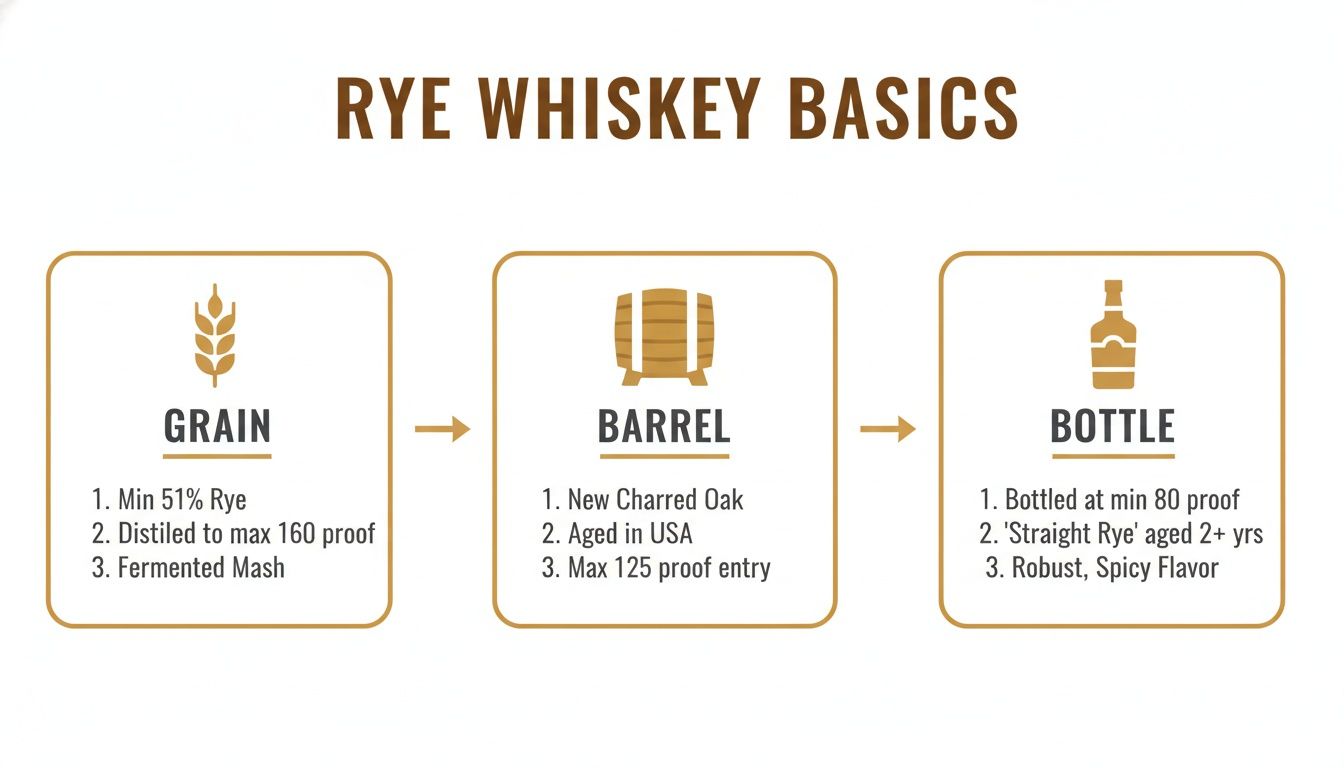
This journey from grain to glass is where the magic happens, all guided by the specific rules for aging and bottling that give rye its distinct character.
The Cocktail Powerhouses
Some brands have built their reputation as the perfect backbone for classic cocktails. Their bold, high-rye profiles are specifically designed to stand up to other strong ingredients like sweet vermouth or bitters, making sure the whiskey’s signature spice always cuts through.
- Bulleit Rye: Famous for its aggressive, high-rye mash bill of around 95%, Bulleit delivers a serious punch of spice and black pepper. It’s a modern classic and a bartender's best friend for crafting a spicy Manhattan or a robust Old Fashioned. If you’re new to rye, trying Bulleit in a cocktail is a fantastic introduction.
- Wild Turkey 101 Rye: Known for its bold, unapologetic flavor, this one brings a rich mix of spice, vanilla, and caramel. Its higher proof means it refuses to get lost in a cocktail, adding a warm, flavorful kick that you can’t miss.
These workhorse ryes are reliable, easy to find, and offer a great baseline for what the category is all about. They really set the standard and are often the first rye many people fall in love with.
The Premium Sippers
Beyond the cocktail bar, a growing number of producers are elevating rye into a true sipping spirit. These brands are focused on older age statements, unique barrel finishes, and single-barrel selections to show off the incredible depth and complexity rye can achieve.
- WhistlePig: This Vermont-based brand is largely credited with putting ultra-premium rye on the map. Their flagship 10-Year is a rich, complex whiskey with notes of orange peel, toffee, and allspice. It’s a fantastic neat pour that demands to be savored.
- Michter's: With deep roots in American whiskey history, Michter's is revered for its meticulous production and exceptional single-barrel offerings. Their US*1 Single Barrel Rye is a masterclass in balance, offering a softer, more elegant spice with hints of citrus and dark cherry.
The rise of these premium brands has proven that rye can be just as nuanced and sophisticated as any top-shelf bourbon or single malt scotch. They invite you to slow down and savor every sip.
The influence of these producers is undeniable. American rye brands have carved out a serious space for themselves, especially in bars and restaurants. While Irish whiskey has a strong presence, American bourbons and ryes collectively account for nearly 46% of whiskey sales in these venues, proving a strong and growing demand. You can explore more on-premise whiskey sales trends to see just how well these brands are performing.
This strong market presence makes these iconic brands more than just benchmarks for flavor; they're driving the entire whiskey industry forward. Getting to know them is an essential part of any rye lover's journey.
Comparing Leading American Rye Brands
To see how these differences play out, let's put a few of the big names side-by-side. This comparison highlights how a distillery's choices in mash bill and proof create a unique tasting experience in the final bottle.
| Brand | Mash Bill (Approx. % Rye) | Typical Proof (ABV) | Common Tasting Notes |
|---|---|---|---|
| Bulleit Rye | 95% | 90 (45%) | Black pepper, baking spice, hint of vanilla |
| Wild Turkey 101 Rye | 51% | 101 (50.5%) | Bold spice, caramel, vanilla, hint of citrus |
| WhistlePig 10 Year | 100% | 100 (50%) | Orange peel, toffee, allspice, mint |
| Michter's US*1 Rye | Varies (Single Barrel) | 84.8 (42.4%) | Elegant spice, dried fruit, citrus, dark cherry |
| High West Double Rye! | Blend of 2 ryes | 92 (46%) | Cinnamon, anise, mint, honey |
This table is just a starting point, of course. Each brand offers a distinct window into the world of rye, from the spice-forward cocktail staples to the complex, elegant sippers. The best way to understand them is to taste them for yourself.
Discovering American Craft Whiskey Distilleries
If the big, iconic brands are the classics that built the house of rye, the American craft distillery movement is its soul. This is where the real action is happening today, a place where tradition gets a healthy dose of relentless creativity. The result? Some of the most exciting bottles you can find anywhere.
These independent distillers are rewriting the rulebook. They’re venturing way beyond the familiar flavor profiles to show us what rye is truly capable of. They're artisans in the truest sense, often digging up heirloom rye grains—old varieties that bring unique spicy, floral, or even chocolatey notes you just won’t find in commercial crops. But their obsession with raw materials is just where the fun begins.
The Art of Innovation and Regional Character
What really defines American craft whiskey is a genuine willingness to experiment. These producers are true pioneers, especially when it comes to barrel finishing. They’ll take their carefully distilled rye and let it rest in casks that once held port, rum, sherry, or even stout beer. Each finish adds a whole new layer of flavor—think dark fruit, tropical sweetness, or a rich nuttiness that beautifully complements rye’s signature spice.
This hands-on approach also lets them capture a sense of place, or terroir. A rye whiskey from Texas, aged under that blistering heat, is going to mature much faster and pull deeper, oakier notes from the barrel than one resting in the cool, damp climate of the Pacific Northwest. For anyone new to whiskey, this is where the real adventure starts.
Exploring craft brands is the best way to discover the true diversity of rye whiskey. It moves you beyond the mainstream and into a world of unique flavor profiles, directly supporting the small businesses driving the category's exciting evolution.
Pioneers of the Craft Rye Movement
A few key players really led the charge, blending old-school techniques with a modern, trailblazing spirit. Their success has lit a fire under a new generation of distillers and shown whiskey lovers just how dynamic rye can be.
- High West Distillery: Operating out of Park City, Utah, High West is a master of blending. They source excellent rye whiskeys from various distilleries and artfully combine them to create balanced, complex, and consistently delicious expressions like their famous Double Rye!
- Sagamore Spirit: This Baltimore distillery is on a mission to put Maryland’s rich rye whiskey heritage back on the map. Their signature bottlings are known for being approachable and smooth, often using a blend of high-rye and low-rye mash bills to hit that perfect harmony of spice and sweetness. For new drinkers, their core rye is a fantastic entry point.
These distilleries are more than just producers; they are storytellers, and each bottle is a reflection of a unique vision and passion. To dive deeper into this world, check out our guide to some of the great American craft spirits making waves today.
The Growing Influence of Small Distilleries
While the big guys certainly steer the market, the collective impact of craft distilleries is impossible to ignore. Industry giants like Beam Suntory (owner of Wild Turkey) obviously command a huge piece of the pie. But it’s the smaller innovators like Balcones, Nashville Barrel Co., and Sagamore Spirit that are fueling incredible growth, collectively adding about $1.2 billion in revenue to the industry. Their creativity and commitment to quality aren't just carving out a niche; they're shaping the future of American whiskey. You can read more about the rye whiskey market dynamics and its key players.
Ultimately, choosing a craft rye is an investment in passion. You’re not just buying a bottle of whiskey; you’re supporting a small business, an artist's vision, and the constant innovation that makes the world of rye so compelling. For any new whiskey drinker, the craft aisle is your ticket to finding a truly personal favorite.
How to Properly Taste Rye Whiskey
Learning to really taste whiskey isn't about becoming some stuffy professional critic overnight. Far from it. It's about slowing down, paying attention, and figuring out what you actually enjoy—and then finding the words to describe it.
This simple, three-step approach is perfect for anyone just getting into whiskey. It will help you appreciate what makes the best rye whiskey brands so special, particularly the wonderfully nuanced bottles coming from American craft whiskey distilleries.

We're going to walk through looking at the color, nosing the aromas, and finally, tasting the spirit itself. The goal here is simple: to build your confidence and give you the tools you need to find your next favorite bottle.
Step 1: Look with Your Eyes
Before you even think about taking a sniff, just hold your glass up to the light. The color of a whiskey tells the first chapter of its story. Is it a pale straw, a glowing amber, or a deep, rich mahogany?
Generally, a darker color points to more time spent aging in a charred oak barrel, which often brings out deeper flavors of caramel, vanilla, and oak. But it’s not a hard and fast rule. The type of barrel, the climate where it aged, and even the char level all play a huge part.
Think of the color as the cover of a book—it gives you a hint of what's inside but doesn't tell the whole tale.
Step 2: Nose the Aromas
This is the big one. Your sense of smell accounts for the vast majority of what you perceive as flavor, so nosing a whiskey properly is arguably the most crucial step.
Gently bring the glass toward your nose. Resist the urge to stick your nose all the way in; the alcohol fumes will singe your senses. Instead, keep it a few inches away and part your lips slightly as you inhale. This little trick lets you pick up the delicate aromas without getting blasted by ethanol.
So, what are you smelling? Ryes are famous for a few key profiles:
- Spice: Look for that classic black pepper, cinnamon, or clove.
- Herbal & Floral: Can you find hints of mint, dill, or fresh-cut grass?
- Fruit: Sometimes you'll get notes of green apple, pear, or darker fruits like cherry.
- Sweet & Oaky: These are gifts from the barrel—think vanilla, caramel, and toasted oak.
The first time you "nose" a whiskey, it often just smells like... well, alcohol. Give the glass a gentle swirl and go back in. The second and third passes are where the whiskey’s true character really starts to open up. This is a top tip for new drinkers.
Step 3: Take Your First Sip
Alright, this is the moment we’ve been waiting for. Take a small sip, just enough to coat your tongue. This first taste is sometimes called the "Kentucky Chew," and its main job is to get your palate accustomed to the alcohol.
Swish it around your mouth for a few seconds. How does it feel? Is it thin and light on the tongue, or does it have a rich, oily texture? Notice the flavors as they emerge. Do they line up with what you smelled earlier?
For a deeper dive into the mechanics of tasting, we've got some great tips on how to taste whiskey like an expert.
After you swallow, exhale gently through your nose. This is the finish. It’s amazing how many new flavors can pop up right at the end. Does that peppery spice linger? Does a sweet caramel note hang around? The length and complexity of the finish are huge indicators of a well-made whiskey.
A fantastic tip, especially if you're new to whiskey, is to add a few drops of water. This can dramatically open up the aromas and soften the alcohol's bite, revealing hidden layers of flavor. Don't be afraid to try a single large ice cube, either. While it can mute some notes, it makes higher-proof whiskeys much more approachable. It’s all part of the fun.
Finding a Great Bottle at Any Budget
Walking down the whiskey aisle can feel a bit overwhelming, especially when you see bottles ranging from perfectly reasonable to "is-that-a-typo" expensive. It’s easy to assume a high price tag guarantees a better whiskey, but that’s not always the case. The real secret is knowing how to spot the gems that deliver incredible flavor without draining your wallet.
So, what drives the cost of a bottle? Several things are at play, from the whiskey's age and proof to the distillery's reputation and sheer rarity. Older whiskeys naturally cost more—they've been sitting in a barrel, taking up precious warehouse space for years. Special releases, single-barrel picks, and limited editions from top-tier producers also come with a premium. If you're new to a brand, a great strategy is to start with their flagship bottle before shelling out for its older, pricier siblings.
What You Get for Your Money
As you start exploring the best rye whiskey brands, you’ll definitely notice the price jump for premium bottles. So, what exactly are you paying for when you move up the shelf?
- Older Age Statements: More time in the barrel usually means more complexity. Older ryes often develop deeper notes of oak, leather, and dark fruit, while that classic rye spice becomes smoother and more integrated.
- Higher Proof: Cask strength or barrel proof whiskeys aren't watered down before bottling. This gives you a more intense, pure expression of the spirit, delivering a richer flavor that seasoned enthusiasts often hunt for.
- Single Barrel Selections: Unlike standard bottlings, which are a blend of many barrels to create a consistent profile, a single barrel is its own unique thing. You're tasting a one-of-a-kind snapshot of that specific barrel's journey, which is a pretty special experience.
The real value in a whiskey isn't its price, but how much you enjoy it. An affordable, well-made rye for cocktails can be just as "good" as a rare, expensive sipper if it serves its purpose perfectly.
Navigating the Premium Rye Market
There's no denying the rye market is booming, with a serious trend toward "premiumization." Brands like Michter's and WhistlePig have really led the charge here. This shift is driving massive growth, with the U.S. rye whiskey market projected to nearly double from $1.2 billion in 2024 to an incredible $2.5 billion by 2033.
You can see this in bottles like Michter's US*1 Barrel Strength, which can fetch anywhere from $100 to $180 for its high-proof, single-barrel expressions. WhistlePig's 10-Year Rye, hovering around $90, is another benchmark for complexity, showing just what an older, well-crafted rye can deliver. You can dig deeper into this growth and see some of the best-selling rye whiskey brands here.
Whether you need a reliable workhorse rye for a perfect Manhattan or a special bottle for a memorable night, there's a fantastic option at every price point. Once you understand what drives the cost, you can navigate the shelf with confidence and always find the best bottle for your budget.
Common Questions About Rye Whiskey
To wrap things up, let's tackle a few of the most common questions that come up when people are first diving into the world of rye. Think of this as your quick-start guide to sounding like you know what you’re talking about.
What Is the Main Difference Between Rye Whiskey and Bourbon?
It all comes down to the recipe—what distillers call the mash bill. For a whiskey to legally be called rye in the United States, its main ingredient must be at least 51% rye grain. This is what gives rye its signature spicy, peppery, and sometimes even minty or fruity character.
Bourbon, on the other hand, is America’s sweeter spirit. It’s required to have a mash bill of at least 51% corn, which is where those classic caramel, vanilla, and sweet oak notes come from. The easiest way to think about it? Rye is the spicy, assertive cousin to bourbon's sweeter, richer personality.
Is Rye Whiskey Good for Cocktails?
It's not just good—it's essential. In fact, many of the cocktails we consider classics today, like the Old Fashioned, Manhattan, or Sazerac, were originally created with rye whiskey in mind.
Rye’s bold, spicy backbone is the perfect foundation for a well-made drink. It has enough punch to stand up to other strong ingredients like sweet vermouth or bitters, creating a beautifully balanced and complex cocktail. While bourbon can make a delicious, sweeter version, rye delivers a crispness and spice that many bartenders and classic cocktail fans swear by.
Many classic cocktail recipes were originally designed around the spicy, assertive profile of rye. Using it is less of a substitution and more of a return to the drink’s historical roots, which is a great tip for anyone learning to mix drinks.
How Should I Store My Rye Whiskey?
Fortunately, storing whiskey is incredibly simple. You don't need a fancy cellar or any special equipment. To keep your favorite bottles in great shape, just remember these three simple rules:
- Store it Upright: Always keep the bottle standing up. If you lay it on its side like a wine bottle, the high-proof alcohol can eat away at the cork over time, which can ruin the seal and the whiskey.
- Keep it Cool and Dark: Sunlight and big temperature swings are whiskey's enemies. Just stick it in a cabinet, pantry, or on a bar cart that's out of direct sunlight.
- Seal it Tight: Once you've opened a bottle, make sure the cork or cap is on tight. A properly sealed bottle will last for years with only very subtle flavor changes from slow oxidation.
And one last thing: unlike wine, whiskey stops aging the second it leaves the barrel and goes into the bottle. So that bottle on your shelf won't mature any further, no matter how long you keep it.
Finding the rye whiskey best brands for your palate means tasting without bias. With Blind Barrels, you get to explore top-shelf American craft whiskey through a blind tasting experience, letting your taste buds lead the way. Discover your next favorite bottle by visiting https://www.blindbarrels.com.