

When you're standing in front of a wall of whiskey, the labels can be a bit much. Scotch, bourbon, whiskey... what's the deal? Here’s the simplest way to think about it: all bourbon and scotch are types of whiskey, but not all whiskey is bourbon or scotch.
Bourbon is America’s native spirit, known for its signature sweet, caramel-like flavor. That profile comes from a mash bill heavy on corn and aging in brand-new, charred oak barrels. Scotch, on the other hand, is Scotland's pride and joy, often defined by a smoky, peaty, and complex character derived from malted barley and aging in previously used oak casks.
Decoding the World of Whiskey
Jumping into the world of whiskey can feel intimidating, but the basics are easier to grasp than you might think. "Whiskey" is simply the broad term for any spirit distilled from a fermented grain mash. It’s the specific grain, the country of origin, and the unique aging process that slice it into different categories.
Think of it like the word "wine"—you have reds, whites, and rosés, and each of those has its own rules and distinct flavors. Whiskey is no different, with major categories that have legally protected identities.
This guide will demystify the three biggest names you'll find on any bar shelf. By breaking down what makes each spirit unique, you’ll be able to explore, taste, and find your perfect pour with confidence. We'll even spotlight some incredible American craft whiskey brands that showcase the amazing diversity within the family. For a deeper dive on another common point of confusion, check out our article on the difference between whisky and whiskey spelling.
Quick Comparison: Whiskey, Scotch, and Bourbon
For anyone new to whiskey, seeing the core differences side-by-side makes everything click. The table below offers a foundational snapshot to guide you through the more detailed comparisons that follow.
| Attribute | Whiskey (General) | Scotch | Bourbon |
|---|---|---|---|
| Origin | Worldwide | Scotland only | USA only |
| Primary Grain | Varies (Barley, Corn, Rye, Wheat) | Malted Barley (often) | At least 51% Corn |
| Aging Barrel | Varies; often used oak | Used Oak Barrels | New Charred Oak Barrels |
| Flavor Profile | Extremely diverse | Smoky, peaty, floral, fruity | Sweet, caramel, vanilla, oaky |
This table gives you the essential framework, but as any seasoned drinker knows, the real magic is in the details. Let's dig deeper into what truly sets each of these incredible spirits apart.
The Rules and Rich Flavors of Bourbon
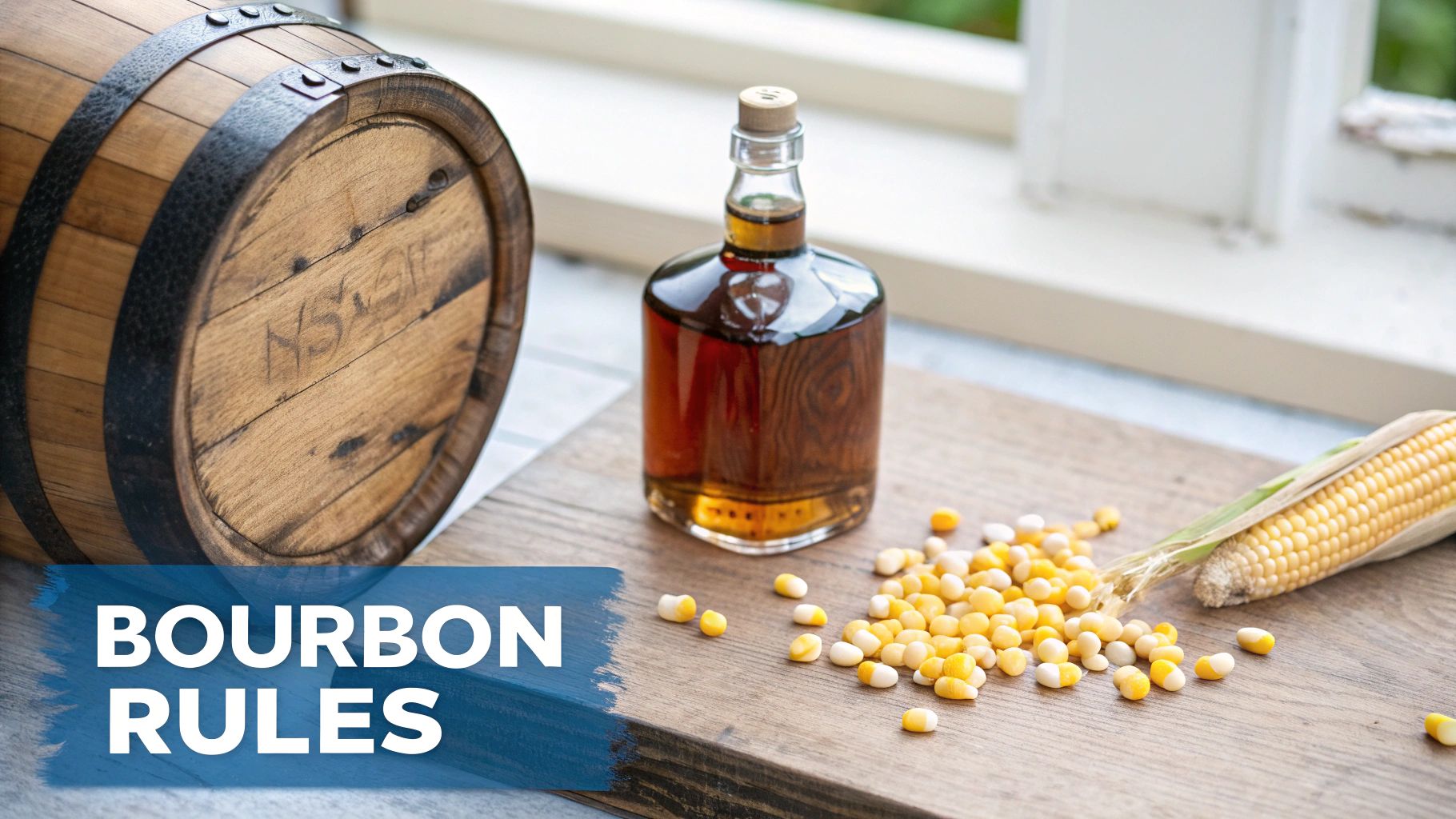
To earn the title of “America’s Native Spirit,” a whiskey must follow a strict set of legal rules to be called Bourbon. These aren't just arbitrary regulations; they are the very DNA of Bourbon's flavor, creating the consistently rich and approachable profile that so many drinkers love.
It all starts with the grain. The foundational rule is that a Bourbon’s mash bill—its grain recipe—has to be at least 51% corn. This high corn content is the secret behind its signature sweetness. Distillers can then get creative with the remaining 49%, often using rye for spice, wheat for a softer touch, or barley for nutty notes.
This specific grain requirement is a huge differentiator in the scotch vs bourbon vs whiskey debate, as it sets Bourbon on a completely different path from the very beginning.
The Impact of New Charred Oak
Once distilled, the spirit must be aged in a brand-new, charred oak barrel. This is a non-negotiable step and, arguably, the most influential one. While Scotch producers often reuse barrels that once held other spirits, Bourbon's mandatory fresh barrel means the wood imparts maximum flavor.
This is where the magic really happens. That aging process is what infuses the whiskey with its classic notes of caramel, vanilla, and toasted oak. There are also strict rules about alcohol content: Bourbon can't be distilled higher than 160 proof (80% ABV), it must go into the new barrel at no more than 125 proof (62.5% ABV), and it has to be bottled at a minimum of 80 proof (40% ABV).
The combination of a corn-heavy mash bill and aging in virgin charred oak is the one-two punch that gives Bourbon its famously sweet, full-bodied character. Every sip is a direct taste of these stringent American regulations.
Tips for New Bourbon Drinkers
If you're just getting into Bourbon, the best place to start is by learning to pick out its core flavors. When you take that first sip, let it rest on your tongue for a second. Try to find that initial sweetness from the corn, then see if you can pinpoint the vanilla and caramel notes that come from the barrel. For a little help putting names to what you're tasting, a resource like the Bourbon flavor wheel can be a game-changer.
To taste these classic characteristics in action, start with a few accessible and highly-regarded bottles.
- Maker's Mark: This is a “wheated” Bourbon, which means wheat is the secondary grain. The result is a softer, smoother profile with a gentle sweetness that's very approachable for newcomers.
- Woodford Reserve: A fantastic example of a more traditional Bourbon, it delivers a beautifully balanced and complex mix of dried fruit, vanilla, and spice.
- Frey Ranch Straight Bourbon: For a taste of modern American craft, this estate-grown whiskey from a Nevada-based distillery offers a robust flavor that really showcases the quality of its grains.
These bottles offer an excellent entry point into the rich world of Bourbon, giving you a solid foundation before you start exploring everything else this spirit has to offer.
The Heritage and Diversity of Scotch Whisky
Now we journey to Scotland, the fiercely protected home of Scotch whisky—spelled without the 'e'—a spirit defined by centuries of tradition and a remarkably diverse landscape. Much like Bourbon, Scotch must follow a strict legal framework to earn its name. It has to be made in Scotland, aged in oak casks for a minimum of three years, and bottled at no less than 40% ABV.
Unlike Bourbon's corn-forward recipe, the heart of most Single Malt Scotch is 100% malted barley. This single grain provides a complex, cereal-driven backbone that serves as a canvas for the incredible range of flavors that follow. The production process, especially the type of cask used for maturation, plays a huge role here. Scotch is often aged in used barrels, frequently ex-bourbon or ex-sherry casks, which impart more subtle, layered notes rather than the bold vanilla and caramel from Bourbon’s new oak.
Exploring the Flavors of Scotland's Regions
The true magic of Scotch lies in its regional diversity. A Scotch from one part of the country can taste completely different from another, making it an exciting spirit for new drinkers to explore. Think of these regions as distinct flavor territories, each with its own signature style.
- Speyside: Known for light, fruity, and often sweet whiskies with notes of apple, honey, and vanilla. This is a fantastic starting point for beginners, with approachable profiles from distilleries like The Glenlivet or Glenfiddich.
- Islay: Famous for its powerful, smoky, and peaty character. The process of drying barley over peat fires infuses the whisky with bold flavors of smoke, brine, and iodine that are beloved by enthusiasts.
The use of peat is one of the most significant differentiators in the world of whisky. To really get a feel for this unique style, it helps to understand what makes a Scotch peaty and how it shapes the final taste.
For a new drinker, the contrast between a light, fruity Speyside and a smoky, maritime Islay is the perfect illustration of Scotch’s incredible range. It's a clear demonstration of how production choices and geography create entirely different tasting experiences.
A Tip for Your First Scotch Tasting
If you're unsure where to begin your Scotch journey, just think about your existing preferences. Do you enjoy bold, smoky flavors like those in barbecue or dark coffee? An Islay Scotch like Laphroaig or Ardbeg might be your perfect match. If you lean towards lighter, sweeter profiles, a classic Speyside is an excellent and welcoming choice. Don't be afraid to start with an entry-level bottle; they are designed to be great introductions to a distillery's style.
Interestingly, the global market for Scotch shows a fascinating trend. While overall export volume increased by 3.9% to around 1.4 billion bottles recently, the total value actually dipped. This suggests a growing preference for more accessible blended Scotches over the more premium single malts. You can discover more insights about global whisky export trends on tradeimex.in.
Key Differences in Production and Taste
While both Bourbon and Scotch begin their lives as humble grain-based spirits, their paths diverge dramatically from there, creating two wildly different tasting experiences. That journey from grain to glass is where all the magic happens, defining everything from sweetness and body to complexity and finish.
If you can grasp these core production differences, you’ll know exactly what to expect when you pour a dram.
The first major fork in the road is the mash bill—the grain recipe. Bourbon, by American law, must be made from at least 51% corn. This gives it that signature sweetness and a fuller, often creamier, mouthfeel. Scotch, especially the single malts, is a purist's game, traditionally using 100% malted barley. That barley foundation provides a more delicate, biscuity, or nutty base.
This initial choice of grain sets the stage for everything else, making the corn vs. barley distinction a central theme in any serious whiskey comparison.
Barrel Aging: The Biggest Flavor Influencer
You could argue all day about what matters most, but the barrel is where the real transformation occurs. This is easily the most significant factor separating these two powerhouse spirits.
Bourbon has a strict rule: it must be aged in new, charred oak barrels. This fresh, virgin wood is incredibly active, imparting a massive amount of flavor in a relatively short time. It bombards the spirit with those bold, classic notes of vanilla, caramel, and toasted oak. American distilleries like Frey Ranch in Nevada have built their reputation on this process, producing robust bourbons where the barrel’s personality is front and center.
Scotch, on the other hand, takes a more sustainable and nuanced approach. It’s almost always aged in used barrels, most often casks that previously held bourbon or sherry. This creates a much more subtle and layered profile. An ex-bourbon cask will lend softer vanilla and coconut notes, while an ex-sherry cask can add rich, decadent flavors of dried fruit, nuts, and spice. Relying on used wood allows the original character of the barley spirit to shine through, rather than being overpowered.
For anyone new to whiskey, the barrel is the easiest difference to taste. If you get a big, sweet blast of caramel and vanilla, you're almost certainly tasting the influence of new charred oak in a Bourbon. If the flavors are more delicate—think fruit, floral notes, or a whisper of smoke—you're probably experiencing the gentle, seasoned touch of a used cask in a Scotch.
Climate and Distillation's Role
You can't talk about whiskey without talking about where it's from. Geography and climate play a massive role in shaping the final product.
Kentucky, the heartland of Bourbon, has hot summers and cold winters. This temperature swing causes the barrels to expand and contract, forcing the whiskey deep into the wood and then pulling it back out. This aggressive interaction with the oak accelerates the aging process, helping Bourbon develop its deep, rich flavors much faster.
Contrast that with Scotland's cool, damp, and stable maritime climate. Here, maturation is a slow, patient game. The spirit ages gradually, allowing for incredible complexity to develop over many, many years.
Finally, the distillation methods themselves are different. Bourbon is typically distilled to a lower proof, which means more of the raw, grainy, and barrel-influenced flavors are retained. Scotch is often distilled to a higher proof, resulting in a lighter-bodied spirit that acts as more of a blank canvas, ready to absorb its character from the cask over a long, slow maturation.
How to Choose and Taste Your First Whiskey
Jumping into the world of whiskey is an adventure for the senses, and your first glass can set the tone for the entire journey. The whole process is a lot less intimidating than you might think. It's really just about slowing down, trusting your palate, and approaching it with an open mind.
You don't need any special gear to get started. Just pour a small measure into a glass and let it rest for a minute. That little bit of time lets the spirit open up. Remember, tasting is as much about smell as it is about taste, so you'll want to engage your nose first.
This visual breaks down the journey from grain to glass for Scotch and Bourbon, zeroing in on the key decisions that create their unique flavors.
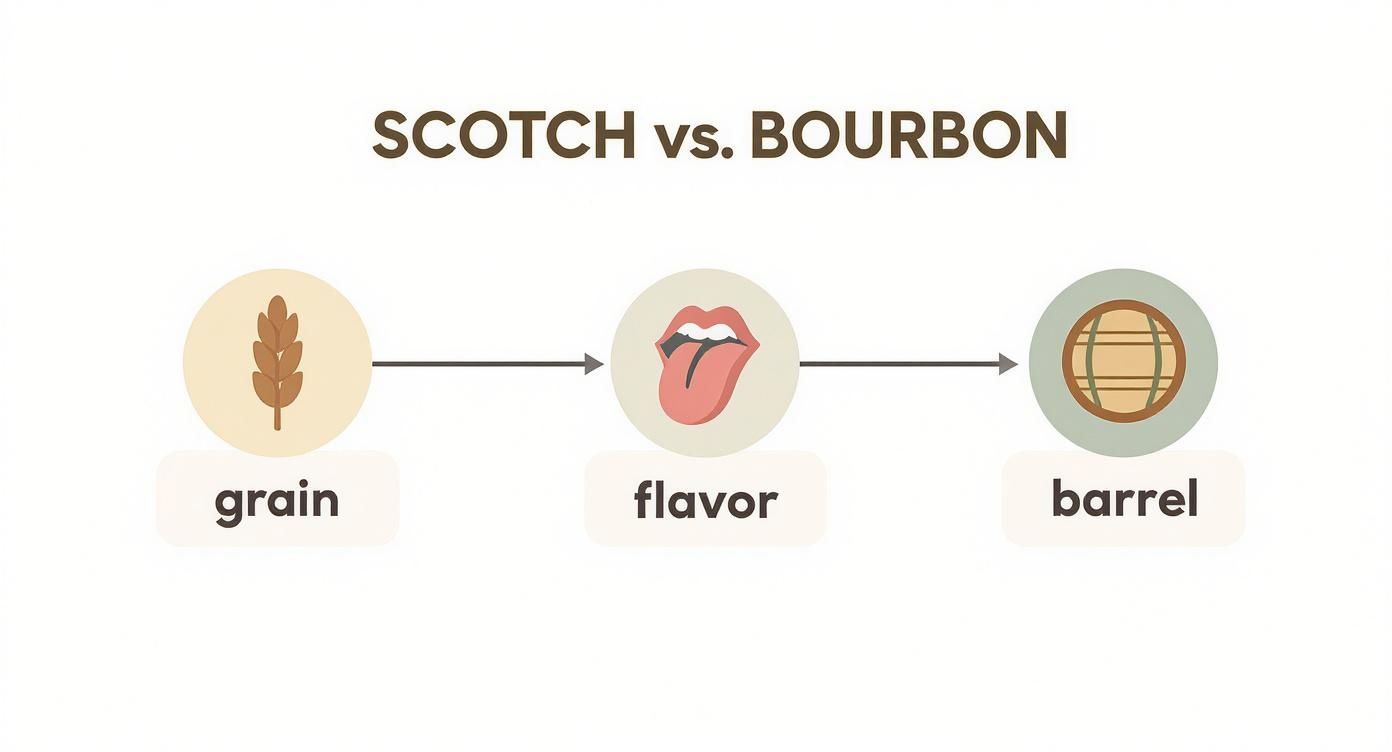
As you can see, something as fundamental as the grain choice or the type of barrel used creates a massive fork in the road, leading to two completely different spirits.
Techniques for Your First Tasting
Before that first sip, give the glass a gentle swirl and bring it toward your nose. Don't stick your nose all the way in and take a huge whiff—you'll just get a blast of alcohol. Instead, keep your mouth slightly open and gently waft the aromas in. This is called nosing, and it’s the best way to pick up all those subtle notes without the ethanol burn.
Now for the taste. Take a tiny sip and let it roll across your tongue. It might feel a little intense at first, but try to notice the mouthfeel. Is it thick and oily, or is it light and crisp? On your second, slightly larger sip, you can start hunting for specific flavors. Finally, swallow and pay attention to the finish—the flavors that linger. Does it disappear instantly or hang around for a while?
- Craving Sweet & Smooth? Start with Bourbon. If you generally enjoy richer, sweeter notes of caramel, vanilla, and toasted oak, a classic Bourbon is the perfect entry point. Its corn-heavy mash bill and time spent in new charred oak barrels give it a friendly, approachable character.
- Feeling Smoky & Bold? Try an Islay Scotch. If you’re the kind of person who loves the smell of a campfire or a smoky barbecue, you’re ready to dive into an Islay Scotch. That distinctive peaty profile comes from the smoke used to dry the malted barley.
American Craft Brands Pushing Boundaries
While the big names are always a great place to start, the American craft whiskey scene is exploding with distilleries doing some incredible, boundary-pushing work. Many of these smaller producers are focused on grain-to-glass transparency and experimenting with unique aging methods.
For anyone new to whiskey, exploring the craft scene is a great way to connect with the agricultural side of the spirit. Distillers like Westward Whiskey in Oregon or Balcones in Texas are completely rethinking what American whiskey can be, releasing bold single malts that defy old-school categories. A brand like High West from Utah is another fantastic example, known for its expert blending and innovative finishes.
The global whiskey market, valued around $61.5 billion, is on an upward trend, driven by drinkers who are increasingly looking for higher-end, premium spirits. This shift is creating the perfect environment for craft distilleries to shine, as more people want quality spirits with a unique story. You can find more details on these developments in this whiskey market trends and forecasts report from ohbev.com.
Answering Your Lingering Whiskey Questions
Once you get the basics down—scotch, bourbon, whiskey, what's the difference?—a whole new set of questions usually pops up. That's a good thing. It means you're digging deeper, and this is where the real fun begins.
Let's clear up some of the most common points of confusion. Think of this as your cheat sheet for sounding like you know what you're talking about, because after this, you will.
Is Tennessee Whiskey the Same as Bourbon?
This is one of the classic debates, and for a good reason—the lines are a bit blurry. Technically, Tennessee whiskey like Jack Daniel's checks all the legal boxes to be called a bourbon. But it's not.
The key difference is one extra step before the spirit ever sees the inside of a barrel. It’s called the Lincoln County Process, where the new-make whiskey is slowly filtered through thick beds of sugar maple charcoal. This extra step mellows the spirit, smoothing out the rough edges and giving it that distinctively smooth, slightly sweet character. Tennessee distillers are proud of this tradition, so they label it "Tennessee Whiskey" to honor their heritage and separate it from their Kentucky cousins.
Does an Older Whiskey Mean Better Quality?
Not always. It's easy to assume that a bigger age number on the bottle means a better whiskey, but that's a common rookie mistake. Age can certainly add incredible complexity and depth, but "better" is all about what you enjoy.
An older whiskey, especially a bourbon that’s been sitting for 15+ years in a fresh charred oak barrel, can sometimes become a one-note oak bomb. You might find it has a heavy, tannic bitterness that completely overpowers the delicate grain flavors. It's a fine line between mature and over-the-hill.
The most important takeaway is that age is just a number. A younger craft whiskey can be vibrant, complex, and full of grain-forward character. Don't dismiss a bottle with no age statement (NAS), as they are often skillfully blended to achieve a specific, consistent, and high-quality flavor profile.
Plenty of American craft distilleries, like St. George Spirits out in California, are releasing absolutely stunning young whiskeys. They prove that you don't need two decades in a barrel to create something truly special.
What Is the Best Way to Drink Whiskey?
Simple: the best way to drink whiskey is the way you like it most. Forget the snobbery and gatekeeping. There are no hard-and-fast rules, just a few suggestions to help you get the most out of your glass.
When you're trying a whiskey for the first time, I always recommend tasting it neat—just the spirit, in a glass, at room temperature. This is the only way to experience the whiskey exactly as the distiller intended, with nothing getting in the way.
From there, it's all about experimentation:
- Add a Few Drops of Water: This is a game-changer. A little splash of water can "open up" the whiskey, breaking down the oils and releasing a whole new wave of aromas and flavors that might have been hiding. This is especially helpful for higher-proof whiskeys.
- Use a Large Ice Cube: If you like your drink cold, go for a single large ice cube or sphere. It chills the whiskey perfectly but melts much slower than a handful of small cubes, so you don't end up with a watered-down mess. This is a great way to enjoy higher-proof bourbons.
The goal is to find your sweet spot. Play around with these methods and you'll discover your own perfect way to enjoy a pour.
Should I Use Expensive Whiskey in Cocktails?
You can, but it's often not the best use of a premium spirit. Using a rare, high-end single malt or a limited-edition bourbon in a cocktail is kind of like putting truffle oil on a hot dog. The delicate, complex notes you're paying a premium for will just get lost behind the sugar, citrus, and bitters.
For classic cocktails like an Old Fashioned or a Manhattan, a solid, mid-range bourbon or rye is your best bet. You want something with enough backbone to stand up to the other ingredients without getting completely steamrolled. A robust whiskey from a distillery like FEW Spirits in Illinois has the character to shine in a mixed drink. Save your top-shelf bottles for when you can sit down and give them the attention they deserve.
Ready to put your palate to the test and discover your next favorite American craft whiskey? At Blind Barrels, we remove brand bias and let your taste buds lead the way. Join our blind whiskey tasting subscription to receive curated samples from the nation's best small distilleries, complete with tasting notes and exclusive access to purchase full bottles. Start your blind tasting adventure today.