

At its core, the difference between single malt and bourbon is simple enough. Single malt is made from 100% malted barley at a single distillery, while bourbon is an American whiskey made from a mash bill of at least 51% corn.
But that one distinction—barley versus corn—is the fork in the road that creates two completely different flavor universes. One path leads to bourbon's comforting, rich sweetness, while the other ventures into single malt's incredibly diverse, grain-forward world. Your preference will come down to whether you're in the mood for caramel and oak or the vast spectrum of tastes only barley can offer.
Understanding The Whiskey Showdown
If you've ever found yourself staring at a wall of whiskey, wondering about the real story behind the single malt vs bourbon debate, you've come to the right place. We’re here to cut through the jargon and give you the foundational knowledge you need to start exploring these iconic spirits with confidence.
A Tale of Two Titans
While both spirits are giants in the whiskey world, they’re charting different courses. Single malt Scotch is in the middle of a massive global surge, with its market value projected to nearly double from USD 10.42 billion in 2025 to a staggering USD 19.55 billion by 2034. This boom is largely fueled by a growing thirst for luxury imports, especially across the Asia Pacific region.
Meanwhile, bourbon, America’s native spirit, holds steady with a commanding presence at home, making up 28.5% of all U.S. whiskey demand. Its market is set for solid growth, climbing from about USD 8.2 billion in 2022 to USD 14.3 billion by 2032. This is powered by iconic, household names and a booming American craft whiskey scene. To see the bigger picture, you can explore more whiskey market trends and see how these spirits stack up.
Single Malt vs Bourbon At a Glance
For anyone new to the whiskey game, the first step is getting a handle on the core definitions that shape each spirit. This table breaks down the essentials—the non-negotiable rules and traditions that influence everything from how it's made to how it tastes in your glass.
| Attribute | Single Malt | Bourbon |
|---|---|---|
| Primary Grain | 100% Malted Barley | Minimum 51% Corn |
| Origin | Most famously Scotland, but made worldwide | United States (by law) |
| Aging | Aged in used oak casks (e.g., ex-bourbon, sherry) | Aged in new, charred oak barrels |
| Typical Taste | Varies widely: fruity, floral, smoky, nutty, cereal | Sweet: caramel, vanilla, baking spices, oak |
With these fundamentals down, we’re ready to really dig into what makes each of these whiskeys so unique.
Exploring The Core Ingredients and Origins
Every whiskey’s character is born from its ingredients—a blueprint drawn by law, tradition, and the land itself. To really get a handle on the single malt vs. bourbon debate, you have to start with the grains that give each spirit its soul.
With single malt, the rule is simple but strict: it must be made from 100% malted barley. This single grain is the source of its classic biscuity, nutty, and cereal-like flavor foundation. Think of malted barley as a blank canvas. Its own flavors are fairly subtle, which lets other parts of the process—like fermentation, distillation, and especially the time spent in a cask—paint a much more complex picture on top.
Of course, where that barley comes from and how it’s prepared can add incredible layers of flavor. This is where you hear people talk about terroir, a term usually reserved for wine, but it’s just as important in the world of whiskey.
The Influence of Terroir and Tradition in Single Malt
The environment truly leaves its mark on single malt. The specific water source, filtered through ancient rock formations or peat bogs, absolutely influences the final spirit. But the most dramatic example of terroir has to be the use of peat.
Peat is basically decomposed vegetation, cut from bogs and used as fuel to dry the malted barley. When it burns, it infests the grain with a powerful, smoky phenol character. This is what gives Islay single malts like Laphroaig or Ardbeg their famously medicinal, briny, and campfire-in-a-bottle notes.
On the flip side, unpeated single malts from regions like Speyside allow the fruity and floral notes from the barley and yeast to take center stage, creating a completely different kind of dram. This incredible diversity is what makes exploring single malt so rewarding.
Bourbon: The Sweetness of America’s Native Grain
Bourbon’s story doesn’t start with barley, but with corn. Legally, a bourbon’s mash bill—its grain recipe—has to be at least 51% corn. This one rule is the biggest reason for bourbon’s signature sweetness. Corn is naturally packed with sugar, which translates directly into those rich notes of caramel, vanilla, and buttery goodness in the finished whiskey.
While corn is the star, the remaining 49% of the mash bill is where distillers really get to put their own stamp on the flavor profile. This is where the "supporting grains" come in:
- Rye: Using a good amount of rye (often 20-35%) creates what’s known as a "high-rye" bourbon. It adds a spicy, peppery kick with hints of mint, clove, and cinnamon.
- Wheat: Swapping out the rye for wheat gives you a "wheated" bourbon. Wheat offers a much softer, gentler profile with notes of honey, fresh bread, and a creamy texture.
- Malted Barley: You'll find a little malted barley in almost every bourbon. Its natural enzymes are essential for converting the starches from the other grains into fermentable sugars.
These choices create a whole spectrum of bourbon flavors, from the bold spice of a high-rye bottle to the gentle sweetness of a wheater.
American Craft Pushing The Boundaries
While these traditions are well-established, American craft distillers are constantly rewriting the rulebook. You can find incredible craft bourbons from distilleries like Frey Ranch in Nevada, which grows all its own grains, or Laws Whiskey House in Colorado, which focuses on heirloom corn varieties. They aren’t just making bourbon; many are also pioneering the world of American Single Malt Whiskey, taking Scottish tradition and injecting it with a uniquely American identity.
To see just how exciting this category is becoming, you can dive deeper into the rise of American Single Malt Whiskey in our detailed guide. These distillers are proving that the rules are just a starting point for creativity.
Production & Aging: Forging Two Distinct Spirits
If the grain bill is the opening chapter of a whiskey's story, then production and aging are the plot twists that define its character. This is where single malt and bourbon really part ways, following paths shaped by law, tradition, and the distiller's own philosophy. Getting a handle on these differences is the key to understanding why they taste so incredibly different.
This simple visual breaks down how that one key ingredient—barley versus corn—sends each whiskey down its own unique path from the very start.
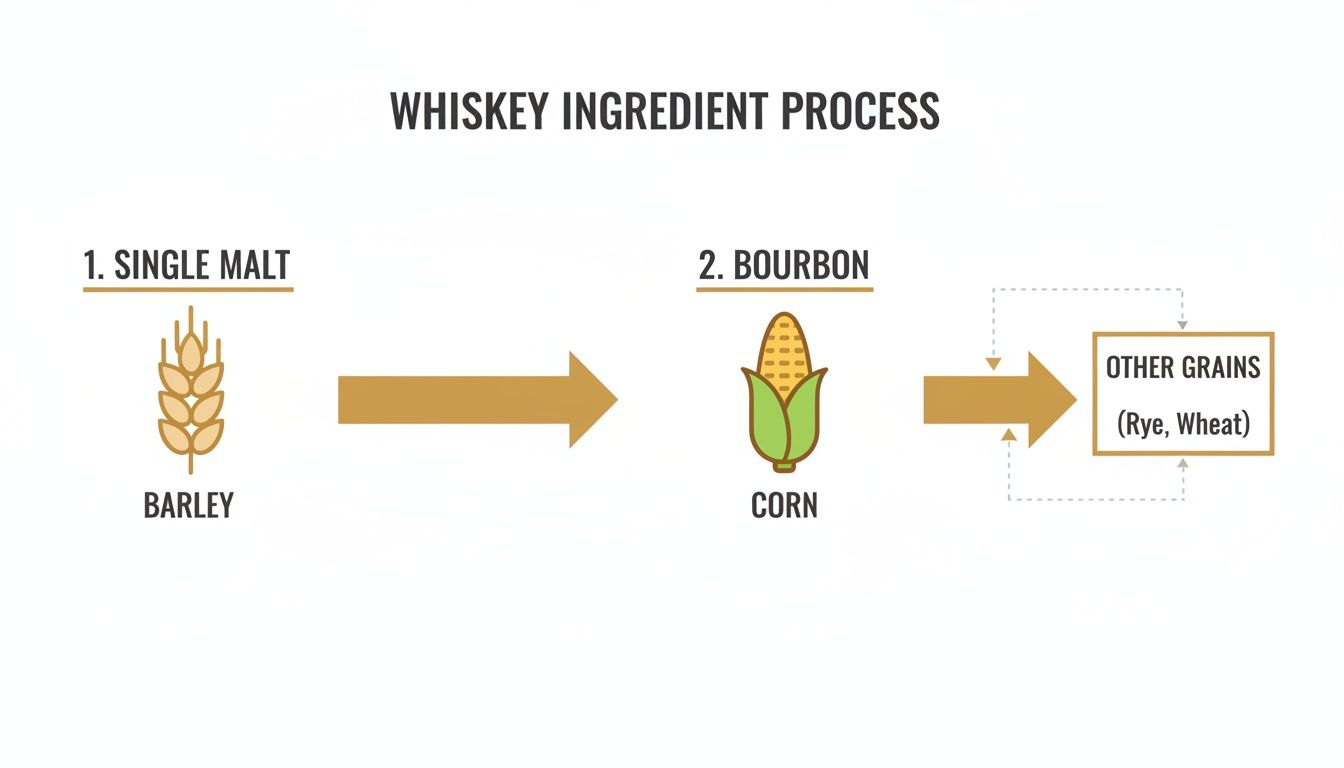
From here, the two spirits embark on completely different journeys, each designed to bring out the absolute best from its base grain.
The Shape of the Spirit: Distillation
The equipment used for distillation isn't just a piece of machinery; it's a sculptor that shapes the body and flavor of the final spirit. For single malt, especially in Scotland, the iconic copper pot still is the undisputed king. These beautiful, often uniquely shaped stills create a slower, less "efficient" distillation by design, allowing heavier, oilier, more complex flavor compounds to make their way into the final spirit.
This process gives you a rich, brawny new-make spirit that absolutely needs time in a cask to soften its edges and develop its personality. To really geek out on how these copper behemoths work their magic, check out our deep dive into the art of whiskey distillation in our comprehensive article.
Bourbon, on the other hand, is built for efficiency. Production typically relies on a column still, often paired with a "doubler" (which is basically a type of pot still for the second distillation). The column still can run continuously, separating the alcohol from the mash with impressive speed. This method creates a cleaner, lighter, and higher-proof spirit right out of the gate—a perfect blank canvas ready to soak up the bold flavors from its brand-new barrel.
The Great Divide: Aging in Oak
If distillation creates a spirit's potential, the aging process is what brings it to life. And right here lies the single biggest, most important difference between single malt and bourbon, all thanks to one strict legal requirement.
Bourbon must be aged in new, charred oak containers. This is the golden rule, and it's non-negotiable. Every single drop of bourbon starts its journey in a fresh barrel that has never touched another liquid.
This one rule is the main reason bourbon tastes like bourbon. The heavy char on the inside of that new oak acts like a powerful filter, pulling out impurities while caramelizing the wood's natural sugars. This direct interaction infuses the spirit with those deep, classic notes of:
- Vanilla
- Caramel
- Brown sugar
- Baking spices (think cinnamon and clove)
- Toasted oak
For anyone just dipping their toes into whiskey, this consistent and approachable flavor profile often makes bourbon the perfect starting point. Its sweet, rich character is easy to recognize and incredibly satisfying.
Single Malt’s World of Cask Influence
Single malt producers play a completely different game. They almost exclusively age their whisky in used barrels. This isn't a cost-saving measure; it's a deliberate artistic choice aimed at building layers of complexity. Whatever was in the cask before—be it bourbon, sherry, port, or wine—leaves behind a "seasoning" that becomes a core part of the single malt's final flavor.
This practice opens up a mind-boggling spectrum of flavor possibilities:
- Ex-Bourbon Barrels: The most common choice, these barrels lend a gentle backdrop of vanilla, honey, and light spice, allowing the delicate, malty spirit to be the star of the show.
- Ex-Sherry Casks: Typically from Spain, these casks impart decadent notes of dried fruit like raisins and figs, along with dark chocolate and nutty spice.
- Ex-Port Casks: These contribute lush flavors of red berries, plums, and a subtle, wine-like sweetness.
This is where single malt’s incredible diversity comes from. A single distillery can offer a dozen different expressions, each with a wildly different taste, based solely on the barrels they chose for maturation.
American Craft: Bending the Rules
While bourbon's laws are rigid, the American craft scene is buzzing with distillers finding clever ways to innovate. You have producers like Stranahan's in Colorado making an American Single Malt but aging it in new charred oak, essentially creating a hybrid that blends Scottish tradition with American whiskey law.
Others are pushing boundaries by "finishing" their bourbon after its initial required aging. It’s not uncommon to find craft bourbons finished in anything from rum casks to stout beer barrels, adding exciting new dimensions to that classic bourbon profile. For example, a recent Twin Bridges American Single Malt spent its final five years in an ex-amaretto cask, resulting in a unique, dessert-like whiskey brimming with almond and dark cherry notes. It’s experiments like these that make exploring American craft whiskey so much fun—you never know what you'll find next.
A Comparative Guide To Whiskey Flavors
Alright, let’s get to the good stuff—what these whiskeys actually taste like. The rules around ingredients and aging are fascinating, sure, but the real magic happens in the glass. This is where you find out what you truly love, embarking on a sensory journey that can lead you down a path of comforting sweetness or into a wild, complex world of endless variation.
The Classic Bourbon Profile: Sweet and Approachable
Think of bourbon as whiskey’s comfort food. Its corn-heavy recipe and required time in new, charred oak barrels give it a reliably rich, sweet, and welcoming character. For anyone just starting their whiskey journey, this makes bourbon an ideal and predictable first step.
When you take a sip of a classic bourbon, a core group of tasting notes almost always shows up to the party:
- Sweet Foundation: Caramel, vanilla, and brown sugar are the undisputed stars.
- Baking Spices: Notes of cinnamon, nutmeg, and clove often add a warm, spicy layer.
- Fruity Undertones: You’ll frequently find hints of cherry, orange peel, and baked apple.
- Oak Influence: A pleasant backdrop of toasted wood, sometimes with a touch of leather or tobacco.
Tip for New Drinkers: If you're new to whiskey, start with a classic, affordable bourbon. Its straightforward sweetness is perfect for training your palate to pick out foundational whiskey flavors, making it easier to identify more nuanced notes in other spirits later.
The Diverse World of Single Malt
If bourbon is a single, beloved recipe passed down through generations, then single malt is an entire library of cookbooks. Since it’s made from 100% malted barley and aged in used casks, the flavor spectrum is unbelievably broad. Two bottles from different distilleries can taste like entirely different spirits.
Tasting single malt is like exploring a flavor map, where each region offers a completely different experience.
- Highland & Speyside: Often light and elegant, these whiskies are known for notes of honey, fresh apple, pear, and delicate florals. Think orchard fruits and springtime.
- Sherry Cask Matured: When aged in ex-sherry casks, single malts take on rich, decadent flavors of dried fruits like raisins and figs, along with dark chocolate, nuts, and baking spices.
- Islay Peated Malts: This is the most polarizing style, famous for its intense smoky character. Expect bold notes of campfire smoke, iodine, seaweed, and brine—a truly unique taste of the sea.
To really understand the core differences, it helps to see the common tasting notes side-by-side.
Typical Flavor Profiles: Bourbon vs. Single Malt
This table breaks down the common tasting notes you can expect from each style, giving you a quick reference for what’s in your glass.
| Flavor Category | Common Bourbon Notes | Common Single Malt Notes |
|---|---|---|
| Sweetness | Caramel, Vanilla, Brown Sugar, Molasses | Honey, Toffee, Malt, Orchard Fruits (Apple, Pear) |
| Fruit | Cherry, Orange Peel, Baked Apple | Fresh Pear, Dried Fig, Raisin, Citrus Zest, Berries |
| Spice | Cinnamon, Nutmeg, Clove, Black Pepper | Baking Spices, Ginger, White Pepper, Anise |
| Wood/Oak | Toasted Oak, Char, Sawdust, Cedar | Gentle Oak, Sandalwood, hints of the previous cask (Sherry, Wine) |
| Smoky/Earthy | Tobacco, Leather, Charred Wood | Peat Smoke, Campfire, Iodine, Brine, Seaweed, Heather, Earth |
| Other Notes | Corn, Nuts (Pecan, Almond), Toasted Grains | Floral, Grassy, Nutty, Salty, Chocolate, Coffee |
While these are typical profiles, remember that there are always exceptions. That’s what makes exploring whiskey so exciting.
American Craft Whiskey: A Flavor Revolution
While tradition defines Scottish malts and Kentucky bourbons, American craft distilleries are busy blurring the lines and creating entirely new flavor profiles. All across the country, brands are taking established styles and putting their own local, innovative spin on them.
You might find a craft producer like High West in Utah finishing their bourbon in a wild, unconventional cask, adding layers of complexity you’d never find in a traditional bottle. Or you could discover an American Single Malt from Balcones in Texas that marries Scottish methods with the bold influence of new American oak, resulting in a fascinating hybrid. Diving into these craft offerings is one of the most rewarding ways to expand your palate.
The market absolutely reflects these distinct personalities. Bourbon's mass-market appeal is immense; Jim Beam sold a staggering 16.7 million cases in 2022, dwarfing a top single malt like The Glenlivet, which moved just 1.7 million. This gap shows bourbon's role as an accessible, everyday spirit versus single malt's more niche, exclusive allure.
While bourbon dominates U.S. sales, single malt's growth in the luxury sector, especially in Asia, is explosive. You can learn more about how these whiskey giants compare in global sales on Master of Malt. This difference in scale and style is what makes the single malt vs bourbon debate so fascinating for drinkers at every level.
How To Serve and Enjoy Each Whiskey Style
Knowing the story behind single malt and bourbon is one thing, but knowing how to get the most out of every single pour? That’s where the real fun begins. Whether you're just starting your whiskey journey or you've been around the block, the way you serve your dram can completely change the experience, unlocking subtle notes you might have otherwise missed.
Probably the first question every newcomer asks is, "Should I add ice?" The answer really depends on what's in your glass and what you're hoping to get out of it. Serving whiskey isn't about rigid rules—it’s about matching the method to the spirit to make it shine.
Neat, Water, or Rocks: The Big Debate
For most single malts, especially older and more intricate ones, starting neat is the only way to go. This lets you taste the distiller's work exactly as they intended, with nothing getting in the way of the aroma and flavor. But a few drops of water can be a total game-changer. For higher-proof whiskeys, in particular, a little water can open up the spirit, dial down the alcoholic heat, and bring out delicate floral or fruity notes that were hiding.
Bourbon, on the other hand, usually has the backbone to stand up to ice. Its bold vanilla, caramel, and oak notes aren’t easily drowned out. A large ice cube or sphere chills the spirit gently and provides just enough dilution to create a smoother, more refreshing sip—perfect for younger or higher-proof bourbons on a warm day.
Tip for New Drinkers: Not sure how you like your whiskey? Pour it neat into a glass. Take a small sip. If it feels too intense, add a single drop of water, swirl, and taste again. Keep going drop by drop until the flavors open up just how you like them. It's a great way to find your perfect balance.
Classic Cocktails for Each Spirit
While many whiskeys are fantastic on their own, cocktails are another brilliant way to explore their character. Some recipes just feel like they were made for one style over the other.
For Bourbon: Its natural sweetness and spicy kick make it the perfect base for those classic, spirit-forward cocktails.
- The Old Fashioned: A sugar cube, a few dashes of bitters, and an orange peel. That's all you need to elevate bourbon's deep caramel and spice. It's a classic for a reason.
- The Mint Julep: This Kentucky Derby staple—just bourbon, sugar, and fresh mint—is unbelievably refreshing and surprisingly simple.
- The Whiskey Sour: The bright, citrusy punch of lemon juice, balanced with a little sugar, creates the perfect counterpoint to bourbon's inherent sweetness.
For Single Malt: Its nuanced, often delicate, profile demands a cocktail that complements it rather than overpowering it.
- The Rob Roy: Think of it as a Manhattan made with Scotch. Sweet vermouth beautifully highlights the fruity and malty notes of a good single malt.
- The Penicillin: This modern classic is brilliant. It uses a lighter single malt mixed with lemon and a honey-ginger syrup, then topped with a float of smoky Islay Scotch for a stunning aromatic kick.
When you're mixing, you don't need to reach for your most expensive bottle. A solid, affordable bourbon like Lazy River is absolutely perfect for cocktails, giving you that quintessential profile without making your wallet cry.
Simple Food Pairings to Elevate Your Tasting
Pairing whiskey with food can be just as rewarding as any wine pairing. The trick is to find flavors that either complement or contrast with what's in your glass.
- Bourbon Pairings: That sweet, rich character is a natural fit for desserts. Try it alongside a slice of pecan pie, some good dark chocolate, or a classic crème brûlée. For something savory, the caramel notes in bourbon are a fantastic match for anything smoked or barbecued.
- Single Malt Pairings: The possibilities here are almost endless. A light, fruity Speyside malt is wonderful with mild cheeses or seared scallops. A rich, sherry-casked malt can hold its own against a hearty steak or a decadent chocolate torte. And a briny, peated Islay malt? There's no better partner for fresh oysters or smoked salmon.
How To Conduct Your Own Blind Tasting
Let's be honest: the best way to figure out what you truly prefer in the great single malt vs. bourbon debate is to taste without bias. A blind tasting strips away the power of a fancy label, a high price tag, and even your own preconceived notions. It’s just you and the whiskey, letting your palate call the shots.
Setting up a blind tasting at home is far easier than you might think. You don't need a lab coat or a wall of expensive glassware—just a few well-chosen bottles and an open mind. The goal is simple: focus on what you smell, taste, and feel, and see what you genuinely enjoy.
Setting Up Your Tasting Flight
First things first, you need to pick your whiskeys. To get a clear comparison, grab one classic bourbon and one representative single malt. If you want to throw a curveball into the mix, add an American craft whiskey to see how distillers are pushing the boundaries of these traditional styles.
Here's a quick and easy way to get started:
- Gather Your Bottles: Choose a well-known bourbon (like Buffalo Trace), a classic unpeated single malt (like Glenmorangie 10), and an intriguing American craft option. An American Single Malt from a distillery like Westland or Stranahan's would be a great choice.
- Pour Discreetly: Ask a friend to pour about one ounce of each into identical glasses while you're out of the room. They can label the bottom of the glasses A, B, and C so you can do the big reveal later.
- Prepare Your Palate: Keep a glass of water nearby and maybe some plain crackers. A quick sip of water or a bite of a cracker between whiskeys helps reset your senses so each one gets a fair shake.
Tip for New Drinkers: Don't get overwhelmed during a blind tasting! It's not a test; it's a tool for discovery. Focus on simple questions: Which one smells sweeter? Which one feels spicier? Which one has a finish that you enjoy the most?
How to Taste Like a Pro
Now for the fun part. To keep things consistent, approach each sample the same way. This isn't a race—take your time and really get to know what's in your glass.
- Observe the Color: Hold the glass up to a light source. Is it a pale straw, a deep amber, or a rich mahogany? Color can drop hints about the barrel type and age.
- Analyze the Aroma: Give the whiskey a gentle swirl and bring the glass to your nose, keeping your mouth slightly open. What hits you first? Is it vanilla and caramel? Fruit and flowers? Or maybe a wisp of smoke?
- Take a Sip: Take a small sip and let it wash over your entire palate. Try to pinpoint the initial flavors. Do you get sweetness, spice, fruit, or that distinct malty character?
- Evaluate the Finish: After you swallow, notice the flavors that linger. Is it a short, clean finish or a long, warming one? Do any new notes pop up at the end?
Jot down a few thoughts for each sample. This simple act trains your palate to put words to what it's experiencing, which is the bridge between just "drinking" whiskey and truly "tasting" it.
For a more guided experience, you can learn more about using a blind whiskey tasting kit to help organize your notes and sharpen your skills. It’s an incredibly engaging way to discover hidden gems without any brand hype getting in the way.
Common Whiskey Questions Answered
Diving into the whole single malt vs. bourbon debate inevitably kicks up a few common questions. Getting some straight answers is the best way to really cement your understanding and feel more confident picking out your next bottle.
Can Single Malt Be Made in America?
You bet it can. While Scotland might be the spiritual home of single malt, the term itself is all about the recipe and process—it must be made from 100% malted barley at a single distillery. The location doesn't disqualify it. In fact, there's a growing wave of incredible American craft distilleries putting their own spin on the style.
These American producers are creating something really special, often blending old-world Scottish tradition with a bit of new-world American grit. For instance, many use brand-new charred oak barrels, a signature move borrowed directly from the bourbon playbook. This creates a fascinating hybrid style you won't find anywhere else. Distilleries like Westland Distillery in Seattle are really leading the charge, showing off what American-grown barley can do.
Is One Whiskey Better Than The Other?
There's no champion here—only the whiskey that's right for you. It's a matter of personal preference, plain and simple. Bourbon’s classic sweet, vanilla-and-caramel profile, driven by corn and fresh oak, is a world away from the massive flavor spectrum of single malt, which can be anything from light and floral to a peaty, smoke-filled beast. The only way to find out what you love is to start tasting.
A top-tier craft bourbon can be every bit as complex and satisfying as a celebrated single malt. The point isn't to pick a winner, but to figure out which style is calling your name today.
Tip for New Drinkers: The most rewarding part of a whiskey journey is realizing that "best" is completely subjective. Your favorite bottle might be a small-batch American craft bourbon one day and a classic Speyside single malt the next. Let your taste buds lead the way and don't worry about what others say you should like.
Why Is Single Malt Often More Expensive?
A few key factors are behind that higher price tag you often see on single malts. For starters, they typically boast older age statements—12, 15, or even 18 years. That’s a lot of time sitting in a warehouse, and with each passing year, more spirit evaporates into the ether. That loss is what distillers call the "angel's share." On top of that, many single malts are aged in pricey, imported casks like Spanish sherry butts, which adds a huge cost to production.
Bourbon, on the other hand, usually matures more quickly in the warmer American climates, and its production process is generally a bit more efficient, which helps keep prices down. But don't let that fool you; premium, limited-run bourbons from sought-after craft producers can easily fetch prices that rival—or even surpass—many single malts.
Ready to let your palate decide in the single malt vs bourbon showdown? Discover hidden gems from America's best craft distilleries with a Blind Barrels tasting kit. Remove the bias, trust your taste, and find your next favorite whiskey at https://www.blindbarrels.com.