

If you've started hunting for the best small batch bourbon brands, you're on the right track. You’re stepping into a world of curated flavor and serious craftsmanship—a major leap from the big, mass-market names and right into the heart of the American craft whiskey movement. This guide is your perfect starting point, especially if you're new to the world of whiskey and want to discover unique flavors from passionate American distillers.
What Is Small Batch Bourbon, Really?
Let’s cut through the marketing noise. Think of "small batch" not as some rigid, legally-defined term, but as a philosophy. It’s a promise from the distiller to create a very specific, memorable flavor experience. It's a lot like an artisanal coffee roaster who meticulously blends different beans to nail that perfect cup. Many of the most exciting small batch bourbons come from independent American craft whiskey brands that pour their heart into every bottle.
Instead of just dumping hundreds or even thousands of barrels together to create a massive, one-size-fits-all product, distillers hand-select a much, much smaller number. The whole point is to find barrels that perfectly complement each other, creating a bourbon with a distinct and repeatable character. It’s this selective, hands-on process that makes small batch bourbon the go-to for anyone looking for real quality.
The Art of Flavor Curation
This approach isn’t just about making bourbon; it's about bottling a personality. Each small batch release tells a story about the distiller's skill, showcasing their blending artistry. You’re literally tasting the result of a deliberate choice to chase nuance and complexity over sheer volume.
This focus on curation is a cornerstone of the entire craft whiskey world. It gives distillers the creative freedom to produce something genuinely special and ensures that every bottle from a particular batch delivers a consistent, high-quality experience. For anyone new to whiskey, this makes it a reliable way to explore more complex flavors without feeling overwhelmed.
Small batch bourbon is the distiller’s signature. It’s where art meets science to create a repeatable, elevated profile that captures the best qualities of their aged barrels.
At the end of the day, picking up a small batch bourbon means you're investing in a more thoughtful, refined spirit. You're choosing a product where every single drop reflects a deep commitment to flavor, depth, and the rich tradition of American whiskey.
The Art Behind the Small Batch Label
Walk down any whiskey aisle, and you'll see "small batch" on plenty of labels. But what does it actually mean? While the term isn't legally defined like "straight bourbon" or "bottled-in-bond," it signals a profound commitment to craftsmanship. It's a move away from mass production toward a more deliberate, artistic process.
This philosophy is what sets many American craft whiskey brands apart from the big players. The entire focus shifts from volume to the final flavor experience in the bottle.
This hands-on approach is driven by the master distiller, who in this context, acts more like a master blender or a flavor curator. Their job isn't just to make whiskey; it's to taste bourbon from many different barrels. Each one has its own unique character, shaped by its specific spot in the rickhouse, the grain of the wood, and its age. It’s an art of selection and combination.
The Craft of Mingling Barrels
The heart and soul of the small batch process is mingling—the careful blending of bourbons from a select group of barrels. A distiller might pull one barrel for its rich caramel notes, another for its spicy rye character, and a third for its deep, oaky foundation. By combining them in just the right way, they create a final product that is far more complex and balanced than any single barrel could ever be on its own.
This diagram really gets to the core of the philosophical split between the craft-focused, small batch approach and the volume-driven, mass-market model.
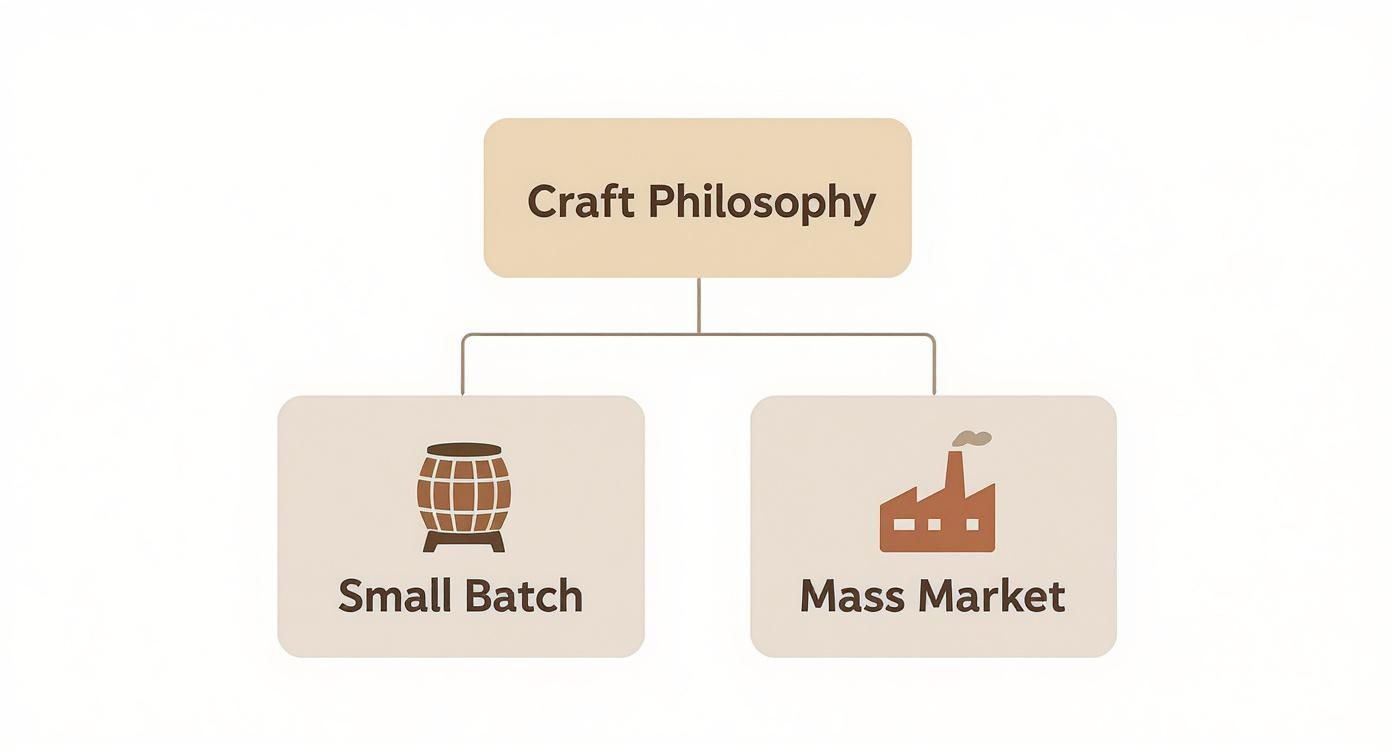
As you can see, small batch bourbon prioritizes the careful selection of individual barrels to hit a specific flavor profile, embodying a true craft philosophy.
This meticulous mingling process is also why small batch bourbon brands can deliver such remarkable consistency. A single barrel release is a fantastic snapshot in time, a unique one-off. A small batch, on the other hand, is designed to hit a specific, repeatable flavor profile, bottle after bottle.
A master distiller's goal with a small batch is flavor curation. They are essentially composing a symphony, ensuring each barrel (instrument) contributes to a harmonious and intentional final bourbon.
To put it all in perspective, let’s quickly break down how small batch stacks up against other bourbon types.
Bourbon Categories at a Glance
| Category | Production Method | Flavor Profile Goal |
|---|---|---|
| Small Batch | Blending a select number of barrels. | Create a specific, complex, and consistent flavor profile. |
| Single Barrel | Bottling from one individual barrel. | Capture a unique, one-of-a-kind flavor snapshot. |
| Standard Bourbon | Blending hundreds or thousands of barrels. | Achieve massive-scale consistency for a brand's core profile. |
This table shows that while all bourbon has its place, the small batch approach is all about intentional blending for a richer, more curated experience.
What This Means for You
For anyone new to whiskey, this curation offers a reliable and often delicious entry point into more sophisticated flavors. You can generally expect a few things from the small batch category:
- Richer Complexity: Mingling different barrels adds layers of aroma and taste that you just don't get from a single source.
- Smoother Finishes: Distillers often blend to smooth out any harsh edges, resulting in a more approachable spirit.
- Distinct Character: Each brand's small batch expression is a showcase of its signature style.
It's clear that drinkers are catching on. This growing appreciation for quality and distinctiveness is fueling major market growth. The global small batch bourbon market was valued at around $2.1 billion and is projected to hit about $4.8 billion by 2033, with a strong compound annual growth rate of 9.4%.
This trend isn't just a fad; it reflects a global consumer shift toward premium, artisanal spirits with unique stories and flavor profiles. If you want to dive deeper into the numbers, you can review the full report on the small batch bourbon market.
Discovering Top Small Batch Bourbon Brands
Alright, now that you’ve got a handle on the philosophy behind the label, it's time for the fun part—exploring the incredible small batch bourbon brands that are really defining American craft whiskey today. This isn't just another list. Think of it as a guided tour through distilleries that pour everything they have into each and every bottle. We'll get into their unique stories, what makes their bourbon tick, and who I think will appreciate their spirits the most.
This dive into craft bourbon is really about finding a connection, a story that speaks to your own palate. It’s an exciting corner of the whiskey world, absolutely packed with passionate creators, from the names you know to the rising stars you'll be glad you discovered.
Willett Distillery
You can't talk about American craft whiskey without mentioning Willett. A true icon, this family-owned distillery has a long legacy of producing some of the most sought-after bourbons on the market. Their Willett Pot Still Reserve is immediately recognizable for its unique bottle shape, but what's inside is what really counts.
It pours a beautifully balanced profile of honey, bright citrus, and a gentle spice that ties it all together. It's an approachable yet surprisingly complex bourbon, which makes it a fantastic starting point for anyone looking to move from the big names into the craft scene. The experience is just consistently smooth and full of flavor.
John J. Bowman
Over in Virginia, the A. Smith Bowman Distillery does things a little differently. They start with new-make spirit from the legendary Buffalo Trace in Kentucky, then run it through their own copper pot stills for a third distillation before aging it right there in Virginia. The result is the John J. Bowman Pioneer Spirit Single Barrel, a bourbon that feels both familiar and entirely its own.
This unique process creates a bourbon bursting with crisp apple, cinnamon, and vanilla, all supported by a solid oak backbone. It’s got a rustic, inviting character that's perfect for drinkers who love a fruit-forward, spicy profile. And while it's technically a single barrel, its small-scale, hands-on production absolutely embodies the small batch ethos. Distilleries like this are a huge part of the movement of phenomenal American craft whiskeys that redefine bourbon well beyond Kentucky’s traditional borders.
Dark Arts Whiskey House
Now for a newer player that’s been making some serious waves: Dark Arts Whiskey House. They are a perfect example of a modern American craft whiskey brand, completely unafraid to experiment with unique finishing techniques. This leads to bold, unforgettable flavor profiles that grab the attention of even the most seasoned enthusiasts.
Take their Toasted Mizunara Bourbon. It's a full-on journey into baking spices and rich complexity.
- Nose: You’re greeted with inviting aromas of toasted oak and sweet vanilla.
- Palate: The taste is like a cookie in a bottle—think gingerbread, warm baking spices, and a surprising pop of bright lemon.
- Finish: It leaves a warm, lingering finish of nutmeg, cinnamon, and rich toffee.
This brand is tailor-made for the adventurous drinker, someone eager to explore how different wood finishes can create truly one-of-a-kind whiskeys.
Tip for New Drinkers: When you're trying a new bourbon, don't hesitate to add a small drop of water. It can really open up the aromas and soften the alcohol burn, making it much easier to pick out individual notes like vanilla, caramel, or spice.
Frey Ranch Distillery
Hailing from Nevada, Frey Ranch is the real deal when it comes to "farm-to-glass" American craft whiskey. They grow 100% of their grains right on their own farm, giving them complete control over the quality and character of their whiskey from the moment the seed hits the soil. That commitment shines through in a bourbon with a distinct sense of place.
Their flagship small batch bourbon is known for its robust, earthy profile, with fantastic notes of citrus, honey, and a peppery spice that comes from its four-grain mash bill. Frey Ranch is an excellent pick for anyone who appreciates transparency and wants to taste the direct impact of high-quality, estate-grown grains. It’s a powerful testament to how thoughtful agriculture can craft truly exceptional spirits.
Your First Steps into the World of Bourbon
Getting into bourbon can feel a lot like learning a new language, but trust me, it’s way less intimidating than it seems. With just a few key pointers, you can start your journey with confidence, ready to appreciate all the subtle differences in top small batch bourbon brands. It really all starts with what's right there on the label.
Think of the label as the bourbon's birth certificate. It spells out everything you need to know about what’s inside. Starting any new collection is an adventure, and you’ll find a lot of parallels in the advice from a beginner's guide to collecting all sorts of unique items. A few key terms on a bourbon label can give you a roadmap to the flavor you're about to experience.
How to Read a Bourbon Label
When you pick up a bottle, you'll see a few critical pieces of information. Don't just scan over them—these are your first clues to the tasting experience ahead. Here are the most important terms to look out for:
- Mash Bill: This is just the fancy term for the grain recipe. By law, bourbon has to be at least 51% corn. The other grains—usually rye, wheat, and malted barley—are what really shape the flavor profile. High-rye bourbons tend to have a spicy kick, while high-wheat bourbons (often called "wheaters") are much softer and sweeter. Tip for new drinkers: If you prefer sweeter, smoother flavors, start with a "wheated" bourbon. If you like a bit of spice, look for a "high-rye" mash bill.
- Proof: This number is all about alcohol content. Just cut the proof in half to get the alcohol by volume (ABV). So, a 100-proof bourbon is 50% ABV. A higher proof doesn't automatically mean it's better, but it often carries a richer, more intense flavor that stands up well. For your first few bottles, something between 90-100 proof is a great starting point.
- Age Statement: If a bourbon has been aged for less than four years, the distillery has to put the age on the label. For older bourbons, it's optional, but it's usually a point of pride. Age is what gives bourbon that smooth character and those deep, delicious notes of oak and caramel.
Getting a handle on these basics will empower you to make smarter choices when you're staring at a wall of small batch bourbon brands, helping you zero in on a bottle that truly matches your personal taste.
The Right Way to Taste Bourbon
Alright, you've picked your bottle. Now it’s time to actually taste it and unlock its full range of flavors. Don't just throw it back. The idea is to really experience it—the aroma, the first taste on your tongue, and the feeling it leaves behind.
Pro Tip: Try the "Kentucky Chew." It sounds a little goofy, but it works. After a small sip, just gently swish the bourbon around your mouth for a few seconds. This simple move coats your entire palate and helps you pick up on subtle notes you'd otherwise miss completely.
How to Enjoy Your Pour
How you decide to drink your bourbon can completely change its character. For anyone new to whiskey, figuring out your preferred method is all about a little experimentation. There’s no single "right" way—it's all about what you enjoy the most.
- Neat: This is bourbon in its purest form—room temperature, no frills. It's the best way to experience exactly what the distiller intended you to taste. This is how you appreciate the full complexity of a really high-quality spirit.
- With a Drop of Water: You'd be amazed what a few drops of water can do. It slightly lowers the proof, which can tame the alcohol burn and "open up" the bourbon's aromas and flavors. Suddenly, notes of fruit, spice, and vanilla become much easier to pick out. This is a highly recommended tip for new drinkers.
- On a Large Ice Cube: If you like your bourbon chilled, go for a large ice cube or sphere. It melts much slower than a handful of smaller cubes, cooling your drink down without quickly diluting it and watering down all those carefully crafted flavors.
How to Judge the Quality of a Bourbon
So, you're ready to start tasting bourbon like you know what you're doing? Perfect. Judging the quality of small batch bourbon isn't about finding a "right" or "wrong" answer. It's about learning to pick out the specific notes and characteristics that make each whiskey unique, which is how you figure out exactly what you enjoy in a great pour.
Think of it like listening to an orchestra. When you first walk in, you just hear the music. But if you listen closely, you start to pick out the individual instruments—the deep hum of the cello, the bright melody of the violins. Tasting bourbon is the same game; you’re just learning to "listen" to its different parts. For a deep dive, our complete guide breaks down how to taste whiskey like an expert.
The Four Pillars of Bourbon Tasting
A proper tasting experience is a four-act play. Each stage gives you valuable clues about the bourbon’s story, from its time slumbering in the barrel to the final touches of the distiller's craft. Taking a moment for each step will completely change how you experience your next glass.
- Appearance: This is your first handshake with the bourbon. Hold the glass up to the light and check out the color—it can run anywhere from pale straw to a deep, rich mahogany. A darker color often points to more time spent aging in that charred oak barrel. Give the glass a gentle swirl and watch for the "legs"—the oily streaks that crawl down the side. Thicker, slower legs can be a hint of a higher proof and a richer mouthfeel.
- Aroma (The "Nose"): Now for the fun part. Gently bring the glass to your nose, but keep your mouth slightly open to avoid getting blasted by the alcohol. What are you picking up? Is it sweet, like caramel and vanilla? Fruity, like cherry or apple? Or maybe you're getting spice, like cinnamon and rye. The "nose" is where a bourbon’s complexity really starts to show off.
From Palate to Finish
Once you've sized it up by sight and smell, you're ready for that first sip. This is where the bourbon’s true character comes alive on your tongue.
A truly great bourbon tells a story from the first sip to the last lingering note. The palate is the main plot, but the finish is the memorable conclusion that makes you want to experience it all over again.
- Taste (The Palate): Take a small sip and let it roll over your entire tongue. Try to find the flavors you smelled earlier and see if any new ones pop up. The palate is what confirms the bourbon’s profile—is it sweet, spicy, smoky, or oaky? This is where the balance of the mash bill and the magic of the barrel really shine.
- The Finish: After you swallow, what are you left with? That’s the finish. A quality bourbon will have a long, pleasant finish where the flavors gently fade instead of just falling off a cliff. You might notice lingering notes of warm spice, sweet toffee, or toasted oak. A short or harsh finish? That can be the sign of a younger, less-developed spirit.
Learning to judge bourbon quality is a journey, and it’s a lot like developing an appreciation for other fine crafts. It's no surprise that many whiskey lovers also find themselves finding the perfect wine gifts for the connoisseur, as the principles of quality and nuance are universal.
This growing appreciation for fine spirits is clear in market trends. Bourbon now makes up 8.7% of the total U.S. spirits volume. It's seen some serious growth, with annual sales jumping 7.9% in volume and 11.4% in dollar value in the five years leading up to 2020. You can dig into more stats about bourbon’s economic impact on VinePair.com.
It's Time to Start Your Own Craft Bourbon Journey
The world of small batch bourbon brands is more than just whiskey; it's a landscape rich with stories, passion, and incredible flavors just waiting to be discovered. We've walked through what makes these bottles special, from decoding the label to judging the spirit in your glass. Now, you’ve got the map. The next step is yours.
Remember, finding a great bourbon is a personal quest. What do you love? Do you lean towards the sweet embrace of caramel and vanilla, the tingle of rye spice, or the deep, grounding notes of old oak? Use that as your compass. And never hesitate to ask for a recommendation—fellow enthusiasts and good liquor store clerks love to share what they know.
Your next favorite whiskey is out there, waiting on a shelf. The best small batch bourbon is simply the one that tells a story you want to hear again and again.
So, head down to your local spirits shop. Chat with the folks behind the counter. Maybe even pick up one of the outstanding American craft whiskey brands we’ve talked about. Your palate is ready for the adventure.
Cheers to the journey.
Got Questions About Small Batch Bourbon? We've Got Answers.
Jumping into the world of American craft whiskey always stirs up a few questions. Let's tackle some of the most common ones about small batch bourbon, so you can walk into any liquor store with the confidence of a seasoned pro.
Is "Small Batch" a Legal Term?
Nope. Unlike ironclad classifications like "Straight Bourbon" or "Bottled-in-Bond," the term "small batch" isn't legally defined by the government. Think of it more as a promise from the distillery.
It’s a marketing term, sure, but it's one that signals a specific intention: this isn't their mass-produced, run-of-the-mill stuff. It's a curated selection from a limited number of barrels, blended together to hit a very specific, often elevated, flavor profile. While the exact barrel count varies wildly between distilleries, the goal is always the same—to create something special that stands apart.
So, Are Small Batch Bourbons Just... Better?
That's the million-dollar question, isn't it? While "better" is always in the eye—or on the palate—of the beholder, small batch bourbons are absolutely crafted to be a premium product. The process gives distillers a level of control they just don't have when blending hundreds or thousands of barrels. It allows them to fine-tune the final product, aiming for complexity and consistency.
That said, you can find incredible standard bourbons and truly mind-blowing single barrel expressions out there. The real magic of small batch is in its reliability.
The key advantage of the best small batch bourbon brands is their curated flavor, designed to deliver a high-quality, repeatable experience you can count on bottle after bottle.
What Should I Expect to Pay for a Good Bottle?
Prices can be all over the map, but they almost always start a notch above the big-name, mass-market bottles. That's just the nature of a more hands-on, craft-focused process. Here’s a rough guide to help you navigate the shelves:
- Accessible Quality: You can find some fantastic, easy-drinking small batch bourbons in the $30 to $50 range. This is a great place to start.
- Established Craft: For bottles from more well-known American craft whiskey brands, you're typically looking at $50 to $80.
- Premium & Limited: The sky's the limit here. Highly aged, special releases, or bottles from cult-favorite distilleries can easily sail past $100.
For anyone just dipping their toes into the craft whiskey scene, that $40-$60 sweet spot offers incredible quality and value. It's the perfect launchpad for your exploration.
Honestly, the only way to figure out which small batch brands you truly love is to taste them without the marketing hype getting in the way. That's where Blind Barrels comes in. We send you quarterly tasting kits filled with top-shelf samples from some of America's best craft distilleries. It's all about letting your palate, not the label, be the judge.