

You know the scene. You're standing in front of a mezcal shelf with a whiskey drinker's instincts fully switched on, scanning for the equivalent of a mash bill, barrel number, age statement, or bottling proof. Instead, the labels offer words such as small batch, artisanal, village mezcal, and ancestral, but the meaning behind those terms isn't always obvious.
That confusion is understandable. Whiskey has trained you to ask who made the spirit, how it was distilled, how long it rested, and whether the bottle tells the truth about its contents. Small batch mezcal deserves the same careful attention, but its vocabulary begins with agave, place, cooking, fermentation, and distillation, not grain and oak. Once you learn that translation, mezcal stops looking mysterious and starts feeling like another branch of craft spirits.
What Small Batch Mezcal Actually Means
Small batch mezcal doesn't have one universal definition that tells you exactly how much spirit a producer may make or which tools they must use. On one label, it might describe a limited distillation run. On another, it may point to a particular village, agave harvest, or producer whose work remains tied to a specific palenque. Treat the phrase as an invitation to investigate, not as proof of quality by itself.
A whiskey drinker can use a familiar comparison. “Small batch” on a bourbon label may tell you something about how barrels were selected, but it doesn't automatically reveal the mash bill, aging conditions, or exact number of barrels. Mezcal works similarly. The useful details are the ones that connect the bottle to a person, place, plant, and production method.
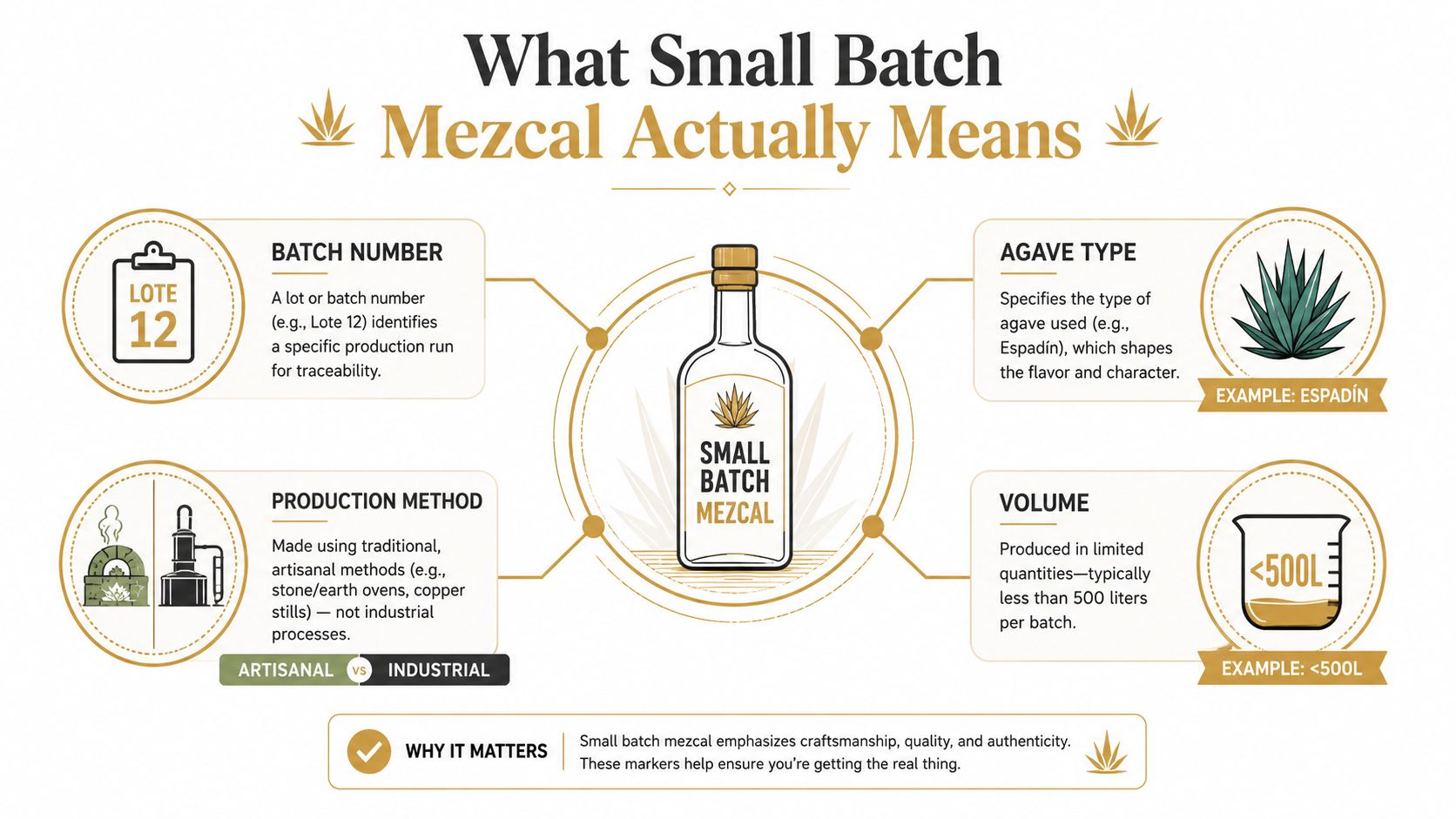
Read the label as a production record
Look for these signals before you focus on tasting notes:
- Agave species: Espadín, Tobalá, Madrecuixe, or another named plant gives you more information than “premium agave.”
- Producer identity: A named maestro mezcalero or family connects the spirit to an accountable maker.
- Place of production: A village and state can be more revealing than a broad regional phrase.
- Batch or lot information: A lot number suggests that the producer or bottler is treating the release as a distinct production unit.
- Method classification: Terms such as artisanal or ancestral can help, but you should still look for supporting details about roasting, milling, fermentation, and still type.
- Volume transparency: A stated batch size is useful because it makes “small” more concrete.
The distinction matters because mezcal has grown from a mostly regional spirit into a globally traded category at remarkable speed. Production rose from less than 1 million liters in a little more than a decade to more than 14 million liters by 2024, according to the Mezcal Regulatory Council figures summarized by Mezcalistas. That scale creates room for both careful craft production and standardized commercial output.
For another useful way to think about the phrase, compare mezcal with the way specialty coffee uses roast, origin, processing, and producer information. Cartograph Coffee's guide for coffee enthusiasts by Cartograph Coffee offers a helpful parallel: “small batch” becomes meaningful when it sits alongside specific sourcing and production details. Your best mezcal filter is simple. Don't ask only whether it's small batch. Ask what, exactly, is small.
For more background on the broader spirits term, see this explanation of what small batch means. Then apply the same skepticism to agave.
How Small Batch Mezcal Is Made Step by Step
Whiskey begins with grain, water, fermentation, distillation, and maturation. Mezcal begins with a mature agave plant, and the most important transformation happens before the liquid reaches a still. The production choices create the foundation for the aromas that whiskey drinkers may describe as earthy, roasted, fruity, herbal, or smoky.
From agave heart to cooked sugars
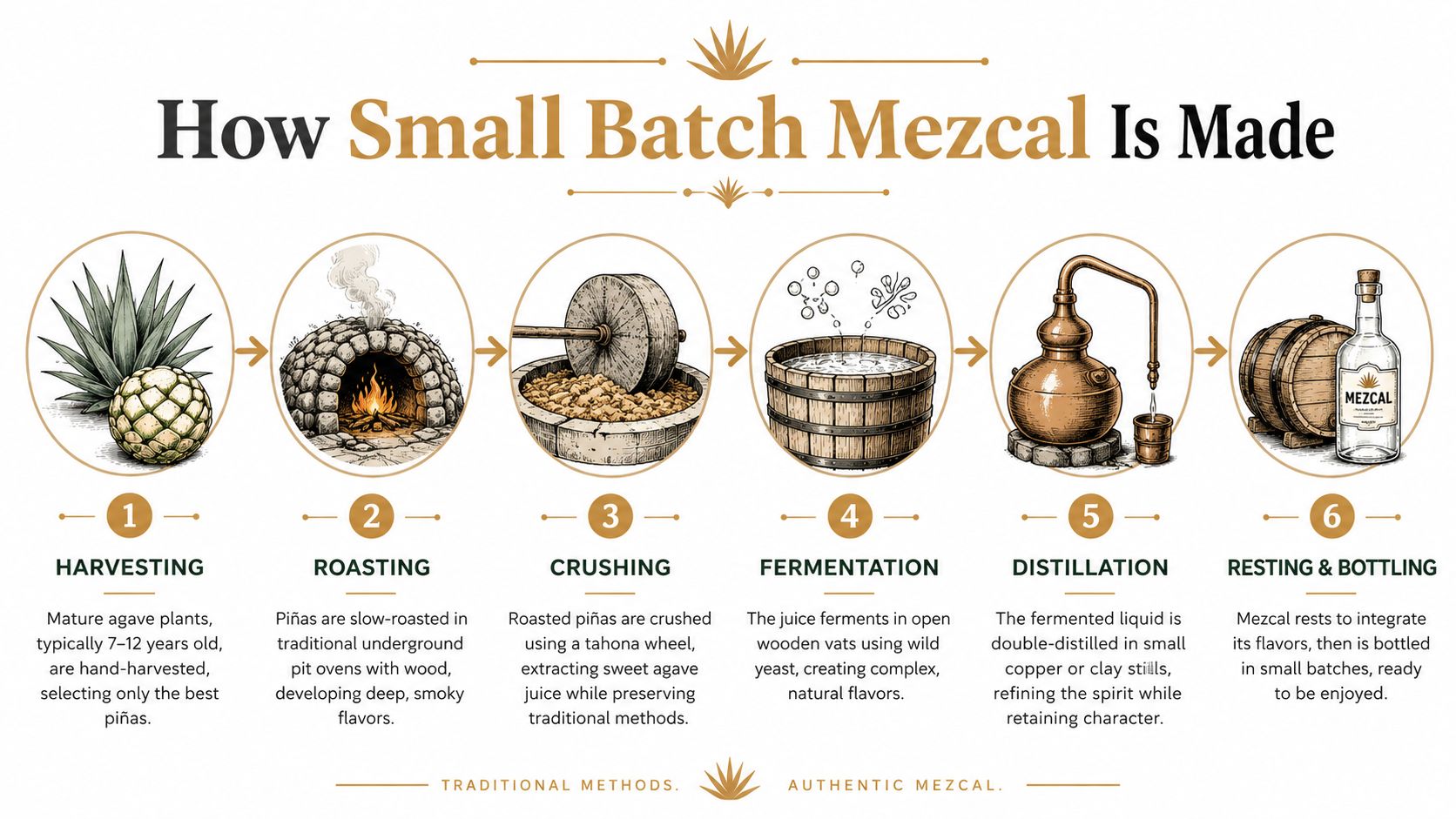
Harvesting starts with removing the leaves and exposing the piña, the dense heart of the agave. Unlike a whiskey mash, which begins with grain that can be processed on a predictable schedule, agave arrives with the character of its species, growing conditions, and maturity already embedded in the raw material.
Roasting usually takes place in an earthen pit in traditional production. The heat softens the piña and converts its stored carbohydrates into fermentable sugars. This is the point where mezcal gains much of its roasted, smoky identity. The result isn't the same as barrel-derived smoke in whiskey. It's closer to tasting the difference between a grain spirit influenced by a kiln and one shaped by a wood-fired oven.
Crushing separates the cooked fibers and juice. A tahona wheel can break the agave down through slow, heavy pressure, while a shredder handles the material more mechanically. Whiskey drinkers can think of this as a rough counterpart to milling and mashing, except the cooked agave fibers remain central to the fermentation character.
Fermentation and distillation create the signature
Fermentation often happens in open vats with wild or ambient yeast. Temperature, moisture, vessel material, and yeast activity can change the pace and aroma of the fermentation, which helps explain why one release may taste fruitier, earthier, or more rustic than another from the same producer.
The liquid is naturally low in alcohol before distillation. Mezcal commonly requires roughly 10 to 20 kilograms of agave to produce 1 liter of spirit, and fermentation often reaches only about 4 to 5 percent ABV before distillation, according to the producer's mezcal production process guide. That contrast with a finished whiskey's strength helps explain why the still has so much influence over the final profile.
Distillation may use copper or clay pot stills, and some traditional mezcals undergo two distillations. The still separates alcohol and aromatic compounds from the fermented agave material, but the producer decides how the run develops and where the spirit is collected. A whiskey enthusiast who already understands the difference between pot still and column still production can explore the art of whiskey distillation, then carry that curiosity into mezcal.
Small batches preserve variation. Changes in agave, weather, fermentation, cut points, and still behavior can make each release feel like a distinct craft expression, much as individual whiskey barrels refuse to taste exactly alike.
Small Batch Mezcal vs Mass-Market Mezcal vs Tequila
The easiest way to separate these categories is to stop treating “agave spirit” as a complete description. Small batch mezcal, commercial mezcal, and tequila share an agave foundation, but their permitted ingredients, geographic rules, and production identities can differ sharply.
Mezcal is governed by a protected designation of origin. Mexico granted the Mezcal Designation of Origin in 1994, initially covering five states, and by 2026 the designation covered thirteen states. Oaxaca accounted for more than 90 percent of certified mezcal production in 2020, according to the Frontiers study of mezcal's history and sustainability.
Tequila has its own designation and is made from Blue agave in designated regions. That makes tequila narrower in agave identity than mezcal. Mezcal can express a much broader range of agave species and local production traditions, although commercial output may rely heavily on a small group of familiar materials and methods.
Mezcal vs Tequila at a Glance
| Attribute | Small Batch Mezcal | Tequila |
|---|---|---|
| Agave identity | May use named cultivated or wild agave varieties, depending on the expression and designation | Made from Blue agave under tequila regulations |
| Cooking approach | Traditional releases often use earthen-pit roasting, though production methods vary | Cooking methods follow tequila production practices and are commonly designed for consistency |
| Fermentation | May use ambient or wild yeast and open vessels, creating batch variation | Fermentation is managed within tequila production standards |
| Distillation | Copper or clay pot stills may shape the spirit's aroma and texture | Equipment and production choices vary, with consistency often central to the category |
| Geography | Must come from a protected mezcal-producing area | Must come from a protected tequila-producing area |
| Typical tasting identity | Can show smoke, roasted agave, herbs, minerals, fruit, or savory notes | Often emphasizes cooked agave, pepper, citrus, sweetness, and a cleaner profile |
| Best starting use | Neat sipping, focused flights, and cocktails where agave character matters | Neat pours and classic tequila cocktails, depending on the bottling |
The phrase mass-market mezcal describes production scale and commercial intent more than a separate flavor category. A larger producer may prioritize repeatability, distribution, and a familiar profile. That isn't automatically a flaw, just as a widely available blended whiskey isn't automatically inferior to a single-cask bottling. It serves a different purpose.
A small batch release is more likely to foreground a particular harvest, village, agave type, or maestro mezcalero. Still, the label needs to prove that story. A decorative bottle and a high price can't substitute for production transparency.
Agave Varieties and Regional Styles Worth Knowing
Whiskey drinkers often predict a bourbon's character from its grain bill or associate a Scotch with a broad regional style. Mezcal asks you to make a similar first read from agave variety and state of origin.
Start with Espadín, the category's dominant workhorse. Espadín is commonly cultivated and adaptable, which makes it a practical foundation for both sipping releases and cocktails. Its profile can show roasted agave, green herbs, citrus, earth, and smoke, but the producer's cooking, fermentation, and distillation choices still matter. The plant name gives you a starting point, not a complete tasting note.
Other varieties can create a more unusual experience. Tobalá is often associated with expressive fruit and floral tones. Madrecuixe can move toward green, vegetal, herbal, and mineral territory. Tepeztate may feel intense, earthy, and savory. These comparisons aren't rigid rules. They're like describing rye whiskey as spicier or a wheated bourbon as softer. The mash bill shapes expectations, but the distiller and maturation environment finish the sentence.
A state-by-state orientation
Oaxaca remains the central reference point for certified mezcal production. Its range of villages, agaves, and production traditions means “Oaxacan mezcal” still covers many different sensory worlds rather than one fixed flavor.
Durango can offer a different sense of place, with local agave traditions and production conditions that may push the spirit toward deeper, earthier, or more intense notes. San Luis Potosí is another important point of comparison for drinkers exploring beyond Oaxaca, especially when a bottle identifies a specific agave and producer rather than relying on broad branding.
The category's scale makes this exploration more urgent. Mezcal production rose from less than 1 million liters to more than 14 million liters by 2024, while Espadín accounted for 84.5 percent of production, according to Mezcalistas' production and export summary. That figure doesn't make Espadín boring. It tells you that the agave is foundational, while rarer varieties occupy a smaller and often more specialized part of the market.
Palate shortcut: Treat agave like a whiskey grain bill. Use it to form a hypothesis, then let the glass confirm or challenge it.
A Tasting Framework for Your First Small Batch Mezcal
Your whiskey tasting habits already give you a strong foundation. Mezcal rewards the same patience, but smoke and roasted agave can dominate the first impression if you rush. The aim isn't to find the biggest flavor. It's to separate the spirit into stages.
Set up the pour
Use a copita or another small, wide-bowled glass that gathers aroma without trapping the alcohol too aggressively. A whiskey tasting glass works well too, especially if it gives you enough room to nose the spirit without placing your face directly over the liquid.
Pour about one ounce, then let it rest for roughly 30 seconds before nosing, following the practical structure in this beginner's guide to tasting whiskey. Hold the glass by its base or stem rather than cupping the bowl. Your hand can warm the spirit and alter the volatile aromas.
Start with the appearance. Note whether the mezcal is clear, pale, or visibly rested in wood. Don't assign quality from color alone. You're building a record of what's in front of you.
Move from aroma to finish
Bring the glass toward your nose gradually. First look for the broad impression, perhaps roasted, smoky, green, fruity, floral, mineral, or savory. Then take shorter sniffs and search for specific details. The nose may shift as the alcohol settles.
Take a small first sip and let it pass across your tongue. The entry tells you how the spirit arrives, the mid-palate reveals texture and flavor development, and the finish shows what remains after swallowing. Mezcal can begin with smoke, open into tropical fruit or herbs, and end with salt, earth, pepper, or mineral notes.
Proof matters. Beginner whiskey guides recommend starting with 80- to 90-proof whiskey and evaluating aroma, taste, and finish rather than judging from the first sip, as described in six tips for new whiskey drinkers. Mezcal may present a different strength and intensity, so choose a bottle that lets you concentrate without fighting alcohol heat.
Use a notebook with four lines:
- Aroma: What appears before the sip?
- Entry: Is the first taste sweet, smoky, bright, earthy, or savory?
- Texture: Does it feel oily, light, dry, warming, or expansive?
- Finish: Which note stays longest?
For a broader whiskey-based tasting reference, use this guide to tasting whiskey, then adapt the vocabulary to agave.
Serving and Pairing Small Batch Mezcal Like a Pro
Neat service is the clearest place to begin. Pour small batch mezcal into a copita and taste it at room temperature so the agave, smoke, fermentation, and distillation remain easy to follow. A small side of orange can add sweetness and acidity between sips, while sal de gusano introduces a savory, earthy contrast.
The comparison with whiskey is useful here. You wouldn't necessarily pour a delicate single malt into a cocktail where its detail disappears, and you don't need to treat every mezcal as a mixer. A vivid, aromatic bottling can be the centerpiece of a flight, while a sturdy Espadín may bring enough roasted agave and smoke to hold its shape in a drink.
Four practical ways to serve it
Neat and focused: Serve one mezcal by itself, with water nearby. Taste it before adding anything, then revisit it after a small amount of dilution if the alcohol obscures the aroma.
Copita with traditional accents: Offer orange and sal de gusano separately. Let guests decide whether the garnish clarifies the spirit or alters the rhythm of the tasting.
An Oaxacan Old Fashioned: Use mezcal in place of some or all of the whiskey base, then keep the sweetness restrained. The drink should frame the agave rather than bury it.
A Mezcal Negroni or highball: Bitter, citrus, and sparkling ingredients can make a smoky mezcal approachable for guests who aren't ready for a neat pour. Choose a mezcal with enough body to remain present after mixing.
Food pairing follows the same logic as whiskey pairing. Smoky mezcal works naturally with grilled meats, roasted vegetables, charred corn, and rich sauces. Brighter or more floral expressions can meet ceviche, fresh fruit, herbs, and lighter seafood.
For a host planning a mezcal dinner, browse the Mexican cooking collection for approachable dishes that can turn a tasting into a full meal. Keep the flight simple. Serve contrasting agave types or regions, give each guest a tasting sheet, and place cocktails after the neat pours.
How to Buy Small Batch Mezcal Without Getting Burned
Buy the information before you buy the bottle. A mezcal can carry an artisanal-sounding name and still leave you guessing about the producer, agave, or production method. Whiskey drinkers already know that a label with a named distillery and specific batch details gives them a stronger basis for judgment. Apply that same standard here.
Your label checklist
Look for:
- A named agave species: “Agave” alone tells you little. Espadín, Tobalá, Madrecuixe, and other names help define the bottle's identity.
- A producer or maestro mezcalero: The person or family behind the spirit should be identifiable.
- A village and state: Place adds useful context, especially when the bottle comes from a recognized mezcal-producing area.
- A lot or batch number: This supports traceability and lets you compare separate releases.
- A clear production description: Look for cooking method, milling, fermentation vessel, and still type.
- Certification information: A bottle marketed as mezcal should provide information connected to the regulated category and its certification framework.
Be cautious when the label leans heavily on vague artisanal language but provides no producer details. Unusually low pricing can also deserve questions when the bottle claims labor-intensive, small-scale production. The issue isn't that low price proves poor quality. It's that the price should make sense alongside the agave, labor, distribution, and production information.
Sustainability requires the same level of attention. Wild agaves can take many years to mature, and rare-agave bottlings can place pressure on limited plant populations when demand rises. A responsible producer should be able to explain whether agave is cultivated, wild-harvested, replanted, or managed through another clear practice.
The market gives buyers a reason to slow down. One 2025 market summary cited 27 percent year-over-year category growth and a 39 percent rise in average bottle price from 2021 to Q1 2025, showing that consumers are paying more as the category becomes more standardized, according to Mezcalistas' 2025 production review. Rising prices make transparency more important, not less.
Bringing It All Together With Blind Tasting Principles
A blind mezcal tasting removes the two strongest distractions on a shelf, the brand story and the price. Put the bottle aside, pour the spirit, and write down what your senses find. Your whiskey experience still matters, but it shouldn't force mezcal into a bourbon-shaped box.
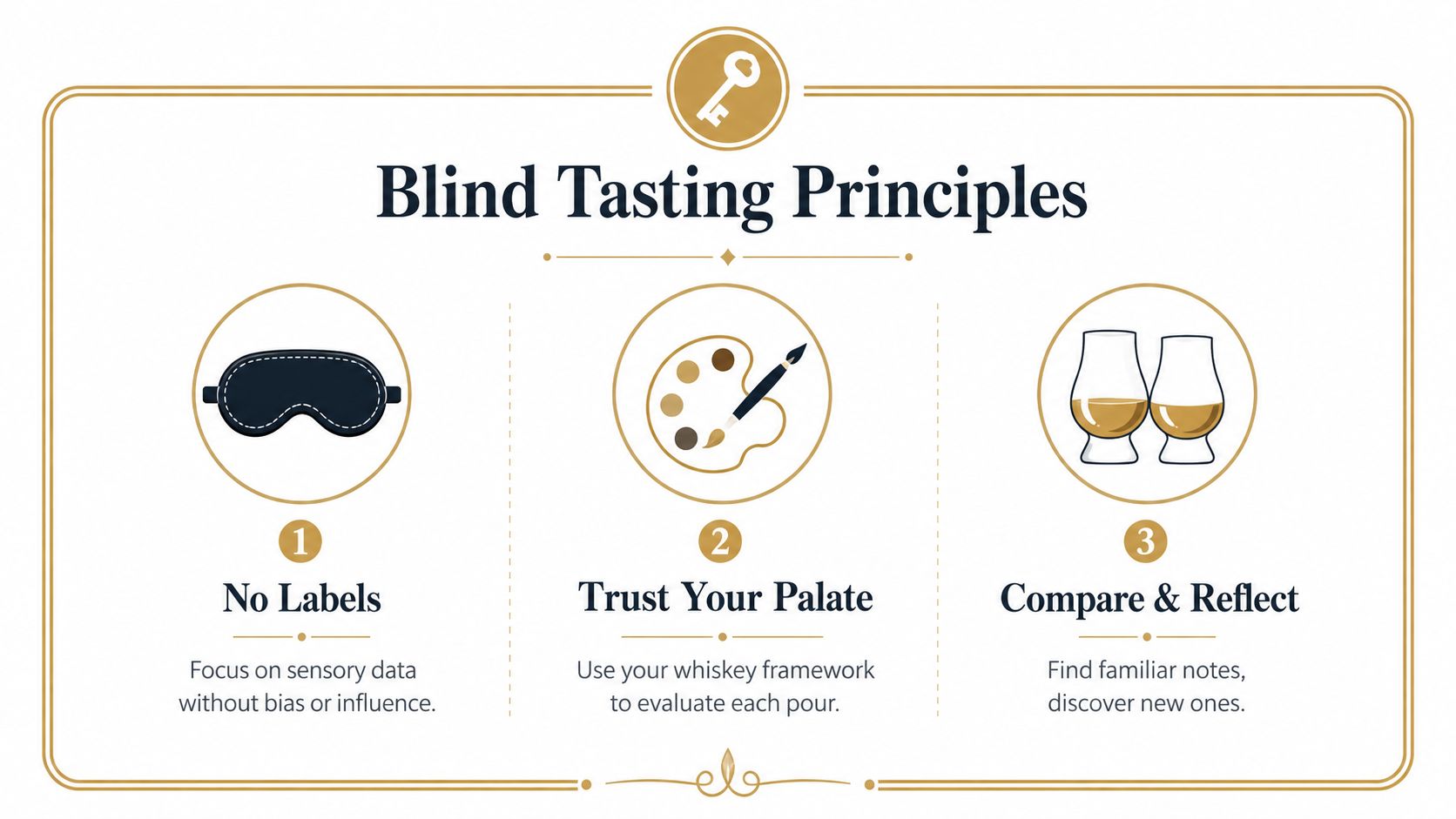
Use three questions:
- What do I smell before I know the label?
- How does the flavor develop from entry to finish?
- Which details feel familiar, and which ones expand my palate?
The American craft-spirit world offers plenty of opportunities to practice that discipline. U.S. craft spirits represented nearly 8 percent of the value of the U.S. spirits market and more than 14 million cases in combined volume, with 3,069 active craft distillers reported in 2024, according to the 2024 Craft Spirits Data Project. That broad ecosystem is why American craft whiskey brands often feature in serious small-batch tasting conversations.
Try one small batch mezcal blind alongside a whiskey, take notes on aroma, palate, and finish, then reveal the labels and compare your impressions. The next time you face a mezcal shelf, you won't need the bottle to tell you what to think.
Blind Barrels brings the same spirit of discovery to whiskey through quarterly blind tasting kits featuring four samples from small American craft distilleries, plus tasting tables, reveal tools, and a palate-scoring game. Visit Blind Barrels to explore a structured way to taste without brand or price bias, and use those skills the next time you pour small batch mezcal.