

You're standing in the liquor aisle, staring at shelves that all promise something different. One bottle is expensive because of the label, another looks familiar, and a third sounds interesting but feels like a gamble. If that's where you are, subscription boxes whiskey starts to make sense, not as a way to buy more bottles, but as a way to stop guessing what your palate likes.
That shift matters because whiskey is one of those drinks people often learn by accident. A friend pours you something, you like it, and then you spend months trying to recreate the experience from memory. A curated tasting box gives you a cleaner path. It replaces label-chasing with sampling, so you can pay attention to aroma, flavor, proof, and finish before you commit to a full bottle.
The Moment a Whiskey Subscription Starts to Make Sense
The first time a whiskey club feels appealing is usually the first time a bottle choice feels annoying. You've probably had that moment where you're comparing price tags instead of flavor, wondering if you're really buying a whiskey you'll enjoy or just one that looks safe on the shelf. A subscription box answers a different question, which is, “What do I like when I'm not being influenced by the label?”
That's why the format works so well for curious beginners. Instead of standing alone in a store with a dozen choices, you get a guided set of samples that nudges you toward comparison. One pour may feel softer, another bolder, another more savory. Those differences matter more than brand familiarity when you're still learning your own preferences.
A better starting point than random bottles
A full bottle asks for trust before experience. A tasting box flips that order. You sample first, then decide whether a style, distillery, or proof level deserves a spot on your shelf.
Practical rule: if you're still learning what you enjoy, buy fewer full bottles and more structured samples.
That's also why whiskey subscriptions can feel less like shopping and more like guided practice. A good one gives you a reason to slow down, compare pours, and notice what changes from glass to glass. For anyone who wants a calmer, more educational way into whiskey, that's a much better first step than buying whatever looks promising under fluorescent store lights.
What a Whiskey Subscription Box Is
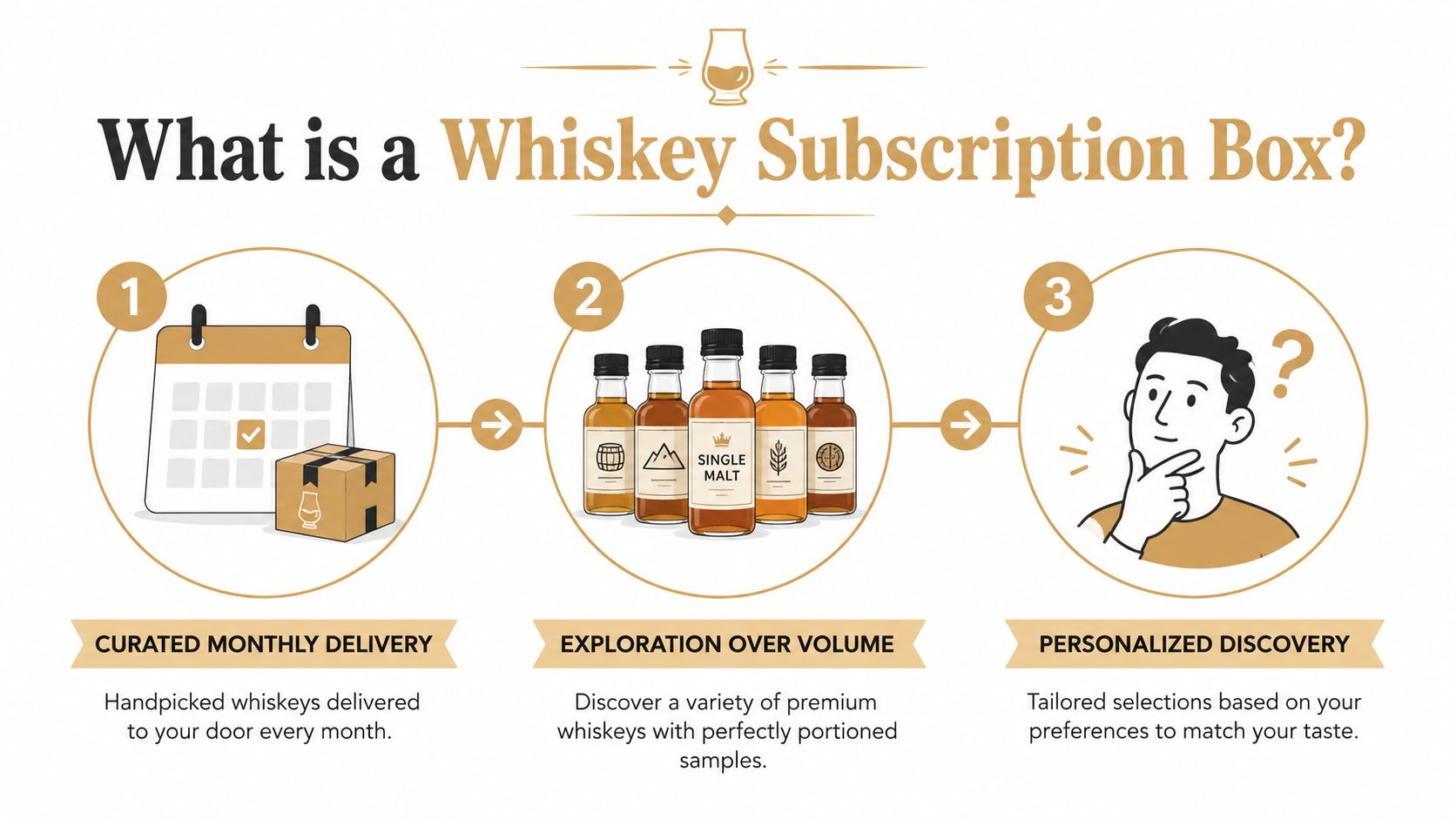
A whiskey subscription box is a recurring delivery of curated samples, not a random package of bottles. It works like a tasting lab for your palate. Instead of guessing from a label or buying a full bottle on faith, you get a set of whiskeys chosen to show how style, age, and production change what ends up in the glass. Many services use monthly or quarterly deliveries, while others offer one-time discovery sets for people who want to try the format before committing.
The idea is straightforward. You sign up, the service selects the whiskies, the box arrives, and you taste at home on your own schedule. That rhythm matters because it shifts the focus from shopping to learning. Some clubs also let you buy a full bottle after tasting, which gives you a chance to move from sampling to owning only after you know the whiskey is worth keeping around. That is a far safer path than buying a bottle because someone online called it “smooth.”
How the format usually flows
A typical service starts with curation, then shipping, then tasting. The samples are often built around a theme, a style mix, or a blind-tasting setup, which keeps the experience focused instead of random. If you want a practical breakdown of how the process is organized, this guide on how subscription boxes work explains the usual path from signup to tasting.
The smaller format is what makes the whole thing approachable. A full bottle asks for confidence before you have much experience. A sample box asks for curiosity instead. You get just enough whiskey to compare pours, notice which notes show up again, and see what your palate keeps reaching for. That is why subscription boxes whiskey are often a better fit for newcomers than for people trying to stock a bar cart quickly. The box is the lesson, not just the purchase.
Why People Join a Whiskey Club in the First Place
People join whiskey clubs for different reasons, but the strongest ones usually come down to learning, discovery, and shared experience. A club can function like a tasting classroom, where each sample teaches you something about aroma, palate, and finish. That matters because whiskey appreciation gets easier when you stop asking, “Do I like whiskey?” and start asking, “What kind of whiskey do I like?”
Learning your palate without guesswork
Curated kits help you compare styles side by side. One pour might give you vanilla and oak, another spice and grain, another a softer mouthfeel that lingers differently. When those samples arrive together, your palate starts to notice patterns instead of isolated impressions.
That's also where American craft distilleries become interesting. Clubs that feature smaller producers expose you to bottles you may never see in a local shop, especially if your store leans on the same big labels. For a beginner, that can be the whole point, because discovery beats repetition when you're still figuring out your taste.
Gifting and shared nights
Whiskey clubs also work well as gifts because they feel thoughtful without being precious. A box is easy to share with a spouse, a friend, or a parent who enjoys learning through tasting. If the gift recipient likes pairing whiskey with an evening ritual, a practical accessory can round it out nicely, and premium leather cigar cases from Grainmark Leather are a natural example of the kind of add-on people browse alongside a whiskey gift.
A good whiskey club gives people something to talk about after the pour, not just something to drink.
The social part matters more than many buyers expect. Blind guesses, scorekeeping, and comparing notes make the box feel like an event instead of inventory. That's why people keep returning to the format. It creates a small shared ritual around tasting, which is often more memorable than opening one expensive bottle alone.
What's Inside a Typical Whiskey Tasting Kit
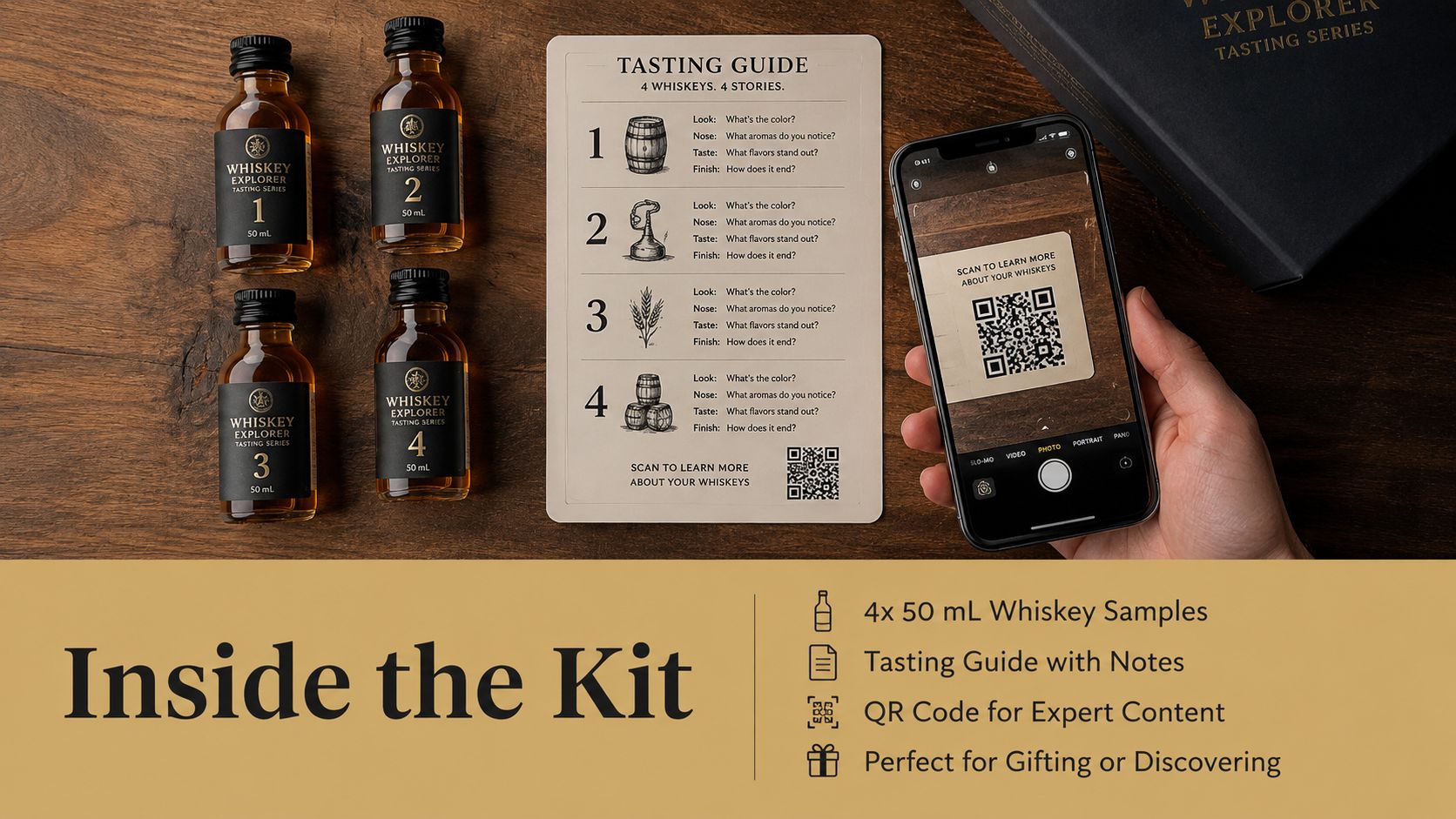
Open a tasting kit and you should feel like you've been handed a small lesson, not just a bundle of bottles. The standard format is a set of four 50 mL samples, which gives you enough whiskey to study aroma, palate, and finish without committing to a full bottle. That size also makes comparison easier, since you can revisit the same flight, add a few drops of water, and see how the whiskey changes once your first impression has settled.
A kit built around that format works well as a learning tool because it slows the process down in a useful way. If you want a closer look at the structure, the whiskey tasting kit guide from Blind Barrels lays out how the format supports blind tasting and guided note-taking. Blind Barrels uses that approach in its quarterly box, so the reveal happens after you have already formed your own impressions. The setup feels less like opening a package and more like running a small tasting session at home.
The details that matter most
A strong kit should tell you what you are tasting, not bury that information under branding. One industry guide recommends looking for cask type, vintage year, and ABV on the label, while Blind Barrels' reveal includes mashbill, ABV, age statement, aroma notes, tasting notes, and distillery background after the blind tasting. That kind of context turns each sample into a lesson about how distillation and maturation shape what ends up in your glass.
The tasting table matters too. It gives you space to write down what you smell, what you taste, and how your impressions change after the reveal. The layout shares the same discovery-first logic as The Candledust discovery set, where the goal is to explore choices before deciding which one fits you best. In both cases, the format encourages comparison before commitment.
A few clubs add a game layer as well. In Blind Barrels' format, you guess the age, proof, and whiskey type, then get a score that shows how close your palate got. That small bit of competition gives the tasting session a clear purpose, which makes the samples easier to remember later.
How to Choose the Right Whiskey Subscription Service
A whiskey subscription service makes more sense when you treat it like a tasting guide, not a monthly shopping cart. That shift changes the questions you ask. You are no longer only checking whether the box looks appealing, you are checking whether it helps you compare pours, notice patterns, and remember what you learned from each glass.
Key criteria to evaluate
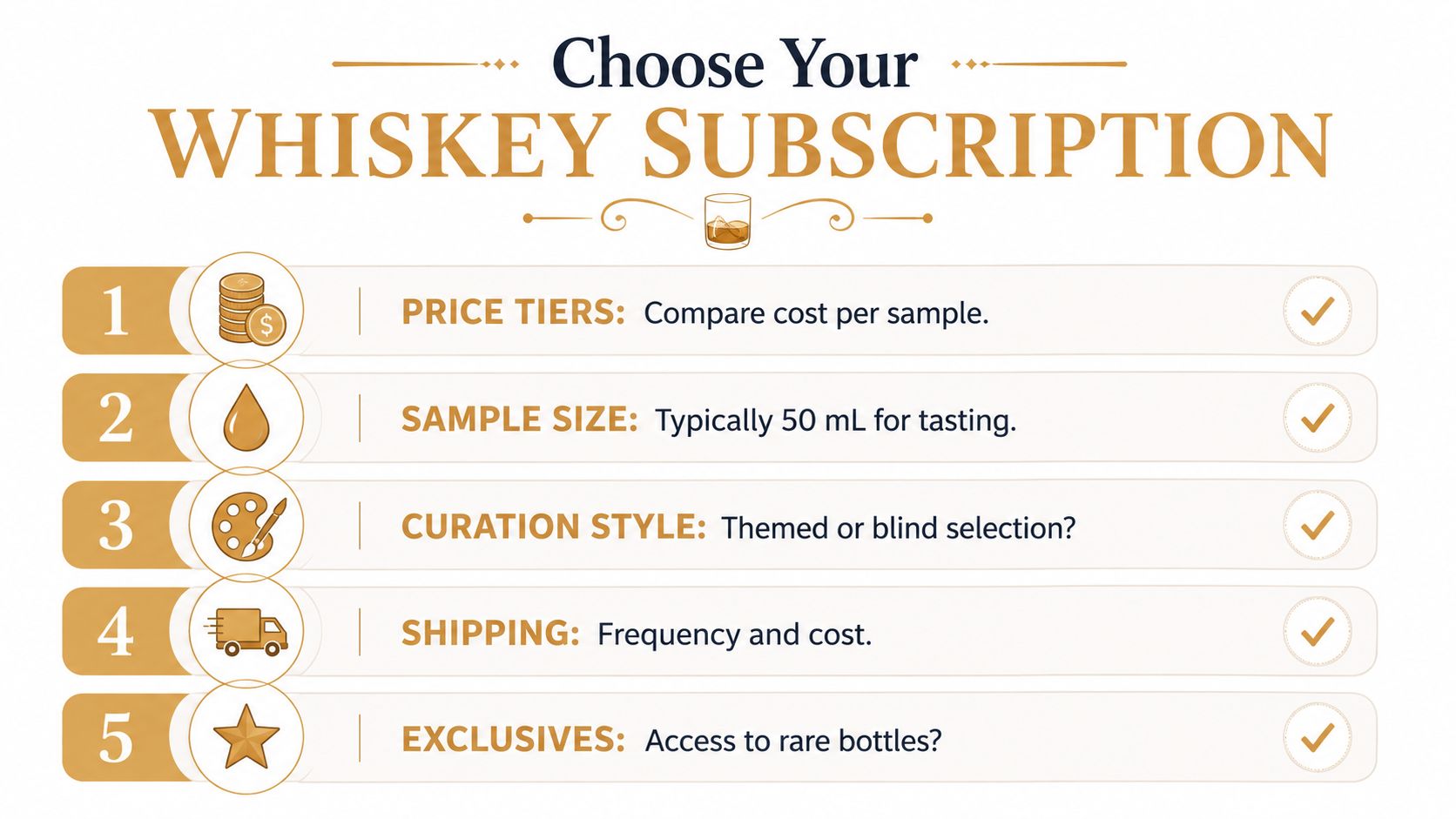
- Price Tiers: Compare the cost per sample, not just the subscription total.
- Sample Size: A useful tasting pour is usually around 50 mL, which gives you enough whiskey to assess aroma, texture, and finish.
- Curation Style: Choose between themed selections, blind tasting, or a mix of both.
- Shipping: Check how often boxes arrive and whether that pace matches how quickly you drink and take notes.
- Exclusives: Look for access to rare bottles or member-only purchase options after the tasting.
Transparency belongs near the top of the list. If a service does not clearly share ABV, age statement, cask type, and distillery identity for each sample, it becomes harder to compare what changed from one pour to the next. That matters because whiskey education depends on seeing how maturation and production choices affect flavor, not just recognizing bottle labels.
If you are curious about smaller producers, pay attention to whether the club highlights American craft whiskey or leans on mixed-origin inventory. That changes what the box teaches you. A club built around craft distilleries can introduce bottles you might never choose on a store shelf, which makes each tasting feel more like guided discovery than simple buying.
Blind tasting is another useful filter. If a service asks you to guess the whiskey before the reveal, it gives you a clearer read on your own palate, the same way a tasting notebook helps you separate first impressions from later ones. Some boxes also add score tracking, so you can see whether your guesses about age, proof, and whiskey type are getting sharper over time. That kind of structure gives the samples a purpose that goes beyond collecting bottles. For readers who also compare delivery services in other drinks, the same practical mindset applies when you find local beer delivery service.
Friendly Tasting Tips for New Whiskey Drinkers
A first tasting doesn't need to feel ceremonial. It just needs a little structure so you can notice what's in the glass before your brain fills in the blanks. Start with the color, then bring the glass to your nose gently, then take a small sip and let it sit across your tongue for a moment.
A lot of beginners press too hard at the nosing stage. You don't need to bury your nose in the glass. A slow inhale from just above the rim is enough to pick up oak, grain, spice, or fruit without overwhelming yourself.
A simple first-night rhythm
Use the tasting sheet or QR-linked guide in the box and write in your own words. You don't need to sound like a professional reviewer. “Sweet,” “peppery,” “dry finish,” or “smells like toasted bread” is far more useful than trying to force polished language.
- Start light: Pour a small amount first, then revisit it after a few minutes.
- Add water carefully: A few drops can open up aroma and soften proof.
- Choose a stable glass: A tulip-style glass helps concentrate aroma, but any clean glass will do.
- Taste slowly: Four samples in one sitting is plenty, especially if you're taking notes.
Blind tasting helps here because the label doesn't steer your opinion. When you don't know the brand, you're more likely to notice what you prefer. That's why a guided box can be such a good beginner tool. It gives you a structure to trust while still leaving room for your own reactions.
Try to end the session by ranking the samples, not by naming the “best” one. The one you'd buy again is often a better answer than the one that sounds most impressive.
Where Blind Barrels Fits in the Whiskey Subscription Market
Blind Barrels sits in the part of the market that treats whiskey as a learning exercise. Its quarterly box includes four 50 mL samples, a tasting table, and a QR code that reveals the distillery, mashbill, ABV, age statement, aroma notes, tasting notes, and backstory after the blind pour. That structure turns the box into a guided tasting session instead of a simple shipment, almost like a lab kit for your palate.
The blind element changes the experience in a meaningful way. You guess the age, proof, and whiskey type, then get a score that shows how accurate your palate was. That is more than a gimmick. It gives you a repeatable way to see whether your tasting skills are getting sharper over time, much like checking your notes against the answer key after a practice quiz.
Why the format feels different
Blind Barrels says its subscription often features American craft whiskey and positions the box around rare craft distilleries. That focus matters if you want to support smaller producers and compare different craft styles side by side. The subscription page also says members can access full bottles at a discount after the reveal, which creates a clear path from tasting to buying without asking you to decide too early. You can see the quarterly option on the Blind Barrels whiskey subscription page if you want to look at the format itself.
For a newcomer, that setup is useful because it removes the pressure to know everything right away. You taste first, learn second, and only then decide whether a bottle deserves shelf space. A bottle purchased from a label can be a guess. A blind set gives you a few clues at once and lets your own reactions do the teaching. If you are comparing clubs, that is the difference between an inventory-led box and an experience-led one.
Quick Answers and Your Next Step
Are whiskey subscription boxes worth it for beginners? Yes, if you want to learn by tasting instead of by guessing. The format works because it gives you a few carefully chosen samples instead of one bottle you may not enjoy.
How much whiskey comes in a typical kit? A common model is a small set of samples, and the format covered here uses four 50 mL pours. That's enough for comparison, notes, and a second taste with water.
Does blind tasting really help you learn? It does, because it removes brand bias. Once you stop reacting to the label, you can focus on what the whiskey tastes like in your glass.
| Criterion | What to Look For |
|---|---|
| Price | Clear value per sample, not just the sticker price |
| Sample Size | Around 50 mL for a real tasting session |
| Transparency | ABV, age statement, cask type, and distillery identity |
| Curation | Blind, themed, or craft-focused selection |
| Bottle Access | Optional purchase after tasting |
The simplest takeaway is this, whiskey subscriptions make the most sense when they're used as guided tasting experiences. If you want to learn what your palate likes, blind samples and thoughtful curation are a much better teacher than random bottle buying.
If you want a structured way to taste, compare, and learn without the guesswork, Blind Barrels offers a quarterly blind whiskey subscription built around four samples, tasting tools, and reveal-based discovery. Visit Blind Barrels to see how that format works and decide whether a guided tasting box fits the way you like to explore whiskey.