

In the world of whisky, if there's one ingredient that rules them all, it’s malt.
At its core, malt is simply barley that’s been allowed to sprout (germinate) and then carefully dried. Think of a raw kernel of barley as a locked pantry, packed with starches but useless to a distiller. The malting process is the key that unlocks that pantry, awakening natural enzymes that convert those starches into the fermentable sugars whisky production depends on.
What "Malt" in Whisky Actually Means
If you’re just getting into whisky, "malt" might sound like another piece of industry jargon, but it’s truly the heart and soul of many of the world's most cherished spirits. Getting a handle on what malt is and what it does is the first real step toward appreciating the incredible complexity in your glass. It’s the foundational building block distillers use to craft everything from light and biscuity notes to deep, smoky profiles.
The whole point of malting is to trick the barley grain into thinking it’s time to grow. This "trick" fires up those internal enzymes, which are absolutely essential for breaking down complex starches into simple sugars. Without these sugars, the yeast added during fermentation would have nothing to eat, meaning no alcohol. It's a beautifully natural, controlled process that sets the stage for every bit of flavor that follows.
The Foundation of Flavor
But malted barley isn't just a functional ingredient; it’s a flavor powerhouse. The way it’s dried—or 'kilned'—after it sprouts has a massive impact on the final taste of the whisky. Low, gentle heat coaxes out lighter, sweeter notes of breakfast cereal, fresh toast, and honey. You’ll find this character in many smooth Speyside Scotches.
This is also a critical element in the American craft whiskey scene, where distilleries like Westland Distillery in Seattle are known for experimenting with different barley varieties to build unique flavor profiles from the ground up.
This tradition of using malted barley goes back centuries, especially in Scotland, where single malt Scotch became a global icon. Its appeal hasn't faded one bit. The global malt whiskey market was valued at USD 5.65 billion and is projected to climb to USD 8.23 billion by 2032. You can learn more about the growth of the malt whisky market and see how this timeless ingredient continues to shape the industry.
For new drinkers, the key takeaway is this: Malt provides the essential sugars for making alcohol and lays down the base layer of flavor for the whisky. It's the canvas upon which all other flavors—from distillation, aging, and finishing—are painted.
To make these core ideas a bit easier to digest, here’s a quick reference guide breaking down the fundamentals.
Whisky Malt at a Glance
For anyone just starting their whisky journey, this table boils down the essential terms into simple, easy-to-understand concepts.
| Term | Simple Definition | Role in Whisky |
|---|---|---|
| Barley | A raw cereal grain, like wheat or corn. | The source ingredient before it is processed. |
| Malting | The process of soaking, sprouting, and drying barley. | Unlocks enzymes to convert starches into sugars. |
| Malt | The final product: barley that has been malted. | Provides fermentable sugars and foundational flavors. |
| Enzymes | Natural catalysts inside the grain, activated by germination. | Break down starches into simple sugars for yeast. |
Think of these four elements as the starting lineup for any malt whisky. Understanding their individual roles makes it much easier to appreciate how they work together to create the spirit in your glass.
The Malting Process: From Grain to Flavor Engine
Malted barley isn’t just an ingredient; it’s the carefully crafted flavor engine that powers the entire whisky-making journey. This transformation from a simple grain into a complex source of sugar and character is a three-step ballet of tradition and science that has been refined for centuries. It’s less of an industrial procedure and more of an art form, where a maltster acts like a chef, preparing an ingredient to release its fullest potential.
The whole point is to trick the barley into thinking it’s time to grow, waking it from its slumber to unlock the starches packed inside. This is where the real craft lies—in carefully controlling a natural process to get the exact result a distiller is looking for.
This visual guide shows how simple barley is transformed into a sugar-rich ingredient ready for whisky production.
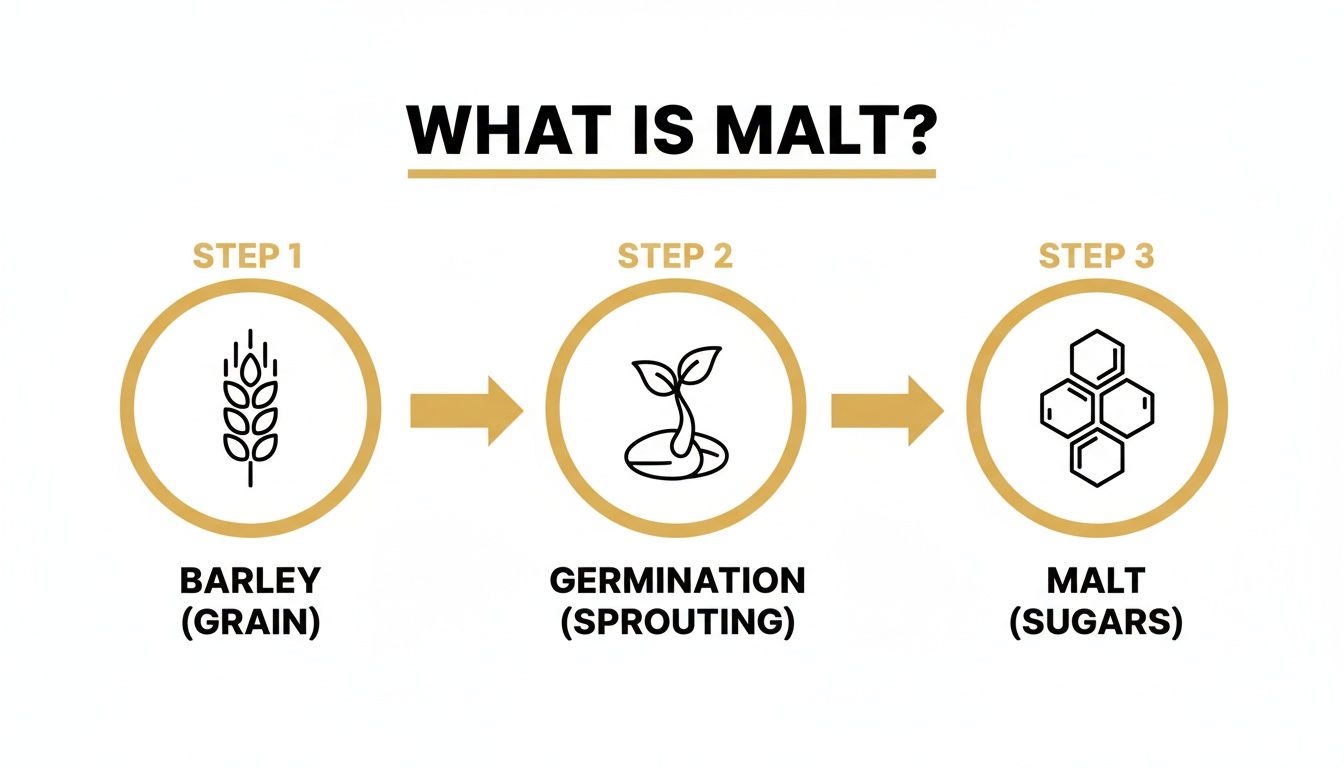
As you can see, each stage builds on the last, turning raw grain into the flavor foundation of the final spirit.
Step 1: Steeping to Awaken the Grain
The first step is steeping, and it’s pretty much what it sounds like. Raw barley gets dunked in cool water for about two to three days, which dramatically raises its moisture content from around 12% to over 40%. Think of it as giving a sleeping seed a long, deep drink to signal that it's time to wake up and get to work.
This hydration is the critical trigger that kicks everything off. It gets the grain ready for the next phase, where the internal chemistry really starts to cook. Without proper steeping, those all-important enzymes would never come to life.
Step 2: Germination to Create Enzymes
Once the barley is fully soaked, it’s moved to the germination floor. Here, the damp grain is spread out in a thick bed and left to sprout for four to six days. During this time, the maltster has to regularly turn the grain to keep the temperature even and stop the tiny rootlets from tangling into a solid mat.
This is where the real magic happens. As the barley sprouts, it produces enzymes—specifically amylase—that act like microscopic scissors, snipping away at the tough cell walls around the starch granules. This makes the starches accessible so they can be converted into the simple sugars that yeast will later feast on during fermentation.
These enzymes are crucial for making alcohol, but you can learn more about how yeast itself creates unique flavors in our article on the magic of yeast in whiskey production.
Step 3: Kilning to Lock in Flavor
Just as the barley’s starch-converting potential hits its peak, the process is brought to a screeching halt with heat in a step called kilning. The sprouted "green malt" is moved into a kiln—basically a giant oven—where hot air dries it out and stops germination dead in its tracks.
This is, without a doubt, the most flavor-defining stage of the entire process. The temperature and the heat source used here will determine the final character of the malt and, by extension, the whisky.
- Low Heat: Gentle drying with hot air produces a pale malt with light, sweet flavors of biscuit, toast, and cereal. This is the backbone of many Scotch, Irish, and American single malt whiskies.
- Peat Smoke: For those iconic smoky whiskies, especially from Islay, the malt is dried over a fire fueled by peat. The smoky phenolic compounds stick to the grain, infusing it with those unmistakable earthy, medicinal, and campfire notes.
The malting process is a precise art, combining these steps to create the perfect foundation for whisky. Every detail matters, from how long the barley steeps to how often the "green malt" is turned on the floor. But it's the final kilning that truly locks in the character that defines the spirit, especially for single malts made from 100% malted barley.
A Tip for New Drinkers: Think of kilning like toasting bread. A light toast gives you soft, bready notes. A darker toast brings out nutty, richer flavors. Burning it (like heavy peating) creates an intense, smoky character. The maltster is the chef deciding exactly how "toasted" the whisky's main ingredient should be.
Exploring Different Malt Styles and Flavors
Think of a distiller like a chef. Just as a chef reaches for different spices to bring a dish to life, a distiller chooses different types of malt to build a whisky’s unique flavor profile. Not all malt is created equal, and the biggest differences come from that final, crucial step in the process: the kilning.
How a distiller dries the barley—the heat, the method, the fuel source—fundamentally shapes the notes that end up in your glass. This is where the magic happens, creating a huge spectrum of possibilities. It’s the reason a smoky Islay Scotch tastes worlds apart from a honeyed Speyside single malt. By getting to know these malt styles, you can start to predict what a whisky might taste like before you even pour it.
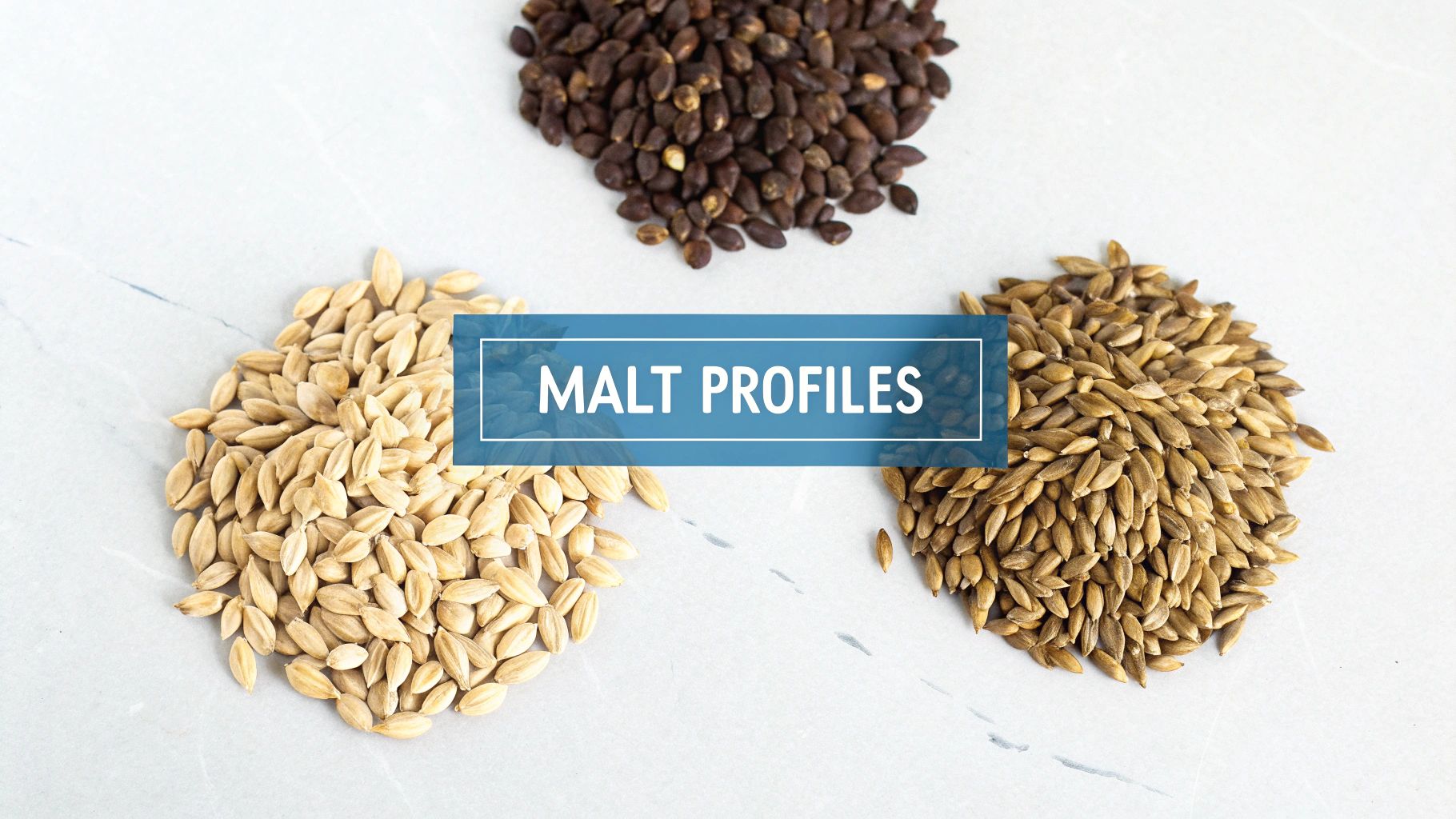
Pale Malt: The Foundation
First up is pale malt, the absolute workhorse of the whisky world. It's made by drying the germinated barley with gentle, indirect heat. The whole point is to preserve as many of those crucial sugar-converting enzymes as possible while adding just a touch of delicate flavor.
Consider pale malt the canvas on which the rest of the whisky is painted. It provides the essential fermentable sugars and lays down a subtle, bready, and slightly sweet backbone. The flavors are often described as biscuity, malty, or like breakfast cereal—the foundational character of countless single malts and bourbons.
Crystal and Caramel Malts: Adding Sweetness
To add layers of sweetness and color, distillers turn to specialty malts like crystal or caramel malt. The process here is different. They take the "green malt" (the freshly sprouted, still-damp barley) and essentially stew it before it hits the kiln. This clever step actually crystallizes the sugars inside the grain.
When these malts are kilned at higher temperatures, those crystallized sugars toast up beautifully, contributing rich notes of toffee, caramel, dried fruit, and a hint of nuttiness. While they're used more sparingly than pale malt, they add incredible depth and a richer mouthfeel. It's a technique many American craft distilleries love to play with to create complex, unique whiskies.
A Tip for New Whiskey Drinkers: Think of crystal malt like the caramelized sugar on top of a crème brûlée. It adds a specific, concentrated sweetness and a darker color that standard sugar (or pale malt) simply can't achieve on its own.
Chocolate and Roasted Malts: The Dark Side
Crank the kilning temperature even higher, and you get chocolate malt and roasted barley. These malts are toasted until they’re dark brown or nearly black, developing intense, roasty flavors that scream dark chocolate, espresso, and bitter cocoa.
You won't find much of this in a typical mash bill—often just 1-2% of the total grain. But that small amount is enough to add deep color and a robust, dark flavor complexity. While they are more common in stouts and porters, some adventurous craft whisky makers are using them to push the boundaries of flavor. For a great example, look for whiskeys from American distillers like Balcones in Texas, who often use roasted malts to create bold, innovative flavors.
Peated Malt: The Smoky Icon
And finally, we have peated malt, the legend behind the iconic smoky whiskies of Scotland. Instead of using clean hot air for drying, the malt is dried over a fire fueled by peat—decomposed, boggy plant matter. The thick, oily smoke clings to the barley, infusing it with powerful phenolic compounds.
This process gives us flavors that range from a gentle campfire smoke to intense medicinal and earthy notes of iodine, tar, and seaweed. The level of smokiness, or "peatiness," depends entirely on how long the malt is exposed to that fragrant smoke. To dive deeper into this unique style, you can explore our guide on what makes a Scotch peaty and discover its fascinating regional variations.
To help tie all this together, here’s a quick look at how these different malts translate into the flavors you find in your favorite whiskies.
How Malt Type Shapes Whisky Flavor
This table offers a comparative look at different malt styles and the distinct flavor notes they contribute to the final whisky.
| Malt Type | Kilning Method | Typical Flavor Notes | Whisky Style Example |
|---|---|---|---|
| Pale Malt | Low, indirect heat | Bready, biscuity, sweet, light honey | Most Single Malt Scotch, Bourbon |
| Crystal/Caramel Malt | Stewed, then kilned at medium-high heat | Toffee, caramel, dried fruit (raisin, fig) | Craft American Single Malts, some Bourbons |
| Chocolate/Roasted Malt | High-temperature kilning | Dark chocolate, coffee, espresso, bitter cocoa | Experimental Craft Whiskies (e.g., Balcones) |
| Peated Malt | Dried over a peat-fueled fire | Campfire smoke, iodine, seaweed, earthy, medicinal | Islay Single Malt Scotch (e.g., Laphroaig, Ardbeg) |
Understanding these building blocks is the key to decoding a whisky's profile. The next time you nose a glass, try to pick out these foundational notes—it will completely change the way you taste.
Alright, now that we've got a handle on the different malt styles—from pale and biscuity to dark and smoky—let's connect that knowledge directly to the bottle on your shelf. The role malt plays is one of the biggest factors defining the world's major whisky categories. Sometimes it's the star of the show, and other times it's a crucial supporting actor.
Understanding how it's used differently is what separates casual sipping from truly appreciating what makes each style unique. This is where the theory becomes practice, and you can start tasting the influence of malted barley in every glass of Scotch, Bourbon, or American Single Malt.
Single Malt Scotch: The Ultimate Expression
When most people think of malt, their mind immediately goes to Single Malt Scotch. This category is the ultimate showcase for malted barley because Scottish law is crystal clear: it must be made from 100% malted barley at a single distillery. No other grains are allowed in the mash bill, which makes the character of the malt absolutely paramount.
This is exactly why the malting process is so central to a Scotch's identity. A distillery in Speyside might use a lightly kilned pale malt to craft a whisky full of honey, apple, and cereal notes, like you'd find in The Glenlivet. Head over to Islay, and a distillery like Laphroaig will use heavily peated malt to produce its legendary smoky, medicinal, and maritime spirit. In both cases, the malt is the entire story.
Bourbon: A Supporting But Vital Role
Jump across the Atlantic to the United States, and you'll find malt playing a completely different—yet equally critical—role in Bourbon. By law, Bourbon’s mash bill has to be at least 51% corn. Corn is fantastic for creating a sweet, rich spirit, but it has one major drawback: it lacks the enzymes needed to convert its own starches into fermentable sugars.
This is where malted barley steps in as the indispensable helper. Distillers add a small percentage of it (typically 5-15%) to the mash, not for its flavor, but for its enzymatic power. The malt acts as a catalyst, unlocking the sugars in the corn so fermentation can begin. While it might add subtle notes of toast and biscuit, its main job is functional. It’s the unsung hero of America’s native spirit.
Tip for New Drinkers: When you're tasting Bourbon, notice the sweet corn notes first. Then, try to find that subtle, underlying bready or nutty character in the background. That's the malted barley at work, adding a quiet layer of complexity behind the big corn and barrel flavors.
American Single Malt: A New Frontier
Right now, the most exciting space for malt is the booming American Single Malt category. Unbound by the strict traditions of Scotland, American craft distillers are taking the 100% malted barley rule and running with it, creating whiskies that are distinctly American and absolutely packed with character.
These producers are the rock stars of the malt world, experimenting with different barley varietals, unique kilning methods, and all sorts of specialty malts to craft truly unique flavor profiles.
- Stranahan’s in Colorado: As a pioneer of the category, Stranahan’s uses a mash bill of 100% malted barley from the Rocky Mountains, creating a rich, robust whisky with notes of caramel, coffee, and chocolate.
- Westland Distillery in Washington: This Seattle-based distillery is famous for its "grain-to-glass" philosophy. They often use locally sourced barley and even roast some of their own malts to build complex flavors of roasted nuts, fruit, and coffee.
These craft distilleries prove that malt isn’t just an ingredient; it’s a tool for innovation. The quality of the malt, often using specific barley varieties like Concerto or Optic, directly shapes the spirit's final complexity. With the North American whisky market now worth over $25 billion, this craft boom is a key driver, with American malts starting to challenge Scotch's long-held dominance. You can discover more insights about the thriving malt whiskey market and see how this innovation is shaking up the industry.
By comparing these three major styles, you can see the incredible versatility of malted barley. It can be the solo artist, the essential backup singer, or the experimental lead guitarist—but no matter the role, it’s always fundamental to the music in the glass.
How to Taste the Malt in Your Whisky
Knowing the theory behind malt is one thing, but actually picking it out in your glass? That’s where the real fun begins. Training your palate to spot those malt-derived flavors is a rewarding skill that will deepen your appreciation for every whisky you pour.
This isn’t about abstract concepts; it's about giving you the confidence to pinpoint those foundational notes. It’s the difference between tasting “whisky” and understanding the soul of the spirit.
The first step is simply knowing what you’re looking for. Malted barley is the source of a whole family of familiar, comforting aromas and flavors that create the backbone of a whisky’s profile.
These are often the very first notes you’ll detect, especially in unpeated or lightly oaked whiskies where the malt has nowhere to hide.
Common Malt-Derived Tasting Notes
When you bring a glass to your nose, think about these specific scents. They are the direct fingerprints of the malted barley that started it all.
- Breakfast Cereal: Remember the smell of dry Cheerios, Grape-Nuts, or shredded wheat? That’s a classic hallmark of pale malt.
- Toast and Biscuit: Imagine the warm aroma of freshly baked bread, digestive biscuits, or golden-brown toast. It’s a bready, comforting note that adds incredible depth.
- Nutty Flavors: Notes of almond, walnut, or hazelnut often come from the kilning process, especially when the malt gets toasted just a little bit darker.
- Chocolate and Coffee: In whiskies that use roasted or chocolate malts, you’ll find distinct notes of dark chocolate, espresso, or rich cocoa powder. This is a common signature in many innovative American single malts.
These are the building blocks. To get a handle on the bigger picture—from nosing to the finish—check out our comprehensive guide on how to taste whiskey and take your palate to the next level.
A Simple Side-by-Side Tasting Exercise
The best way to train your palate is through direct comparison. This simple exercise helps you isolate and identify the influence of malt by putting two different but accessible whiskies head-to-head. It’s a hands-on approach that really makes the concept click.
Your Tasting Lineup:
- A Classic Unpeated Speyside Malt: A bottle like Glenfiddich 12 is perfect. Its profile is clean, light, and overwhelmingly driven by its pale malt base.
- An Innovative American Single Malt: Try a bottle from Westward Whiskey in Oregon. They focus on pale malt to create a bold, robust flavor that offers a great contrast to the lighter Scottish style.
Tasting Tip for Beginners: Pour a small amount of each into separate glasses and let them sit for a few minutes. Nose each one before tasting, and take a small sip of water in between to cleanse your palate. Focus on finding those core malt notes first, then notice how the American whiskey presents a different, often richer, expression of the same ingredient.
In the Speyside malt, you should easily pick up those notes of breakfast cereal, fresh pear, and a honeyed sweetness—all classic expressions of unpeated malt. Now, move to the American single malt. Notice that the same bready, sweet foundation is there, but it might be bolder, with notes of toasted almond or caramel alongside the core maltiness.
This comparison shows you exactly what malt in whisky tastes like and how different production philosophies can shape its expression. Once you get the hang of this, you’ll be deconstructing the flavors in any whisky you try, from a classic Scotch to a bold American craft single malt.
Your Questions About Malt in Whisky Answered
We've covered a lot of ground, from a humble barley grain to the complex, delicious spirit in your glass. But you might still have a few questions rattling around. This last section is all about getting you clear, straightforward answers to the most common queries people have about malt in the world of whisky.
Think of it as your go-to reference. It's here to lock in what you've learned and clear up any final bits of curiosity about this foundational ingredient.
Does All Whisky Contain Malt?
Not every single whisky out there contains malt, but it’s absolutely essential to most of the world's major styles. When you're talking about Single Malt whiskies—whether from Scotland or the exploding American craft scene—they are legally required to be made from 100% malted barley. It's the undisputed star of the show.
Blended whiskies, on the other hand, are a mix of malt whisky and grain whisky (often made from corn or wheat). And American Bourbon has to be at least 51% corn, but you'll almost always find a little malted barley in the mix. Here, its job is less about flavor and more about providing those critical enzymes needed to kick off fermentation. So, while it’s not in every drop of every bottle, malt is a hugely important player across the board.
What Is the Difference Between Malt and Malted Barley?
This is a really common question for folks new to whisky, but thankfully the answer is simple. In the whisky world, the terms “malt” and “malted barley” are used interchangeably—they mean the exact same thing.
Here’s a quick way to think about it:
- Barley is the raw, untouched cereal grain.
- Malted barley is the specific name for that grain after it has gone through the full malting process: steeping, germination, and kilning.
- Malt is just the everyday shorthand we all use for malted barley.
So, when you hear a distiller or a fellow whisky lover talking about the “malt” character in a dram, they’re just talking about the flavors and sugars that came from the malted barley.
For new drinkers, just remember that if someone mentions malt, they're talking about malted barley. They are one and the same in the whisky world.
Can Other Grains Besides Barley Be Malted?
Yes, absolutely! While barley is the undisputed king of malting for whisky—mainly because it’s packed with enzymes that are perfect for converting starch to sugar—it’s not the only grain that can get the treatment. Grains like rye, wheat, and even corn can be put through the malting process.
Malting these other grains often unlocks totally different and more intense flavor profiles. Malted rye, for example, can bring out a richer, spicier, and sometimes more chocolate-forward character than you'd get from its unmalted version. Many American craft distilleries are really on the cutting edge here, experimenting with all sorts of malted grains to create truly unique whiskies you won’t find anywhere else.
Why Is Peat Smoke Used in the Malting Process?
Using peat smoke is one of the most iconic—and polarizing—techniques in all of whisky making. Peat is basically decomposed organic matter (mostly moss) that’s been compressed in bogs for thousands of years. In places like Scotland, it was simply the most common fuel source available.
When distillers burn peat to dry the damp malted barley during the kilning stage, its incredibly thick, phenolic smoke gets infused right into the grain. This is where those powerful smoky, earthy, and medicinal flavors come from—think campfire, iodine, and seaweed. These bold notes are so resilient they survive the entire distillation process and years of aging in a cask, becoming the signature of whiskies from regions like Islay. The "peatiness" level is all about how long the grain is exposed to that smoke.
This ancient technique completely transforms the malt, creating a whisky experience that is nothing short of unforgettable.
Ready to put your newfound knowledge to the test and discover your next favorite malt-forward whiskey? At Blind Barrels, we send you curated flights of American craft whiskies to taste completely blind. It's the best way to train your palate, remove bias, and let your taste buds decide what you truly love.