

Small batch bourbon is bourbon blended from a limited number of barrels chosen by the distiller, but the U.S. government does not legally define what “small batch” means. That's why the label can feel precise while still leaving room for a lot of marketing judgment.
You've probably stood in front of two bottles that look similar, seen the words small batch on one of them, and wondered whether you're looking at a real quality marker or just a nicer way to sell the bottle. The answer matters because the phrase sounds official, yet it often behaves like a suggestion rather than a rule. If you already know the difference between bourbon and whiskey, a solid refresher like the ROCKS guide to bourbon vs whiskey can help keep the categories straight before you even start comparing labels.
That confusion is normal. Some bottles lean into craft-style artwork, some carry a slightly higher price, and some use warm language on the back that makes the whiskey sound hand-picked and special. By the time you've read the front and glanced at the back, you've already been invited to trust the bottle.
The trick is learning where the label stops and the whiskey starts. Once you know that, you can judge small batch bourbon by how it's made, how it tastes, and how it shows up in your glass instead of by the marketing copy alone.
Standing in the Bourbon Aisle Wondering What Small Batch Really Means
The shopper is usually holding two bottles under bright store lights, turning one over in a slow half-circle. One says small batch, the other doesn't. Both may look polished, both may promise quality, and both may sit close enough in price to make the decision feel important.
Why the label feels meaningful
That little phrase does a lot of work. It can sound like a smaller production run, a careful barrel selection, a richer flavor promise, or all three at once. It's easy to see why people read more into it than the bottle guarantees.
The label also plays on familiar cues. A more deliberate typeface, a darker wax top, a back label full of tasting language, all of it suggests attention and restraint. For a newcomer, that can feel more trustworthy than a plain bottle with no extra claim.
Practical rule: if a bourbon claim sounds official but doesn't come with a clear legal definition, treat it as a style cue first and a quality signal second.
That's why the question isn't just “what does small batch mean?” It's also “what should I do with that information once I've seen it?” A useful next step is to separate bourbon's legal identity from the label language layered on top of it.
The Legal Truth About Bourbon and Why Small Batch Is Different
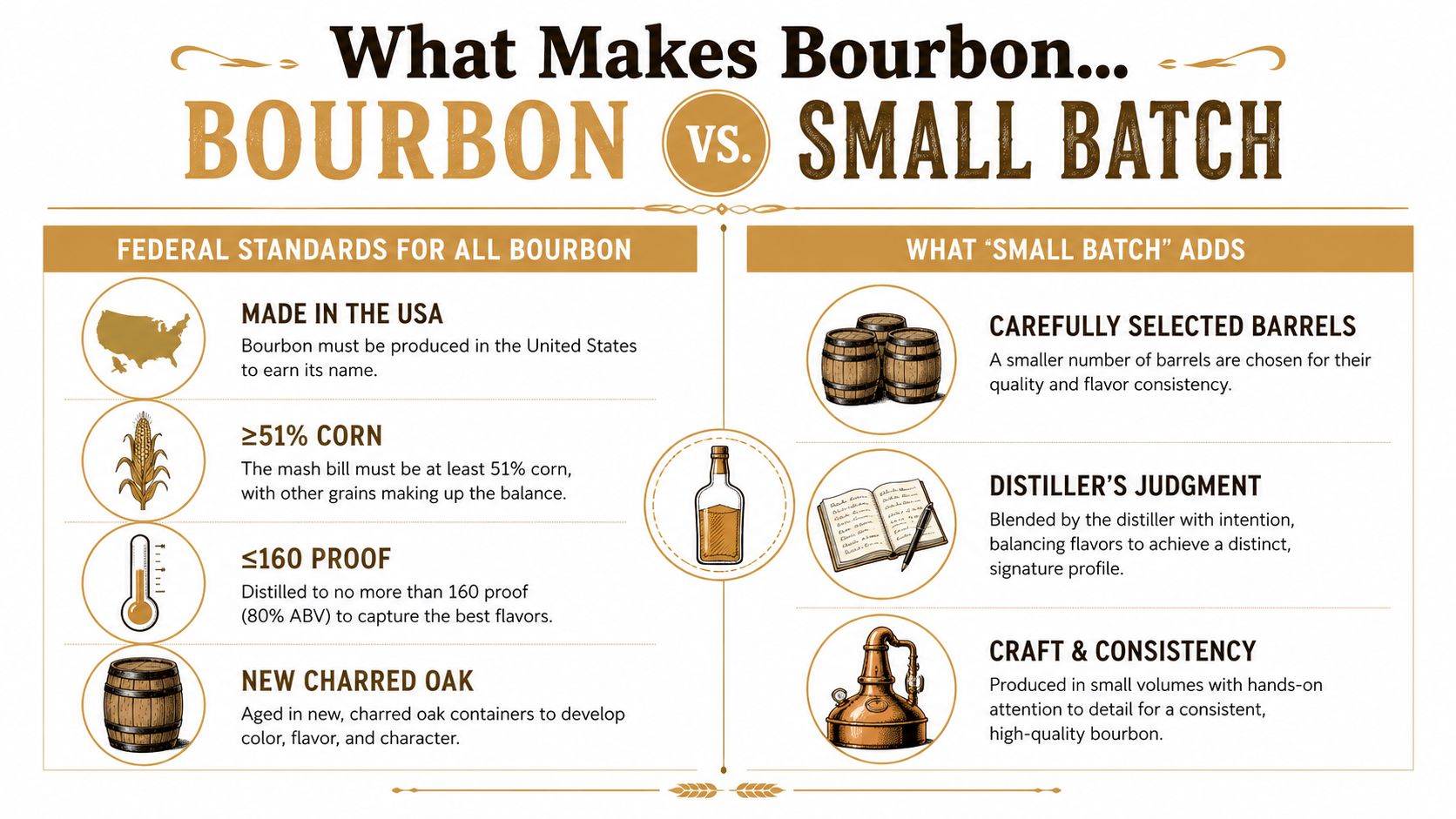
Bourbon has real federal rules. The spirit must meet the TTB's standards of identity for bourbon, including at least 51 percent corn, distillation to no more than 160 proof, entry into new charred oak at no more than 125 proof, and bottling at no less than 80 proof. Those rules shape what bourbon is, while the phrase small batch sits outside that legal framework.
Regulated bourbon, unregulated batch size
Think of bourbon law like highway speed limits. The government sets the legal lanes, the speed, and the basic rules of the road. Small batch is more like a roadside sign the distillery chooses to put up, and the sign can mean different things at different companies.
That difference matters. The TTB does not define batch size, so one producer may use a handful of barrels and another may blend dozens or more. Independent whiskey coverage points out that the term still has no fixed federal meaning, which is why you can't use it as a shortcut to compare brands directly.
What the phrase sits on top of
In practice, small batch is a layer of brand choice built on top of bourbon's legal base. Some distillers use it to signal a more selective blending philosophy, and others use it to describe a house style without ever saying how many barrels went into the final blend. That ambiguity is exactly why the label feels useful and slippery at the same time.
The clean way to think about it is simple. Bourbon law tells you what the whiskey must be. Small batch tells you how the producer wants you to think about the blend.
How Small Batch Bourbon Gets Made Behind the Scenes
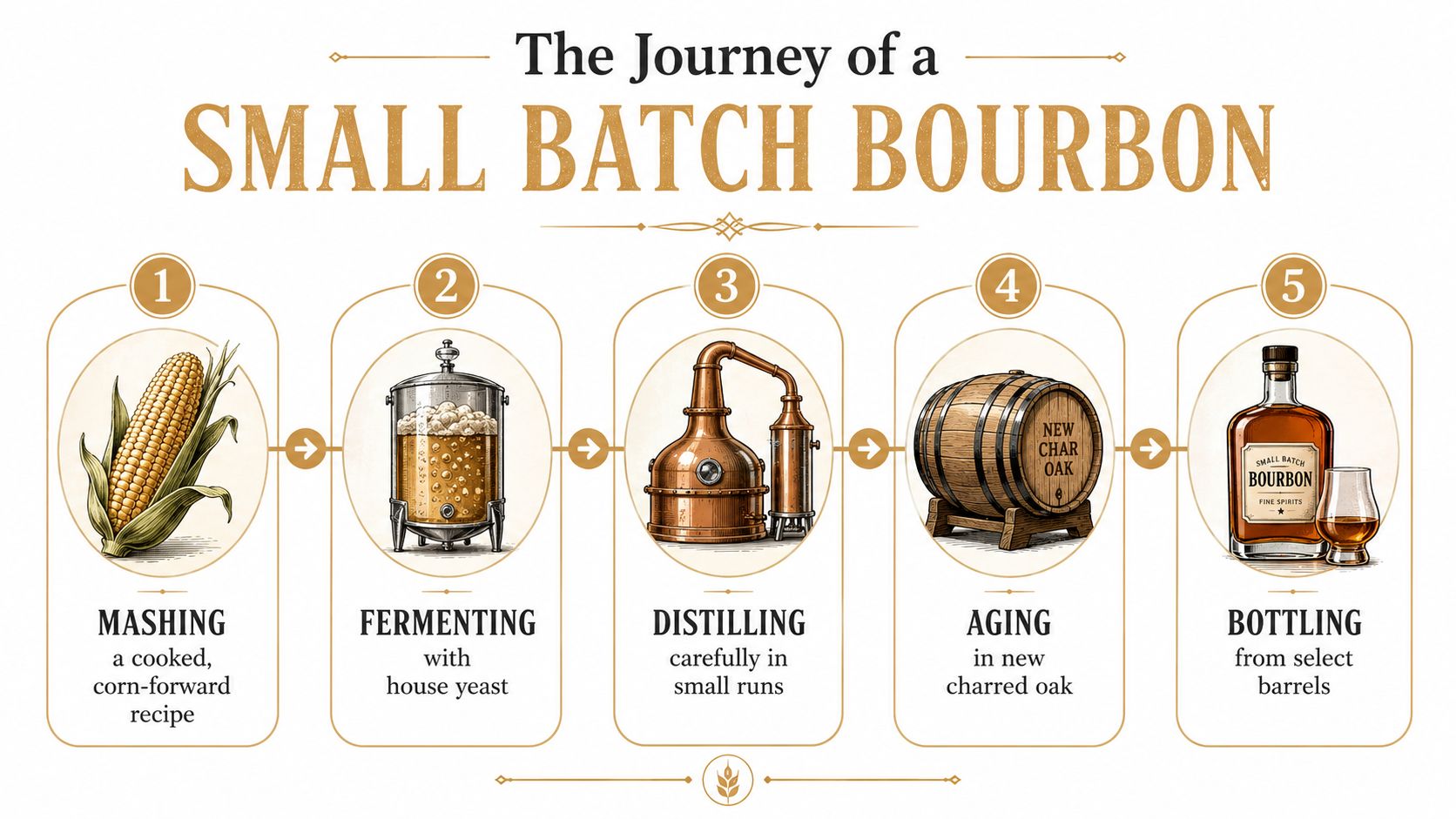
A small batch bourbon often starts like any other bourbon, with a corn-forward mash that gets cooked, fermented, and distilled into clear spirit. The difference usually shows up later, when the whiskey has spent time in new charred oak and the distiller starts choosing which barrels belong together. That selection step is where the style gets its shape.
The blending table matters more than the phrase
A distiller may sample barrel after barrel, looking for the ones that share a target profile. One barrel might bring sweeter vanilla tones, another more spice, another a rounder oak presence. The final batch comes from marrying those barrels in a tank so the whiskey tastes like one planned expression instead of a pile of random casks.
That's why small batch is less about a magical barrel count and more about selection discipline. The producer is choosing a narrow group of barrels on purpose, usually to hit a specific flavor balance. A careful blender can make the whiskey feel tighter and more coherent than a broad, anonymous mix.
The real craft happens when someone decides which barrels can live together and which ones need to stay out.
Why barrel choice changes the glass
Once the whiskey enters wood, the barrel and warehouse conditions start pushing flavor around. Seasonal temperature swings draw spirit in and out of the oak, which deepens color and builds layers of oak, spice, and sweetness. By the time a bottle is filled, the batch reflects both the recipe and the person who decided what to keep.
For a deeper technical look at the equipment side, the internal breakdown at pot stills and column stills in whiskey distillation is a helpful companion read. It's useful because the distillation style influences the spirit that eventually ends up in the blender's hands.
Single Barrel vs Small Batch vs Standard Bourbon
The easiest way to compare these is by what lands in your glass, not by how a distillery organizes its spreadsheets. Single barrel comes from one cask, small batch comes from a selected group of casks, and standard bourbon usually draws from whatever barrels fit the house profile and cost target.
Three styles, three different drinking moods
A single barrel bottle is like a solo portrait. You see one barrel's personality clearly, including the sharp edges and the pleasant surprises. That makes it appealing if you enjoy variation, and less appealing if you want every pour to feel the same.
A small batch bottle is closer to a group photo with careful editing. The producer still wants personality, but the barrels are chosen to work together, so the result often feels more balanced and more deliberate.
Craft happens when someone decides which barrels can live together and which ones need to stay out.
A standard bourbon is closer to a factory print. It is built to be familiar from bottle to bottle, which is exactly what many shoppers want when they reach for a reliable everyday bottle.
For a side-by-side perspective, the tasting-focused explanation at single barrel bourbon pairs well with the comparison below.
| Category | Barrels Used | Flavor Character | Consistency |
|---|---|---|---|
| Single Barrel | One barrel | Distinctive, barrel-specific, sometimes quirky | Lower, each barrel can differ |
| Small Batch | A limited set of barrels | Balanced, selected, often more polished | Moderate to high, depending on the blender |
| Standard Bourbon | Many barrels | Familiar, house-style, built for broad appeal | High, usually the most repeatable |
What each style rewards
If you like risk and discovery, single barrel gives you the most character. If you want balance with some personality, small batch usually fits that middle ground. If you want a bottle that tastes like the last one you bought, standard bourbon is built for that kind of consistency.
Does Small Batch Bourbon Actually Taste Better
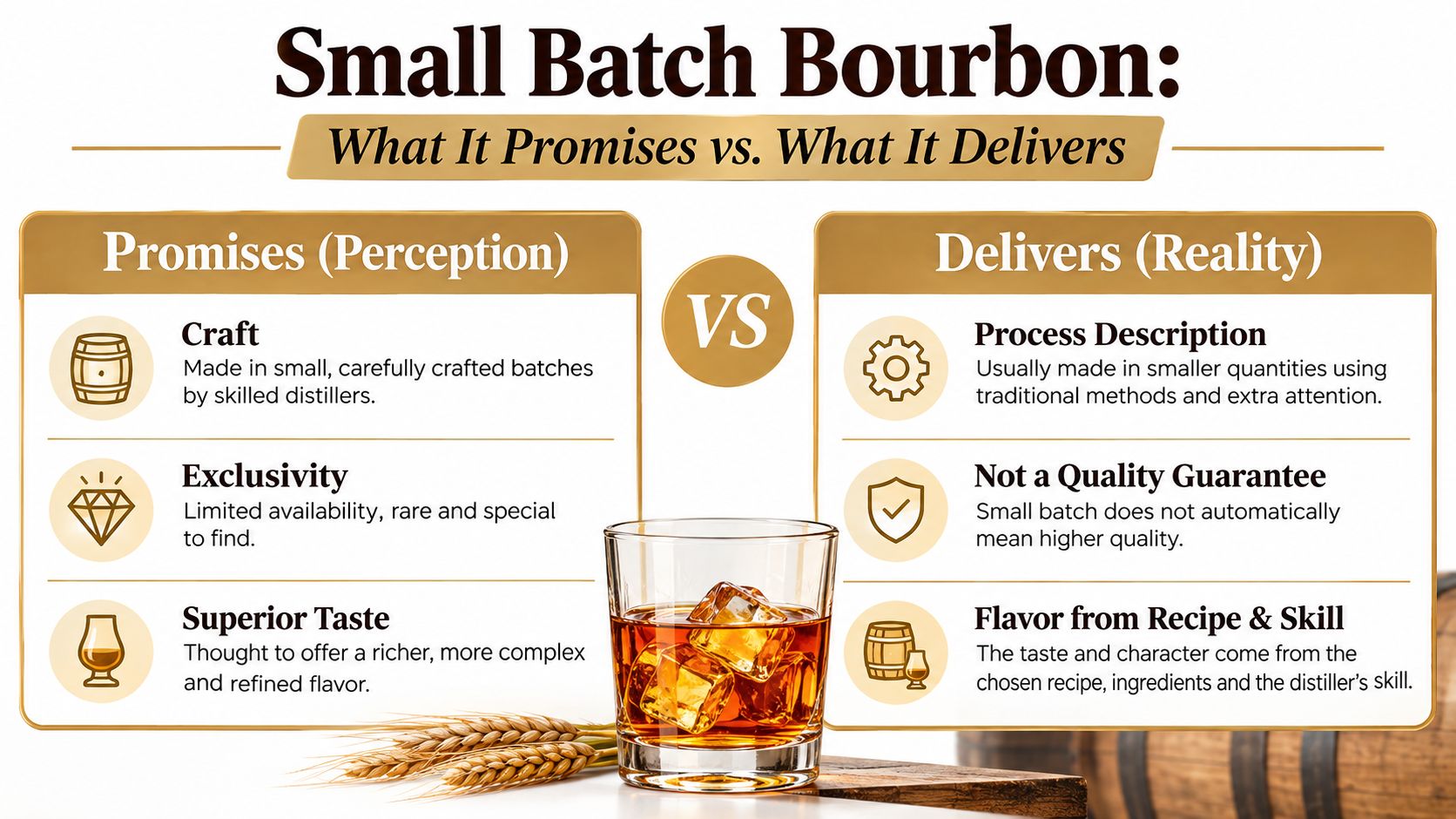
Not automatically. Small batch is a process description, not a flavor grade, so the label alone doesn't tell you whether the whiskey will be elegant, flat, bold, or forgettable. A good small batch can be excellent, and a weak one can taste worse than a plain bottle with no special label at all.
What the term can and can't promise
The term does matter because a distiller is actively choosing the barrels instead of letting a broader blending system blur everything together. A skilled blender can steer toward more depth, softness, or complexity than a mass blend aimed mainly at consistency. That's a real advantage, but it's still a choice, not a guarantee.
So the smarter question is not “is small batch better?” It's “what else does this bottle tell me?” Look at whether there's an age statement, whether the mash bill is transparent, whether the distillery has a reputation for thoughtful blending, and whether the proof makes sense for the style.
What to watch before you trust the label
- Age statement: A clear age can help you understand how long the whiskey spent in wood, while the absence of one leaves more to the producer's judgment.
- Mash bill transparency: If the distiller tells you the grain recipe, you can connect flavor clues to the ingredients instead of guessing.
- Bottling proof: A higher proof often carries more intensity and texture, though it can also bring more heat.
- Price reality: If the bottle seems unusually cheap for a premium-sounding claim, stay cautious and read the rest of the label.
A useful tasting-service option for curious drinkers is Blind Barrels, which ships blind whiskey samples and strips away the front-label story so you can judge the liquid first. That kind of approach is useful here because it separates the words on the bottle from the whiskey in the glass.
How to Taste Small Batch Bourbon Like You Know What You Are Doing
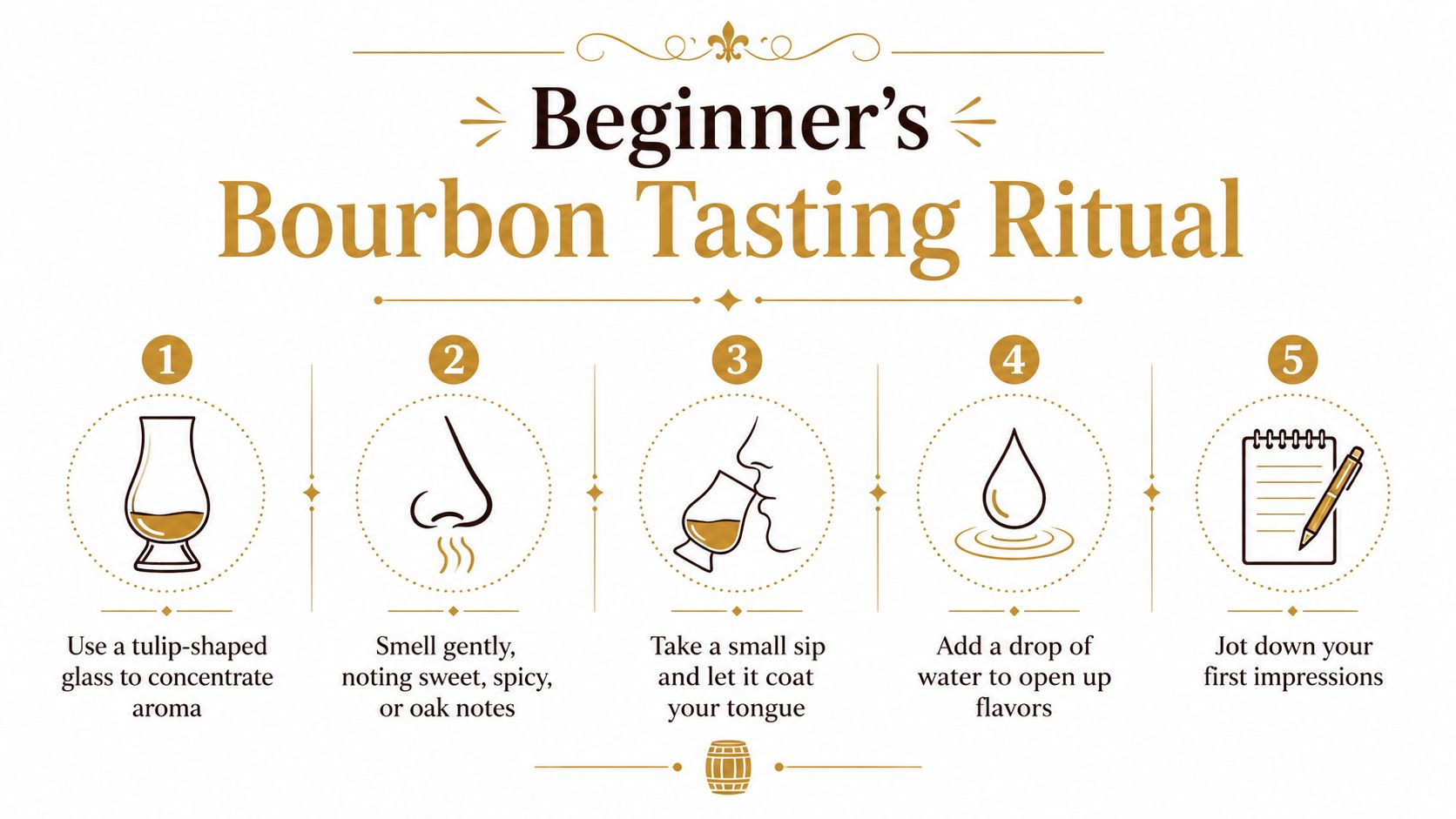
Start with the glass. A Glencairn or another tulip-shaped glass focuses aroma at the rim, while a rocks glass spreads it out more loosely. Pour a small measure, let the bourbon sit for a minute if the bottle was just opened, and then nose it with short, gentle breaths instead of one deep pull.
A simple tasting rhythm
Take the first sip small. Let it coat the tongue, then breathe out softly through your nose so the aromas come back through the back of the mouth, where smell and taste meet. If the ethanol feels sharp, add a few drops of room-temperature water and taste again.
Water doesn't fix the whiskey, it changes the way you experience it. Lowering proof can open aromatics and soften burn, which helps beginners notice flavor without getting distracted by heat. That's especially useful when you're comparing a few bottles side by side.
Practical rule: nose gently, sip small, and change only one thing at a time so you know what actually affected the flavor.
A quick flavor map
Use four buckets and keep it simple.
- Sweet: caramel, vanilla, brown sugar
- Spice: rye-like snap, cinnamon, pepper
- Oak: char, toast, dry wood
- Fruit or grain: orchard fruit, corn, cereal, or malt
If you want a guided version of those mechanics, the how to taste whiskey guide offers a straightforward beginner approach. The point isn't to sound expert, it's to notice what you like.
A Simple Buying Checklist for Your Next Bottle
Read the back label before you trust the front. The front may say small batch, but the back often tells you more useful things, like where the whiskey was distilled, where it was bottled, and whether any sourced whiskey is involved. That's where the label starts to become information instead of decoration.
The shelf test
Use this quick pass the next time you're standing in front of the bourbon shelf.
- Check the proof first: Proof gives you a quick signal about intensity and style. It won't tell you quality by itself, but it helps you set expectations.
- Look for an age statement: If the producer tells you the age, you're not guessing about maturation time.
- Read the mash bill if it's printed: Transparency usually signals confidence, and it gives you a clue about whether the whiskey leans sweet, spicy, or grain-driven.
- Scan the origin details: Kentucky still anchors much of bourbon culture, but craft regions like Texas, Colorado, and New York often bring different aging conditions and flavor ideas.
- Watch the price against the claim: A modest price doesn't make the whiskey bad, but it does make flashy language less convincing.
A bottle marked small batch can absolutely be worth the money, and a more expensive one can still disappoint. The better question is whether the producer has given you enough detail to understand what you're buying before the cork ever comes out.
Letting Your Palate Decide With Blind Tasting
Stand in front of two bottles with the same small batch label, and the label can still point you in two different directions. A blind pour strips away the brand story, the shelf position, and the marketing language, so the whiskey has to speak for itself.
That matters because tasting begins with the glass, not the bottle. Aroma, palate, and finish tell you whether the whiskey feels lively, soft, dry, spicy, or plain out of balance. Blind tasting gives major producers and smaller craft distilleries the same starting line, which helps a newcomer notice what tastes good instead of what sounds impressive.
It also solves the main problem with this category. Small batch is not a fixed promise, so one distiller's version may taste very different from another's. A blind sample lets you judge the liquid in front of you, not the wording on the label. That is especially useful with craft bourbon, where the backstory can be polished even when the whiskey itself is still working out its identity.
Blind Barrels uses that same idea in a quarterly tasting format, sending curated blind samples so drinkers can compare aroma, flavor, and finish before seeing the brand. A simple blind tasting at home does the same job.
Let the bottle get you curious, then let your palate make the decision.