

When you get right down to it, whiskey is made from just three simple ingredients: grain, water, and yeast.
That’s it. This humble trio is the foundation for every single style of whiskey in the world, from the sweetest bourbon to the spiciest rye. Think of these ingredients as an artist's primary colors; how a distiller chooses and combines them is what creates the final masterpiece in your glass.
The Building Blocks of Whiskey Flavor
Every bottle of whiskey, no matter how fancy, begins its life in a field. The specific grain—or combination of grains—is the single most important decision a distiller makes, setting the fundamental character of the spirit. This grain recipe is known as the mash bill, and it’s the whiskey's blueprint.
You can dive deeper into how different grains create their signature tastes in our guide to the bourbon grain bill.
The entire global whiskey market, valued at a staggering USD 108 billion as of 2025, is built on this agricultural foundation. American whiskey alone makes up USD 32.4 billion of that, with states like Kentucky pumping out 2.7 million barrels in 2022. That's a whole lot of grain.
How Each Grain Shapes the Spirit
For anyone new to whiskey, learning to connect the grain to the flavor is the first real step in figuring out what you actually enjoy. Each grain variety brings its own distinct personality to the party.
Here’s a quick rundown of the major players:
- Corn: This is the heart and soul of American bourbon. It delivers that characteristic sweetness we all know and love, with classic notes of vanilla, caramel, and a rich, full-bodied mouthfeel.
- Malted Barley: The absolute soul of Scotch and American Single Malts. Malted barley provides those delicious biscuit, nutty, and chocolatey flavors. Critically, it also contains the natural enzymes needed to convert grain starches into fermentable sugars.
- Rye: Known for its bold and assertive character, rye is what gives a whiskey that spicy, peppery kick. You'll often find hints of pumpernickel bread and dried fruit in a good rye whiskey. Brands like High West Distillery have built their reputation on expertly crafted rye.
- Wheat: Often used as a secondary "flavoring" grain, wheat softens a whiskey’s profile. It lends a gentle sweetness and a creamy, smooth texture that defines the famous "wheated" bourbon category.
To make it even simpler, here’s a quick-reference table that breaks down what to expect from each grain.
Primary Whiskey Grains and Their Flavor Contributions
This table is a great starting point for understanding the core flavors that different grains bring to the bottle.
| Grain | Primary Flavor Profile | Common Whiskey Styles |
|---|---|---|
| Corn | Sweet, vanilla, caramel, buttery | Bourbon, Tennessee Whiskey |
| Malted Barley | Bready, biscuit, chocolate, nutty | Scotch, Irish Whiskey, American Single Malt |
| Rye | Spicy, pepper, mint, dried fruit | Rye Whiskey, High-Rye Bourbon |
| Wheat | Soft, honey, bread dough, creamy | Wheated Bourbon, Wheat Whiskey |
As you start tasting more whiskeys, try to pick out these foundational notes. It's the first and most important step toward identifying what you truly love in a dram.
Unlocking Sugars Through Mashing and Fermentation
Once the grains are chosen, the real work begins. This is where the potential locked inside each kernel gets unleashed through two absolutely critical steps: mashing and fermentation. It's the moment raw ingredients start their long journey to becoming a complex, layered spirit.
Think of mashing as making a giant, incredibly important porridge. Distillers take the milled grains and mix them with hot water in a huge vessel called a mash tun. This isn't just a simple mix; it's a carefully controlled cooking process that gelatinizes the starches, basically opening them up. More importantly, it activates natural enzymes from the malted barley which then get to work converting all those starches into fermentable sugars. The result is a sweet, grainy liquid we call the wort.
The Magic of Fermentation
After the wort is cooled down, it’s pumped into a fermentation tank. This is where the real magic happens. A tiny but tireless workforce—yeast—is pitched into the sugary liquid. For the next few days, these microscopic organisms have a feast, devouring the sugars and producing two things that are absolutely vital: alcohol and a massive range of foundational flavors.
It’s a process that feels a lot like baking bread, where yeast is what brings the dough to life. In whiskey making, though, the goal is different. The yeast is laying down the very building blocks of the final spirit's aroma and taste profile.
Tip for New Drinkers: When you smell a whiskey and pick out notes of fruit—like banana or apple—or even floral and spicy hints, those aromas were almost certainly born right here during fermentation. The yeast is the first artist to leave its signature on the spirit.
The visual below shows how these core ingredients—grain, water, and yeast—all come together in the early stages.
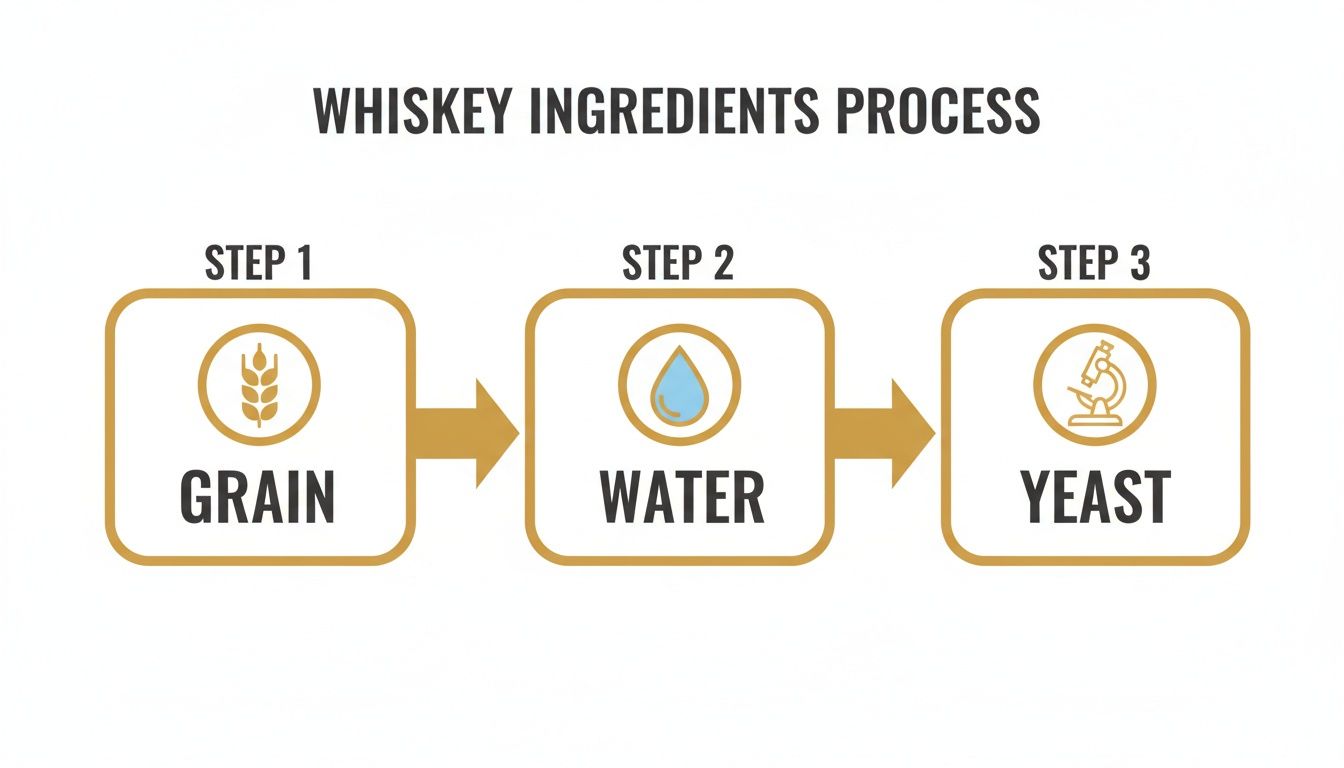
It’s a simple flow, but it shows how basic components can interact to create something incredibly complex down the line.
How Yeast Creates a Whiskey's Identity
A distillery's specific strain of yeast is often one of its most closely guarded secrets, and for good reason. Different yeast strains are specialists, each producing a unique set of flavor compounds called congeners. Some are great at creating fruity esters, while others churn out spicy phenols. This is fundamental to what whiskey is made from at a chemical level.
This is how a brand can establish a distinct profile long before a single drop of liquid ever touches the inside of a barrel.
- Fruity Notes: Some yeast strains are known for pumping out bright, fruity esters that give us notes of pear, citrus, or even tropical fruits.
- Floral Aromas: Other yeasts can contribute delicate floral notes like honeysuckle or rose, adding an elegant, perfumed layer to the spirit.
- Spicy Characteristics: Certain strains are masters at creating spicy phenols that introduce hints of clove, pepper, or baking spices early in the game.
For a perfect real-world example, look no further than the legendary American brand Four Roses. They famously use five different proprietary yeast strains combined with two different mash bills to create ten completely distinct bourbon recipes. It’s a masterclass in how much influence this single ingredient truly has. You can dive much deeper into the magic of yeast in our detailed article.
By the time the yeast has done its job, the wort has been transformed into a low-alcohol liquid known as "distiller's beer" or "wash," fully prepped for the next phase: distillation.
Refining the Spirit Through Distillation
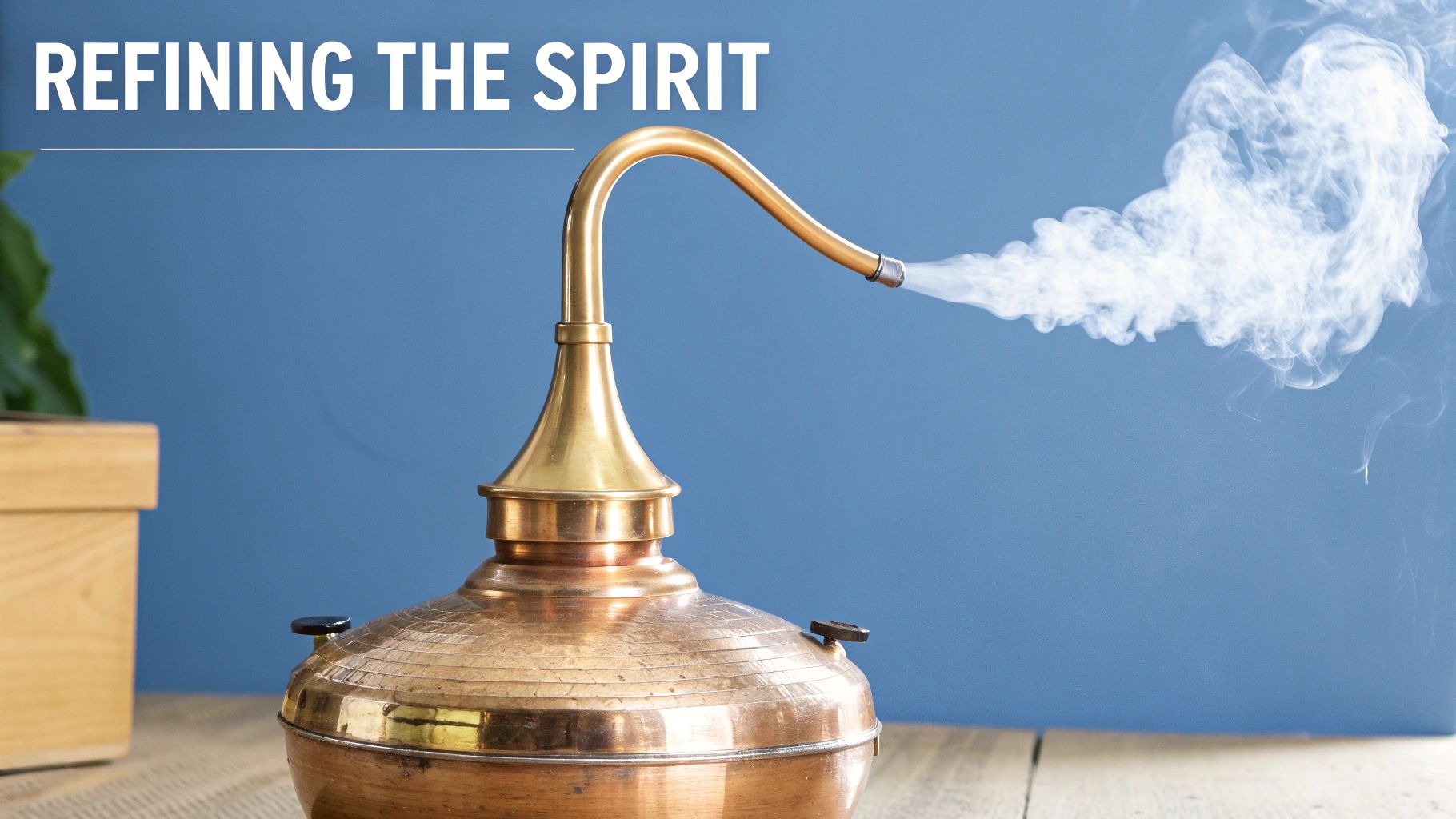
After fermentation wraps up, we have what's essentially a strong, funky "distiller's beer." It holds all the raw potential for flavor, but it’s still a low-alcohol liquid. To coax it into the high-proof spirit that will one day become whiskey, it has to go through distillation.
Think of it as simply as boiling a pot of soup to concentrate the flavors. Alcohol has a lower boiling point (173°F or 78.3°C) than water (212°F or 100°C). So, when you gently heat that distiller's beer in a still, the alcohol vaporizes first, leaving most of the water and other heavy stuff behind. This potent, alcohol-rich vapor is then captured, cooled, and condensed back into a liquid. This is the new-make spirit, or "white dog."
The Tale of Two Stills
The still itself isn’t just a piece of plumbing; it’s one of the most important tools a distiller has for sculpting the final character of their whiskey. The two main types—pot stills and column stills—create dramatically different spirits.
- Pot Stills: These are the classic, beautiful, onion-shaped copper vessels you picture at old Scottish distilleries. They work in batches and tend to produce a heavier, oilier, and more flavor-packed spirit. The copper itself is a key player, reacting with the vapor to strip out undesirable sulfur compounds and smooth out the final product.
- Column Stills: Also known as Coffey stills, these are the towering, industrial-looking columns that distill continuously. They’re incredibly efficient and can produce a much higher-proof spirit that’s lighter, cleaner, and more refined. This efficiency is perfect for many American styles like bourbon, where consistency across huge volumes is crucial.
You'll also find a lot of American craft distilleries using hybrid stills that blend the two designs. Places like Colorado's Stranahan's use them to get the full flavor of a pot still with the efficiency needed for modern production—a perfect marriage of tradition and ingenuity.
Making the Cut: The Heart of the Spirit
Distillation isn’t a simple, one-step affair. As the new spirit trickles off the still, it arrives in three distinct phases, and only the middle part is good enough to become whiskey. This is where a distiller’s real artistry comes in—making the “cuts.”
Tip for New Drinkers: The "cut" is where a master distiller truly earns their reputation. It’s a sensory skill honed over years, separating the good from the great and ensuring only the most desirable flavors make it into the barrel.
The spirit run is broken down into:
- The Foreshots (Heads): The very first vapors to come off the still. They’re harsh and full of volatile compounds like methanol—stuff you definitely don’t want to drink.
- The Heart: This is the sweet spot. It’s the high-quality, flavorful spirit loaded with all the good esters and congeners that will mature into a beautiful whiskey.
- The Feints (Tails): The final part of the run. The alcohol content drops off, and the liquid becomes heavy, oily, and can carry some bitter, funky flavors.
Only the heart is collected for aging. The distiller's precise judgment on when to start and stop collecting this middle portion defines the whiskey’s core identity before it ever touches a single oak stave.
How Barrels Add Color and Complexity During Maturation
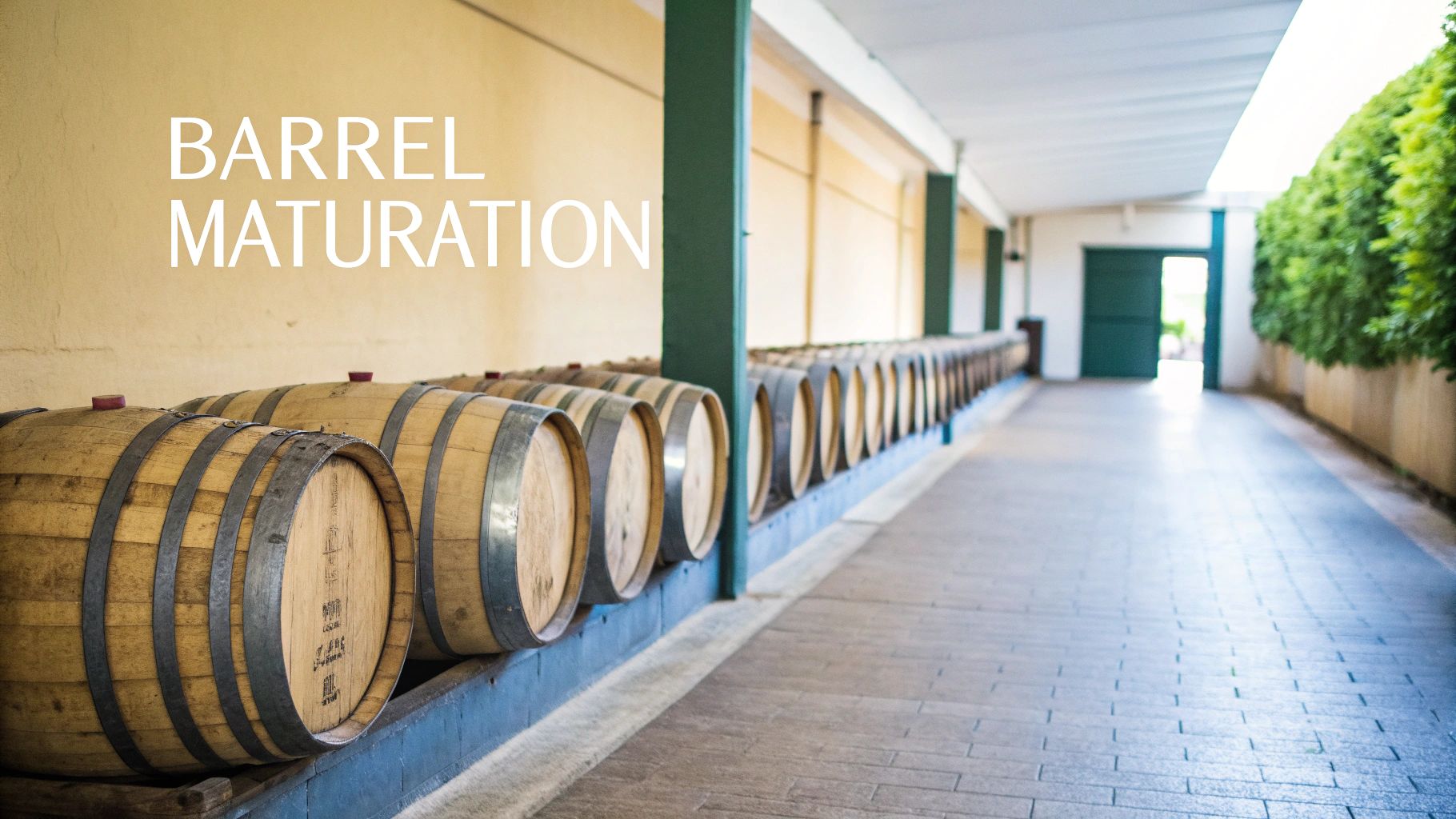
After distillation, the spirit is perfectly clear, fiery, and a little raw—more like a high-proof vodka than the amber whiskey we know. The final, and arguably most important, transformation happens during maturation, a patient process where the spirit rests for years inside a wooden barrel.
Many distillers call the barrel the "fourth ingredient," and for good reason. It’s responsible for up to 80% of a whiskey’s final flavor and all of its color. This period of quiet aging is where the spirit evolves from a simple grain-based alcohol into the complex, layered drink we recognize. The clear "white dog" soaks into the wood, interacting with it on a chemical level to develop deep hues and rich flavors.
The Three Jobs of the Whiskey Barrel
Think of the barrel as an active filter, a spice rack, and a color palette all rolled into one. During maturation, it’s doing three critical jobs that fundamentally change the whiskey.
- It Adds Flavor: The wood itself imparts signature notes. Charred oak, in particular, releases compounds called vanillins, which is why so many whiskeys have those classic notes of vanilla, caramel, coconut, and toffee.
- It Subtracts Harshness: That charcoal layer on the inside of a barrel acts like a natural filter. It binds to and removes undesirable, harsh-tasting compounds like sulfur from the raw spirit, making it much smoother on the palate.
- It Interacts with the Spirit: As temperatures change, the whiskey expands into the wood and contracts back out. This "breathing" process pulls all those wonderful wood sugars and flavor compounds into the liquid while allowing for oxidation, which helps develop nutty and fruity notes over time.
This detailed transformation is a major reason why premium spirits command such high prices. The premium segment of the whiskey market was valued at an impressive USD 53.3 billion in 2025, showing that consumers are willing to invest in spirits where superior barrel aging techniques directly impact quality. For more on this, you can explore detailed market insights on luxury whiskey.
Why Charred New Oak Is Bourbon's Secret Weapon
For a spirit to be legally called bourbon, it must be aged in a brand-new, charred American oak barrel. This rule is the secret behind bourbon's signature sweet and approachable profile. The charring process caramelizes the wood sugars in the oak, creating a rich layer of vanilla, caramel, and baking spice flavors just waiting to be absorbed by the spirit.
This specific requirement also fuels a fascinating secondary market. Once a bourbon barrel has done its job, it can't be used for bourbon again. These "used" barrels are then sold to distilleries around the world to age Scotch, Irish whiskey, rum, and even tequila.
Tip for New Drinkers: If you’re trying a bourbon and taste prominent notes of vanilla and caramel, that’s the direct influence of its time in a new charred oak barrel. It's the most reliable flavor marker you can look for.
Craft Distillers and Creative Cask Finishing
American craft distillers are taking barrel aging to another level by using a technique called cask finishing. This involves aging a whiskey in a standard barrel, then transferring it to a different type of cask for a secondary maturation period.
For example, a distillery like Westland Distillery in Seattle, a pioneer in American Single Malts, might finish its whiskey in barrels that previously held sherry, port, or red wine. This extra step adds unique layers of flavor—like dried fruit from a sherry cask or dark berries from a wine cask—creating a truly distinct final product. This artistic approach turns the science of maturation into a creative expression.
You can learn more about the science and art of aging barrels for whiskey in our detailed guide.
Connecting Grains to the Whiskey in Your Glass
We’ve touched on the big four—grains, yeast, water, and barrels—but how does a simple grain recipe create the incredible diversity you see on the shelf? It all comes down to the mash bill, which is just a fancy term for the specific percentages of each grain in the mix. This recipe isn't just a friendly suggestion; for many of the world's most famous whiskeys, it's the law.
Understanding these grain requirements is the secret decoder ring for connecting the raw ingredients to the flavors swirling in your glass. Each style is a direct reflection of its dominant grain, creating a flavor profile you can learn to predict and appreciate.
For anyone just dipping their toes into the whiskey world, learning these rules is the fastest way to walk down the liquor aisle with confidence. Knowing the mash bill gives you a surprisingly accurate preview of whether a bottle is going to be sweet, spicy, or something else entirely.
Bourbon: The Corn-Driven American Classic
When you taste that signature sweetness in a glass of bourbon, you're tasting corn. Plain and simple. To earn the name "bourbon," a whiskey must, by law, be made from a mash bill of at least 51% corn. That high corn content is exactly where those classic, comforting notes of vanilla, caramel, and sweet brown sugar come from.
Many distillers push their corn content way past the minimum, often into the 70-80% range, which really doubles down on that rich, full-bodied sweetness. The other grains in the recipe, usually a bit of rye or wheat, are there to add some complexity and keep things interesting.
Tip for New Drinkers: If you have a bit of a sweet tooth and love flavors like caramel and vanilla, bourbon is the perfect on-ramp for your whiskey journey. Its corn-forward profile is friendly, approachable, and consistently delicious.
For a wild example from the craft scene, check out Balcones Distilling in Texas. Their "Baby Blue" is made from 100% roasted blue corn, creating an intensely buttery, nutty, and uniquely sweet take on what corn can do.
Rye: The Bold and Spicy Counterpart
If bourbon is the sweet, easy-going friend, rye is its bold, spicy cousin who tells it like it is. For a whiskey to be legally called a rye in the United States, its mash bill has to contain at least 51% rye grain. This is what gives it that unmistakable kick of black pepper, baking spices, and sometimes a fresh, herbal note of mint or even dill.
Rye whiskey brings a drier, more assertive flavor to the table that stands up brilliantly in classic cocktails like a Manhattan or an Old Fashioned. It provides a sharp, flavorful backbone that cuts right through bourbon’s sweetness.
To taste what a fantastic American craft rye is all about, you have to look at what High West Distillery is doing. They are absolute masters of sourcing and blending different rye whiskeys to create spirits that are complex, balanced, and perfectly showcase the grain's signature spice.
Single Malts: A Celebration of Barley
The world of single malts is built on one simple, non-negotiable rule: 100% malted barley. That’s it. This is the law of the land for Single Malt Scotch and the fast-growing category of American Single Malt Whiskey. Malted barley delivers a completely different set of flavors, often leaning into notes of biscuit, nuts, dark chocolate, and honey.
Scotch whisky production is a masterclass in what can be achieved with a single grain on a massive scale. In 2024, Scotland exported a mind-boggling 1.35 billion bottles—that’s about 43 bottles shipped out every single second. This incredible output is built entirely on the humble foundation of malted barley. You can explore more about these global trends in whiskey production to see the full picture.
Back in the U.S., craft distilleries like Westland Distillery in Seattle are pioneering the American Single Malt category. They use locally sourced barley to create rich, complex whiskeys that are giving their Scottish counterparts a serious run for their money. Trying these styles side-by-side is a fantastic way to experience the profound impact this one versatile grain can have.
To make this all a bit clearer, here's a quick cheat sheet connecting the most common whiskey styles to their grain recipes.
Common Whiskey Styles and Their Grain Requirements
This table offers a snapshot of popular whiskey styles, their legally mandated grain recipes (mash bills), and the typical flavors you can expect as a result. Think of it as your field guide to the whiskey aisle.
| Whiskey Style | Minimum Grain Requirement | Typical Flavor Profile | Example American Craft Brand |
|---|---|---|---|
| Bourbon | 51% Corn | Sweet, vanilla, caramel, oak | Balcones Distilling |
| Rye Whiskey | 51% Rye | Spicy, black pepper, baking spices, herbal | High West Distillery |
| American Single Malt | 100% Malted Barley | Malty, biscuit, chocolate, nutty, honey | Westland Distillery |
| Scotch Single Malt | 100% Malted Barley | Varies widely by region; can be smoky, floral, fruity, or rich | (Primarily Scottish) |
| Wheated Bourbon | 51% Corn (with wheat as the secondary grain) | Soft, sweet, bready, gentle spice | (e.g., Maker's Mark, not strictly "craft") |
Knowing these basics gives you a huge advantage. The next time you're staring at a wall of whiskey, you won't be guessing—you'll be making an educated choice based on the flavors you already know you love.
How to Start Tasting Whiskey Like a Pro
Knowing what goes into a whiskey gives you a massive leg up when it's time to actually sit down and enjoy it. When you understand the backstory of the grains, the water, the barrels—the whole nine yards—tasting transforms from just drinking into a genuine experience.
This simple, three-step approach is all you need to connect the dots between what you know and what you're tasting.
A Simple Guide to Tasting
Forget about stuffy, complicated rules. The best way to taste whiskey is to simply use your senses to uncover the story in your glass. This method is straightforward and perfect for anyone looking to build confidence and figure out what they truly enjoy.
- Look at the Color: Hold your glass up to a good light source. Is it a pale straw color, a rich gold, or a deep, dark amber? A darker color often hints at more time spent aging in the barrel. It can also suggest it was matured in a more "active" cask, like a brand-new, charred oak barrel which gives up its color and flavor much more readily.
- Smell the Aromas: Give the whiskey a gentle swirl and bring the glass to your nose. A little pro-tip: keep your mouth slightly open as you do this. Can you smell the sweetness of corn? The peppery spice from rye? You might even pick up vanilla or caramel notes, which are a direct gift from the oak barrel itself.
- Take a Sip: Now for the fun part. Take a small sip and let it coat your entire palate. Try to notice the initial flavors that hit you. Does a wave of sweetness come first, quickly followed by a pop of spice? Then, pay attention to the finish—that’s the flavors that hang around after you swallow.
Tip for New Drinkers: The absolute best way to learn is by comparing. Next time you're at a good whiskey bar, ask for a flight. Tasting a bourbon, a rye, and a single malt scotch side-by-side is the quickest way to have that "aha!" moment where you truly understand how the grain bill dramatically changes the final product.
To take this a step further, try a blind tasting. Services like Blind Barrels remove all the bias from the equation. When you don't know the brand, the age, or the price, you let your palate—not the fancy label—decide what you love. It makes every discovery a real one.
A Few Lingering Questions
You've got the basics down, but a few questions always seem to pop up when people are digging into what makes a whiskey a whiskey. Let's tackle them head-on.
Does All Whiskey Have to Be Aged in Barrels?
Not always, but almost always if you want to call it by a familiar name. The raw, clear spirit that comes directly off the still is what’s known as "white dog" or, more colloquially, moonshine. It’s whiskey in its most primal state.
However, the real magic—the color, the complexity, the flavors of caramel, vanilla, and spice—comes from time spent in an oak barrel. To earn the legal title of Bourbon, Rye, or Scotch, the spirit must be aged in oak for a specific minimum amount of time. Aging isn't just a suggestion; it's the law and the key to developing the spirit's character.
What's the Difference Between Whisky and Whiskey?
It all comes down to geography. Think of it as a subtle nod to the spirit’s homeland, a clue to its origin story printed right on the label.
"Whiskey" (with the "e") is the spelling you'll see in the United States and Ireland. On the flip side, "Whisky" (no "e") is the go-to for spirits made in Scotland, Canada, and Japan. While the core process is similar, that one little letter tells you a lot about where it came from.
Can You Make Whiskey from Something Other Than Grain?
In a word: no. By legal definition and by tradition, a true whiskey has to start its life as a fermented mash of grain. That's the non-negotiable heart of the spirit.
Whether it’s corn, barley, rye, or wheat, the specific grain is what shapes a whiskey's fundamental style and flavor profile. If you start with something else, you're making a different spirit entirely—brandy comes from fruit like grapes, and rum is born from sugarcane. The grain is the soul of whiskey.
Ready to put your new knowledge to the test and discover your next favorite American craft whiskey? At Blind Barrels, we remove the guesswork and brand bias, letting your palate lead the way. Explore our blind tasting subscriptions and find hidden gems at https://www.blindbarrels.com.