

A whiskey aging barrel is so much more than a simple wooden container. For a new whiskey drinker, it's helpful to know it's the single most important ingredient in turning a harsh, clear spirit into the complex, amber whiskey we all know and love. Think of it as a master chef's secret weapon—the barrel works its magic over months and years, slowly layering in deep flavors, smoothing out the rough edges, and building a ton of character.
When you get right down to it, all of the color and at least 60% of a whiskey's flavor comes directly from its time in wood.
What a Whiskey Aging Barrel Actually Does
Before a spirit ever touches a barrel, it’s just a raw, unaged liquid that distillers call "white dog" or "new make." Sure, it has the basic grain notes from fermentation and distillation, but it's a world away from a finished whiskey. It lacks the depth, color, and smoothness. The barrel's job is to completely reshape this spirit through three distinct, magical processes that all happen at once.
It helps to think of a brand-new, unseasoned cast iron skillet. On its own, it’s just a piece of metal. But with time, heat, and oil, it develops a rich seasoning that adds incredible flavor to everything you cook. A whiskey barrel works in a similar way, but its job is far more complex.
The Three Core Jobs of a Barrel
The barrel isn't just a passive container; it's an active participant in the whiskey-making journey. It performs a trio of essential tasks that ultimately define the final product, each one crucial for developing the nuanced flavors and aromas that whiskey lovers chase.
These three functions work in harmony to create a balanced, mature spirit:
- Additive Process: The barrel adds desirable flavors like vanilla, caramel, and spice, along with all of its color.
- Subtractive Process: It removes harsh, undesirable compounds from the spirit, acting like a natural charcoal filter.
- Interactive Process: It helps kickstart chemical reactions that create entirely new, complex flavor compounds that didn't exist before.
This incredible transformation is what makes the barrel such a vital tool. It’s an alchemical vessel, turning raw spirit into liquid gold.
Tip for new whiskey drinkers: The magic is in the wood. A distillery can have the perfect grain recipe and the most precise distillation process, but without the right barrel aging, the spirit will never reach its full potential. The barrel is where the soul of the whiskey is born.
Real-World Barrel Impact
Let's look at an American craft brand like Stranahan's, Colorado's first legal distillery since Prohibition. They specialize in American Single Malt, and their signature profile is heavily influenced by their barrel choice. They use new, charred American white oak barrels for aging.
This specific choice imparts bold notes of caramel, vanilla, and a hint of leather—classic flavors that come straight from the wood. By using a heavy char, Stranahan's also ensures the wood's charcoal layer filters out any rough edges from the young spirit, which leads to an exceptionally smooth finish. For someone new to whiskey, tasting Stranahan's is a perfect lesson in how a barrel directly injects sweetness and complexity into the final pour.
Why Oak Is the Wood of Choice for Whiskey
Of all the trees in all the forests of the world, one stands alone in the whiskey universe: oak. This isn't just about sticking to tradition; oak has a unique trifecta of strength, porosity, and chemical makeup that makes it the perfect vessel for aging spirits.
If you tried to age whiskey in a pine or maple barrel, you'd end up with a harsh, resinous mess. But oak? Oak is different. It’s the perfect partner for the spirit.
Think of it as the canvas for a masterpiece. A painter needs something that won’t warp, that holds the paint just right, and that has the durability to last. For a distiller, oak is that perfect canvas, providing the ideal foundation to create something truly special in a bottle.
The global whiskey market, which is floating around $84 billion in 2024, is built on the back of the humble oak barrel. The entire process—from selecting the right barrel to patiently waiting through the aging process—is what separates a forgettable spirit from a legendary one, whether it's a bourbon aging for 6 to 12 years or a Scotch patiently maturing for well over a decade.
The Two Kings: American vs. European Oak
Now, not all oak is the same. The two heavyweights in the whiskey world are American White Oak (Quercus alba) and European Oak (Quercus robur). Each one brings a completely different personality to the table, kind of like two great chefs who favor different sets of spices.
- American White Oak: This is the undisputed champion of American whiskey. It’s a fast-growing tree, which leads to a less dense wood packed with compounds called vanillins. As the whiskey ages, these vanillins break down and release those big, sweet notes of vanilla, caramel, and even coconut.
- European Oak: More common for aging Scotch and Sherry, this oak grows much slower, creating a tighter grain. It’s loaded with more tannins, which give the whiskey a spicier, drier, and more robust character, often with hints of dried fruit and clove.
Tip for new whiskey drinkers: A simple way to think about it is that American Oak is like vanilla extract in your pantry. It reliably adds a sweet, creamy flavor that’s instantly recognizable and welcoming. European Oak is more like a complex spice blend, offering a more nuanced, savory profile that reveals itself over time. Beyond just whiskey, understanding the general properties of different wood types used in cabinetry, including oak can give you a better appreciation for why its structure is so prized.
Unlocking Flavors from the Wood
So, how does a chunk of wood magically create all those delicious flavors? It all comes down to chemistry. Oak is full of key compounds that get unlocked when the barrel is made and the spirit starts aging. These are the fundamental building blocks of flavor.
The big three compounds you need to know are:
- Lignin: This is where those classic vanilla and sweet-spice notes come from. When the barrel is toasted and charred, lignin breaks down and releases vanillin—the exact same compound that’s in vanilla beans.
- Tannins: These give the whiskey structure, body, and that pleasant dryness on the finish. If you’ve ever had a bold red wine or a strong cup of black tea, you know what tannins feel like. They keep the whiskey from being flabby.
- Hemicellulose: These are wood sugars. When you heat them up during the toasting and charring process, they caramelize. This is where all those incredible notes of toffee, brown sugar, and butterscotch come from.
The real magic begins when the clear, raw spirit soaks into the staves of the barrel. It dissolves these compounds and pulls them right back into the liquid. It's a slow, patient conversation between the spirit and the wood, and every single barrel has its own unique story to tell.
You can taste this in action. Pour a glass of an accessible American craft whiskey like Laws Whiskey House Four Grain Bourbon. That wave of sweet vanilla, rich caramel, and toasted oak you immediately notice? That’s American Oak (Quercus alba) loud and clear. It’s a direct result of the spirit pulling flavors from the wood’s lignin and caramelized sugars inside a new, charred whiskey aging barrel. For anyone starting their whiskey journey, learning to pick out those flavors is the first real step in understanding just how much the barrel does.
How Barrel Char Levels Create Flavor
Before a single drop of new make spirit touches the inside of a barrel, that wood has to meet fire. This isn't just for show; it's a fundamental step that completely changes the barrel's chemistry, turning a simple wooden container into an active flavor-making machine. The whole process boils down to two key techniques: toasting and charring.
Think of it like making a perfect piece of toast. A light toasting brings out a gentle, bready sweetness. Leave it under the heat a bit longer, though, and you get a dark, crunchy char that adds a smoky, almost bitter depth. Both are delicious, but they offer completely different experiences.
Toasting vs. Charring The Barrel
Toasting is the slow and low approach. A controlled flame gently heats the inside of the barrel, caramelizing the natural wood sugars (a compound called hemicellulose). This is where those delightful notes of vanilla, toffee, and brown sugar are born. It's a delicate art that sets the stage for the main event.
Charring, on the other hand, is a full-on, intense blast of fire. A powerful flame is shot into the barrel for a very specific amount of time, creating a thick layer of carbonized wood on the surface. This charcoal layer, known simply as the char, does two critical jobs: it acts as a natural filter, smoothing out any harshness in the raw spirit, and it breaks down the wood’s lignin to unleash even more complex flavors. You can dive deeper into the differences here: https://blindbarrels.com/blogs/whiskey-insights/toasted-charred-and-beyond-how-barrel-preparation-affects-whiskey-taste.
The infographic below shows the two primary types of oak used for whiskey barrels, each bringing its own unique character to the party before the fire even gets started.
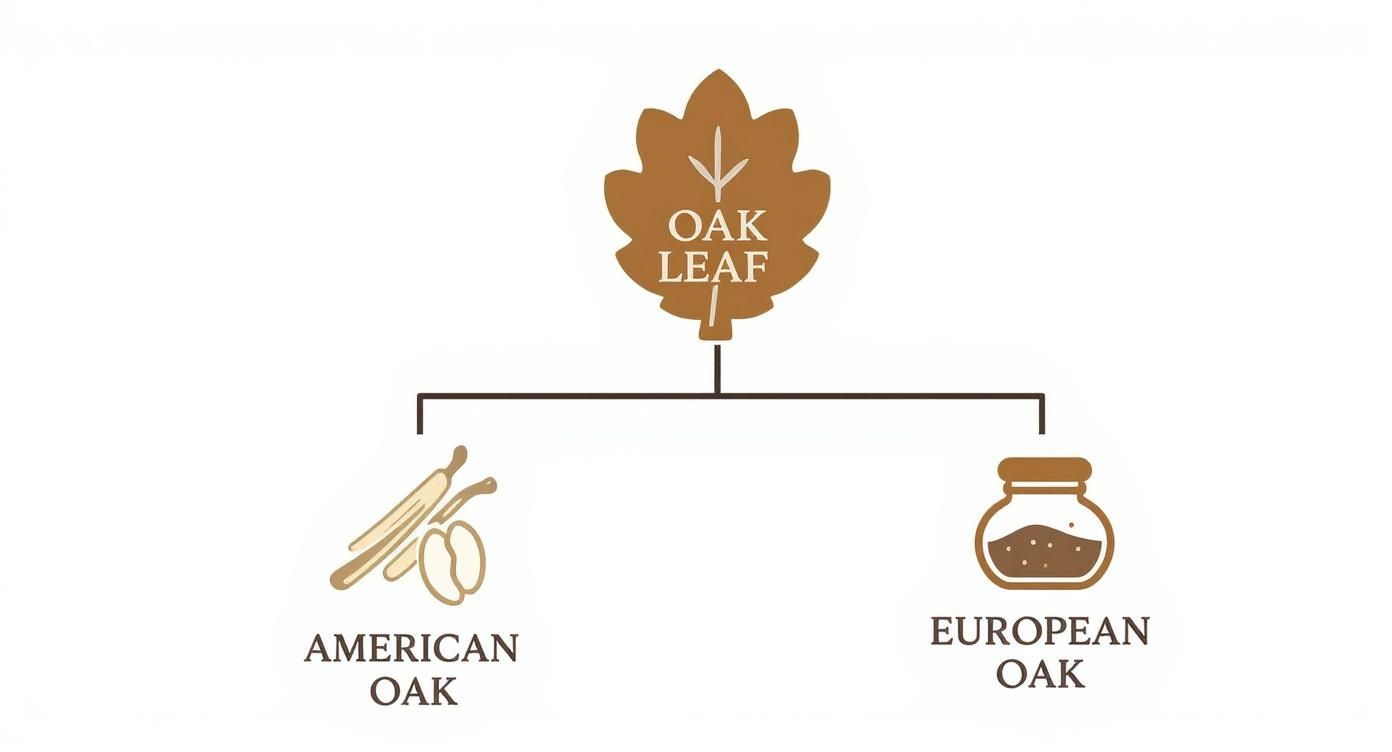
As you can see, American Oak tends to give off those classic vanilla notes, while European Oak leans more toward spicy flavors. The char level then takes these foundational profiles and shapes them into something entirely new.
Understanding The Char Levels
Distillers don't just char a barrel—they choose a precise char level to craft a specific flavor profile. The industry has a straightforward numbering system, and each level corresponds to a different burn time and, ultimately, a different impact on the final spirit.
The four standard char levels offer a spectrum of flavor possibilities, from light and sweet to dark and smoky. Each level is determined by the length of time the barrel's interior is exposed to an open flame.
| Char Level | Typical Burn Time | Primary Flavor Contribution | Commonly Used For |
|---|---|---|---|
| #1 | 15 seconds | Light sweetness, toasted oak, subtle spice | Lighter-bodied whiskies, some craft gins, aged tequilas |
| #2 | 30 seconds | Balanced vanilla, light caramel, more prominent toasted notes | Wheated bourbons, some Canadian whiskies, finishing barrels |
| #3 | 35 seconds | Rich caramel, vanilla, baking spices, a touch of smoke | The go-to for many classic Kentucky and rye bourbons |
| #4 | 55 seconds | Dark chocolate, heavy toffee, espresso, prominent smokiness | Bold, full-bodied bourbons and ryes needing deep flavor |
This table makes it clear how a few extra seconds under the flame can drastically alter the whiskey's future. The famous "alligator char," or Char #4, gets its name because the intense 55-second burn cracks the wood's surface into a pattern resembling alligator skin, allowing the spirit to penetrate deeper for maximum flavor extraction. It's a fascinating process, similar in principle to the traditional Japanese wood burning technique used in architecture to preserve and beautify wood.
Tip for new whiskey drinkers: A deeper char creates a more aggressive filter and unlocks bolder, sweeter flavors. The char level is one of a master distiller's most important decisions, directly influencing the final character of the whiskey.
How Craft Distillers Use Char
American craft distillers, in particular, have become masters at using specific char profiles to create truly unique spirits.
Just look at High West Distillery out in Utah. For their American Prairie Bourbon, they lean on barrels with a Char #4 level. This heavy char is absolutely crucial for taming the young spirit and layering in those rich, sweet notes of caramel and fudge that define its profile. By going with the deepest char, they accelerate the development of complex flavors, crafting a remarkably smooth and approachable whiskey that really stands out.
For anyone new to whiskey, a great way to taste the direct impact of fire on flavor is to try a bourbon aged in a #4 char barrel right next to one from a #1 char barrel. The difference is night and day.
The Impact of Climate on Whiskey Aging
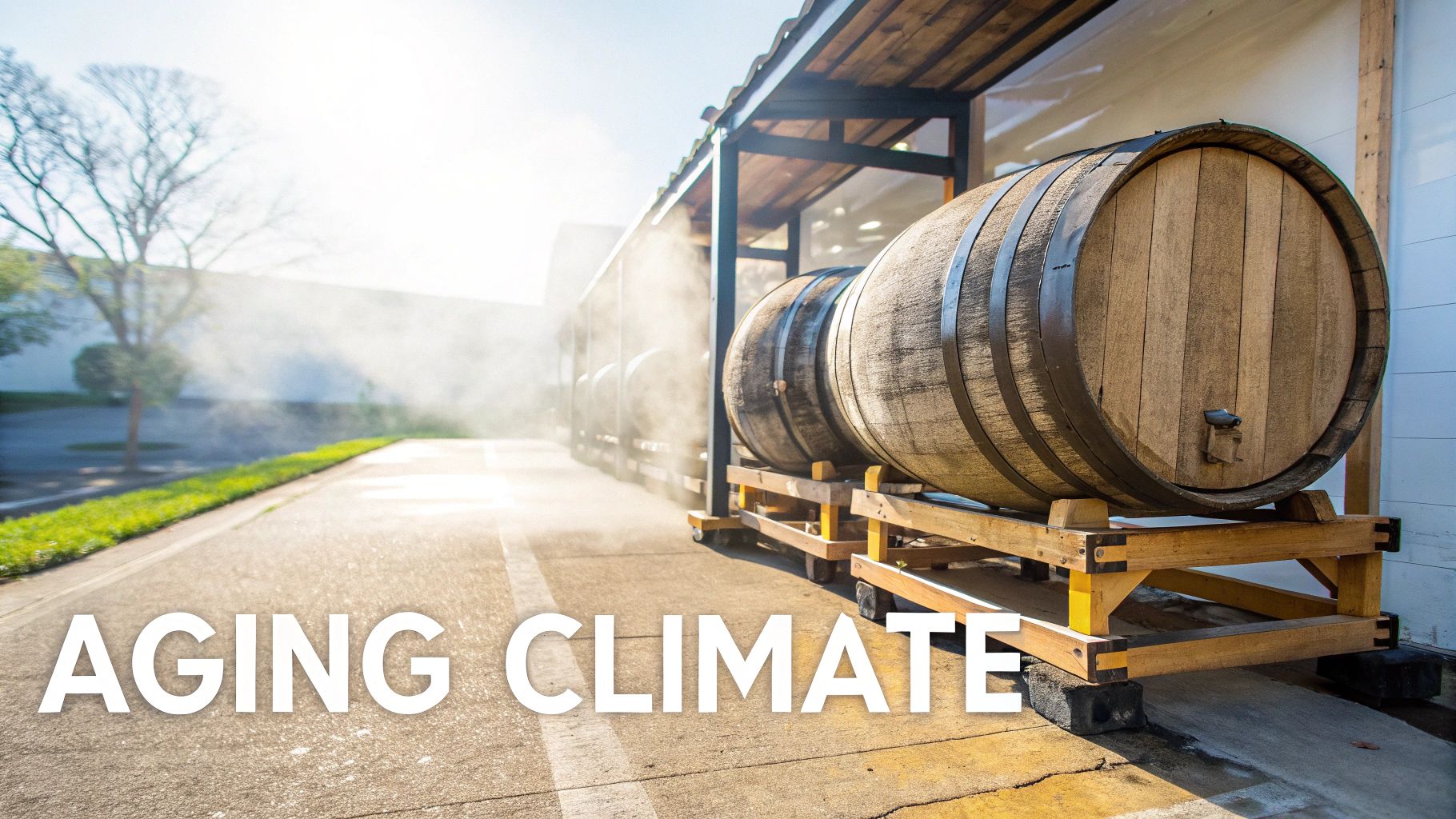
Time is a massive factor in maturation, but where a whiskey aging barrel spends that time is just as crucial. A barrel resting in the humid heat of Texas will churn out a dramatically different spirit than one aging in the cool, damp climate of Scotland. The local environment dictates the very pace and rhythm of the aging process.
This interaction is driven by a simple, powerful phenomenon: the barrel "breathes." It's a constant, slow cycle of expansion and contraction driven by temperature swings.
Think of the barrel as a lung. When the weather gets hot, the wood staves expand, and the rising pressure inside pushes the whiskey deep into the wood. As it cools down, the staves contract, pulling that spirit—now loaded with sugars, tannins, and color—back out. This cycle happens day after day, year after year, slowly infusing the spirit with its signature character.
Two Climates, Two Stories
To really get a feel for this, let's compare two iconic whiskey regions. Their climates create fundamentally different aging philosophies and flavor profiles, offering a fantastic lesson for new whiskey drinkers.
-
Kentucky's Dynamic Aging: The Bluegrass State is known for its dramatic seasonal shifts—hot, humid summers and bone-chilling winters. These extreme temperature swings force an aggressive breathing cycle. The result? Accelerated aging. The whiskey extracts bold flavors of vanilla, caramel, and spice from the new charred oak barrels relatively quickly. This intense interaction also causes the whiskey's proof to rise over time as more water than alcohol evaporates.
-
Scotland's Patient Maturation: Scotland's climate is much milder and more stable. Without the extreme heat, the breathing cycle is far gentler and slower. This leads to a gradual, patient maturation that allows subtle, complex flavors to develop over many years. The higher humidity also means more alcohol than water evaporates, causing the proof to slowly decrease in the barrel.
The Angel's Share
This whole process of evaporation has a famously poetic name: the "Angel's Share." It's the portion of whiskey that simply vanishes from the barrel during aging, lost to the heavens. But how much the angels take depends entirely on the climate.
In Kentucky's heat, it’s not uncommon to lose 4-5% of a barrel's volume each year. Over a decade, that can be nearly half the barrel! In Scotland's cool climate, the annual loss is much lower, typically around 2%. This difference is a huge economic factor for distillers and directly influences how they manage their aging stocks.
The Angel's Share is more than just lost product; it's a direct indicator of the climate's influence. A high Angel's Share points to a hot, dry environment and rapid, intense aging, while a lower share suggests a cooler climate and a slower, more delicate maturation process.
A Texan Example of Climate's Power
For a perfect American craft whiskey example of climate-driven aging, look no further than Balcones Distilling in Waco, Texas. The intense Texas heat creates one of the most extreme aging environments in the world, and Balcones has built its entire philosophy around it.
The relentless heat and dramatic temperature shifts mean their barrels breathe at an incredible rate. A whiskey that might take eight years to mature in Kentucky can reach a similar level of oak influence in just two or three years in Texas. This results in spirits that are incredibly dark, rich, and full-bodied for their age.
Balcones' flagship Texas "1" Single Malt is a testament to this strategy. It's aged for a relatively short time but boasts a deep color and powerful notes of toasted oak, dark fruit, and brown sugar. For a new whiskey drinker, tasting a Balcones spirit is a direct lesson in how a unique climate can create a bold and unforgettable profile, proving that age is just a number—location is everything.
Exploring the World of Craft Cooperages
While giant cooperages crank out millions of barrels a year for the industry's biggest names, a different kind of magic is brewing in smaller, more specialized workshops. These are the craft cooperages—the true artisans who team up with distilleries to chase new horizons of flavor. Think of them as the crucial link between the forest and the final spirit, turning humble wood into an artist's palette.
Tip for new whiskey drinkers: It helps to picture the difference between a massive commercial bakery and your local artisan bread maker. Both make bread, sure. But the artisan is experimenting with heirloom grains, unique fermentation methods, and custom baking techniques to create something unforgettable. Craft coopers do the exact same thing, just with the whiskey aging barrel.
Innovation Meets Tradition
Craft cooperages have become hotbeds of experimentation. Instead of sticking only to the tried-and-true American white oak, they’re playing with unique regional oak varieties or even woods from different climates. This gives distillers a level of hands-on customization that’s simply impossible to get at a larger scale.
This is where the real partnership between a distiller and a cooper comes to life. A craft distillery might go to their cooper with a very specific request, like:
- Unique Toasting Profiles: Asking for a specific, prolonged toast to pull out notes of honey and almond before the charring process even begins.
- Varied Barrel Sizes: Using smaller barrels to speed up the maturation for a young, punchy rye whiskey.
- Hybrid Barrels: Building barrels with staves from different types of oak to layer in a more complex flavor profile from a single cask.
These small tweaks can have a massive impact on the finished whiskey, giving American craft brands the chance to carve out a niche and create a signature taste that truly stands out. You can dive deeper into how these artisans are shaping the industry by exploring the cooperage legacy in crafting small-batch spirits.
A Partnership Forged in Wood and Spirit
A perfect example of this kind of collaboration is the relationship between Westward Whiskey in Oregon and Kelvin Cooperage down in Kentucky. As a pioneer of American Single Malt, Westward needs barrels that complement its distinct, beer-fermented spirit. Kelvin Cooperage, known for its meticulous craftsmanship, stepped up and developed a custom, low-char barrel just for them.
This lightly charred barrel doesn't steamroll the delicate, fruity notes of the malt. Instead, it adds a gentle layer of vanilla, crème brûlée, and toasted pecan that elevates the spirit without masking it. The result is a whiskey that is uniquely Westward—a product born not just from a distillery, but from a deep, hands-on partnership with its cooper.
This synergy is what the craft movement is all about. It’s a direct connection between the hands that raise the grain, distill the spirit, and build the barrel. When you sip a whiskey like Westward, you’re tasting the story of that collaboration.
This movement is a vital part of what's become a thriving global market. In fact, the global oak whiskey barrel market was valued at approximately $2.27 billion in 2025, a number that shows just how essential barrels are in creating flavor. While huge producers in North America and Europe still lead the way, the growing number of craft distilleries worldwide is fueling demand for both traditional and custom barrels. This ensures that both large-scale production and artisanal craftsmanship will continue to grow side-by-side.
For new whiskey drinkers, seeking out brands that proudly talk about their cooperage relationship is a fantastic way to explore unique flavor profiles and connect with the hands-on craft behind every single bottle.
How to Taste a Barrel's Influence in Your Whiskey
Alright, you've got the theory down. You know how a whiskey aging barrel works its magic. Now for the fun part: translating that knowledge into what you’re actually tasting in the glass. This is the moment you graduate from just drinking whiskey to truly understanding it.
The first clues are often right on the label. When you see terms like "new charred oak," you can bet you're in for the bold vanilla and caramel notes that define so many great American craft bourbons. If the bottle says something like "finished in port casks," get ready for a delicious layer of red fruit and spice over the whiskey’s original character.
Putting Your Palate to the Test
The quickest way to really get the barrel's impact is to taste whiskeys side-by-side. It’s a simple exercise, but it’s incredibly effective at training your palate to pick up on the subtle (and not-so-subtle) differences that wood and time create.
- Try Different Ages from One Distillery: Grab a bottle of a younger American craft whiskey and compare it to an older one from the same producer. For instance, pitting a standard bottling from a distillery like Westland against one of their older, limited releases is a masterclass in how extra years in the barrel can deepen oak flavors and build serious complexity.
- Explore Different Finishes: This is a blast. Find two whiskeys from the same brand that have different barrel finishes. A distillery like High West is always playing with this. Tasting their classic American Prairie Bourbon next to one of their bottles finished in a rum or wine cask instantly reveals how that final stretch of maturation adds a whole new dimension of flavor.
A tip for your whiskey journey: Honestly, the most rewarding part is figuring out what you love. When you start paying attention to the barrel, you’re not just tasting whiskey—you’re learning the language of maturation and discovering the specific notes that get you excited.
This focus on unique barrels isn't just a niche hobby; it's driving a huge part of the industry. As distilleries scramble to create unique flavor profiles that stand out on the shelf, the demand for high-quality, interesting casks is exploding. The global market for wine, scotch, and whiskey barrels is projected to jump from $2.2 billion to $3.4 billion between 2025 and 2035, all thanks to this quest for new flavors. You can read the full report on barrel market trends to see just how big this is getting.
At the end of the day, tasting is a skill, and like any skill, it gets better with practice. To keep refining your senses, be sure to check out our complete guide on how to taste whiskey like an expert.
Answering Your Whiskey Barrel Questions
As you get deeper into whiskey, you start to realize just how much the barrel does. It's only natural to have a few questions pop up about how it all works. Let's tackle some of the most common curiosities people have about the humble, yet all-important, whiskey barrel.
Why Are Whiskey Barrels Almost Always Made of Oak?
It turns out, oak is pretty much the perfect wood for the job. It has this unique sweet spot of being strong enough to hold liquid without leaking, but it's also just porous enough to let the spirit inside breathe a little. This slow, controlled oxygen interaction is crucial.
But the real magic is what's inside the wood itself. Oak is loaded with natural compounds that, over time, leach into the whiskey and create those classic vanilla, caramel, and spice notes we all love. Other woods, like pine, would just make the spirit taste like a cleaning product, while others simply aren't strong enough for the long haul. Oak is the undisputed king for a reason—it adds delicious complexity without overpowering the spirit.
How Does a Barrel's Size Affect the Whiskey?
Barrel size has a huge impact on how fast and how intensely a whiskey matures. It all boils down to a simple concept: the ratio of wood surface area to the amount of liquid. Think about it—smaller barrels, like quarter casks, have a lot more wood touching every drop of whiskey inside.
This constant contact puts the aging process into overdrive, letting the spirit suck up flavor from the wood much more quickly. You’ll see this technique used a lot by American craft distillers like Garrison Brothers in Texas, who want to develop a rich, oak-forward profile in a younger whiskey. On the flip side, larger barrels mature whiskey far more slowly, allowing for a more subtle and graceful evolution of flavor over many, many years.
The barrel isn't just a container; it's an active ingredient. The size, char level, and wood type are all dials a distiller can turn to craft a specific flavor profile, making each whiskey a unique expression of its time in wood.
Can a Whiskey Barrel Be Used More Than Once?
Absolutely. In fact, reusing barrels is the backbone of the entire global whiskey industry. While American bourbon has a strict legal requirement to be aged in new, charred oak barrels, what happens to those barrels afterward is where things get interesting.
Once a bourbon distillery is done with them, those used barrels are incredibly valuable. They get shipped off to Scotland, Ireland, Japan, and all over the world to age Scotch, Irish whiskey, and countless other spirits. These "second-fill" or "refill" barrels have already given up their strongest, punchiest oak notes to the bourbon. What’s left is a softer, more mellow character that they pass on to the next spirit. It's a fantastic example of how one country's regulations have directly shaped the flavor of whiskies worldwide, creating a sustainable and delicious cycle.
Ready to put your palate to the test and discover how the barrel truly shapes a spirit? With Blind Barrels, you can explore unique American craft whiskies without any brand bias. Our blind tasting kits let your taste buds lead the way, helping you identify the flavors you truly love.