

Forget everything you think you know about whiskey. For too long, it’s been relegated to a solitary, post-dinner drink, something to be sipped alone by the fire. We're here to tell you that’s a tired old story. Pairing whiskey with food is one of the most exciting frontiers in the culinary world, especially with the incredible diversity coming out of today's American craft whiskey scene.
This isn't just for experts with discerning palates. It's a culinary adventure that can turn a simple cheese board into a flavor explosion or elevate a multi-course dinner to something truly memorable. For new whiskey drinkers, this is the perfect way to explore the spirit without feeling intimidated. By learning just a few core principles, you can unlock incredible new dimensions of flavor in both your glass and on your plate.
Your Journey Into Whiskey and Food Pairing
The idea is simple: create harmony. You can get there by either matching similar flavors—think a caramel-rich bourbon with a crème brûlée—or by creating a bold, delightful contrast, like a spicy rye cutting through the richness of smoked brisket. Either way, you’re creating surprisingly delicious combinations that turn any meal into an event.
This is about forgetting the old, stuffy rules and discovering what you actually enjoy.
A New Era for Whiskey at the Dinner Table
Whiskey is having a major moment at the dinner table, and the numbers don’t lie. The flavored whiskey market is exploding, projected to jump from USD 37.41 billion in 2025 to a staggering USD 49.34 billion by 2030. Bourbon is leading the charge with a 38.5% market share, and for good reason. Its classic caramel notes have been shown to boost flavor perception in barbecued meats by as much as 25%.
This shift isn't just happening in restaurants; it's being driven by curious drinkers at home. A full 40% of millennials now prefer whiskey-paired meals over wine. This guide is for you. We’re going to give you practical tips and real-world examples using accessible American craft whiskeys that are perfect for experimenting. Our goal is to help you build confidence in your own palate.
The best pairing isn’t dictated by an expert; it’s discovered through personal exploration. By removing brand bias and focusing purely on flavor, you learn to trust your own senses and identify what truly delights you.
Getting Started with Classic Pairings
Ready to dive in? Let's start with one of the most beloved and forgiving pairings out there: whiskey and chocolate. It's a fantastic training ground for your palate, especially if you're new to drinking whiskey.
Here are a couple of can't-miss combinations to get you started:
- Bourbon with Milk Chocolate: The creamy sweetness of a good milk chocolate perfectly mirrors the caramel and vanilla notes found in most bourbons. It's a natural fit. Try it with an approachable craft bourbon from a distillery like Frey Ranch in Nevada or Treaty Oak in Texas.
- Rye with Dark Chocolate: The bold, peppery spice of a rye whiskey is the ideal counterpoint to the rich bitterness of dark chocolate. The contrast is what makes it so fantastic.
These simple, elegant pairings are an easy win and a great way to build your tasting confidence. If you need some visual cues, you can find great inspiration in guides for classic dark and milk chocolate pairings.

Understanding the Three Pillars of Pairing
You don't need a complicated rulebook to create a truly great whiskey and food pairing. Honestly, it's more like playing with LEGOs—once you understand how the basic pieces connect, you can build anything. In the world of pairing, there are three fundamental building blocks that will guide every choice you make.
Getting a handle on these three simple concepts—Complement, Contrast, and Cut—is the real key to unlocking amazing flavor combinations. Once you get the hang of them, you'll have the confidence to experiment with any whiskey and any dish, moving beyond just following recipes to creating your own signature pairings.
Complement: Matching Like with Like
The first and most intuitive pillar is Complement. This is simply the art of matching similar flavors to amplify each other. Think of it like peanut butter and jelly; the two are good on their own, but together they create something even better. The goal is to find a shared note between the food and the whiskey that they can both elevate.
For instance, many American craft bourbons are aged in new, charred oak barrels, which imparts rich notes of caramel, vanilla, and toasted nuts. When you pair a bourbon like this with a dessert that shares those flavors—say, a creamy crème brûlée or a slice of pecan pie—the result is pure magic. The whiskey doesn't overpower the dessert, and the dessert doesn't mute the whiskey. They just sing in harmony. You can explore a huge range of these notes with a comprehensive bourbon flavor wheel to discover even more complementary matches.
Contrast: The Sweet and Salty Effect
Next up is Contrast, which works on the simple principle that opposites attract. Instead of matching like with like, you’re creating an exciting tension between flavors that makes both the food and the whiskey more interesting. This is the "sweet and salty" effect we all know and love, like dipping a pretzel in chocolate.
A fantastic example is pairing a spicy, peppery American rye whiskey with a rich, creamy cheese like a triple-cream brie. The sharp, spicy character of the rye provides a bold counterpoint to the mellow, fatty texture of the cheese.
The rye’s spice doesn’t clash with the cheese; it actually highlights its creaminess by providing a fascinating textural and flavor contrast. This dynamic interplay keeps your palate engaged, with each sip and bite revealing something new.
Cut: Slicing Through Richness
The final pillar is Cut. This principle is all about creating balance, especially when you're dealing with rich, heavy, or fatty foods. Just as a squeeze of lemon can brighten up a heavy cream sauce, a whiskey's proof and bold character can slice right through richness to cleanse your palate, getting you ready for the next bite.
Think about a juicy, perfectly marbled ribeye steak. It's incredibly flavorful but can quickly coat your mouth with its richness. A high-proof craft bourbon or a robust single malt can act like a sharp knife, cutting straight through that fat. The alcohol's intensity resets your taste buds, preventing that richness from becoming overwhelming and making each bite of steak taste as good as the first.
To make these concepts stick, here’s a quick-reference guide that breaks down the three "C's" of pairing.
The Three 'C's of Whiskey Pairing Explained
| Pairing Principle | What It Means | Simple Example |
|---|---|---|
| Complement | Matching similar flavor profiles to make each one more intense and harmonious. | A sweet, caramel-forward bourbon paired with a nutty pecan pie. |
| Contrast | Using opposite flavors and textures to create an exciting, dynamic experience. | A sharp, spicy rye whiskey served alongside a creamy, mild blue cheese. |
| Cut | Leveraging a whiskey's high proof to slice through rich, fatty foods and cleanse the palate. | A bold, high-proof bourbon to balance a fatty cut of smoked brisket. |
By keeping these three pillars in mind, you're no longer just guessing. You're making informed choices that will consistently lead to some truly delicious and memorable whiskey and food experiences.
Matching American Whiskey Styles to Your Menu
Now that you've got the core principles of pairing in your back pocket, it’s time for the fun part: putting them to work. The world of American craft whiskey is a playground of flavor, offering a dynamic range of styles that can elevate any dish, from simple snacks to a full-on multi-course meal. This is where theory gets delicious.
Let's dive into the most prominent American whiskey styles, breaking down their signature flavor profiles and suggesting specific food matches that create those truly memorable moments. This is your practical guide to pairing with purpose.
This visual breaks down the three core strategies—Complement, Contrast, and Cut—that are the foundation of any great pairing.
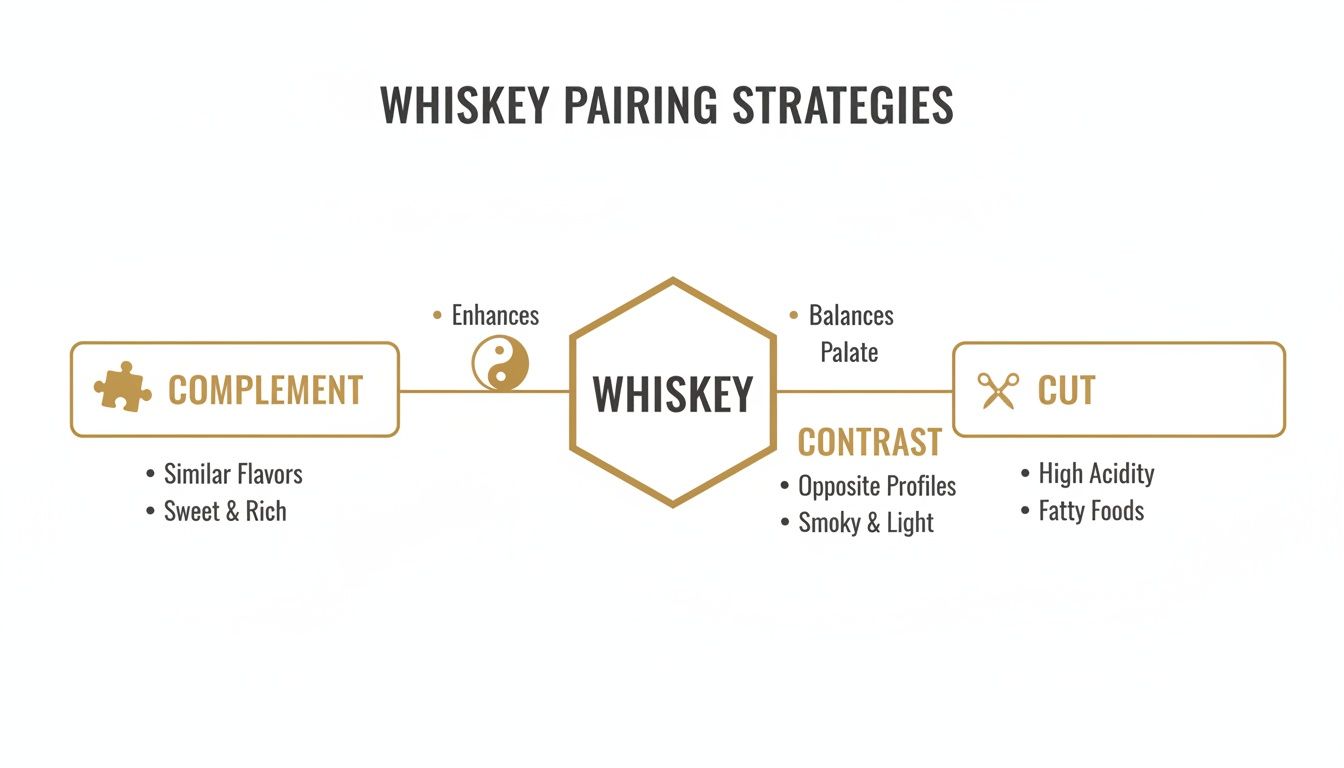
As you can see, these pillars give you a clear roadmap for creating pairings that are either harmonious, excitingly different, or perfectly balanced.
Bourbon: The Sweet and Savory All-Star
Bourbon is, for many, the quintessential American spirit. Its approachable flavor profile makes it a fantastic starting point for anyone new to whiskey. Because it’s legally required to be aged in new, charred oak barrels, bourbon develops its signature notes of vanilla, caramel, and toasted oak. That inherent sweetness makes it a natural for complementary pairings.
Picture a classic craft bourbon, maybe from an innovative distillery like Balcones in Texas or High West in Utah. Its warm, sweet character is a perfect partner for rich, savory foods.
- Smoked Meats: A high-proof bourbon is practically made for barbecue. Its sweetness complements the smoky char of brisket or pulled pork, while its proof cuts right through the fat, cleansing your palate with every sip.
- Aged Cheeses: Try a great bourbon with a sharp, aged cheddar. The cheese’s saltiness provides a beautiful contrast to the whiskey’s sweet caramel notes.
- Sweet Desserts: When it comes to dessert, think pecan pie or crème brûlée. These dishes echo the vanilla and nutty flavors in the bourbon, creating a perfect complementary finish to a meal.
Rye: The Spicy and Complex Counterpart
If bourbon is the sweet, charismatic friend, rye is its spicy, sophisticated cousin. Known for its peppery bite and notes of baking spices like cinnamon and nutmeg, rye whiskey offers a bolder, drier profile that excels at creating contrast. It’s the perfect choice for foods that can stand up to its assertive personality.
Many American craft distilleries are reviving historic rye recipes, producing whiskeys that are both powerful and nuanced—and ideal for creating dynamic pairings.
A robust rye from a distillery like Pennsylvania's Stoll & Wolfe or Colorado's Laws Whiskey House works wonders with cured meats. The whiskey’s spice provides a brilliant counterpoint to the salty, fatty richness of prosciutto or salami. Dark chocolate with a high cocoa content is another classic; the whiskey’s peppery notes cut through the chocolate’s bitterness for a surprisingly harmonious experience.
Tip for new whiskey drinkers: Don’t be afraid of rye’s spice—it’s your greatest asset in pairing. Use it to stand up to strong flavors, from funky blue cheese to rich, savory duck confit.
Emerging American Craft Styles
The American whiskey scene is about so much more than just bourbon and rye. Craft distillers all over the country are experimenting with unique grains, cask finishes, and aging techniques, creating entirely new categories of whiskey that are perfect for food pairing. American Single Malts, for instance, often bring malty, fruity, or even subtly smoky notes to the table, making them incredibly versatile.
Consider these innovative pairings:
- American Single Malt: A lighter, fruit-forward single malt from a distillery like Westland in Seattle can be a delicate and surprising match for grilled fish or roasted chicken.
- Finished Whiskeys: Many craft producers finish their whiskey in secondary casks, like port or sherry barrels. A port-finished bourbon, with its notes of red fruit and dark chocolate, is an incredible match for a cheese board featuring figs and aged Gouda.
This kind of innovation is what’s driving whiskey’s growing presence on the dinner table. The global whiskey market is projected to hit USD 110.7 billion in 2024, with American whiskey dominating flavored segments at a 32.67% share. This growth coincides with a 7.01% jump in American whiskey consumption back in 2020, fueled by a cocktail boom and a desire for spirits that pair well with bold foods. Distillers are responding with infusions and finishes—like rye toast and orchard fruit notes—that are practically designed for a charcuterie board. You can learn more about these market dynamics from this detailed whiskey market report.
Building Your Own Whiskey Pairing Menu
All the theory in the world is great, but the real magic happens when you bring it all to life at the dinner table. This is your chance to play both chef and sommelier, crafting a complete experience that tells a story through flavor. Building a menu isn't about getting bogged down by rigid rules; it’s about using the core principles of Complement, Contrast, and Cut as your creative roadmap.
To show you exactly how it’s done, we’ve put together two distinct, multi-course menus. Think of them as blueprints you can follow, adapt, or just use for inspiration. They’re designed to be totally approachable for new hosts and feature some incredible American craft whiskeys that truly sing alongside great food.
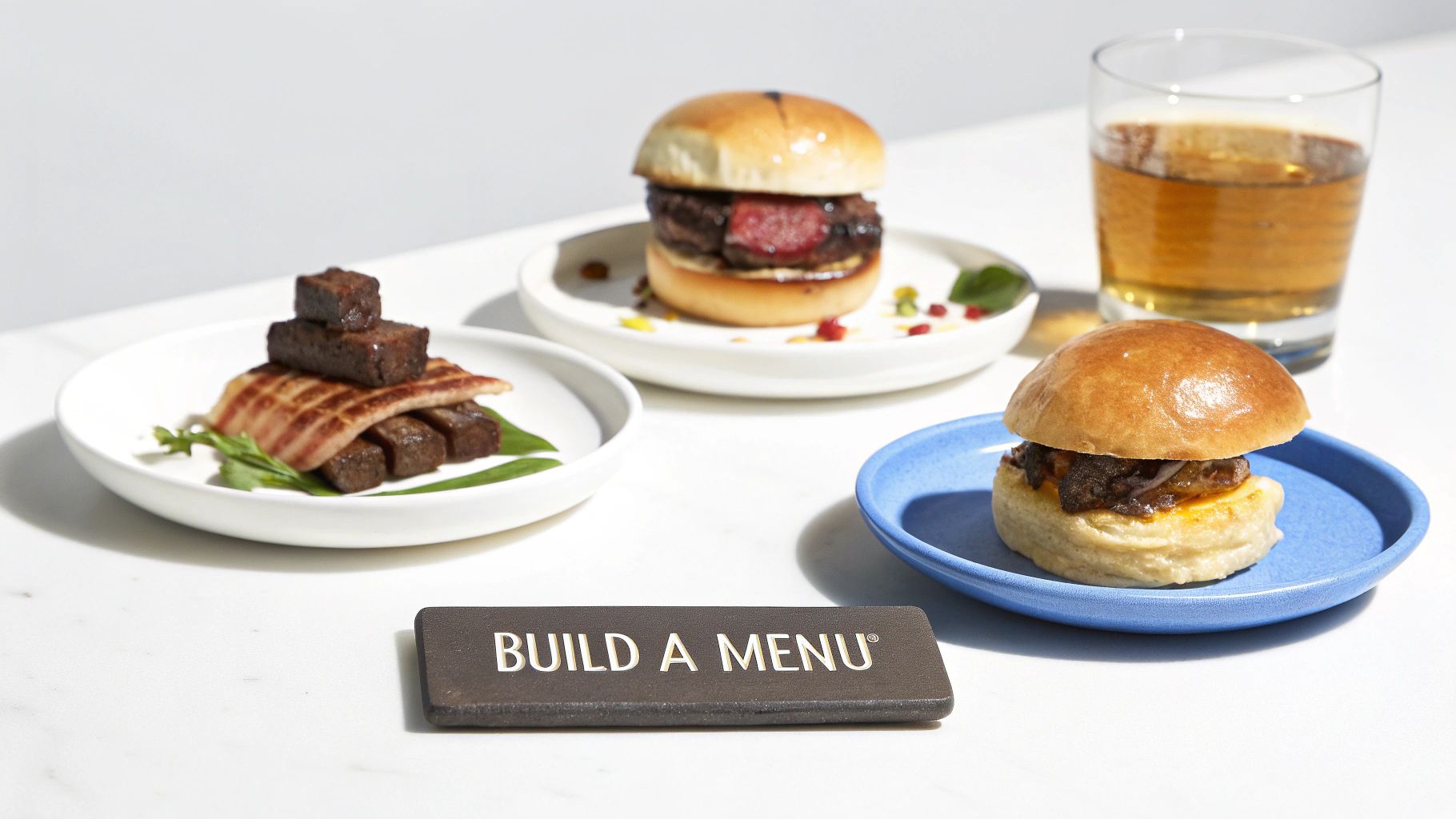
Menu 1: The Bourbon BBQ Bash
This menu is a full-throated celebration of all things rich, smoky, and sweet. We’re pairing a bold, high-proof American craft bourbon—one with those deep notes of caramel, vanilla, and a touch of charred oak—with classic barbecue. That higher proof is crucial here; it gives the whiskey the backbone it needs to cut right through the richness of the meal.
-
Appetizer: Bacon-Wrapped Dates Stuffed with Goat Cheese.
- The Why: This is a classic contrast pairing. The bourbon’s inherent sweetness latches onto the caramelized sugar of the dates, while its oaky spice is a beautiful counterpunch to the salty bacon and tangy goat cheese.
-
Main Course: Slow-Smoked Pulled Pork with a Tangy Vinegar Sauce.
- The Why: Here, we're hitting all three pillars. The smoky pork complements the charred oak notes in the bourbon perfectly. The whiskey's high proof cuts through the fatty richness of the pork, cleansing your palate for the next bite. And that tangy sauce? It offers a bright contrast to the bourbon's deep sweetness.
-
Dessert: Rich Chocolate Bourbon Pecan Pie.
- The Why: We’re finishing with a pure complement. The pie’s ingredients—caramel, toasted nuts, vanilla, chocolate—are all flavors you’d expect to find in a great bourbon. It’s a seamless, harmonious end to the meal.
To get even more out of your tasting, try jotting down your thoughts. Tracking what you taste is incredibly helpful, and you can get started with this simple and effective whiskey tasting notes template.
Menu 2: A Spicy Rye Soirée
For our second act, we’re shifting gears to something a bit more refined but every bit as bold. We're putting a spicy American craft rye, with its signature notes of black pepper, baking spices, and dark fruit, center stage. This menu is all about creating dynamic, exciting contrasts that really wake up the palate.
A great rye whiskey doesn't just sit next to the food; it challenges it. Each sip lands a peppery kick that makes the flavors of the dish pop even more vividly.
-
Appetizer: Charcuterie Board with Aged Cheeses and Cured Meats.
- The Why: Rye and charcuterie are a match made in heaven. Its sharp spice contrasts beautifully with creamy, funky cheeses like Roquefort and cuts right through the fat of cured meats like prosciutto and soppressata.
-
Main Course: Duck Confit with a Cherry Reduction Sauce.
- The Why: This pairing is a masterclass in contrast and complement. The rye’s peppery profile cuts through the rich, fatty duck perfectly. At the same time, the dark fruit notes in the rye complement the cherry sauce, creating a perfect bridge between the spirit and the dish.
-
Dessert: Dark Chocolate Lava Cake.
- The Why: This is an intense, elegant contrast. The rye’s spice provides a fiery counterpoint to the deep, bittersweet notes of the dark chocolate. The result is a pairing that feels both sophisticated and incredibly satisfying.
Of course, these menus are just a starting point. The real joy of pairing whiskey and food comes from getting in there and experimenting. If you get the bug and want to host regular themed dinners, you might even find some great tips on how to start a supper club to share your creations. Use these ideas as a foundation, swap in your favorite whiskeys, and never be afraid to try something new. You might just stumble upon the next perfect pairing.
How to Host a Blind Whiskey Pairing Dinner
There's something special about sharing the joy of discovery, and that's really at the heart of the whiskey journey. A fantastic way to bring people into that experience is by hosting a blind whiskey and food pairing dinner. It instantly transforms a simple get-together into an interactive, unforgettable night. This isn't about showing off your expertise; it's about creating a fun, relaxed space where everyone can just explore their own palate without being swayed by a fancy label.
When you strip away the branding and preconceived notions, the unique flavors of American craft whiskeys truly get to shine. The moment your guests don't know what they're drinking, the conversation shifts from distillery names to the actual experience—what they smell, taste, and feel. Honestly, it's the most exciting way to approach a whiskey and food pairing.
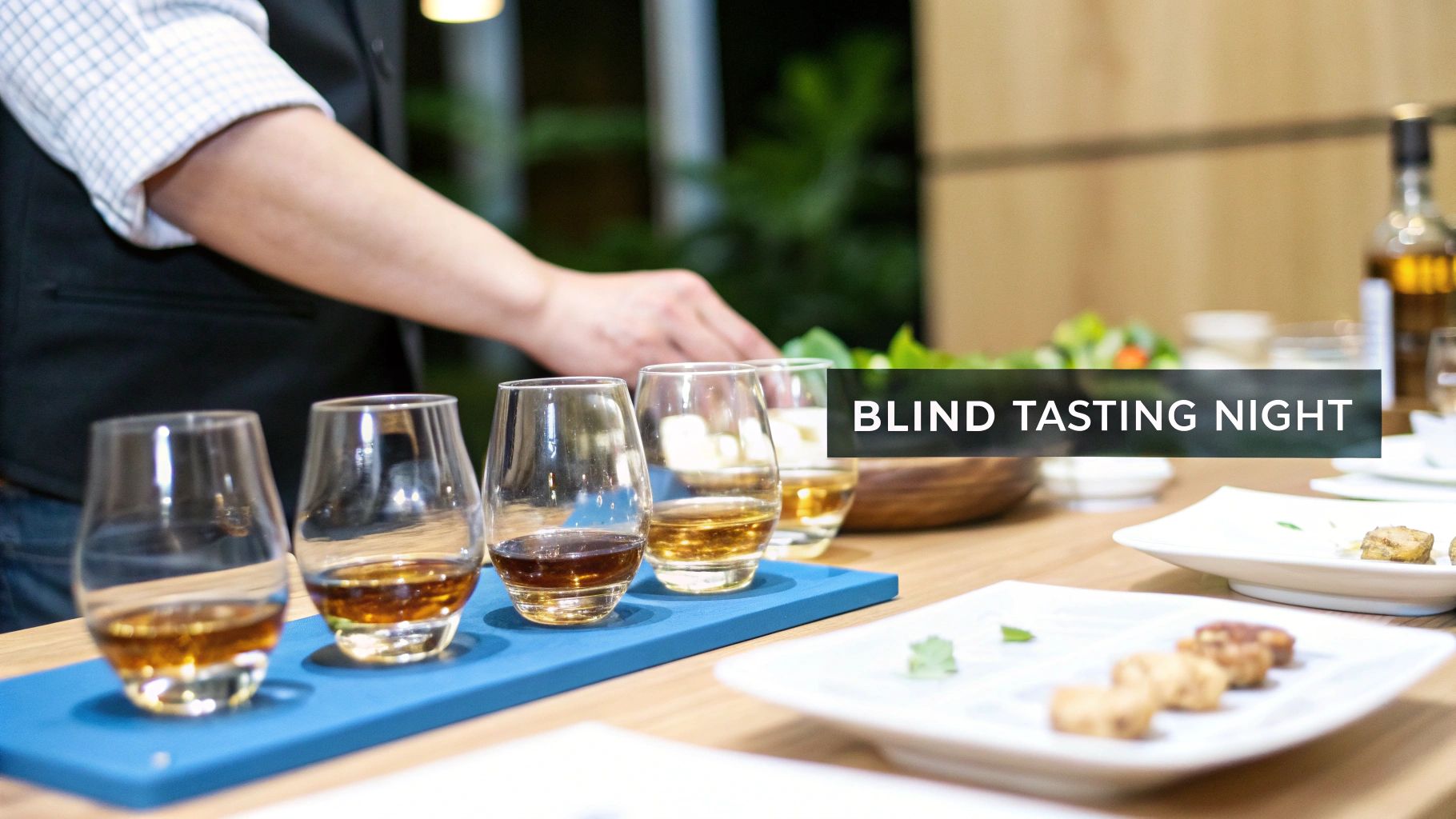
Setting the Stage for Discovery
First things first: you've got to pick your whiskeys. Your goal should be a diverse lineup of three to four different American craft whiskeys. Variety is the name of the game here, so look for spirits that showcase different styles and flavor profiles.
For a flight that really covers the bases, think about including:
- A classic, sweet Bourbon
- A spicy, peppery Rye
- An innovative American Single Malt or a cask-finished whiskey
This kind of variety gives your guests a real taste of the broad spectrum of what American craft distillers are doing. It just makes the whole tasting more dynamic and eye-opening.
Once the whiskeys are chosen, it's all about presentation. Hide those bottles! Pour a small 1-ounce sample of each into identical glasses and make sure to number each glass clearly so you can keep track. This simple step of making the whiskeys anonymous is what gives the blind tasting its power.
Designing the Perfect Pairing Menu
With your whiskeys lined up, it's time to talk food. For a blind tasting, small bites or appetizers are your best friends. You want food that will highlight the whiskey, not overpower it, making it easy for guests to compare and contrast.
Try designing a small plate for each whiskey, leaning on the principles of Complement, Contrast, and Cut to build your pairings. For example:
- Whiskey 1 (Bourbon): A mini pulled pork slider is a perfect match. The bourbon’s sweetness will complement the smoky, savory meat beautifully.
- Whiskey 2 (Rye): Try serving this with a sharp cheddar cube and a slice of soppressata. The spice from the rye will contrast the rich fat in the cheese and meat.
- Whiskey 3 (Single Malt): A smoked salmon blini works wonders here. The delicate notes in the whiskey can cut right through the oiliness of the fish.
These small, focused pairings really encourage your guests to think about how each whiskey and bite interact, turning dinner into a hands-on tasting experience.
The Reveal: Where the Fun Happens
This is where the magic really kicks in. Guide your guests through the tasting, one whiskey and food pairing at a time. Get everyone talking and sharing their notes. What are they smelling? What flavors are jumping out? There are no wrong answers—the whole point is to spark conversation and help everyone build a little confidence in their palate.
The communal aspect of sharing tasting notes before the reveal is invaluable. It validates everyone's palate and often reveals surprising consensus and fun disagreements, making the educational element feel like a shared discovery.
After everyone has tasted and discussed each pairing, it's time for the grand finale. Unveil the bottles one by one. As you do, share some details about the distillery, the mash bill, and the story behind each spirit. This final step is what connects the sensory experience to the real craft and passion that went into the bottle, leaving everyone with a much deeper appreciation for what they just tasted.
For anyone new to hosting, using a curated blind whiskey tasting kit can be a great shortcut. It simplifies the whole process by giving you pre-selected samples and tasting guides to get the party started.
To make sure everything goes off without a hitch, here’s a quick checklist to guide you.
Your Blind Pairing Party Checklist
Planning your first pairing event can feel like a lot, but breaking it down into simple steps makes it manageable and fun. This checklist will walk you through everything from picking your whiskeys to the final reveal.
| Task | Key Consideration | Pro Tip for Beginners |
|---|---|---|
| Select Your Whiskeys | Aim for variety (3-4 styles like Bourbon, Rye, Single Malt). | Start with a curated tasting kit to take the guesswork out of selection. |
| Plan the Menu | Create one small bite per whiskey. Use Complement, Contrast, or Cut. | Keep it simple. Cheese, charcuterie, and dark chocolate are always winners. |
| Prep Your Station | Hide bottles, pour 1 oz. samples into identical glasses, and number them. | Have plenty of water and palate-cleansing crackers on hand for guests. |
| Guide the Tasting | Go one pairing at a time. Encourage open discussion and note-taking. | Create simple tasting mats so guests can jot down their thoughts for each number. |
| The Grand Reveal | Unveil each bottle after its tasting round and share its story. | Have fun with it! The surprise is the best part of the evening. |
Following these steps will help you create a memorable and engaging experience for everyone, turning a simple dinner into a true exploration of flavor.
Taking Your Pairing Skills to the Next Level
Once you’ve nailed down the fundamentals, the real adventure in whiskey and food pairing can begin. It’s time to graduate from the basics and start thinking like a true connoisseur, exploring the subtle details that turn a good match into an unforgettable one. This is where your own palate really gets to shine.
The next step is to look deeper into what’s actually in your glass. Start thinking about the specific mash bill—does that high-corn bourbon bring a sweetness that would sing alongside a dessert? How does a whiskey's age deepen its oaky character, and could that older, more robust spirit stand up to a seriously rich dish? These nuances are the new tools in your pairing arsenal.
Exploring Advanced Flavor Dimensions
One of the most exciting frontiers for advanced pairing is the cask finish. A lot of American craft distilleries are experimenting with finishing their whiskeys in barrels that once held other spirits or wines, adding incredible new layers of complexity. Virginia’s Catoctin Creek, for example, is a master of this art.
- Sherry Cask Finish: Whiskeys finished in sherry casks often pick up beautiful notes of dried fruit and nuts. This makes them a stunning partner for things like aged cheeses and a well-stocked charcuterie board.
- Port Cask Finish: With their deep, jammy red fruit flavors, port-finished whiskeys are practically made for dark chocolate desserts. They can also create a phenomenal pairing with something savory and rich, like duck confit.
Don't Forget Whiskey Cocktails
And remember, pairing isn't just for neat pours. Whiskey cocktails throw open a whole new world of possibilities. Now you’re not just matching the spirit, but the entire profile of the drink—sweet, sour, bitter, and booze—to your plate.
The ultimate goal is to trust your own palate. The "best" whiskey and food pairing is simply the one you enjoy the most. Remove bias, have fun, and let your taste buds lead the way on your next tasting adventure.
Take a classic Old Fashioned. Its signature hints of orange and bitters make it a natural fit for a perfectly grilled steak. A bright, zesty Whiskey Sour, on the other hand, can act like a squeeze of lemon, cutting right through the richness of fried chicken or playing off a tangy lemon tart.
This cocktail-first approach is gaining some serious traction. The global flavored whiskey market, which hit USD 19.0 billion in 2024, is expected to skyrocket to USD 35.7 billion by 2034. This explosion is being driven by mixology, with bartenders getting creative—think a cinnamon-infused whiskey in an Old Fashioned to pair with apple pie, or a peach-infused sour served alongside a fresh fruit tart. You can read more about the growth of the flavored whiskey market and see just how much it's shaking up the dining scene.
Common Whiskey and Food Pairing Questions
Jumping into the world of whiskey and food pairing can feel a little intimidating, and it’s natural to have a few questions. We get it. Below, we’ve tackled some of the most common queries to give you the confidence to start your own delicious experiments.
What Is the Easiest Food to Pair with Whiskey for a Beginner?
For anyone just dipping their toes in, dark chocolate (think 70% cocoa or higher) is a can't-miss starting point. Its deep, slightly bitter profile is a phenomenal match for the caramel and vanilla notes inherent in so many American craft bourbons. It's a simple, elegant pairing that just works.
Another fantastic and forgiving option is a good aged cheddar cheese. That beautiful combination of salt and fat provides a perfect counterpoint to almost any whiskey you throw at it, from a sweet bourbon to a peppery rye. It’s a delicious first step that’s hard to get wrong.
Can I Pair Whiskey with Spicy Food?
You absolutely can, and you should! A bold, high-proof bourbon or a sturdy rye can stand up beautifully to dishes with some serious heat, like a zesty barbecue or even certain Thai curries. The key is that the whiskey's powerful character doesn't get bulldozed by the spice.
We’ve found that the natural sweetness in many bourbons is a fantastic counter-punch to the heat, creating a thrilling sweet-and-spicy dynamic on the palate. If you're new to this, start with moderately spicy dishes to find the heat level that works for you.
Should I Add Water or Ice to My Whiskey When Pairing?
This really comes down to personal preference, but it can be an incredibly useful technique. Adding just a few drops of water to a higher-proof whiskey can tame the alcoholic burn and "open up" the spirit, unlocking new aromas and making it much more approachable with food.
A single large ice cube can do the same thing, just more slowly. Here's a pro tip for anyone starting out: first, try the whiskey neat with your food. Then, add a little water or ice. This way, you get to experience firsthand how it transforms the spirit and its interaction with the pairing.
Ready to discover your next favorite American craft whiskey without all the guesswork? The Blind Barrels subscription sends you quarterly tasting kits with four unique, top-shelf samples presented completely blind. It’s a fun, educational way to trust your palate and find incredible whiskeys you’ll love. Explore our whiskey tasting kits today.