

You're standing at a whiskey shelf with a friend, reading labels that mention mash bills, barrel finishes, and proof points you don't yet know how to compare. One bottle looks familiar, another comes from a small American distillery you've never heard of, and the only obvious advice seems to be “buy what collectors like.” That's an intimidating way to begin.
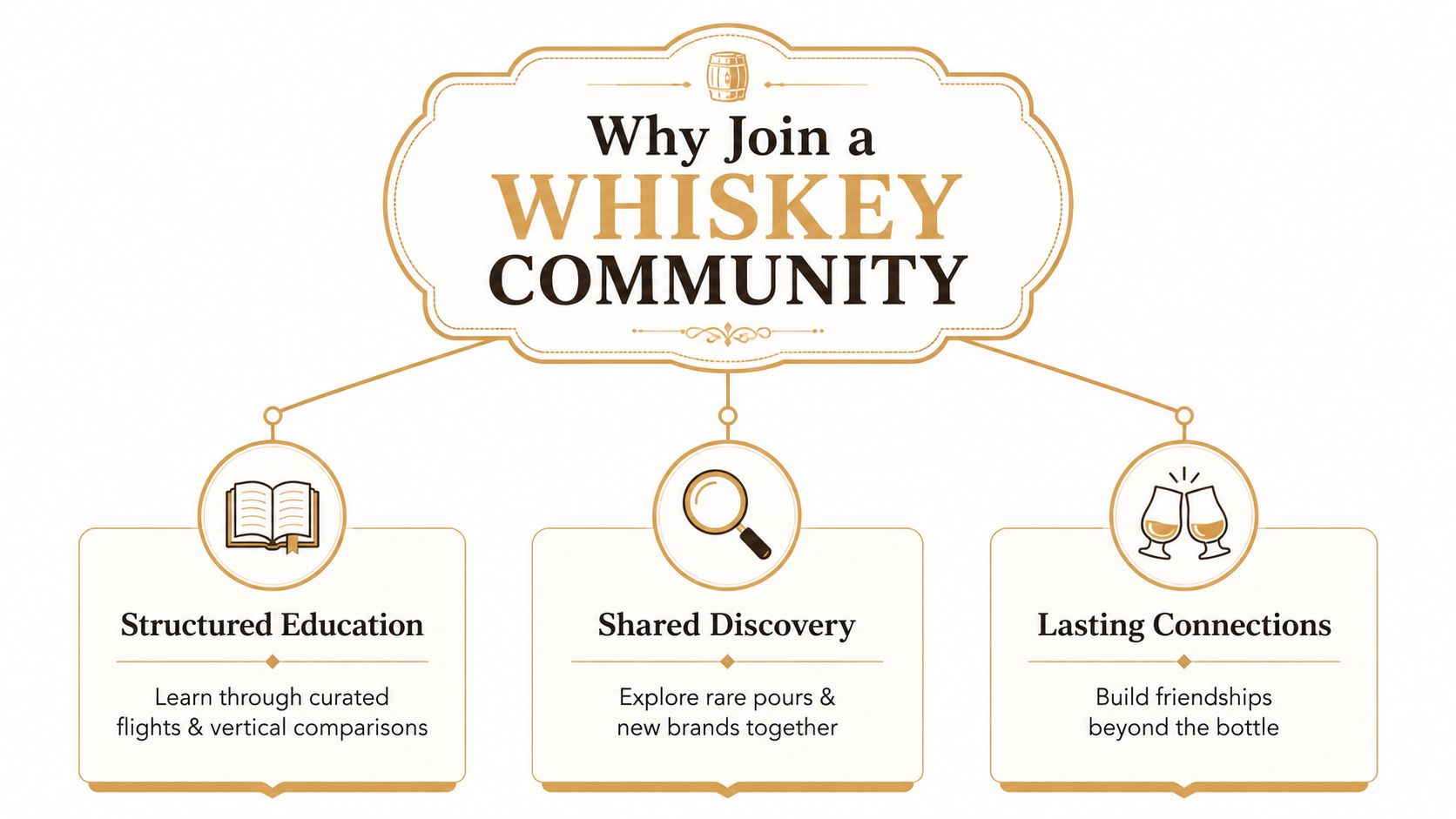
A whiskey community offers a better entry point. It turns whiskey from a test of bottle knowledge into a shared tasting practice, where couples, friends, and curious newcomers can discover what they enjoy. The most useful community isn't a trophy shelf. It's a room, chat, tasting table, or recurring gathering where people compare pours and learn together.
What a Whiskey Community Actually Is
Two neighbors meet beside a backyard grill on a warm evening. One brings a small-batch rye from an American craft distillery, the other brings two tasting glasses and a notebook. Neither has tried the rye before. They pour it, take a quiet smell, and trade impressions. One notices pepper and dry grain. The other gets orange peel and a softer sweetness. By the end of the pour, they're discussing what to try next, not arguing over who has the more impressive collection.
That's a whiskey community in its simplest form: people who share whiskey, impressions, questions, and recommendations on a regular basis.
It doesn't require a private club, a rare bottle, or a vocabulary test. A community can be four friends around a kitchen table, a local bar's tasting night, an online discussion group, or a packed event at a distillery. The setting changes, but the mechanic stays familiar:
- Shared pours: Members taste the same whiskey instead of relying only on separate personal impressions.
- Scheduled gatherings: A recurring evening gives the group momentum and makes participation easier.
- Blind flights: Hidden labels help people notice aroma, flavor, aftertaste, and texture before reputation takes over.
- Open conversation: Members explain what they're experiencing without treating one palate as the final authority.
The distinction matters. A collecting club may focus on acquisition, rarity, and bottle value. A connoisseur circle may spend more time discussing provenance, age statements, and release history. Those interests can belong in a whiskey community, but they aren't requirements for membership.
The practical definition: If people gather to taste, compare, and help one another understand whiskey, they're already building a community.
The category itself is now international. One market analysis estimates the global whiskey market at USD 77.92 billion in 2025, with a projection of USD 116.01 billion by 2033 at a 5.1% compound annual growth rate. The same analysis reports that Asia Pacific held 44.69% of global market share in 2025, a reminder that whiskey culture extends far beyond Scotland, Ireland, and the United States (Grand View Research whiskey market analysis).
The rest of the experience is about finding the right format for your life, then creating a tasting habit that helps you identify your own preferences. Your “pour family” may include a couple, a few neighbors, or people you first meet through a screen.
Why People Join a Whiskey Community
People usually join for a bottle, but they stay for the learning and the relationships. A good group gives whiskey a structure that solo drinking often lacks. You don't just ask whether a bottle is “good.” You ask what it smells like, what changes after a sip, and whether you'd want another pour.
Learning becomes easier with comparison
Structured tasting gives your palate reference points. A group might compare an Indiana rye, a Kentucky bourbon, and a Pennsylvania single malt in one flight. The point isn't to identify every distillery. It's to notice how grain, fermentation, maturation, and production choices create different experiences.
A recent study identified eight purchase attributes, aroma, flavor, aftertaste, age, packaging, price, brand image, and availability. That combination shows why blind tasting can be useful. A hidden pour removes some label and reputation cues, allowing the group to focus first on the sensory traits that influence choice (2025 whiskey purchase-attribute study).
The practical outcome is confidence. After several shared flights, you'll have better language for ordering at a bar, choosing a bottle, or explaining to a partner why one rye appeals to you more than another.
The gathering creates its own rhythm
A tasting group works like a book club with glasses. The whiskey gives everyone something concrete to react to, so conversation doesn't depend on forced small talk. One member may prefer a rich bourbon, another may favor a grassy single malt, and a third may care most about a long, dry finish.
That difference is useful. Couples can learn what they enjoy together without assuming they need identical tastes. Friends can create a standing Friday night tradition. Newcomers can ask basic questions in a setting where the discussion has a natural subject.
Shared access expands discovery
A community can also make unfamiliar bottles easier to explore. Members may split a bottle, coordinate a visit to a small craft distillery, or share information about a limited release. That doesn't mean chasing every scarce product. It means reducing the risk of buying a full bottle before you know whether the profile suits you.
The global audience is broad enough to support many different local traditions. Market overviews estimate global whisky consumption at about 3 billion litres in 2024, with China consuming 724 million litres, roughly 24% of worldwide volume, while the United States consumed 281 million litres, about 9.3%. In value terms, China reached $6.1 billion, Japan $4.0 billion, and the United States $2.6 billion (IndexBox global whisky market overview).
Your group doesn't need access to every market or release. It only needs a reliable way to discover bottles you wouldn't have selected alone.
Where to Find and Join a Whiskey Community
Choose a format by asking two questions: How much time can you give this, and do you want conversation or convenience? The right answer may change from month to month.
Online forums suit flexible schedules
Forums and social groups let you read tasting notes, ask beginner questions, and learn how people in other regions approach whiskey. They're inexpensive and available whenever you have time. Their limitation is obvious, though. You can compare descriptions, but you can't pass a glass across the table.
Start by searching a whiskey subreddit or a newcomer-focused discussion thread. Look for posts where members explain why they like a bottle, rather than listing scores or collecting wins.
Local groups provide the strongest hands-on practice
Bottle shops, bars, and private homes often host tastings that offer a comfortable mix of instruction and conversation. Ask a local shop about its tasting calendar, then attend one event without worrying about becoming an expert before you arrive.
This format is especially useful for couples. One person can enjoy bourbon while the other explores rye, American single malt, or a lighter style. If you're searching for small producers nearby, use a guide such as finding a craft distillery near you as a starting point, then confirm event details directly with the venue.
Distillery events reward curiosity
A distillery tour connects the liquid to the people and place that produced it. You may learn about grain selection, fermentation, barrel storage, and local history while tasting expressions that aren't widely available elsewhere. These events can cost more and happen less often, so they work well for travelers or drinkers who want a focused deep dive into an American craft producer.
Regional whiskey festivals offer a wider version of the same experience. RSVP early, decide which producers interest you, and pace yourself with water and food.
Subscriptions fill the gaps
A curated tasting subscription gives solo drinkers a planned exercise between local meetups. You receive smaller samples, compare them at home, and bring your notes to the next group discussion. Order a sampler if you want structure without committing to several full bottles.
| Format | Cost | Time Commitment | Social Connection | Rare Bottle Access |
|---|---|---|---|---|
| Online forums | Low | Anytime | Discussion-based | Tips and leads |
| Local tasting groups | Modest to variable | Scheduled evenings | Strong | Shared recommendations |
| Distillery events and festivals | Variable, often higher | Occasional events | Direct and immersive | Producer-specific access |
| Curated subscriptions | Recurring purchase | Flexible home sessions | Solo or virtual | Selected samples |
No format has to become your entire whiskey life. Many drinkers combine an online forum with a local tasting and use a sampler when schedules don't line up.
Inside an American Craft Whiskey Tasting Circle
At a small American craft producer, the tasting room feels less like a release queue and more like a workshop. The distillery team sets out several experimental barrels. Each glass is identified by its grain bill and age statement, not by a familiar brand name or a polished bottle story.
The host begins with aroma. Nobody rushes to score the whiskey. Attendees rotate their glasses, take short notes, and compare what they find with the person beside them. One pour may show toasted grain and dried fruit, while another brings more oak, pepper, or fresh herbs.
The group listens before it judges
Next comes palate mapping. Participants take a small sip, let it move across the tongue, and describe the arrival, middle, and finish. The host may add a few drops of water to one sample, not to declare a correct method, but to see whether the whiskey opens or loses definition.
The discussion stays practical. Someone might say a rye feels sharper than expected. Another person might prefer the same pour because the heat fades into a dry finish. The group doesn't need a shared verdict. It needs enough detail for each person to understand their own response.
After the final pour, everyone votes on a favorite. The distiller collects those reactions as product feedback, especially when deciding which experimental direction deserves further development. That direct exchange gives attendees a role beyond buying a bottle. They're helping a small producer understand how the whiskey lands with real drinkers.
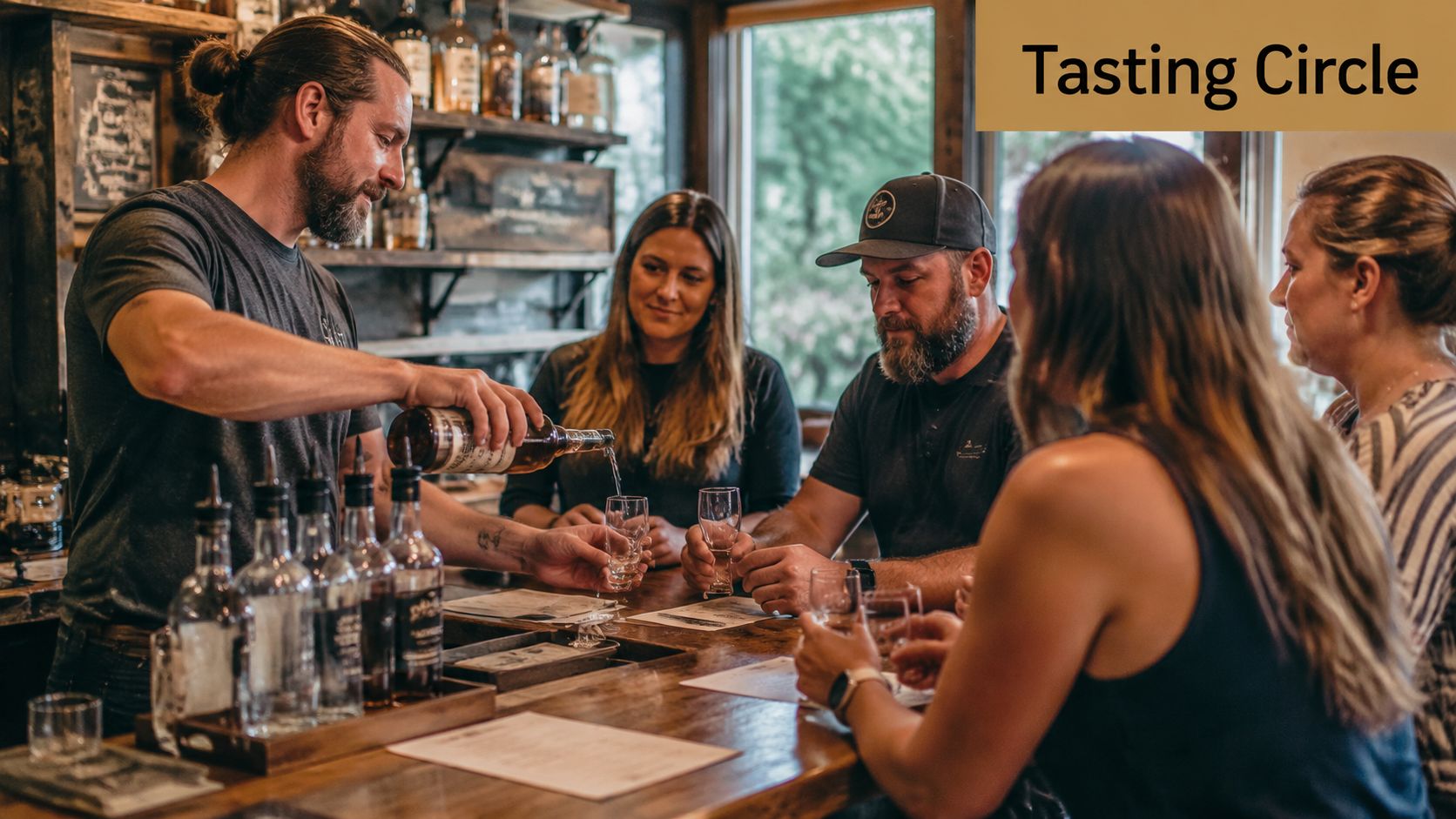
A craft tasting circle differs from a collector swap. The scale is smaller, sourcing is discussed more openly, and the relationship runs directly between drinker and distiller. You're not evaluating a bottle mainly for its resale appeal. You're asking whether the liquid works for your palate and whether the producer's choices interest you.
For a first visit, a practical American whiskey tasting experience guide can help you know what to expect. The most important preparation is simple. Bring curiosity, write down what you notice, and don't apologize for preferring the pour that gives you the most pleasure.
How to Host Your Own Whiskey Tasting
You don't need a dedicated bar or a collector's cabinet to host a useful tasting. Start with a theme that gives the evening a clear question. Compare regions, focus on grain, or choose an age range. A theme keeps guests from treating the event as a random sequence of drinks.
For an accessible home session, select four to six pours in the $30 to $60 range. That range appears in the tasting plan, but the principle is variety without making the evening feel like a financial test. Include at least one bottle that's familiar to the group and one American craft whiskey that most guests haven't tried.
Set the table for attention
Give each guest a copita or tulip glass, room-temperature water, plain crackers, and a one-page score sheet. Use four categories:
- Aroma: What reaches you before the first sip?
- Palate: What flavors and textures appear once you taste?
- Finish: What remains after swallowing?
- Overall rating: Use a simple 1 to 5 scale, then explain the number in words.
Avoid strong perfume, smoky rooms, coffee, and heavily seasoned food before the tasting. Beginner guidance also recommends tasting at least twice and comparing neat pours with a few drops of water, practices intended to reduce distractions and help new drinkers notice changes (beginner whisky tasting guidance).
A friendly entry point is a whiskey around 40% to 46% ABV, rather than a barrel-strength pour, because that range can balance flavor with lower alcohol intensity for newer drinkers (beginner whisky tasting guide).
Guide the conversation gently
Pour equal measures and reveal the theme, but keep labels hidden if you want a blind format. Let everyone smell first, then taste together. Discuss in rounds so one confident guest doesn't define the whole pour before quieter people have spoken.
A good hosting rule: Ask “What do you notice?” before asking “Do you like it?”
Finish by having each guest choose a favorite and leave with a 30 ml sample in a small jar. Label it with the whiskey and date. That small takeaway extends the conversation and gives everyone a reference for the next gathering.
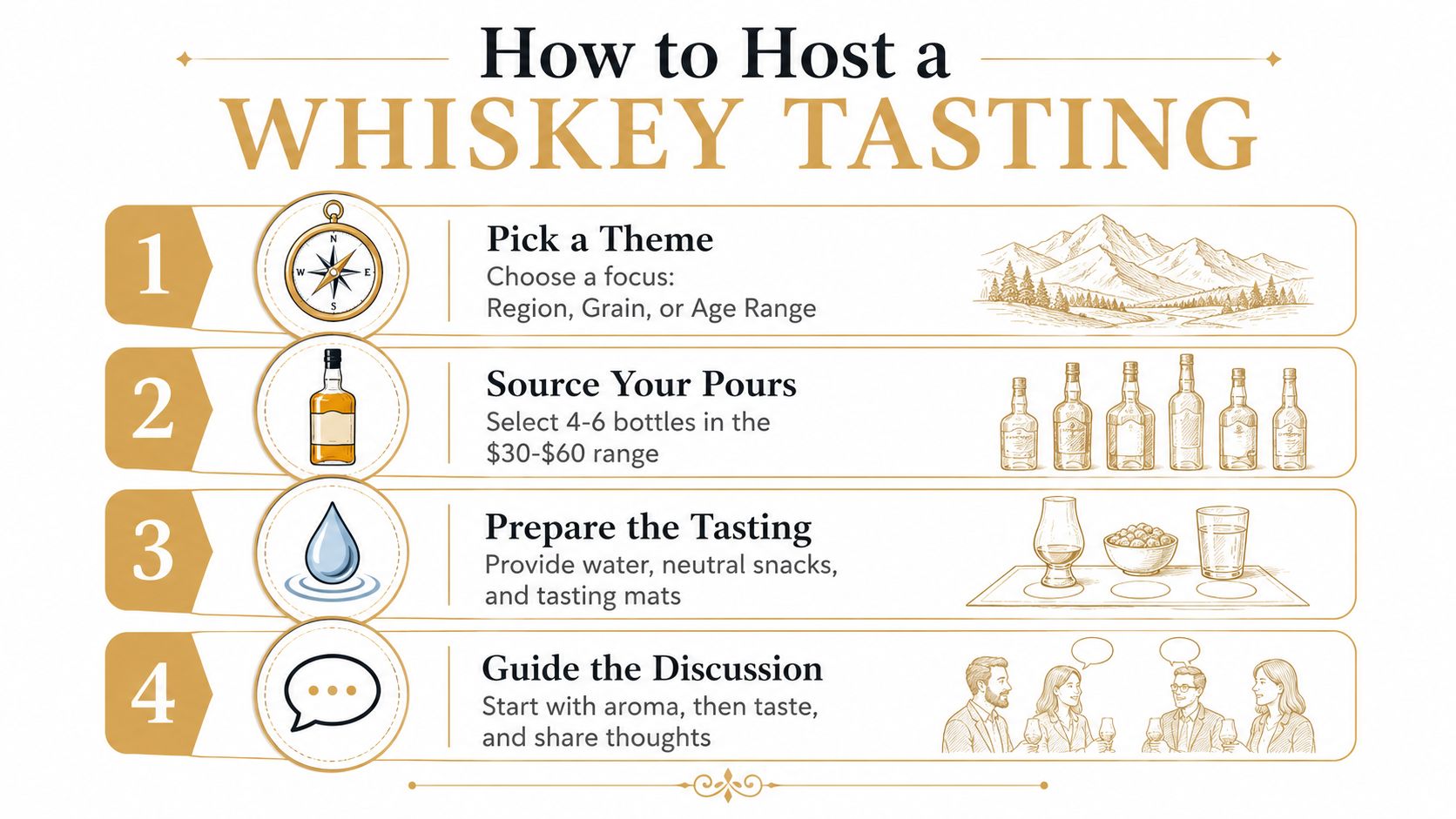
For a printable approach to planning the evening, use this at-home whiskey tasting guide as a reference, then adapt the format to your guests' comfort and experience.
Where Blind Barrels Fits In
A blind tasting subscription works best as a tool inside an existing whiskey community, not as a replacement for the people around your table. Blind Barrels sends four blind samples each quarter, featuring small American craft distilleries, with a tasting table for aroma, tasting, and finish notes. The kit also includes a game that lets participants guess age, proof, and whiskey type, then receive a score showing how closely their palate matched the reveal.
That format creates several easy uses for a couple or group. Bring the samples to a regular tasting night and add one mystery pour to the planned flight. Pour the same sample for two people and compare notes before scanning the QR code. Or make the reveal the centerpiece of a monthly gathering, with everyone writing down impressions before the producer and bottle details appear.
The craft-only focus gives drinkers a way to encounter smaller American producers that local bars may not stock. Each shipment includes producer background and tasting notes, so a casual host doesn't have to research every distillery before the conversation begins. Members can also use the reveal information to access full bottles through the service's purchasing option.
For atmosphere, a host might pair the tasting with a small sensory detail, such as choosing artisan candles at Loyaltie, while keeping the room free from overpowering scents during the actual nosing. The aim is simple: let the sample create a shared question, then let each person answer from their own palate.
Common Myths and Your First Week In
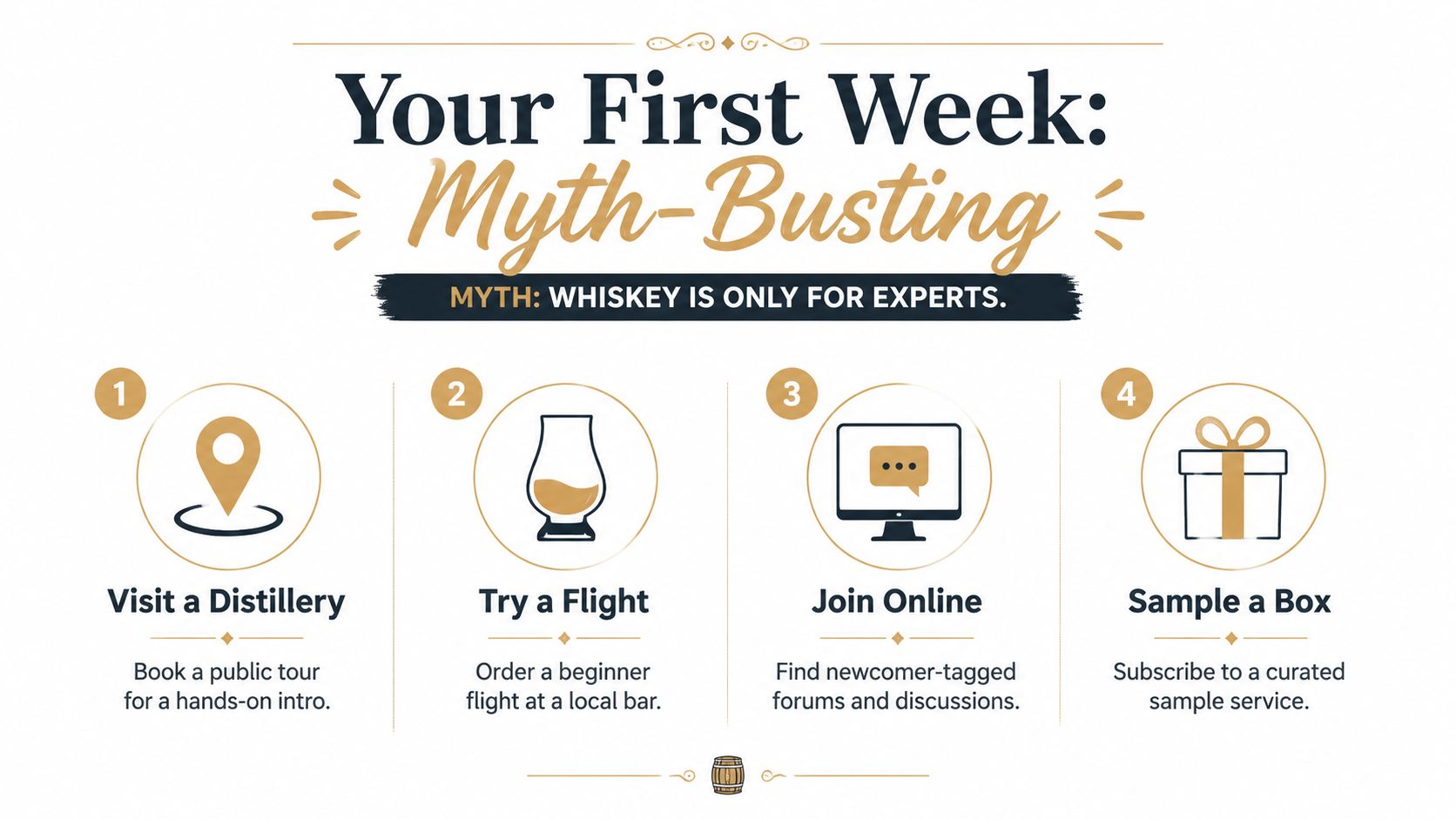
The idea that whiskey communities belong only to experts falls apart as soon as you look at the available entry points. Public distillery tours, beginner flights, newcomer-tagged online threads, and sample services all let you participate without owning a large collection or recognizing every famous release.
The broader audience is changing, too. IWSR Bevtrac data describes U.S. whiskey consumers as increasingly Millennial, reports female representation at just over one-third of drinkers, and identifies the strongest super-premium demand among households earning roughly USD 100,000 to 150,000. It also describes drinking occasions as more social while still mainly taking place at home, with cocktails appearing more often than neat pours (IWSR premiumization and whiskey consumer trends).
Try this five-day start:
- Day one: Browse r/bourbon or a local Facebook tasting group.
- Day two: RSVP to a free shop tasting.
- Day three: Pour one whiskey at home and write down two flavor words.
- Day four: Order a blind sample kit.
- Day five: Invite friends to compare a simple three-drink flight.
Don't chase rare bottles before you've trained your palate to recognize what you enjoy. Curiosity, generosity, and a willingness to compare pours define membership far better than collection size.
Blind Barrels offers quarterly blind kits with four samples from small American craft distilleries, tasting guidance, producer details, and a palate game built for shared discovery. Bring a kit to your next tasting night, compare notes with your partner, and visit Blind Barrels to make your first whiskey community gathering easy to start.