

You're standing in a liquor store, scrolling past engraved decanters and boxed glasses, trying to choose something for the person who can identify a whiskey by its finish. Their shelves are already full, their favorite bottle is probably more specific than you realize, and a safe mid-shelf bourbon feels like a duplicate waiting to happen. The right whiskey connoisseur gifts aren't necessarily more expensive bottles. They're gifts that give the recipient something their collection can't already provide, such as a new flavor comparison, a guided tasting, a distillery experience, or a smarter way to understand their own palate.
Why Buying for a Whiskey Connoisseur Is Harder Than It Looks
The obvious gifts are obvious for a reason. Engraved tumblers, generic decanters, whiskey stones, and cocktail tools are easy to find, easy to wrap, and easy to regret. A serious drinker may already own several versions of each, and a decorative decanter can become another object that occupies shelf space without improving the drinking experience.
Bottles create a different problem. You might know that the recipient likes bourbon, but that doesn't tell you whether they prefer a high-rye profile, a sweeter mash bill, a barrel-proof pour, or a softer expression. A bottle that looks impressive can still miss badly if its flavor profile duplicates something they already have or clashes with what they enjoy.
The useful question isn't “What whiskey gift looks impressive?” It's “What part of this person's whiskey life is still unexplored?”
That distinction matters because Scotch Whisky is the world's number one internationally traded spirit, with exports worth over £5.36 billion in 2025, according to the Scotch Whisky Association data cited by Global Market Insights. The same source reports that 43 bottles were shipped every second, a sign of how whiskey is tied to global gifting, collecting, and enthusiast culture. This isn't a niche hobby where one more novelty accessory solves the problem.
Start instead with the missing experience. Maybe the recipient has never compared American craft whiskey with established Kentucky brands. Maybe they buy bottles confidently but never taste blind. Maybe they collect releases from one region and rarely explore another. Maybe they want access to limited bottles, but what they really need is provenance, education, or a reason to open something slowly with friends.
A quick profile removes most of the guesswork. You don't need to become a whiskey judge. You need to learn what they drink, what they avoid, and what their collection hasn't yet given them.
Profile the Recipient Before You Spend a Dollar
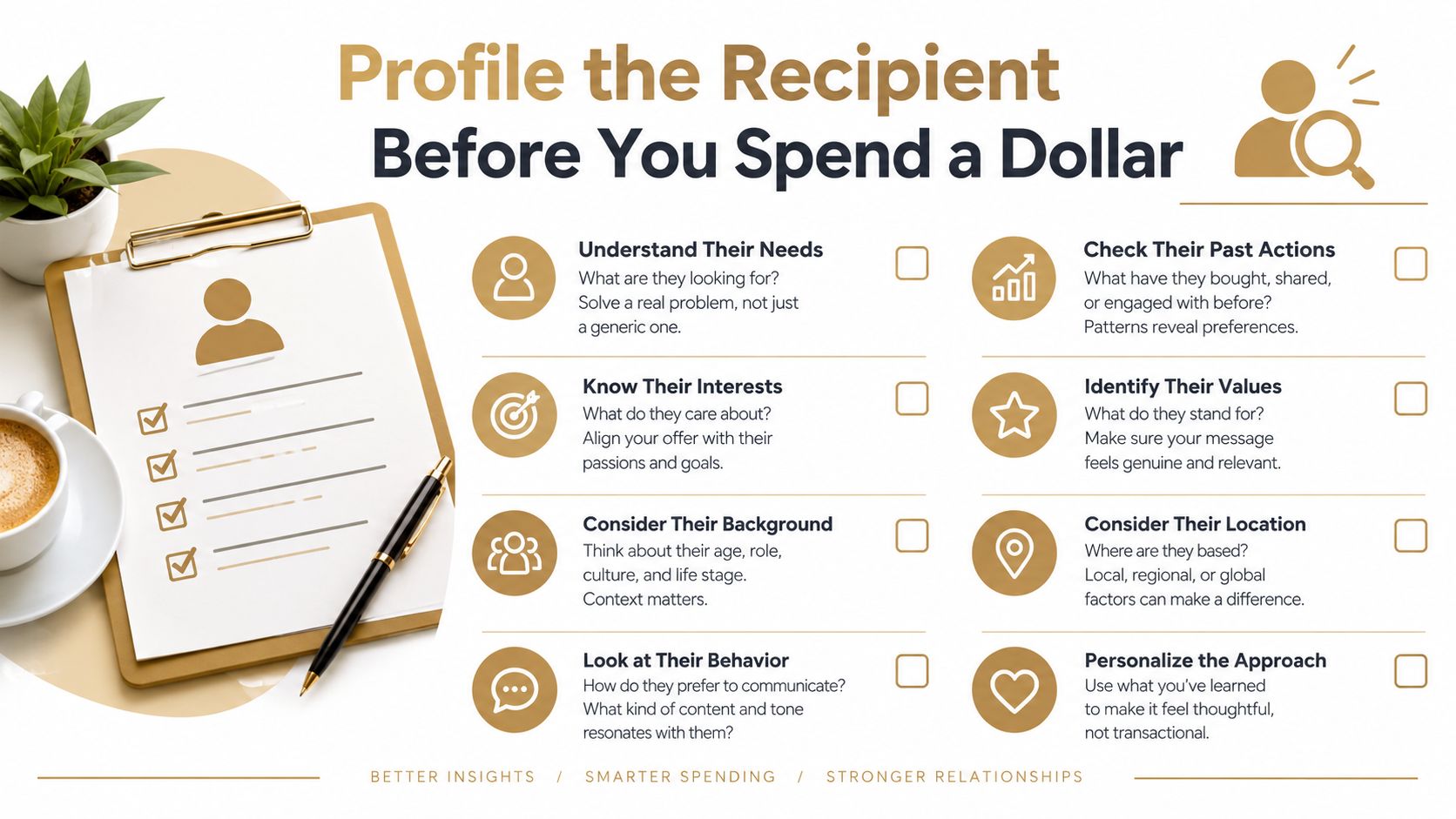
Spend fifteen minutes gathering clues before you spend a hundred dollars on the wrong bottle. The profile below is simple enough to use without turning a casual conversation into an interrogation.
Start with how they actually drink
Watch the pour, not the shelf label. Do they drink whiskey neat, add water, build cocktails, or reach for it only on weekends? A person who enjoys an Old Fashioned may appreciate quality bitters and a cocktail-focused experience, while someone who studies aroma wants a proper nosing glass and a flight of contrasting samples.
For new whiskey drinkers, small pours are the sensible starting point. Beginner guidance recommends tasting neat or with only a few drops of water, using a narrow-opening tasting glass to concentrate aroma, filling the glass roughly one-quarter to one-third full, and taking slow sips to assess aroma, taste, and finish. Those instructions appear in this beginner whiskey tasting guide. A small tasting set can therefore be more useful than a large bottle for someone still learning what they like.
Identify flavor preferences, then question your assumptions
Listen for words such as peated, sherried, bourbon-sweet, rye-spicy, or Irish smooth. Ask which distilleries they mention without prompting. Notice what gets finished at parties and which bottles remain half-full.
Don't assume a bourbon fan will enjoy every American whiskey. Don't assume a peat enthusiast will welcome every sherry-cask expression. Whiskey categories contain wide flavor ranges, and broad labels aren't enough to predict a perfect match.
Place their experience level accurately
A new enthusiast needs confidence and a clear tasting method. A hobbyist may want better comparisons, tasting notes, or access to small American craft distilleries. An advanced collector tracking limited releases probably doesn't need another standard bottle. That person may value a private barrel selection, distillery visit, or advanced education instead.
Find the collection gap
Look for regions, styles, and proof ranges they rarely reach for. A bourbon-only shelf may leave room for an American single malt, a peated Scotch, an Irish pot still whiskey, or a cask-strength rye. The gap doesn't have to be expensive. It has to be distinctly different.
Profile for the missing experience, not for a label you think sounds sophisticated.
Your reconnaissance can stay casual. Ask what they want to try next, check which bottles sit unopened, or mention a distillery and see whether they light up. The objective isn't expertise. It's discovering the one thing they don't already have.
Match the Gift Category to the Person
Five categories cover most strong whiskey gifts, but they don't serve the same recipient. The best match depends on whether the person needs discovery, equipment, education, access, or a specific bottle.
An experiential subscription is my first choice when preferences are uncertain. Blind tasting flights and curated sample boxes let the recipient compare styles without committing to a full bottle. They also turn the gift into an activity, which gives couples and friends a reason to taste together. A quarterly option such as the monthly whiskey subscription can suit someone who enjoys recurring discovery, while an alcohol-focused advent format can work for a seasonal countdown. For shoppers comparing those formats, buy a boozy advent calendar offers another way to package variety as an experience.
Tasting gear fits the organized hobbyist who already owns bottles. A Glencairn set, proper nosing glasses, a tasting journal, water pipette, and palate-cleansing tools support better habits. The trade-off is blunt: gear improves the process, but it doesn't create discovery by itself.
Bottles work when you know a precise gap. A peated Islay can challenge a bourbon-only drinker, and a cask-strength rye can suit someone who never splurges on higher-proof whiskey. The risk is duplication or palate mismatch, so don't buy a bottle merely because its packaging looks premium.
Education belongs with the curious learner. A respected whiskey book, distillery virtual class, or introductory WSET-style course gives structure to interest. It can feel less immediately festive than a bottle, but the recipient keeps the knowledge.
Memberships and accessories suit collectors chasing access. Club allocations, travel flasks, and durable carrying cases can be useful, though they depend heavily on the recipient's existing setup and travel habits.
| Category | Best For | Key Trade-Off |
|---|---|---|
| Experiential subscriptions | Uncertain preferences and adventurous tasters | Less shelf presence than a full bottle |
| Tasting gear | Organized hobbyists with bottles covered | Improves technique without guaranteeing discovery |
| Bottles | Buyers who know a clear collection gap | Highest risk of duplication or palate mismatch |
| Education | Curious learners and developing enthusiasts | Requires time and active participation |
| Memberships or accessories | Collectors seeking access or practical carry gear | Depends on existing habits and availability |
Route the recipient profile directly to the category. A new drinker gets education or a guided flight. A hobbyist gets tasting gear or samples. A collector gets access. A bourbon loyalist gets a carefully chosen contrast, not another familiar bottle.
Build the Right Gift at Every Budget
Price should determine the depth of the experience, not whether you default to clutter. A thoughtful small gift can teach someone something, while an expensive gift can fail if it guesses at the wrong flavor.
Under $50
Pair a quality nosing glass with a curated mini-sample set or a single craft sample from an under-the-radar distillery. This works well for a new drinker, a coworker, or anyone whose preferences you know only generally. It signals attention without pretending you understand a collection you haven't seen.
For a beginner, add a concise tasting card with prompts for aroma, taste, and finish. Encourage small pours, neat tasting, and a few drops of water rather than treating the gift like a drinking challenge.
$50 to $150
This is the strongest range for blind tasting kits, a guided subscription lasting several months, or a mid-tier bottle from a region the recipient hasn't explored. It signals shared time and curiosity instead of simple consumption.
A well-built whiskey gift set guide can help you combine samples, glassware, notes, and presentation without stacking redundant accessories. I prefer one discovery element plus one useful tool. Four samples and a proper glass beat four decorative objects.
Over $150
At this level, choose an experience with a clear memory attached. A distillery tour and tasting, premium club membership, or allocated bottle with proper provenance can suit a partner, spouse, mentor, or milestone recipient.
Allocated bottles require more scrutiny than the price tag suggests. Check shipping rules, taxes, retailer reputation, storage, and provenance before paying. A rare-looking bottle with unclear history is a poor gift, and delivery costs can change the overall budget quickly.
| Budget Tier | Example Gift Combos | Best For | What It Signals |
|---|---|---|---|
| Under $50 | Nosing glass plus craft sample | New drinkers and coworkers | Thoughtfulness without overstepping |
| $50 to $150 | Blind kit, guided subscription, or exploratory bottle | Friends, hobbyists, and couples | Shared time and curiosity |
| Over $150 | Distillery visit, premium membership, or verified allocated bottle | Partners, spouses, and mentors | Milestone-level recognition |
Mix categories rather than stacking bottles. A sample flight with a journal feels intentional. A bottle paired with a distillery class feels personal. Three similar bottles mostly announce that you ran out of ideas.
Personalization and Presentation That Actually Impresses
A name engraved on a decanter isn't automatically personalization. If the recipient already owns barware, the engraving reflects the giver's idea of a whiskey gift more than the drinker's actual needs.
A blind tasting kit solves the unknown-preference problem more intelligently. The recipient leads the discovery, compares samples without seeing labels, and learns which profiles appeal to them through direct experience. That makes the activity itself personal, even when you can't confidently choose between bourbon, rye, Scotch, or American craft whiskey.
Engraved glasses and barrels still have a place for a wedding, retirement, or milestone celebration. They work best when you know the recipient enjoys keepsakes and has room for another display piece. Otherwise, monogrammed gear can miss the mark, especially if their preferred glass shape or bar setup is already established.
Add details that support the tasting
Use small touches that make the recipient curious:
- Handwritten tasting card: Mention why you chose the flight and leave room for their own notes.
- Regional map: Mark where each sample came from so geography becomes part of the conversation.
- Custom flight board: Assign each sample a number and create a simple reveal moment.
- Playlist QR code: Link to music selected for the tasting night, not a generic celebration playlist.
- One tactile element: Add a wax seal, wooden box, or textured paper sleeve to make the package feel deliberate.
Presentation also protects the gift. Whiskey packaging guidance recommends sturdy double-walled boxes, bottle-sized inserts or dividers, and premium tins or wooden cases to reduce damage risk while improving unboxing. Packaging matters because a fragile bottle or loose sample set can undermine an otherwise smart choice. Broader industry coverage reports that gift-packaging demand grew at a 3.3% consumer CAGR from 2016 to 2021, with North America representing 25% of 2022 forecast revenue, as detailed in SevenFifty Daily's spirits gift-packaging coverage.
Wrap the gift opaquely, print the flight card, and include one tactile detail. Don't reveal the samples before the tasting begins.
Words and Pairings for Every Relationship
The same blind tasting kit can feel romantic, durable, or funny depending on the relationship. The message and shared activity do more emotional work than an inflated price.
For a partner, pair a tasting flight with a planned evening or a distillery visit for two. Reference a memory, such as the first bar where you tried whiskey together, and make the gift about another shared discovery. A note could read:
“You still claim that first pour was your best whiskey opinion. I picked this flight so we can test that theory together.”
For a spouse or long-term recipient, choose a subscription with a leather tasting journal or another keepsake element. The language should recognize time and future rituals, not just the occasion. Write:
“I want to hear every dram you discover this year, including the ones you insist I'm wrong about. Here's to another year of tasting, arguing, and finding favorites together.”
For a friend, humor and competition work better than solemn language. Add a leaderboard card to a blind flight and reference the next tasting night. Try:
“Four samples, one leaderboard, and no excuses when your palate loses to mine again. Save your notes for our next tasting night.”
If food is part of the evening, use a deliberate pairing rather than random snacks. The guide to pairing food with whiskey can help shape the menu around the whiskey's character. Avoid generic lines such as “cheers to you.” Mention the recipient's habits, your shared joke, or the specific memory the gift is extending.
Quick Answers to the Whiskey Gift Questions You Still Have
The decision path is simple: profile the recipient, identify the gap, match the category, choose the budget tier, then personalize the presentation. That sequence prevents the most common mistake, buying an impressive object that adds nothing to the recipient's whiskey life.
What do you buy a seasoned drinker who owns everything? Choose a scarce experience or deeper education. Private barrel picks, a distillery visit, a flight at a renowned whiskey bar, an advanced course, a WSET Level 3 program, or a serious nosing kit offers more value than another standard bottle. If you're organizing a broader celebration, browsing examples of real-world registries can also help you turn several contributions into one meaningful experience.
How do you gift whiskey when you know nothing about their preferences? Buy a blind tasting kit or curated subscription. It removes brand and price bias, lets the recipient compare styles, and avoids forcing you to guess whether they prefer peat, sherry, rye spice, or bourbon sweetness. Include a handwritten card that frames the gift as shared discovery, not a test of your whiskey knowledge.
Blind Barrels offers quarterly blind tastings with four samples from small American craft distilleries, tasting guidance, reveal information, and a palate-scoring game. If you want whiskey connoisseur gifts built around discovery instead of duplicate barware, visit Blind Barrels and choose an experience the recipient can use.