

You've arrived at a distillery with a reservation in your phone, sturdy shoes on your feet, and only a vague idea of what happens after the welcome desk. Copper stills gleam beyond the doorway. Somewhere nearby, warm grain, yeast, oak, and alcohol create a smell you can't quite name. You're excited, but you may also be wondering whether you'll understand the technical explanations, whether the tasting will feel intimidating, and whether a whiskey distillery tour is worth giving up part of your travel day.
Introduction to the Whiskey Distillery Tour Experience
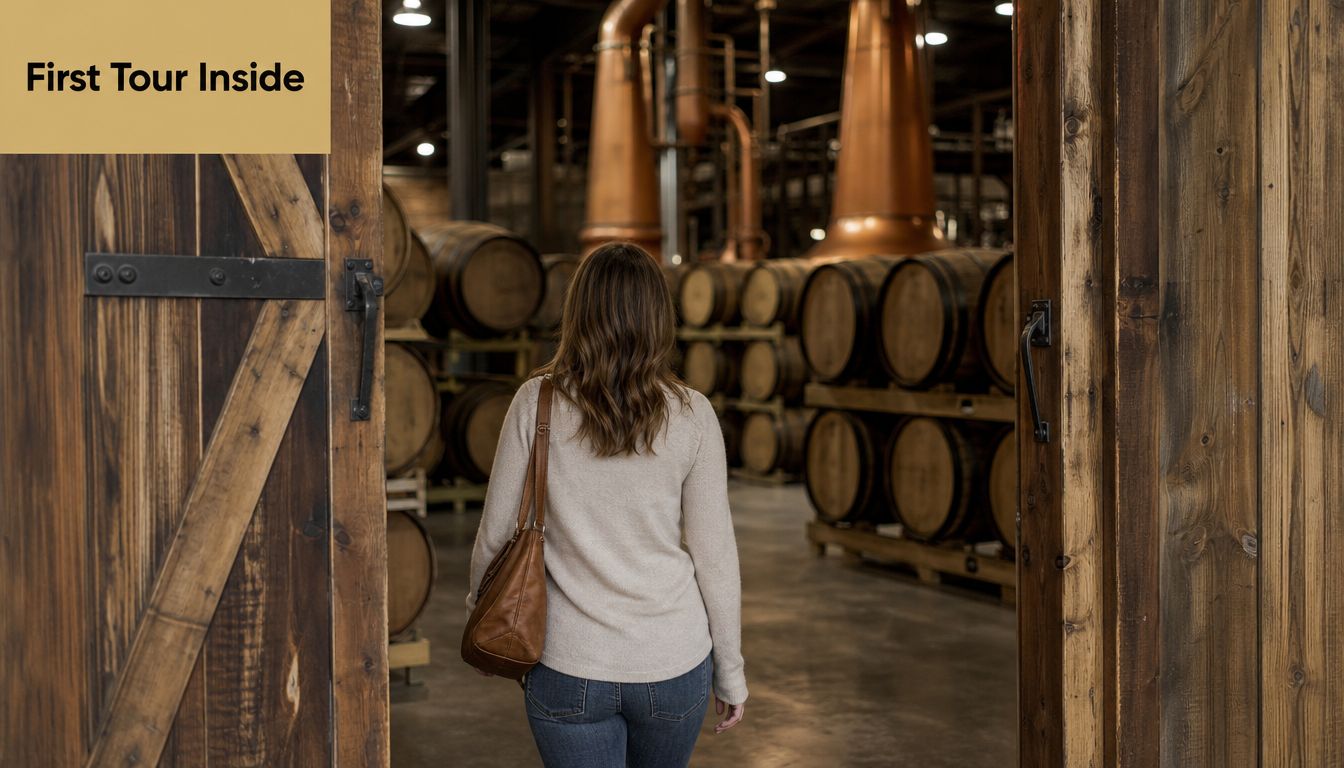
A good tour quickly changes that uncertainty. The guide connects the grain in the mash room to the liquid in your glass, explains why a still's shape matters, and gives you a vocabulary for aromas that previously felt impossible to describe. You don't need to be a collector. Curious beginners, casual bourbon drinkers, travelers who enjoy food and drink, and experienced whiskey enthusiasts can all find something useful in the same visit.
Distillery tourism has grown into a major international travel experience. Scotch whisky visitor centres received 2.7 million visits in 2024, with more than 60% of visitors coming from overseas, while Irish distillery visits passed 1,010,261 in the 12 months to June 2025, a 23% year-over-year increase according to coverage of whisky tourism and destination-led travel. Those visitors aren't touring factories. They're spending time in regions, tasting local products, buying bottles and gifts, and learning how place affects what they drink.
The modern format has a recognizable starting point. Glenfiddich opened the first Scotch distillery visitor centre in 1969, a milestone widely credited with helping launch whisky tourism; Scotland had passed 2 million annual distillery visits by 2019, and the country had 152 operating Scotch whisky distilleries by June 2025, as described in the history of spirit tourism.
The useful question isn't only “What does this brand make?” It's “What will I understand about whiskey by the time I leave?”
That question shapes everything that follows. You'll learn what the production areas mean, how tour formats differ, how to plan without rushing, how to taste safely, and how to spot an experience that teaches palate skills rather than relying on polished brand storytelling. You'll also see when a tour is the right choice and when a structured blind tasting at home may teach you more.
How Whiskey Is Made and Why It Matters on Tour
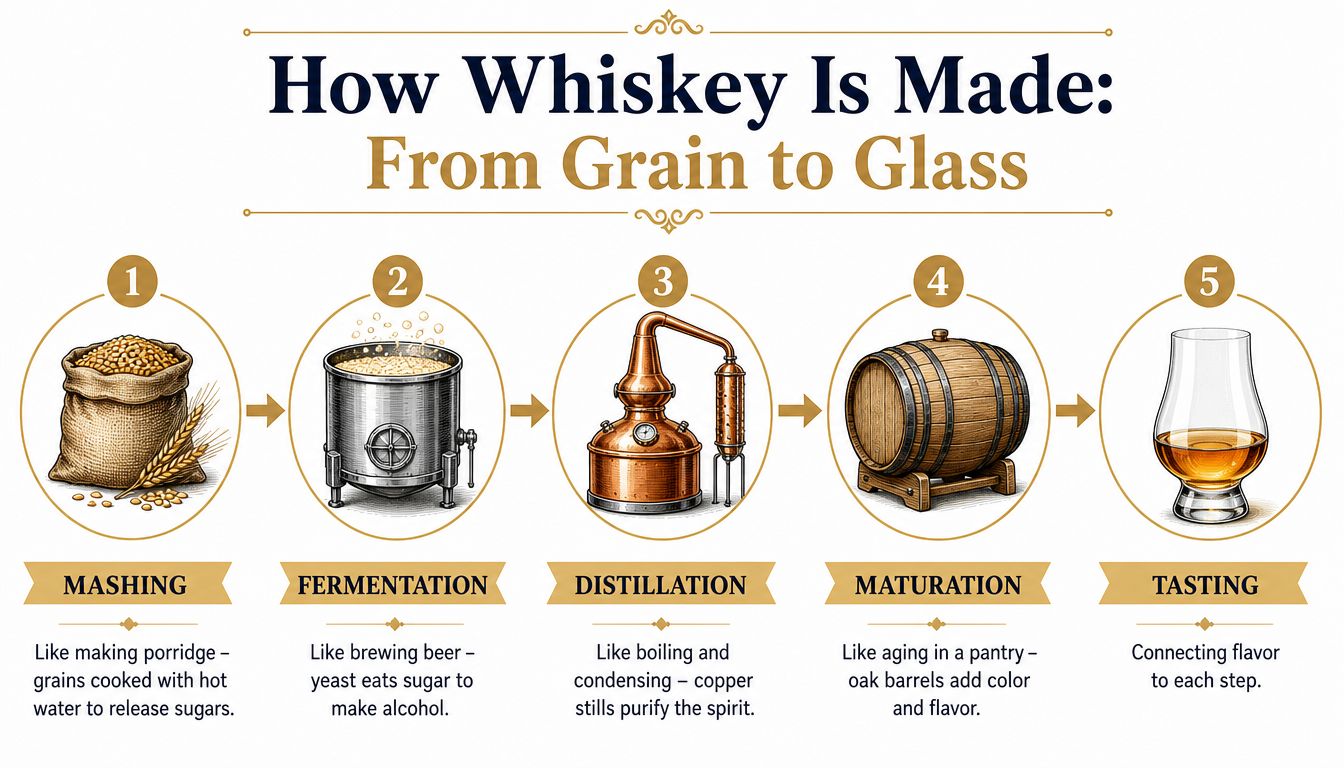
A distillery visit becomes more useful when each production stage gives you something specific to taste later. Mashing starts the process: grains meet hot water, and enzymes convert starches into fermentable sugars. The chosen grains, or mash bill, set the recipe's foundation, although the liquid is not whiskey yet.
Fermentation resembles brewing beer. Yeast consumes the sugars, producing alcohol and flavor compounds that can influence the finished spirit. It typically lasts 48 to 72 hours and creates wash at about 8% ABV, according to this practical guide to what happens on a distillery tour. Wash is closer to strong beer than whiskey, so the washbacks can reveal how a distillery builds flavor before distillation begins.
The stills shape the spirit
Distillation depends on precise control of heat and vapor paths, far beyond what a kitchen pot allows. The distiller heats the wash in stills, separates alcohol and other compounds, and collects new make spirit at around 65% to 70% ABV. That range matters on a tour because the clear spirit in a sampling room has already been shaped by equipment, timing, and the cuts made during distillation.
Look closely at the stills. Their height, width, neck shape, and connecting pipes affect vapor movement and which compounds remain in the spirit. A guide who explains those features is giving you a practical reason to expect differences in aroma, texture, and weight. For a clearer comparison of equipment choices, read this comparison of pot stills and column stills before or after your visit.
Oak supplies more than color
Maturation is the long pantry stage. New make spirit enters oak casks, where time, wood, temperature, and warehouse conditions gradually transform it. The cask adds color, while also contributing aromas, texture, sweetness, spice, and drying tannin. Some industry guidance attributes up to 70% of final flavor to wood influence, a point discussed in the distillery-tour production guide.
The most educational route connects the washbacks, stills, and warehouse. Ask how fermentation time affects the spirit, what the still shape is intended to do, and why the distillery selected a particular cask. Then compare each answer with what you smell and taste. A tour teaches palate skills when the guide connects process variable, sensory result, and evidence in the glass, rather than presenting brand theater alone. If the tasting cannot help you make those connections, a structured blind tasting at home may teach you more.
Types of Whiskey Distillery Tours Duration and Cost
Tour menus can look confusing because distilleries use different names for similar experiences. One visitor centre may call a short introduction a tasting tour, while another reserves that term for a more advanced session. Focus less on the label and more on access, tasting depth, group size, and whether the route includes working production or maturation areas.
| Tour Type | Typical Duration | What You Get | Best For |
|---|---|---|---|
| Introductory tour and tasting | Short visit | A guided overview, selected pours, and retail access | First-time visitors who want orientation |
| Production walkthrough | Roughly 80 minutes to 2 hours | Mash, fermentation, distillation, and a tasting | Travelers who want to understand the full process |
| Production and warehouse experience | Up to 2 hours 45 minutes | Production areas plus maturation access and a more detailed tasting | Enthusiasts interested in casks and aging |
| Premium tasting or blending session | Varies by operator | Guided comparison, blending, special pours, or take-home options | Visitors focused on palate development |
| Private or small-group experience | Varies by operator | More direct guide interaction and flexible discussion | Couples, collectors, and serious learners |
Major distilleries commonly offer guided experiences lasting roughly 80 minutes to 2 hours 45 minutes, with some separating production and maturation-warehouse modules. Advance reservations and multilingual audio guides are also common, as outlined in this visitor-experience case study.
Match the format to your goal
Choose a brief introduction if you mainly want atmosphere, history, and a few samples. Pick a production tour if you want to understand how the liquid changes from grain to spirit. Choose a warehouse or premium tasting when your real interest is cask influence, blending, or comparing expressions side by side.
Cost usually rises with smaller groups, more pours, warehouse access, rare or limited samples, blending materials, and take-home bottles. Don't assume the most expensive option is the most educational. A high-priced tasting can still be mostly brand theatre if the guide doesn't explain what you're tasting or invite comparison.
For travelers building a broader food-and-drink itinerary, Samba for food tours can help you think about how a distillery visit fits alongside regional meals and other guided experiences. The practical test is simple: if you want to improve your palate, look for a clear tasting structure, contrasting samples, and time for questions.
Planning and Booking Your Visit Like a Pro
The best distillery day starts before you leave the hotel. Popular tours often have limited spaces, and official visitor guidance commonly stresses reservations and restricted walk-up availability. Treat the booking like a restaurant reservation, not an optional detail.
Build the day around real time
A trail-level planning guide suggests budgeting roughly 45 minutes to 1.5 hours per distillery, as noted in the Tennessee Whiskey Trail FAQ. That window should include check-in, the tour, tasting, restroom use, shopping, and the drive to the next stop. A tour listed as an hour can occupy much more of your itinerary once those surrounding tasks are included.
Use this checklist before confirming:
- Book early: Check the official calendar first, especially for weekends, holidays, or high-demand destinations. Don't build an entire route around walk-up availability.
- Confirm the duration: Add transition time between stops instead of scheduling back-to-back starts.
- Check age and identification rules: Bring valid photo ID and verify the minimum age before paying. Policies vary by location.
- Ask about access: Contact the visitor centre about stairs, wet floors, warehouse conditions, mobility needs, hearing support, and language options.
- Dress for the site: Closed-toe shoes, comfortable layers, and clothing suitable for changing temperatures make production and warehouse areas easier to enjoy.
- Arrange transportation: Designate a driver, book a taxi, or use a tour operator. Tasting and driving don't belong in the same plan.
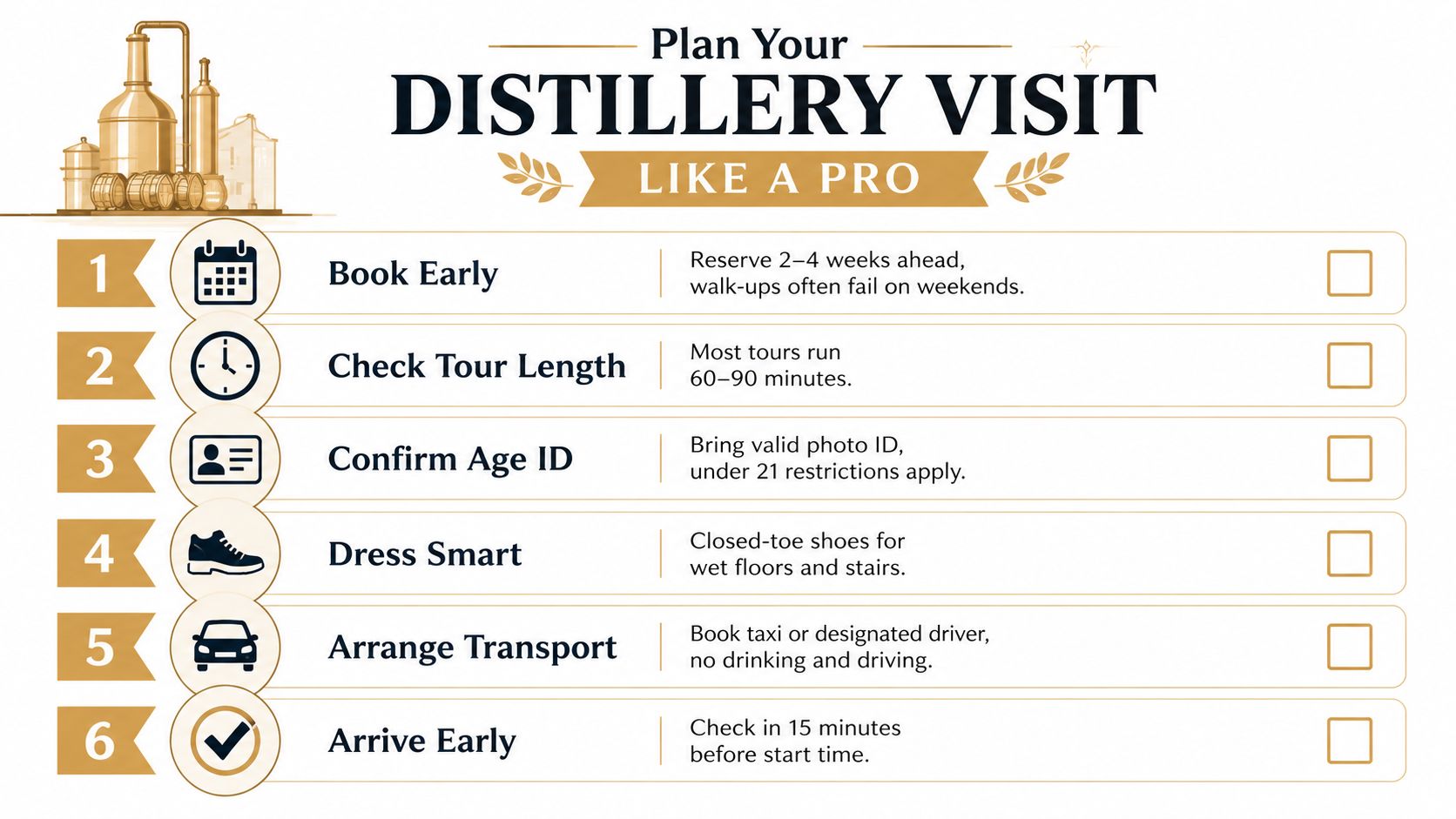
Arrive 10 to 15 minutes early, a beginner's guide to distillery visits advises, because check-in, identification checks, parking, and group assembly can take longer than expected. Eat before tasting, carry water, and bring a small notebook if you want to record what you smell. If you're searching for a smaller producer close to your route, this guide to finding a craft distillery near you can help you identify local options without forcing too many stops into one day.
Tasting Etiquette Safety and Getting the Most Flavor
A tasting isn't an exam. Your job isn't to identify every aroma correctly. Your job is to notice what happens in your glass and describe it.
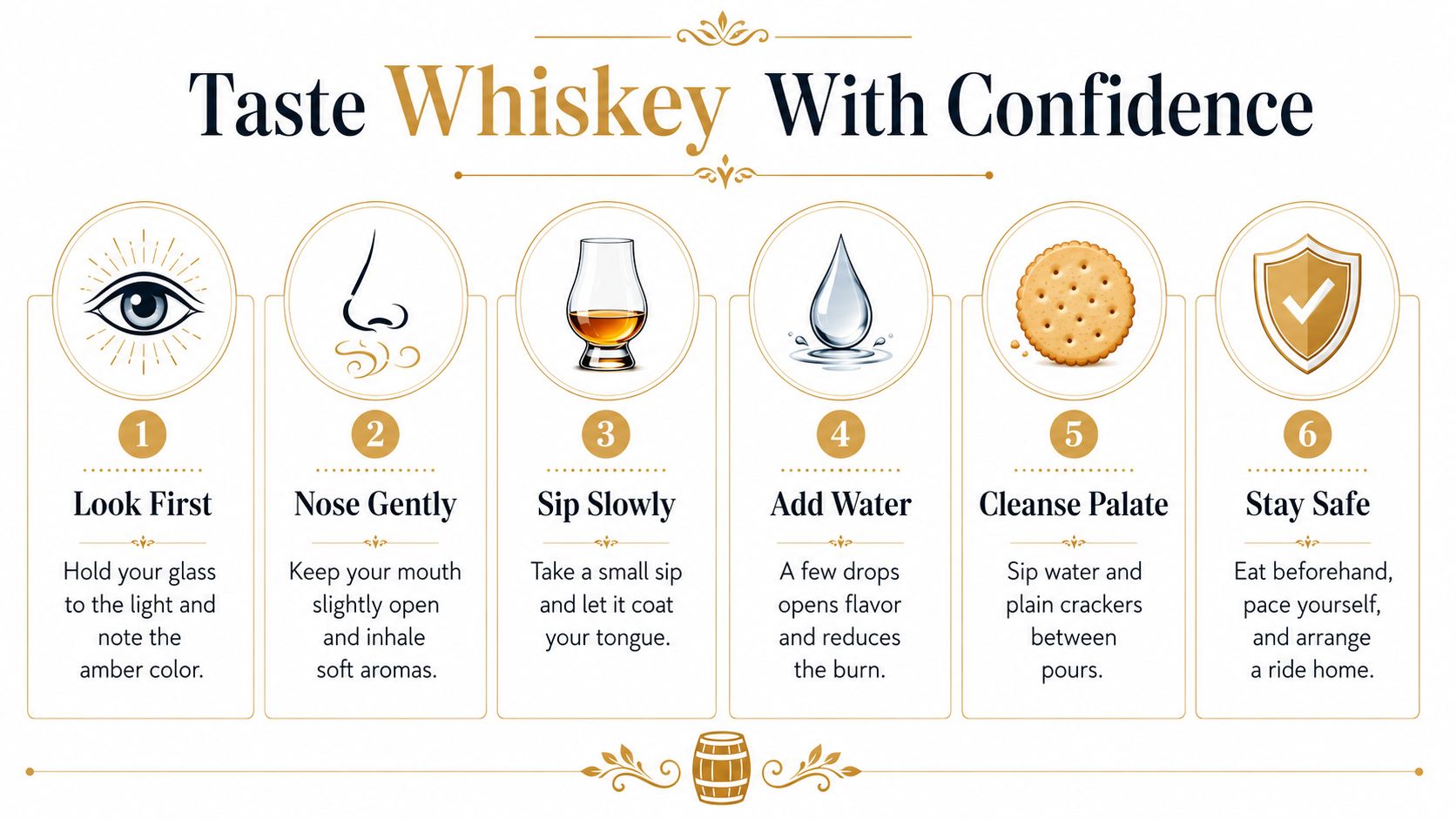
Start by looking at the whiskey. Hold the glass toward the light and notice its color, clarity, and movement. Color can suggest cask influence, but it doesn't tell you whether you'll enjoy the drink. Treat it as an observation, not a quality score.
Next, nose gently. Keep your mouth slightly open and take soft, short inhales rather than pushing your nose deep into the glass. Alcohol can dominate at first, so give the whiskey a moment and look for broad categories such as fruit, grain, vanilla, toast, spice, smoke, flowers, or dried herbs.
A simple tasting ritual
Take a small sip and let it move across your tongue. Notice sweetness, heat, texture, and whether the whiskey feels light, oily, dry, peppery, or soft. After swallowing, pay attention to the finish. Does the flavor disappear quickly, or does oak, spice, fruit, or smoke remain?
A few drops of water can reduce the alcohol sensation and reveal different aromas. Taste before and after adding water so you can compare the change. Between pours, sip water and use plain crackers if they're available. Avoid strong coffee, heavily seasoned food, or sweets immediately before a delicate sample.
Good etiquette: Ask questions, take your time, and don't apologize for preferring a particular style.
Safety matters more than tasting bravado. Eat beforehand, pace yourself, hydrate, and arrange transportation before the first pour. A beginner's distillery tour etiquette and safety guide also emphasizes booking ahead, arriving early, designating a driver, and avoiding an empty stomach.
You can describe preference in ordinary language. “I like the softer one,” “the second pour feels spicier,” or “I prefer less smoke” gives your guide something useful to work with. If you're exploring nightlife afterward, these Edinburgh bar highlights for backpackers can help you choose a relaxed setting for a drink rather than turning the entire day into a rushed tasting schedule.
Sample Itineraries and Smart Questions to Ask
A useful itinerary protects your attention as much as your stomach. One carefully chosen tour can teach more than several rushed stops that repeat the same script.
A half-day visit
Choose one distillery with a production walkthrough and a guided tasting. Arrive early, take notes, eat afterward, and spend time in the shop only after you've finished processing the samples. This format suits a couple who wants a meaningful experience without turning the rest of the day into a whiskey marathon.
A full day on a trail
Combine different formats instead of booking identical tours. Start with a production-focused visit, take a proper meal break, then choose a warehouse, blending, barrel, or tasting experience. Leave space for travel and shopping. If you're driving through a rural region, arrange transportation in advance rather than assuming a taxi will appear when you need it.
A weekend gives you room to compare scale and personality. Visit a large destination distillery for polished interpretation, then spend another day with an American craft producer. The American Craft Spirits Association reported 2,282 active U.S. craft distillers in August 2025, down from 3,069 in August 2024, according to industry data on American whiskey and bourbon distilleries. That changing environment means small-producer visits can offer a closer look at independent decision-making, even though each operation will have its own format.
Questions that reveal educational depth
Ask questions that connect production choices to flavor:
- Mash bill: Which grains contribute the most noticeable character in this whiskey?
- Fermentation: What does the distillery watch for during fermentation, and how does the chosen time affect the spirit?
- Still design: What does this still's shape encourage or limit?
- Cask selection: What was the cask meant to add, and how can I recognize that influence in the tasting?
- Blending: Are different casks combined for consistency, contrast, texture, or another reason?
- Warehouse conditions: What changes between the spirit entering the cask and the sample in front of me?
Listen for explanations that return to evidence. A guide who says, in plain language, “this cask brings the vanilla, while the spirit supplies the pepper,” gives you something to test with your senses. A guide who only repeats heritage slogans may be entertaining, but the experience teaches less.
Travelers unsure about transport, route design, or regional logistics may also benefit from learning when to use a tour operator. The right operator should reduce driving stress while preserving enough time for questions, meals, and unhurried tasting.
Beyond the Distillery Blind Tasting Alternatives at Home
A whiskey distillery tour is strongest when you want place, people, machinery, and production context. You can smell the grain room, stand beside the stills, see the casks, and ask a guide why one decision differs from another. That combination is difficult to recreate in a living room.
But a tour can also introduce bias. You may expect the most expensive bottle to taste better, favor a label because of its story, or remember the distillery's presentation more strongly than the liquid itself. A blind tasting removes those cues and asks a cleaner question: Which whiskey do you prefer when you don't know the brand?
This works especially well with American craft whiskey. The craft spirits classification explained by American Whiskey Authority describes a producer category based on independent ownership and production below 750,000 proof gallons annually, giving visitors useful context for why small distilleries often emphasize local identity and hands-on production.
A structured home tasting should include several covered samples, a table for aroma, taste, and finish notes, and a reveal after everyone has committed to an opinion. Add a guessing game for age, proof, or whiskey type, but treat the score as a learning tool rather than a verdict on your expertise. Comparing guesses with the reveal helps you notice where alcohol heat, oak, sweetness, or smoke influences your judgment.
For a ready-made format, a blind whiskey tasting kit can extend the lessons from a distillery visit and give a group a shared activity at home. Choose the tour when place and process matter most. Choose blind tasting when your priority is separating preference from reputation and giving your palate the final say.
Blind Barrels offers quarterly blind whiskey tasting kits featuring four samples from small American craft distilleries, with tasting guidance, reveal access, and a game that lets you test your guesses about age, proof, and whiskey type. If you want to continue learning after your next whiskey distillery tour, visit Blind Barrels and turn your next tasting into a more thoughtful group experience.