

Starting your journey with whiskey is all about one thing: finding a flavor you truly enjoy.
For newcomers, the key is to start with more approachable styles. Think of a sweeter Bourbon or a smooth Irish whiskey. These are perfect for training your palate without overwhelming it. A great tip for new whiskey drinkers is to not feel pressured to drink it neat right away—a little water or a single ice cube can make those first sips far more pleasant.
Your First Steps into the World of Whiskey
Jumping into the world of whiskey doesn't have to be intimidating. Think of this section as your friendly map to the basics, designed to make your first pour exciting, not overwhelming. We'll cut through the jargon and get straight to what matters for a newcomer: the flavors.
You'll learn the simple differences between essential whiskey types—like Bourbon, Rye, and Scotch—that shape the taste in your glass.
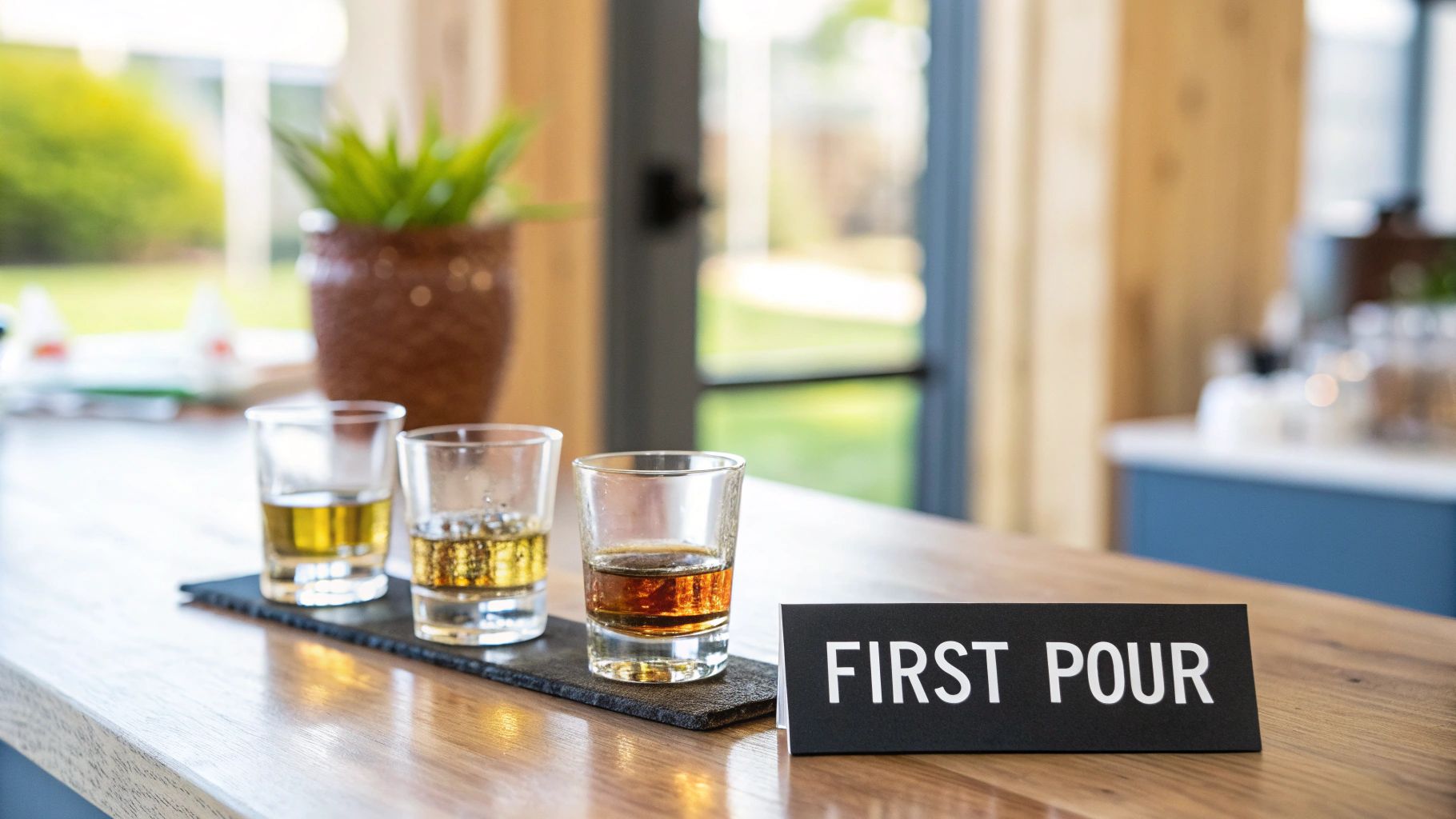
Understanding the Main Whiskey Styles
The first step is simply knowing what you're looking at on the shelf. While there are whiskeys made all over the world, a few key styles dominate the scene and offer a fantastic starting point for your exploration, especially within the American craft whiskey scene.
Here’s a quick rundown of the big three:
- Bourbon: An American classic. To be called Bourbon, it must be made from at least 51% corn, which gives it a characteristically sweet profile with notes of vanilla, caramel, and oak. It's an excellent starting point for any beginner.
- Rye Whiskey: Also American, Rye has to contain at least 51% rye grain. This gives it a spicier, peppery, and sometimes fruity character that stands in contrast to the sweetness of bourbon.
- Scotch Whisky: Hailing from Scotland, this spirit is made primarily from malted barley. Its flavor can range wildly, from light and floral to rich and smoky—especially the "peaty" bottles from the Islay region.
To make things even easier, here's a simple chart breaking down these popular styles. It’s a great cheat sheet for your next trip to the liquor store.
Quick Guide to Common Whiskey Types for Beginners
| Whiskey Type | Primary Grain | Common Flavor Notes | American Craft Example |
|---|---|---|---|
| Bourbon | Corn (at least 51%) | Caramel, vanilla, oak, honey, brown sugar | Frey Ranch Straight Bourbon |
| Rye | Rye (at least 51%) | Black pepper, baking spice, mint, dark fruit | High West Double Rye! |
| Single Malt Scotch | Malted Barley | Varies: floral, fruity, nutty, smoky, briny | Westland American Single Malt |
| Irish Whiskey | Malted & Unmalted Barley | Smooth, light, apple, honey, floral | West Cork Bourbon Cask |
This table should give you a solid foundation as you begin to explore the incredible variety that whiskey has to offer.
Finding an Approachable First Bottle
Your first bottle should be something you're genuinely curious about, not just what someone else tells you is "the best." A great tip for new whiskey drinkers is to start with a brand known for its smoothness and accessibility.
Look for well-regarded American craft whiskey brands. A fantastic example is Frey Ranch from Nevada, which produces a Straight Bourbon that is both flavorful and incredibly easy to drink for a newcomer.
The goal is to build a practical foundation so you can understand labels, ask the right questions, and find a whiskey you're genuinely eager to explore.
This growing interest in quality spirits isn't just a hunch; it's reflected across the market. In 2024, the worldwide whiskey market reached a value of approximately $61.51 billion. What’s more, reports show that 54% of drinkers aged 18-34 are more likely to choose premium options. If you're interested, you can learn more about whiskey market forecasts and trends.
Learning How to Actually Taste Whiskey
Alright, ready to figure out what's really in your glass? This is the fun part, where we move beyond just drinking whiskey and start truly tasting it. Having a little structure can transform a simple sip into a genuine experience, helping you pinpoint the flavors you like and, just as importantly, the ones you don't.
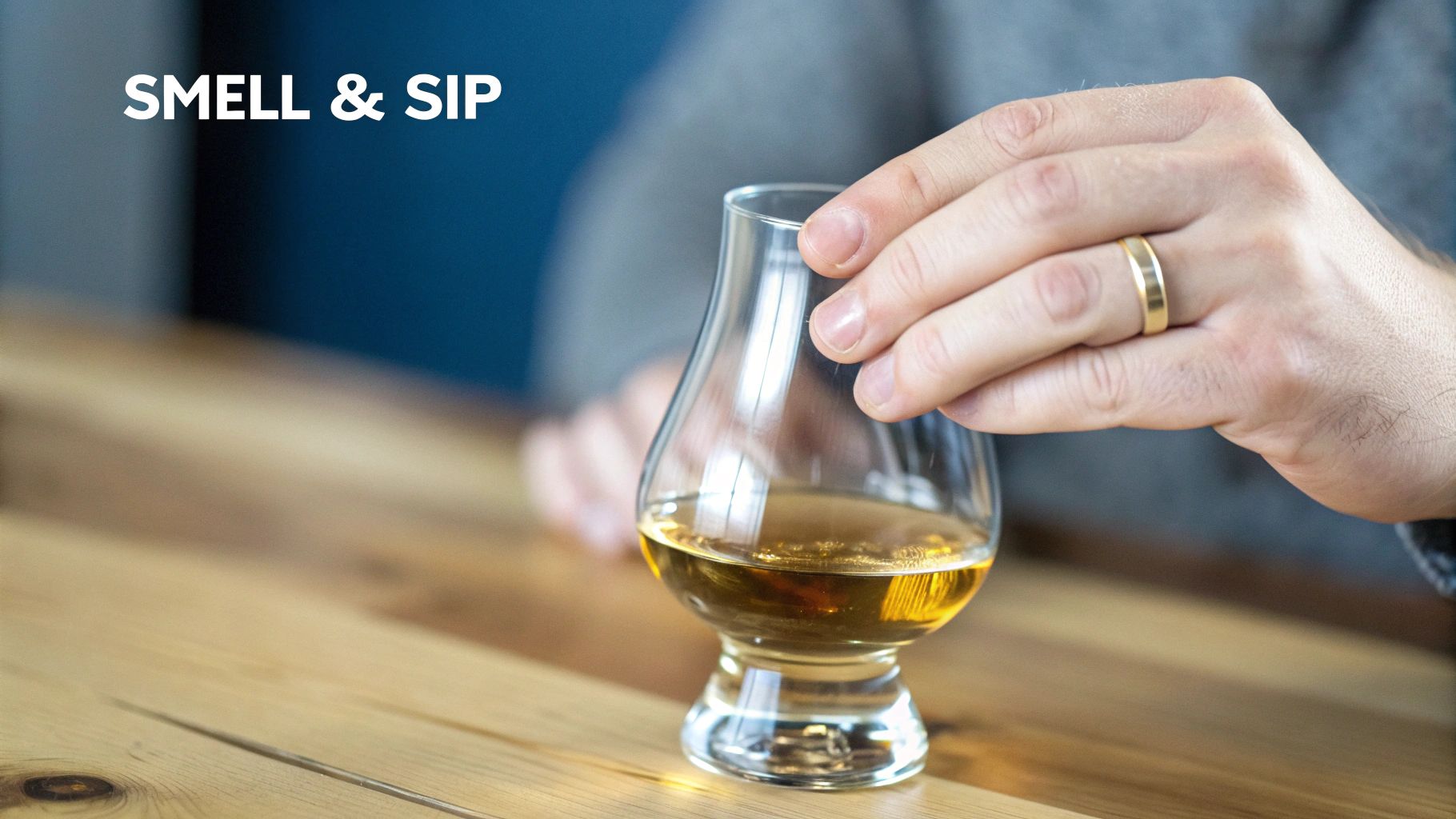
This isn’t about becoming a stuffy professional critic overnight. It’s about arming you with the tools to notice the incredible subtleties hiding in each pour. Let's break down a simple, four-part method that makes every glass far more interesting.
First, Just Look at It
Before you even think about taking a sip, hold your glass up against a neutral background—a white wall or a napkin works perfectly. Take a good look at the color. Is it a pale straw? A deep, reddish amber? Maybe a rich mahogany?
Color can offer clues about the type of cask it was aged in or how long it spent in the barrel, though it's not always a perfect indicator of flavor.
Now, give the glass a gentle swirl. Watch for the streaks that run down the inside of the glass. We call these "legs" or "tears." As a general rule, thicker, slower-moving legs can suggest a higher proof or a fuller-bodied whiskey with more oils.
Nosing the Aromas
Here’s a pro tip for new whiskey drinkers: your sense of smell is responsible for the vast majority of what you perceive as taste. So, bringing the glass to your nose is a critical step. Just don't jam your nose deep into the glass and take a huge whiff—you’ll get nothing but an eye-watering blast of alcohol.
Instead, keep your mouth slightly open and gently bring the glass toward your nose. Try wafting it from side to side, smelling with one nostril and then the other. What are you picking up?
- Sweet scents? Think vanilla, caramel, honey, or brown sugar.
- Fruity notes? Maybe you'll find hints of apple, cherry, citrus, or even dried fruits like raisins.
- A bit of spice? Look for cinnamon, black pepper, or other baking spices.
- Wood or smoke? Is there a distinct oaky character, a peaty smokiness, or maybe something leathery?
Thanks to the explosion of craft distilleries, there's a wild variety of aromas out there. In the United States alone, the number of craft distilleries has rocketed to over 2,000 by 2024, giving beginners an incredible playground to explore unique American craft whiskeys.
The First Taste
It's finally time for a sip. Take a tiny amount—much smaller than a normal drink—and let it roll over your tongue. Some folks call this the Kentucky Chew, where you gently swish the liquid around your mouth for a few seconds to hit all your taste buds. This really helps your palate get used to the alcohol before you swallow.
Don’t be discouraged by that initial alcohol burn. Your palate will adjust over time, I promise. Taking those tiny sips is the key to pushing past the heat to find the incredible flavors hiding underneath.
Understanding the Finish
The finish is all about what happens after you’ve swallowed the whiskey. It’s the lingering taste and feeling. Is it short and clean, disappearing quickly? Or does it hang around for a while, leaving a warm sensation in your chest?
This is often where secondary flavors pop up. What notes of spice, oak, or sweetness are left behind?
By following these simple steps, you'll unlock a whole new level of appreciation for what's in your glass. If you're eager to go even deeper, check out our complete guide on how to taste whiskey, where we really dive into the art of savoring every pour.
Neat, Water, or Ice: How to Enjoy Your Pour
One of the biggest questions I hear from newcomers is, "What's the right way to drink whiskey?" The simple answer? There isn't one. The best way is whatever way you enjoy it most. Finding that preference is all part of the fun.
The three classic approaches are neat, with a splash of water, or on the rocks. Each one changes the experience, pulling different aspects of the spirit into the spotlight.
Your palate is the only expert that matters here. The goal is to experiment and discover what works for you, whether it's the full-force flavor of a neat pour or the refreshing chill of whiskey on ice.
Drinking Whiskey Neat
Pouring a whiskey neat is as simple as it sounds: just the spirit, in a glass, at room temperature. This is the purist's approach, letting you taste the whiskey exactly as the distiller intended. All the bold flavors and complex aromas are right there, with nothing to get in the way.
I always recommend trying a new whiskey neat first. It gives you a baseline for its true character, from the first scent to the last lingering note on the finish. Many American craft whiskey brands, like FEW Spirits out of Illinois, craft incredibly complex Bourbons and Ryes that are fantastic to sip this way.
The Magic of Adding Water
It might sound counterintuitive, but adding just a few drops of water can completely open up a whiskey. This isn't about watering it down; it's pure chemistry. That tiny bit of water can break down some of the oils in the spirit, softening the alcohol's punch and unlocking subtle notes you might have missed otherwise—think delicate fruit, warm spice, or floral hints.
A great tip for new whiskey drinkers is to start with just a tiny amount, literally two or three drops. Give the glass a gentle swirl and take another sip. The difference can be astounding.
Serving Whiskey on the Rocks
Serving whiskey on the rocks just means pouring it over ice. The cold makes the drink more refreshing and can mellow out some of the more aggressive flavors, which is great if you find the alcohol "burn" a bit too intense. It's an excellent choice on a warm day.
The only real trade-off is that extreme cold can numb some of the whiskey's more delicate aromas and flavors. Still, its easy-drinking appeal is a big reason whiskey has become a global favorite. To give you some context, Scotch whisky exports alone hit 1.35 billion bottles in 2024. The growing number of affordable, quality blends means there’s no shortage of great options out there for newcomers to experiment with.
Choosing Your First Bottle Without Getting Lost
Walking into a good liquor store for the first time can feel like stepping into a library where you don’t know the language. You're faced with rows upon rows of bottles, unfamiliar names, and labels that might as well be written in code. It's a lot to take in, but choosing your first bottle of whiskey should be an exciting first step, not a stressful one.
The trick is to start with something approachable. You're not looking for a peat monster or a high-proof monster just yet. Instead, you want something smooth and flavorful that won't overwhelm your palate. A great place to start is with well-regarded American craft whiskey brands; they often deliver incredible quality and value.
What to Look For on the Label
That whiskey label is your roadmap. It tells you a surprising amount about what's waiting for you inside the bottle. Here are a few key terms to get you started:
- Straight Bourbon Whiskey: This is a mark of quality. It means the whiskey is made from at least 51% corn, aged for a minimum of two years in new charred oak barrels, and has no added color or flavor. It’s the real deal.
- Single Malt: This term is most common with Scotch. It tells you the whiskey comes from a single distillery and is made from 100% malted barley. It’s all about capturing the unique character of one specific producer.
- Small Batch: This means the whiskey was blended from a select, limited number of barrels. While there's no legal definition for how many barrels, it generally suggests a more hands-on, carefully crafted product.
Once you have that bottle home, what's the best way to enjoy it? This simple infographic breaks down the most common ways to pour and sip.
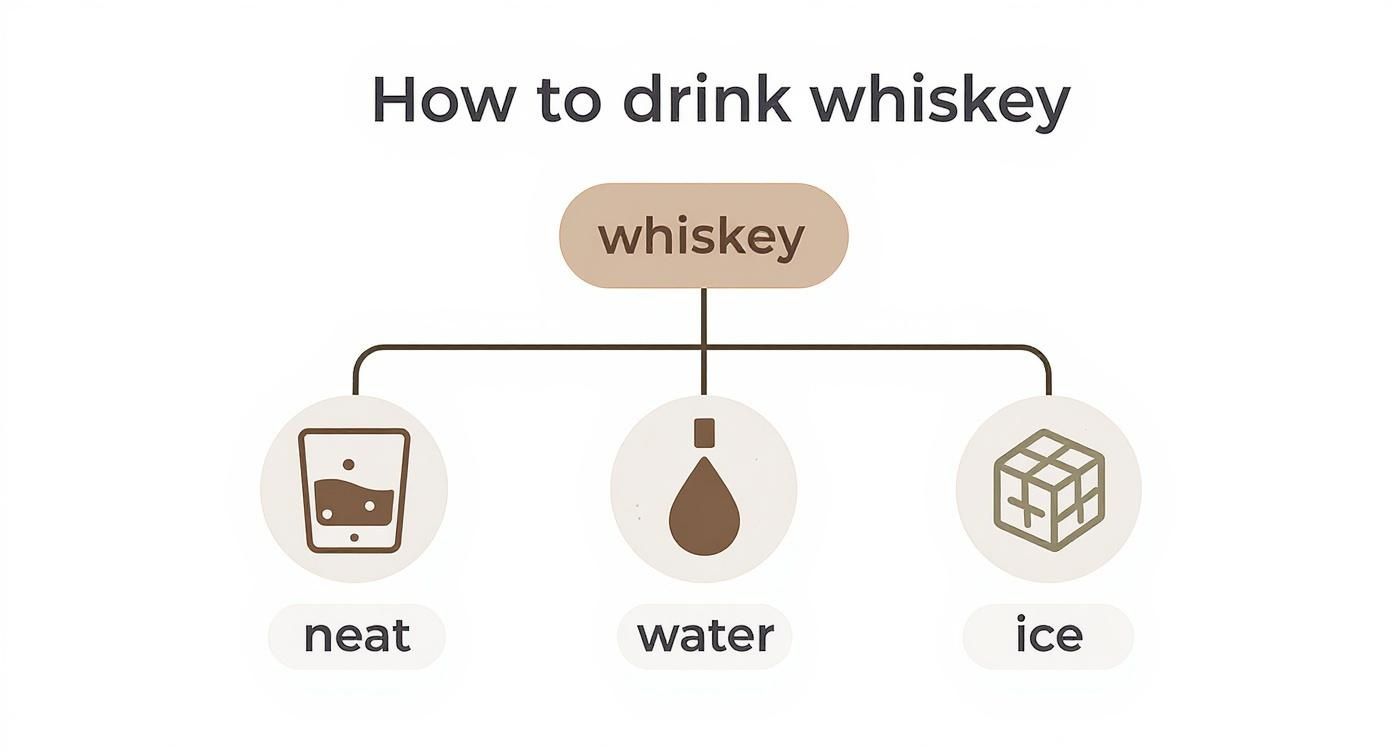
As you can see, each method offers a completely different experience. Feel free to experiment and find what works for you.
Approachable Bottles Perfect for Beginners
To make things even easier, I’ve put together a short list of fantastic and affordable American craft whiskeys that are perfect for starting your journey. These are all known for being smooth, balanced, and just plain delicious.
- Woodinville Straight Bourbon: A true craft gem out of Washington with rich notes of caramel, dark chocolate, and vanilla. It’s incredibly smooth and dangerously easy to sip.
- Laws Four Grain Straight Bourbon: This Colorado whiskey offers a complex but gentle profile with hints of orange peel and baking spice. It’s a great introduction to a more nuanced bourbon.
- Frey Ranch Straight Bourbon: Hailing from Nevada, this "farm-to-glass" bourbon is beautifully balanced with notes of honey, citrus, and a soft, spicy finish.
Remember, the goal isn't to find the "best" whiskey in the world—it's to find the best whiskey for you. Start with one of these recommendations, and let your own palate guide you from there.
Choosing your first bottle is a personal adventure. If you're looking for more guidance, our article on what's the best whiskey offers even more tips to help you make an informed choice. Happy hunting.
Common Mistakes New Whiskey Drinkers Make
Look, every single whiskey expert was a beginner once. We’ve all made missteps along the way. Your journey will be a whole lot smoother if you can just sidestep a few of the most common pitfalls.
Think of these less as hard-and-fast rules and more as friendly advice from someone who’s been there, all to help you get more enjoyment out of your glass from day one.
Don't Dive into the Deep End
One of the absolute biggest mistakes is jumping straight into a "cask strength" or high-proof whiskey. I get the appeal—it sounds impressive. But these bottles pack a serious punch and can easily overwhelm a palate that's still learning the ropes.
A key tip for new whiskey drinkers is to stick with whiskeys bottled between 80 and 95 proof (40-47.5% ABV) to start. This range is flavorful without being overpowering.
Forget the Hype and High Price Tags
Another classic trap is getting suckered into buying a wildly expensive, hyped-up bottle right out of the gate. Chasing trends is a great way to drain your wallet, not develop your palate.
Instead, start with accessible, affordable, and most importantly, approachable options. You'll learn far more about what you actually enjoy by exploring a quality American craft whiskey like Laws Four Grain Straight Bourbon than by staring at a collector's bottle you're too intimidated to even open.
The most important tip for any new whiskey drinker is this: there is no single "right" way to drink it. If you like it with a splash of water, a big ice cube, or even mixed with ginger ale, then that's the correct way for you.
And that brings me to the last point: don’t ever feel pressured to drink it neat if you’re not enjoying it that way. The whiskey community can sometimes seem a bit intense, but true appreciation is all about your own personal enjoyment.
So go ahead and experiment. Freely. That’s how you’ll find your perfect pour.
Got Questions About Whiskey? We've Got Answers.
As you start wading into the world of whiskey, you're going to have some questions. It's totally normal. Think of this section as your personal cheat sheet for the most common things people wonder about. Our goal is to cut through the noise and get you sipping with a bit more confidence.
What's the Best Glass for Drinking Whiskey?
Okay, while you can technically drink whiskey out of a coffee mug, the glass you choose really does shape the whole experience.
If you're getting serious about tasting and picking out flavors, a tulip-shaped glass like a Glencairn is the gold standard for a reason. Its unique shape funnels all those complex aromas right to your nose, making it way easier to smell what's going on in the glass before you even take a sip.
But for just enjoying a casual pour or a simple whiskey cocktail? A classic rocks glass (you might hear it called an Old Fashioned glass) is perfect. It's sturdy, gets the job done, and it's what you'll find in pretty much any bar.
Do I Really Need to Spend a Lot on My First Bottle?
Nope. Not at all. This is probably the biggest myth that trips up newcomers.
You can find some truly fantastic, well-made whiskeys in the $25-$40 range that are perfect for figuring out what you like. Honestly, some of the most exciting stuff is coming from American craft distilleries, and they often offer incredible bang for your buck.
The best bottle of whiskey is the one you actually enjoy drinking, not the priciest one you can find. Your own taste is the only thing that matters here.
How Do I Get Past That Alcohol "Burn"?
That sharp, warming sensation from the alcohol—the "burn"—is something everyone experiences at first. The trick is to manage it, not power through it.
Start by taking tiny, tiny sips. We're talking seriously small. Don't swig it like you would a beer or a soda. Let it sit in your mouth for a second.
Another pro move for new whiskey drinkers is to add a few drops of water or a single, large ice cube. This can dramatically mellow out the alcohol's intensity, almost like turning down the volume on the static. Suddenly, those other flavors—the vanilla, the fruit, the spice—get a chance to come forward. Don't worry, your palate will get used to it over time.
Ready to figure out what you really like, without any preconceived notions? Blind Barrels sends a curated, blind whiskey tasting experience right to your door, highlighting some of America's best craft distilleries. Explore our subscription boxes and start your adventure.