

If you’ve always thought of whiskey as a solo act, something best sipped in a quiet study by the fire, it’s time to invite it to the dinner table. Pairing whiskey with the right dish isn't just a novelty; it unlocks incredible new dimensions of flavor in both your glass and on your plate. A good meal can become a truly memorable experience.
This culinary journey is perfect for anyone looking to explore, especially those new to the world of whiskey.
Your Journey into Whiskey and Food Pairing
The whole idea is surprisingly simple: match or contrast flavors. It’s a familiar concept if you’ve ever paired wine with a meal, but whiskey brings a much richer, more complex character to the game. Suddenly, every meal is an opportunity for discovery.
American craft whiskeys, in particular, are tailor-made for this adventure. Distillers all over the country are bottling spirits with an incredible range of profiles. You’ve got everything from the sweet, corn-driven notes of a classic Kentucky bourbon to the sharp, peppery spice of an Indiana rye. This diversity makes finding the perfect whiskey for your food easier and more exciting than ever.
The Rise of Whiskey at the Dinner Table
Pairing whiskey with food has moved far beyond a niche hobby, exploding in popularity right alongside the flavored whiskey boom. Bourbon, which now holds a commanding 38.5% market share, has become a go-to for chefs and home cooks creating innovative pairings that elevate everyday meals.
Bartenders worldwide are swapping out traditional spirits for bourbon-infused twists, like a peach-flavored bourbon sour that perfectly cuts through the richness of barbecue ribs. This shift has boosted bar sales by up to 20% in trendy U.S. spots. It's not just hype—Europe, which dominates with 45.8% of the global flavored whiskey market, has turned this synergy into a cultural staple. You can discover more about this growing trend and its market impact.
For new whiskey drinkers, the best starting point is to trust your own palate. If you enjoy a whiskey with notes of caramel and vanilla, think about what foods share those flavors, like a warm pecan pie or crème brûlée. This simple connection is the foundation of every great pairing.
A Quick-Start Guide for Beginners
Getting started doesn't require a master's degree in mixology—the whole point is to experiment and have fun. To give you some immediate, actionable ideas for your next meal, here are a few simple guidelines to kickstart your whiskey and food pairing journey:
- Match Weight with Weight: Pair a light-bodied whiskey with lighter fare like seafood or salads. Save that full-bodied, high-proof whiskey for rich, heavy dishes like a grilled steak or smoked brisket.
- Complement the Flavors: This is the most intuitive approach. A sweet bourbon brimming with caramel and vanilla is a natural match for desserts like apple pie or a decadent piece of dark chocolate.
- Contrast for Balance: Sometimes, opposites attract. Use a spicy rye whiskey to slice through the richness of creamy cheeses or fatty cured meats like salami. The spice provides a beautiful counterpoint.
To make things even simpler, here’s a quick cheat sheet with some can't-miss combinations to get you started.
Quick-Start Whiskey Pairing Cheat Sheet
This table offers a few classic combinations that are always a safe bet. Use it as a jumping-off point for your own culinary experiments!
| Whiskey Style | Try Pairing With | Why It Works |
|---|---|---|
| Bourbon | Grilled steak, BBQ ribs, pecan pie, dark chocolate | The sweet corn base and notes of caramel, vanilla, and oak complement the smoky char of grilled meats and the richness of sweet desserts. |
| Rye | Cured meats (salami, prosciutto), sharp cheeses (cheddar, Gruyère), pastrami sandwiches | The signature peppery spice of rye cuts through the fat and richness of cured meats and aged cheeses, creating a perfect balance. |
| Single Malt Scotch | Smoked salmon, roasted lamb, blue cheese | The complex notes—from smoky and peaty to fruity and floral—can either match the smokiness of foods or contrast beautifully with strong cheeses. |
| Blended Scotch | Roasted chicken, grilled vegetables, apple crumble | A well-balanced blended Scotch is versatile. Its smooth, often fruity and malty character won't overpower more delicate dishes. |
| Cask Strength | Rich stews, aged Gouda, chocolate lava cake | The intense, undiluted flavors stand up to the boldest dishes. The high proof cuts through richness, cleansing the palate with each sip. |
Remember, these are just suggestions. The best pairing is the one you enjoy the most, so don't be afraid to break the rules and find what works for your taste.
Understanding the Core Principles of Pairing
Before you start raiding the pantry, let's get into the ‘why’ behind a truly great whiskey and food experience. Once you get a handle on a few core ideas, pairing transforms from simple guesswork into a creative art. You’ll have the confidence to match any whiskey with the perfect dish.
It’s way simpler than it sounds and really just boils down to two basic strategies that work whether you're a newcomer or a seasoned pro.
The first route is a complementary pairing. Think of it like matching harmonies in a song. The goal is to find flavors in your food that echo the notes already present in the whiskey. A sweet, corn-forward bourbon from a small American craft distillery, for instance, often sings with deep notes of caramel and vanilla. That makes it a perfect dance partner for a rich dessert like pecan pie or crème brûlée.
The second strategy is all about creating a contrasting pairing, which is a game of balance. Here, you're using the whiskey to cut through or stand up to powerful flavors in the food. Take a spicy rye whiskey. Its signature peppery bite slices beautifully through the creamy, fatty texture of a decadent cheese or rich cured meat, cleansing your palate with every single sip.
The Two Paths to a Perfect Pairing
Thinking about a whiskey's "body" or "weight" can also be a huge help in guiding your choices. Imagine it like a sauce—a light-bodied whiskey is like a vinaigrette, while a full-bodied, cask-strength bourbon is more like a thick, rich gravy. You wouldn’t drown a delicate fish in a heavy sauce, and the same logic applies here. Match light with light, and bold with bold.
This visual breaks down the simple but powerful connection between whiskey and food.
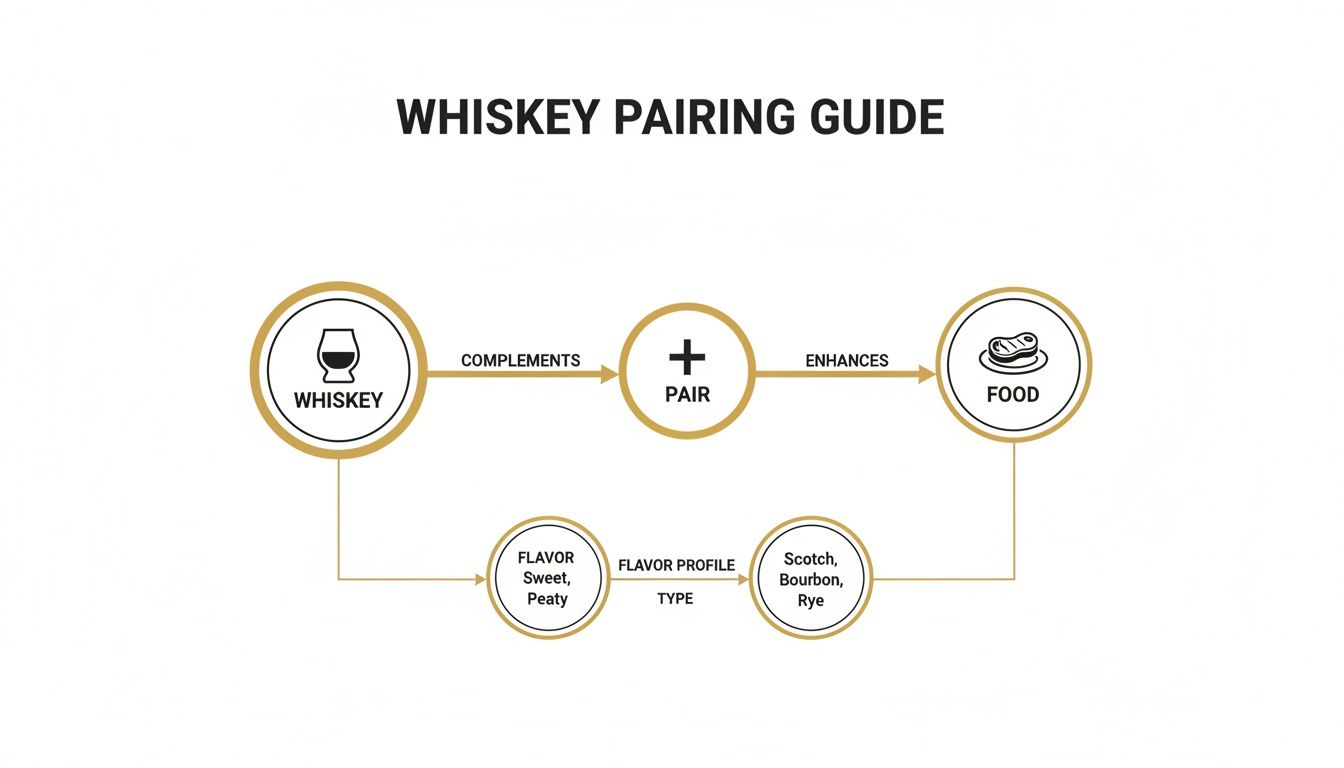
Ultimately, whether you choose to complement or contrast, the goal is always the same: create an experience where both the whiskey and the food taste better together than they ever could apart.
A great pairing should feel like a conversation between your glass and your plate. The whiskey might highlight a subtle spice in the dish, or the food might bring a hidden fruity note out of the whiskey. It's this interaction that makes the experience so memorable.
Getting a feel for how other spirits and wines interact with food can seriously level up your pairing game. For example, learning about unlocking flavors with dry sherry in the kitchen can give you a deeper understanding of how different ingredients elevate a dish from the inside out. It reinforces the same concepts of balance and harmony we're talking about here, empowering you to go beyond our guide and start creating your own perfect pairings with confidence.
A Guide to American Craft Whiskey Styles
To really get the hang of pairing whiskey with food, you first need to know the key players on the field. The world of American craft whiskey is a playground of flavor, and each style brings something totally different to the dinner table. Getting a feel for the personality of what's in your glass is the absolute first step toward creating a pairing that people will talk about.
This is a game-changer, especially if you're new to whiskey. Think of it like cooking: you wouldn't use oregano in every single dish, would you? Bourbon, Rye, and American Single Malts are your foundational ingredients, and each one gives you a unique profile to build a meal around.
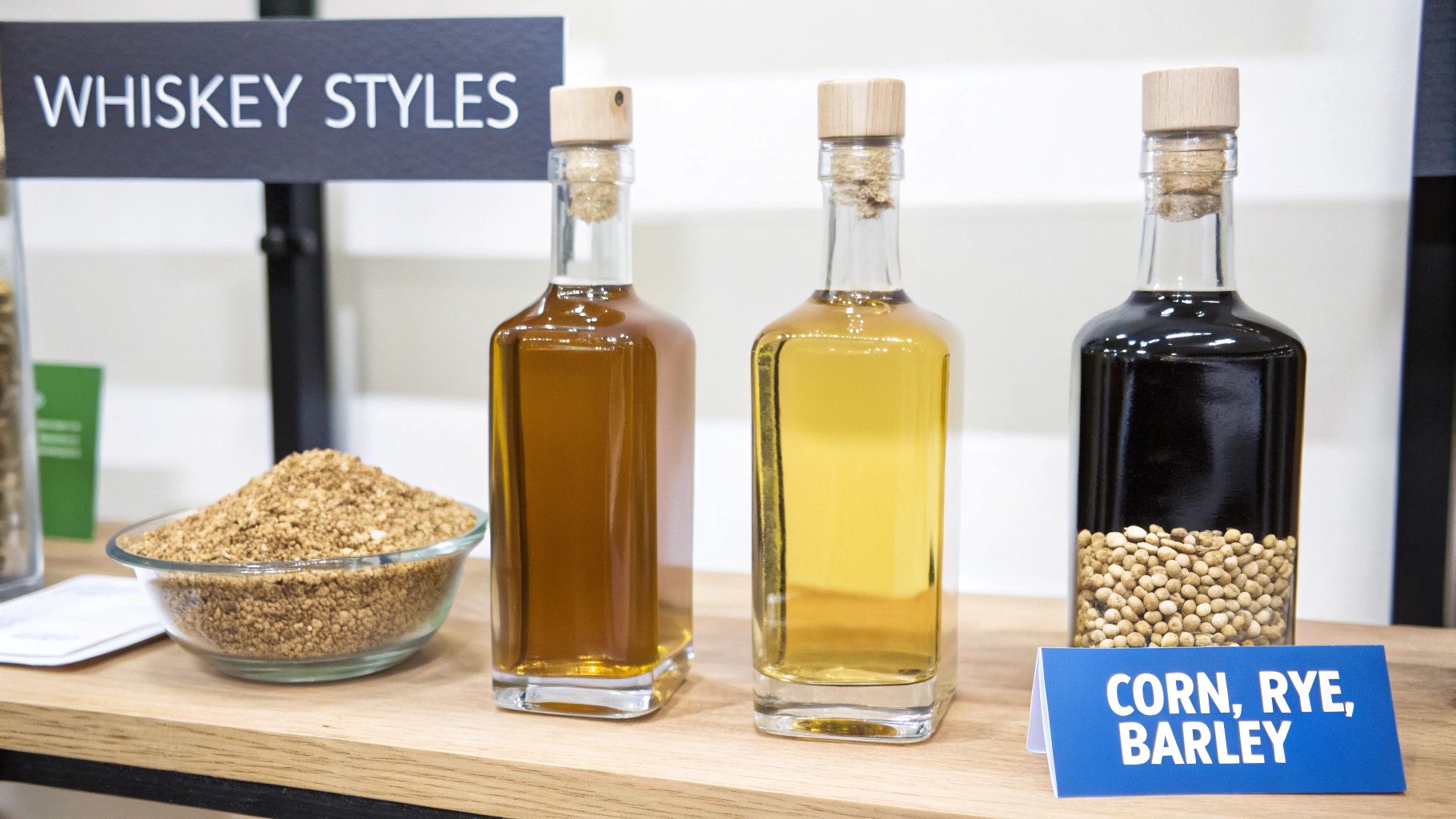
Bourbon: The Sweet and Approachable Classic
When most people picture American whiskey, their mind immediately goes to Bourbon. To earn that name, a whiskey has to be made from a mash bill of at least 51% corn, which is the secret to its signature sweetness. That corn base, combined with aging in brand-new, charred oak barrels, is what creates those classic, crowd-pleasing notes of caramel, vanilla, and toasted oak.
Its friendly, often rich profile makes it a fantastic and versatile partner for food.
- Grilled Meats: Bourbon’s natural sweetness and the subtle smokiness from the barrel char are a knockout combination with the smoky char of a grilled steak, pork chops, or a rack of BBQ ribs.
- Rich Desserts: That vanilla and caramel core just sings alongside a slice of pecan pie, bread pudding, or even a simple square of good dark chocolate.
A perfect example is the bourbon coming out of Frey Ranch Distillery in Nevada. Their whole farm-to-glass approach results in a beautifully balanced bourbon with notes of honey and spice that can absolutely hold its own against a hearty meal.
Rye: The Bold and Spicy Contender
If bourbon is a sweet, warm harmony, then Rye whiskey is the spicy, exciting counterpoint. Made from at least 51% rye grain, this style is famous for its distinctive peppery kick, sometimes leaning into herbal or even minty territory. It’s generally drier and packs more of a punch than its corn-based cousin, which makes it an incredible tool for cutting through rich foods.
Rye whiskey acts almost like a palate cleanser. Its assertive spice slices right through fat and creaminess, keeping rich dishes from feeling too heavy and getting your taste buds ready for the next bite.
This unique quality makes rye the perfect partner for certain kinds of dishes. Try pairing a bold rye, like the ones from High West Distillery in Utah, with cured meats like prosciutto or salami, sharp and funky cheeses, or a classic pastrami on rye. The whiskey’s spice doesn't just complement the food; it takes it to a whole new level.
American Single Malt: The New Frontier
Right now, the most diverse and exciting category in American craft whiskey has to be the American Single Malt. This style is made from 100% malted barley at a single distillery, but beyond that, it doesn't have the same strict rules as bourbon or rye. This gives distillers a massive amount of creative freedom.
The result is an incredible spectrum of flavors, from light and fruity to rich, malty, and sometimes even smoky. This sheer variety is what makes exploring what is craft whiskey so much fun.
Because of this diversity, pairing an American Single Malt requires paying close attention to the specific bottle in your hand. A lighter, more fruit-forward single malt from a distillery like Westland in Seattle could be perfect with smoked salmon or roasted chicken, while a richer, more chocolatey one might be an amazing match for a decadent chocolate torte. This category is an open invitation to experiment and a fantastic way to expand your pairing horizons.
Building the Perfect Pairing Menu
Alright, we've covered the principles. Now for the fun part: putting it all into practice. Think of this as your roadmap for crafting a truly unforgettable whiskey-centric dinner, whether it’s for a special occasion or just a fantastic meal at home. We’ll go course by course, giving you some concrete ideas you can easily pull off.
The goal here isn't just to throw some food and whiskey together. It's about building an experience. Each pairing is designed to create a conversation between the glass and the plate, where the unique character of both the dish and the spirit gets its moment to shine. We’ll be focusing on accessible yet impressive combinations that highlight some fantastic American craft whiskeys.
Kicking Things Off with Appetizers
The start of the meal sets the tone, and the right whiskey pairing can turn simple starters into something truly special. The key is to wake up the palate without overwhelming it right out of the gate.
A cheese board is a classic for a reason—it’s foolproof and fantastic. Try pairing a sharp, aged cheddar or a nutty Gouda with a high-rye bourbon. The bourbon’s inherent sweetness is a perfect dance partner for the cheese's saltiness, while that pop of rye spice cuts right through the creaminess. It’s a beautiful contrast.
If you’re leaning toward something a bit lighter, think about smoked salmon blinis. The delicate, oily fish finds a wonderful partner in a lighter American single malt. The whiskey's gentle, often fruity or malty notes will complement the salmon without bulldozing its subtle flavor.
The Main Event: Bold Flavors and Perfect Partners
For the main course, it's time to bring out the big guns. This is where we can create a timeless combination that really shows off the power of a perfect match.
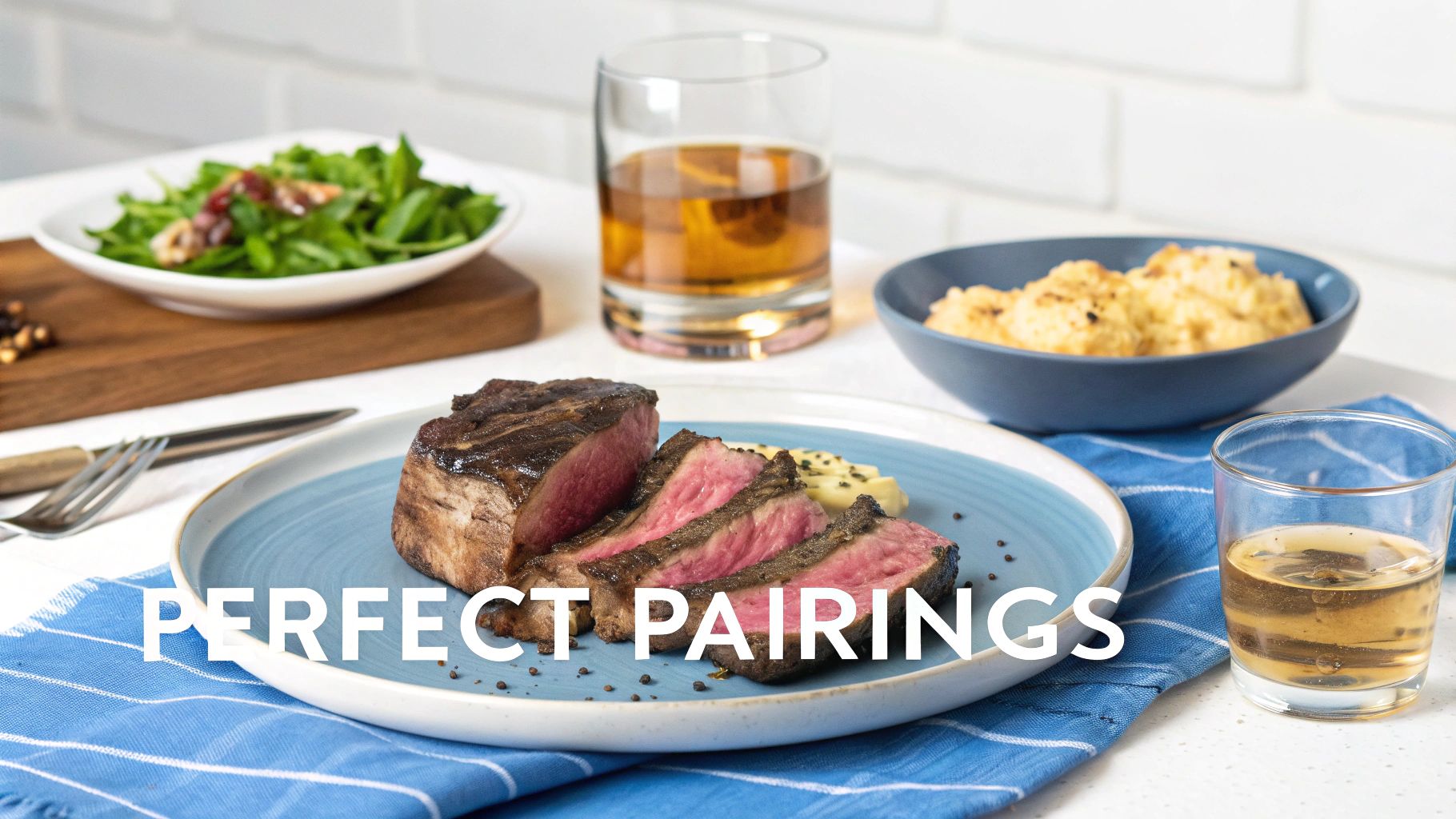
There is no pairing more iconic than a perfectly seared ribeye steak and a bold, cask-strength bourbon. It’s a classic for good reason, and here’s the magic behind it:
- Fat and Proof: The high alcohol content of a cask-strength whiskey is tailor-made to slice through the rich marbling of a ribeye, cleansing your palate with every single sip.
- Char and Oak: That smoky char from the grill or a hot pan finds a perfect echo in the charred oak notes from the bourbon barrel. It's a connection that feels meant to be.
- Sweet and Savory: The deep caramel and vanilla sweetness of the bourbon provides a delicious counterpoint to the savory, umami-rich flavor of the beef.
This pairing is a masterclass in complementary flavors. Every element of the whiskey enhances an element of the food, creating an experience that is far greater than the sum of its parts.
A great tip for anyone new to whiskey: add a single drop of water to a high-proof bourbon when pairing it with steak. This can tame the initial alcohol heat just enough to let the whiskey's more subtle flavors open up, making its interaction with the food even more harmonious.
Tips for Serving and Tasting
Don’t forget that how you serve the whiskey is just as important as the pairing itself. To really get the most out of your experience, pay attention to the sensory details. Learning how to taste whiskey properly is the key to unlocking all those nuanced notes and will dramatically improve your pairing game.
Always try to use a proper tasting glass, like a Glencairn, which is designed to concentrate the aromas. Encourage your guests to nose the whiskey first, then take a small introductory sip to acclimate their palate before tasting it alongside the food. This mindful approach is what transforms a simple meal into an engaging and memorable tasting event.
Crafting Sweet Endings with Dessert Pairings
Don’t put the whiskey away when dessert arrives. I’ve found that this is where some of the most surprising and memorable pairings are discovered, turning the final course into the real highlight of the meal. The dance between a complex spirit and a thoughtfully chosen sweet can create something truly special.
The trick is to think of your whiskey as the final, liquid ingredient that completes the dish. Its built-in notes of oak, caramel, spice, and fruit can either harmonize with or cut against the flavors on your plate, adding an incredible new layer of depth. For anyone just starting out, this is easily one of the most fun and approachable ways to explore whiskey pairing food.
Complementary vs. Contrasting Pairings
A classic complementary pairing is all about matching the core flavors in your glass to those in the dessert. Imagine a high-corn bourbon, with its signature vanilla and caramel sweetness, served alongside a warm slice of pecan pie. The whiskey doesn't just sit next to the dessert; it actively amplifies its inherent richness.
For a truly decadent experience, I always recommend serving the whiskey neat or with a single drop of water to open up its aromatics. This approach allows the spirit’s full character to shine without dilution, making it the perfect partner for a rich, sweet treat.
On the flip side, a contrasting pairing uses the whiskey to cut through sweetness and bring balance to the whole experience. A spicy rye whiskey served with a warm, gooey apple crumble is the perfect example. The rye’s peppery kick slices right through the rich sweetness of the crumble, cleansing your palate and keeping the dessert from feeling too heavy or cloying.
Ideas for Your Next Dessert Course
Getting creative and playing around is half the fun. For those looking to craft some truly unique sweet endings, exploring delicious air fryer dessert recipes can offer some surprising and delightful options that go way beyond the ordinary.
To help you get started, here's a look at how different whiskeys interact with a few classic dessert types.
Whiskey and Dessert Pairing Ideas
| Whiskey Style | Dessert Pairing | Flavor Interaction |
|---|---|---|
| Bourbon | Pecan Pie, Crème Brûlée, Caramel Flan | Complementary: The vanilla and caramel notes in the bourbon perfectly match the sweet, rich flavors of the dessert. |
| Rye Whiskey | Apple Crumble, Lemon Tart, Dark Chocolate | Contrasting: The bold spice of the rye cuts through the sweetness, providing balance and cleansing the palate. |
| Single Malt Scotch | Fruit Cake, Ginger Snaps, Bread Pudding | Complementary: The malty, often fruity or slightly smoky profile of the Scotch enhances the complex flavors of the dessert. |
| Cask-Strength | Rich Chocolate Lava Cake, Sticky Toffee Pudding | Contrasting: The high proof and intense flavor cut through the richness, preventing the pairing from being overwhelming. |
These are just starting points, of course. The best pairings come from experimentation and finding what you enjoy most.
The rise of home entertaining has made whiskey-and-food pairings a real game-changer. Flavored whiskey’s versatility, in particular, has turned dessert into a gourmet event—honey-flavored options now lead the category with a 34.83% market share. In a blind tasting, you might find yourself pairing an unknown American whiskey (32.67% market leaders) with pecan pie and discovering how its natural sweetness creates a perfectly harmonious finish.
To get a better handle on the specific notes you're tasting, a fantastic tool is the bourbon flavor wheel. It can help you identify those subtle flavors in your glass and make more intentional, and delicious, pairing choices.
Common Whiskey Pairing Questions
As you start exploring the wild and wonderful world of whiskey and food pairing, you're going to have questions. It's only natural. Think of this next part as your pocket guide for the most common queries that pop up, especially when you're just getting your feet wet.
Getting a good handle on these points will give you the confidence to dive in, experiment, and really get the most out of every single pour.
What Is the Easiest Whiskey Food Pairing for a Beginner?
For anyone just starting out, you can't go wrong with a classic bourbon paired with either a sharp cheddar cheese or a good, dark chocolate. It's the easiest win in the book. There's zero cooking required, and the payoff is almost always incredible.
Bourbon has this natural sweetness—think caramel and vanilla—that just sings when it meets the salty, tangy bite of an aged cheddar. Then, if you pair it with dark chocolate (go for 70% cocoa or higher), the bourbon cuts right through the chocolate's bitterness, and its oaky backbone pulls out all these surprising, complex cocoa notes. It's a simple, delicious lesson in the fundamental magic of pairing.
A hot tip for newcomers: grab a versatile, approachable craft bourbon. A lot of American distilleries are making beautifully balanced spirits that aren't too aggressive in proof or flavor. They're the perfect canvas for your first pairing experiments.
Can I Pair Whiskey with Spicy Food?
You absolutely can, but it’s a delicate dance. You’re aiming for balance, not a five-alarm fire on your palate. Instead of grabbing a high-proof, spicy rye that will just throw gasoline on the fire, reach for a sweeter, smoother bourbon.
The corn-forward sweetness and those rich caramel notes in a good bourbon can actually cool the palate, providing a really welcome contrast to the spice. It’s the same principle that makes a sweet element work so well in Thai or Mexican dishes—it creates a fantastic harmony. I'd steer clear of heavily peated Scotch here; that intense, briny smoke can really clash with the capsaicin heat in a bad way.
How Does a Blind Tasting Help with Food Pairing?
A blind tasting is, hands down, one of the best ways to train your palate for food pairing. When you strip away the fancy labels, the cool bottle shapes, and the marketing stories, you're forced to focus on one thing and one thing only: what’s actually in the glass. You have to rely entirely on your senses to decode the aroma, taste, and finish.
This is where you really start to sharpen your ability to pick out core flavors like cherry, toasted oak, or a hint of smoke.
- It builds your flavor vocabulary: The moment you can put a name to what you're tasting, you're suddenly equipped to think, "Hey, this would be great with..."
- It hones your senses: You begin to notice the subtle stuff you might have missed otherwise, and that’s the key to creating more thoughtful, sophisticated pairings.
- It empowers your palate: It stops being a guessing game. Pairing becomes a creative process driven by your own senses and intuition, not by what a label tells you to taste.
Ultimately, this practice makes finding that perfect whiskey for any meal a much more confident, fun, and rewarding experience.
At Blind Barrels, we’re firm believers that the best discoveries happen with an open mind and an unbiased palate. Our blind tasting subscription sends you quarterly kits packed with unique American craft whiskeys, letting you explore incredible spirits without any preconceived notions. It’s the perfect way to build your tasting skills, uncover some hidden gems, and find the ideal bottle for your next pairing adventure. Experience the thrill of blind tasting today.