

Putting together a whiskey tasting at home is one of the best ways to dive into new flavors and have a great time doing it. Forget the stuffy, overly complicated tastings you might be imagining. It all really comes down to three things: picking a theme, choosing the right whiskeys, and grabbing a few simple supplies.
This guide is all about turning your living room into a fun, relaxed space for discovery, especially for those new to whiskey.
Bringing the Distillery Experience Home
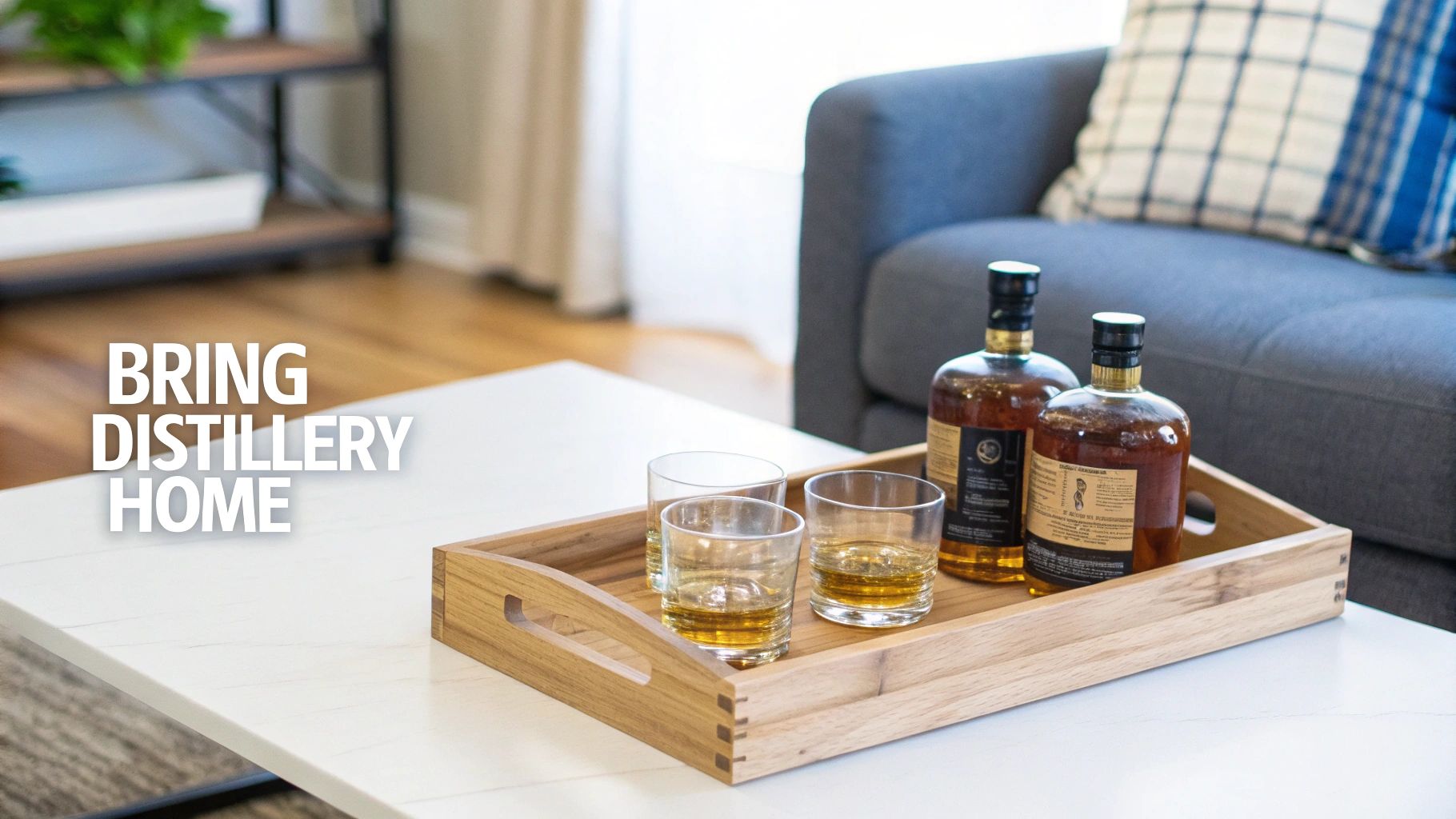
Hosting a great whiskey tasting has nothing to do with being some formal expert who can recite distillery histories from memory. It’s really about curiosity, sharing a cool experience with friends, and figuring out what you genuinely like—no jargon required.
You probably already have most of what you need to get started. A few good glasses and some water to cleanse the palate are usually enough to kick things off. The real secret to making it memorable, though, is creating a theme for the evening. It gives the whole thing a focus and makes choosing your bottles so much easier.
Why a Theme Matters
A theme is what turns a few random pours into a real story. Instead of just sampling whatever you have on the shelf, you're curating a specific journey for your guests. This is a game-changer, especially for friends who are new to whiskey and aren't sure where to start.
Here are a few simple but really engaging themes to try:
- A Regional Showcase: Zero in on a single area. Think Kentucky bourbon, Islay Scotch, or even the up-and-coming Texas single malts.
- Bourbon vs. Rye: This is a classic for a reason. You get to compare the quintessential sweet corn and spicy rye profiles right next to each other.
- American Craft Spotlight: This is my personal favorite. You get to explore some truly innovative whiskeys from smaller, independent distilleries that are pushing the boundaries, like Westward Whiskey from Oregon or High West from Utah.
Exploring American craft whiskey brands is an excellent way to introduce yourself and your guests to a world of unique flavors you won't find on every store shelf. These distilleries often experiment with different grains and aging techniques, offering truly distinctive spirits.
And this isn't just a niche hobby anymore. The interest in at-home tasting has exploded, with the global volume of at-home whiskey consumption projected to hit 5.46 billion liters by 2025. You can see the data behind this shift in worldwide whiskey consumption on Statista.com.
So let's pull back the curtain and give you the confidence to host a tasting your friends will be talking about for weeks.
Setting Up Your Tasting Station
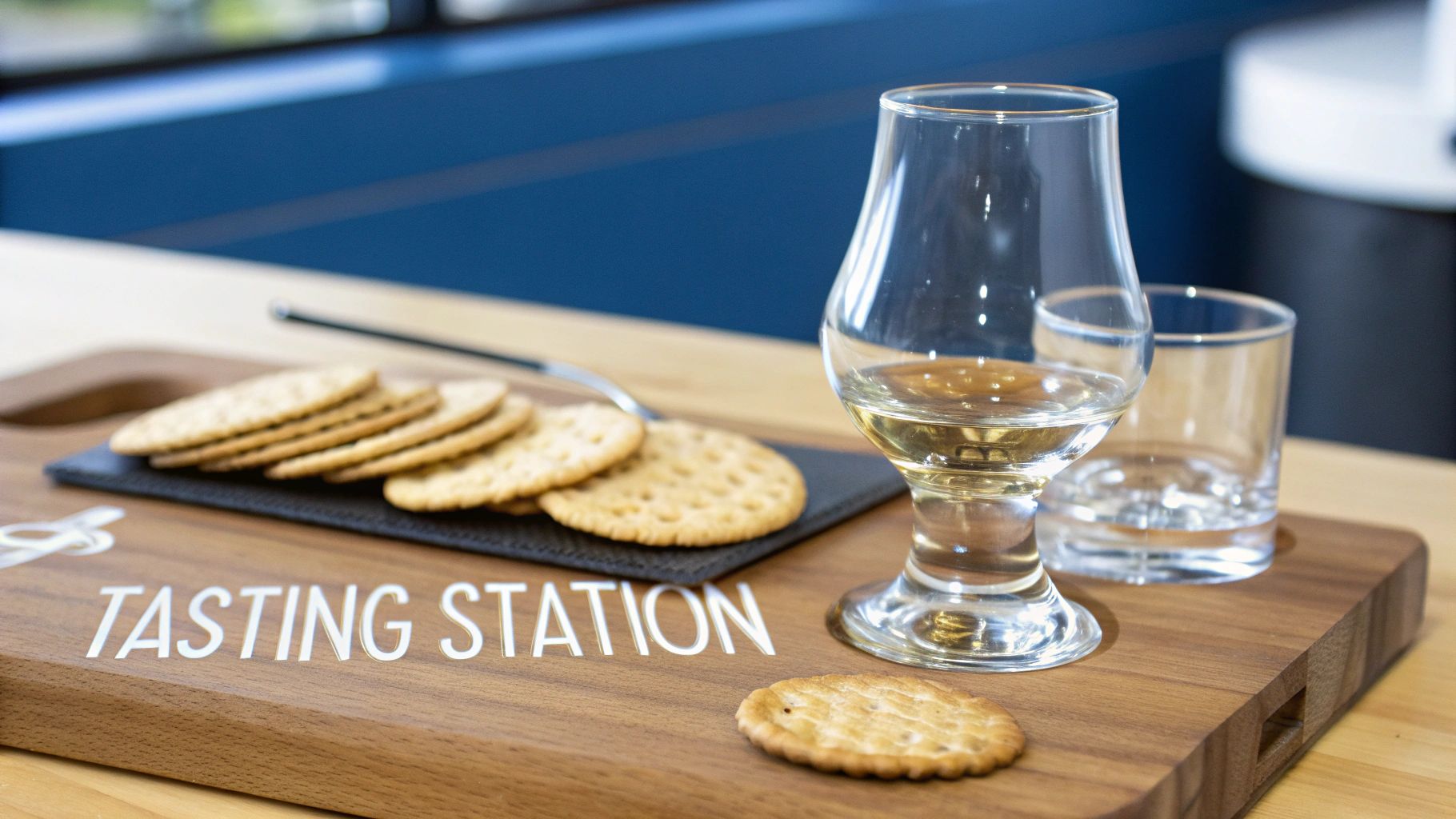
Before you even think about pouring, let's talk about setting the stage. Getting the environment right is crucial because you want the whiskey—not a cluttered table or the wrong glass—to be the star of the show. Your tasting station doesn’t need to be fancy, but a few key details will make a huge difference for a proper whiskey tasting at home.
First up, glassware. You can use any glass, but if you want to get the most out of the experience, something tulip-shaped like a Glencairn is the way to go. Its design is brilliant for concentrating all those delicate aromas, making it much easier to pick out subtle notes of vanilla, oak, or fruit. If you don't have a set of Glencairns lying around, don't sweat it. A standard wine glass is a fantastic substitute that works on the same principle.
Your Essential Tasting Toolkit
With your glasses sorted, it's time to gather a few simple but non-negotiable accessories. These items are what separate a casual drink from a genuine tasting, helping everyone explore each whiskey without getting palate fatigue.
- A Water Dropper or Pipette: This is a pro-level move that's incredibly easy to do. Just a single drop of water can completely open up a high-proof whiskey, taming the alcohol burn and revealing hidden layers of flavor and aroma you'd otherwise miss.
- Simple Palate Cleansers: The goal here is to reset your taste buds between pours. You need something neutral. Think plain water crackers, unsalted table water biscuits, or even simple white bread. Stay far away from anything with strong flavors like cheese or cured meats—those are for after the tasting.
Pro Tip for Beginners: Pour small. A sample of about a half-ounce to one ounce is more than enough for nosing and tasting. This keeps everyone's palate sharp and ensures the flight can be enjoyed responsibly. For a new whiskey drinker, it's better to start with less and pour a little more if needed, rather than getting overwhelmed by a large serving.
Finally, a bit of organization goes a long way, especially for a blind tasting where things can get confusing fast. A tasting mat is your best friend here. It gives each glass a designated spot and leaves room for notes. Pair this with a scorecard, and you've got a setup that encourages everyone to jot down their thoughts, which makes the final reveal and discussion so much more fun. You can find plenty of free, downloadable templates online to print out before your event.
How to Curate Your Whiskey Flight
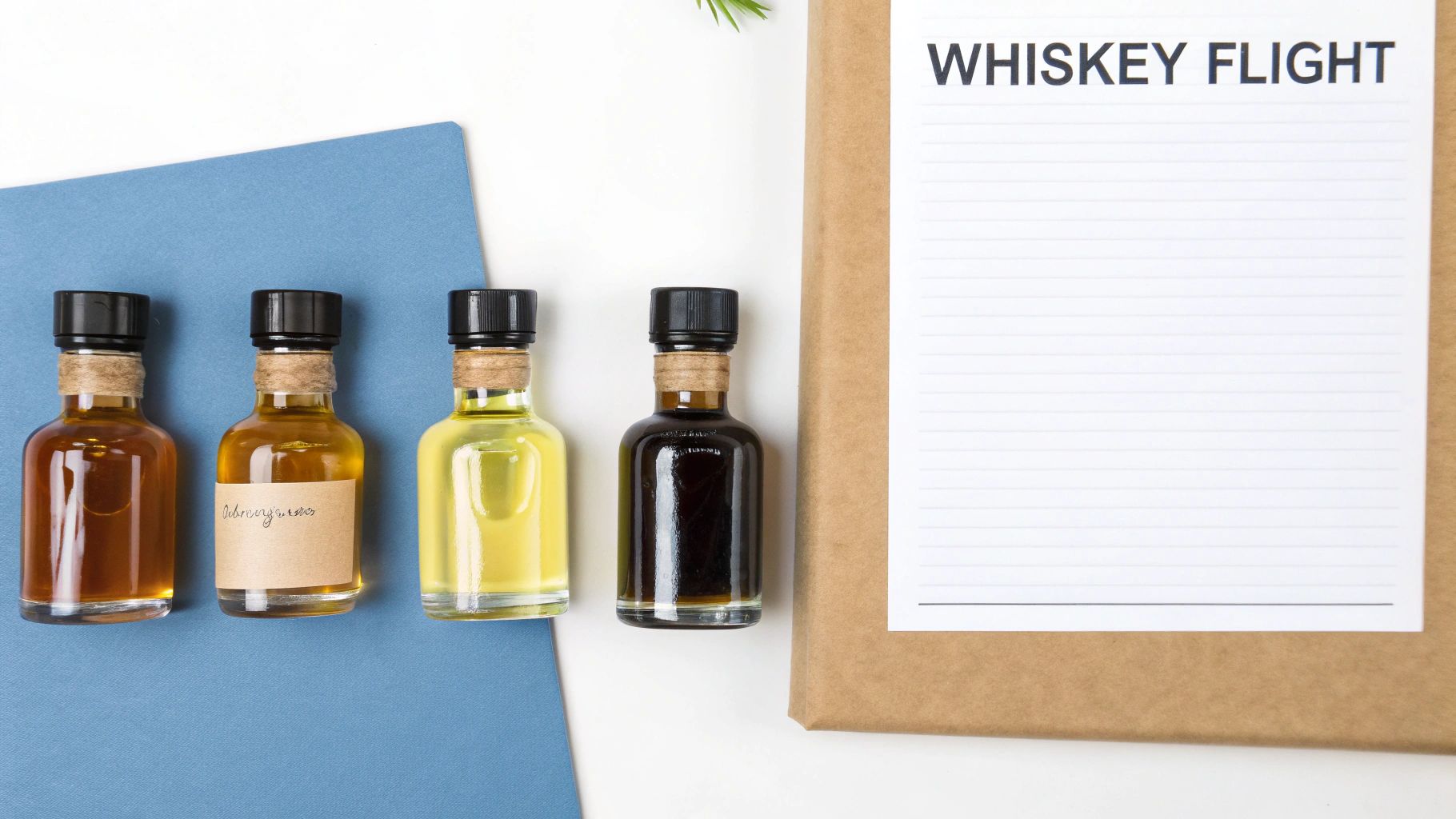
This is where the real fun begins. Putting together the right whiskeys for your whiskey tasting at home is less about just pouring drinks and more about becoming a storyteller. You’re building a "flight"—a curated selection of whiskeys—that revolves around a central idea, connecting each glass to the next in a thoughtful way.
Having a theme provides focus and makes the entire experience way more engaging, especially if you have guests who are new to whiskey. Instead of just grabbing random bottles off the shelf, you're crafting a guided tour through the world of flavor. This deliberate approach is really the secret sauce to a great tasting, and you can get more ideas from our guide on creating the perfect whiskey tasting flight.
Choosing Your Tasting Theme
Your theme is what sets the stage for discovery. For anyone just starting out, my advice is to keep the flight manageable. Four whiskeys is the sweet spot; it's enough to explore different profiles without completely wrecking your palate.
Here are a few themes that always work well:
- Bourbon vs. Rye Showdown: This is a classic for a reason. It’s a fantastic way to directly compare the characteristic sweet corn notes of bourbon against the spicy, peppery kick of rye. You can’t find a better tasting to clearly illustrate the impact of the main grain.
- A Tour of American Craft: Here’s your chance to dive into the incredible spirits coming from smaller, independent producers. You could line up something like the rich, non-chill filtered bourbons from Widow Jane in Brooklyn or the bold, Texas-oak-aged single malts from Balcones in Waco.
- Single Distillery Deep Dive: Pick one distillery and grab several of their different bottles. For instance, you could taste the flagship bourbon from an American craft brand like St. George Spirits, their rye whiskey, and maybe a special cask-finished expression to really get a feel for their unique style.
The boom in home tastings is directly tied to the explosion of craft distilling. With over 2,000 active distilleries in the US, people are hungry for unique, small-batch whiskeys to explore. It's no surprise the US whiskey market rocketed to $13.3 billion in 2024, largely fueled by this thirst for premium spirits. You can dig into the numbers on the growth of the craft whiskey market at Data Insights Market.
Once you've picked your whiskeys, the order you taste them in is critical. Always, always arrange your flight from the lightest and lowest proof to the boldest and highest proof. This simple step prevents a big, high-proof, or heavily peated whiskey from blowing out your palate early, making sure you can actually appreciate the nuances of everything that follows.
A Practical Guide to Nosing and Tasting
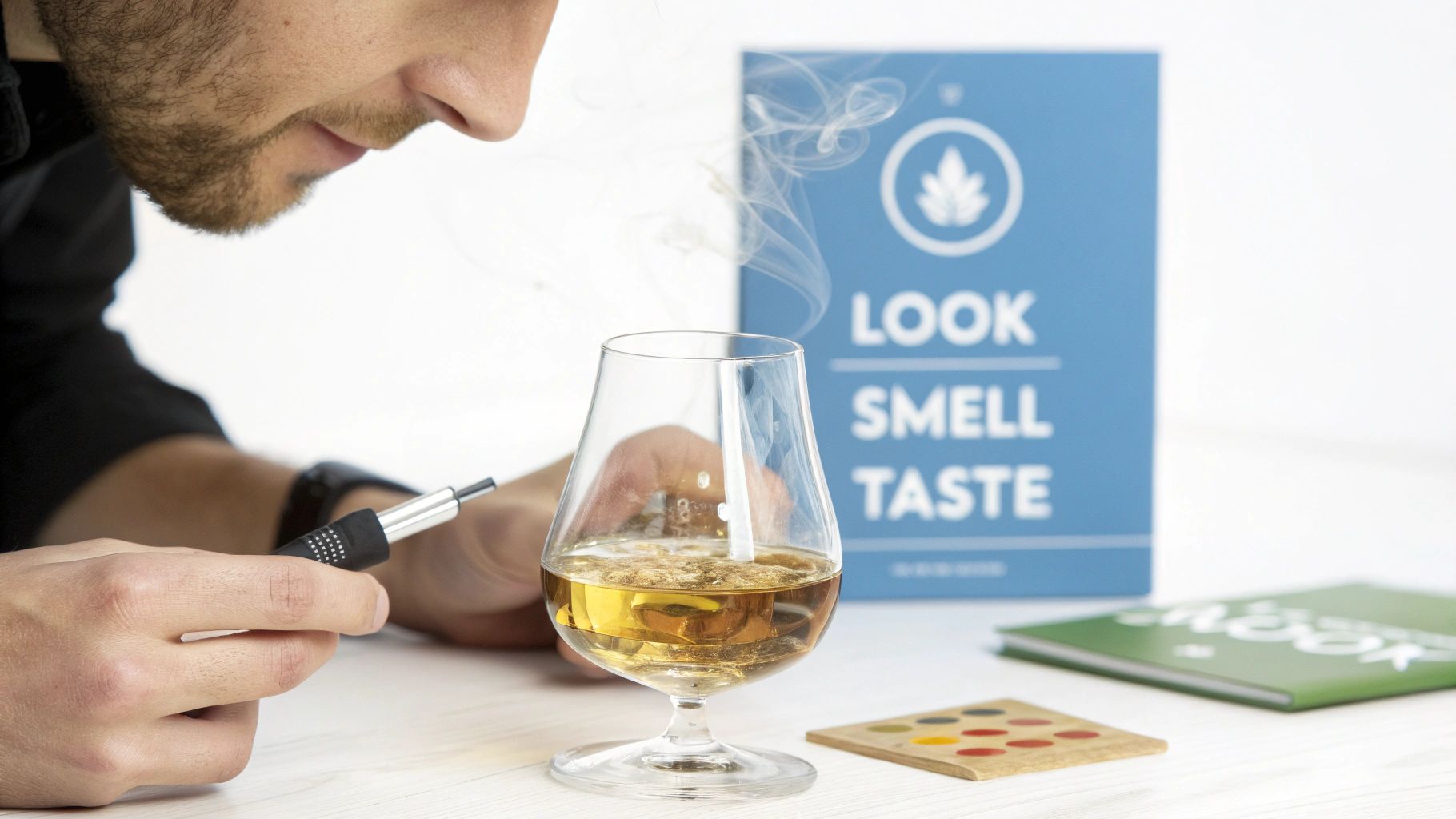
With your flight perfectly arranged, it's time for the main event. A successful whiskey tasting at home isn't about just throwing back samples; it's a sensory journey that breaks down the experience into a few simple parts. Following this process helps you truly appreciate the incredible complexity hiding inside each glass.
The experience actually starts before you even take a sip. First, just look at the whiskey. Hold your glass up to a light source and take in its color, which can offer clues about its age or the type of cask it slumbered in. Is it pale straw, deep amber, or rich mahogany?
The Art of Nosing Your Whiskey
Next up is arguably the most important step for appreciating flavor: nosing. A huge portion of what we perceive as "taste" actually comes from our sense of smell, so give this part the attention it deserves.
Instead of shoving your nose deep into the glass—a move that will only reward you with a harsh whiff of alcohol—hold it a few inches away. Gently swirl the whiskey and bring the glass toward your nose, inhaling with your mouth slightly open. This little trick helps you pick up more of the delicate aromas without getting overwhelmed.
What are your first impressions? Do you get sweet notes like vanilla and caramel? Fruity scents like apple or citrus? Or maybe something deeper, like oak, tobacco, or leather?
Tip for Beginners: If a whiskey is high-proof, that alcohol "sting" can be intense. Don't hesitate to add a single drop of room-temperature water. This can dramatically tame the ethanol and "open up" the spirit, revealing a whole new layer of aromas that were previously hiding. Start with a tiny amount—you can always add more, but you can't take it out.
Tasting Techniques for Deeper Flavors
Alright, it’s finally time to taste. Take a small sip—just enough to coat your tongue. A popular method known as the “Kentucky Chew” involves gently swishing the whiskey around your mouth for a few seconds. This simple action ensures the liquid hits all your taste buds, revealing its full spectrum of flavors from sweet to savory.
Think about the texture, or what we call mouthfeel. Is it thin and light, or does it feel rich and oily?
As you swallow, pay close attention to the finish. This is the lingering taste left behind. Does it vanish quickly, or does it stick around with a long, warming sensation? Describing what you're experiencing can be tough at first, which is where a flavor wheel or tasting notes can be a huge help.
You can dive deeper into identifying specific notes with our complete guide on how to taste whiskey. To really refine your palate, you can even explore tasting techniques used by professionals in other industries, like coffee cupping. Adopting a structured approach like this is the fastest way to turn simple sensations into true appreciation.
Capturing Notes and Comparing Favorites
Once everyone has had a chance to really sit with the whiskey, the real fun begins. This is the moment a quiet, personal tasting transforms into a lively, shared experience—the very reason a whiskey tasting at home can be so memorable. You don't need to be a seasoned pro; the idea is simply to capture your own impressions.
A basic tasting notes sheet is your best friend here. Just focus on four key areas: Appearance, Nose, Palate, and Finish. Jotting down a few quick thoughts for each helps lock in what you experienced without getting bogged down in some overly complex scoring system. If you need a solid starting point, our easy-to-use whiskey tasting notes template is perfect.
Fostering a Lively Discussion
With everyone’s initial thoughts on paper, it's time to open up the floor. Encourage a fun, judgment-free conversation where everyone feels comfortable sharing what they smelled and tasted. It’s always fascinating to hear the different takeaways. One person might get rich caramel from an American craft bourbon, while the person next to them picks up a blast of spicy cinnamon from the exact same pour.
The best tastings are built on shared discovery. There are no right or wrong answers—only personal preferences. This final reveal is where you connect, learn from each other, and create lasting memories over a great dram.
To get the most out of your observations, you could even explore different note-taking styles to see what clicks for you. This hands-on, exploratory approach really resonates with younger enthusiasts. In fact, 54% of consumers aged 18-34 are now more likely to opt for premium spirits at home, driven by that desire for unique experiences they can share.
At the end of the day, comparing notes is what helps everyone find a potential new favorite bottle. It’s the final step that turns a simple tasting into an event you’ll be talking about for a long time.
Hosting a Whiskey Tasting: Your Questions Answered
When you're putting together your first tasting, a few questions always seem to pop up. Getting these small details right can make all the difference, turning a good evening into a great one. Let's tackle some of the most common ones.
How Much Whiskey Should I Pour?
This is a big one. You're not pouring a round of drinks at the bar; you're setting up a tasting. The goal is comparison, not consumption.
A standard tasting pour is much smaller than you might think—aim for just a half-ounce to one ounce per sample. That's plenty for everyone to properly nose the whiskey, get a good taste, and even come back to it a second time without overwhelming their senses (or their sobriety).
What Kind of Food Should I Serve?
During the actual tasting, less is more. You want your guests to pick up the subtle notes in the whiskey, and strong flavors from food will get in the way. Stick with simple, neutral palate cleansers. Plain water crackers or a simple baguette are perfect.
Once the formal tasting is over, though, it's a different story. That's when you can bring out the good stuff.
- For an American Craft Bourbon: Play off its sweet and savory notes. Think sharp cheddar cheese, high-quality dark chocolate, or smoked almonds.
- For a Spicy Rye: You'll want something that can stand up to the spice. Cured meats like prosciutto or a slice of rich fruitcake are fantastic complements.
Pro Tip for New Drinkers: Never underestimate the power of a pitcher of cool, still water. It's not just a great palate cleanser between samples; adding a single drop can open up a high-proof whiskey, revealing a whole new layer of aromas and flavors. If you're not used to higher-proof spirits, this is the best way to make them more approachable.
Do We Really Need Spit Buckets?
For a casual tasting at home, you can skip the spit buckets (or "spittoons"). Professionals use them because they might be sampling dozens of spirits in a single session and need to avoid intoxication.
For a smaller flight of four or five samples at home, they're just not necessary. Simply remind your guests that there's no pressure to finish every drop. It's all about exploring the different profiles and discovering what you like, especially when you're diving into the world of unique American craft whiskeys.
Ready to take the guesswork out of your next tasting? Blind Barrels delivers a curated, blind tasting experience to your door every quarter, featuring top-shelf samples from America's best craft distilleries. Discover your next favorite whiskey at https://www.blindbarrels.com.