

You've invited a few friends over for whiskey, bought more bottles than you need, and now you're staring at the table wondering how to keep the night from becoming either a free-for-all or a lecture. The risk is especially high with a mixed group. Beginners need an easy entry point, while experienced drinkers want comparison, surprise, and enough substance to stay interested.
A successful whiskey tasting party solves both problems through design. The pours should move from approachable to challenging, the rules should remove brand bias, and the conversation should give every guest a useful way to participate. American craft whiskey brands fit naturally into this format because small-batch bottles often give guests meaningful differences in grain, proof, maturation, and texture to discuss.
The U.S. craft spirits category is already a major market, not a niche curiosity. It exceeded 14 million 9-liter cases and about $7.9 billion in value in 2022, with 2,753 active craft distilleries, before volume declined to 13.5 million cases and $7.8 billion in 2023. Craft spirits represented 4.9% of U.S. spirits volume and 7.7% of value in 2022, then 4.6% and 7.5% in 2023, respectively, according to Whisky Magazine's coverage of the American craft distillers report. Your tasting can help guests understand that variety, then turn genuine interest into a confident purchase.
What a Great Whiskey Tasting Party Actually Feels Like
By Saturday evening, eight friends have gathered around the table. Four are already discussing mash bills and barrel finishes. The other four are skeptical, holding their glasses carefully and wondering whether they're supposed to detect something more complex than “alcohol.” Then the first mystery pour arrives, everyone writes down a few impressions, and the room loosens.
One guest notices vanilla. Another gets dried fruit. A third dislikes the sample but can explain why. When the bottles are revealed, the group starts arguing over which bourbon they'd buy. That argument is the payoff. Nobody needed to perform expertise, and nobody left bored.
A great tasting has a clear arc:
- Warm-up: Start with an approachable pour that teaches the room how to taste without creating pressure.
- Comparison: Use a focused blind flight so guests can compare related whiskeys without relying on labels or reputation.
- Commitment: End with a reveal, a favorite bottle, and a practical way for interested guests to find or buy it.
The first pour should feel friendly rather than impressive. Ask guests to describe aroma and texture in ordinary language. “Sweet,” “dry,” “hot,” “light,” “oaky,” and “fruity” are useful observations. Nobody needs to identify an obscure flower or a highly specific dessert.
Host principle: Beginners don't need simpler conversation. They need simpler entry points.
The middle of the evening should introduce structure. Have guests look at the whiskey, swirl gently, smell it in a few passes, take a small sip, and consider the finish. Professional guidance recommends inspecting appearance first, nosing in two to three passes, then assessing palate and finish before retasting with a small amount of water, as described in this structured whiskey tasting guide. A fixed sequence gives newcomers something to do and gives enthusiasts a consistent basis for comparison.
Treat mixed experience as the default, not a problem to solve later. Plan the invitation, room, glassware, flight, score sheet, food, pacing, and purchase close around that reality. For broader party logistics, the Venue Finder party planning guide is useful when you're coordinating the wider event around the tasting itself.
Setting the Date, Guests, and Glassware
The logistics should feel deliberate before the first bottle is opened. I recommend a Friday or Saturday start between 7 and 8 PM, with a 2.5 to 3 hour window for the whole evening. That gives guests time to arrive, taste, discuss, and socialize without forcing the flight into a rushed sequence.
Keep the guest list between six and ten people. A smaller group can become too quiet, while a larger one makes equal pouring, note-taking, and conversation harder. If you're expecting a particularly enthusiastic crowd, stay closer to six. If several guests are beginners, eight is a comfortable target because quieter people can contribute without competing with a large table.
Send an invitation that sets expectations
Send invitations 10 to 14 days before the event. The invitation should answer practical questions before guests arrive:
- Start time: State the arrival time and the time the first pour begins.
- Dress code: “Smart casual” is enough. Don't make whiskey feel like a formal ceremony.
- Blind tasting notice: Tell guests that some labels will be hidden and that independent guesses are part of the evening.
- Food and allergies: Ask guests to flag allergies in advance.
- Non-alcoholic option: Mention that non-drinkers will receive their own tasting lineup.
Use a well-lit room with a neutral table. Strong candles, scented flowers, cooking smoke, and room fragrance interfere with aroma. Give each guest an individual placemat, a water glass, palate cleansers, a dump cup, and a printed score sheet. The setting should make participation obvious without making the evening feel clinical.
For rentals, serving pieces, extra seating, or a larger event setup, Forever Party Rentals' information on planning your 2026 wedding rentals can help you think through equipment beyond your existing home supplies.
Choose one glass and keep it consistent
Use one tulip-shaped Glencairn glass per guest as the default. Its shape concentrates aromas toward the opening and gives beginners a clear way to nose without burying their face in the glass. Keep one shared bottle of room-temperature water on the table for dilution and cleansing.
Don't switch between rocks glasses, wine glasses, and Glencairns during the flight. Glass shape changes aroma delivery, which makes comparisons less reliable. If guests want a different glass after the formal tasting, offer that during the social hour. For a concise explanation of the naming and purpose of common whiskey glass styles, see this guide to the whiskey glass.
Designing the Tasting Flight and Blind Mechanics
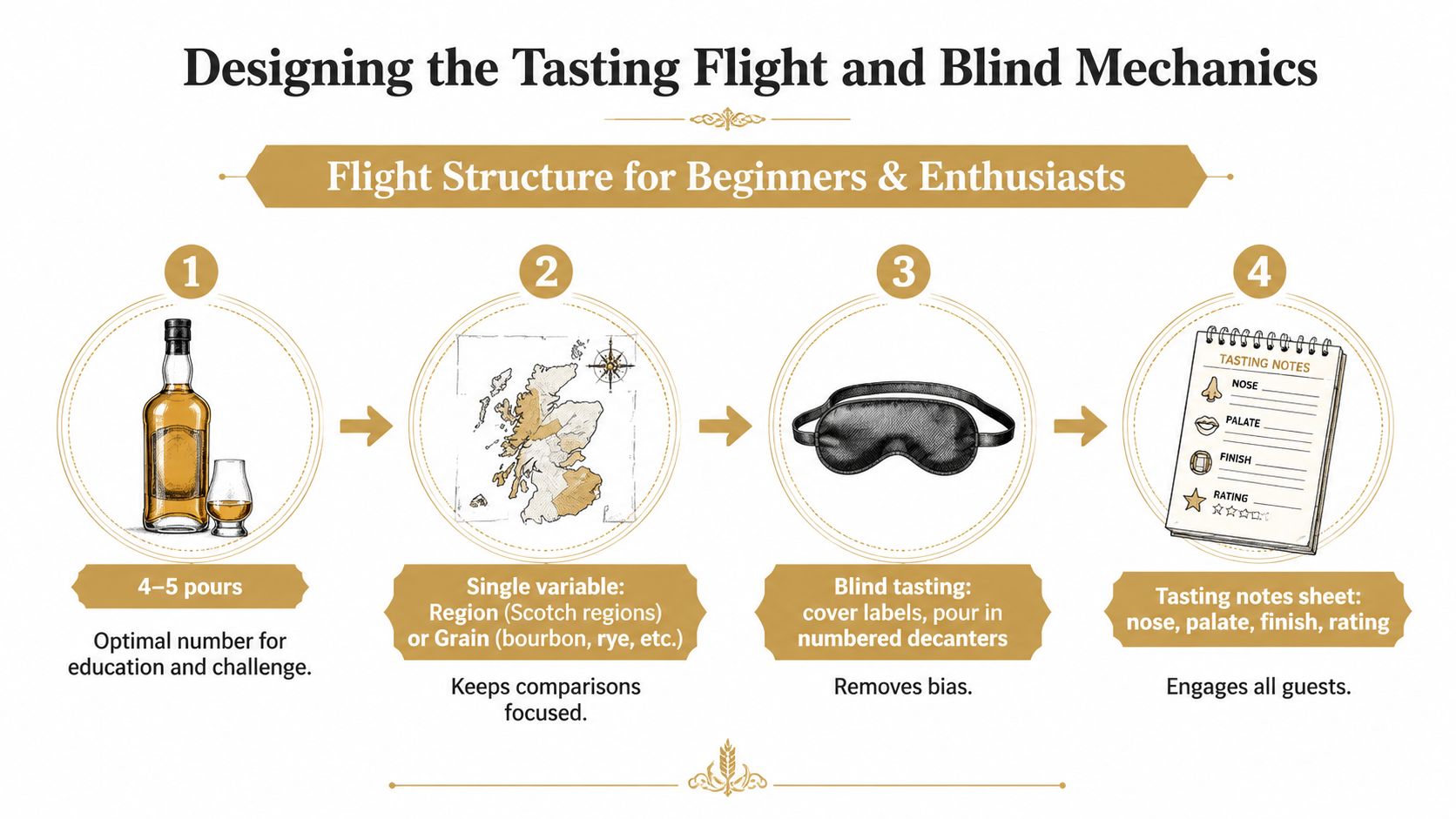
Random bottles create random conversation. Build the flight around one variable, then let guests experience how that variable changes the whiskey.
A strong lineup might compare rye, bourbon, and wheat whiskey. Another might compare Scotch regions. You could also use several releases from one distillery and move through an age progression. The single-variable rule matters because beginners can follow the comparison, while enthusiasts still have enough detail to analyze.
Use four to five pours. Plan each sample at 1 to 1.5 ounces, for roughly 4 to 6 ounces of spirit per guest across the flight. Those quantities come from the planned tasting format, so keep the actual serving conservative if you'll be using higher-proof whiskey or extending the evening with a social hour. A focused whiskey tasting flight gives you a practical model for keeping the lineup coherent.
Build the sequence from light to full
Pour from lighter to darker, younger to older, or lower proof to higher proof. Don't put a heavily peated or high-proof whiskey first and expect guests to evaluate delicate aromas afterward. Arrange the bottles so each pour adds a new challenge without overwhelming the palate.
Leave a 10 to 15 minute gap between pours. Use that time for quiet note-taking, water, a small bite, or discussion after everyone has finished writing. The structured tasting guidance recommends look, nose, palate, finish, and a final retaste with dilution. A beginner-friendly version is simple:
- Look: Observe color and clarity.
- Swirl: Move the whiskey gently, not aggressively.
- Sniff: Take easy, short passes with your mouth slightly open.
- Sip: Take a small sip rather than a mouthful.
- Savor: Notice the aftertaste and how long it remains.
The beginner guidance from Malts on whiskey tasting recommends looking for broad families such as vanilla, caramel, fruit, and spice. That vocabulary is enough to start useful discussion. Above 100 proof, add two to three drops of water and retaste. Water can open aromatics and soften the first impression, especially in cask-strength whiskey.
Make the blind process genuinely blind
Number the bottles A through E, depending on the size of the flight. Pour before guests sit down, cover the bottles with foil, or transfer the whiskey into numbered decanters. Don't let guests watch the order or see bottle shapes if you can avoid it.
Hand out reveal cards only at the end. Each guest should record aroma, sweetness, texture, heat, finish, and a rating before anyone announces a guess. Expectation effects can distort sensory judgment, so randomizing the order, standardizing temperature and pour size, and delaying discussion makes group scores more comparable, as explained in Difford's Guide to assessing spirits.
Scoring, Games, and Food Pairings That Keep the Energy Up
Don't force every group into the same game. A serious bourbon club wants a different structure from a room where half the guests are trying whiskey for the first time. Pick the format before you buy the food.
| Format | Best Group Size | Prep Time | Experience Level | Best Use Case |
|---|---|---|---|---|
| Structured scoring | Six to ten | Moderate | Beginner to advanced | Comparing bottles fairly |
| Blind bracket | Under eight | Higher | Intermediate to advanced | Competitive groups |
| Narrative tasting | Six to ten | Low to moderate | Mixed experience | Relaxed discovery |
Structured scoring
Give each guest a one-page ballot for the flight. Use 0 to 5 scales for nose, palate, finish, and one wildcard category such as “would buy.” Tabulate scores after round two and again at the end, then crown the table favorite.
This format is the safest choice for mixed groups because it gives beginners prompts without requiring them to speak first. Enthusiasts can add detail in the notes while everyone still contributes to the same score.
Blind bracket
Pair guests, pour two samples head-to-head, and let the preferred glass advance. Continue until one whiskey remains. This works best with a small group that enjoys competition and doesn't mind a faster pace.
The drawback is that the bracket can reward immediate impact rather than balance. A high-proof pour may win the first impression even if another whiskey has the better finish. Keep the bracket playful, not authoritative.
Narrative tasting
Lead the commentary yourself and save the blind reveal for the close. Ask one simple question after each pour, such as “Which one feels sweeter?” or “Which finish lasts longer?” This keeps beginners involved without making them complete a formal ballot.
Keep each round under twenty minutes, and reveal results only between pours. Mid-flight reveals create anchoring and can make guests revise their opinions to match the group.
Food should follow intensity. Use dark chocolate and dried fig with sherry-cask pours, aged cheddar with bourbon, smoked almonds with peat, and plain crackers between flights. Avoid heavily seasoned food during the formal tasting because it can dominate the whiskey. The whiskey and food pairing guide offers another useful way to organize pairings around flavor rather than novelty.
Pacing, Safety, and Making Non-Drinkers Feel Welcome
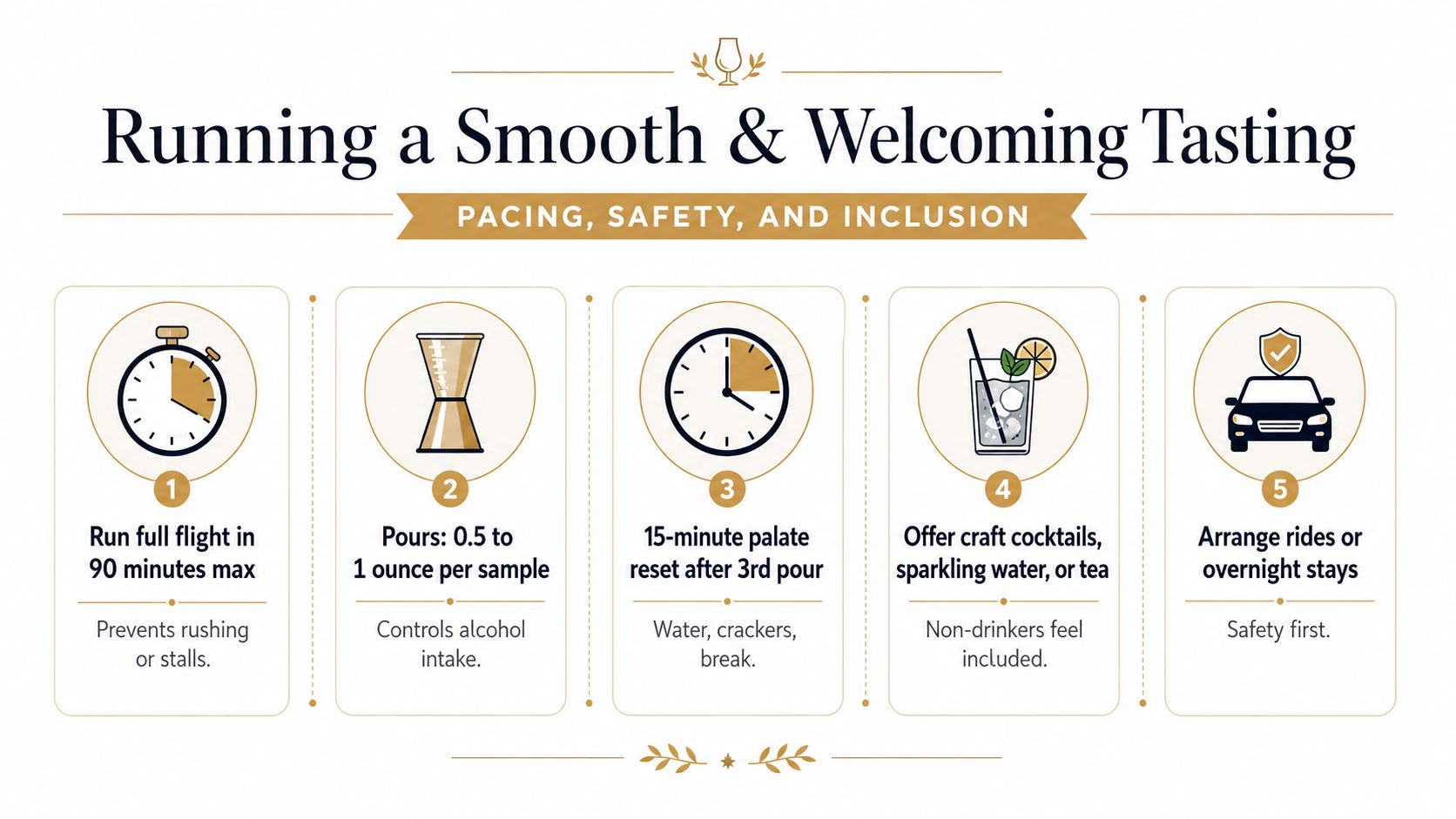
A tasting night stalls when the host pours too quickly, lets conversation sprawl, or treats non-drinkers as spectators. Run the formal flight in 90 minutes maximum and cap each sample at 0.5 to 1 ounce. The smaller pour is especially sensible when guests are comparing several whiskeys or when the lineup includes higher-proof bottles.
Build in a 15-minute palate reset after the second round. Serve sparkling water, bread, and plain crackers. Put two water glasses at each seat, provide dump cups, and skip ice during the formal rounds. Offer ice only after the final reveal, when guests move into the social hour and choose how they want to drink.
Practical rule: Tasting pours happen only when everyone is seated. Full drinks happen only after the reveal.
That rule gives the evening a clean boundary. Guests can skip a sample, spit or dump it, add water, or pause without feeling that they're disrupting service. Never pressure anyone into an extra pour, and make the ride-home plan before the first bottle opens.
Give non-drinkers a parallel experience
Ask at the door whether anyone isn't drinking. Prepare equivalent flights of cold-brew coffee, tea, or specialty sodas so those guests can smell, compare, score, and discuss alongside everyone else. A non-alcoholic flight should have its own progression and tasting notes, not a single beverage handed over as an afterthought.
A Non alcoholic Wine Directory from NA Beer Finder can help you explore additional alcohol-free options when you want something closer to a conventional tasting format.
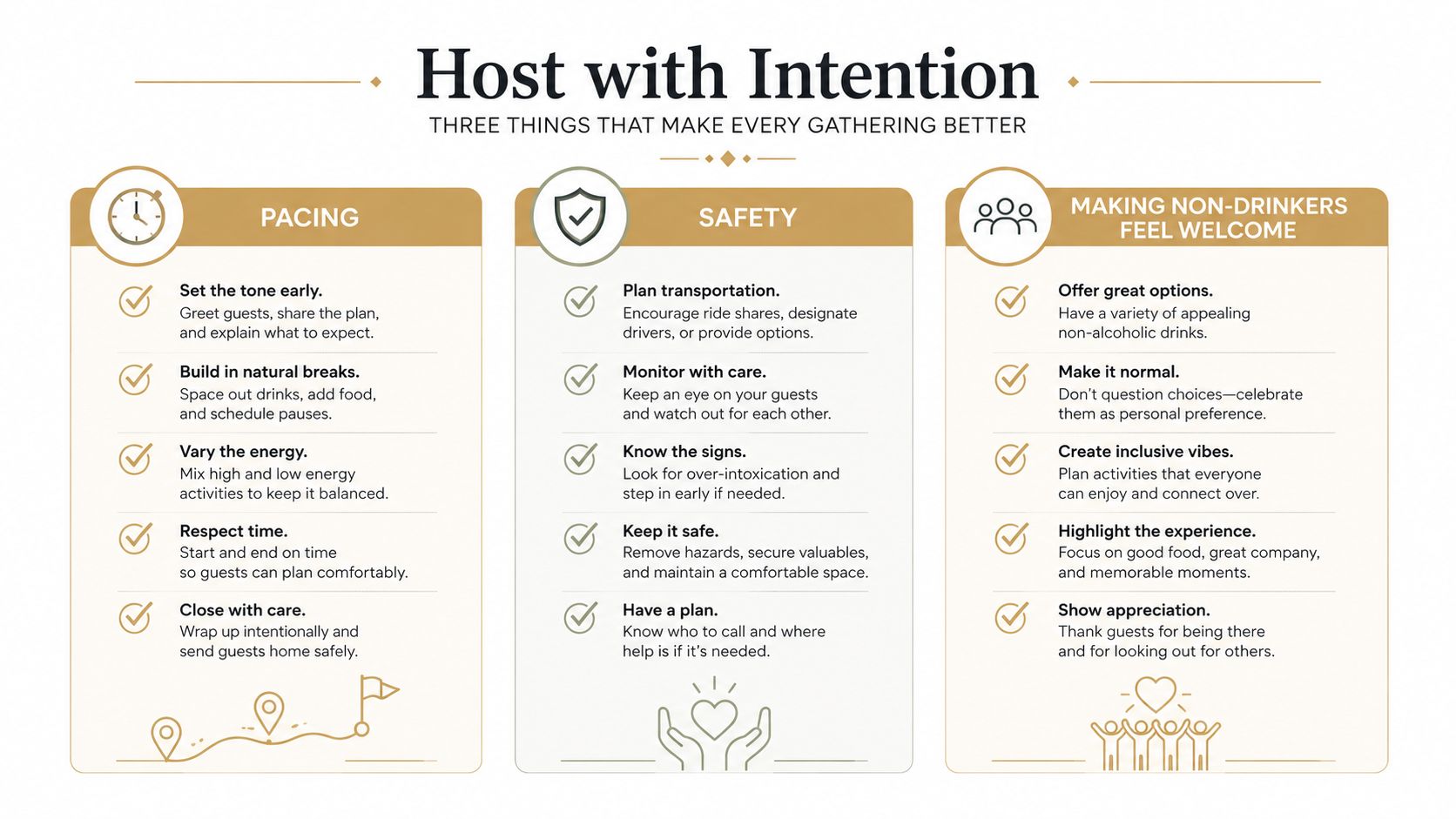
Put designated drivers, taxis, rideshare, and overnight arrangements on the invitation or group message. The host's job isn't to maximize consumption. It's to make the experience enjoyable, controlled, and easy to leave safely.
Turning the Night Into Craft Whiskey Sales
The reveal is the sales moment. Guests have just discovered which whiskey they preferred without the label influencing them, so their interest is concrete rather than hypothetical. If you wait several days and send a vague “let me know what you liked” message, much of that momentum disappears.
Capture reactions while they're fresh. Use the score sheets or a shared group document to record each guest's favorite, preferred style, and whether they want purchase information. Send a follow-up email within 48 hours, while the bottles and the conversation are still familiar.
The category gives you plenty of room to introduce American craft whiskey. The American Craft Spirits Association reported 3,069 active U.S. craft distillers as of August 2024, up 11.5% from 2,753 in August 2023, according to its 2024 Craft Spirits Data Project. Whiskey held the leading craft spirits revenue share in 2025 at 38.5%, valued at roughly $9.0 billion, in the same reference material. Those figures describe a crowded, expanding producer base, which makes guided discovery more valuable than asking guests to browse an undifferentiated shelf.
Remove the hardest purchase barrier
Don't make every guest hunt down a bottle after the party. Offer a curated Blind Barrels box shipped directly to each guest, featuring the night's winners plus two undiscovered picks. The format includes four 50 mL samples, a tasting table covering aroma, tasting, and finish notes, and a QR code that reveals the samples and provides access to full-bottle purchases.
Include a custom tasting card, a short backstory for each distillery, and an exclusive reorder link. Guests should understand what they liked, why it stood out, and what to do next without needing another conversation with the host.
Use a short, specific follow-up sequence
Reward a night-of purchase with a discount code valid for 72 hours. Then send one well-timed nudge email, not a stream of reminders. The email should name the guest's favorite, include the relevant purchase link, and mention the alternative pick for anyone who wants to keep exploring.
This approach works because it captures excitement at its peak and removes decision friction. The tasting creates the preference, the blind reveal validates it, and the purchase path makes acting on it simple. You don't need to push guests toward a bottle they didn't enjoy. Let their own scores and reactions do the closing.
Blind Barrels gives you a ready-made way to run a blind whiskey tasting with premium craft samples, tasting guidance, a reveal QR code, and a scoring game guests can share. Visit Blind Barrels to choose a tasting box for your next whiskey tasting party and turn the evening's favorite pours into an easy follow-up purchase.