

Here’s the simple truth: all bourbon and rye are types of whiskey, but not all whiskey can be called bourbon or rye. Think of "whiskey" as the big family name for any spirit made from fermented grain. Bourbon and rye, on the other hand, are specific, legally-defined American styles that have to play by a strict set of rules to earn their titles.
A Beginner's Guide to American Whiskey
If you’ve ever found yourself staring down a wall of brown spirits at the local shop, feeling a little lost, you're in good company. The labels can be a puzzle, but figuring them out is the first step on an incredible tasting journey.
This isn't just about semantics; the name on the bottle is a promise about what’s inside, dictated by laws governing ingredients, production, and aging. It’s this rich diversity that has fueled the global whiskey market, which was valued at an incredible USD 72.7 billion in 2024, thanks to drinkers eager to explore these nuances.
For anyone new to the game, it all boils down to what defines each spirit:
- Whiskey: This is the broad category. It’s any spirit distilled from a fermented mash of grains like corn, barley, rye, or wheat.
- Bourbon: A distinctly American whiskey that must be made from at least 51% corn. This is where bourbon gets its signature sweetness.
- Rye: Another American original, rye whiskey must contain at least 51% rye grain, which gives it a trademark spicy, peppery kick.
Beginner's Tip: Not sure where to jump in? Try a "high-rye" bourbon. Fantastic craft options like New Riff Single Barrel Bourbon deliver that classic caramel sweetness but finish with a pleasant hint of rye's signature spice, giving you a taste of both worlds.
Once you get a handle on these basics, a whole universe of flavor opens up. You can start by getting a solid foundation on what makes a whiskey a whiskey.
For a quick reference, the table below breaks down the key differences at a glance.
Quick Comparison Whiskey vs Bourbon vs Rye
Here's a simple breakdown of the core distinctions between these three popular spirits. This table offers a quick snapshot to help you remember the fundamentals.
| Spirit | Primary Grain | General Flavor Profile | Origin Requirement |
|---|---|---|---|
| Whiskey | Varies (Corn, Barley, Rye, etc.) | Highly diverse; can be sweet, smoky, spicy, or fruity | Can be made anywhere in the world |
| Bourbon | Minimum 51% Corn | Sweet, full-bodied; notes of caramel, vanilla, oak | Must be made in the United States |
| Rye | Minimum 51% Rye | Spicy, dry; notes of black pepper, baking spices, fruit | Must be made in the United States |
Ultimately, understanding these rules helps you find the bottle that best suits your palate. Bourbon is your go-to for sweetness, while rye brings the spice.
Decoding Bourbon: America's Native Spirit
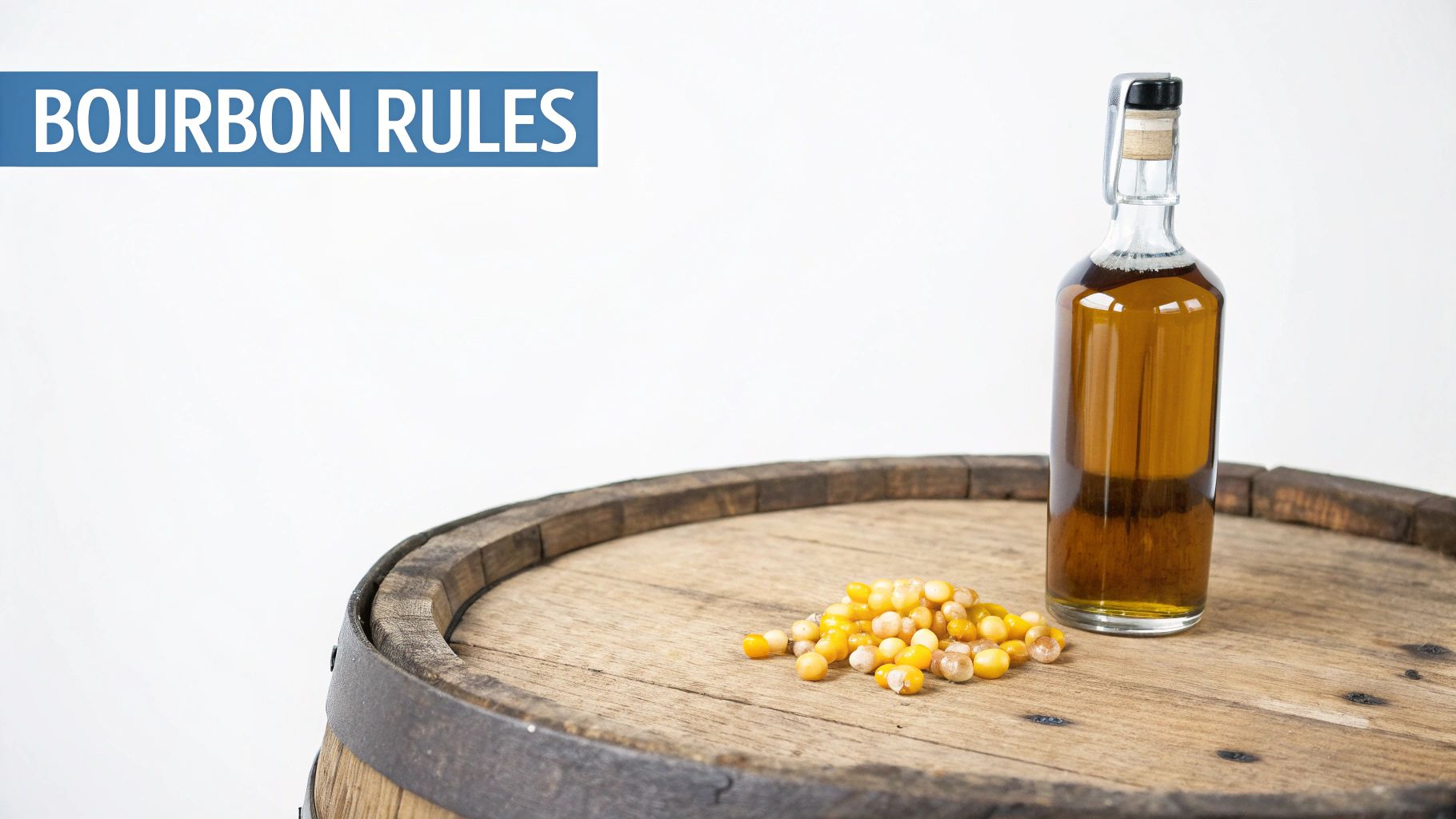
Often called "America's Native Spirit," bourbon is much more than just a drink—it’s a story defined by a strict set of legal guardrails. Unlike the wider world of whiskey, a spirit has to meet some very specific criteria to legally earn the name "bourbon" on its label.
It all starts with the grain. The most critical rule is that a bourbon's mash bill must contain at least 51% corn. This is the heart of its flavor, giving bourbon its signature sweetness and those rich caramel, vanilla, and toffee notes we all love. The other 49% is where distillers get to play, adding complexity with grains like rye, wheat, or malted barley.
This commitment to a uniquely American style has carved out a massive piece of the global spirits market. In 2024, the global bourbon market hit a value of USD 8.29 billion, with North America alone making up over 35% of all revenue. It’s clear this spirit has a deep connection to its American roots and a huge following right here at home. For a deeper dive into these numbers, check out this bourbon spirits global market report.
The Unbreakable Rules of Bourbon
Beyond the corn-heavy mash bill, several other non-negotiable laws shape bourbon's character. These aren't just suggestions; they are federal standards that guarantee consistency and quality from bottle to bottle.
- Aging Vessel: Bourbon has to be aged in new, charred oak containers. This is absolutely crucial. The interaction between the spirit and that fresh, charred wood is where most of its color and flavor comes from.
- Distillation Proof: It can’t be distilled to more than 160 proof (80% ABV).
- Barrel-Entry Proof: The spirit must go into the barrel for aging at no more than 125 proof (62.5% ABV).
Tip for New Drinkers: Keep an eye out for the term "Straight Bourbon." This tells you it has been aged for at least two years and has zero added colorings or flavorings. It's a great sign that you're getting a quality, authentic product.
Tasting American Craftsmanship
Even with these rigid rules, craft distillers find plenty of room to get creative. American craft brands are proving just how much local grains and unique aging conditions can shape a bourbon’s final profile.
Take Widow Jane, a distillery in Brooklyn, New York. They're famous for using pure limestone mineral water from the legendary Rosendale Mines to proof their whiskeys. That mineral-rich water creates a distinct mouthfeel and brings out complex notes of orange, maple, and cherry in their bourbon.
Out in Utah, High West Distillery is known for its innovative blends that showcase different mash bills and aging techniques. Their American Prairie Bourbon is a fantastic blend of straight bourbons that delivers notes of sweet cornbread and honey nougat with a little spice, showing the true art of combining different sources. These craft examples prove that distillers can work within bourbon's strict framework to produce an incredible spectrum of flavors. If you want to get better at picking out these nuances, exploring a bourbon flavor wheel is a great way to train your palate.
Exploring Rye Whiskey's Spicy Character
While bourbon leans on corn for its sweet, mellow personality, rye whiskey charts a spicier course. It delivers a bold, peppery profile that really stands out in a lineup, making it a go-to for anyone who appreciates a more assertive spirit.
It all comes down to the grain. To earn the legal title of American rye whiskey, the mash bill has to contain at least 51% rye. This single rule is the source of rye's signature flavor—a lively mix of spice, black pepper, and sometimes subtle fruit or herbal notes that cuts through with a crisp, dry finish.
A Storied History and Modern Revival
Rye whiskey has a deep and fascinating history in America. It once reigned as the nation's most popular spirit, especially in northeastern states like Pennsylvania and Maryland. If you want to dive deeper, you can explore the history of rye as America's true native spirit.
Though it fell out of favor for decades, rye is in the middle of an incredible resurgence. Bartenders rediscovered its power to punch up classic cocktails, and drinkers looking for flavors beyond bourbon's sweetness have flocked back to it.
Once a niche spirit, rye whiskey's sales volume has exploded by an astonishing 1,275% since 2009. The market is projected to grow from USD 3.89 billion in 2023 to USD 4.98 billion by 2030—a clear signal of its comeback. This growth is being driven by its essential role behind the bar and its appeal to consumers looking for bolder flavors.
Tasting American Craft Rye
For whiskey drinkers curious about this spicy style, American craft distilleries offer some fantastic and approachable entry points. They're pushing the boundaries of what rye can be while staying true to its historic character.
- WhistlePig: Based out of Vermont, WhistlePig is famous for its bold, high-rye expressions. Their 10 Year rye is a modern benchmark, delivering intense notes of baking spice, orange peel, and toasted oak. It’s a perfect example of a powerful, classic rye.
- Sagamore Spirit: This Maryland distillery is reviving the state's historical style of rye. Their signature expression offers a more approachable profile with a smoother, slightly sweeter character balanced by notes of cinnamon, clove, and a hint of walnut.
Trying a craft rye is one of the best ways to understand the whiskey vs bourbon vs rye debate firsthand. Its spicy kick provides a clear contrast to bourbon's sweetness, helping you figure out which profile best suits your palate. If a bold, peppery, and complex drink sounds like your kind of thing, rye whiskey might be exactly what you're looking for.
Comparing Production, Flavor, and Finish
The unique character you find in a glass of bourbon or rye is no accident—it's the direct result of specific, legally-defined production choices. Even though they're both proud American whiskeys, the subtle shifts in their grain recipes, aging rules, and distillation proofs create two completely different tasting experiences. Getting a handle on these details is the key to really appreciating the whiskey vs. bourbon vs. rye conversation.
It all starts with the mash bill. Bourbon’s soul is its 51% minimum corn base, which is the source of its signature sweetness. This gives it that full-bodied mouthfeel and those classic flavors of caramel, vanilla, and honey. Rye whiskey, on the other hand, is built on a foundation of 51% minimum rye grain. This recipe delivers a leaner, drier character that’s packed with spicy notes like black pepper, cinnamon, and baking spices.
Aging: The Soul of the Spirit
You could argue that the barrel is just as important as the grain. This is where the spirit gets its deep color and a huge chunk of its flavor profile.
- Bourbon: The law is crystal clear—bourbon must be aged in new, charred oak containers. This rule is non-negotiable and it's the main reason bourbon soaks up those deep vanilla, toffee, and toasted oak notes so effectively.
- Rye Whiskey: It follows the same script, aging in new, charred oak. But the assertive, spicy nature of the rye grain interacts with that wood differently, pulling out more peppery spice and less of the overt sweetness you find in bourbon.
- Other World Whiskeys: Take Scotch and Irish whiskies, for instance. They are often aged in used barrels, frequently ones that once held bourbon. This imparts a much subtler wood influence, letting the character of the grain and the distillation process take center stage.
The new charred oak requirement for bourbon is the single most important factor behind its signature flavor profile. Without it, bourbon would lose the rich, sweet complexity that defines it as "America's Native Spirit."
To really see how these rules shape the final product, it helps to lay them out side-by-side. The legal definitions aren't just red tape; they are the very recipes that create the spirits we love.
Detailed Comparison of Whiskey Production Rules
| Attribute | Bourbon | Rye (American) | Scotch Whisky | Irish Whiskey |
|---|---|---|---|---|
| Primary Grain | At least 51% corn | At least 51% rye | 100% malted barley (for Single Malt) | Varies (malted & unmalted barley common) |
| Aging Container | New, charred oak containers | New, charred oak containers | Used oak casks (often ex-bourbon) | Used oak casks (often ex-bourbon) |
| Aging Minimum | No minimum (2 years for "Straight") | No minimum (2 years for "Straight") | 3 years | 3 years |
| Distillation Proof | Max 160 proof (80% ABV) | Max 160 proof (80% ABV) | Max 189.6 proof (94.8% ABV) | Max 189.6 proof (94.8% ABV) |
| Barrel Entry Proof | Max 125 proof (62.5% ABV) | Max 125 proof (62.5% ABV) | N/A | N/A |
| Geography | Made in the USA | Made in the USA | Made in Scotland | Made in Ireland |
This table highlights just how specific the American whiskey regulations are, especially concerning the use of new barrels and entry proofs, which directly contributes to their bold flavor profiles compared to their counterparts across the Atlantic.
Proof and Finish: A Tale of Two Endings
Distillation and barreling proofs also play a huge part in the final taste. Bourbon can't be distilled higher than 160 proof and has to go into the barrel at no more than 125 proof. Keeping these proofs relatively low ensures that more of the flavorful compounds, or congeners, from the fermented mash make it into the final spirit.
This infographic does a great job of breaking down what makes rye whiskey tick.
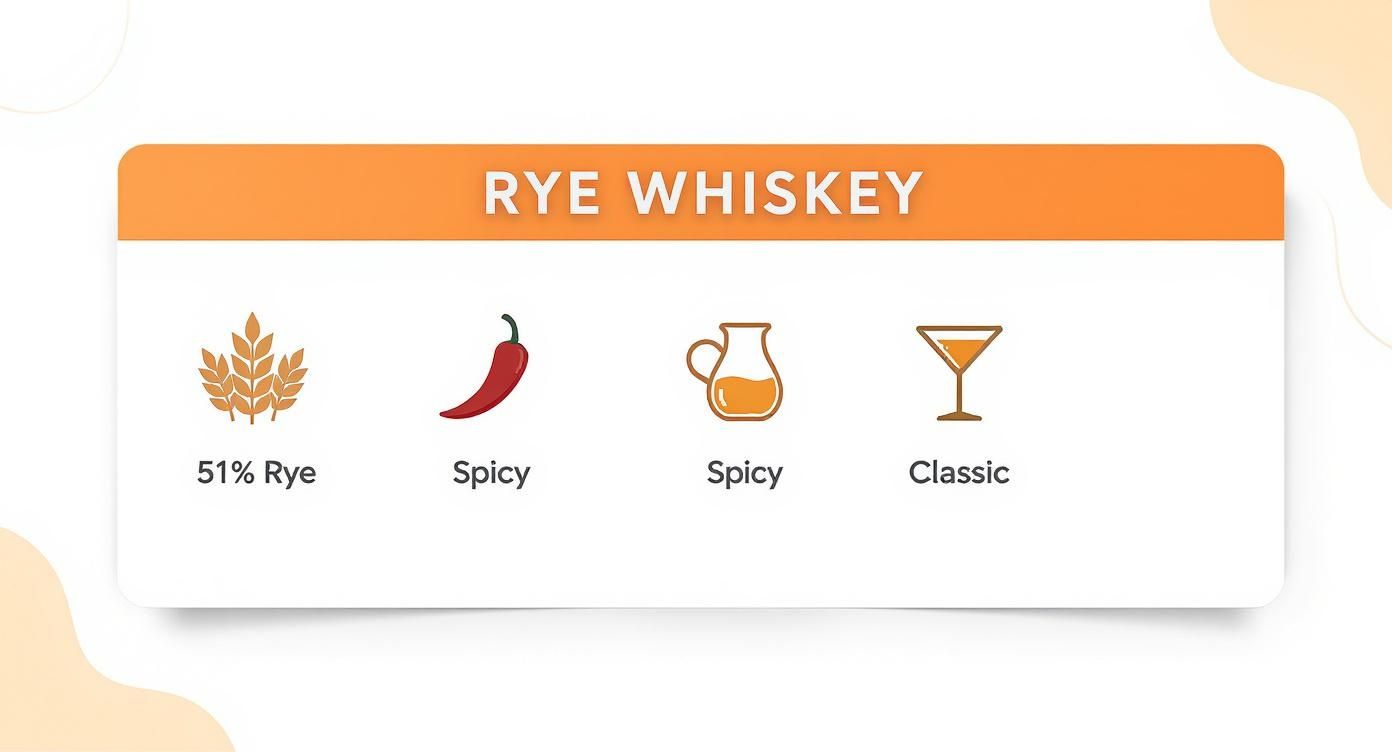
As you can see, there's a straight line from that 51% rye grain requirement to the spicy profile that makes it a bartender's best friend for classic cocktails. This direct link between ingredient and flavor is what really sets rye apart.
For someone new to whiskey, the finish is where these differences really hit home. A bourbon like Wilderness Trail Wheated Bourbon leaves you with a soft, lingering finish full of caramel and sweet oak. In stark contrast, a craft rye like Frey Ranch Straight Rye Whiskey hits you with a crisp, peppery spice that just cleanses the palate. The choice really comes down to what you're in the mood for: do you want your whiskey to end with a warm hug or a spicy handshake?
Choosing Your Pour for Classic Cocktails
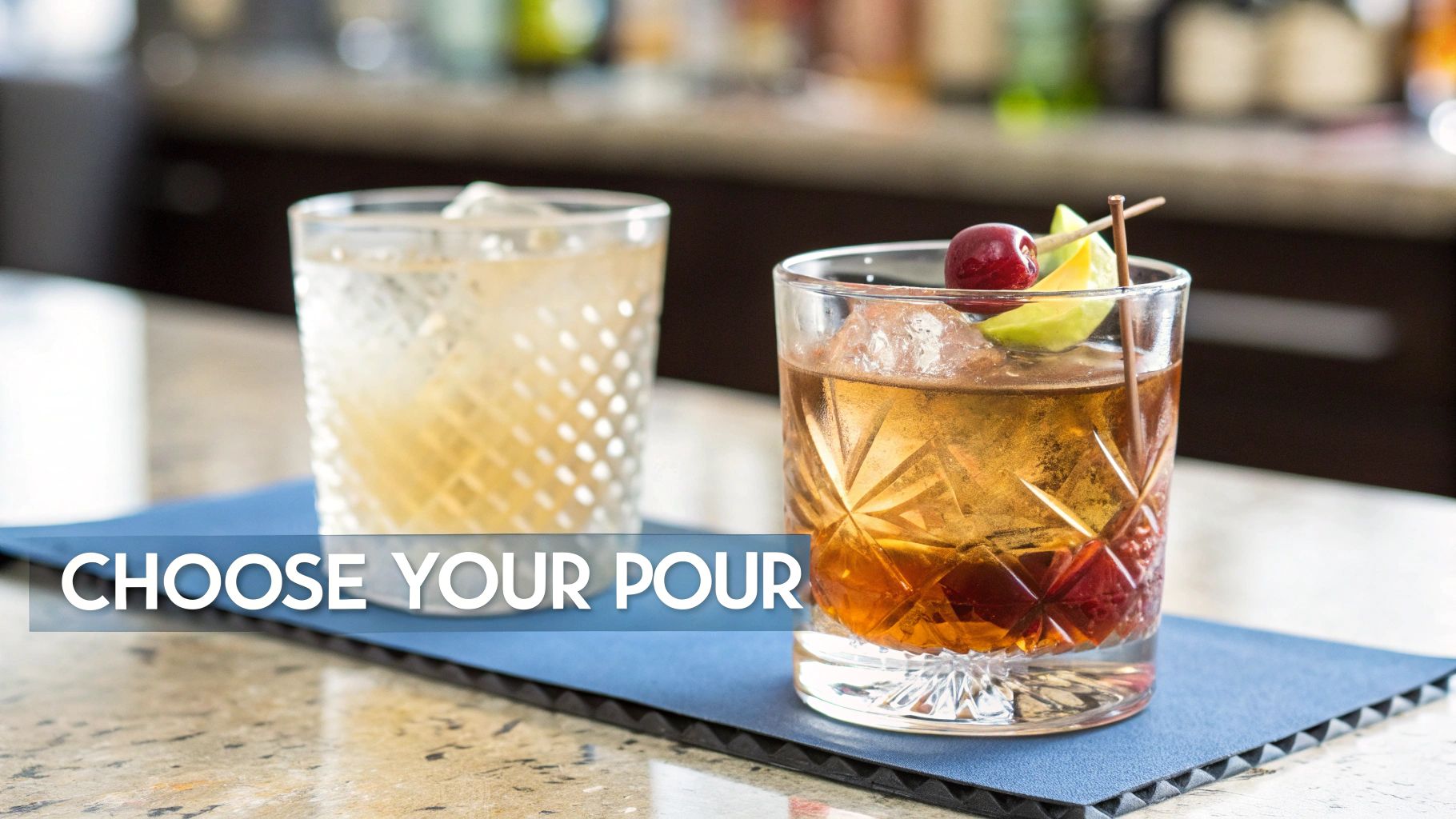
The choice between bourbon and rye can completely transform the character of a cocktail, turning a familiar drink into a whole new experience. For home bartenders and new enthusiasts, knowing which whiskey to grab—and why—is the key to unlocking the true potential of the classics. This isn't about rigid rules, but about developing a feel for how each spirit's unique personality plays with other ingredients.
It really all boils down to a simple question: do you want to sweeten and soften, or do you want to spice things up? Bourbon’s corn-heavy profile is perfect for rounding out sharp edges, while rye’s peppery bite adds a layer of complexity that can stand up to just about anything.
The Old Fashioned: Sweet vs. Spicy
The Old Fashioned is the perfect battleground for the great bourbon vs. rye debate. It’s a beautifully simple cocktail—just spirit, sugar, bitters, and citrus—which means the base spirit has absolutely nowhere to hide. Your choice here directly shapes every single sip.
- For a Smoother, Sweeter Drink: A classic bourbon is your best friend. Its inherent caramel and vanilla notes melt into the sugar and bitters, creating a rich, mellow, and incredibly approachable cocktail. It’s the definition of a comforting sipper.
- For a Spicier, More Assertive Drink: This is where you reach for the rye. The spirit's signature peppery kick cuts right through the sweetness, resulting in a drier, more complex, and bracing Old Fashioned. It's a much bolder take on the classic.
For a fantastic bourbon Old Fashioned, a great American craft choice is Laws Whiskey House Four Grain Straight Bourbon, which brings a beautiful honeyed sweetness. If you're going the rye route, try New Riff Kentucky Straight Rye Whiskey for its powerful spice.
The Manhattan and Other Classics
While the Old Fashioned gives you a clear choice, some cocktails have a classic pairing for a reason. Understanding the "why" behind these traditions helps you make better drinks across the board.
The Manhattan, for instance, is traditionally a rye cocktail. Its peppery spice provides the perfect counterbalance to the rich, sweet vermouth, creating a sophisticated and impeccably balanced drink. A bourbon Manhattan is still delicious, of course, but it will be noticeably sweeter and a bit less complex.
Beginner's Tip: Not sure which camp you fall into? Start with a 'high-rye' bourbon. These whiskeys, like Redemption High Rye Bourbon, are made with a significant amount of rye in their mash bill. They offer the best of both worlds: the foundational sweetness of bourbon with a spicy finish that hints at rye’s character, making them incredibly versatile for just about any cocktail.
Other classic cocktails have their own distinct preferences:
- Whiskey Sour: This cocktail absolutely shines with bourbon. The spirit’s sweetness beautifully complements the tartness of the lemon juice, creating a perfect sweet-and-sour harmony.
- Sazerac: This New Orleans classic practically demands rye whiskey. Its spicy, almost herbal character is essential for balancing the absinthe rinse and Peychaud's bitters. It just wouldn't be the same without it.
How to Host Your First Whiskey Tasting
Tasting whiskey is about savoring the experience, not just taking a drink. If you're just starting out, a little structure can unlock a whole world of flavor you might otherwise miss. This simple guide will help you appreciate the full range of aromas and tastes tucked away in every glass.
First things first: your glassware matters. While any glass will do in a pinch, a Glencairn glass is specifically designed with a wide bowl and a narrow rim. This shape is your best friend in a tasting, as it concentrates the spirit’s aromas and makes it much easier to pick out individual notes.
A Step-by-Step Tasting Guide
Properly tasting whiskey involves more than just a quick sip. Follow these four simple steps to get the most out of every pour.
- Observe the Color: Hold your glass up to the light. The color, which can range from pale straw to deep amber, offers clues about its age and the type of barrel it rested in.
- Nose the Spirit: Gently swirl the whiskey to release its aromas. Bring the glass to your nose, but keep your mouth slightly open and take short, gentle sniffs. This helps you avoid getting overwhelmed by the alcohol vapor.
- Take the First Sip: Make the first sip a small one. Let it coat your entire palate for a few seconds—some people call this the "Kentucky Chew." It's all about acclimating your taste buds to the alcohol.
- Add a Drop of Water: Before your second sip, add just a few drops of room-temperature water. This simple trick can be a game-changer, softening the alcohol's punch and revealing more complex underlying flavors.
Pro Tip for New Drinkers: Don't stress about identifying a dozen obscure notes like "saddle leather" or "cigar box." Start with the big categories. Is it sweet like caramel? Spicy like black pepper? Fruity like cherry? Training your palate is a gradual—and very enjoyable—process.
A Simple Blind Tasting Flight at Home
Ready to put your new skills to the test? A blind tasting is a fantastic way to figure out what you genuinely like without a cool label influencing your decision. Set up this simple flight to compare the core differences in the whiskey vs bourbon vs rye debate.
- Pour One Bourbon: Grab an accessible craft bourbon like Still Austin "The Musician." As you sip, look for those classic sweet notes of caramel, vanilla, and honeyed corn.
- Pour One Rye: Choose a solid craft rye, something like Dad's Hat Pennsylvania Rye. Search for its signature spicy character—you should find notes of black pepper, cinnamon, and maybe a hint of mint.
Tasting them side-by-side like this makes their distinct profiles immediately obvious. It's the best way to learn the difference firsthand.
Common Questions Answered
Jumping into the world of American whiskey always stirs up a few good questions. Let's tackle some of the most common ones to clear the air as you get started.
Can Bourbon Be Made Outside of Kentucky?
It sure can. While Kentucky is undoubtedly the heartland of bourbon, pumping out about 95% of the world's supply, it's not a geographical requirement. Bourbon is legally "America's Native Spirit," which means it can be produced anywhere in the United States, so long as it follows the strict production rules.
You can find some absolutely killer craft bourbons coming out of states like Texas, New York, and Colorado these days.
Beginner's Tip: When you’re ready to venture beyond the Bluegrass State, check out a craft brand like Still Austin from Texas. Their flagship bourbon, "The Musician," is a fantastic example of a top-shelf spirit made outside the traditional bourbon belt. It really shows how local climate and grains can create a completely unique flavor.
What Is the Best Way to Drink Whiskey for a Beginner?
Honestly, the best way is however you enjoy it most. But if you're looking for a good place to start, try tasting it neat (that's without any ice).
Pour just a small amount into a glass and take a tiny first sip to let your palate get used to it. After that, try adding a few drops of water or a single large ice cube. This little bit of dilution can tone down the alcohol burn and open up the more subtle flavors and aromas hiding in the glass.
Ready to find your next favorite craft whiskey without all the marketing hype? At Blind Barrels, we strip away the fancy labels so you can focus on what really matters: the flavor. Our blind tasting kits are the perfect way to train your palate and discover incredible spirits from small, independent American distilleries. Explore our subscription boxes and start your tasting adventure today.