

If you still hear people call whiskey a man's drink, start by questioning the advice that women are newcomers to the category. The better starting point is simpler and more accurate, women have been part of whiskey's story from the beginning, as producers, sellers, and buyers, even if the branding around the shelf took a much narrower view later on. That's the myth worth setting aside before you pour the first glass.
The Myth Whiskey Forgot
The usual story says women arrived late to whiskey, first as curious drinkers and then as a market brands had to learn how to court. The historical record points in the other direction. Women helped make, sell, and manage whiskey long before modern advertising decided who belonged in the room.
One early clue comes from Europe, where historical accounts note that women ran household distilling and medicinal spirits production for centuries. One source also says women made up 30% of the brewers' guild in London by the mid-1400s in a world where brewing and distilling often overlapped in domestic and commercial life. That doesn't sound like a category women had to break into. It sounds like one they were already helping build.
In the U.S., historian Fred Minnick's research describes women selling more than $2 million of whiskey per year in the 1800s, often through brothels. That detail is messy, but it matters, because it shows women were economically embedded in the trade, not standing outside it. Additional historical reporting also says women managed legitimate distilleries in Scotland, with archival records identifying more than 30 women overseeing distilleries such as Dalmore, Glenmorangie, and Ardbeg. The “women just discovered whiskey” narrative falls apart once you look at the paperwork.
Practical rule: if a whiskey story only starts in the era of modern marketing, it's probably missing the women who were there before the brand existed.
The question isn't whether women belong in whiskey. They always have. The better question is why the industry still talks about them like an emerging niche instead of a foundational part of the trade.
How Women Shaped Whiskey Before Anyone Branded It
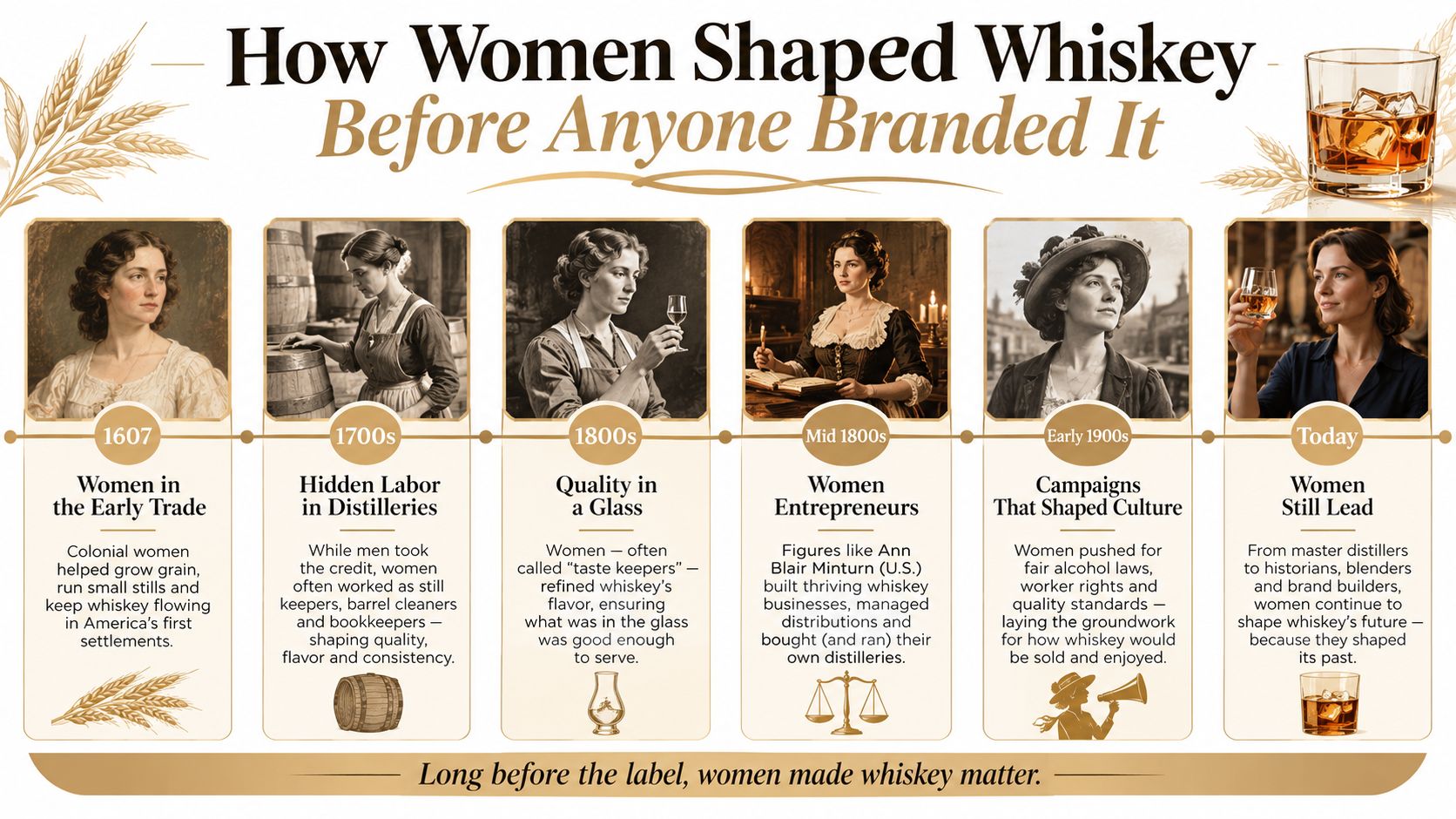
Brewing and distilling often overlapped in domestic and commercial life. That mattered because the work behind whiskey was rarely confined to one tidy role. Women helped keep the whole chain moving, from production to selling to the day-to-day decisions that made a trade function.
From household work to commercial decisions
The clearest example is in the practical labor itself. Women handled the kinds of tasks that made whiskey possible long before branding turned the spirit into a polished product, watching ferments, moving ingredients, keeping accounts, and selling through the channels they already knew. That is a very different picture from the old myth of whiskey as a closed male craft. It shows a trade built through repeated, ordinary decisions, the kind that usually disappear when later marketing rewrites the story.
That same reality appears in the frontier and small-town economy. Minnick's research on women selling more than $2 million of whiskey per year in the 1800s points to women acting as dealers, brokers, and practical operators in a market that often ran through homes, taverns, and other informal spaces. Those settings mattered because whiskey did not always move through a formal storefront first. It moved through trust, access, and local relationships, all areas where women already had standing.
Scotland offers another example, and it is a useful one because it shows women inside the official structure of the trade. Archival records identifying more than 30 women managing distilleries such as Dalmore, Glenmorangie, and Ardbeg show women making real production choices, not just appearing in the margins. Running a distillery meant judging when to act, how to keep consistency, and how to handle the pressures that came with a working site. That is hands-on management, the sort that shapes what ends up in the cask and, later, in the glass.
Why that older story still matters
This history helps explain why modern American craft whiskey can feel familiar even when the packaging looks new. Small distilleries still rely on close oversight, direct relationships, and a local reputation that has to be earned bottle by bottle. Those are working habits, not branding tricks. They echo a longer tradition in which women were already present as producers, sellers, and decision-makers, even when later labels did not bother to name them.
That is the point to carry forward. Women in whiskey do not begin with a recent wave of visibility, and they do not fit neatly into a “making their way in” story. They were already there, keeping the trade running before the industry decided whose names should stay on the record.
What the Consumer Numbers Actually Show
The buying side tells the same story in modern terms. Women were once treated as a fringe audience in whiskey, but the numbers now point to a much more central role in the category. Multiple sources cited in industry coverage put women at about 15% of whiskey drinkers in the 1990s, while recent figures place them closer to 37% to 40% in the U.S. and North America. That's not a small shift in tone. It's a structural change in who sits at the table.
| Metric | Figure | Why It Matters |
|---|---|---|
| Women whiskey drinkers in the 1990s | 15% | Shows how male-coded the category used to be |
| Women whiskey drinkers recently | 37% to 40% | Shows that women are now a major consumer base |
| Women's share of U.S. whiskey sales | 27% | Suggests buying power is already shaping the market |
| Home alcohol purchasing decisions | 70% | Points to influence beyond the bottle on the shelf |
| Woodford Reserve shoppers who are women | 40% | Shows premium brands already see women as core customers |
| Some brands' female customer estimates | 30% to 35% | Reinforces that women are not a side audience |
The most important part of this table is what it doesn't say. It doesn't describe a niche. It describes a large and growing buyer cohort with real influence over retail behavior and home purchasing. One industry article reports women account for 27% of whiskey sales in the U.S., based on Nielsen research, while another says women drive about 70% of alcohol purchasing decisions for the home. Those two facts belong together, because they show how whiskey purchases happen in real life, not just in brand decks.
Women are not the exception in whiskey buying. They're part of the decision-making structure.
That matters for any drinker trying to learn the category without getting trapped by old assumptions. If you're choosing a bottle for yourself, your partner, or your next tasting, you're already shopping inside a market where women shape demand. Brands that ignore that reality are not protecting tradition. They're missing their actual audience.
Inside the Workforce and the Marketing Gap
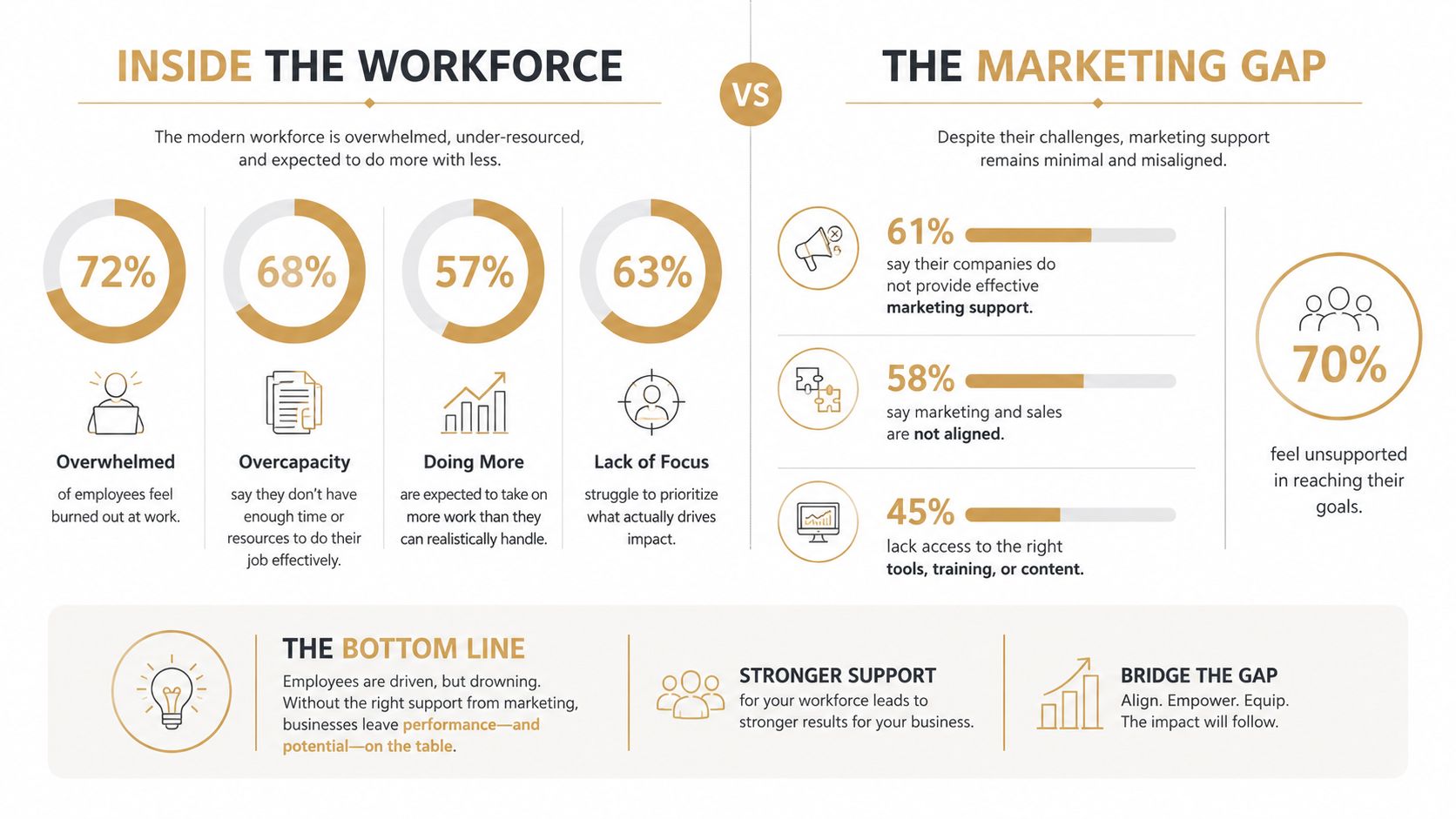
The workforce numbers look encouraging at first glance. In Ireland, women now make up 37% of the whiskey workforce. That suggests the category is no longer locked to a single type of employee, at least on paper. But the deeper survey data shows the culture hasn't caught up with the hiring.
The global whiskey survey cited in industry reporting found only 16% of women believed the industry was doing enough to change the perception of whiskey as a “man's drink.” The same survey found 87% felt they faced more workplace challenges than men, and 70% said they had experienced inappropriate or sexual remarks on the job. Those aren't soft issues. They shape retention, leadership development, and who feels comfortable staying in the category long enough to become an expert.
What the brands are showing
The marketing side has its own mismatch. SevenFifty Daily reported that the world's leading whiskey brands posted 228% more images featuring men than women across social media accounts in 2020, even though women made up 36% of whiskey drinkers. That gap is hard to ignore once you see it. A huge share of the customer base isn't seeing itself reflected in the content meant to welcome it in.
The pattern is consistent with the OurWhisky Foundation findings reported elsewhere, where more than 80% of respondents said they had been asked whether they even like whiskey, and 89% said consumers still widely perceive whiskey as a man's drink. The industry doesn't just need more women in the room. It needs to stop telling them, directly and indirectly, that the room belongs to someone else.
Why this creates an opening
Brands have a practical opportunity, not just a messaging challenge. Better representation in staff training, tasting-room behavior, and visual marketing can close the gap between actual buyers and brand imagery. The mistake is assuming the audience needs to be educated into whiskey. The evidence suggests the industry needs to catch up to the audience it already has.
That's also why women-led brands often resonate so quickly with mixed audiences. They don't have to invent demand. They just have to meet the market as it is, with better cues and more honest storytelling.
The Women Behind the Barrel and the Bottle
The easiest way to flatten women in whiskey is to treat them as one type of person. They're not. Some are distillers, some are blenders, some are educators, and some shape the conversation as writers and advocates. The modern craft world is full of that range, which is why the old “one woman, one success story” framing feels too small.
Makers, not mascots
Bourbon Veach's industry profile points to women like Lisa Wicker, Marianne Eaves, Pam Heilmann, and Sherrie Moore as examples of how far the production side has expanded. It also highlights Andrea Wilson at Michter's, whose expertise lies in aging whiskey, and Nancy Fraley, who brought blending experience from wine and brandy into whiskey. Heather Greene at Milam & Greene represents another lane, the craft blender making technical decisions that shape the liquid itself.
Those names matter because they show different kinds of authority. Not every woman in whiskey is standing behind a still, and not every technical role looks the same. Some build flavor through maturation, some through blending, and some through the way a distillery talks to the public.
The culture around the glass
The conversation also includes writers and educators, because whiskey doesn't stay in the barrel until someone teaches people how to talk about it. The same industry history points to women such as Susan Riegler, Janet Patton, Maggie Kimberl, and Sarah Havens helping shape whiskey media and education. Their work matters because it widens the vocabulary around the category, which helps new drinkers feel less like outsiders.
If you want a tighter look at how women are showing up across American craft whiskey, Blind Barrels has a useful overview of rising female distillers in the category. That kind of coverage helps replace the old stereotype with a broader map of who's doing the work.
What stands out across all these roles is that there's no single “women in whiskey” profile. The category is healthier when it makes room for technical, public-facing, and editorial work at the same time.
How to Find and Support Women-Led Distilleries
The simplest way to support women in whiskey is to shop with a little more intention. Start by looking at small American craft distillery databases, women-owned spirits directories, and the About or team pages on distillery websites. Founder names, production leads, and bottling notes usually tell you more than polished ad copy does.
A bottle can also give you clues. Founder signatures, producer bios, and direct references to ownership or leadership are useful signs, while vague language can hide a lot. If a label leans hard on lifestyle imagery but won't say who runs the place, that's a reason to keep looking.
Practical rule: if you can't quickly find the founder, the distiller, or the production team, the brand may be selling a vibe more than a business.
A quick way to shop smarter
- Check the website first. Look for ownership, leadership, and production names before the bottle reaches your cart.
- Compare shelf neighbors. Women-led craft bottles often sit right next to better-known labels at boutique retailers, so don't assume the most familiar name is the better fit.
- Taste before you commit. Blind sampling strips away the label bias that can make marketing feel like flavor.
- Ask direct questions. Retailers and distillery staff should be able to tell you who makes the whiskey and how the business is structured.
If you want a broader shopping field, a travel-style directory like the Haute Black Bordeaux travel guide is a good model for how curated recommendations can help people move from curiosity to action. That same habit applies in whiskey, where a little curation goes a long way.
For a more location-based search, Blind Barrels also has a guide for finding a craft distillery near you. Once you find a few names, support goes beyond a single bottle. Follow founders on social channels, plan distillery visits, and look for subscription clubs that feature craft women-owned producers.
The point isn't to buy out of obligation. It's to make sure your spending reflects the actual range of talent in the category.
Why Blind Tasting Levels the Playing Field
Blind tasting is the cleanest way to cut through whiskey's old biases. When the brand, price, and label disappear, the glass stops whispering stereotypes and starts asking a simpler question, do you like what's in front of you? That matters in women in whiskey because packaging and category myth often shape expectations before the first sip.
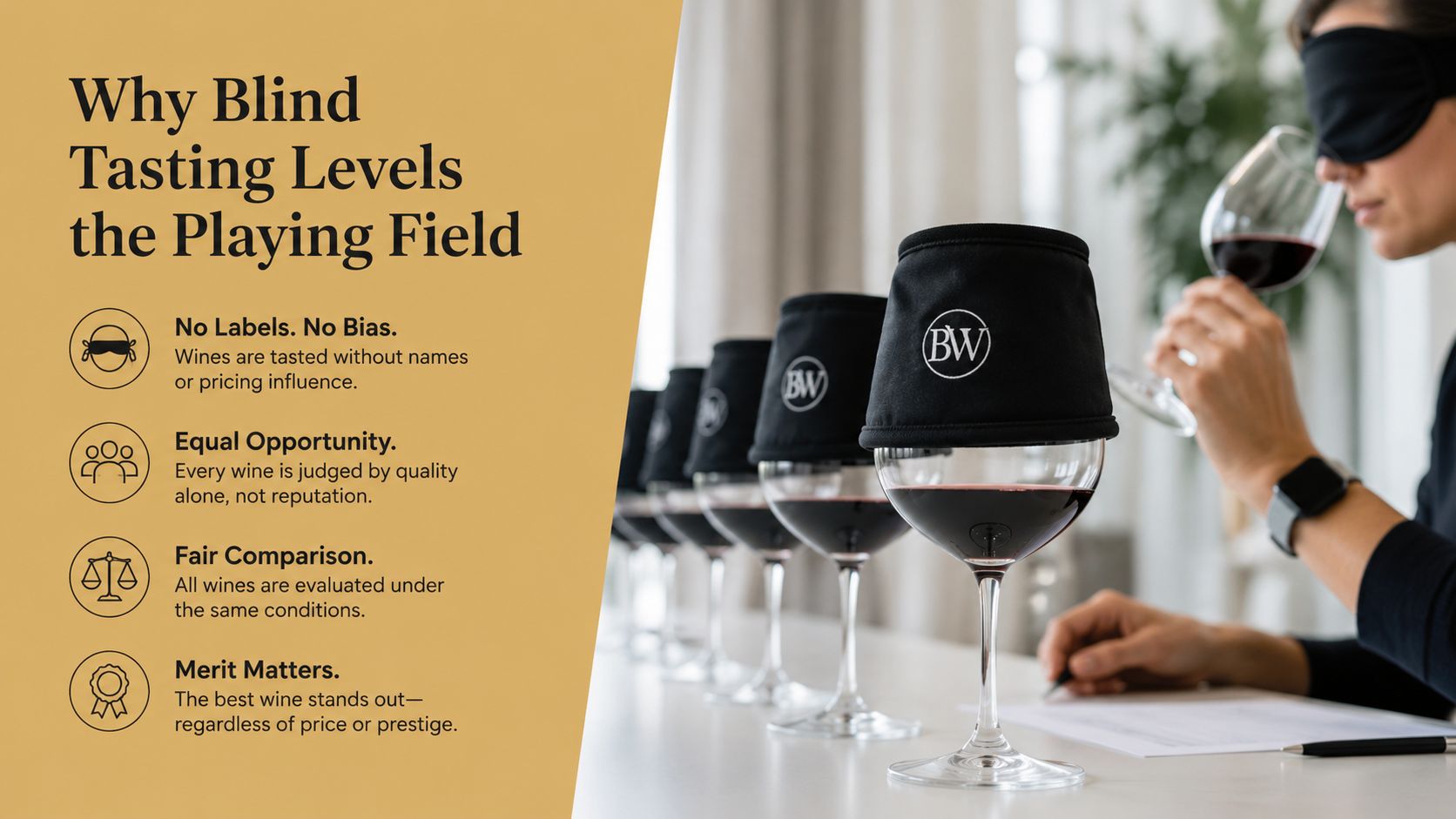
A simple home version works well. Pour four small samples into identical glasses, then use a basic grid for aroma, palate, and finish. Before you reveal the bottles, guess the age, proof, and whiskey type. That's enough structure to help new drinkers learn without turning the tasting into homework.
If you want a more formal approach, Blind Barrels' sensory evaluation method gives you a good template for how to stay focused on the palate instead of the packaging. It's especially useful for couples, for wives of whiskey fans who want to explore the category without pressure, and for groups comparing women-led bottles against legacy labels.
The bottle that wins blind is the bottle that earns the next purchase.
That rule keeps the conversation honest. It also gives women-led distilleries the same chance every other brand gets, which is exactly the point. When the tasting is fair, the best whiskey doesn't need a gender script attached to it.
Resources, Events, and What to Do This Month
A good reading list can keep this topic grounded. Fred Minnick's historical work, Forbes' ongoing women-in-whiskey coverage, and OurWhisky Foundation reporting all help separate real change from old assumptions. They're useful because they cover history, consumer shifts, and workplace culture without pretending those are the same thing.
Events can do the same job in person. Look for International Women's Day tastings, women-led distillery open houses, regional whiskey festivals with women-poured booths, and blind tasting nights that focus on small American craft producers. Those settings make it easier to ask direct questions, compare styles, and meet the people behind the labels.
A simple 30-day plan
- Buy one women-led craft bottle. Pick a small producer and read the label before you shop.
- Host one blind tasting. Use four glasses and compare the whiskey before you guess the brand.
- Follow one founder or maker. Learn how they talk about process, not just promotion.
- Share one resource. Send a friend an article, event listing, or distillery page that changes the conversation.
The broader lesson is that women in whiskey aren't waiting to be admitted. They're already here, and the better move is to notice them, taste with more discipline, and spend with more intention.
If you want a guided way to keep learning, tasting, and buying with less bias, Blind Barrels makes that process easy to build into your routine. Each quarter, members get four blind samples from small American craft distilleries, plus tasting notes, a guessing game, and direct access to purchase full bottles at a discounted price. Visit Blind Barrels and use blind tasting as the habit that helps you find the bottles worth coming back to.