

You've probably seen the pattern already. A friend opens a whiskey club box, pours four small samples, and spends the rest of the night comparing notes like they've suddenly become a better judge of flavor. That's the appeal of a yearly whiskey subscription, it turns a casual purchase into a yearlong ritual with something to learn from every pour.
The best versions don't just drop bottles at your door and call it a day. They create a rhythm, a tasting habit, and a cleaner way to figure out what you enjoy, especially if you're still finding your footing with American craft whiskey. If you've been wondering whether an annual plan makes sense for you, the answer depends on how you like to drink, how often you buy, and whether you want each sip to teach you something new.
Opening a Year of Whiskey
The first kit lands on the counter, the seal comes off, and the whole thing feels a little more deliberate than a normal delivery. Four amber samples sit in a neat row, there's a printed tasting table beside them, and a QR code waits to open the distillery story behind the glass. It doesn't feel like shopping, it feels like the start of a ritual.
That's why an annual plan works so well for people who enjoy whiskey as an experience, not just a beverage. Each shipment gives you a new chance to taste without the usual brand noise, price-tag assumptions, or shelf pressure. The bottle becomes secondary for a moment, and your own palate gets to lead.
A yearly whiskey subscription stretches that feeling across the calendar. Instead of one-off novelty, you get a repeatable structure that asks the same questions every few months, what do I smell, what do I taste, what do I want to buy again? That rhythm is what makes the format stick.
If you've ever wished whiskey buying felt less random, this is the kind of setup that makes the process easier to trust.
What a Yearly Whiskey Subscription Actually Is
A yearly whiskey subscription is a prepaid or recurring annual commitment that ships curated whiskey on a set cadence, usually quarterly. You pay for the year, or you agree to a yearlong run of deliveries, and the club sends a planned set of samples or bottles instead of asking you to start from scratch every time. The point is consistency, not clutter.
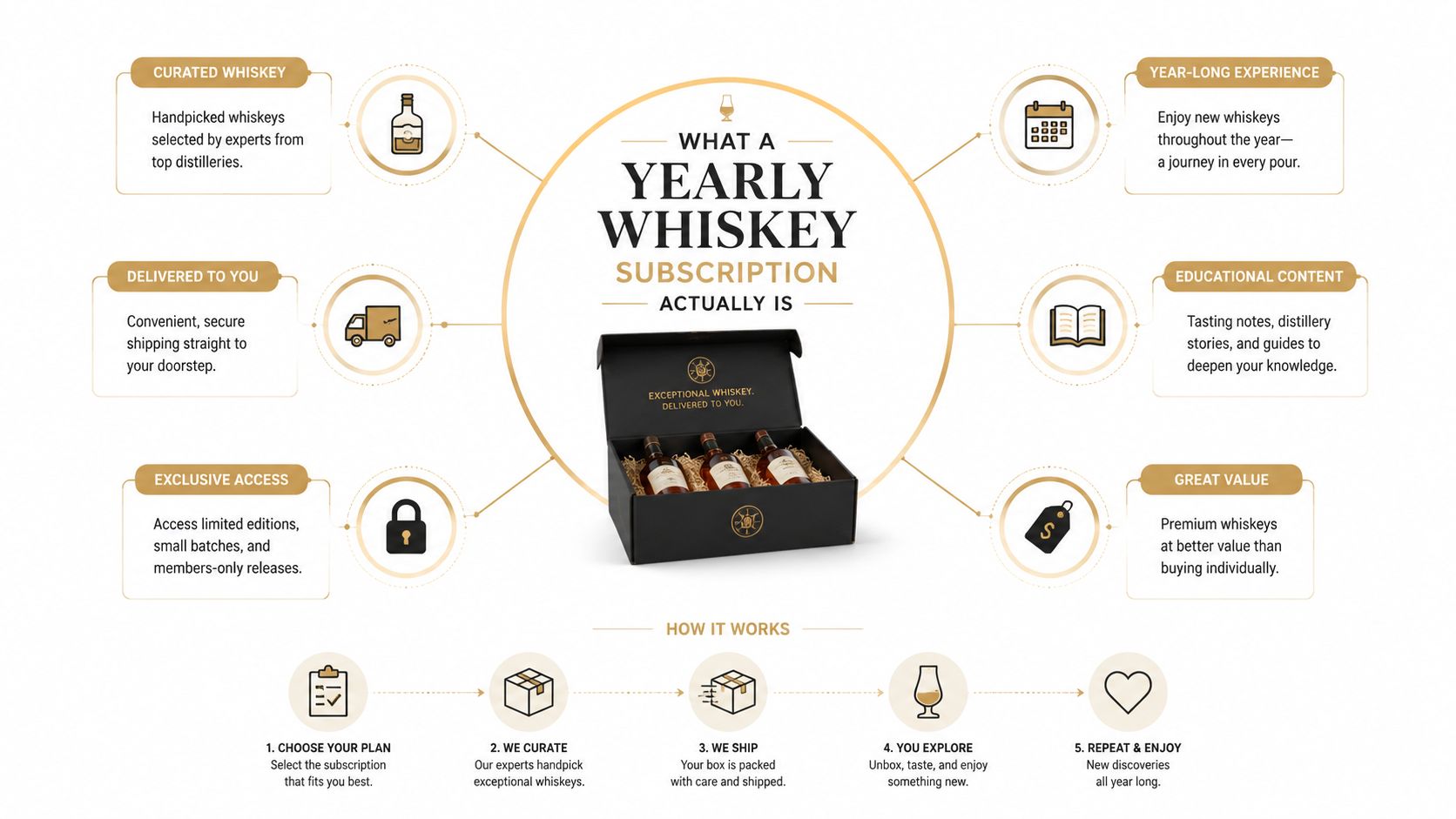
Most kits include a few core pieces. You usually get multiple samples, tasting notes, and some kind of educational insert that explains what you're drinking and why it matters. Some clubs also create a purchase path for full bottles, so you can move from sample to bottle once you know you like the profile.
Practical rule: if a club can't tell you what's in the box, how often it ships, and how you can buy more of what you like, it's probably not doing enough for a newcomer.
There are a few common models. Tasting-focused boxes lean into discovery and education. Full-bottle clubs make more sense for buyers who already know their preferences. Hybrid blind tasting kits sit in the middle, they let you compare samples first, then decide whether a bottle deserves a spot on your shelf.
For a plain-English breakdown of how subscription boxes are usually structured, this liquor subscription box guide is useful context. The main thing to remember is simple, the annual version just packages that experience into a longer commitment with a regular cadence.
Annual Plans Compared to Quarterly or Monthly
Annual, quarterly, and monthly plans all solve different problems. The yearly version is about commitment and smoother budgeting. Quarterly keeps your options open. Monthly delivers constant novelty, which some drinkers love and others find exhausting.
Blind Barrels offers a useful comparison point here. Its annual plan is billed at $299.99 for four quarterly tasting kits, while the quarterly plan is $59.99 per kit plus $15 shipping per shipment, as listed on the subscription page. That makes the annual plan about $87.50 effective cost per quarterly delivery under annual prepay, versus $74.99 per delivery on the quarterly plan before any bottle-shop purchases. The annual option mainly helps with cash-flow smoothing and lower shipping overhead per shipment, while the quarterly plan preserves flexibility. For a different cadence model, see the monthly whiskey subscription overview.
| Plan Type | Typical Billing | Cost Per Delivery | Flexibility | Best For |
|---|---|---|---|---|
| Annual | Paid once for the year | Lower effective per-shipment overhead in prepaid setups | Lower | People who want a set tasting rhythm |
| Quarterly | Paid every three months | More visible per-shipment cost | Medium | Drinkers who want room to pause or adjust |
| Monthly | Paid every month | Usually the most frequent billing cycle | Highest | Buyers who like constant novelty |
The key decision is about temperament. If you like to lock in a routine and stop re-deciding every few months, annual makes sense. If you want to test the waters first, quarterly is safer. If you're the kind of person who wants a new pour arriving all the time, monthly can feel more exciting than efficient.
Pick the plan that matches your buying habits, not the one that sounds most complete on paper.
Inside the Blind Tasting Experience
Blind tasting changes the whole psychology of whiskey buying. When the samples arrive unbranded, you lose the cues that usually steer your opinion, the label design, the reputation, the price, even the distillery name. What's left is aroma, texture, proof, and finish, which is exactly what you want a new drinker to pay attention to.
How the tasting table changes the experience
The tasting table is the part that turns the kit into a learning tool. It gives you space to write down aroma, taste, and finish notes, then compare them against the sample in front of you instead of trying to remember everything later. That kind of simple structure matters because beginners often know whether they liked something, but not why.
A blind format also makes the bottle-buying path more honest. If you score a whiskey highly without knowing the name, the result is more likely to reflect your actual palate. That's a cleaner signal than chasing a brand you've seen praised online.
The QR code adds another layer. It opens the distillery background and gives you direct access to full bottles at a discounted price, so the tasting can move naturally from discovery to purchase. If you want a proper glass for evaluating those samples, a Pasabahce Karat whiskey glass 300ml gives you a straightforward shape that works well for tasting small pours.
Why the scoring game matters
Blind Barrels' format asks members to guess the age, proof, and whiskey type, then returns a score that shows how accurate their palate is. That's not just playful, it teaches pattern recognition. Over time, you start connecting proof with heat, age with oak influence, and whiskey type with structure.
For more detail on the blind format itself, the blind whiskey tasting guide shows how the sample flow supports that kind of palate training. The educational value comes from repeated comparison, not from trying to memorize tasting jargon.
Blind tasting works because it lowers the amount of story in the glass. That makes room for your own preferences to show up.
Why the Premium Whiskey Boom Matters for Subscribers
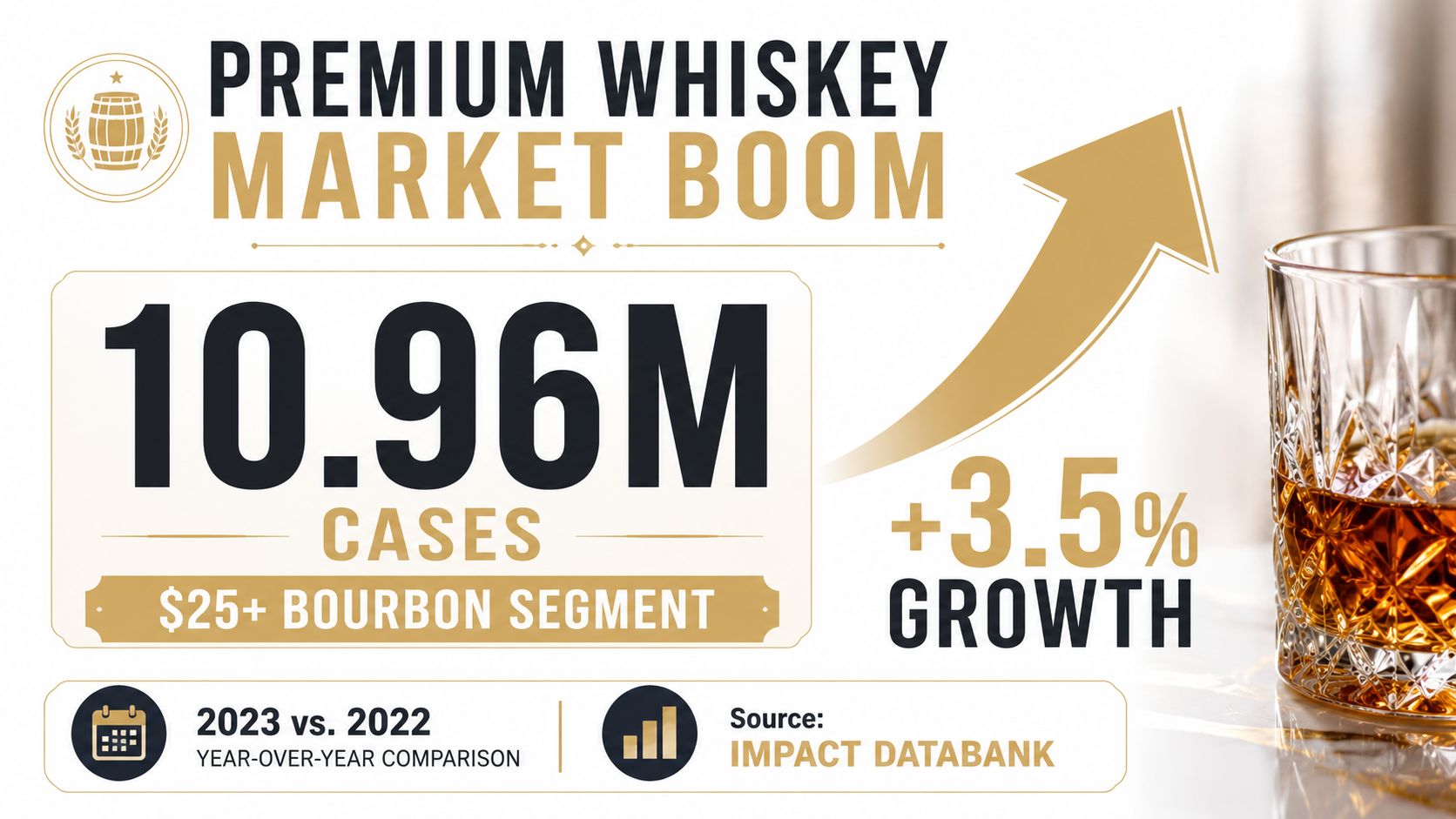
The premium end of the market helps explain why annual subscriptions have room to work. Impact Databank data shows the $25-and-over Bourbon segment grew 3.5% in volume to 10.96 million 9-liter case depletions, even while overall U.S. American whiskey volume fell 1% in the same period, according to MarketWatch Mag's coverage of the report. That split matters. It suggests buyers at the top are still willing to pay for better bottles and more curated experiences.
The audience already behaves like a subscriber
Whisky Magazine's ratecard says the publication has a readership of 68,270, with an average reader age of 40 and 75% of readers between 35 and 65 years old. It also says 80% of readers drink whisky more than twice a week and 64% buy themselves more than 11 bottles of whisky each year, based on Whisky Magazine's circulation data. That profile looks a lot like the person who benefits from a yearly subscription, experienced, engaged, and already comfortable buying repeatedly.
The subscription model fits that behavior because it rewards curiosity instead of impulse. A frequent buyer doesn't need another generic bottle recommendation. They need a way to compare styles, narrow preferences, and decide what deserves a full bottle purchase.
The strongest annual plans don't try to create whiskey interest from nothing. They organize the habits of people who already care.
That's why premium subscriptions work especially well with American craft whiskey. They suit buyers who want more than a shelf trophy. They want a curated sequence of pours that helps them learn the market one sample at a time.
Pricing, Gifting, and the Legal Side
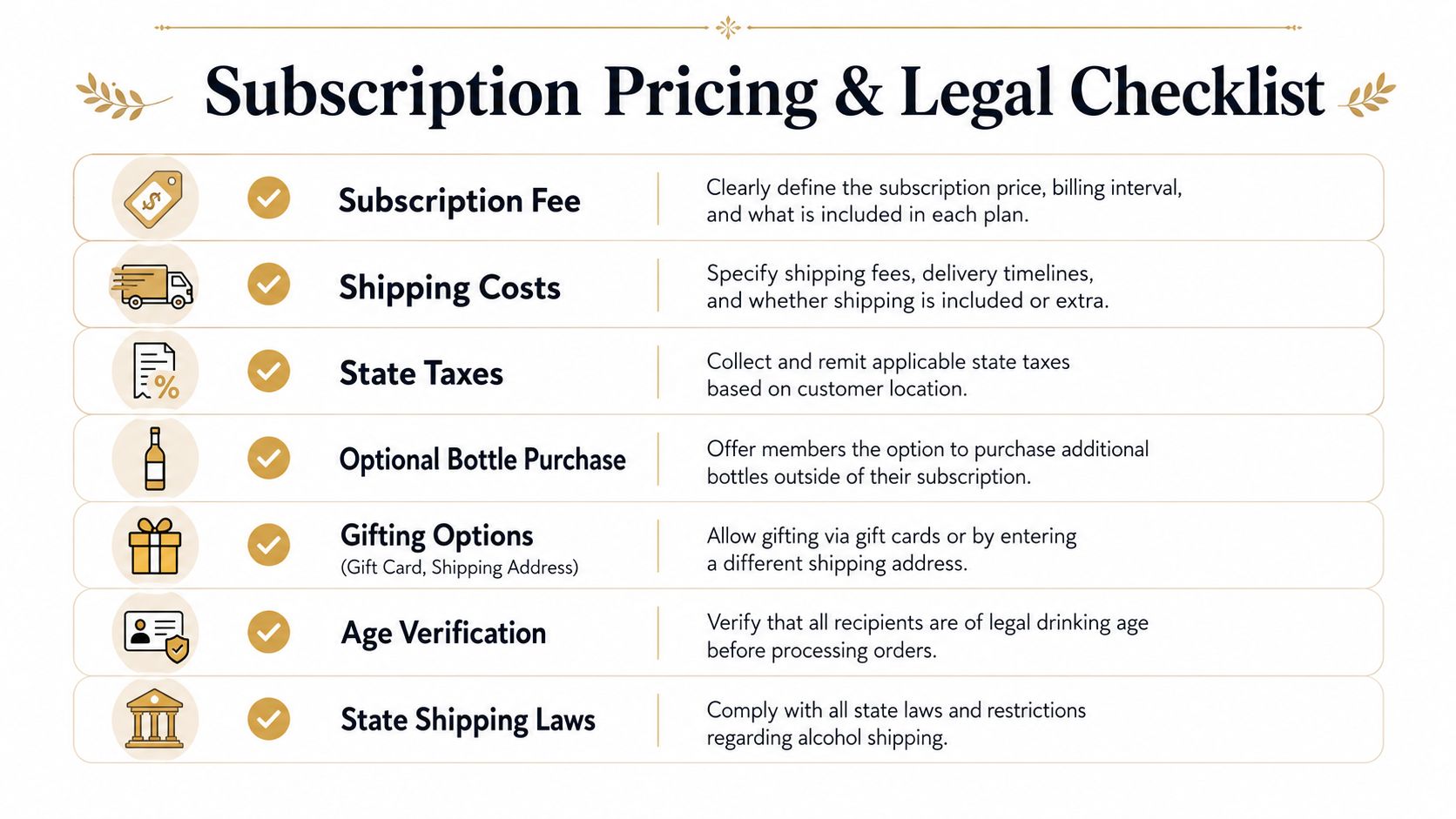
The full price of a whiskey subscription is rarely just the headline fee. You may also see shipping costs, taxes, and optional full-bottle purchases layered on top. That's normal, but it's easy to underestimate how those pieces change the overall cost of the year.
What gifting looks like in practice
A yearly plan can work well for couples, milestone gifts, and spouses buying for a whiskey fan. It feels more thoughtful than a single bottle because it keeps arriving after the birthday or holiday has passed. If you're looking for a broader gifting format alongside whiskey, USA gift basket collections can help you think through how a subscription gift fits into a larger celebration.
The legal basics that matter before checkout
Alcohol subscriptions have real delivery rules. Buyers must be 21 or older, an adult signature is usually required on delivery, and shipments are limited to states where the retailer is licensed to ship. Those checks aren't cosmetic, they're the difference between a smooth delivery and a returned box.
Check before you buy: confirm age verification, shipping state coverage, signature requirements, and whether the club allows bottle add-ons or gifting before you enter payment details.
A quick checklist helps:
- Verify your state: make sure the retailer can legally ship there.
- Confirm the billing structure: annual, quarterly, or monthly.
- Review shipping charges: don't assume they're included.
- Check gift handling: see whether you can ship to another address.
- Read the bottle-purchase terms: know how discounts or add-ons work.
If a club can answer those questions clearly, you're in much better shape. If it can't, keep looking.
A Buyer's Checklist for New Whiskey Drinkers
New whiskey drinkers don't need a giant shelf to start well. They need a subscription that teaches them how to taste, compare, and remember what they liked. The right annual plan should make that easier, not more complicated.
What to look for before you commit
- Sample format: small, clearly labeled samples are easier to learn from than a full bottle you feel pressured to finish.
- Educational material: tasting notes, distillery background, and basic explanations help you connect flavor to production style.
- Feedback tools: a tasting table, scorecard, or palate game makes it easier to track progress over time.
- Bottle access: a direct path to purchase a full bottle is useful once you find a sample you love.
- Shipping coverage: make sure the club ships to your state and supports any gifting address you might need.
- Cadence: quarterly shipping is often a calmer way to learn than frequent monthly deliveries.
Tips for new whiskey drinkers
Start with one sample at a time. Pour a little, smell it twice, then take a small sip and give your palate a minute before deciding anything. Whiskey often opens up after the first taste, so don't rush the judgment.
Use the tasting table like a notebook, not a test. Write down one aroma, one taste note, and one finish note for each sample. If the scorecard says you missed the age or proof, that's useful, because it shows where your assumptions are running ahead of your senses.
When a sample clicks, buy the bottle only if you'd happily drink it again without the blind reveal. That keeps you from collecting bottles just because the story sounded impressive. A good subscription should train you to trust your own notes more than the label.
If you're new, the best annual plan is the one that makes tasting feel simple enough to repeat.
Making the Year Count
A yearly whiskey subscription works best when you treat it like a twelve-month tasting journal, not a single purchase. The three decisions that matter most are cadence, tasting format, and budget. Get those right, and the rest of the experience starts to make sense on its own.
Blind tasting is the feature that gives the format its edge. It strips away brand bias, turns samples into honest feedback, and helps you buy bottles with more confidence. That's a better use of an annual plan than just accumulating another set of labels.
Start with the first kit, write your notes, and let the year teach you what your palate keeps reaching for.
Blind Barrels builds its annual whiskey subscription around blind samples, tasting notes, and direct bottle access, so the kit keeps working long after the first pour. If you want a subscription that helps you compare American craft whiskey without leaning on the label, visit Blind Barrels and see how the quarterly tasting rhythm fits your own year.